

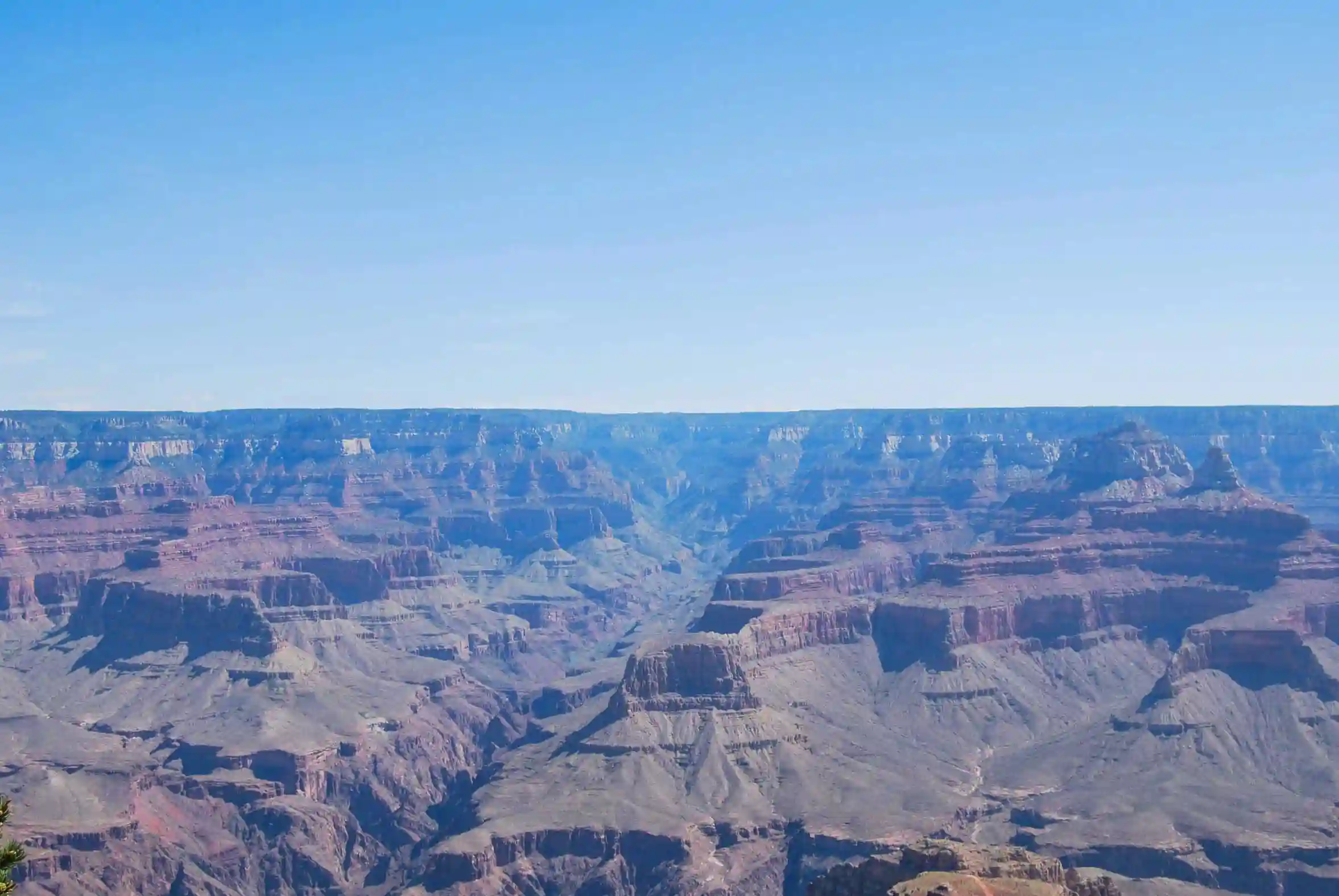
Where is the Grand Canyon
If you're wondering where the Grand Canyon is located, the answer is that it's in the northwestern part of the state of Arizona, spanning 447 km (278 mi) along the Colorado River. The southern part of the canyon is located 129 km (80 mi) from Flagstaff (1h30), 210 km (131 mi) from Page (2h20), 370 km (230 mi) from Phoenix (3h30), and 445 km (277 mi) from Las Vegas (4h15).
What is the closest airport to the Grand Canyon
✈️ The closest airport to the Grand Canyon is the Grand Canyon National Park Airport, located in Tusayan, 3 km (1.86 mi) from the park’s south entrance. Although it receives flights from Las Vegas, Phoenix, and Flagstaff, these are small planes and the frequency of flights is not very high.
Other larger airports you can fly include:
- Flagstaff Pulliam Airport (Flagstaff): 137 km or 85 mi (1 hr 25 min)
- Phoenix Sky Harbor International Airport (Phoenix): 364 km or 226 mi (3 hrs 30 min)
- Harry Reid International Airport (Las Vegas): 435 km or 270 mi (4 hrs 10 min)

TRAVEL INSURANCE
FOR THE UNITED STATES
💸 Healthcare in the U.S. is very expensive, and any accident or illness can cost you a fortune.
That's why we recommend getting travel insurance that covers you in case anything goes wrong, so you don't have to pay anything up front.
💡 We always travel with Heymondo because it offers excellent medical coverage at a great price. Plus, you can get 5% OFF*!
🤓 Take a look at: Best travel insurances for the USA | Comparison + Discounts |
What are the areas of the Grand Canyon (and how to get there)
The Grand Canyon is divided into three main areas, each with its own unique characteristics, which you need to understand clearly in order to plan your visit.
Comparison table of areas in the Grand Canyon
Here's a summary with the main features of all three areas, after the table we'll go into more detail about each one:
| AREAS OF THE GRAND CANYON | |||
|---|---|---|---|
| SOUTH RIM | NORTH RIM | WEST RIM | |
| Distance from Las Vegas | 445 km or 276 mi (4 hrs 20 min) | 433 km or 269 mi (4 hrs 30 min) | 205 km or 127 mi (2 hrs) |
| Is it part of the National Park? | Yes | Yes | No |
| Opening times | All year round | Mid-May through late November | All year round |
| Recommended minimum time | 1–2 days | 1 day | Half a day |
| Landscape type | Stunning panoramic views | Closer views and forests | Narrowest part of the canyon |
| Altitude | 2,100 m or 6,890 ft | 2,400 m or 7,875 ft | 1,500 m or 4,921 ft |
| Number of visitors | High | A little | Medium |
| Infrastructure and services | Very good | Limited | Good |
| Hiking | Excellent | Excellent | More limited |
| Skywalk (glass bridge) | No | No | Yes |
| Perfect for... | First visit to the Grand Canyon: best viewpoints and hiking trails | Repeaters, avoiding crowds of tourists, and hiking | People with limited time from Las Vegas |
Grand Canyon South Rim
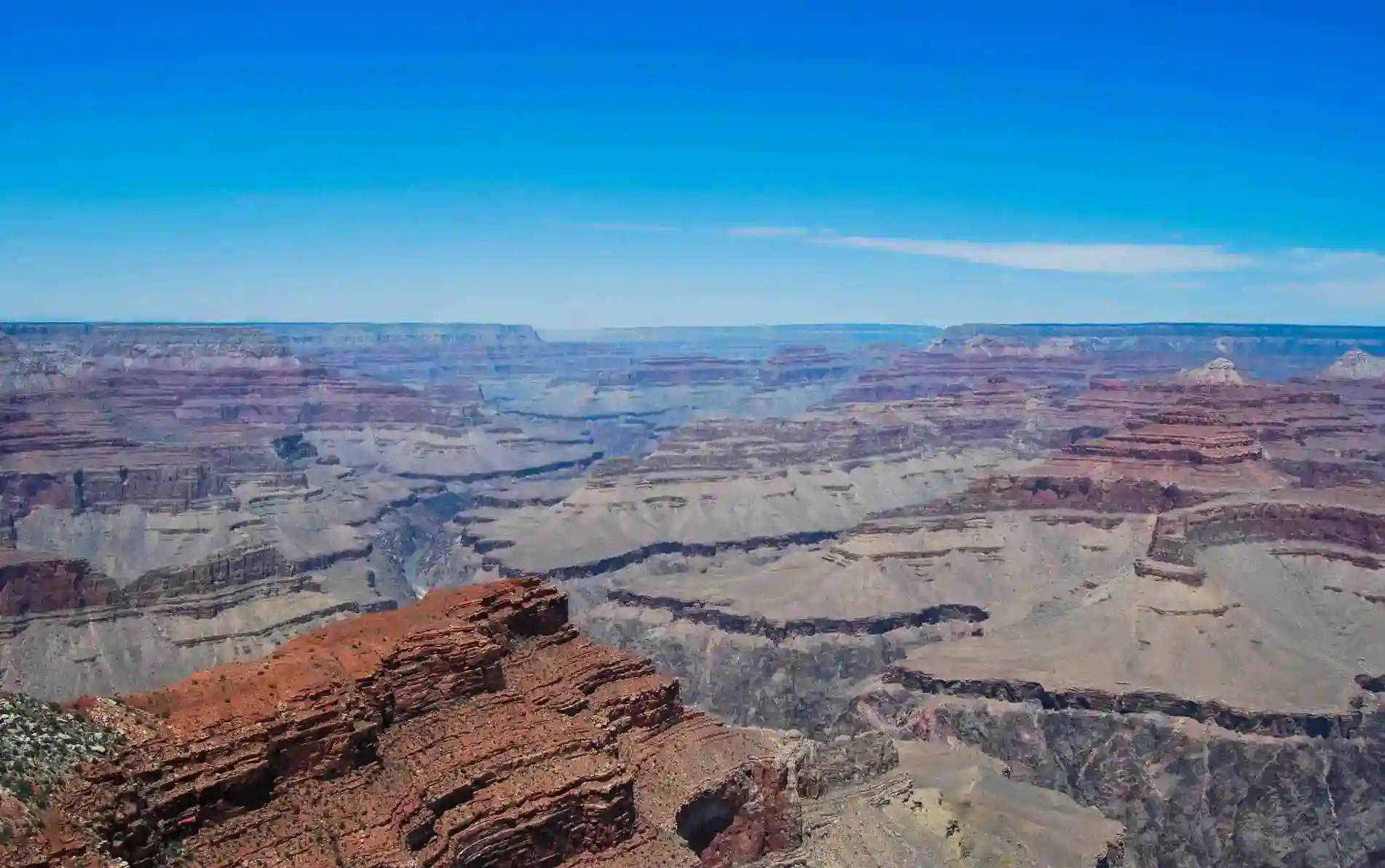
The southern part of the Grand Canyon is located within the National Park and is the most visited area of all. It's accessed through the South Entrance and is open year-round, offering the most classic and expansive views of the Grand Canyon from a large number of overlooks.
💡 If this is your first time at the Grand Canyon, we recommend visiting the South Rim. It’s the most spectacular area, home to the most famous viewpoints, and the one that offers the classic experience most travelers hope to find.
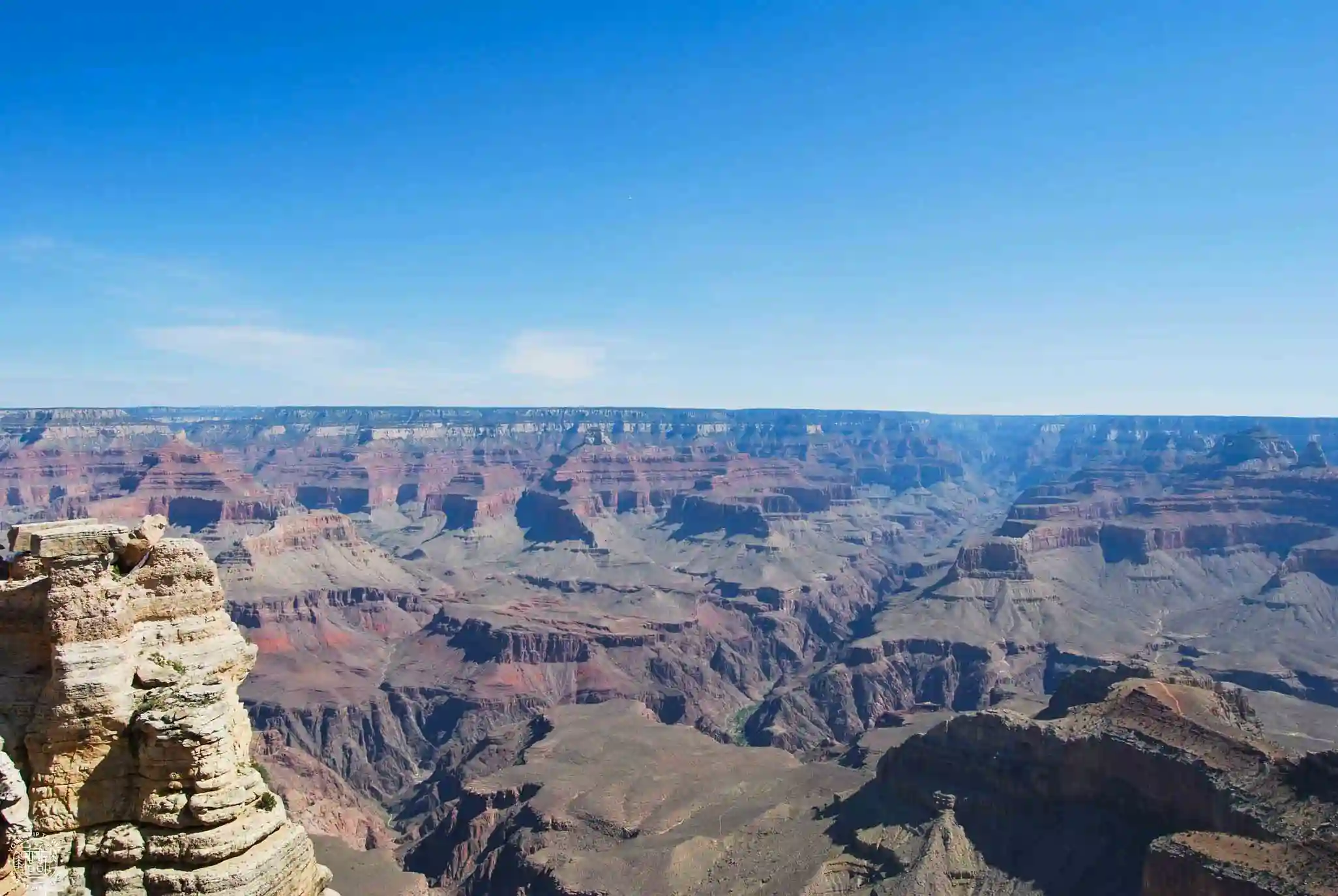
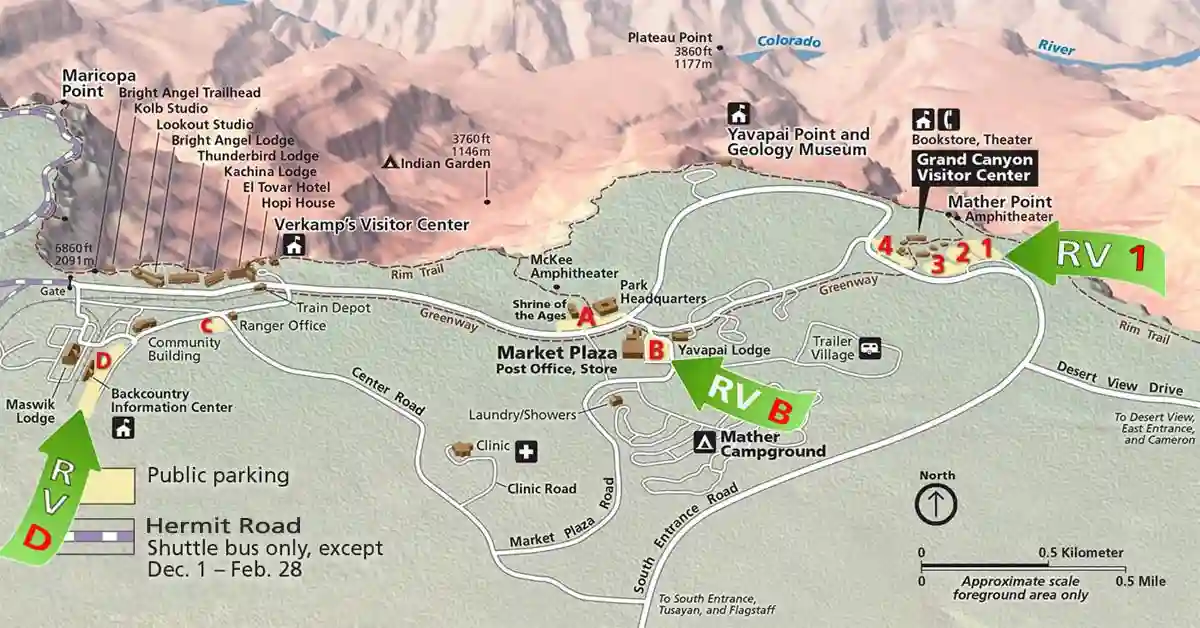
The South Rim is further divided into three sections: Grand Canyon Village (central area), Hermit Road (western area), and Desert View Drive (eastern area). Here’s a brief overview of each area so you can understand the main differences:
Grand Canyon Village
Grand Canyon Village is the heart of the South Rim and is divided into three districts (Visitor Center, Village Historic District, and Market Plaza). This is where all the amenities are concentrated: shops and a supermarket, lodging, two visitor centers, a post office, ATMs, campgrounds... The blue shuttle bus line serves this area.
There is also a group of historic buildings here that commemorate the town's founding in 1901, when the first steam train arrived. Some examples include Hopi House, Verkamp’s Visitor Center, the Kolb Studio, the train station, and El Tovar (the most luxurious hotel, dating back to 1905).
Hermit Road
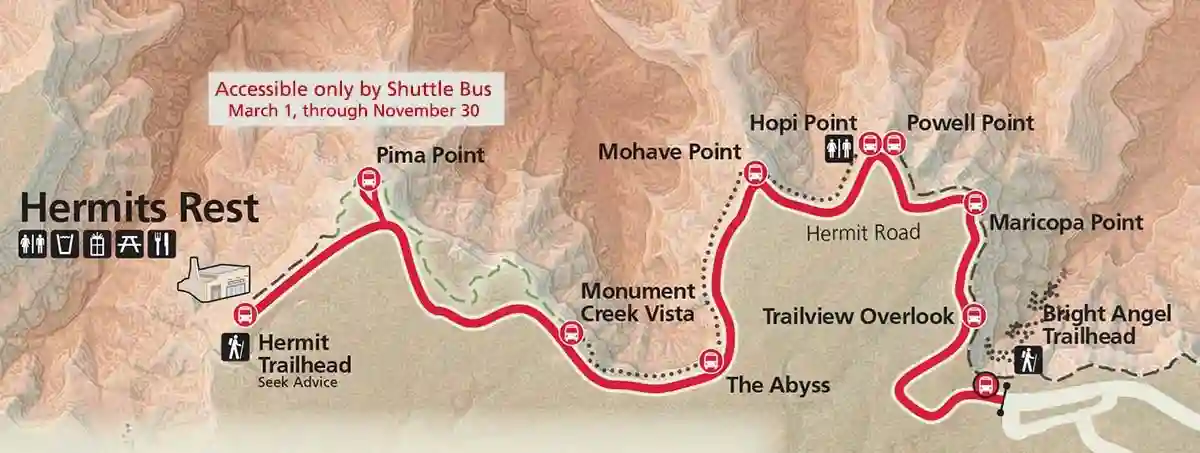
Hermit Road is the westernmost part of the South Rim, an 11-kilometer (7-mile) road that starts at Grand Canyon Village and ends at Hermit's Rest, where you'll find a snack bar, gift shop, restrooms, and a picnic area. Along the way, you’ll find some of the best viewpoints at the Grand Canyon—there are 9 in total.
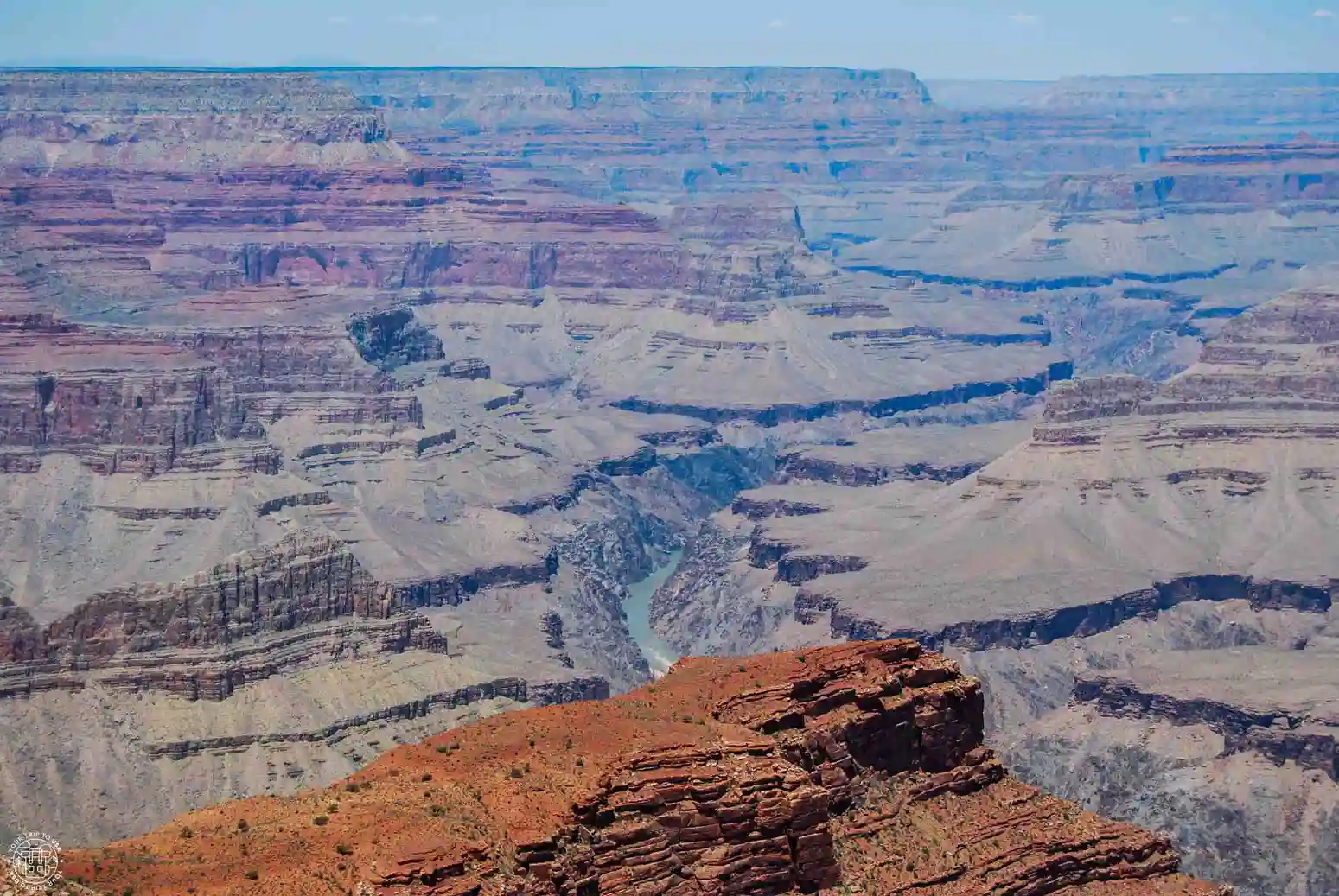
From March 1 to November 30, private vehicles are prohibited on this road, so you must use the free shuttle bus service—specifically, the red line. December through February are the only months when you can drive your own vehicle, always if it's less than 6.7 meters (22 feet) long.
Desert View Drive
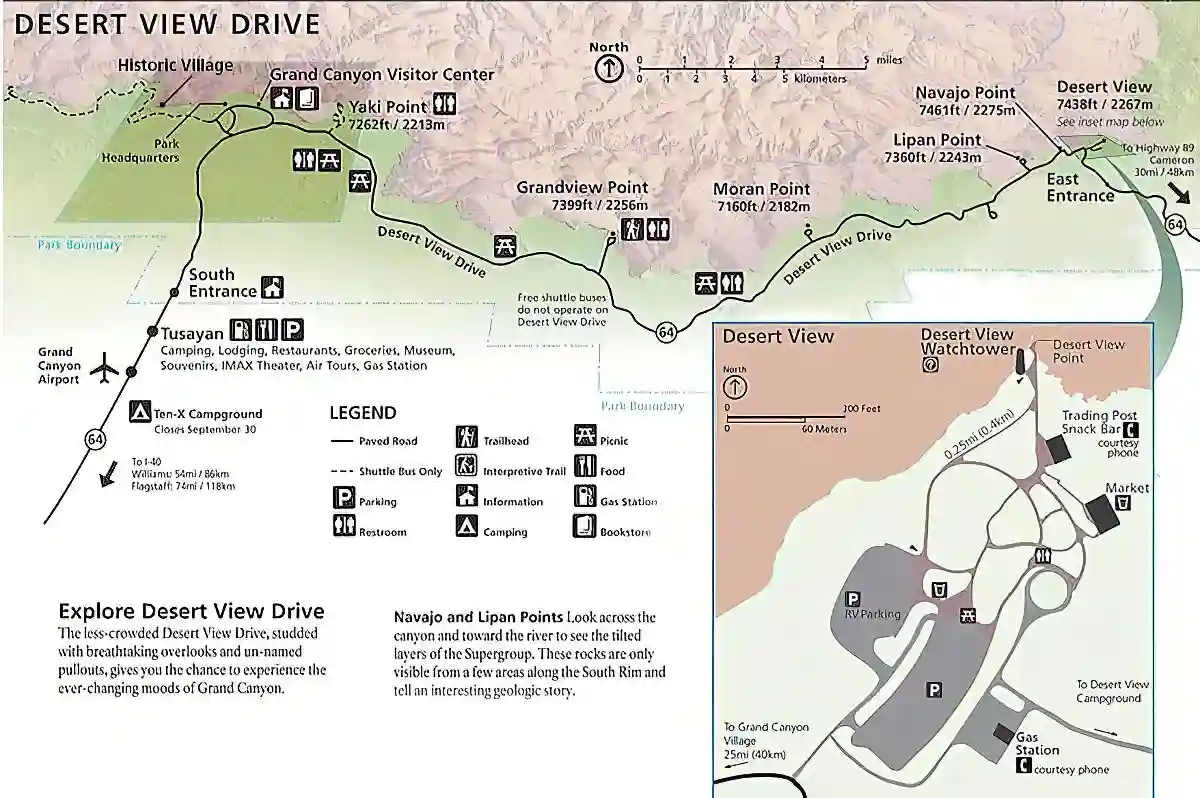
Desert View Drive is a 37-kilometer (23-mile) stretch of Highway 64 that connects Grand Canyon Village with the park’s easternmost entrance, the East Entrance. This area can be traveled by private vehicles year-round, as none of the shuttle routes operate here.
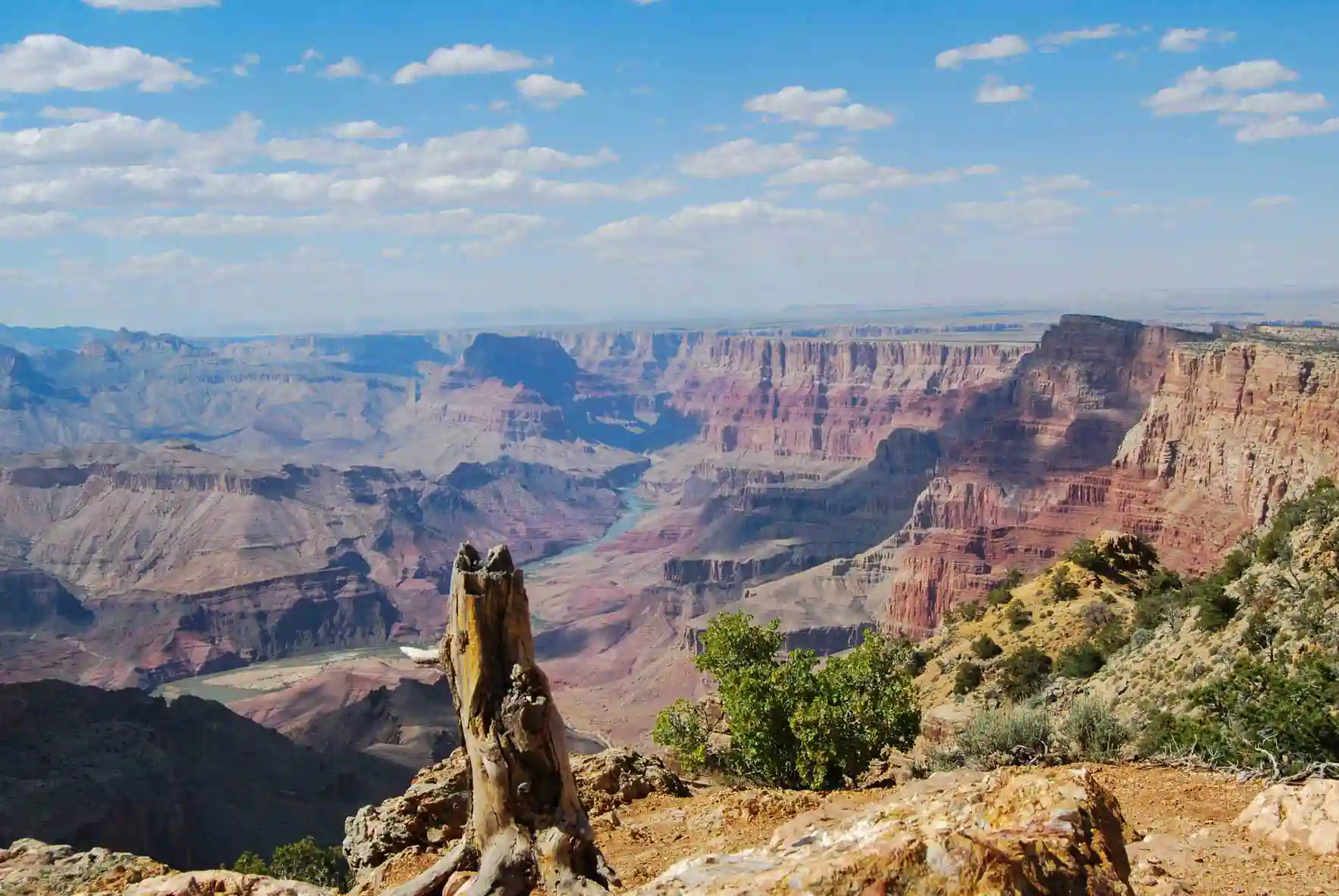
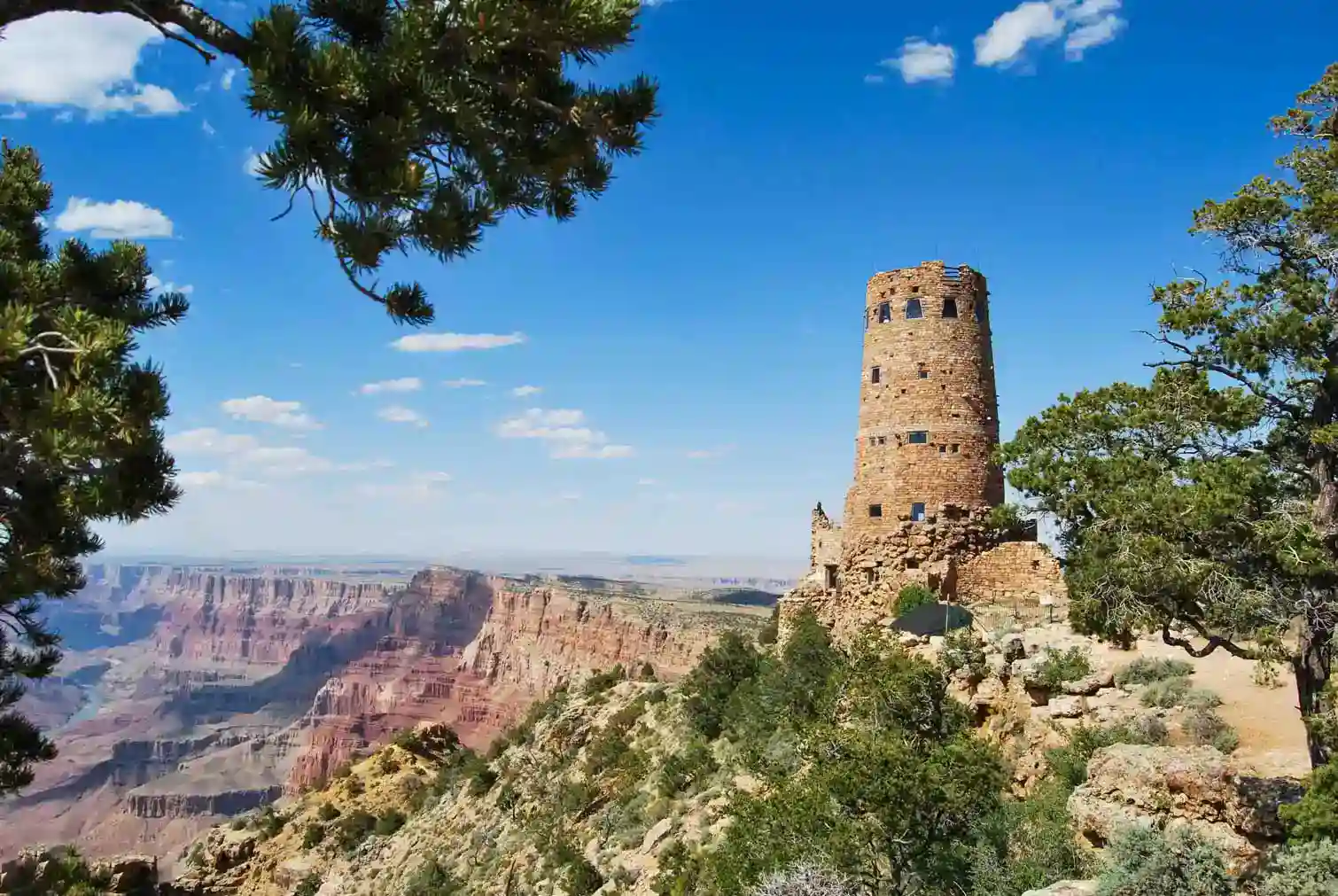
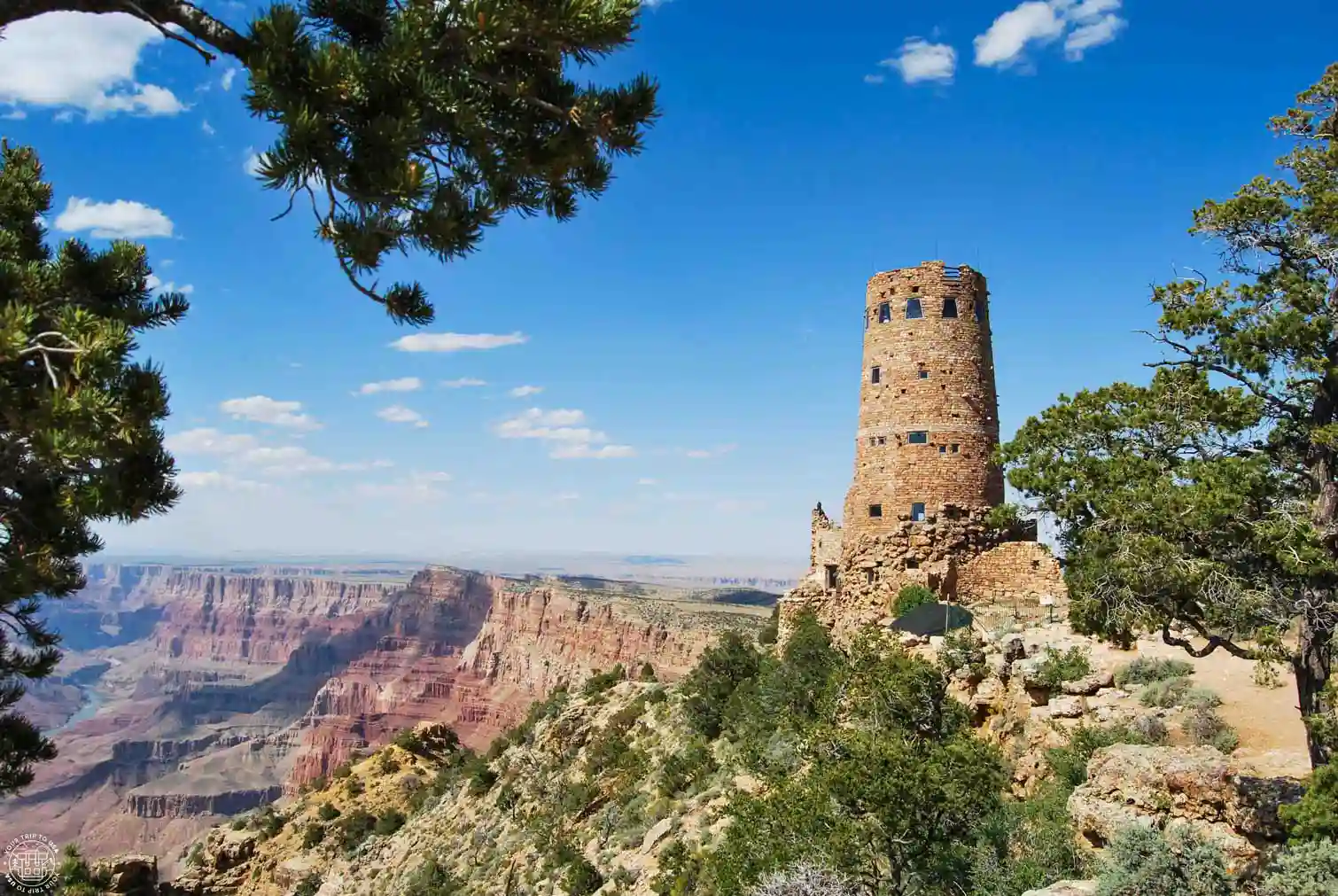
Next to the entrance, you'll find a supermarket, a gas station, a snack bar, and the famous Desert View Watchtower. Along the road, there are six overlooks, picnic areas, and the Tusayan Pueblo Archaeology Site.
Grand Canyon North Rim
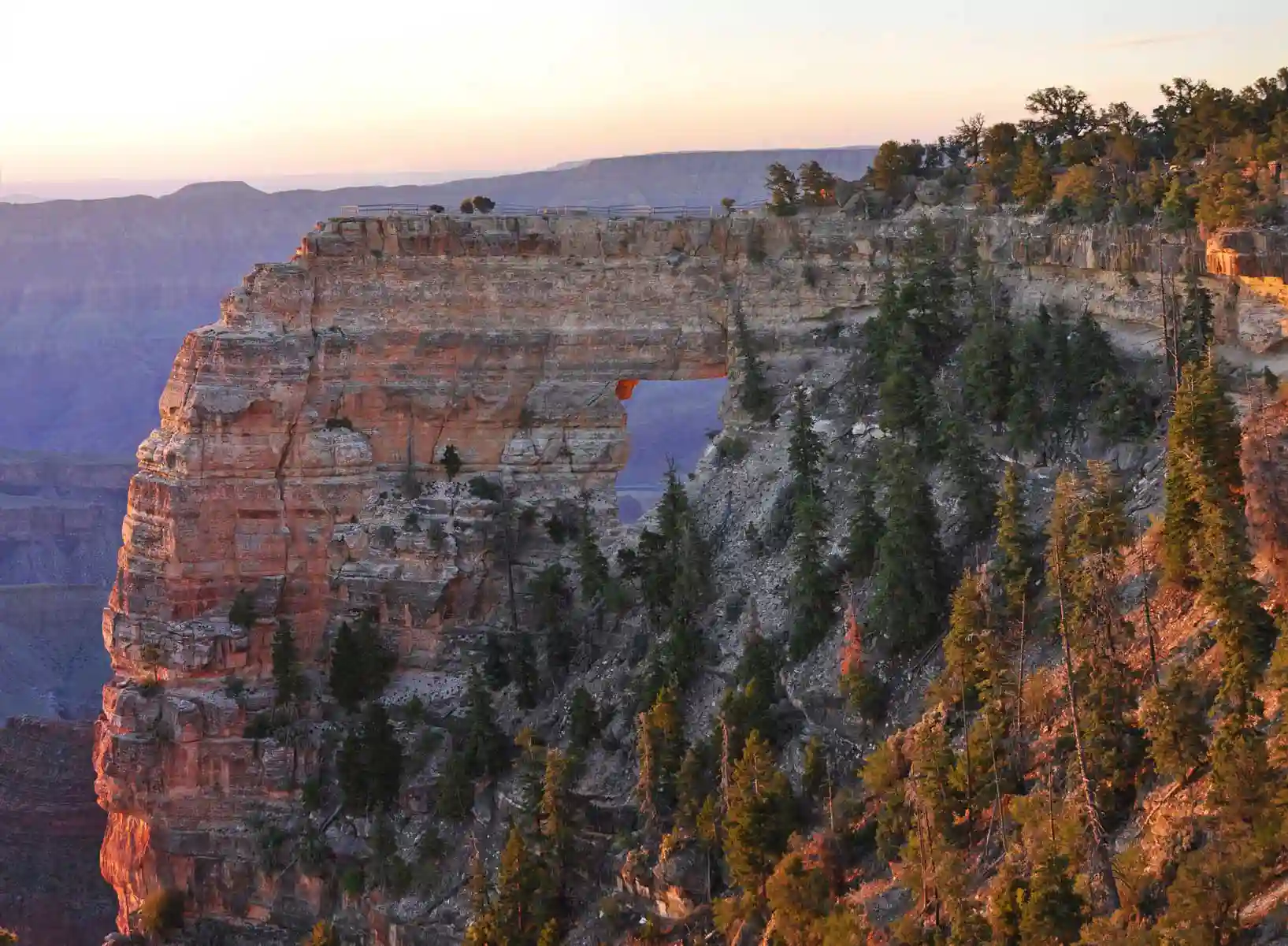
The North Rim of the Grand Canyon, which is also part of the National Park, is a much less-visited area; in fact, only 10% of the people who go to the Grand Canyon visit this more remote part. Although the distance from the South Rim to the North Rim on foot is only 39 km (24 mi), if you want to drive from one rim to the other, you’ll have to drive 354 km (220 mi)—which translates to about 4 hours behind the wheel.
The North Rim is accessed through the North Entrance, located 50 km (31 mi) from Jacob Lake, and is an area with far fewer services and infrastructure compared to the south. In addition, in the summer of 2025, a severe fire broke out, and the only hotel on the North Rim—which was also a historic building—was severely damaged.
Another distinctive feature of the North Rim is that it lies between 2,438 and 2,682 meters (8,000 and 8,800 ft) above sea level, about 300 meters (985 ft) higher than the South Rim. This difference in elevation means that winters here are harsher and bring heavier snowfall, so it's only open from mid-May through late November (depending on weather conditions).
There are fewer overlooks here than on the South Rim, but the view is just as impressive since the sculpted rock formations appear much closer. That said, you rarely get a view of the Colorado River. Also, there are quite a few hiking trails here, and they aren’t as exposed to the sun as those on the South Rim, since there’s much more vegetation and pine forests.
Grand Canyon West Rim (Skywalk)
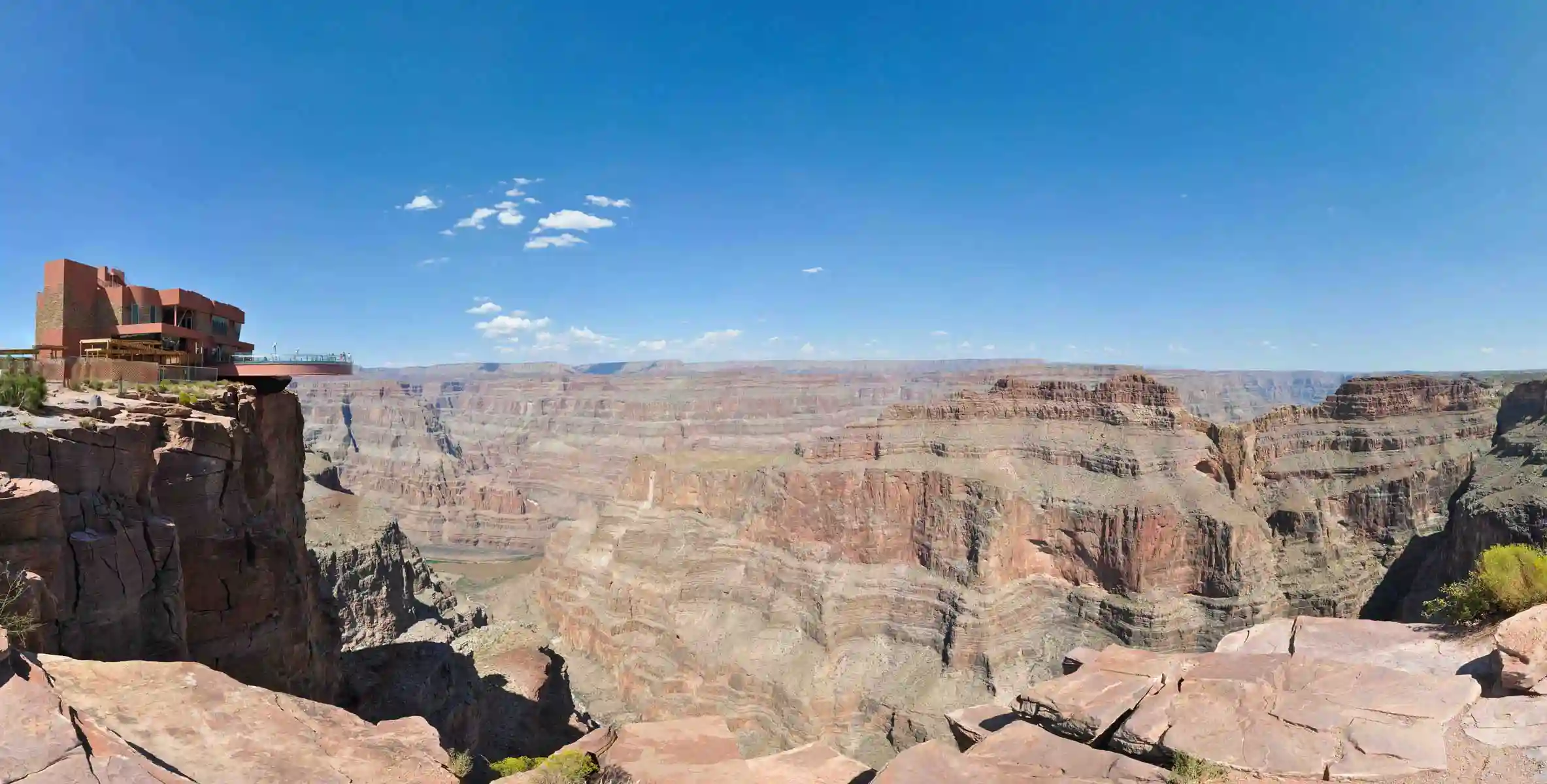
Grand Canyon West is the westernmost part of the Grand Canyon of the Colorado River and is not part of the National Park; instead, it's managed by the Hualapai Tribe. They own this area and manage it entirely, which means the admission price is significantly higher if you want to enjoy the experience to the fullest.
The West Rim is the ideal place to visit from Las Vegas if you don't have time to make it all the way to the National Park, since it's 210 km (130 mi) from the city (about 2 hrs and 20 min by car). For this reason, all tours to the Grand Canyon from Las Vegas focus on this area, such as this Grand Canyon West + Hoover Dam tour from Las Vegas.

RENT A CAR IN THE UNITED STATES
The best way to explore the United States is by car, giving you the freedom to travel at your own pace.
🚗 Whether you’re looking for a convertible Mustang, a 4x4, or a regular car, we recommend to book through this car rental search engine
💸 This is where we find the best prices, both on the rental car itself and on full coverage insurance!
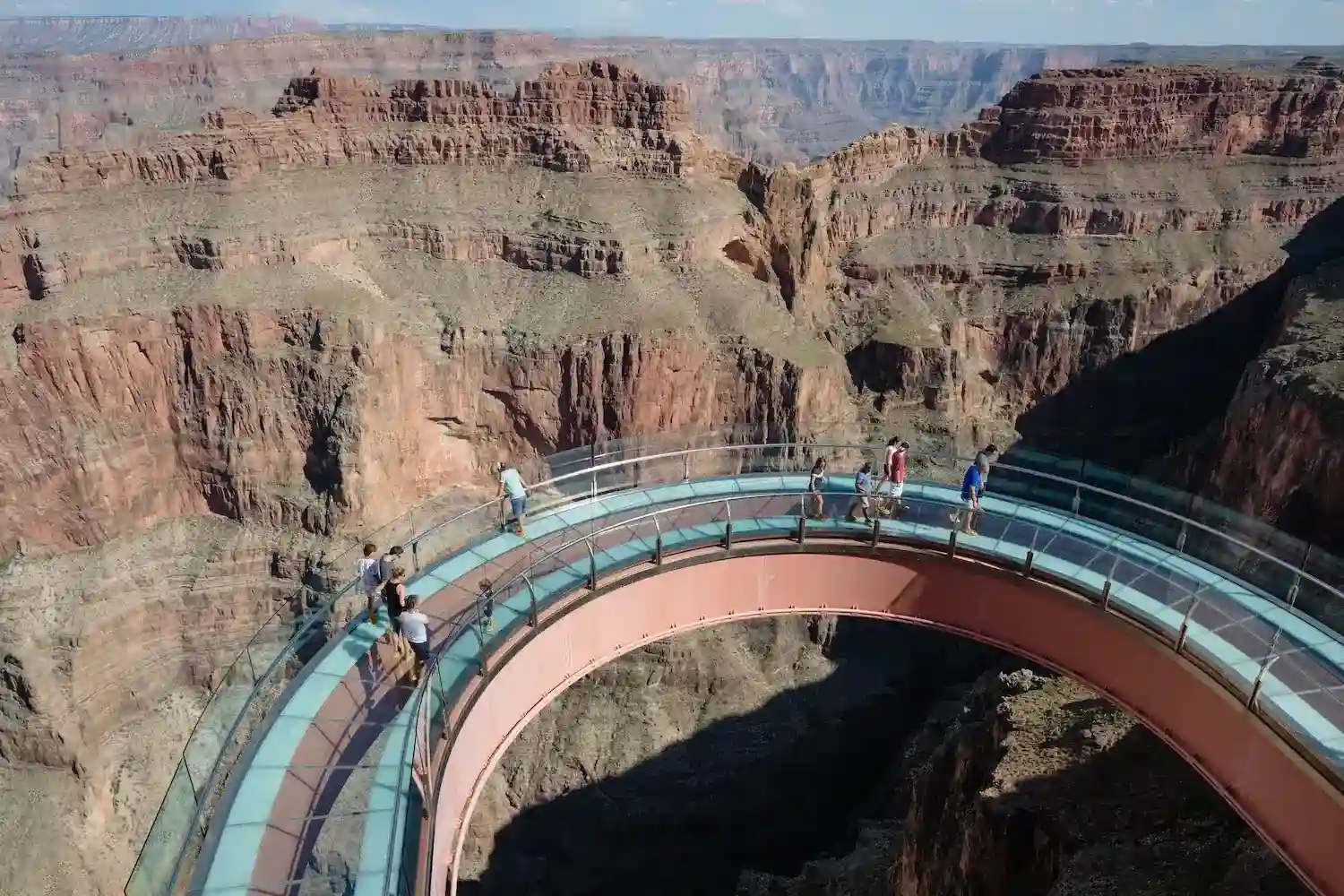
Although we’ll go into more detail in this section, Grand Canyon West is very tourist-oriented, with the famous Grand Canyon Skywalk being a prime example—a glass walkway suspended over the edge that lets you walk over the abyss while taking in breathtaking views. In addition, there are other overlooks, gift shops, restaurants, a craft shop, Native American cultural demonstrations, and The Cabins, the only lodging in the entire complex.
ℹ️ You can purchase the pass with full access to Grand Canyon West here (includes the Skywalk)
Other stunning places near the Grand Canyon
Although the three mentioned above are the main areas, there are also other incredible places in the vicinity of the Grand Canyon that are less frequently visited due to their management or location:
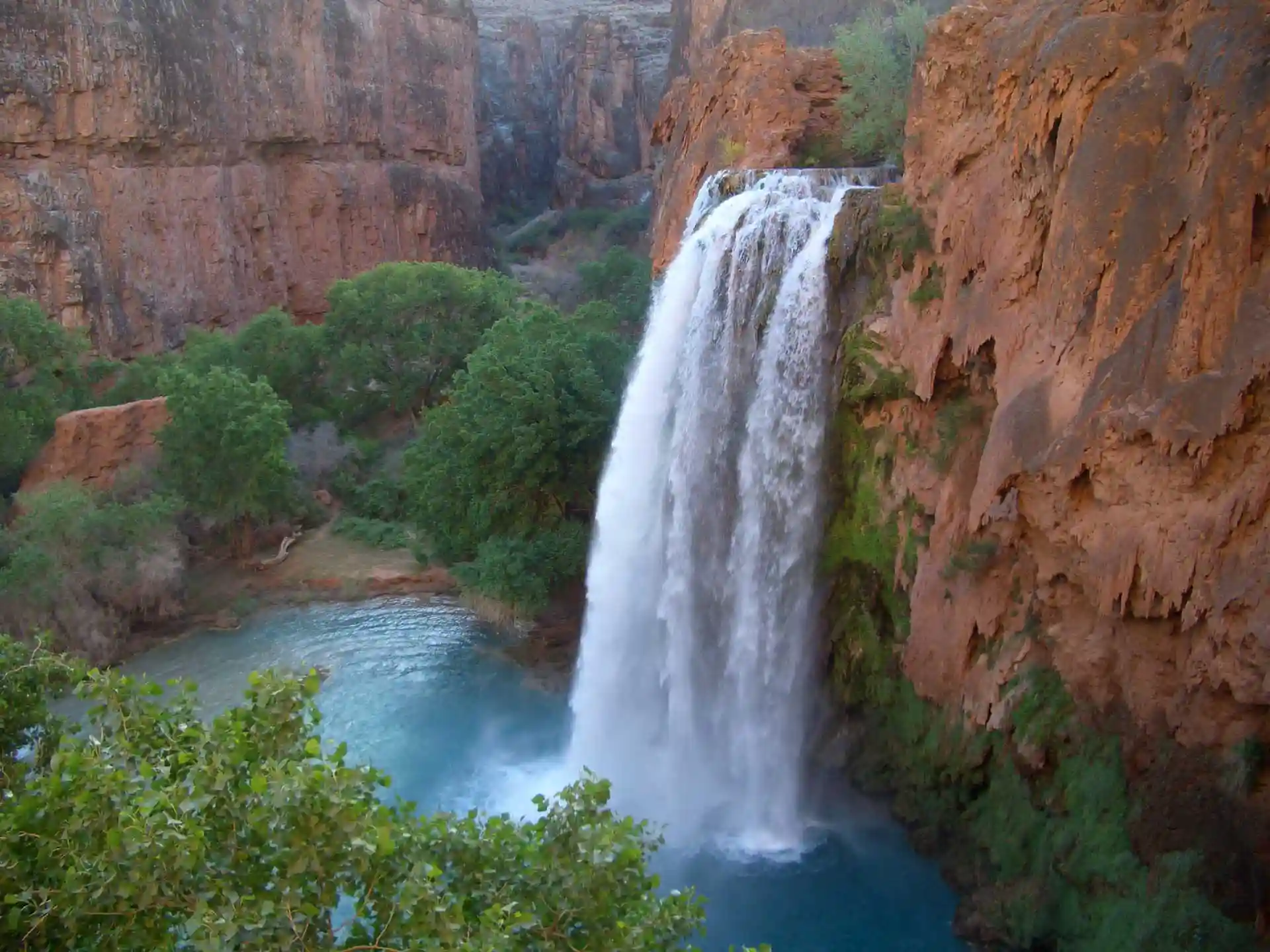
- Havasu Falls: the famous turquoise waterfalls in the Colorado River Canyon, despite being close to the South Rim, are located on Havasupai territory and are managed entirely by the Havasupai people. Day trips are not possible; instead, access requires a permit that includes lodging in the village of Supai. Spots become available during specific times of the year and usually sell out in less than an hour.
- Toroweap Overlook (or Tuweep): this remote overlook, located on the North Rim of the Grand Canyon, offers some of the most breathtaking views, as it's a vertical cliff 915 meters (3,000 feet) high. The access road is a dirt track that can only be reached by 4x4, and a permit is required to get there.
- Little Colorado River Navajo Tribal Park: this canyon, located on Navajo territory, was carved by the Little Colorado River, one of the main tributaries of the Colorado River. It's very close to the east entrance and also offers spectacular views, with only a fraction of the visitors.
How to get to the Grand Canyon (South Rim)
Before planning your U.S. Southwest road trip, it's important to know the distances to the Grand Canyon from the main departure points and the best route to take in each case:
How to get to the Grand Canyon from Las Vegas
- Distance: 450 km (280 mi)
- Driving time: about 4 hrs and 30 min
- Recommended route: Las Vegas → Hoover Dam → Kingman → Seligman → Williams → South Entrance
Traveling to the South Rim of the Grand Canyon from Las Vegas is one of the most popular routes among travelers exploring the Southwestern of the United States. The distance between the two locations is approximately 450 km (280 mi), which translates to about 4½ hours of driving, not including stops.
The most convenient way to make the trip is by rental car or rental RV, following US-93 and connecting to I-40. Along the way, you’ll cross the impressive Hoover Dam, where we’d recommend stopping (in our guide to Hoover Dam, we tell you about the best viewpoints).
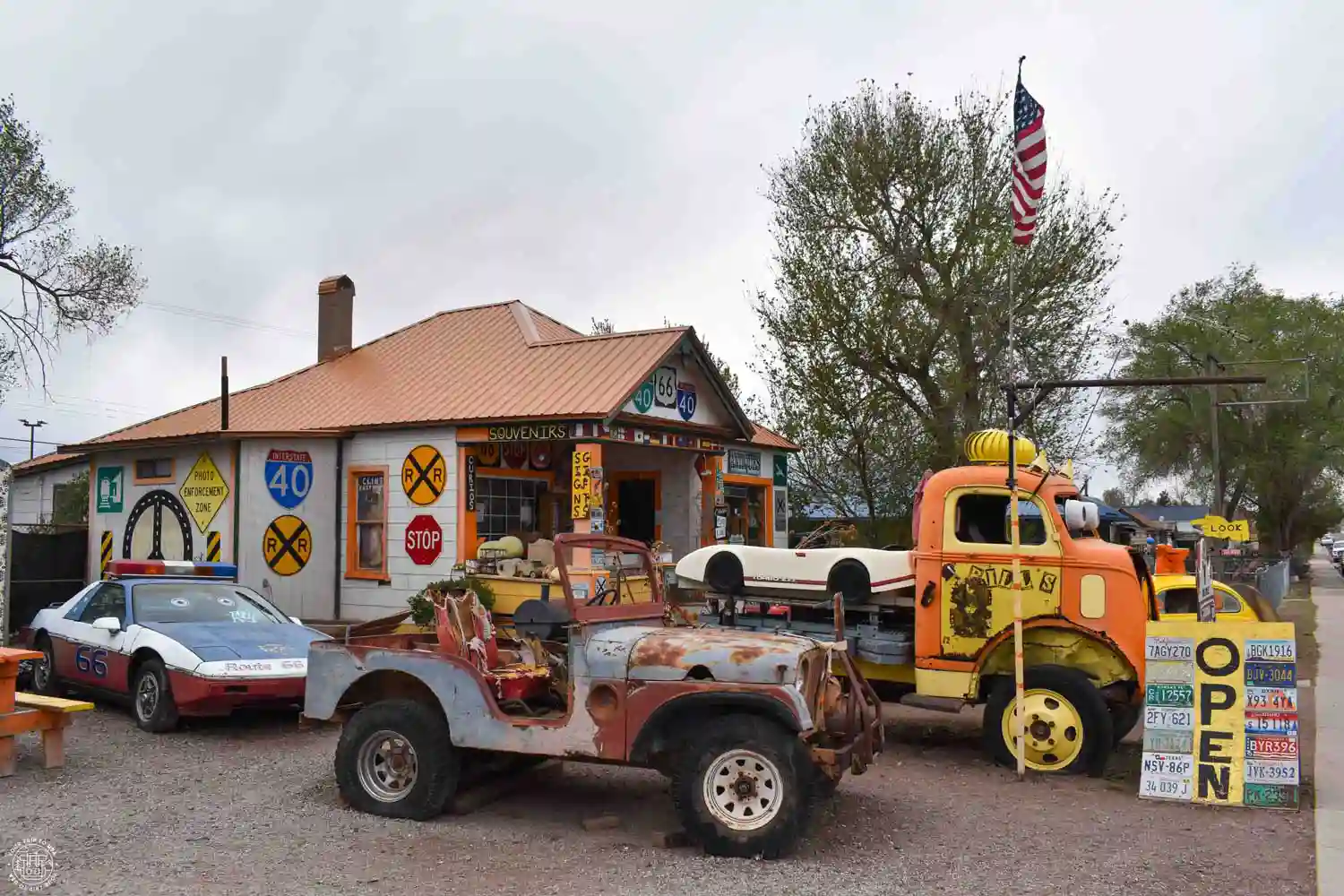
If you have time, definitely take a detour along Historic Route 66, even if it means driving a few extra miles. That way, you can stop in historic Route 66 towns in Arizona like Kingman, Seligman, or Williams—one of the most common entry points to the park. This way, you can spend a full day on the road, turning the trip into an experience in itself.
Grand Canyon organized tours from Las Vegas
There are also tours to Grand Canyon from Las Vegas, in case you don't have a car or would prefer to go with a guide and not have to worry about a thing. Most of them focus on the West Rim because it's the closest area to the city, but there are also some that go to the South Rim. Here are a few examples:
- Grand Canyon West + Hoover Dam Tour from Las Vegas: very comprehensive option to visit the West Rim (with the option to add the Skywalk or not) and Hoover Dam, which is along the way. Includes transportation, admission tickets, and 2 meals. ➡️ Book it here.
- Grand Canyon South Rim Tour from Las Vegas: a good option if you don't mind spending a few more hours on the road and visiting the national park. Includes transportation, lunch, and 3 hours of free time. ➡️ Book it here.
Grand Canyon helicopter tours from Las Vegas
Another option is to book a helicopter (or a small plane) tour from Las Vegas, in this case there are also several tours to choose from, but all of them involve flying over the West Rim. Don't miss our post on the best Grand Canyon helicopter tours, where you'll find all the information about this activity, but from Las Vegas you can choose between these options:
- Grand Canyon Helicopter Landing Tour: with this option, you’ll fly over Lake Mead, Hoover Dam, and the West Rim of the Grand Canyon, landing for 30 minutes at the bottom of the canyon next to the Colorado River (where food and champagne are served). ➡️ Book it here.
- Grand Canyon Helicopter Tour: a 90-minute flight that doesn't land at the bottom of the canyon, but includes views of the Strip, Lake Mead, Hoover Dam, and Grand Canyon West. The heliport is located next to Las Vegas Strip. ➡️ Book it here.
- Grand Canyon Helicopter Tour + Skywalk: this option combines a scenic flight with a landing near the Skywalk, so you can visit the glass walkway. The departure heliport is located next to Las Vegas Strip. ➡️ Book it here.
- Light Airplane Tour over Grand Canyon: light airplane tours are a more affordable alternative to helicopter tours, since they can carry more passengers. This particular flight lasts 70 minutes and takes you over Lake Mead, Hoover Dam, and Grand Canyon West. ➡️ Book it here.
How to get to the Grand Canyon from Williams
- Distance: 85 km (53 mi)
- Driving time: 1 hour
- Recommended route: Williams → South Entrance
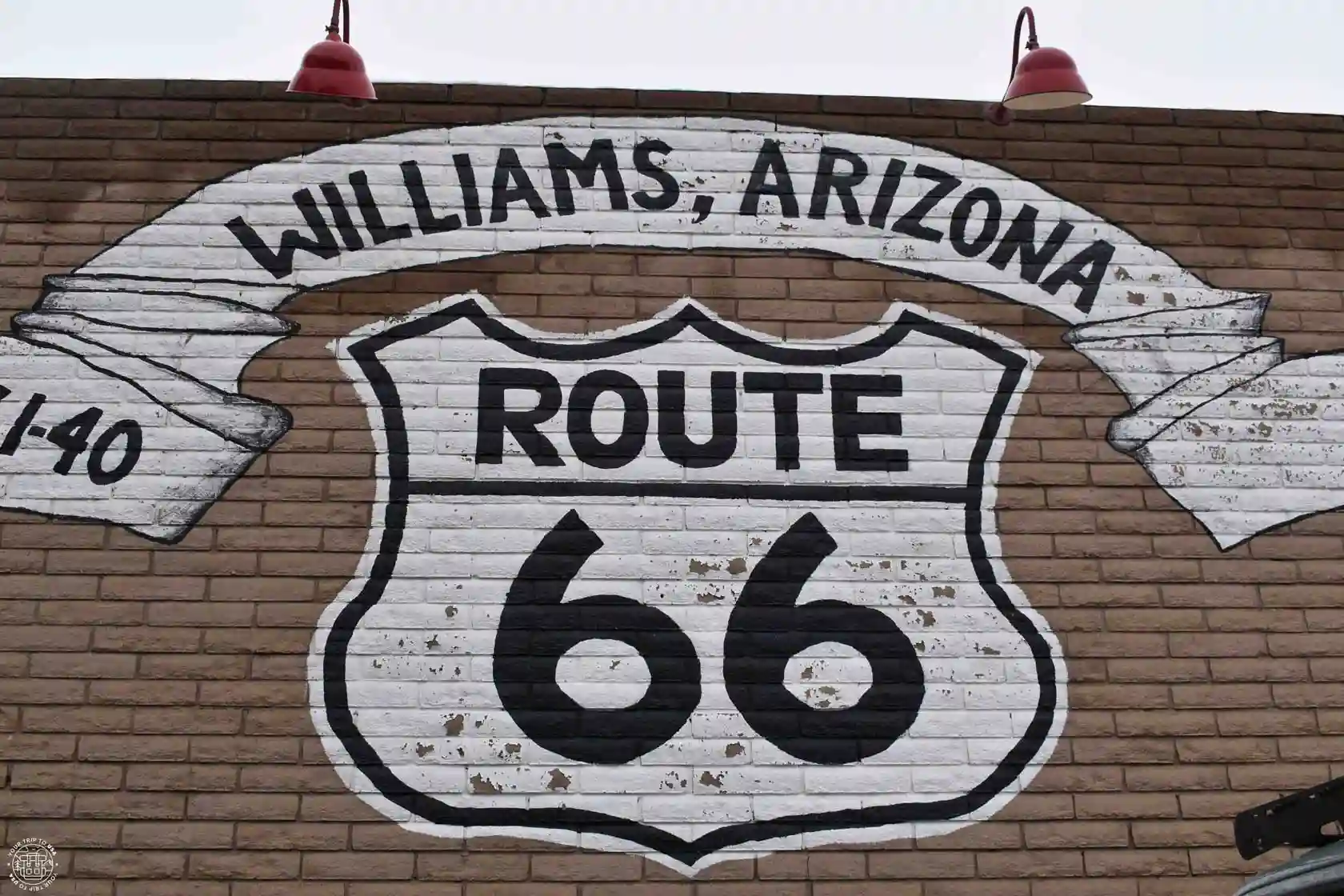
Williams is considered the main gateway to the South Rim, as well as one of the best places to stay when visiting the Grand Canyon. Located on historic Route 66, it's just 1 hour from the park and offers a wide range of hotels, restaurants, and services.
From Williams, just take AZ-64 North and then merge onto US-180, passing through Tusayan and entering the park via the south entrance. It's a straight shot, so you can't miss it!
Williams is also popular because it's the starting point for the famous Grand Canyon Railway, a historic train that runs to Grand Canyon Village, making the trip a magical experience.
💡Recommended: Best things to do in Williams | + Map & Travel tips |
How to get to the Grand Canyon from Page
- Distance: 185 km (115 mi)
- Driving time: 2 hours
- Recommended route: Page → Cameron → East Entrance (Desert View Drive)
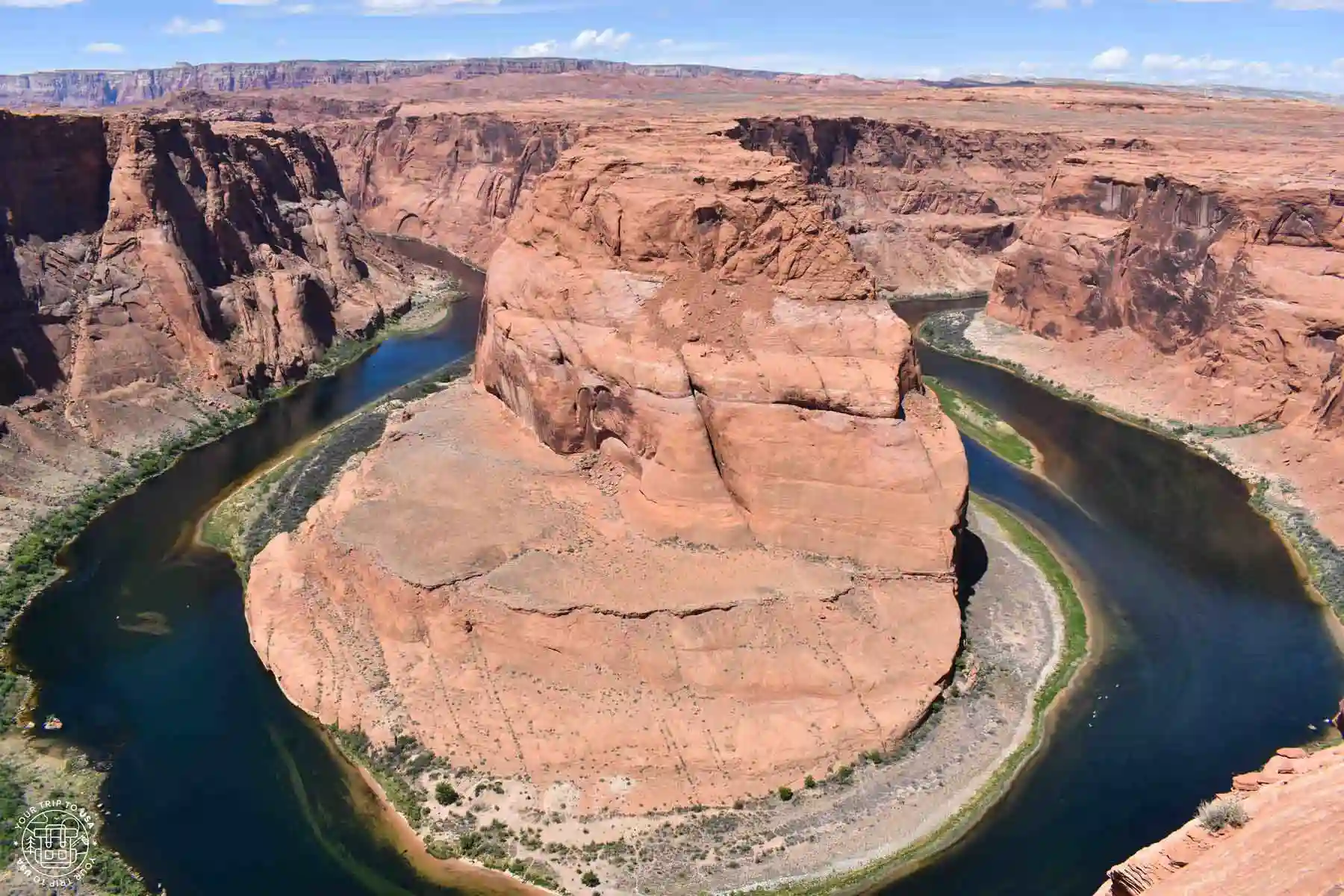
Page is one of the most common stops on any U.S. Southwest trip, thanks to popular attractions such as Horseshoe Bend and Antelope Canyon. From here, getting to the South Rim of the Grand Canyon is relatively easy and takes about 2 hours.
The most direct route follows US-89 south to Cameron, where it connects with Desert View Drive, one of the park’s most spectacular scenic roads. This option has the advantage of allowing you to enter the Grand Canyon through the east entrance, passing by some of the most impressive overlooks right from the start.
If you're coming from Monument Valley or are on a loop tour through Arizona and Utah, this is usually one of the best ways to get to the park.
How to get to the Grand Canyon from Flagstaff
- Distance: 120 km (75 mi)
- Driving time: 1 hr 30 min
- Recommended route: Flagstaff → US-180 → South Entrance
Flagstaff is one of Arizona's major cities. In addition to being a stop on Route 66, it has its own airport and is close to other tourist attractions such as Sedona, Monument Valley, and Page. From here, it’s very easy to reach the South Rim by following US-180 and entering through the south entrance, although you can take a longer route and enter through the east entrance.
How to get to the Grand Canyon from Phoenix
- Distance: 360 km (224 mi)
- Driving time: 3 hrs 30 min
- Recommended route: Phoenix → Flagstaff → US-180 → South Rim
Thanks to its international airport, Phoenix is often the point of entry for many travelers, even though it's quite a distance from the Grand Canyon. The most direct route follows I-17 north to Flagstaff, where it connects with US-180 to the park’s south entrance.
If you have time, you can make the most of the trip and stop in Sedona, where you can easily spend 1 to 2 days enjoying its hiking trails and rock formations.

INTERNET IN THE UNITED STATES
💡 The most convenient way to get internet access in the U.S. is to buy an eSIM—that way, you'll have a connection as soon as you set foot in the country. Plus, local SIM cards in the U.S. are pretty expensive.
💸 We have 2 discounts for your unlimited data eSIM for the US:
⭐5% OFF with Holafly ➡️ Excellent coverage
⭐20% OFF with eSIMFlag ➡️ Best price
🤓 Take a loot at: Best SIMs & eSIMs for traveling to the USA
How much is the admission fee to Grand Canyon National Park
The standard entrance fee for Grand Canyon National Park varies depending on your mode of transportation:
- Cars, RVs , and vans with up to 15 seats: $35 per vehicle. This fee covers all passengers traveling in the vehicle. If you are a nonresident, you must pay an additional $100 per person.
- Motorcycle: $30; covers 2 motorcycles and up to 4 passengers.
- On foot or by bike: $20 per person.
💡Recommended: Tips for traveling along the U.S. Southwest
This ticket grants you access to Grand Canyon for 7 consecutive days, and you must pay by card at any of the 3 entrances, as this national park is cashless. For this reason, we recommend that you bring one of the best cards for traveling to the United States to avoid fees.
 NO FEES CARD FOR THE UNITED STATES
In the U.S., you'll pay for almost everything by card. If you use one from your regular bank, you'll get hit with a ton of currency conversion fees.
💡 That's why we recommend to get the Wise card. There's no maintenance fee, and you can:
💸 Withdraw $250/month in any currency with no fees
💳 Do payments in any currency with no extra fees
There are also a number of passes that already include admission to Grand Canyon National Park; if you have any of them, you won't have to pay anything extra:
- Annual Entrance Pass: $70, which grants you unlimited admission to the park for 12 months. Available only to U.S. citizens and residents.
- America the Beautiful Pass: $80, granting you access to all U.S. national parks and other natural areas for 12 months. Available only to U.S. citizens and residents.
- America the Beautiful Non-Residents: $250, granting you access to all U.S. national parks and other natural areas for 12 months. For non-residents only.
⚠️ Grand Canyon National Park is on the list of national parks where visitors must pay an additional $100 per person on top of the admission fee if they don't have the America the Beautiful Non-Residents Pass.
Skywalk, the Grand Canyon glass walkway: is it worth it?
Although the South Rim is usually the preferred choice for a first visit to the Grand Canyon, many travelers consider visiting the West Rim mainly because of the Skywalk. Whether or not it’s worth it will depend on the kind of experience you’re looking for, so we’ll explain everything you need to know to make your decision.
What is the Skywalk?
The Skywalk is a horseshoe-shaped glass walkway located 1,220 meters (4,000 ft) above the bottom of the Grand Canyon and extending 21 meters (70 feet) over the rim, making it appear as if it were suspended in midair.
This structure is located on the West Rim, an area owned by the Hualapai Nation that is not part of the national park. You cannot drive there in a private vehicle; instead, you must leave your car in the designated parking lot and take the shuttle service included with your admission ticket from there.
How much is admission to the Skywalk?
Unlike the South Rim and the North Rim, where you pay an entrance fee to the national park, access to the West Rim is granted through various passes:
- General admission: $67 per person. Includes trails, exhibits, and indigenous dances, but access to the Skywalk is NOT included.
- All-Access Pass: $99 per person. Includes everything listed above, plus the Skywalk, zip line, shuttle service, and the Eagle Point, Guano Point, and Hualapai Point overlooks.
- Sunset Pass: $59 per person. Includes admission starting at 3:00 p.m., with access to the Skywalk, Eagle Point, Guano Point, and the shuttle.
⚠️ The America the Beautiful Annual Pass is not valid at Grand Canyon West neither the Skywalk
Pros and Cons of the Skywalk (Grand Canyon West) vs. South Rim
✅ Pros of the Skywalk
- It's the closest area to Las Vegas, so it's ideal if you're in the Sin City and don't have time to go all the way to the national park.
- It allows you to take a same-day round-trip tour, which you can even combine with a visit to the Hoover Dam. ➡️ Book this tour to Grand Canyon West + Hoover Dam from Las Vegas.
- It offers the unique experience of walking on a glass platform suspended over the canyon.
- The all-inclusive pass includes activities such as zip-lining and hiking trails.
- It takes less time than a visit to the South Rim.
❌ Cons of the Skywalk
- It isn't part of the Grand Canyon National Park.
- The views are less expansive and spectacular than those from the South Rim.
- The experience is considerably more expensive than in the national park.
- Cameras and cell phones are not allowed on the walkway (due to the risk of objects falling into the canyon). Therefore, if you want photos, you must hire a photographer there at an additional cost.
- It's an area heavily focused on tourism and commercial activities.
Is the Skywalk worth it?
If you're looking to take in the most breathtaking views of the Grand Canyon, the South Rim is still your best bet. Here you'll find the most famous overlooks, the widest panoramic views, and the classic experience.
In contrast, the West Rim stands out for its “proximity” to Las Vegas and for offering an experience more focused on commercial activities. Its main attraction, the Skywalk, while spectacular, may not on its own make up for the more limited views and the high admission price.
In our opinion, if you have enough time, the South Rim is the best option for a first visit to the Grand Canyon. The West Rim may be a good choice for those who are short on time, want to take a quick trip from Las Vegas, have already been to the South Rim, or want to experience walking on the famous glass bridge.
How to get around the Grand Canyon National Park
Transportation on the South Rim
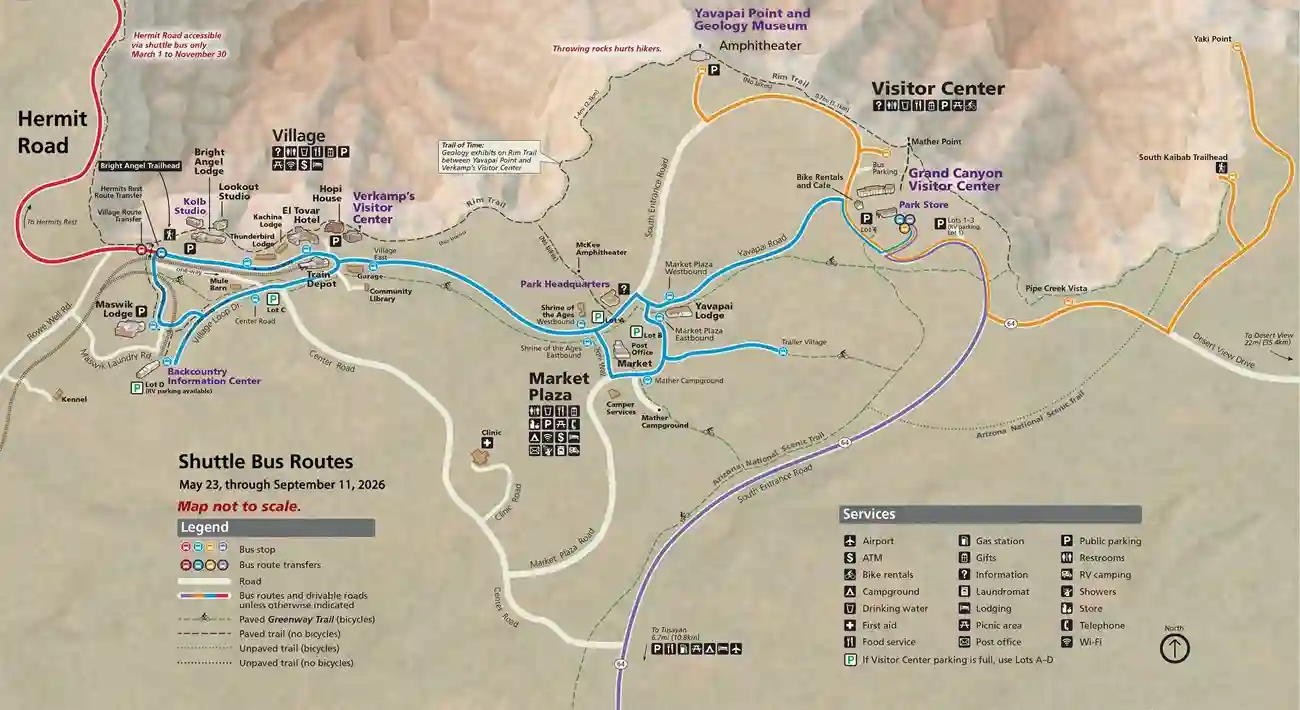
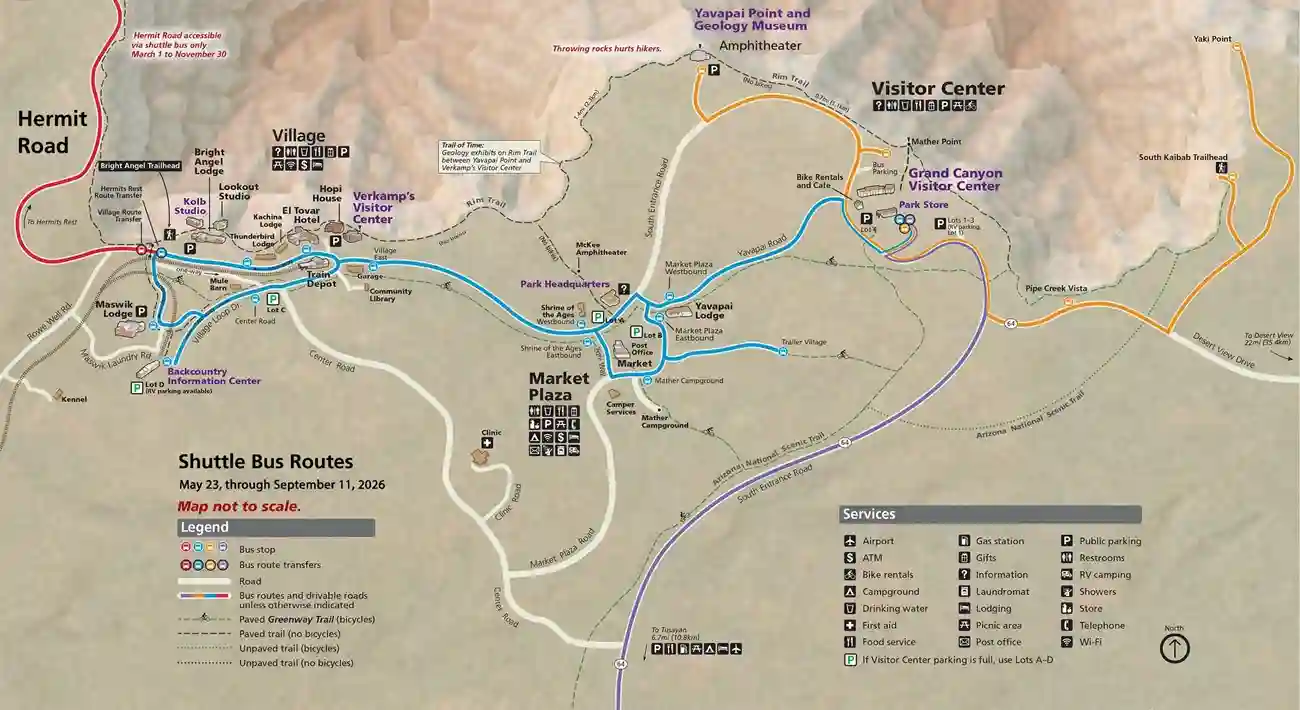
Grand Canyon South Rim has several free shuttle routes that operate from mid-May through mid-September (always check the official website for exact dates).
They are designed so that during the peak tourist season, you can leave your car parked in one of the parking lots at Grand Canyon Village and get around the park all day without having to drive, avoiding traffic jams and the hassle of finding parking in certain areas.
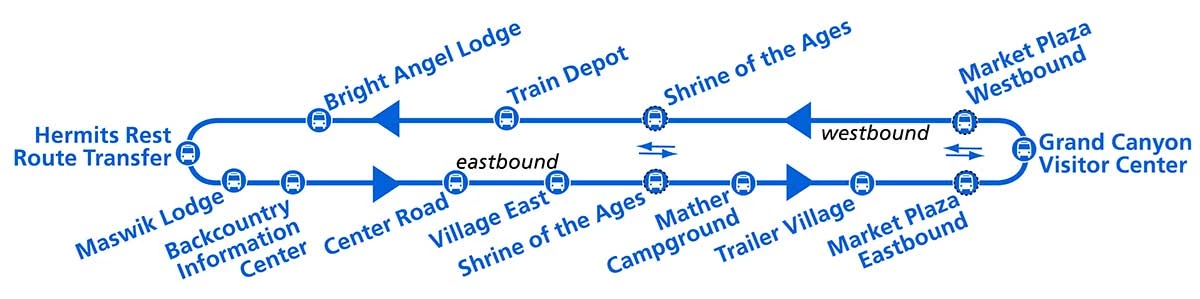
🔵 Village Route (Blue)
The blue line operates in the Grand Canyon Village area from 6:30 a.m. to 9:30 p.m., running every 10 to 15 minutes. It connects the Visitor Center bus terminal with several lodges, campgrounds, the Backcountry Information Center, historic buildings, and Market Plaza (where the supermarket and post office are located).
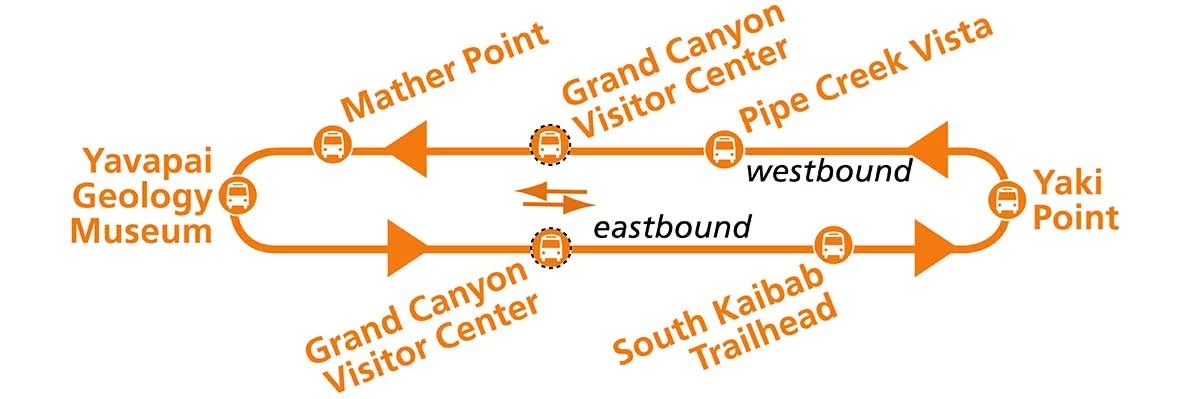
🟠 Kaibab Route (Orange)
The Orange Line operates from 5:00 a.m. until 1 hour after sunset, with buses running every 12 to 15 minutes. It connects the Visitor Center bus station in Grand Canyon Village with the South Kaibab Trailhead, Yaki Point, Pipe Creek Overlook, Mather Point, and the Yavapai Geology Museum. Please note that this line runs in two directions: eastbound and westbound.
The road to the South Kaibab Trailhead and Yaki Point is closed to private vehicles, so the only ways to get to either of these locations are by taking this bus, on foot, or by bike.
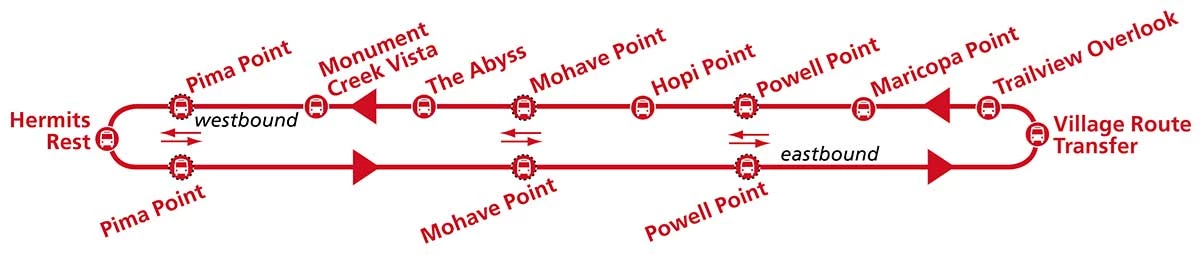
🔴 Hermits Rest Route (Red)
This line travels the 11 km (7 mi) of the scenic Hermit Road stopping at its overlooks, from 5:00 a.m. until 1 hour after sunset, with buses running every 8 to 15 minutes. This road is closed to private vehicles from March 1 through November 30, so during this period you can only access by this shuttle, on foot, by bicycle, or through a commercial tour. From December to February you can access with your private vehicle.
Hikers' Express
This route is designed for people who want to start the South Kaibab Trail early. It departs from Bright Angel Lodge daily at 4:00 a.m., 5:00 a.m., and 6:00 a.m., stopping at the Backcountry Information Center, the Visitor Center bus station, and the South Kaibab Trailhead. This is a one-way route only, so it doesn't bring hikers back. Remember that the orange line also stops at the trailhead for this hike.
🟣 Tusayan Route (Purple)
This shuttle connects the town of Tusayan with the Grand Canyon Village Visitor Center, so that guests staying here don't have to drive. You can even leave your car parked in Tusayan and use this service if you don’t want to wait in line at the park entrance checkpoints. It runs from 8:00 a.m. to 9:00 p.m., with buses every 45 minutes.
Transportation on the North Rim
The north side of the Grand Canyon doesn't have a free shuttle service like the south. Until 2025, the Grand Canyon Lodge Hiker Shuttle operated, connecting this lodge to the trailhead of the North Kaibab Trail. Following a major fire, the service is currently not operating, and visitors must walk the 2.6 km to the trailhead.
When is the best time to visit the Grand Canyon
Grand Canyon can be visited year-round, but the experience can vary greatly depending on the season. The best months to visit the Grand Canyon will depend on the area you want to explore, the weather you’re hoping for, the type of scenery you want to see, and whether or not you want to avoid the busiest times of the year.
In addition, the weather in the Grand Canyon varies greatly depending on where you are, since the elevation ranges from 760 to 2,440 meters (2,494 to 8,005 ft), resulting in significant differences between the highest and lowest areas.
Here is a summary table showing the average temperatures for each month of the year in each area of the canyon:
| AVERAGE TEMPERATURE IN THE GRAND CANYON | |||
|---|---|---|---|
| SOUTH RIM | NORTH RIM | INNER CANYON | |
| January | Low: -8°C/18ºF High: 5°C/41ºF | Low: -9ºC/16ºF High: 3ºC/37ºF | Low: 2°C/36ºF High: 13°C/56ºF |
| February | Low: -6ºC/21ºF High: 7ºC/45ºF | Low: -8°C/18ºF High: 4°C/39ºF | Low: 6ºC/42ºF High: 17ºC/62ºF |
| March | Low: -4°C/25ºF High: 10°C/51ºF | Low: -6ºC/21ºF High: 7ºC/44ºF | Low: 9°C/48ºF High: 22°C/71ºF |
| April | Low: 0°C/32ºF High: 15°C/60ºF | Low: -2°C/29ºF High: 12°C/53ºF | Low: 13°C/56ºF High: 28°C/82ºF |
| May | Low: 4°C/39ºF High: 21°C/70ºF | Low: 1ºC/34ºF High: 17ºC/62ºF | Low: 17ºC/63ºF High: 33ºC/92ºF |
| June | Low: 8ºC/47F High: 27ºC/81F | Low: 4°C/40F High: 23°C/73F | Low: 22°C/72F High: 38°C/101F |
| July | Low: 12°C/54ºF High: 29°C/84ºF | Low: 8°C/46ºF High: 25°C/77ºF | Low: 26ºC/78ºF High: 41ºC/106ºF |
| August | Low: 12°C/53ºF High: 28°C/82ºF | Low: 7°C/45ºF High: 24°C/75ºF | Low: 24°C/75ºF High: 39°C/103ºF |
| September | Low: 8°C/47ºF High: 24°C/76ºF | Low: 4°C/39ºF High: 21°C/69ºF | Low: 21°C/69ºF High: 36°C/97ºF |
| October | Low: 2°C/36ºF High: 18°C/65ºF | Low: -1°C/31ºF High: 15°C/59ºF | Low: 14ºC/58ºF High: 29ºC/84ºF |
| November | Low: -3ºC/27ºF High: 11ºC/52ºF | Low: -4ºC/24ºF High: 8ºC/46ºF | Low: 8°C/46ºF High: 20°C/68ºF |
| December | Low: -7°C/20ºF High: 6°C/53ºF | Low: -7°C/20ºF High: 4°C/40ºF | Low: 2ºC/37ºF High: 14ºC/57ºF |
🌸Grand Canyon in spring (March through May)
Spring is one of the best times to visit the Grand Canyon. Winter begins to fade in mid-April, and warmer, more pleasant temperatures start to set in along the rim of the canyon. However, during this time, nighttime temperatures at the rim can still drop below freezing, and there’s still a chance of snowfall. Spring is also typically a windy season, with gusts that can exceed 18 km/h (12 mph) and there’s usually little precipitation.
As for the number of tourists, it's best to avoid Spring Break, which usually takes place between late February and early April (dates vary by school and university). Outside of this period, there aren't as many tourists.
☀️Grand Canyon in summer (June through August)
Summer is the most popular season and the time when the park receives the most visitors, as it coincides with school vacations. The days are long and all services are operating at full capacity, but this is also when you’ll find the biggest crowds at the overlooks and accommodations.
Temperatures at the rim of the canyon are usually bearable, but at the bottom of the canyon they can exceed 40°C (104ºF). For this reason, it isn't the ideal season for hiking, especially on trails that descend to the river’s edge.
Summer is the monsoon season, with days that start out clear but become cloudy by mid-morning, sometimes bringing rains that can be torrential and significantly increase the river’s flow. Thunderstorms are also common and can cause fires.
If you're planning to visit the Grand Canyon in the summer, we recommend booking your accommodations well in advance.
🍂Grand Canyon in fall (September through November)
Fall is another of the best times of year to visit the Grand Canyon, with mild temperatures along the rim and more bearable temperatures at the bottom of the canyon. The summer rains begin to subside, making fall a drier season, although thunderstorms at the beginning of the season and possible snowfall toward the end cannot be ruled out.
In addition, the number of tourists drops significantly, making September and October the perfect time to enjoy pleasant weather, fewer crowds, and ideal conditions for hiking.
❄️Grand Canyon in winter (December through February)
Winter completely transforms the landscape of the Grand Canyon. Although temperatures are low and snowfall is relatively frequent, the combination of snow and red rock creates some of the park’s most spectacular scenery. What’s more, this is the season with the fewest visitors, so you can enjoy the overlooks in much greater peace and quiet and drive your own vehicle along Hermit Road—something that’s impossible at other times of the year.
Keep in mind that North Rim is closed during the winter due to snowfall, so at this time of year you’ll have to focus on South Rim. However, be prepared for possible road closures and snow-covered trails.
💡If you're looking for the best combination of weather, scenery, and visitor numbers, April, May, September, and October are usually the best months to visit.
How many days should you spend at the Grand Canyon
The amount of time you'll need to visit the Grand Canyon depends on your interests and the route you're taking through the Southwest of the United States. Although we recommend spending at least one day there, we'll give you some suggestions if you have less or more time:
Grand Canyon in half a day
If you're short on time, it's best to visit the best viewpoints on the South Rim in just a few hours. This is a common choice for those on a very tight itinerary, but while you'll get a first impression of the park, you'll likely feel that the visit is too short.
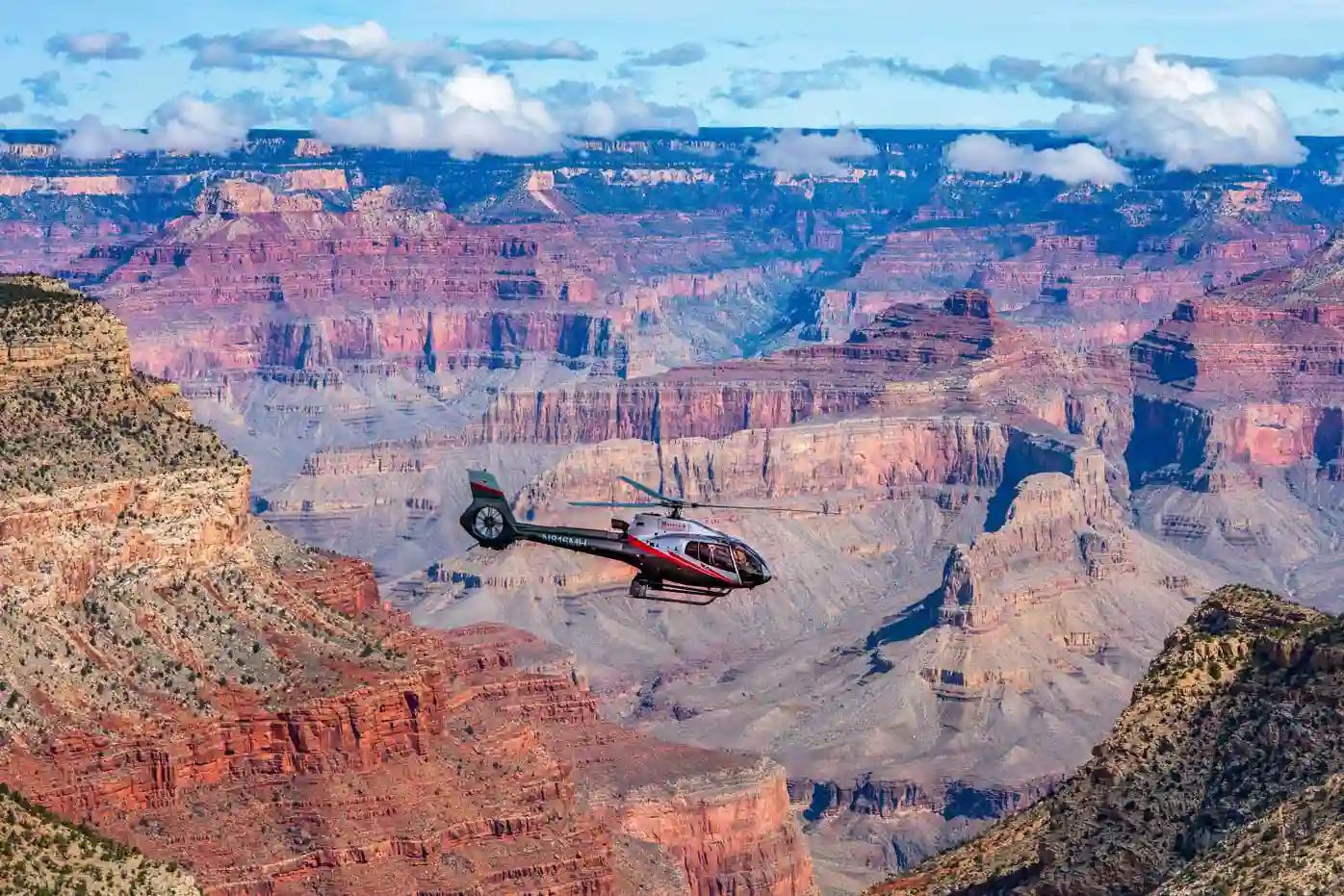
Another option is to simply enjoy the panoramic views from above by booking a Grand Canyon helicopter tour, which departs from Tusayan Airport.
Grand Canyon in 1 day
We recommend spending at least a full day on the South Rim. You can visit several overlooks, hike some of the most accessible trails, visit the visitor center, and enjoy the sunrise and/or sunset. ➡️ Check out our post on best things to do in Grand Canyon for lots of information.
💡 Another option would be to combine a helicopter flight over the Grand Canyon with visits to the best viewpoints on the South Rim, for a truly comprehensive experience.
Grand Canyon in 2 days
If you have two days to visit the Grand Canyon, you can spend both of them at the South Rim and take your time, combining hikes, scenic overlooks, and a helicopter tour, with the chance to see both sunrise and sunset. You can even venture down to the banks of the Colorado River, if the heat isn’t too stifling yet, although this option is best if you’re planning to spend the night at the bottom of the canyon.
Another option would be to visit the South Rim and the North Rim. You can spend the first day at the South Rim, which has the most tourist attractions, and on the second day you can go to the North Rim (a 4-hour drive) and enjoy its viewpoints in the afternoon.
Where to stay in the Grand Canyon
No matter how much time you plan to spend at the Grand Canyon, you’ll most likely need to stay here. In our post on where to stay in the Grand Canyon, we go into great detail about all the options available to you—both inside and outside the park—so you can choose based on your budget and how close you want to be to this natural wonder.
🏨 In summary, Grand Canyon Village is the place to stay if you want to be inside the park; it’s home to several historic lodges, such as El Tovar Hotel and Bright Angel Lodge. Just a few minutes from the park entrance is Tusayan, a town that has grown due to its proximity to the Grand Canyon and offers good accommodations such as The Grand Hotel and The Squire.
If you don't mind traveling a bit farther, Williams offers great value for the money and is also a charming town nestled along Route 66. The Red Garter Inn and El Rancho Motel are just a few of the many places to stay here.
Best things to do in Grand Canyon National Park
Breathtaking viewpoints, hiking trails, helicopter tours, water activities on the Colorado River... The Grand Canyon offers plenty of plans, so in this post covering the best things to do in Grand Canyon National Park, you'll find all the information you're looking for.

HELICOPTER TOUR
-Starting location: Grand Canyon National Park Airport (Tusayan)
-Duration: 30 min
If you want to get right to the point, here are our best recommendations at the South Rim:
Best views of the Grand Canyon
Here are the viewpoints you can't miss on the South Rim of the Grand Canyon:
- In Grand Canyon Village: Mather Point and Yavapai Point (perfect for both sunrise and sunset).
- In Desert View Drive: Yaki Point (sunrise), Shoshone Point (sunset), Desert View Watchtower and Navajo Point.
- In Hermit Road: Hopi Point (sunset), Mohave Point and Pima Point.
- Inner Canyon (the area between the rim and the bottom of the canyon): Ooh Aah Point.
Best hike in Grand Canyon National Park
If we could only choose one hike on the South Rim of the Grand Canyon, it would definitely be the South Kaibab Trail. Although it goes all the way down to the bottom of the canyon, you don’t have to complete the entire hike to enjoy some breathtaking views. Go as far as Ooh Aah Point and Cedar Ridge, and if you want, you can turn back here—you’re going to love it!
👉🏼To learn more about other available trails, check out our section on the best hikes in the Grand Canyon for all the information you need.
Where to eat at the Grand Canyon
If you want to eat inside the national park, the best place to do so is in Grand Canyon Village, at the restaurants located within the various lodgings:
- Yavapai Lodge (Market Plaza): features the Yavapai Dining Hall (for breakfast and dinner), the Yavapai Cafe (for coffee and snacks), and the Yavapai Lodge Tavern (for lunch and dinner).
- El Tovar Hotel (Historic District): features El Tovar Dining Room (which overlooks the canyon and serves breakfast, lunch, and dinner) and El Tovar Lounge (for drinks and light meals).
- Bright Angel Lodge (Historic District): features the Arizona Steakhouse, the Fred Harvey Burger, the Bright Angel Fountain, and the Fred Harvey Tavern (the latter two serve drinks and light meals).
- Maswik Lodge (Historic District): features the Maswik Food Court and Pizza Hub, open all day.
If you want to eat outside the park, the nearest town is Tusayan. Here you'll find everything from chain restaurants to more authentic options, such as:
- 🍕 We Cook Pizza and Pasta: open since 1981 and specialized in pizza and pasta.
- 🍔 Drigo's Restaurant: a mix of Mexican and American cuisine.
- 🍝 Big E Spaghetti Western: Italian food with a Western atmosphere.
- 🌮 Plaza Bonita Restaurant: Mexican food.
A little further away is Williams, a charming town with plenty of dining options. We'll tell you about the best restaurants in Williams here.
Tips for visiting the Grand Canyon for the first time
- ⛽ Fill up your gas tank before entering the Grand Canyon National Park. There are gas stations in Desert View and Tusayan, but the prices are higher there. There are also several in Williams. We always use the GasBuddy app and Google Maps to find the cheapest gas stations.
- 🧴 Don't forget to bring all of these items: sunscreen, sunglasses, a cap or hat, and some warm clothes even if you're going in the summer—especially for the early morning and late evening hours.
- 💸 Grand Canyon National Park is cashless, so all payments are made by card. Check out our post on the best cards for traveling to the United States to avoid currency conversion fees.
- 🛜 Although there is cell service in Grand Canyon Village and other parts of the park, you may lose signal in some areas. Be sure to download maps to your phone and bring everything you need so you don't have to rely on cell service.
- 🔥 Avoid hiking during the hottest part of the day.
- 🥾 If you want to hike down to the bottom of the canyon, keep in mind that it’s not recommended to hike down and back up on the same day. If you do decide to do so, take all necessary precautions (enough food and water, sun protection, etc.).
- 💧 Don't buy bottled water. Bring your own reusable water bottle and fill it up at the park's water fountains—it's free and tastes great!
- 🏨 Book your accommodations well in advance if you're traveling in the summer or during Spring Break, since those are peak seasons. Check out our post on where to stay at the Grand Canyon to choose your hotel.
- 🚌 Use the free bus service when it's running. That way, you'll pollute less, avoid traffic jams, and save yourself the hassle of finding a parking spot.
- 🛣️ Always check the national park's official website for information on possible restrictions and closed trails or roads.
- 🌄If you want to watch the sunrise or sunset from a viewpoint, you can check this page to see the exact times they occur throughout the year. For the sunrise, arrive 30 minutes early and stay for 1 hour. For sunset, arrive 60 minutes early and stay for at least 30 minutes.
- 🌠 The Grand Canyon is one of the best places to gaze at the starry sky. If you're staying overnight in Grand Canyon Village, don't forget to go outside at night if the sky is clear.
- 🐿️ Do not touch or feed the animals—including squirrels—or take any plant species with you. This is strictly prohibited, and fines can be as high as $5,000.
- ⛺ If you want to camp outdoors because you’re going on a hike that requires it, you must obtain a Backcountry Permit. The same if you want to stay in the campground located at the bottom of the canyon. You can get one on the recreation.gov website or app (it’s assigned by lottery), and there’s a fee.
- 🍽️ If you don't bring your own food, there are restaurants and a supermarket in Grand Canyon Village, although prices are high. Snacks are also sold at Hermit's Rest and Desert View.
Map of the Grand Canyon
On this map of the Grand Canyon, you'll be able to see the different areas it's divided into, access points, visitor centers, restaurants, airports, and more. It's all there to help you locate all the spots we've told you about!
FAQs about visiting the Grand Canyon
How far is the Grand Canyon from Las Vegas?
The South Rim of the Grand Canyon, which is the most visited area, is 450 km (280 mi) from Las Vegas, and it takes about 4 hrs and 30 min to get there. Another option is to visit Grand Canyon West, which is not part of the national park and is 205 km (127 mi) from Las Vegas—about a 2-hour drive.
How deep is the Grand Canyon?
The Grand Canyon has an average depth of 1,600 meters (5,250 ft), with its deepest point at 1,857 meters (6,092 ft).
Is it better to visit the South Rim or the West Rim?
The South Rim is part of Grand Canyon National Park and offers the most breathtaking and expansive views of the canyon. The West Rim, managed by the Hualapai Nation, is known for the Skywalk and its proximity to Las Vegas, although its scenery is generally considered less spectacular.
Is it possible to visit the Grand Canyon on a day trip from Las Vegas?
Yes, it's possible to visit the Grand Canyon on a day trip from Las Vegas, especially the West Rim. However, if you want to explore the South Rim and enjoy its main attractions at a leisurely pace, it's a good idea to spend at least one night in the area around the park.
What's the best area to visit the Grand Canyon?
For a first visit, the South Rim is the best option. It’s the most accessible area, features the most famous viewpoints, and is open year-round. The North Rim offers a more peaceful and untamed experience, while the West Rim stands out for being home to the famous Skywalk and for being the closest area to Las Vegas.
How many days does it take to visit the Grand Canyon?
Ideally, you should set aside at least one full day for the South Rim to enjoy its main viewpoints and trails. If you have more time, even better—that way you can go on an additional hike, see some extra viewpoints, or visit other areas.
When is the best time to visit the Grand Canyon?
Spring and fall are usually the best times to visit the Grand Canyon, thanks to their pleasant temperatures and fewer visitors.
What is the best viewpoint at the Grand Canyon?
There are many scenic overlooks worth visiting, but among the most popular are Hopi Point, Mohave Point, Mather Point, and Desert View Watchtower.
Where is the best place to stay when visiting the Grand Canyon?
The best options are to stay inside the national park or in Tusayan, the closest town to the south entrance. If you're looking for more affordable prices or a wider selection of hotels, Williams and Flagstaff are excellent alternatives. We'll tell you more in our post about where to stay at the Grand Canyon.
We hope you found this guide to visiting the Grand Canyon helpful!
Skywalk: Jonas.tesch, CC BY-SA 3.0 https://creativecommons.org/licenses/by-sa/3.0, via Wikimedia Commons