


What is Antelope Canyon
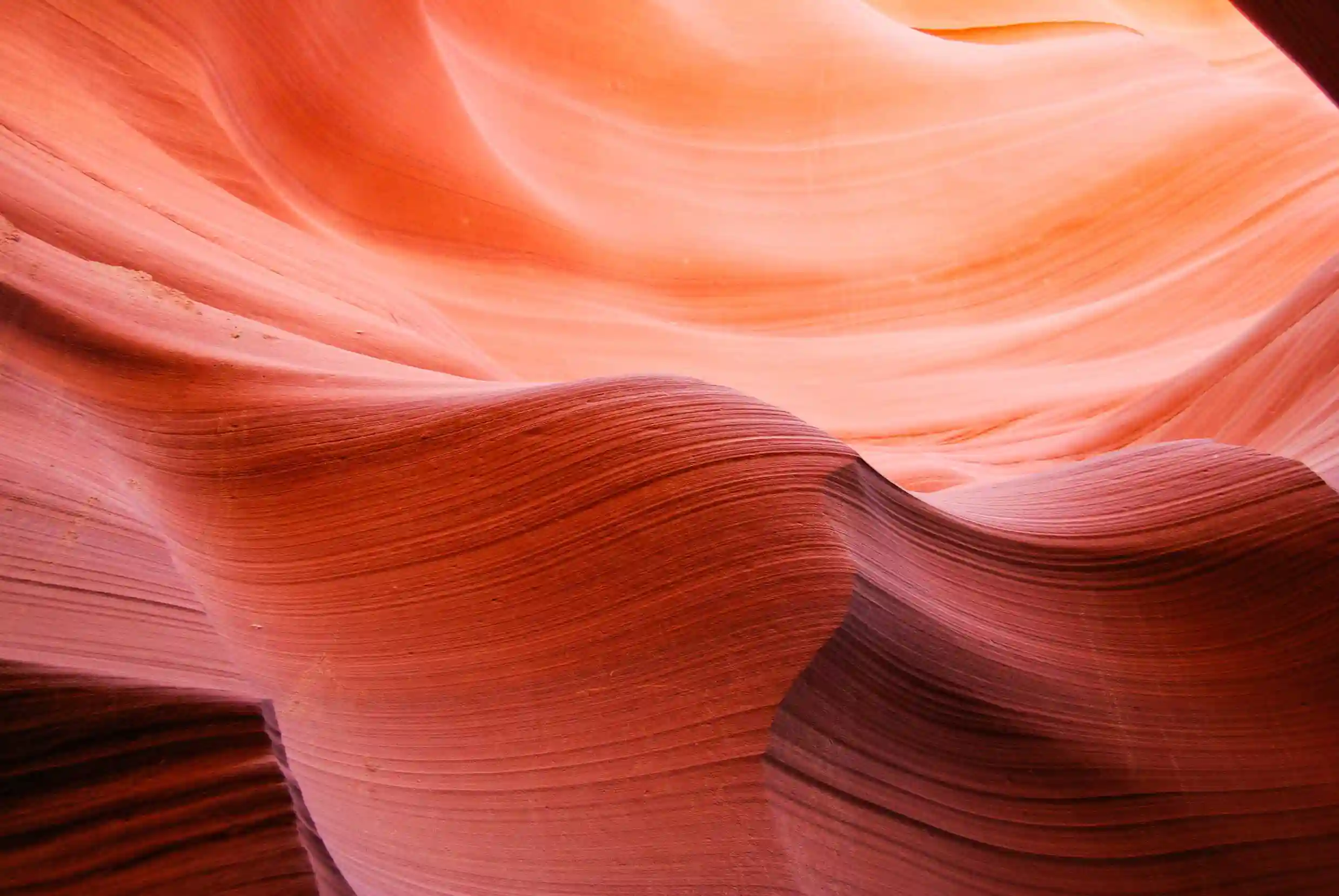
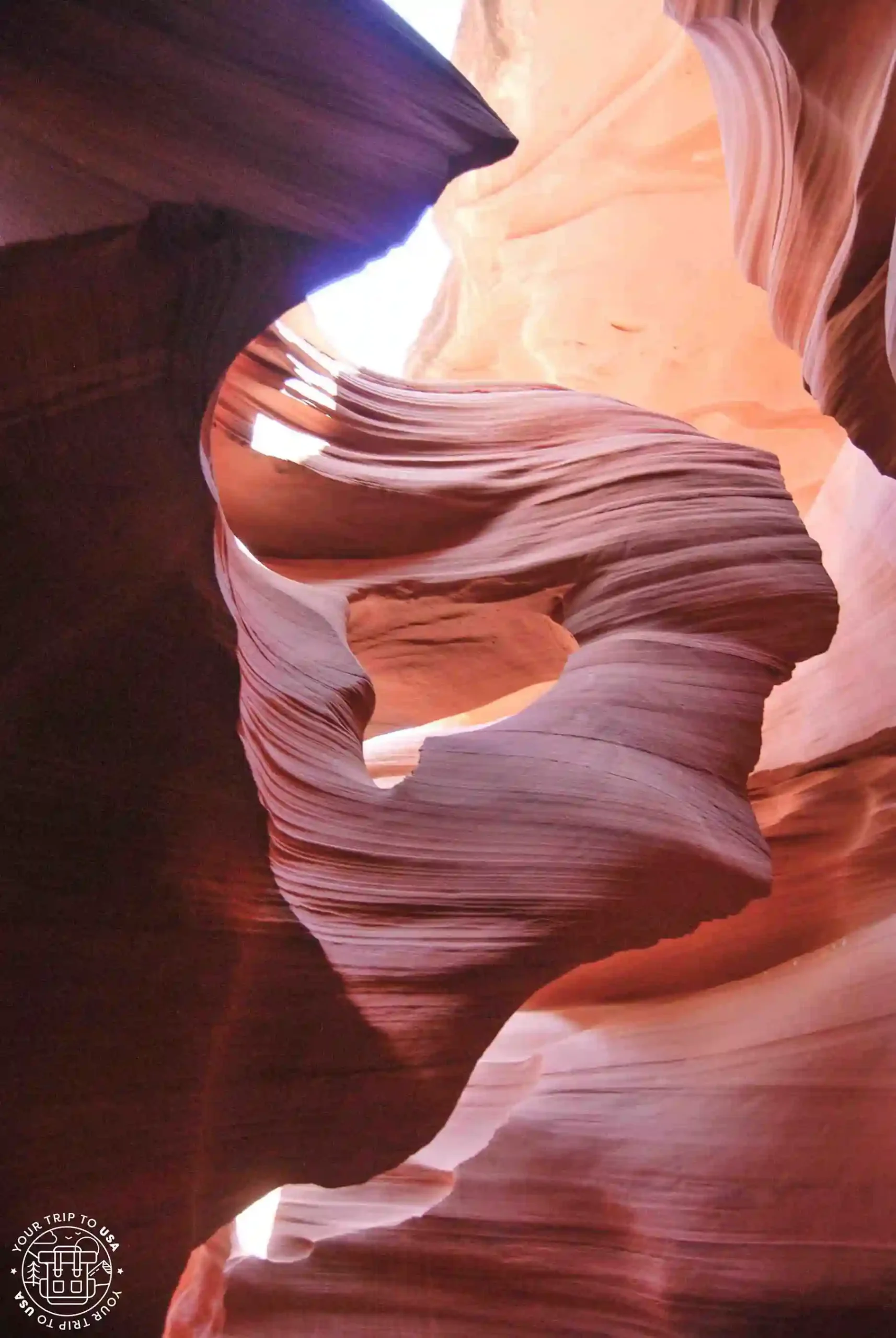
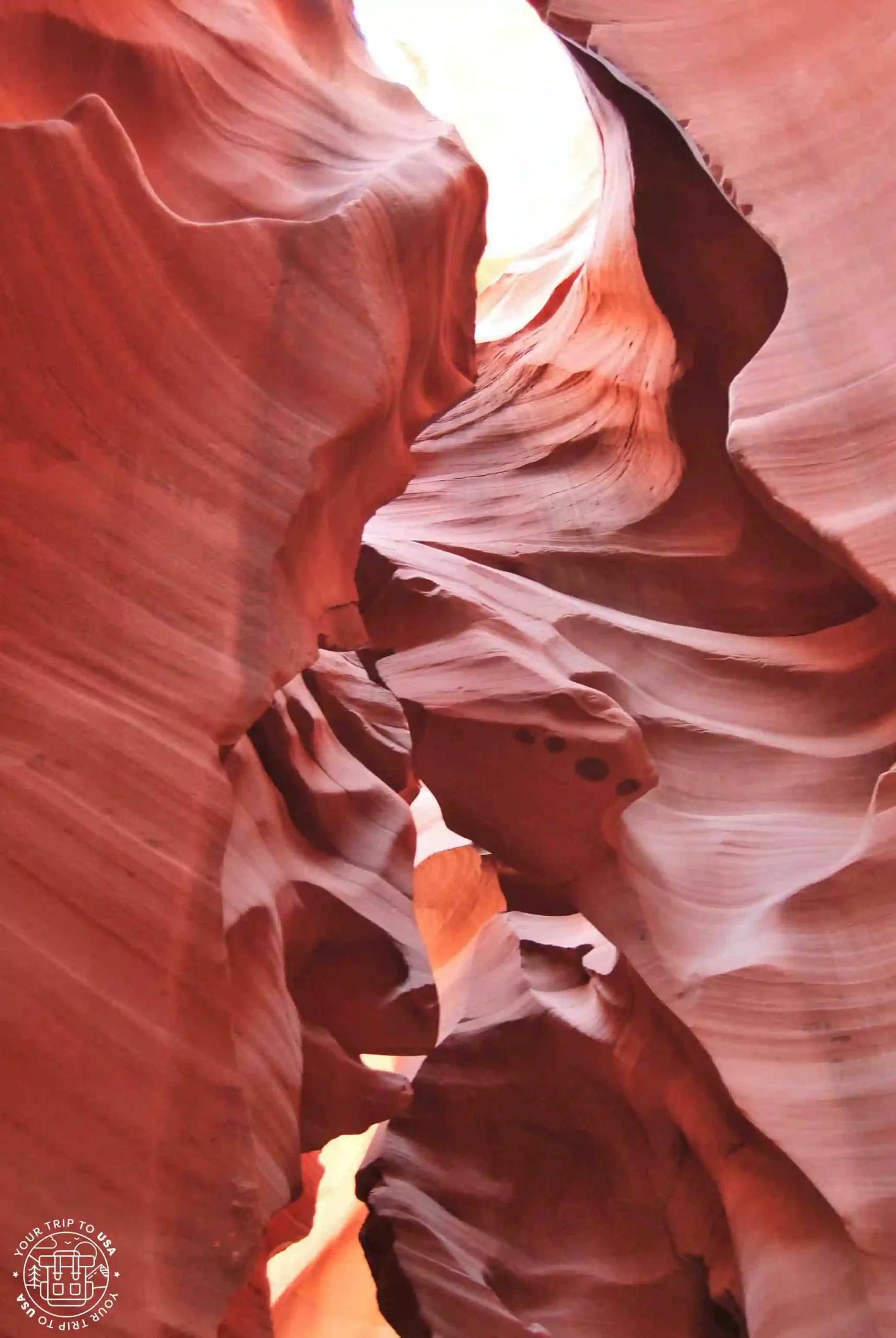
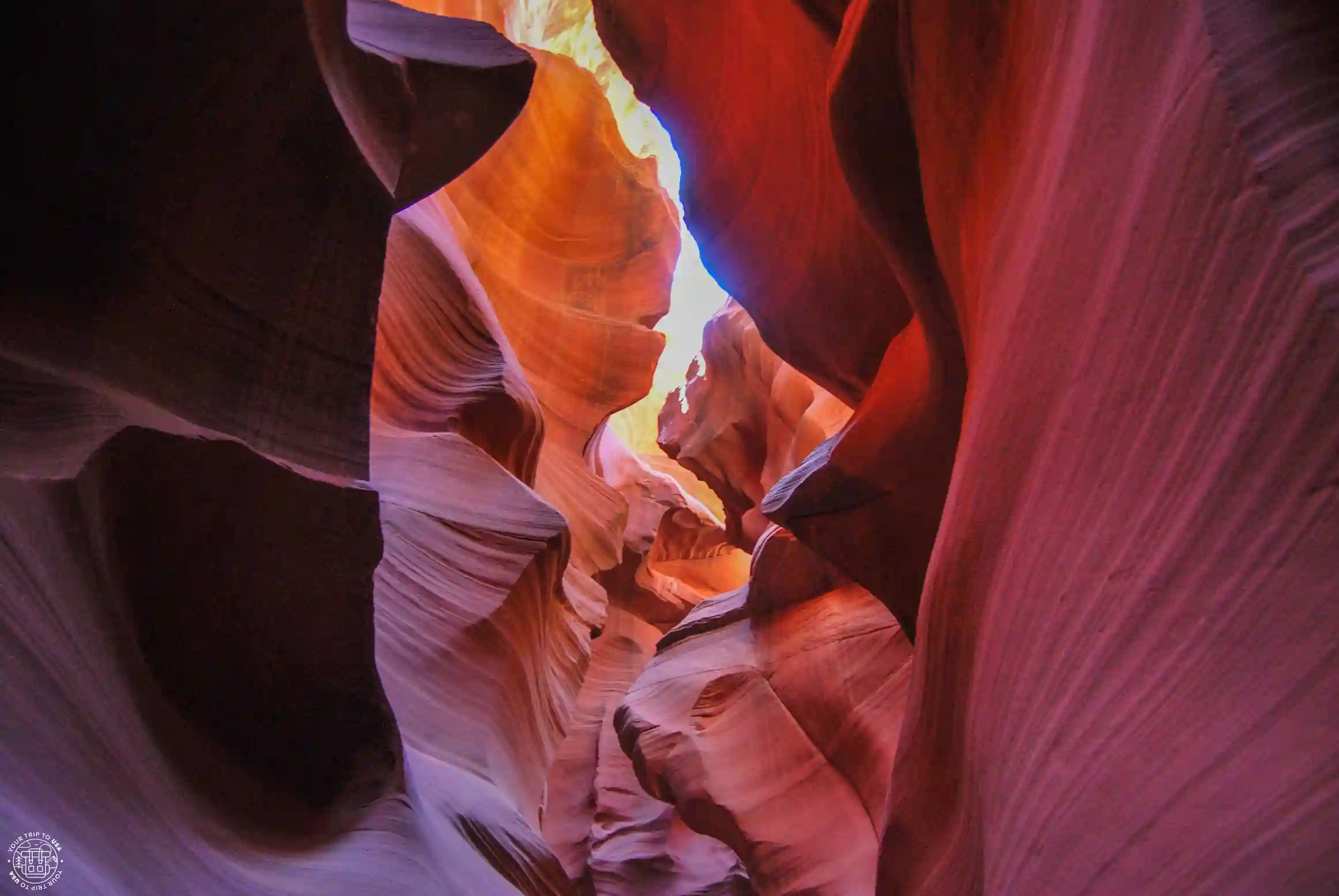
Antelope Canyon is a spectacular slot canyon formed over thousands of years by the erosion caused by torrential rainwater on the sandstone. Unlike other large, open canyons, such as the Grand Canyon of the Colorado, Antelope Canyon is characterized by its narrow passages, its undulating walls up to 40 meters (131 feet) high, and the incredible plays of light created when the sun’s rays penetrate from above.
The Navajo name for Upper Canyon is Tsé bighánílíní, which means “the place where water flows between the rocks”, and the name for Lower Canyon is Hazdistazí, which translates as “spiral rock arches”. However, the popular name—and the one virtually everyone uses—is Antelope Canyon, so named because of the presence of pronghorn herds in the area in the past.
💡 Recommended: 10-Day U.S. Southwest Road Trip | Itinerary + Map |
Antelope Canyon is a living canyon. Every episode of heavy rain triggers flash floods that continue to shape its walls, smoothing the rock and creating the distinctive curved formations for which it is famous.
Where is Antelope Canyon
Antelope Canyon is located in northern Arizona, near the Utah border and within the Navajo Nation Reserve, about 10 km (6 mi) east of the city of Page. It’s one of the must-see stops on any trip along the U.S. Southwest, and its location—very close to popular attractions—makes it easy to combine a visit here with trips to other nearby destinations:
- Page: 10 km or 6 mi (10 min)
- Horseshoe Bend: 15 km or 9 mi (15 min)
- Lake Powell: 16 km or 10 mi (15 min)
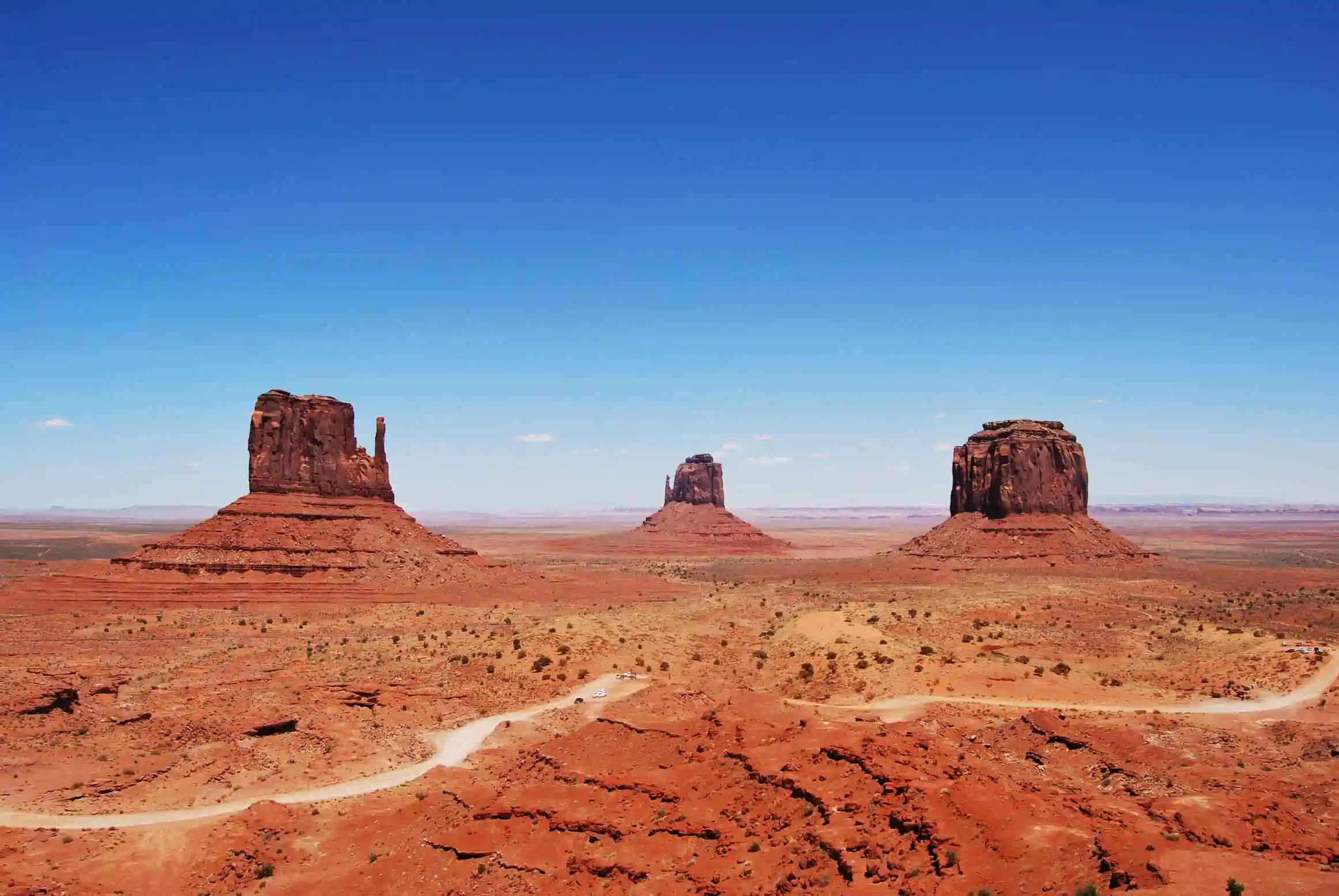
- Monument Valley: 210 km or 130 mi (2 hr 15 min)
- Grand Canyon: 180 km or 112 mi (1 hr 50 min) to the East Entrance; 220 km or 136 mi (2 hr 30 min) to the South Entrance
- Kanab (Utah): 130 km or 81 mi (1h20)
- Las Vegas: 450 km or 280 mi (4 hr 30 min)
⚠️ In Antelope Canyon, unlike other areas of Arizona that are also part of the Navajo Nation, there is no Daylight Saving Time. Therefore, its time zone is always UTC -7 Mountain Standard Time. The time may differ from that in Utah and Nevada at certain times of the year, so keep this in mind if you’re coming from those states. More ℹ️ in our post with tips for traveling to the U.S. Southwest.
Hotels near Antelope Canyon
If you're looking for lodging in Antelope Canyon, the best option—and what practically everyone does—is to use Page as a base for visiting Antelope Canyon. This town, which was founded in the 1950s by the workers who built the Glen Canyon Dam, is only 10 km (6 mi) away, so visiting from here is very easy. Plus, this way you can explore Horseshoe Bend and other interesting sights in Page.
Despite the popularity of the tourist attractions around it, Page always surprises us as a quiet town right in the middle of the desert, yet with a good selection of hotels and restaurants.
Although we have a very comprehensive article on where to stay in Page, in which we discuss the different hotel options in detail, if you want to get straight to the point, here are what we consider to be the best hotels in Page:
Upper vs Lower vs X: which section should you choose?
Although we refer to Antelope Canyon as if it were a single location, this canyon is actually made up of several different sections, the best known of which are Upper Antelope Canyon, Lower Antelope Canyon, and Antelope Canyon X.

RENT A CAR IN THE UNITED STATES
The best way to explore the United States is by car, giving you the freedom to travel at your own pace.
🚗 Whether you’re looking for a convertible Mustang, a 4x4, or a regular car, we recommend to book through this car rental search engine
💸 This is where we find the best prices, both on the rental car itself and on full coverage insurance!
All 3 are located within the Navajo Reserve, and it is mandatory to book a guided tour with a Navajo guide to access any of them. Although they are part of the same geological system and share the characteristic undulating terrain, each section of the canyon offers a distinct experience in terms of scenery, difficulty, photo opportunities, visitors traffic, and price, so it’s a good idea to familiarize yourself with their differences before booking your visit.
In this summary table, we've listed the characteristics of each section of the canyon, but we'll go into more detail about each one later:
| DIFFERENCES BETWEEN SECTIONS OF ANTELOPE CANYON | |||
|---|---|---|---|
| UPPER ANTELOPE CANYON | LOWER ANTELOPE CANYON | ANTELOPE CANYON X | |
| Best tour | Upper Antelope Canyon Tour (includes transportation to the entrance and admission fee) | Lower Antelope Canyon Tour (fee included) | Antelope Canyon X Tour (fee included) |
| Beauty | ⭐⭐⭐⭐⭐ | ⭐⭐⭐⭐ | ⭐⭐⭐ |
| Number of visitors | High | Medium-High | Low |
| Difficulty | Low | High | Low-Medium |
| Ladders | No | Yes, vertical | Yes, but simple |
| Light beams | Yes (from late March through early October) | Yes, but they're very thin and scattered | Yes, but they're very thin and scattered |
| Price | 💰💰💰💰 | 💰💰💰 | 💰💰 |
| Ideal for... | Seeing the light beams and less physical effort | A more active experience at a slightly lower price | Fewer crowds and a more peaceful visit |
Upper Antelope Canyon
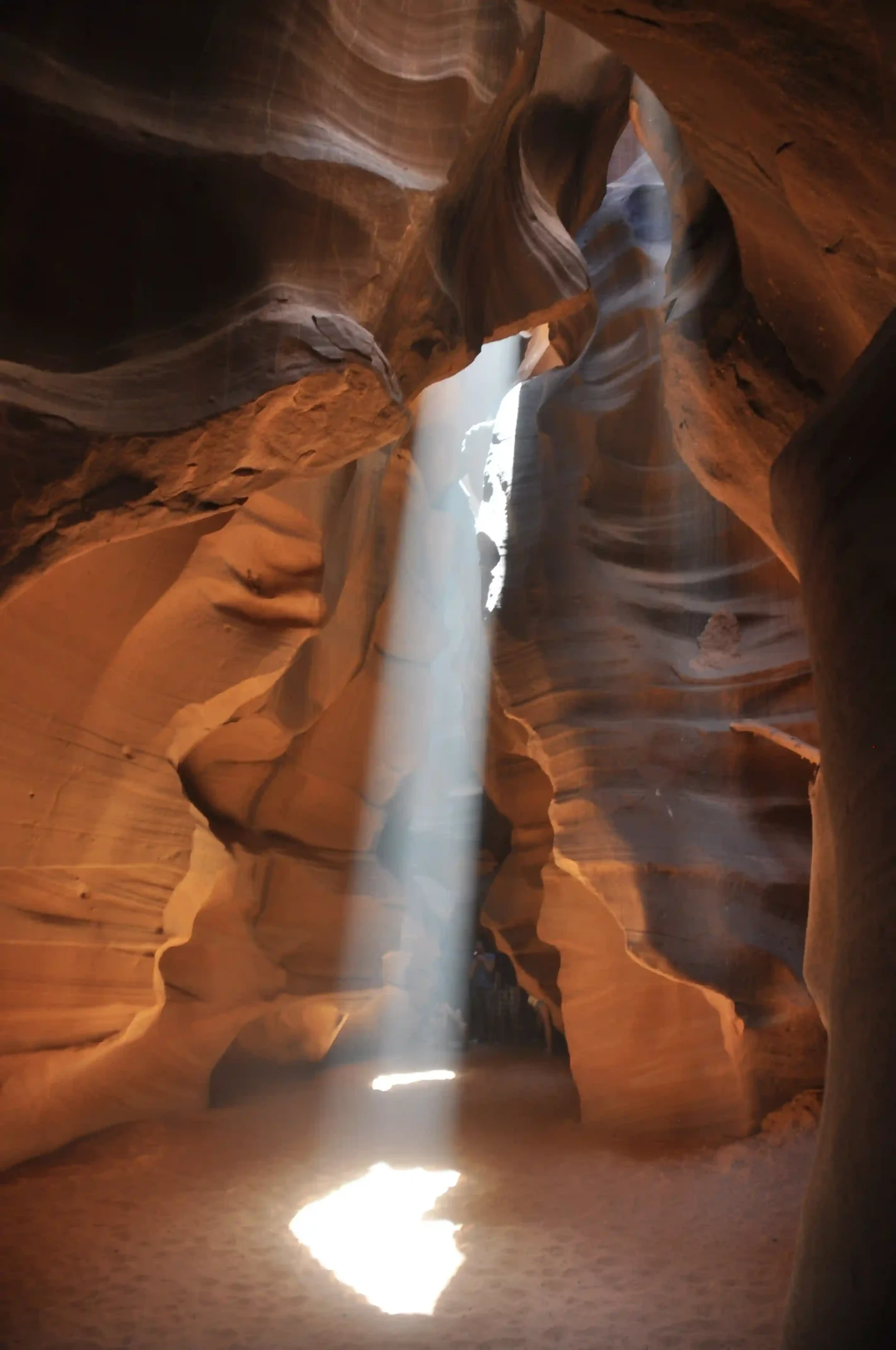
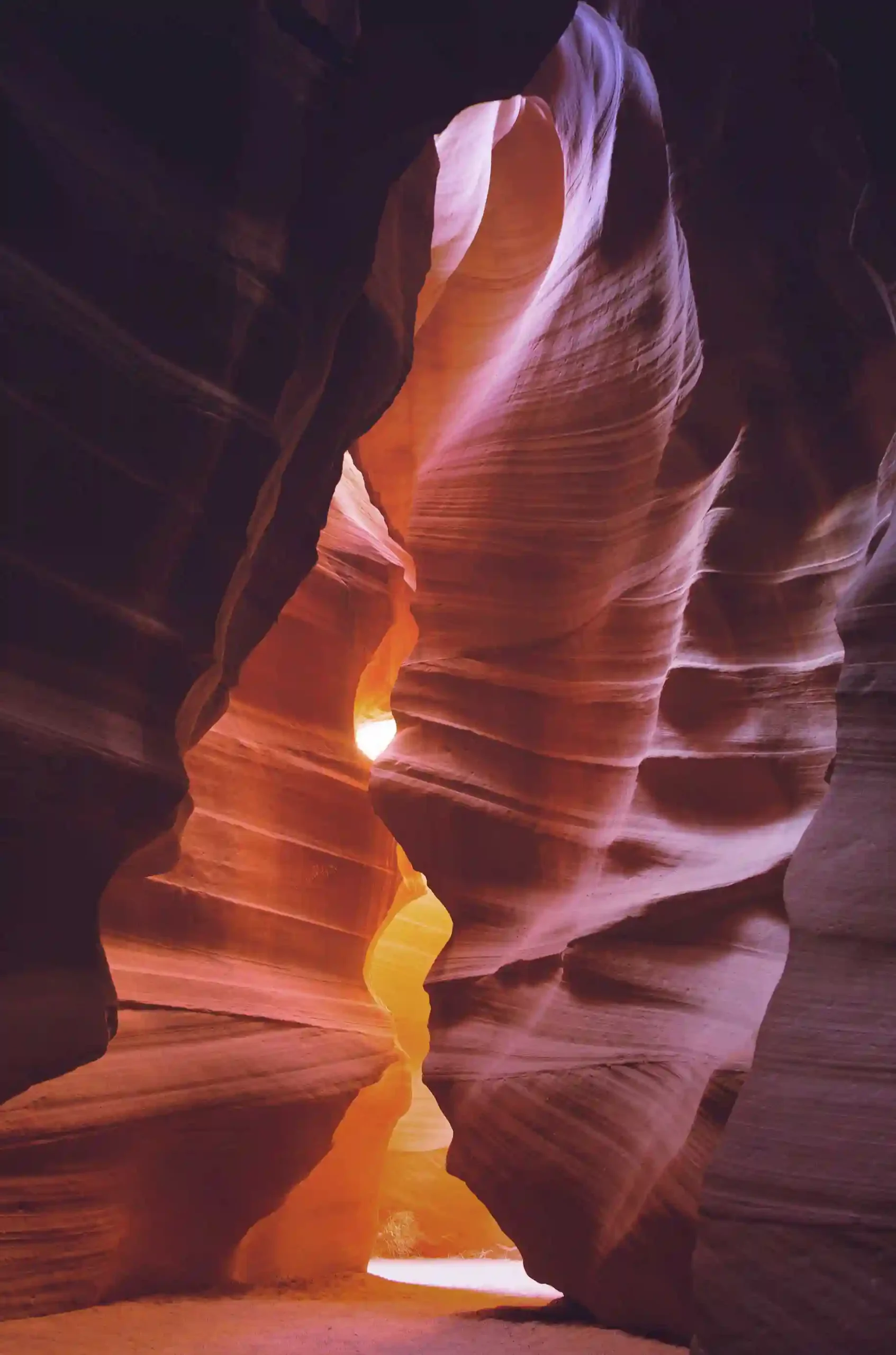
Upper Antelope Canyon is the most famous and most photographed section of Antelope Canyon. It is characterized by its A-shape—that is, the surface fissure is very narrow, and the canyon widens as the walls slope down toward the bottom. This makes it darker and allows sunlight, when at the right angle, to enter through a narrow slit.
The main attraction of Upper Antelope Canyon is precisely this: the light beams that enter through the canyon, which only occurs at midday between late March and early October (and not every day). For this reason, midday tours during this season are more expensive than tours at other times of day.
To reach Upper Antelope Canyon—which is farther away—you’ll need to take a 15-minute van ride from the meeting point (some companies charge extra for this service, though you always have the option of walking there—a 30-minute walk with no shade). Once you arrive, you’ll see that the entrance to the canyon is at ground level, so you don’t need to go up or down any stairs to get in.
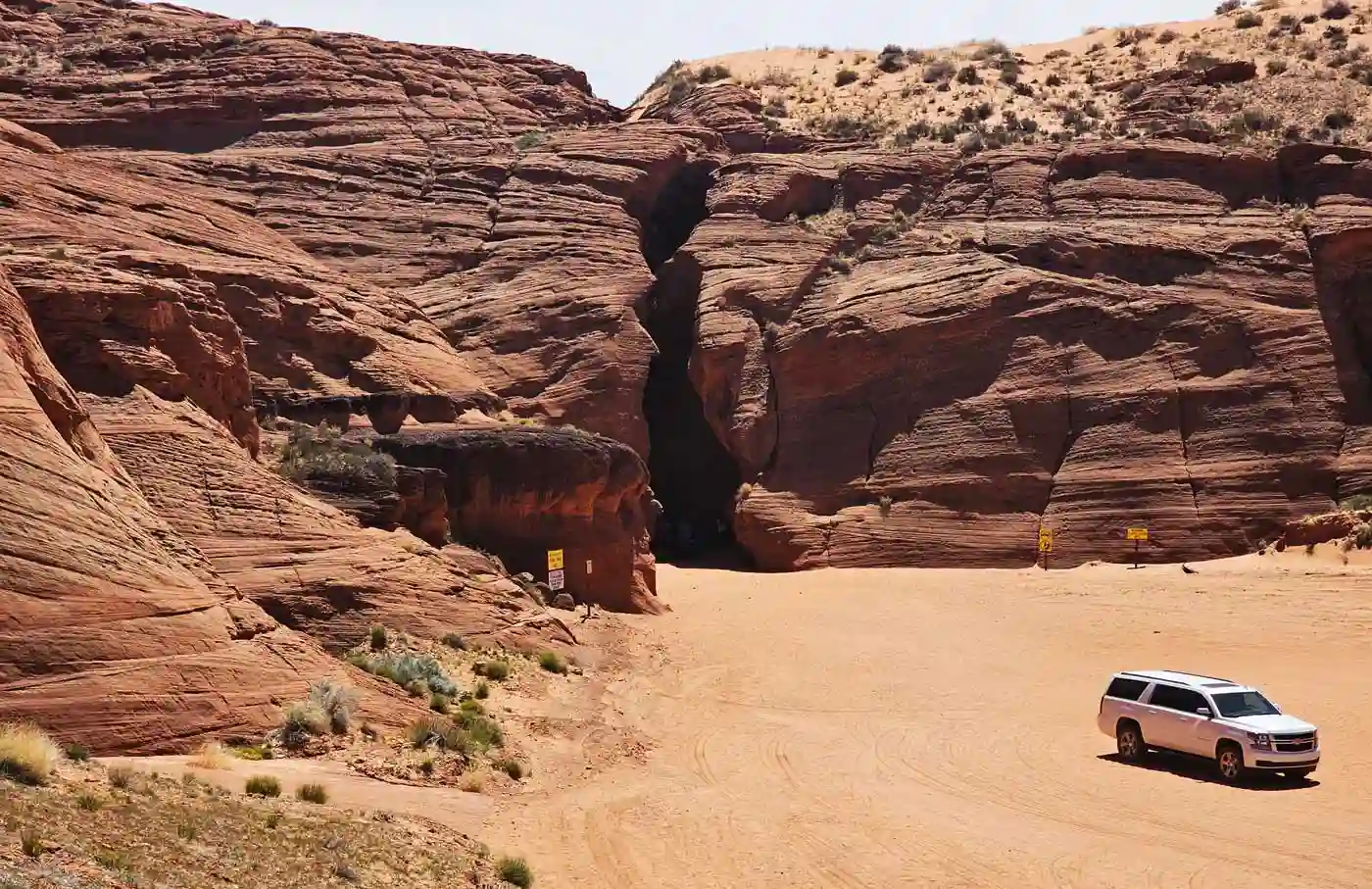
In addition, the Upper is quite short and completely flat—so it requires no physical effort to walk along it. As a result, it’s suitable for everyone and ideal for people with limited mobility, young children, and those who aren’t very fit.

TRAVEL INSURANCE
FOR THE UNITED STATES
💸 Healthcare in the U.S. is very expensive, and any accident or illness can cost you a fortune.
That's why we recommend getting travel insurance that covers you in case anything goes wrong, so you don't have to pay anything up front.
💡 We always travel with Heymondo because it offers excellent medical coverage at a great price. Plus, you can get 5% OFF*!
🤓 Take a look at: Best travel insurances for the USA | Comparison + Discounts |
Visiting Upper Antelope Canyon requires a great deal of patience, since there are many tour operators with groups that usually number around 15 people and all follow one after another, which can be a bit overwhelming. That’s the price you have to pay to see a wonder of this caliber! Just relax and look up 😉
Previously, the way back went through the interior of the canyon, which made the visit more difficult because there were people coming from both directions in some very narrow sections. Fortunately, this has changed, and the way back now goes along the outside.
ℹ️ Photography tours in Antelope Canyon are no longer offered, both because the use of tripods was damaging the canyon walls and because these groups were significantly hindering other visitors' experience
What makes Upper Antelope Canyon unique?
- The spectacular light beams
- The tallest and narrowest walls in all of Antelope Canyon
- A higher chance of seeing sandfalls
Pros of Upper Antelope Canyon
- It's the most visually spectacular canyon
- Ideal for a first visit if you don't mind the crowds
- It's very easy to get around
- Perfect for people with limited mobility (although it's always a good idea to confirm accessibility with the operator)
- It features the famous beams of light
Cons of Upper Antelope Canyon
- It's the most expensive one
- It's the most popular one
- Tours during the times when you can see the light beams are more expensive
- It's essential to make reservations well in advance, especially between spring and fall
- The amount of time you can stay inside the canyon is usually somewhat limited due to the large number of visitors
Who is Upper Antelope Canyon best for?
Upper Antelope Canyon is the best choice for first-time visitors to Antelope Canyon who want to see the most iconic scenery. It’s also the ideal option for photographers, travelers who dream of seeing the light beams, and those who prefer a comfortable tour with minimal elevation gain.
Lower Antelope Canyon
Lower Antelope Canyon offers a very different experience from Upper Antelope Canyon. This section is V-shaped—in other words, the opening at the surface is wider, and the canyon narrows as you descend toward the bottom. Since more light enters, it’s a brighter canyon throughout the day, and the famous light beams don’t ocur—only thin ones. Even so, we can tell you firsthand that it’s a stunning canyon full of undulating walls and fascinating rock formations.
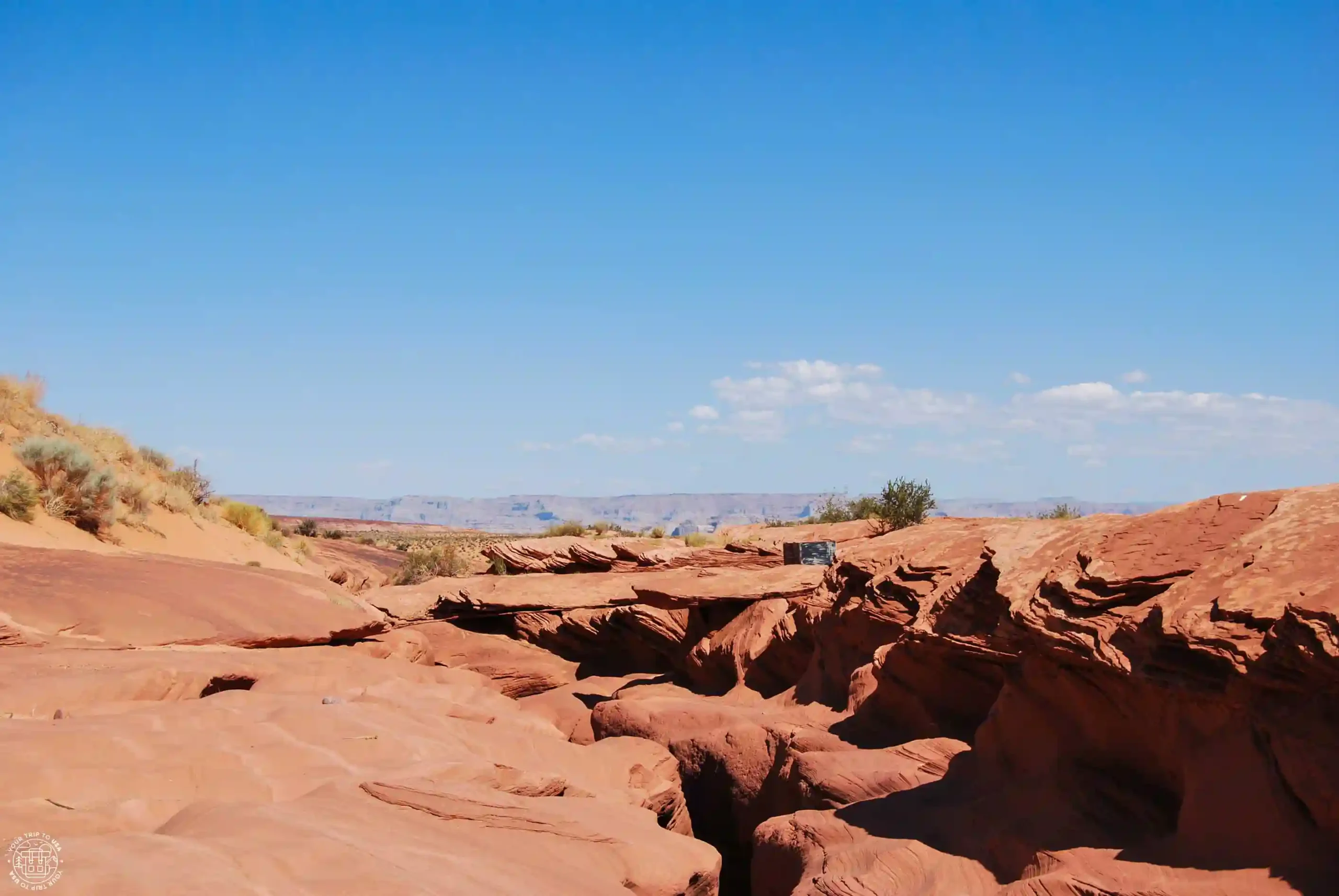
Lower Antelope Canyon is more physically demanding and adventurous. You don’t need transportation to reach the entrance (since it’s so close, you can walk there), and to access it, you have to descend through a crevice in the surface using metal ladders that take you to the bottom. The distance is longer (twice as long as the one in the Upper section), has more curves, some uneven terrain, and some really narrow sections, so you’ll need to be fairly flexible and, at times, climb over rocks.
Although it's a little less popular than the Upper, the Lower Canyon also sees several groups from different companies gathering at the same time, so don't expect a quiet visit with plenty of time to stop and take pictures.
What makes Lower Antelope Canyon unique?
- A much more varied route
- A greater sense of adventure
- Very unique rock formations
Pros of Lower Antelope Canyon
- It's usually more affordable
- It's a little less crowded than Upper (though don't expect to be alone either)
- Longest route
- Great for photographing shapes and textures
Cons of Lower Antelope Canyon
- There are quite a few ladders
- It isn't the best option for people with limited mobility
- It may be a bit challenging for people with knee problems or vertigo
- It doesn't feature the famous beams of light
Who is Lower Antelope Canyon best for?
It's an excellent option for those who are already familiar with Upper Antelope Canyon or are looking for a slightly more active experience that isn't as crowded. It's also ideal for travelers who want to save some money without sacrificing the chance to enjoy one of the world's most impressive slot canyons.
Antelope Canyon X
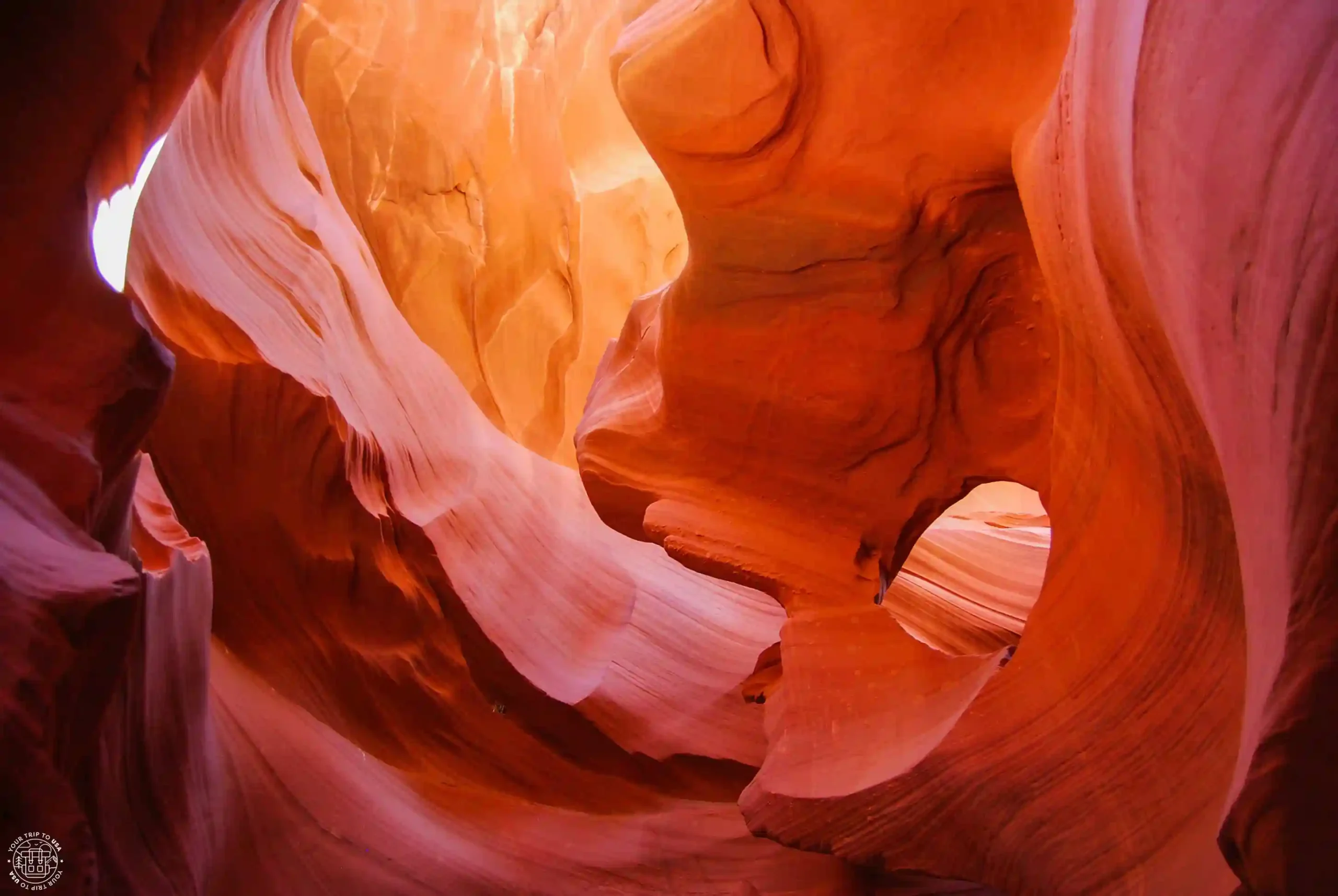
Antelope Canyon X is the least well-known of the three, and that's precisely why it's the quietest. If you look at it from the air, you'll see two large fissures that form an X on its surface—hence its name!
The main advantage of the X is that it allows you to be practically alone in some sections, enjoy the experience more, and have more time to take photos. Although it doesn’t have as many geological formations as the previous ones, here you have the chance to see some beams of light during the right season, though they’re thinner and less intense than in the Upper. Even so, it’s an equally beautiful canyon with undulating walls similar to the previous ones, along with curves and narrow sections.
This tour covers two sections—the north and the south—and there are hardly any ladders along the way, just one to access the canyon. Therefore, the difficulty level here is moderate compared to the Upper and Lower trails.
What makes Antelope Canyon X unique?
- A much smaller number of visitors
- A much more peaceful visit
- More time to stop and take pictures
- Excellent value for the money
Pros of Antelope Canyon X
- It's the least crowded one
- Lower price
- A more relaxed atmosphere
- A greater sense of exclusivity
- Possible light beams, though thinner
- A great option for photography without crowds
Cons of Antelope Canyon X
- It doesn't have huge light beams
- The formations aren't that spectacular
- There are fewer tours available
Who is Antelope Canyon X best for?
Antelope Canyon X is perfect for repeat visitors or those who prefer to avoid the crowds and enjoy the site in a more peaceful setting. It’s also an excellent alternative if you’re traveling during peak season and can’t find availability at Upper or Lower Antelope Canyon, or if you’re looking for a more affordable option.
Best Antelope Canyon tours depending on your trip
To help you more with your decision, here are some examples of tours whether your starting point is somewhere other than Page, whether you're traveling with your family, whether you want to take the best photos, and so on.
| ANTELOPE CANYON TOURS BY TYPE OF TRIP | |
|---|---|
| IF YOU'RE LOOKING FOR... | RECOMMENDED TOUR |
| Best Antelope Canyon tour from Las Vegas | Antelope Canyon + Horseshoe Bend tour from Las Vegas ➡️ Includes admission fees, lunch, water, and a snack |
| Grand Canyon + Antelope Canyon + Horseshoe Bend tour from Las Vegas ➡️ Includes admission fees, lunch, water, and a snack | |
| Best Antelope Canyon tour from Sedona | Antelope Canyon X and Horseshoe Bend tour from Sedona ➡️ Includes admission fees, and water |
| Best Antelope Canyon tour for families with children | Upper Antelope Canyon tour ➡️ Choose the "all ages" tour option |
| Best Antelope Canyon and Horseshoe Bend tour | Upper Antelope Canyon + Horseshoe Bend + Glen Canyon Dam tour from Page ➡️ Includes admission fees, and transportation |
| Secret Antelope Canyon + Horseshoe Bend tour from Page ➡️ The Horseshoe Bend overlook is private; it isn't the one open to the general public | |
| Best Antelope Canyon Tour with time to take photos | Secret Antelope Canyon tour + Horseshoe Bend from Page |
| Antelope Canyon X tour | |
| Rattlesnake Canyon tour (more physically demanding) | |
Antelope Canyon tickets: how much is the admission fee?
As we mentioned earlier, it isn't possible to visit any part of Antelope Canyon on your own, and you must book a tour with a Navajo guide to explore it.
There are quite a few companies, and prices may vary slightly from one to another, but as a general rule, the most expensive is the one to see the light beams of Upper Antelope Canyon, followed by the Upper Antelope Canyon tour at any other time of day, then the Lower Antelope Canyon tour, and finally the Antelope Canyon X tour.

INTERNET IN THE UNITED STATES
💡 The most convenient way to get internet access in the U.S. is to buy an eSIM—that way, you'll have a connection as soon as you set foot in the country. Plus, local SIM cards in the U.S. are pretty expensive.
💸 We have 2 discounts for your unlimited data eSIM for the US:
⭐5% OFF with Holafly ➡️ Excellent coverage
⭐20% OFF with eSIMFlag ➡️ Best price
🤓 Take a loot at: Best SIMs & eSIMs for traveling to the USA
In addition to the cost of the tour itself, you must pay a per-person fee to enter a Navajo Tribal Park. The fee is $15 per person per day (it used to be $8); only those 8 years of age and older are required to pay it, and while some tours include this fee and others do not, it’s important to check this detail when making your reservation.
💡If you want to visit several sections of the canyon, we suggest you do so on the same day. That way, you'll only pay the $15 fee once
When is the best time to visit Antelope Canyon
If you're wondering what is the best time to go to Antelope Canyon, it can be visited year-round, but the experience varies considerably depending on the season and time of day. The light, temperature, number of visitors, and the chance to see the famous light beams vary throughout the year, so choosing the right time to visit can make all the difference.
When is the best season to visit Antelope Canyon?
Here's a summary of what each season has to offer:
🌸 Antelope Canyon in the spring (March through May)
Spring is an ideal time of year to visit the canyon, as temperatures are mild (between 10°C and 24°C or 50ºF and 75ºF depending on the time of day), making the trip more comfortable. There are fewer tourists than in the summer, and starting in late March, you can already see the light beams in the Upper Canyon, though not quite as vertically.
☀️ Antelope Canyon in the summer (June through August)
Summer is the peak tourist season, and that’s when you really need to make sure to book your tour in advance. Temperatures are quite high, reaching nearly 40°C or 104ºF, which makes exploring the canyons more tiring. Remember to bring water!
Summer is also the best time to see the light beams, since that’s when the sun shines most directly through the narrow opening of Upper Antelope Canyon (especially in June and July). However, July and August are the monsoon months, so there’s a higher risk of cancellations due to flash floods (sudden flooding in the canyon that can be deadly). It’s not very common, but it can happen.
🍂 Antelope Canyon in the fall (September through November)
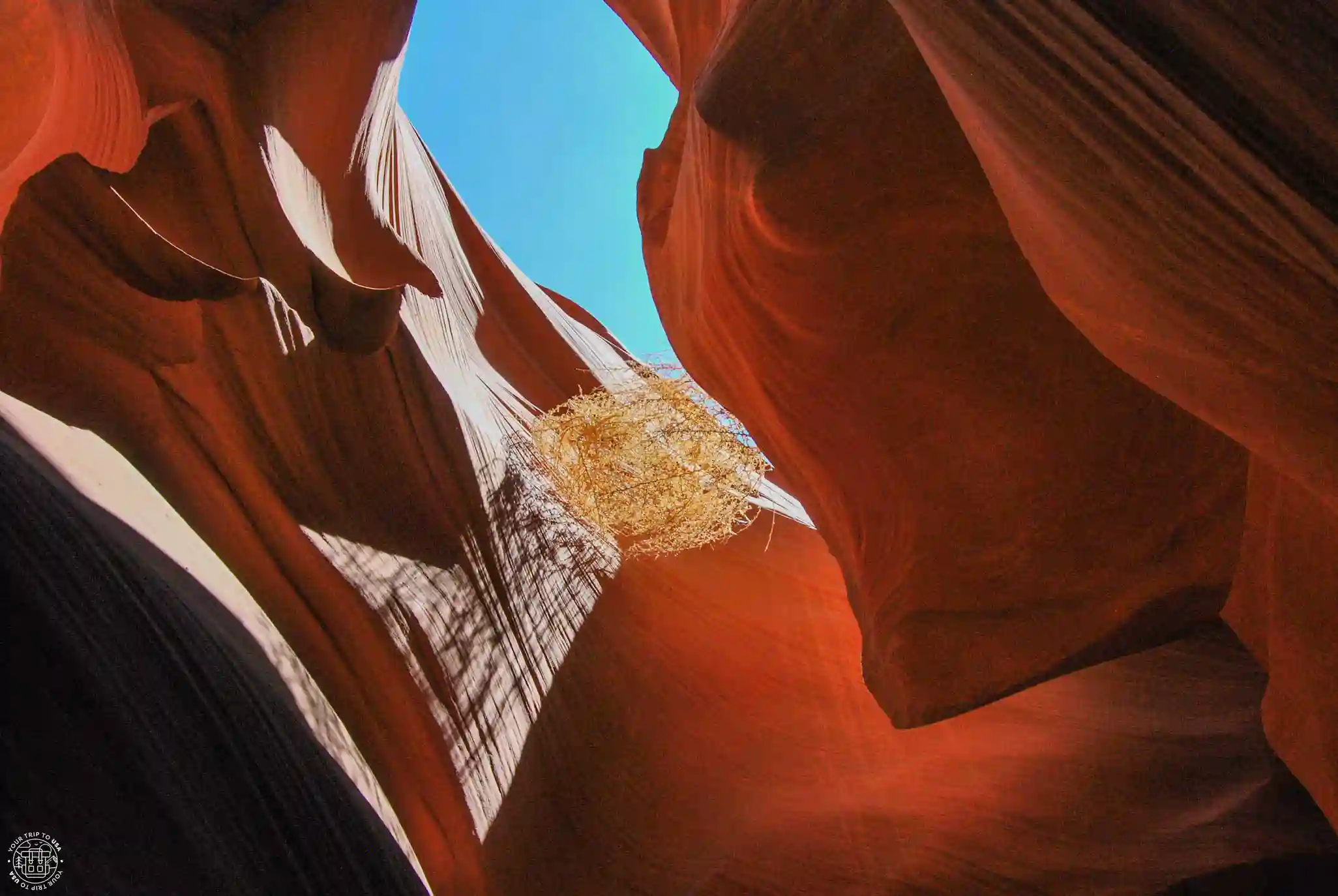
Fall brings pleasant temperatures to Antelope Canyon, ranging from 18°C to 29°C or 65ºF to 84ºF. This, combined with fewer tourists, makes it the perfect time to visit. The light beams are less spectacular and only last until early October, but the canyon’s colors appear more intense, with a beautiful palette of pinks, purples, and soft hues.
❄️ Antelope Canyon in winter (December through February)
Winter in Antelope Canyon is cool, with temperatures typically ranging from freezing to 10°C or 50ºF. There are far fewer visitors during this time of year, which makes for a very peaceful visit and ideal conditions for photography. There are no light beams, but if you’re lucky enough to be there during one of the snowfalls that can occur, the contrast between the white snow and the reddish hues of the canyon is incredible.
💡 If you're looking for the best balance of weather, light, and visitors, spring and early fall are usually the best times to visit Antelope Canyon. If your priority is to see the famous beams of light, the phenomenon is at its most spectacular in June and July
What is the best time of the day to visit Antelope Canyon?
One of the fascinating things about Antelope Canyon is that its appearance changes throughout the day. Depending on the time of day and the position of the sun, the walls take on different hues such as orange, pink, red, and purple... In addition, the light beams streaming through the top opening are more intense at certain times of the day.
Therefore, to choose the time for your tour, you should first ask yourself what kind of experience you want to have:
| BEST TIMES OF THE DAY TO VISIT ANTELOPE CANYON | |
|---|---|
| IF YOU'RE LOOKING FOR... | BEST TIME |
| See the light beams | 11:00 a.m. to 1:30 p.m. from mid-March to early October (book a tour that starts between 10:30 a.m. and 12:00 p.m.) |
| Taking good pictures | 10:30 a.m. to 1:30 p.m. for Upper / First or last hour for Lower and X |
| Avoiding crowds or traveling in the summer | First or last tour of the day if the light beams doesn't matter to you |
| The best price | First tour of the day |
Kayaking at Antelope Canyon
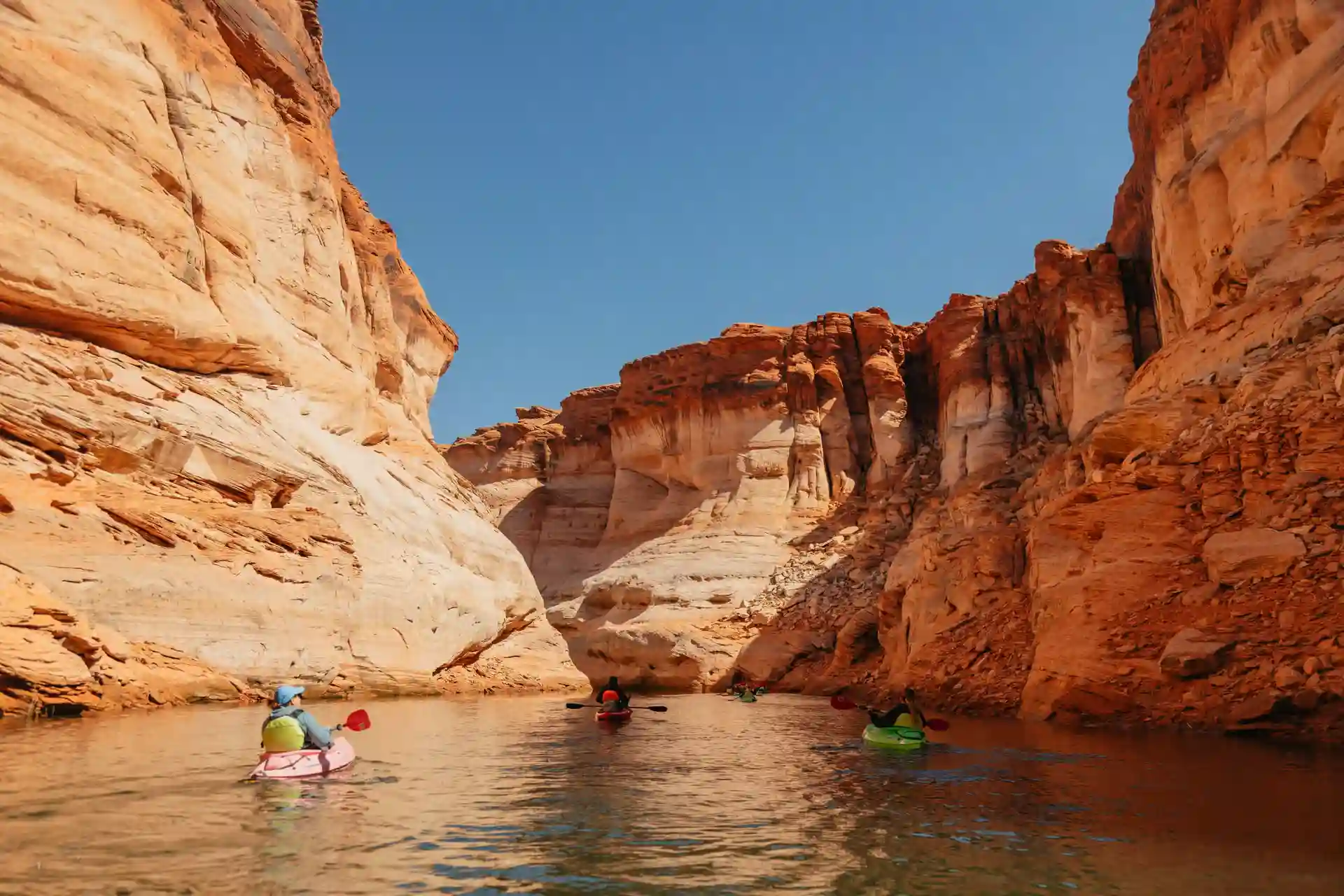
A fantastic and very different way to explore Antelope Canyon is to kayak or paddle through what’s known as Water Antelope Canyon, a branch of Lake Powell that’s part of the same geological system as Antelope Canyon and features winding curves between sandstone walls. The last time we were in Page, we were determined to do this activity, but the strong wind prevented us from doing so 😔
⚠️ This activity doesn't include access to Upper or Lower Antelope Canyon, as these are separate areas. Please note that you'll be entering the Glen Canyon National Recreation Area, which has an entrance fee of $15 per person. If you have an annual park pass, this fee is included, so don't forget to bring it
To start this activity, head to Antelope Point Marina, which is where the tours depart from. You can bring your own kayak or rent one like these and pick it up right there (we recommend doing this in advance and not waiting until the last minute). If you don’t feel comfortable venturing out on your own, you can book this guided kayak tour to Water Antelope Canyon.
The activity involves paddling along this arm of the lake at your own pace, without the rush of the walking tours, making your way between rock walls that grow increasingly narrow and tall. The contrast between the color of the rock and the blue of the lake is breathtaking!
When the water level is low enough, you can get out at a small sandy beach at the end and walk to enter the lower part of the canyon. This section isn't as beautiful as Upper or Lower Antelope Canyon, but it's still pretty.
We would set aside at least half a day to complete the entire activy (round trip). Try to start early to avoid the hottest part of the day, and above all, be sure to bring sunscreen and plenty of water. It’s also important to wear shoes that can get wet, especially if you want to hike the final stretch of the canyon.
Tips for visiting Antelope Canyon
Want to make sure your visit to Antelope Canyon is perfect? Here are some tips and things to keep in mind that will come in handy:
- 🕐 Although Antelope Canyon is located within Navajo Territory, there is no Daylight Daving Time there, unlike in other parts of Arizona that belong to the Navajo Nation, such as Monument Valley or Canyon de Chelly. However, the time difference with Utah and Nevada may vary depending on the time of year, so keep that in mind if you’re traveling from either of those states.
- ⌛Arrive 30 to 45 minutes before the tour begins so you can check in at your leisure and receive the necessary instructions. Tours depart on time.
- 🚶🏼♂️The Upper and Lower Canyon tours don't leave much time to stop and take pictures. To take things at a more leisurely pace, bring up the rear of your group—that way, it'll be easier to stop if possible.
- 🥾 Wear closed-toe shoes that are suitable for walking on sand and climbing stairs and rocks if you plan to visit the Lower.
- ☀️ If you book a tour in the summer, keep in mind that many companies cancel if the temperature exceeds 40.5°C (105ºF), as well as if there is a flash flood warning.
- 🎒 Backpacks, bags, and fanny packs are prohibited to prevent erosion of the canyon. Check with your tour operator beforehand to see what you can bring.
- 🥢 Poles, tripods, selfie sticks, and drones are strictly prohibited.
- 📸 GoPro-style action cameras are not allowed.
- 🧴 Wear a hat and put on sunscreen before starting the tour.
- 🕯️ Even if you go during the right season, you won't see the light beams if the sky is cloudy.
- 📷 Bring a case for your camera to keep sand from getting inside when you're not using it. Remember that flash photography is not allowed inside the canyon.
Other slot canyons near Antelope Canyon
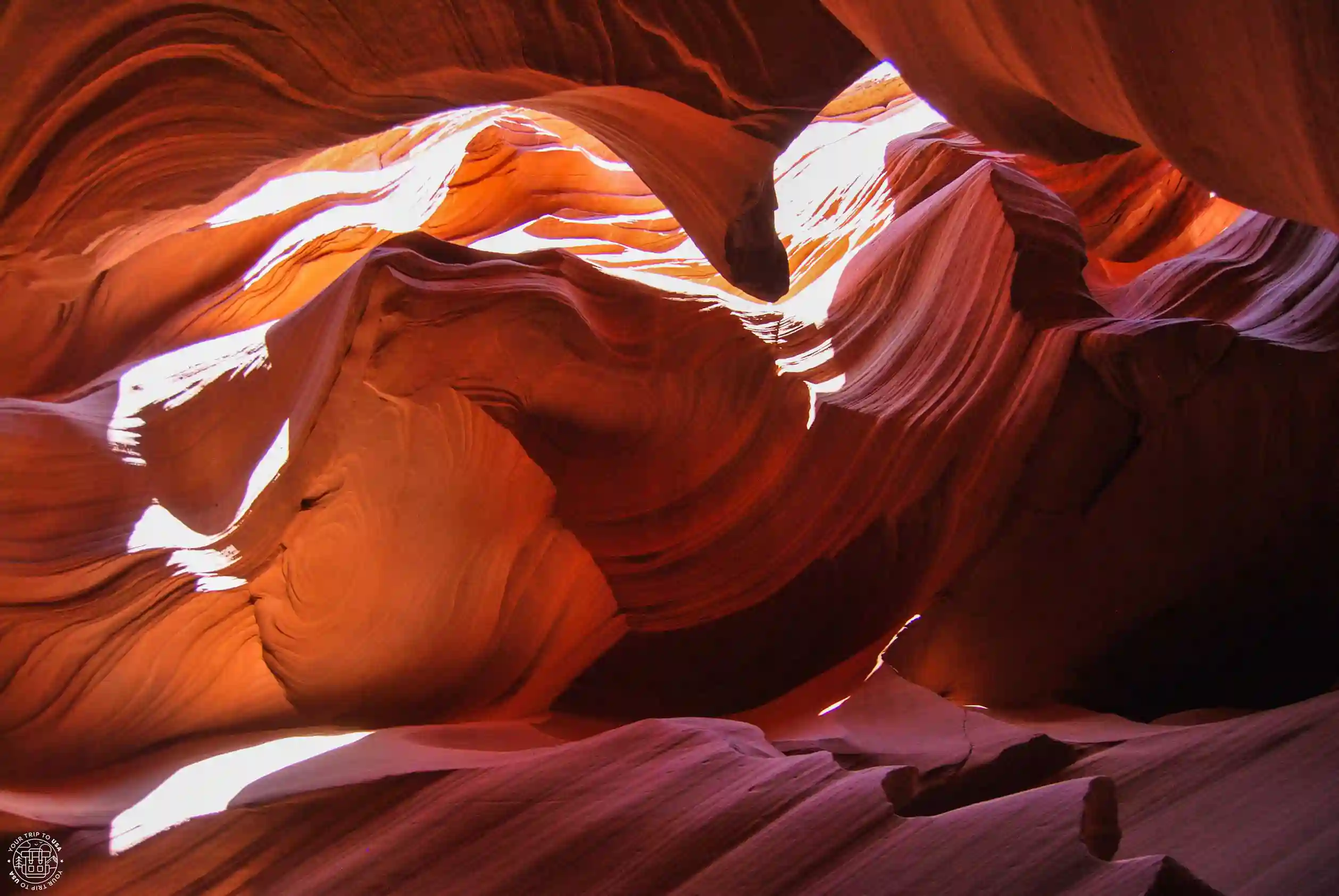
We have some wonderful news for you: aside from the three slot canyons we already mentioned... there are more! And many of them are still part of the same geological system as Antelope Canyon. As you can see, you could be hopping from slot canyon to slot canyon for several days 😉
These are much lesser-known options, so we think they’re ideal alternatives if you want to get even further off the beaten path or if you’re a repeat visitor to the area and feel like exploring other places. Plus, there are far fewer tours available, and the operating hours are more limited.
Here's a summary of them:
- Rattlesnake Canyon: similar in beauty to Upper Antelope Canyon, it is very narrow and requires flexibility and good mobility. It’s ideal for photography. ➡️ Book a guided tour of Rattlesnake Canyon here.
- Owl Canyon: a more open and wider canyon where a pair of owls lives.
- Secret Canyon: similar to Upper Antelope Canyon in beauty, but much easier than Rattlesnake Canyon since it isn't as narrow. ➡️ Book a guided tour of Secret Antelope Canyon + Horseshoe Bend here
- Mountain Sheep Canyon: the wildest canyon, with a few sets of ladders. Here, the grooves in the rock are larger and don't have that fine texture.
- Waterhole Canyon: a narrower and longer canyon, but with lower walls. It is not part of Antelope Canyon and is more remote.
- Cardiac Canyon: the longer option (the tour lasts 4 hours). It features incredible undulating formations with a darker reddish hue and has some very narrow sections.
Antelope Canyon Map
On this map, you can see all the sections of Antelope Canyon marked, along with the other slot canyons we've mentioned, recommended hotels in Page, and more. We hope it helps you find all the hidden gems!
FAQs about visiting Antelope Canyon
Is Antelope Canyon worth visiting?
It’s definitely worth it, as it’s a spectacular place thanks to its sandstone walls sculpted by erosion, the play of light, and the uniqueness of its shapes. That said, many travelers agree that visiting the Upper and Lower canyons is an expensive activity, and because there are so many visitors, the tours tend to be a bit rushed to prevent traffic jams inside the canyon.
Can you visit Antelope Canyon on your own?
No. Antelope Canyon is located within a Navajo Nation Reserve and can only be visited as part of a guided tour with an authorized company. Independent access is not permitted.
What is the difference between Upper and Lower Antelope Canyon?
Upper Antelope Canyon stands out for its famous light beams, its virtually flat trail, and its ease of access, making it usually the best option for a first visit. Lower Antelope Canyon, on the other hand, offers a more adventurous experience, with numerous ladders and narrow passageways, slightly fewer crowds, and a slightly lower price.
Which is better: Upper Antelope Canyon, Lower Antelope Canyon, or Canyon X?
It depends on the kind of experience you're looking for. Upper Antelope Canyon is the most spectacular and the only one where you can see the famous beams of light. Lower Antelope Canyon offers a more dynamic tour, and Canyon X is the best option if you prefer a more relaxed visit with fewer tourists.
Is it possible to visit Upper Antelope Canyon and Lower Antelope Canyon in a single day?
Yes, it's definitely possible. If you want to see both, we recommend doing so on the same day, so you'll only have to pay the admission fee once.
Is it possible to visit Antelope Canyon and Horseshoe Bend in a single day?
Yes, it's entirely possible, and that's what most travelers do. Take a look to our guide to visiting Horseshoe Bend!
When is the best time to see the light beams in Antelope Canyon?
Light beams occur in Upper Antelope Canyon between 11:00 a.m. and 1:30 p.m. from mid-March to early October, so if you want to see them, you'll need to book a tour that starts between 10:30 a.m. and 12:00 p.m.
How long is the tour of Antelope Canyon?
The duration depends on the canyon and the guide, but most tours last between one hour and an hour and a half, of which about 30 minutes are spent inside the canyon.
What is the best time to visit Antelope Canyon?
If you're visiting Upper Antelope Canyon and want to see the famous light beams, it's best to book a tour between 10:30 a.m. and 12:30 p.m. If you'd rather avoid the crowds, the early morning or late afternoon are usually the quietest times.
How far in advance do I need to make a reservation?
During peak season, it's a good idea to book several weeks or even months in advance, especially if you want to visit Upper Antelope Canyon at noon or are traveling during the summer and holiday seasons.
Is Antelope Canyon suitable for children?
Yes. Children can visit Antelope Canyon as long as they are able to complete the tour. Upper Antelope Canyon is usually the most comfortable option for families, while Lower Antelope Canyon can be more challenging due to the ladders and narrow passageways.
Is it okay to take photos during the tour?
Yes, and in fact, Antelope Canyon is one of the most photogenic places in the world. However, the use of tripods, selfie sticks, GoPros, or professional equipment is prohibited. Furthermore, on the Upper and Lower tours, there’s hardly any time to stop and take photos at a leisurely pace.
What kind of clothing and shoes should I wear?
It's best to wear comfortable, breathable clothing and closed-toe shoes with good soles. In the summer, it's also a good idea to bring water, apply sunscreen before the tour, and wear a hat while waiting for the tour to begin.
We hope you found this guide to visiting Antelope Canyon helpful and that you get to enjoy this natural wonder!
Fotos Upper Antelope Canyon: Sebastien Gabriel sgabriel, CC0, via Wikimedia Commons & TerraFrost, CC BY 4.0 https://creativecommons.org/licenses/by/4.0, via Wikimedia Commons