

Where Is Zion?
Zion National Park is located in the southwestern part of the state of Utah, very close to the border with Arizona to the south and Nevada to the west. It is less than a 3-hour drive from Las Vegas, and some of the towns closest to the park are Springdale, Rockville, Virgin, and Hurricane, the latter being the largest of them all and offering the most amenities.
Here are the distances to a few cities and destinations to give you an idea:
- Hurricane (Utah): 23 miles or 37 km (45m)
- Bryce Canyon National Park (Utah): 85 miles or 137 km (2 hours)
- Page (Arizona): 116 miles or 186 km (2:15 h)
- Las Vegas (Nevada): 160 miles or 257 km (2:45h)
- Escalante (Utah): 127 miles or 205 km (2:45 h)
- Salt Lake City (Utah): 308 miles or 496 km (4:30 h)
- Williams (Arizona): 282 miles or 454 km (5 hours)
- Moab (Utah): 345 miles or 555 km (5:15 h)
- Sedona (Arizona): 281 miles or 452 km (5:15 h)
- Phoenix (Arizona): 392 miles or 631 km (6:30 h)
- Los Angeles (California): 428 miles or 689 km (6:45 h)
- San Diego (California): 490 miles or 788 km (7:45 h)
- San Francisco (California): 726 miles or 1,168 km (11 hours)

RENT A CAR IN THE UNITED STATES
The best way to explore the United States is by car, giving you the freedom to travel at your own pace.
🚗 Whether you’re looking for a convertible Mustang, a 4x4, or a regular car, we recommend to book through this car rental search engine
💸 This is where we find the best prices, both on the rental car itself and on full coverage insurance!
What are the closest airports to Zion?
The closest airport to Zion National Park is Las Vegas, which is about a 3-hour drive from the park. The airports in Salt Lake City and Phoenix are 4.5 hours and 6.5 hours away, respectively.
What are the entrances to Zion?
Zion National Park has four entrances, although only two of them provide access to Zion Canyon (the most visited area). These are the South Entrance, East Entrance, Kolob Canyons, and Kolob Terrace. Here is more information about each of them:
South Entrance
This is the park's main entrance, located in the town of Springdale and next to the Zion Canyon Visitor Center, the parking lots, and the park's bus stop. This is the entrance you'll need to go through if you're staying in Hurricane or coming from Las Vegas.

🚐 The U.S. is a paradise for traveling by camper van or motorhome: there are plenty of campgrounds, wonderful places to stay overnight for free, and amenities around every corner.
If you'd like to try this way of traveling, the United States is the place to do it!
💸 And you can save a lot of money on lodging and food!
➡️ We always book through this rental search engine because they work with all the companies and have great deals.
East Entrance
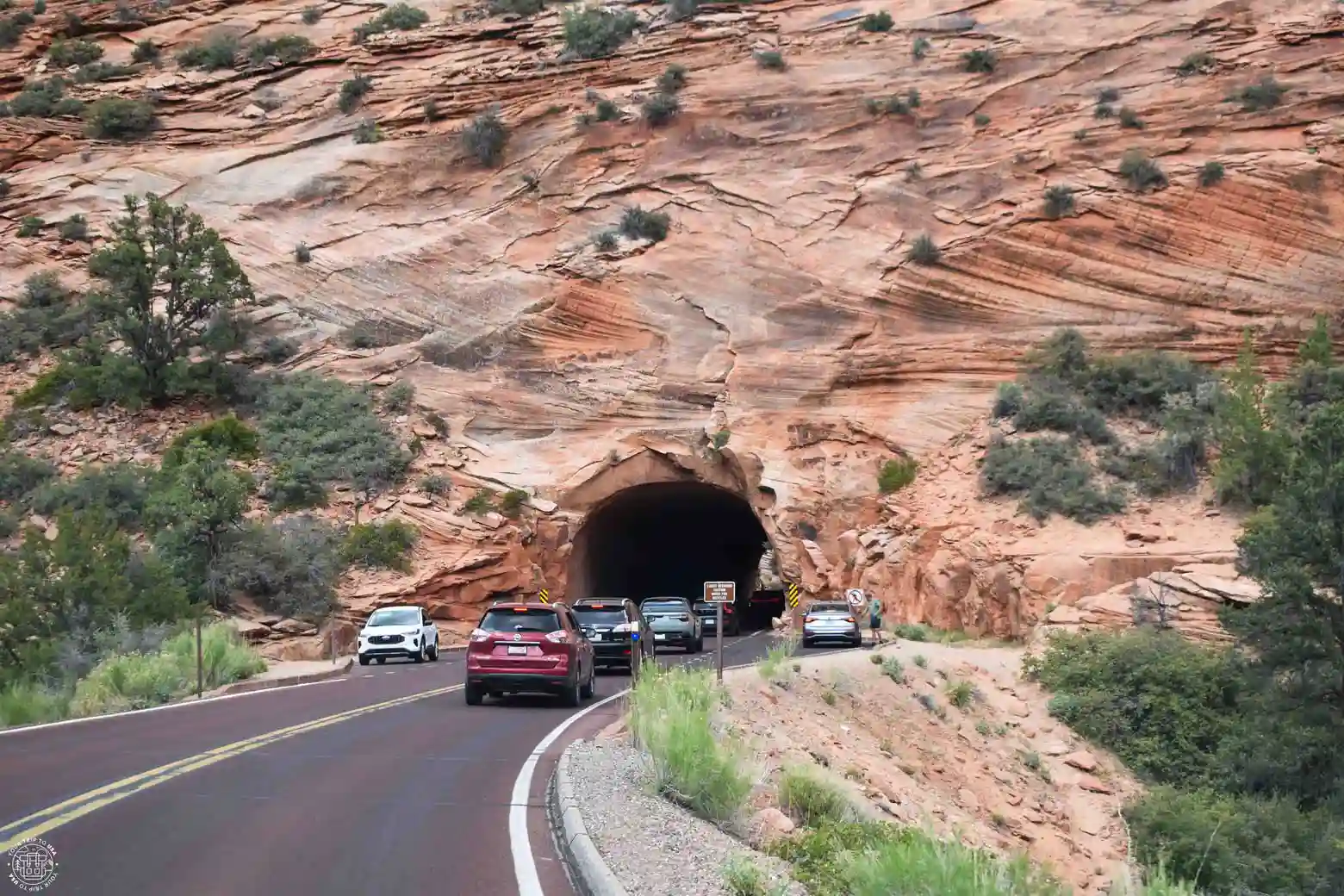
The East Entrance provides access to the park via the Zion-Mount Carmel Highway. This historic highway, opened in 1930, is the fastest route from Bryce Canyon, the Grand Canyon, Kanab, and Page. It is also the most scenic route, as it winds through sandstone canyons and offers spectacular views.
The Zion-Mount Carmel Highway has size and weight restrictions for vehicles, since its tunnels and bridges were not designed for today’s vehicles. But don’t worry—any standard car or RV can pass through, except for buses, large trucks, and some very large RVs. The restrictions are a maximum length of 35 feet 9 inches (10.9 meters), a maximum height of 11 feet 4 inches (3.45 meters), and a maximum width of 7 feet 10 inches (2.39 meters), or a weight exceeding 55,000 lbs (26,680 kg). Additionally, bicycles and pedestrians are not allowed in the tunnels.
Kolob Terrace
This secondary entrance provides access to Kolob Terrace Road, which crosses the Kolob Plateaus to Kolob Reservoir at an elevation of 8,120 feet (2,475 meters), outside the park. The road is paved, but it is not recommended for vehicles towing trailers, as it has sharp curves and steep gradients. Additionally, snow is not plowed from the upper section in winter. To reach it, take a detour in the town of Virgin from the main road connecting Hurricane to the South Entrance.
Kolob Canyons
Another secondary entrance that provides access to the Kolob Canyons and their visitor center, in the westernmost part of the park. It is located next to Interstate 15, the motorway connecting Las Vegas and Salt Lake City. To get there from Hurricane, take the road to Toquerville until you reach the highway, then continue north to Exit 40.
How to Get Around in Zion?
There are several ways to get around Zion National Park: on foot, by electric bike, by car, or by shuttle bus. It depends on the area of the park and the dates you choose to visit, since private vehicles are restricted in Zion Canyon depending on the time of year.
On foot
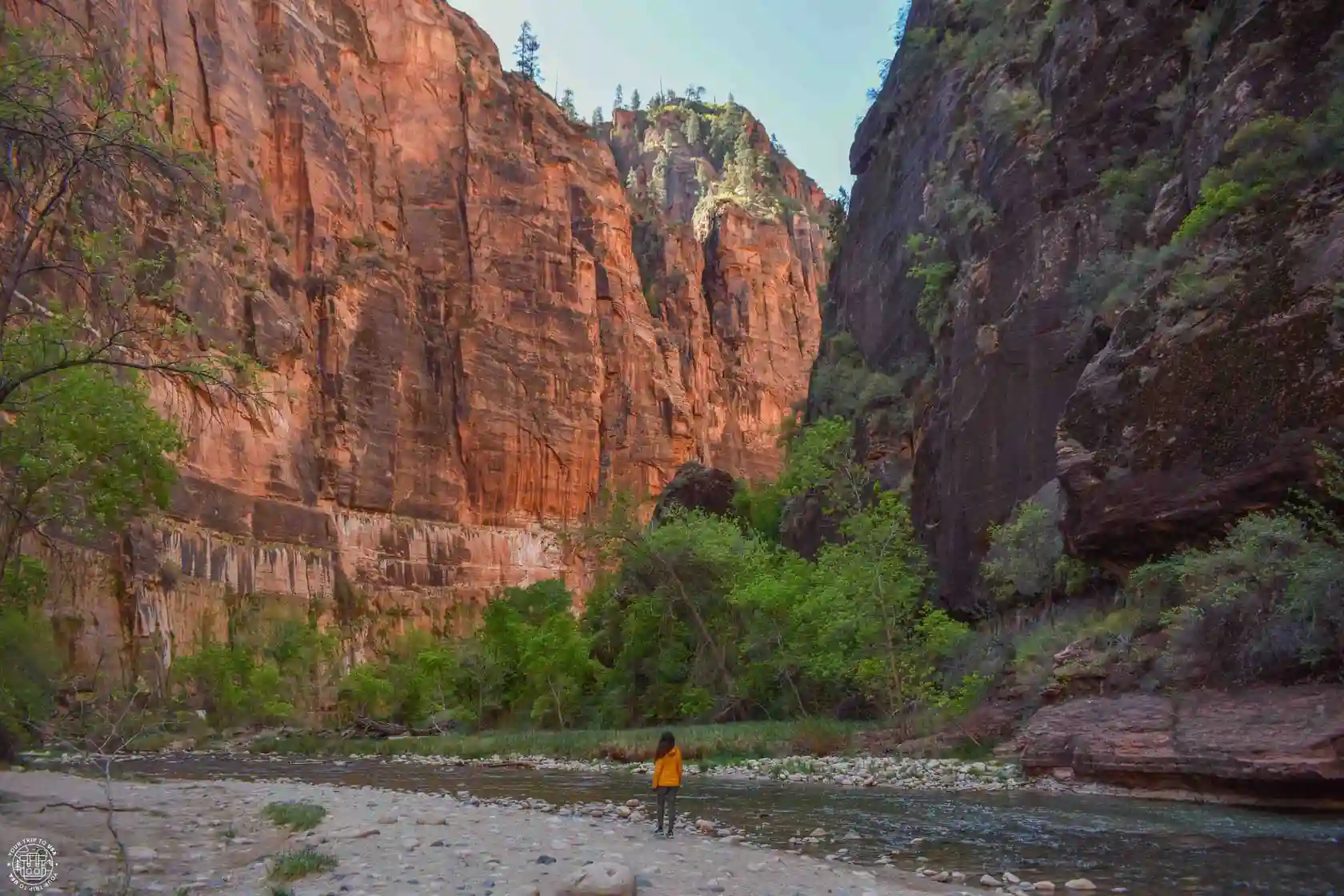
There are many trails in Zion National Park, which is why some of the most breathtaking viewpoints—such as The Narrows and Angels Landing—can only be reached on foot. We’ll discuss this topic in more detail later in the section on hiking in Zion.
On an electric bike
A really fun way to explore Zion Canyon—if you want to skip the bus and go at your own pace—is to rent an electric bike. If you’re staying in Springdale, this is ideal, since the rental companies are located in this town. With an e-bike, you can stop whenever and wherever you want and forget about lines and schedules on peak days.
By private vehicle
If you want to drive your own car or motorcycle on the Zion Canyon Scenic Drive—the park’s most famous road— you can only do so on days when the park’s bus routes are not operating; on all other days, you’ll need to use the bus, walk, or ride an electric bike. The other roads that cross the park—such as Zion-Mount Carmel Road, Kolob Terrace Road, and Kolob Canyons Road—are open year-round to motor vehicles.
We've put together a special section for you on where to park in Zion National Park.
On the bus
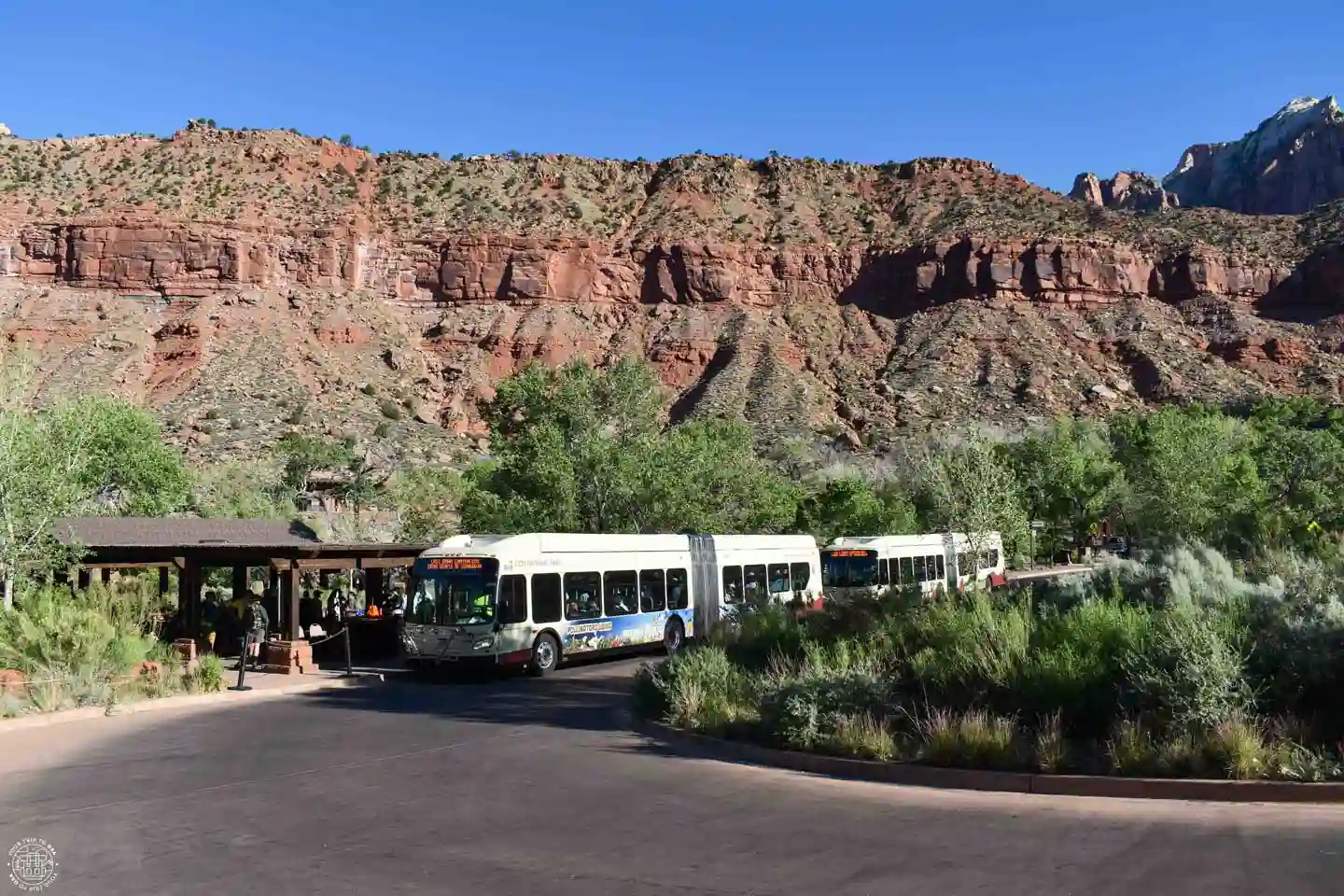
The Zion Canyon Scenic Drive, the road that runs through the park’s most famous canyon, is narrow, and parking lots are few and small. For this reason, and to avoid traffic jams, a free electric bus service operates along the route during the months when visitor traffic is heaviest.
There are two routes: the Zion Canyon Line, which runs from the visitor center to Temple of Sinawava (the end of the road), and the Springdale Line, which runs from the edge of town to the visitor center. This way, you can transfer from one line to the other, which is very convenient if you’re staying in town, since you won’t need a car.
Please note that stops 2, 3, and 8 (Zion Human History Museum, Canyon Junction, and Big Bend) on the Zion Canyon Line are one-way only, and that you can find all the stops on our map.
🚌 The shuttle bus service runs from mid-May through late November and during the Christmas holidays; the rest of the year, access to the canyon is unrestricted.
How to Get to Zion?
Zion National Park is strategically located along the major travel routes through the western United States. Most travelers reach the park by car or RV, either from Las Vegas or Salt Lake City, or as part of a road trip that includes other nearby national parks such as Bryce Canyon, the Grand Canyon, or Capitol Reef.
Las Vegas is the most common gateway for visitors to Zion National Park. The distance is approximately 162 miles (260 km), and the drive takes about 2 hours and 45 minutes. Thanks to the city’s many domestic and international flights, many travelers begin their tour of the U.S. West Coast here.
If you're coming from northern Utah, the trip from Salt Lake City is about 310 miles (500 km) and takes about 4 hours and 30 minutes to drive. It's a great option for those taking a complete tour of the state of Utah.
Zion and Bryce Canyon are a perfect combination for any itinerary through the western United States. The two parks are just 80 miles (130 km) apart, which is about a 2-hour drive along scenic, beautiful roads.

INTERNET IN THE UNITED STATES
💡 The most convenient way to get internet access in the U.S. is to buy an eSIM—that way, you'll have a connection as soon as you set foot in the country. Plus, local SIM cards in the U.S. are pretty expensive.
💸 We have 2 discounts for your unlimited data eSIM for the US:
⭐5% OFF with Holafly ➡️ Excellent coverage
⭐20% OFF with eSIMFlag ➡️ Best price
🤓 Take a loot at: Best SIMs & eSIMs for traveling to the USA
Where to Park in Zion?
When the shuttle service is running, parking at Zion National Park can be difficult, as the parking lot at the entrance is somewhat small and tends to fill up before 9 a.m. Located next to the Visitor Center, this is the ideal place to leave your car if you’re not staying in Springdale or inside the park.
If you're staying in Springdale, accommodations usually have parking available. If the parking lot is already full when you arrive, you can park in town and take the free Springdale Line bus, which will take you right to the door.
Parking in the municipality is regulated and requires payment. There is only one parking lot, the Bit and Spur Lot at 1212 Zion Park Boulevard; payment is required from 6 a.m. to 4 p.m., and the cost is $20 for the entire day or $15 starting at 1 p.m.
In addition, there are some streets where you can park, classified into zones A through C, with zone A being the closest to the park. Paid parking is available from 6 a.m. to 5 p.m., and the cost varies by zone from $25 to $15 for the entire day, with a $5 discount after 1 p.m. All vehicles longer than 24 feet (7.3 meters) must park in Zone C, and the cost is $30, or $15 after 1 p.m. For more information, please visit the town’s website.
How much is admission to Zion?
The standard admission price for Zion National Park varies depending on your mode of transportation:
- Cars, RVs , and vans with up to 15 seats: $35 per vehicle. This rate covers all passengers traveling in the vehicle. If you are a nonresident, you must pay an additional $100 per person.
- Motorcycle: $30; covers 2 motorcycles and up to 4 passengers.
- On foot or by bike for those 16 and older: $20 per person.
💡Recommended: Tips for Traveling Along the U.S. West Coast
This ticket grants you access to the park for 7 consecutive days, and you can purchase it at any of the park entrances. 💸 Both credit cards and cash are accepted, so we recommend reading our article on the best credit cards for traveling to the United States to avoid fees.
There are also a number of passes that already include admission to Zion National Park; if you have any of them, you won't have to pay anything extra:
- Annual Entrance Pass: $70, which grants you unlimited admission to the park for 12 months. Available only to U.S. citizens and residents.
- America the Beautiful Pass: $80, granting you access to all U.S. national parks and other natural areas for 12 months. Available only to U.S. citizens and residents.
- America the Beautiful Non-Residents: $250, granting you access to all U.S. national parks and other natural areas for 12 months. For non-residents only.
⚠️ Zion is on the list of national parks where tourists must pay an additional $100 per person on top of the entrance fee if they do not have the America the Beautiful Non-Residents Pass.
When to Visit Zion?
Although you can visit Zion National Park at any time of year, each season has its pros and cons. The weather is usually dry, although there may be occasional showers in late summer. Summers are hot and sunny, and winters are cold and cloudy.
Here's a table showing the average high and low temperatures for each month to give you an idea:
| Average Temperatures in Zion National Park | ||
|---|---|---|
| Maximum | Minimum | |
| January | 50°F or 10°C | 28°F or -2°C |
| February | 55°F or 13°C | 34°F or 1°C |
| March | 65°F or 18°C | 39°F or 4°C |
| April | 72°F or 22°C | 45°F or 7°C |
| May | 82°F or 28°C | 54°F or 12°C |
| June | 93°F or 34°C | 60°F or 16°C |
| July | 97°F or 36°C | 68°F or 20°C |
| August | 95°F or 35°C | 68°F or 20°C |
| September | 98°F or 31°C | 59°F or 15°C |
| October | 75°F or 24°C | 48°F or 9°C |
| November | 60°F or 16°C | 37°F or 3°C |
| December | 50°F or 10°C | 30°F or -1°C |
We've also put together a brief summary of each season to help you decide more easily:
🪻 Visiting Zion in the Spring
During April and May, temperatures in the park begin to rise, the snow starts to melt, and the flowers begin to bloom. Some high-altitude areas may be impassable due to snow or ice, and the water level of the Virgin River may be too high to hike The Narrows. The shuttle service is suspended (it begins in mid-May), and you can drive your own vehicle into Zion Canyon.
☀️ Visiting Zion in the Summer
June through September is considered the park’s peak season, when it receives the highest number of visitors. During this time, the best months to visit are June or September, since in July and August the heat can be very intense, reaching up to 100°F (38°C).
You should bring plenty of water if you plan to go hiking—up to 1 gallon (4 liters) per person—and there are water fountains where you can refill your bottles at the visitor center and some bus stops. From July through September, unexpected showers can cause the river’s water level to rise suddenly.
🍂 Visiting Zion in the Fall
October and November are pretty good months to visit the park, since visitor numbers and temperatures are lower than in the summer, although the bus service continues to operate. During this time of year, the trees begin to lose their leaves, and the nights can get quite cold.
❄️ Visiting Zion in Winter
During December, January, and February, the park is practically empty, except during the Christmas holidays. The bus service is suspended, and there may be some snowfall. Although Zion Canyon Road remains open year-round, many of the trails may become impassable due to snow and ice.
Where to Stay in Zion
There are many lodging options in Zion National Park, although there is only one place to stay inside the park: Zion Lodge. We recommend looking for lodging along the road between Hurricane and the south entrance, in towns such as Springdale, Rockville, Virgin, La Verkin, or Hurricane itself, where you’ll find the most affordable options.
🏨 Since this is such a broad topic, we have a separate post about accommodation in Zion National Park, where we'll walk you through all your options.
 NO FEES CARD FOR THE UNITED STATES
In the U.S., you'll pay for almost everything by card. If you use one from your regular bank, you'll get hit with a ton of currency conversion fees.
💡 That's why we recommend to get the Wise card. There's no maintenance fee, and you can:
💸 Withdraw $250/month in any currency with no fees
💳 Do payments in any currency with no extra fees
How many days to spend in Zion?
The amount of time you should spend at Zion National Park will depend largely on the hikes you want to do.
If you just want to explore Zion Canyon and the overlooks along the Zion-Mount Carmel Highway, one day is enough. But if you want to hike The Narrows, Angels Landing, or any other trails, you’ll need at least two full days—though with three days, you’ll be able to explore other areas, go on an extra hike, or take it a little easier. In short, you’ll need at least one to three days to visit the park.
What to See in Zion?
There are so many things to see and do in Zion, so we've written a very comprehensive post about what to see in Zion National Park, where you'll find all the details.
Hiking in Zion
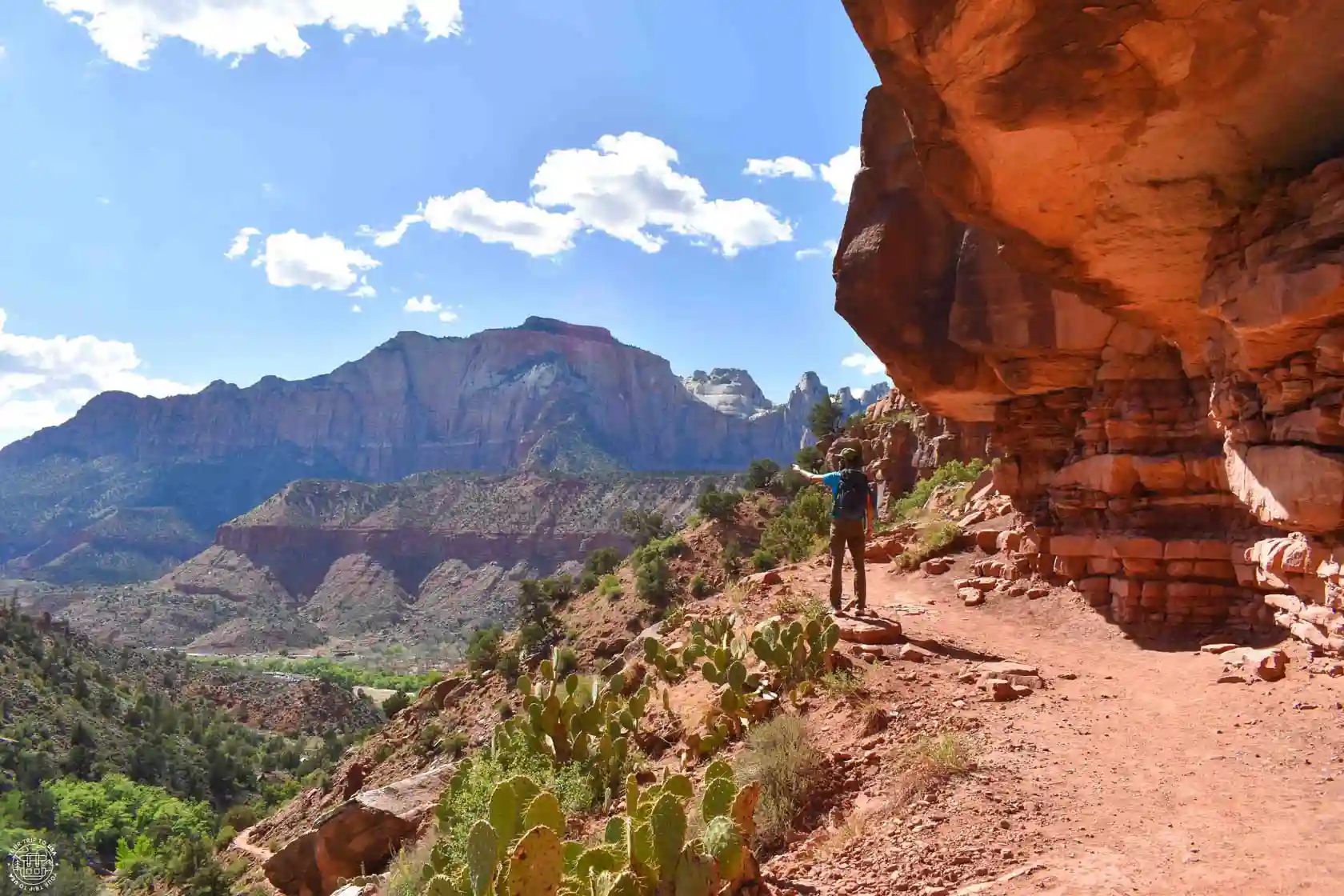
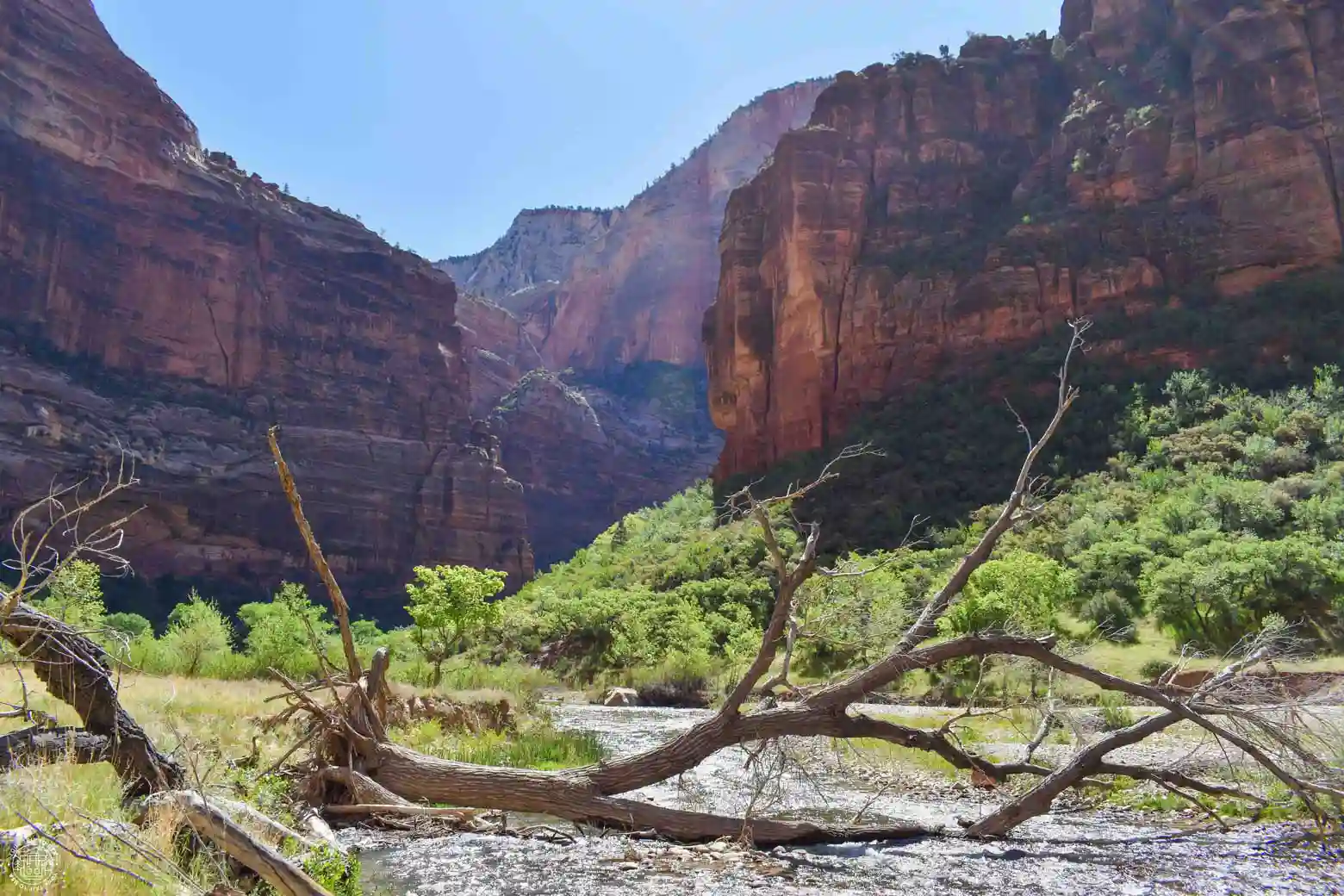
Zion National Park is famous for its hiking trails that lead you to incredible viewpoints, small pools, and waterfalls, or that take you deep into canyons right along the river. Since this is a very broad topic, we’ve written a dedicated post about the best hikes in Zion National Park and another about the hike to Angels Landing, so you’ll have all the information you need.
Tips for Visiting Zion
- ⛽ Fill up your car's gas tank in Hurricane before heading to Springdale; although there are a few gas stations at the park entrance, they're more expensive—especially if you plan to continue on to Bryce Canyon. We always use the GasBuddy app or Google Maps to find the cheapest gas stations.
- 🌄 Try to get there early—there may be lines at the entrances, and the parking lot fills up very quickly. During peak season, it may already be full by 9:00 a.m.
- 🏨 Book your lodging well in advance if you're traveling during peak season. Check out our post on where to stay in Zion to choose your hotel.
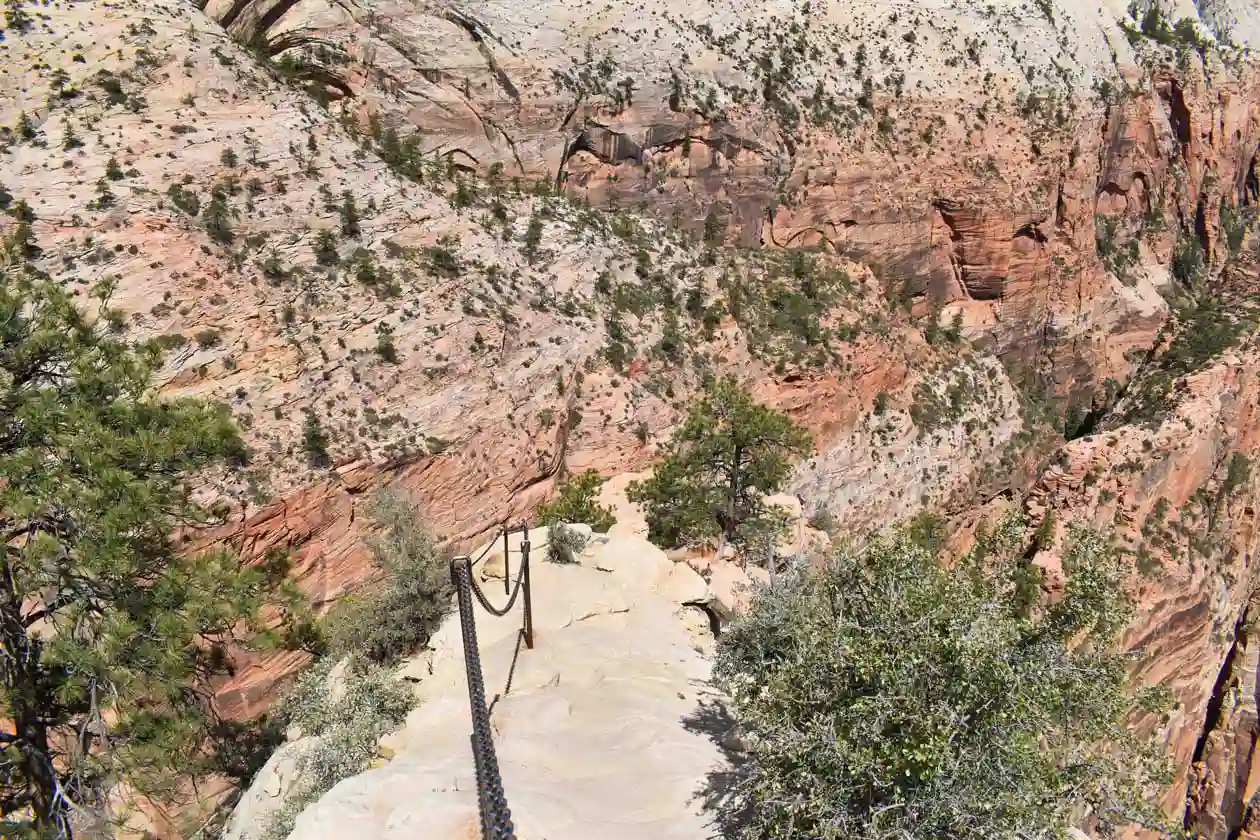
- 🚶🏻Stay on the marked trails; many of them are high up, and a fall could be fatal.
- 🧢 Don't forget your hat, sunglasses, and sunscreen—the sun is very strong in the summer, and there's not much shade.
- ℹ️ Check the park's official website for information on bus schedules, trail conditions, flooding, fires, maps, etc.
- 🥪 Bring some sandwiches or snacks and a reusable water bottle to make the most of your time at the park; there are water fountains at the visitor center and at some bus stops where you can refill them.
- 💧 Bring plenty of water if you're going for a hike in the summer—between 1/2 to 1 gallon (2 to 4 liters) per person.
- 💳 If you want to hike Angels Landing, you'll need a permit and must enter a lottery through the recreation.gov website or app.
- ⛺ If you want to camp outdoors because you're going on a hike that requires it, you must obtain a wilderness permit. You can get one on the recreation.gov website or app, and there is a fee.
Zion Map
On this map of how to visit Zion National Park, you'll find the different entrances, visitor centers, bus stops, trails, and lodging options marked. We hope you find it helpful!
Frequently Asked Questions About Zion National Park
How many days does it take to visit Zion National Park?
Ideally, you should set aside 2 to 3 days to explore the main attractions of Zion National Park. However, if you're short on time, you can visit the most iconic sites in a single day by using the park's shuttle service.
When is the best time to visit Zion National Park?
Spring and fall are the best times to visit Zion because of the pleasant temperatures and fewer visitors. Summer is usually very hot and crowded, while winter offers more peaceful scenery and the chance to see snow at higher elevations.
Do you need to make a reservation to enter Zion National Park?
No reservation is required to enter the park in general. However, some popular activities and trails, such as Angels Landing, require a permit that must be obtained through an official lottery.
How does the shuttle service at Zion National Park work?
Between May and November and during the Christmas holidays, private vehicles are not allowed on Zion Canyon Scenic Drive. To explore this area, you must use the park’s free shuttle buses, which connect the main attractions and trails.
Is it possible to visit Zion National Park with children?
Yes. Zion has several easy, family-friendly trails, such as the Riverside Walk, the Pa'rus Trail, and the Lower Emerald Pool Trail, which allow you to enjoy the park with children of all ages.
Where should you stay when visiting Zion National Park?
The best option is to stay in the town of Springdale, located next to the park's south entrance. There are also more affordable options in Hurricane; we provide more details in our post on where to stay in Zion National Park.
We hope this guide on How to Visit Zion National Park helps you enjoy this wonderful place!