

Best Hikes in Zion National Park
The following table lists the key information about the best hikes in Zion National Park:
| BEST HIKES IN ZION NATIONAL PARK | |||||
|---|---|---|---|---|---|
| Hike | Area | Distance (mi & km) | Duration (h) | Elevation Gain (ft & m) | Difficulty |
| Angels Landing | Zion Canyon | 5.4 (8.7) | 3-5 | 1,640 (500) | 🔴 High |
| The Narrows | Zion Canyon | 9.4 (15.1) | 1-8 | 335 (102) | 🔴 High |
| Emerald Pools | Zion Canyon | 3 (5) | 2-3 | 755 (230) | 🟠 Medium |
| Canyon Overlook | Mount Carmel Hgw | 1 (1.6) | 0.5 | 141 (43) | 🟢 Easy |
| Riverside Walk | Zion Canyon | 1.9 (3) | 1 | 56 (17) | 🟢 Easy |
| Watchman Trail | Zion Canyon | 3 (5) | 2 | 535 (163) | 🟠 Medium |
| Pa'rus Trail | Zion Canyon | 3.5 (5.6) | 1.5 | 141 (43) | 🟢 Easy |
| Observation Point | Mount Carmel Hgw | 7 (11.3) | 4-6 | 699 (213) | 🟠 Medium |
| Taylor Creek Trail | Kolob Canyons | 5.2 (8.6) | 3-4 | 797 (243) | 🟠 Medium |
| Timber Creek Overlook | Kolob Canyons | 1.2 (2) | 0.5-1 | 118 (36) | 🟢 Easy |
| Northgate Peaks Trail | Kolob Terrace | 4 (6.4) | 1.5 | 161 (49) | 🟢 Easy |
| The Subway | Kolob Terrace | 10 (16) | 6-10 | 1,312 (400) | 🔴 High |
💡 You'll find more information about things to do in Zion National Park in our exclusive post
Angels Landing
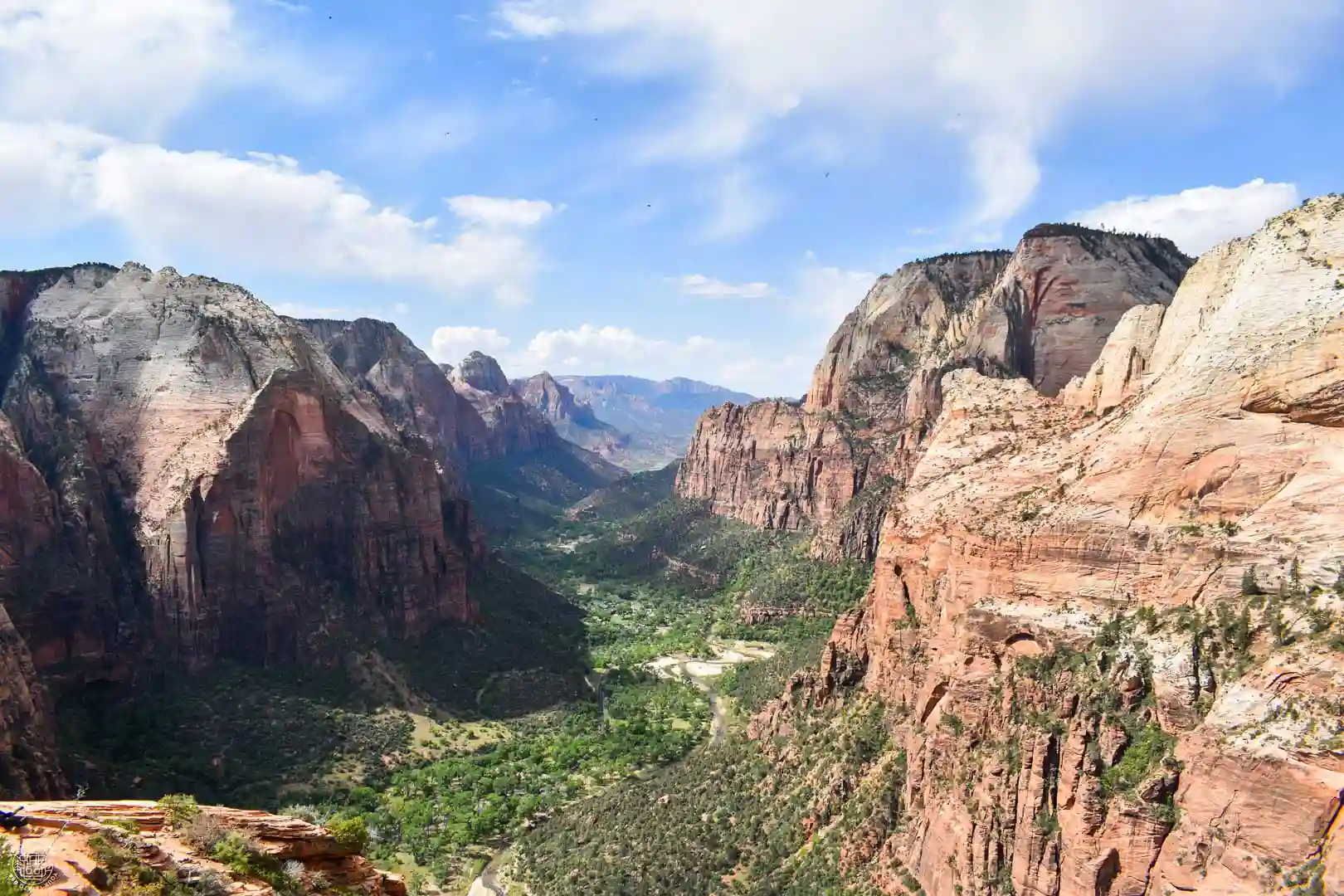
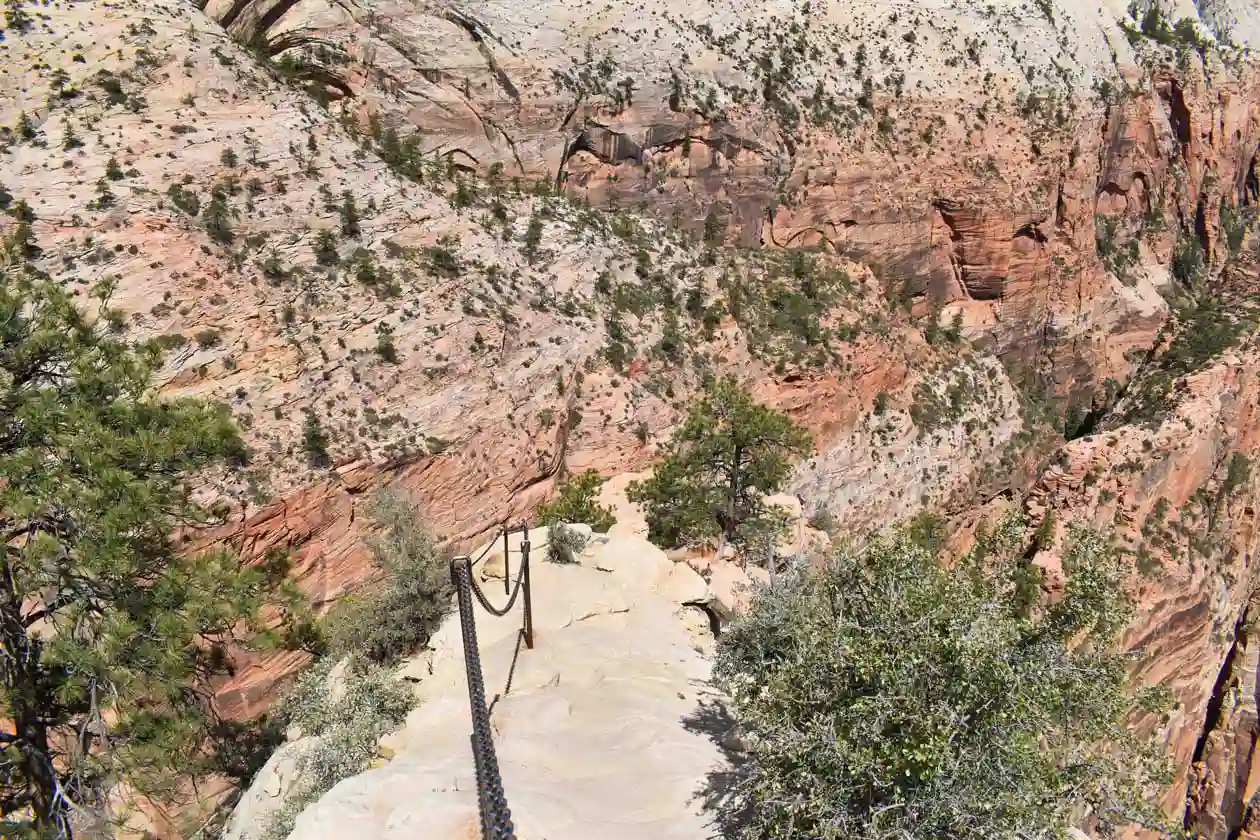
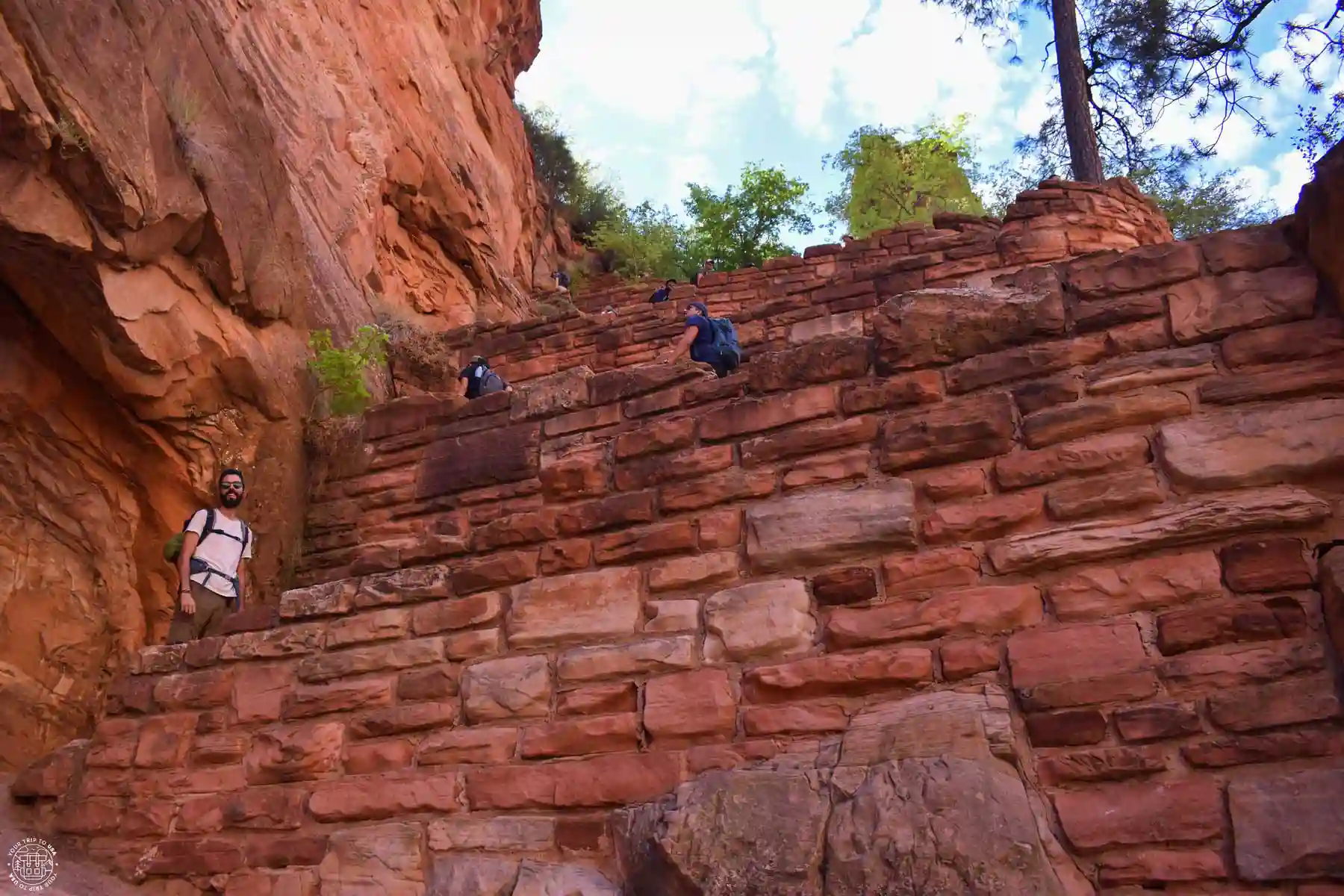
One of the most spectacular and famous hikes along the entire West of the United States—and a must-do if you have two or more days to visit the park and feel ready to tackle it. Since you need to obtain a permit and there are several things you should know before setting out on this trail, we’ve written an exclusive article about hiking to Angels Landing—we hope you enjoy it!
The Narrows
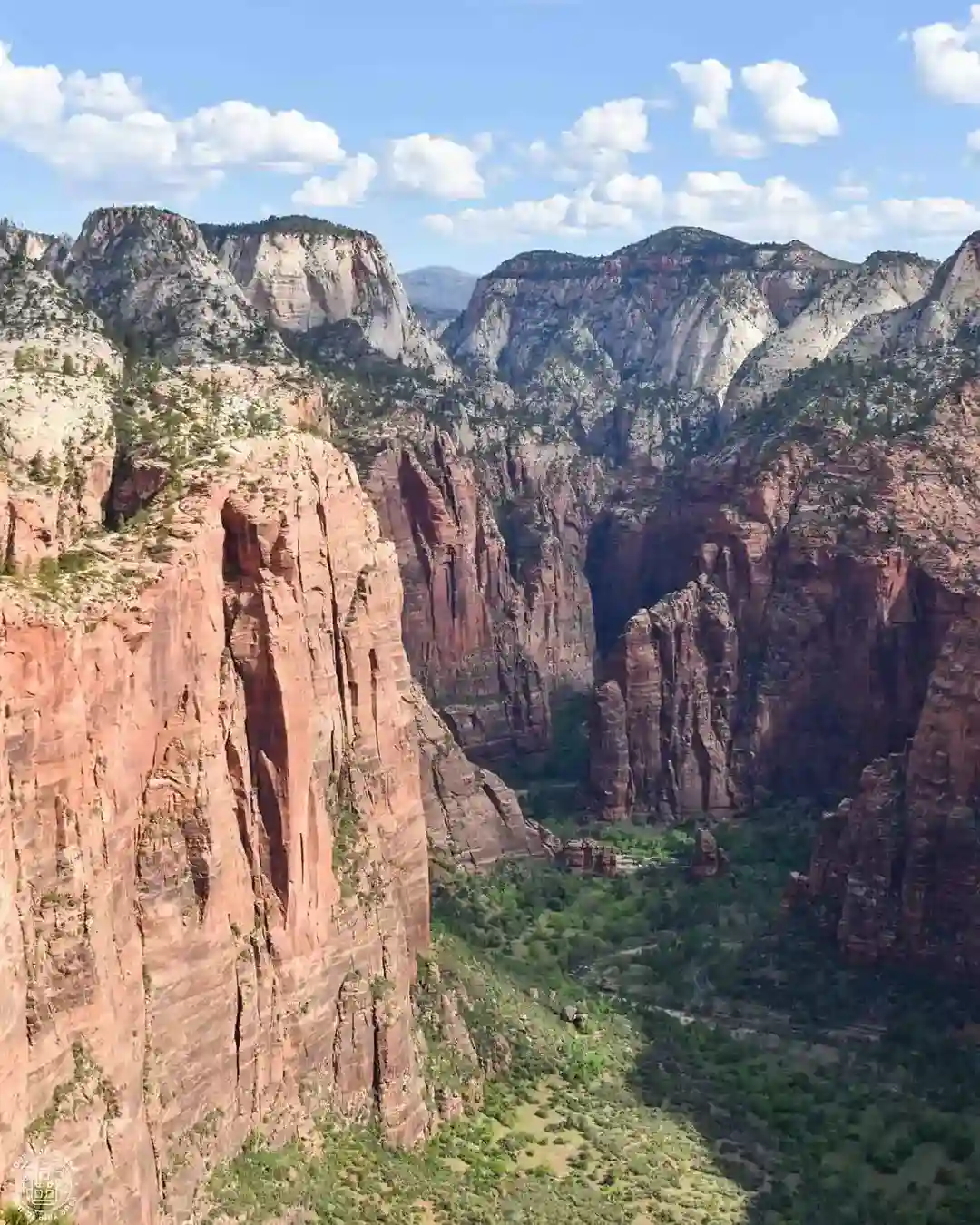
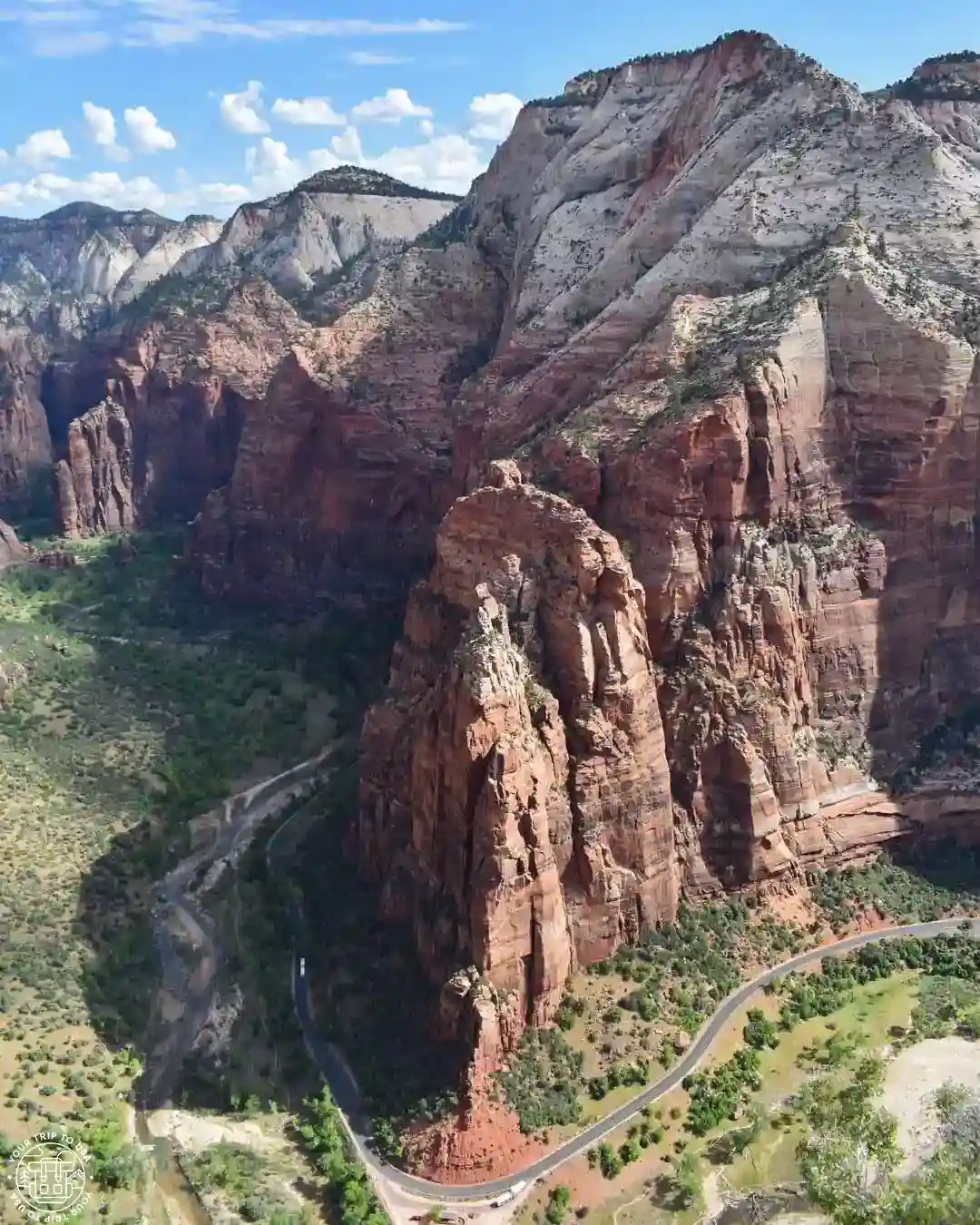
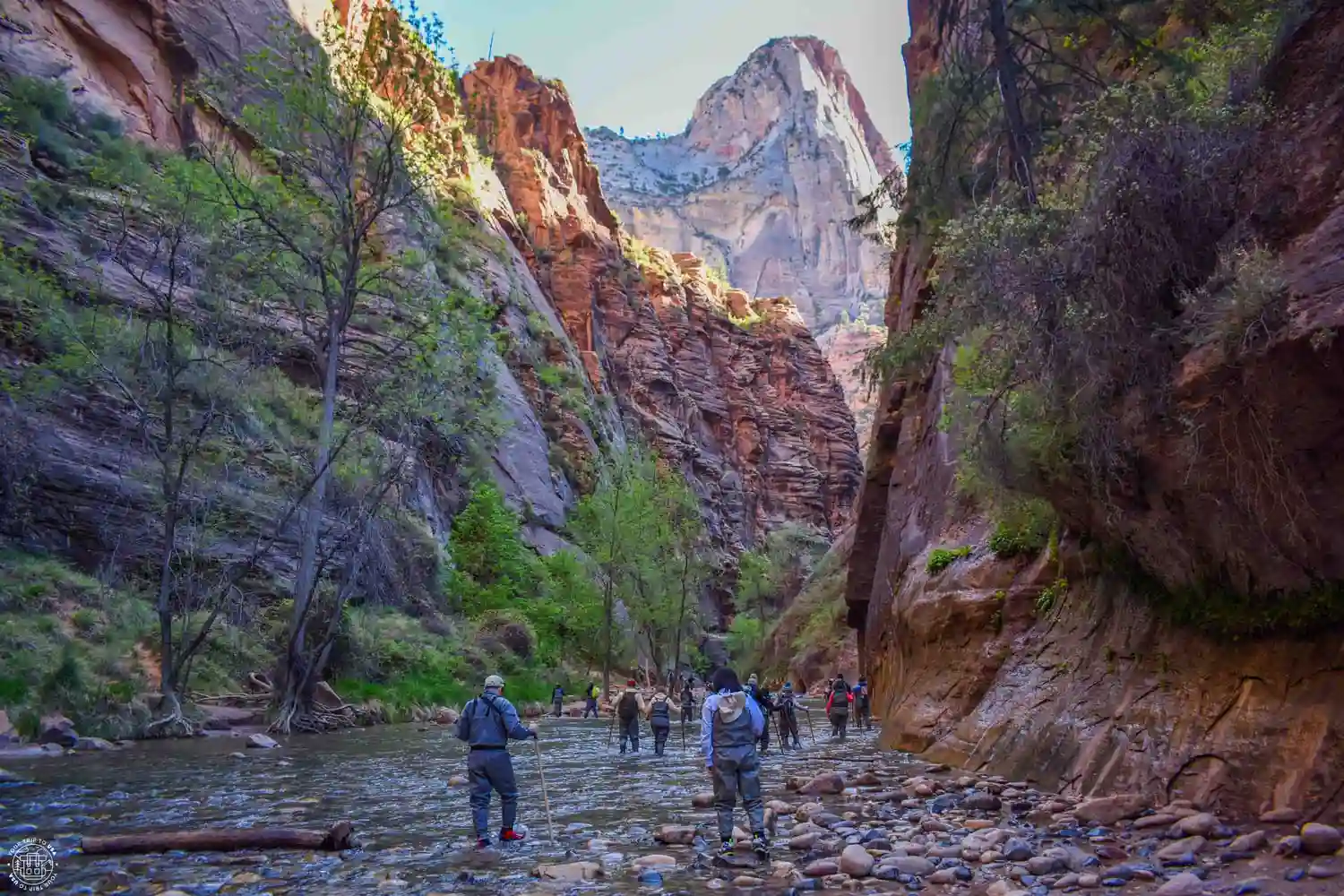
Along with the hike up to Angels Landing, it is undoubtedly the park’s most famous hike. The hike takes you through the upper part of Zion Canyon along the Virgin River bed itself, making it a very special route—both for its beauty and for the dangers involved. It’s not a hike for everyone, as you need to be in good physical shape and well-prepared.

-Meeting point: Hurricane
-Duration: 4 hours
😉 Free cancellation up to 24h in advance
Here are some tips for the hike:
- 🥾 Put on hiking boots—preferably ones with a stiff toe cap to protect your feet
- 🥢 You'll need a hiking pole—it's very easy to trip or slip, and this will give you extra support
- ⛈️ Check the flood risk on this website, as afternoon thunderstorms are common in the summer and can double or even triple the river's flow, turning the canyon into a death trap
- 🏊🏻 Most of the route is through water that's between your ankles and knees, but if you want to complete the entire route, you may have to swim at some point
- 👕 Even though it gets very hot in the summer, much of the canyon is in the shade, and the water temperature helps keep the air temperature down. Be sure to bring an extra layer!
- ❄️ During the rest of the year, the water temperature is very low, so it's essential to bring the right gear. You can rent a wetsuit and an electric bike in Springdale so you don't have to take the bus.
- 🎒 It's a good idea to bring a waterproof backpack so your belongings don't get wet
- 🦠 The Virgin River naturally contains toxic cyanobacteria; it is important not to drink the river water or go hiking with open wounds exposed to the water, as this can be very harmful to your health
To get to the trail, take the park shuttle bus, get off at the last stop (Temple of Sinawava), and walk 20 minutes north along the Riverside Walk—that's where the adventure inside the canyon begins!
🚶🏻 Book this tour to The Narrows—which includes all equipment, transportation, and a specialized guide—from Springdale, and forget about everything else
Emerald Pools Trail
The Emerald Pools are three ponds of crystal-clear water located at different levels along the mountainside and connected by a small stream. One of their distinctive features is that each pool has its own waterfall, the flow of which varies depending on the time of year and whether it has rained recently.
If you want to visit them all, you’ll need to hike a 3-mile (5 km) out-and-back trail with 755 feet (230 m) of elevation gain. Along the way, you’ll enjoy magnificent views of Zion Canyon and the surrounding cliffs.
-Meting point: Kanab
-Duration: 3 hours
😉 Free cancellation up to 24h in advance
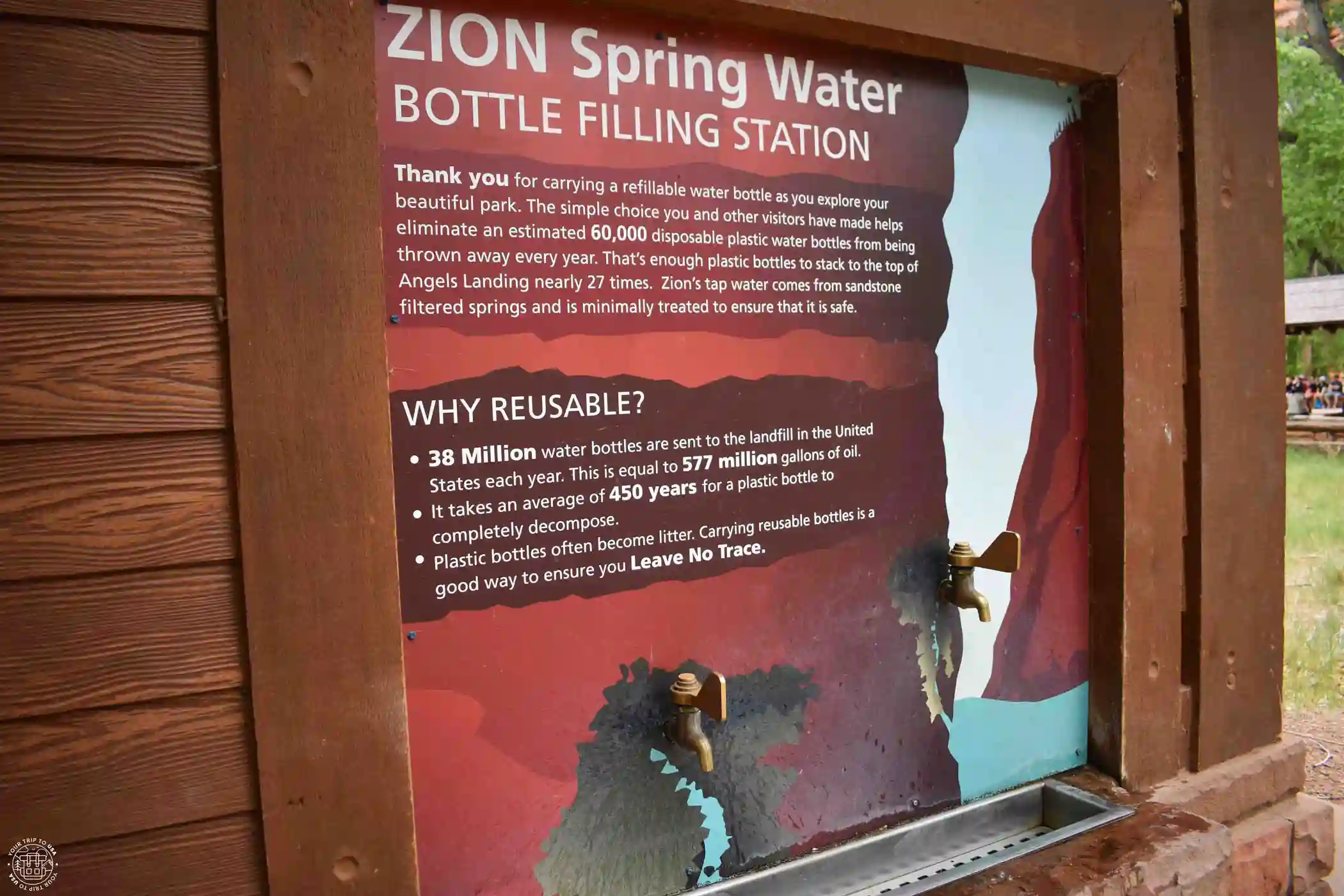
To get there, take the shuttle bus and get off at the Zion Lodge stop or at The Grotto; at both locations, you’ll find restrooms and water fountains where you can refill your water bottle. A highly recommended option is to start the hike at The Grotto and finish at Zion Lodge so you don’t have to retrace your steps.
Although much of the trail is shared by all three pools, to visit the Lower and Middle pools you’ll need to take a couple of short detours, which is why some hikers only visit the Lower pools.
Here's a brief summary of all of them:
Lower Emerald Pool
It’s the most accessible of all, since the trail is very short—just 1.2 miles or 2 km (round trip)—and has very little elevation gain (131 feet or 40 meters). That’s why it’s a highly recommended hike for families with young children or people who aren’t in great shape. What makes this trail unique is that you can partially circle it and walk behind the waterfall, offering a completely different view from the others, which makes it very popular among hikers visiting the park.
The Lower Emerald Pool Trail starts at Zion Lodge and follows the west side of the canyon parallel to the Virgin River until it turns off westward toward the pools. If you're coming from The Grotto, take the Kayenta Trail toward the pools.
Middle Emerald Pool
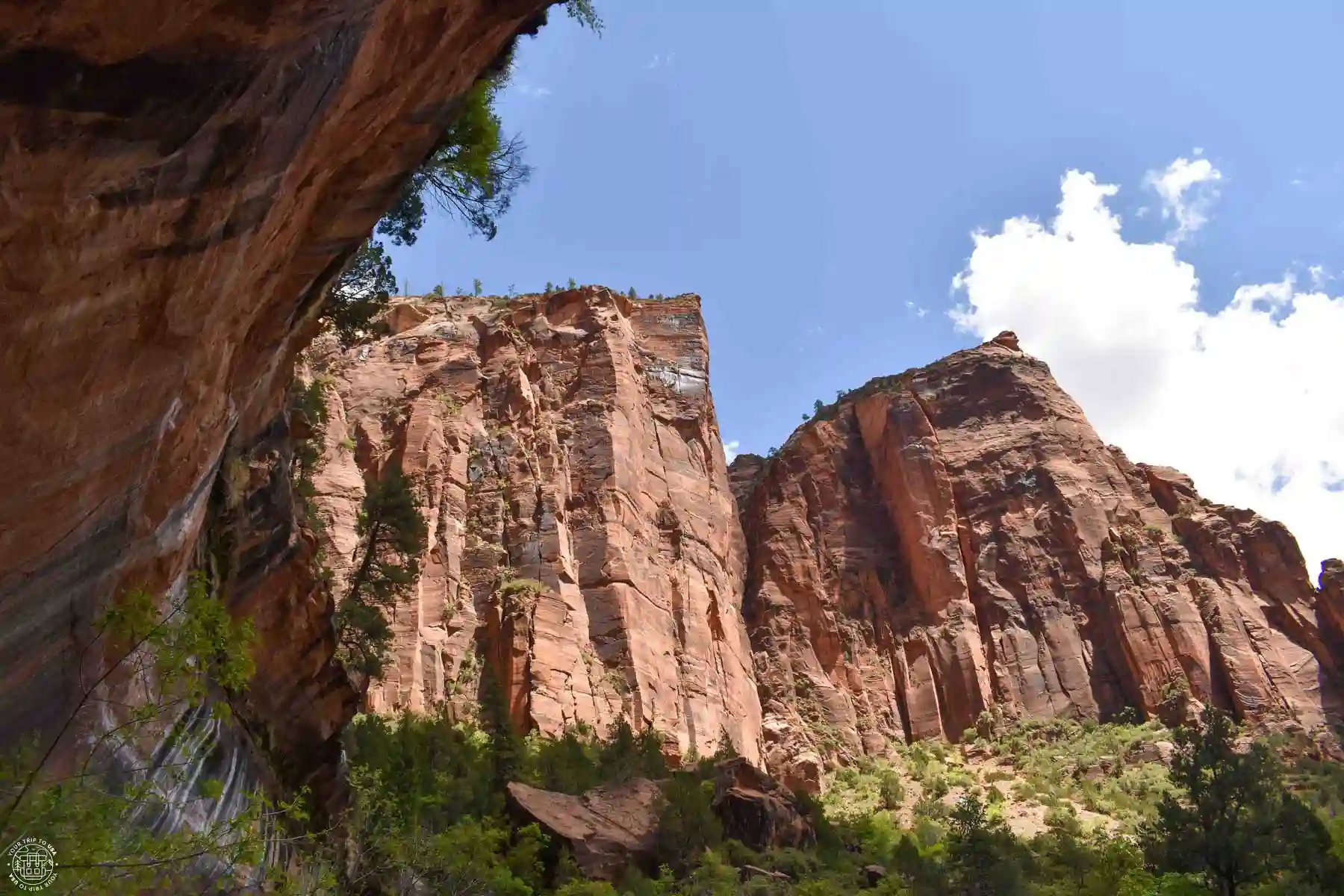
Just above the Lower Emerald Pool is the Middle Emerald Pool. To get there from the Lower Emerald Pool, you’ll need to climb a short flight of stairs and take a small detour. The distance between the two is only 320 meters, but there’s a 164 feet (50 m) elevation gain.
This pool has its own trail, the Middle Emerald Pool Trail, which also starts at Zion Lodge. Like the trail to the Lower Emerald Pool, it runs parallel to the Virgin River along the west side of the canyon until it turns west toward the pools. In fact, both trails run parallel to each other, although one is at a higher elevation than the other. If you want to visit both pools, you can take a loop hike starting at Zion Lodge, going out on one trail and returning on the other.
When we visited this pool in early May, it was practically dry.

🚐 The U.S. is a paradise for traveling by camper van or motorhome: there are plenty of campgrounds, wonderful places to stay overnight for free, and amenities around every corner.
If you'd like to try this way of traveling, the United States is the place to do it!
💸 And you can save a lot of money on lodging and food!
➡️ We always book through this rental search engine because they work with all the companies and have great deals.
Upper Emerald Pool
And finally, the Upper Emerald Pool, located at the highest point of the trail. From the Middle Trail, you’ll need to hike 0,6 mile or 1 km (round trip) with a 656-feet (200 m) elevation gain. The trail is a dead end, so you’ll have to retrace your steps and head back down to Zion Lodge—either via the Lower or Middle Trail—or to The Grotto via the Kayenta Trail.
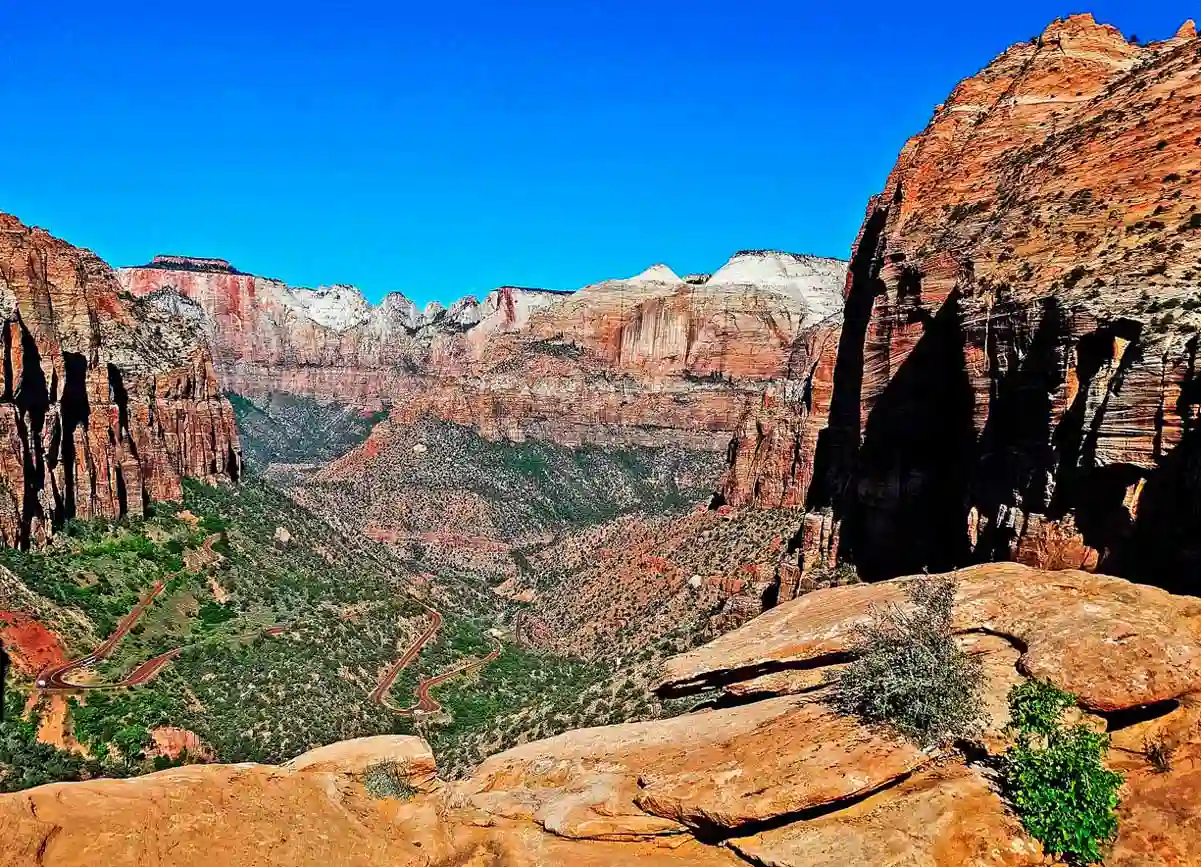
Canyon Overlook Trail
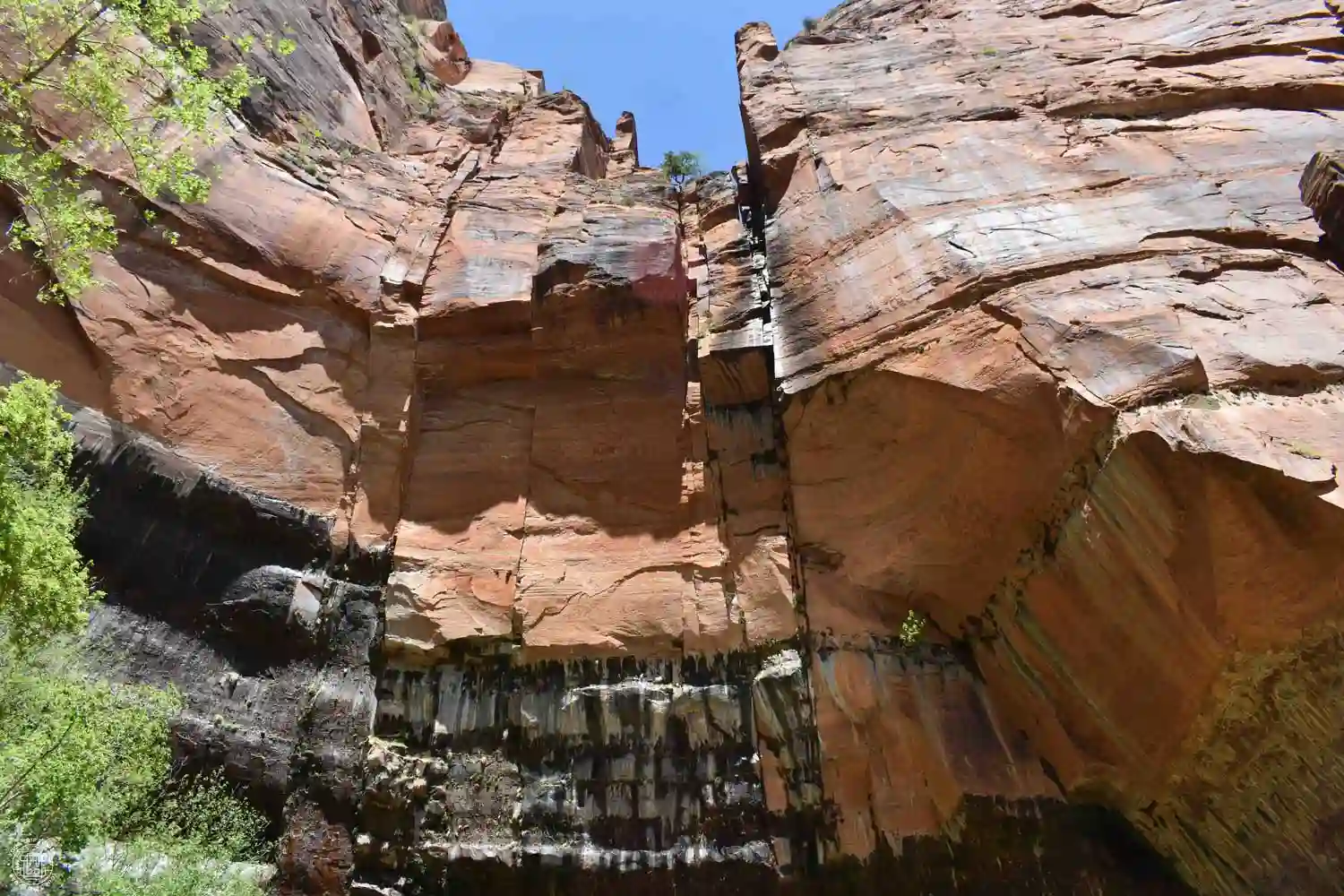
One of the best viewpoints overlooking Zion Canyon —and by far the most accessible of them all—since it’s located very close to the Mount Carmel–Zion Highway. In fact, the trail is 1 mile or 1.6 km long (round trip) with an elevation gain of about 130 feet (40 m), making it an easy hike. It shouldn’t take you more than 20 minutes to complete the hike—but we can’t guarantee how long you’ll spend taking photos at the overlook! 😉
To get there, take the Mount Carmel–Zion Highway; it begins at the exit of the first tunnel heading toward Kanab and Bryce Canyon, so it’s very easy to miss it and have to turn around. Keep in mind that the parking lot is small and tends to be full.
Although it can be done with children, this trail is not the most suitable for them, and you must remain vigilant at all times, since the path is narrow and sometimes exposed, and any fall could be fatal.
Riverside Walk
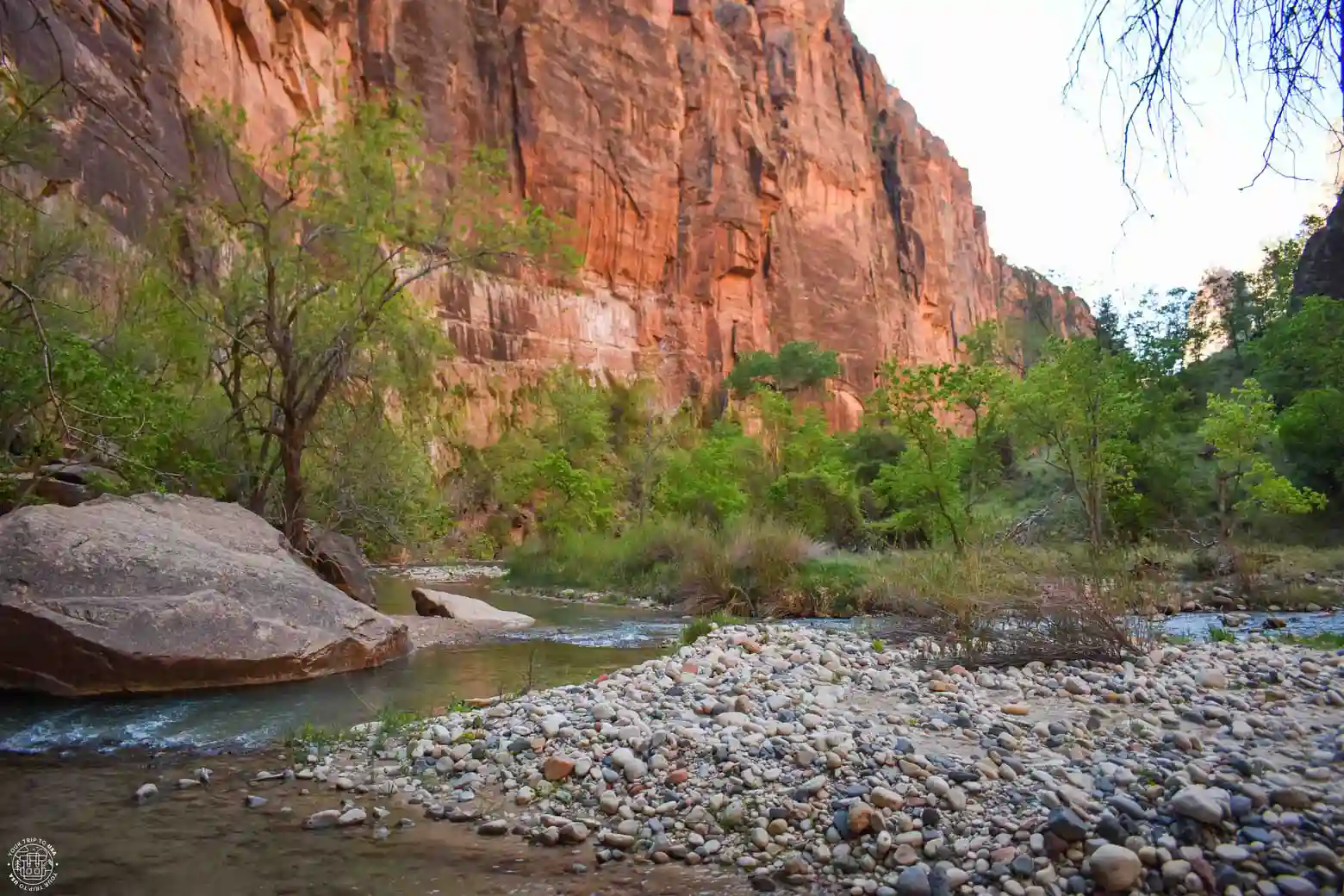
This short trail with very little elevation gain is located in the upper part of Zion Canyon; it’s 1.9 miles (3 km) long and is considered an easy hike. It takes you to a natural amphitheater and the start of the hike through The Narrows, the walk can take about 1 hour, depending on how many stops you make. To reach the trailhead, take the park shuttle bus—the Zion Canyon Line—to the last stop, called Temple of Sinawava.
Watchman Trail
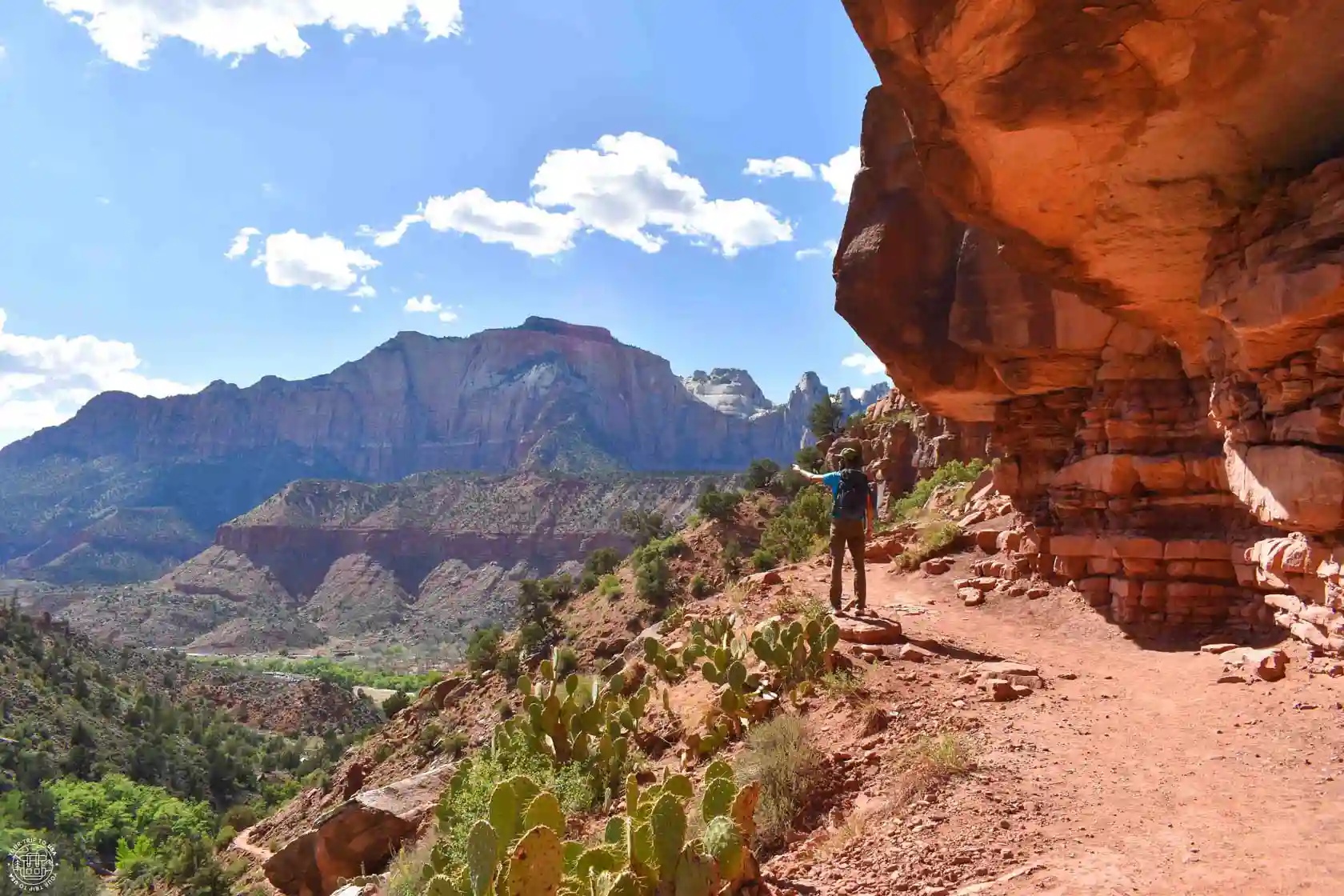
This moderate-difficulty trail is a good alternative to Emerald Pools for a half-day hike. It’s perfect to combine with a visit to Zion Canyon, and from its overlook, Watchman Overlook, you’ll enjoy great views of the lower part of the canyon and the town of Springdale, one of the best places to stay in Zion.
The trail, which is 3 miles or 5 km long (round trip) and has an elevation gain of 535 feet (163 m), will take you at least a couple of hours. Although the trail isn’t difficult, it does have some exposed sections, and neither these sections nor the overlook have guardrails, so keep this in mind if you’re hiking with children. The trailhead is at the Zion Visitor Center, and don’t forget to bring plenty of water, as there is no shade along the way.
Pa'rus Trail
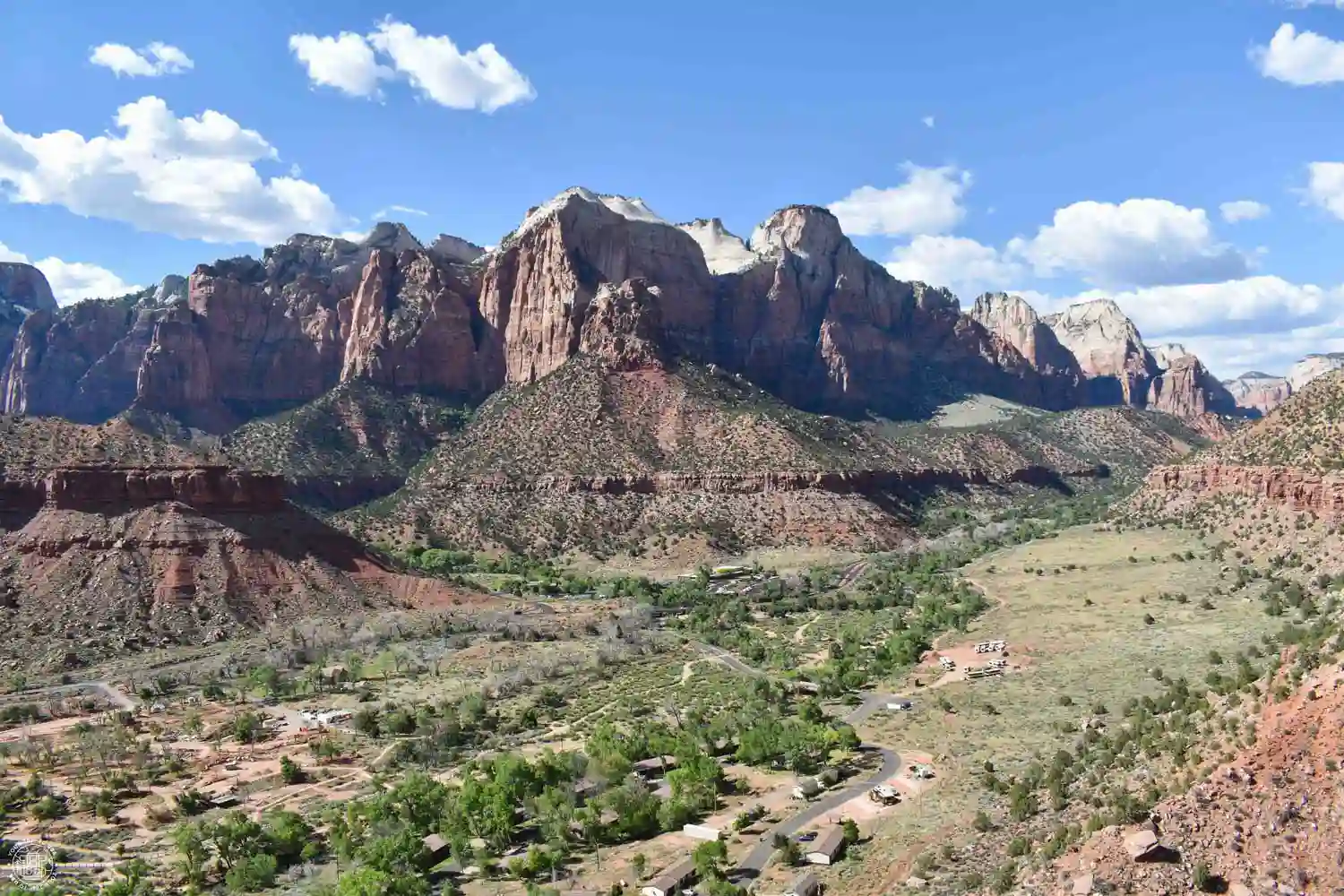
This 3.5-mile or 5.6-kilometer (round-trip) linear trail winds through the canyon floor parallel to the Virgin River between the Zion Canyon Visitor Center and Canyon Junction. With a minimal elevation gain of just 141 feet (43 m) and classified as easy, it’s ideal for families or people who aren’t in top shape. Plus, you can hike it one-way, since you can take the bus back to the Visitor Center from the stop at the end of the trail.
 NO FEES CARD FOR THE UNITED STATES
In the U.S., you'll pay for almost everything by card. If you use one from your regular bank, you'll get hit with a ton of currency conversion fees.
💡 That's why we recommend to get the Wise card. There's no maintenance fee, and you can:
💸 Withdraw $250/month in any currency with no fees
💳 Do payments in any currency with no extra fees
Observation Point
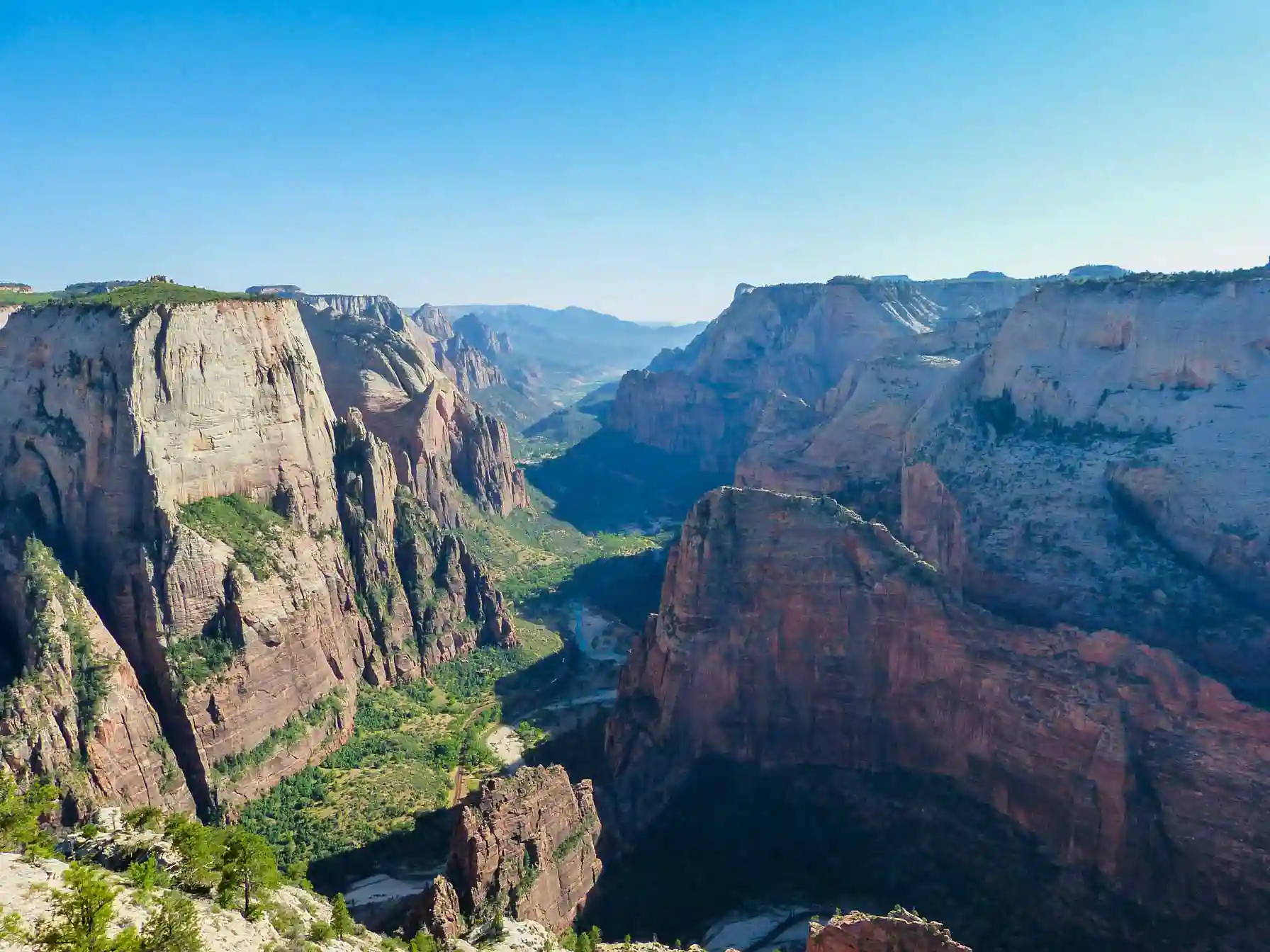
The most panoramic overlook in Zion Canyon and one of the best, along with Angels Landing. Located at the highest point of the canyon, it offers panoramic views of the national park, including some of its most notable landmarks, such as the Virgin River, Angels Landing, The Organ, and Big Bend.
From Zion Canyon itself, starting at Weeping Rock, it is no longer possible to reach this overlook due to a rock slide that blocked the trail in 2019. The only possible route is the East Mesa Trail, which runs along the same plateau where the overlook is located. The trail is 7 mile (11.3 km) long with an elevation gain of 699 feet (213 m) and is not difficult, although it is considered intermediate due to its length. The cliff is very high and there are no guardrails, so be careful when approaching it!

TRAVEL INSURANCE
FOR THE UNITED STATES
💸 Healthcare in the U.S. is very expensive, and any accident or illness can cost you a fortune.
That's why we recommend getting travel insurance that covers you in case anything goes wrong, so you don't have to pay anything up front.
💡 We always travel with Heymondo because it offers excellent medical coverage at a great price. Plus, you can get 5% OFF*!
🤓 Take a look at: Best travel insurances for the USA | Comparison + Discounts |
To reach the trailhead, take a side road off the Mount Carmel–Zion Highway that leads to the Ponderosa Ranch Resort and continue to the designated parking lot. The last section of the road is unpaved, but any car should be able to handle it without trouble as long as it hasn’t rained recently or the road is covered in snow—which is usually the case in winter. Parking is limited, and you may only park in the designated areas, so it’s advisable to arrive early or take a shuttle from the ranch.
Taylor Creek Trail
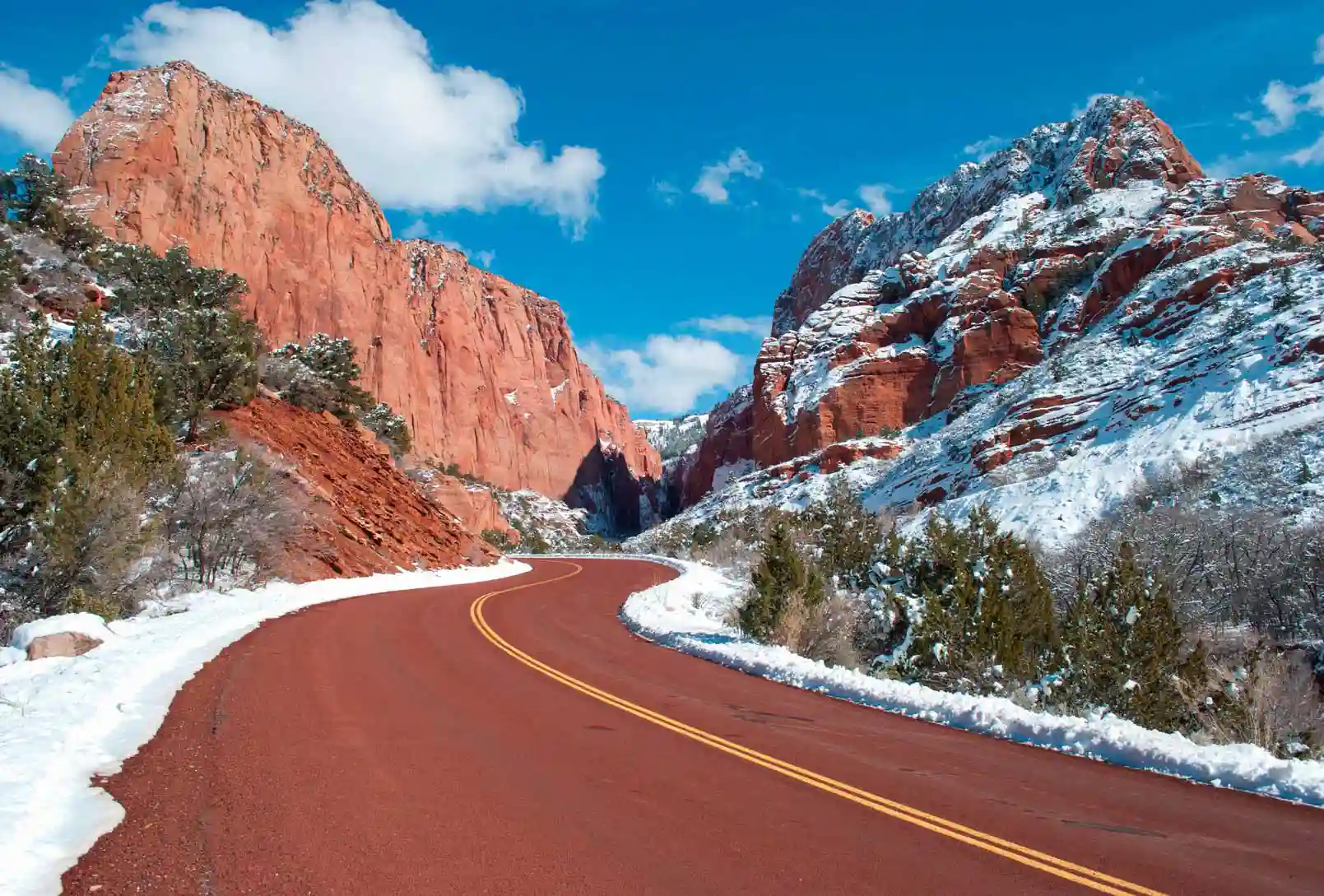
This moderate-difficulty trail takes you through a beautiful, narrow canyon to Double Arch Alcove, a cavity in reddish sandstone—known as Navajo sandstone—formed by erosion over thousands of years. Along the way, you’ll pass two cabins from the 1930s.
Is an out-and-back trail, 5.3 mile or 8.6 km long (round trip), with an elevation gain of 797 feet (243 m), and it can take between 3 and 4 hours to complete. Keep in mind that you’ll be crossing the stream several times, so in the spring your feet might get wet, and in the winter it may be completely frozen over. Although the trail is accessible year-round, it’s best to avoid hiking it in the winter.
To get there, take Interstate 15 and exit at Exit 40 toward the Kolob Canyons Visitor Center. From there, simply follow Kolob Canyons Road for 2.1 miles (3.4 km) to the trailhead.
Timber Creek Overlook Trail
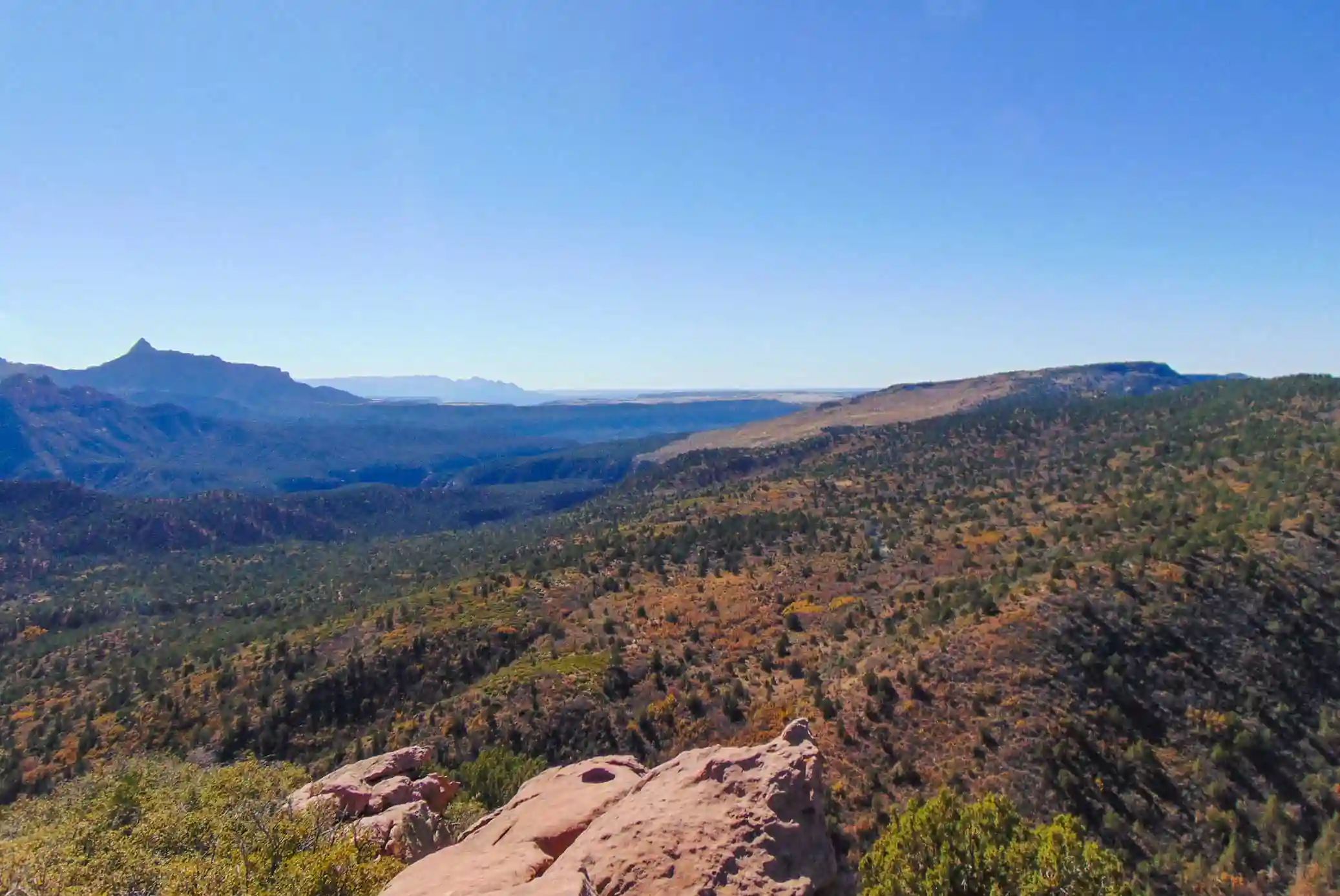
This short, easy trail along a ridge leads you to a spectacular overlook in the Kolob Canyons area. From there, you can see Shuntavi Butte, Timber Creek, Kolob Terrace, and the Pine Valley Mountains.
Is an out-and-back trail, 1.2 mile or 2 km long (round trip), with an elevation gain of 118 feet (36 m), and it can take between half an hour to 1 hour to complete. It’s ideal for families and is located in a much quieter area than Zion Canyon.
To get there, take Interstate 15 and exit at Exit 40 toward the Kolob Canyons Visitor Center. From there, simply follow Kolob Canyons Road to the end, where you'll find a parking lot.
Northgate Peaks Trail
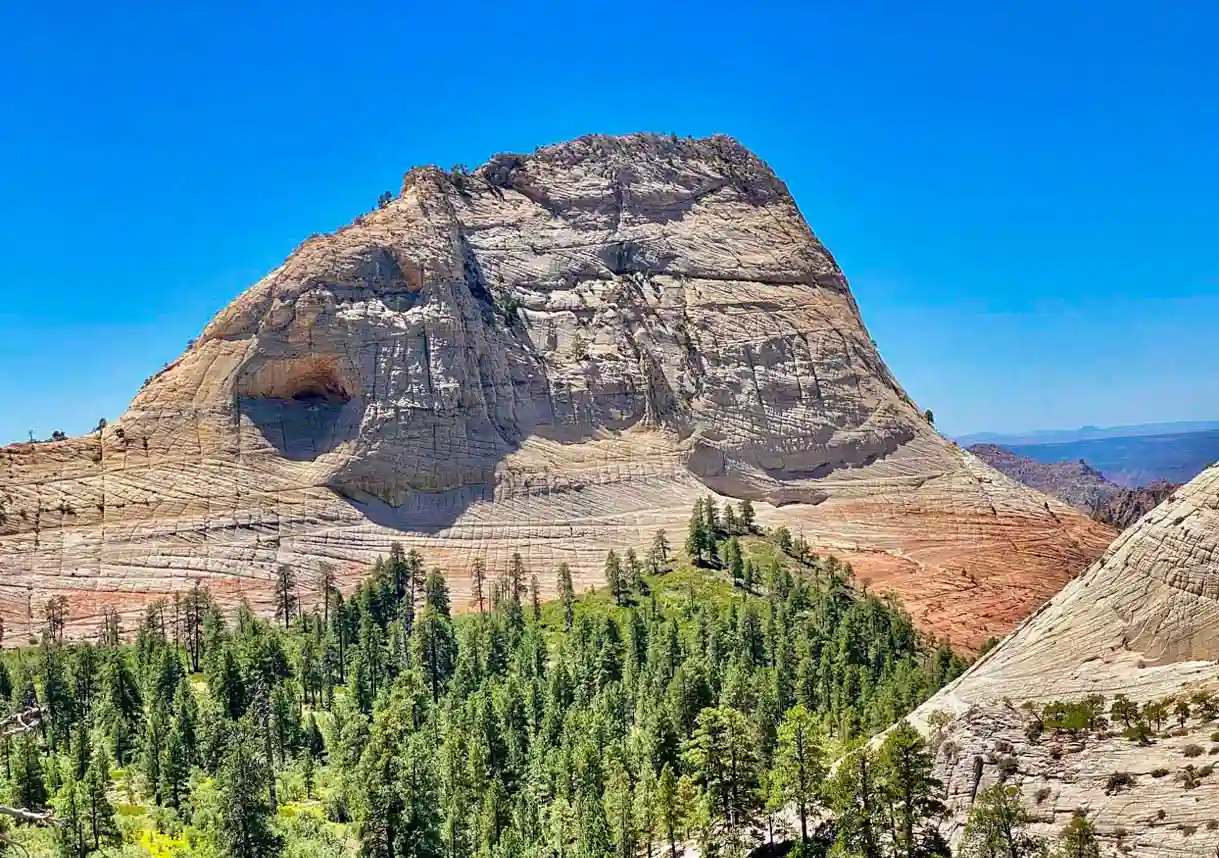
This scenic and easy trail takes you to a beautiful overlook of the Northgate Peaks, a series of grayish-sandstone rock formations. The trail is straightforward and relatively flat, surrounded by pine trees, though you’ll need to be careful—you’ll have to take two detours before finally reaching the path that leads to the overlook.
Is an out-and-back trail, 4 mile or 6.4 km long (round trip), with an elevation gain of 161 feet (49 m), and can take between 1.5 and 2 hours to complete. It’s ideal for a family outing if you want to escape the crowds at Zion Canyon.
To get there, take Kolob Terrace Road—which starts in the town of Virgin—for 15.5 miles (25 km) and park at the Wildcat Canyon Trailhead parking lot.
The Subway
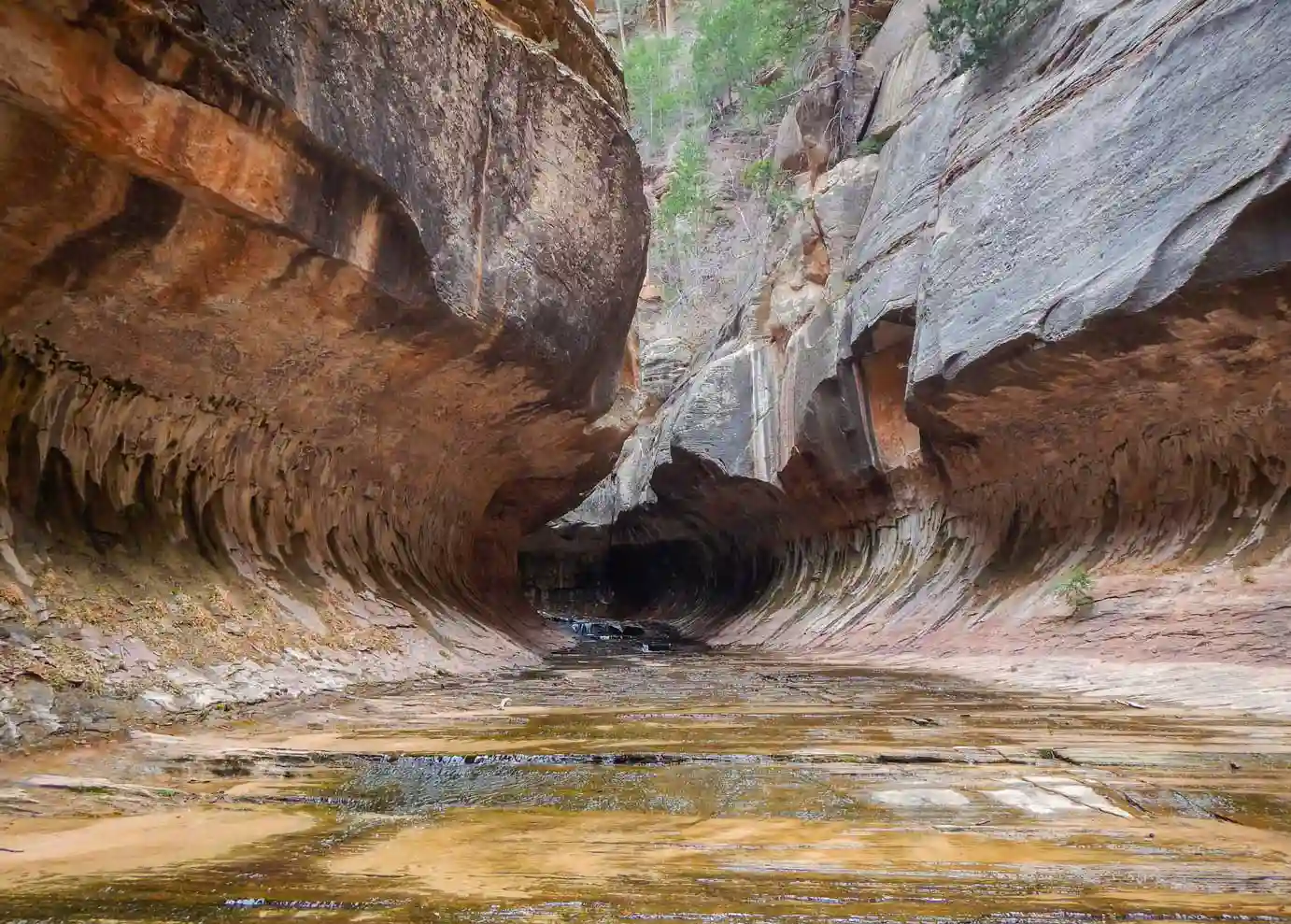
This slot canyon is one of the most spectacular hikes in Zion National Park and a much less crowded alternative to The Narrows. It is a unique, tube-shaped canyon, carved by water over thousands of years to create this incredible place.
There are two ways to do this hike: downhill or uphill. For the downhill route, you’ll need canyoning experience and the proper equipment; for the uphill route, you’ll need a waterproof suit and neoprene socks, although in the summer you might be able to do it without them.
As for the hike, it’s a long one—10 miles or 16 km with 1.312 feet (400 m) of elevation gain. In addition, depending on the time of year, the water level can vary, reaching knee-deep in some sections. Always check the weather forecast and the risk of flash floods before setting out on the hike, and be sure to wear closed-toe hiking boots, bring a hiking pole, and pack enough water and food.
To reach the trailhead, take Kolob Terrace Road from the town of Virgin and park at the Left Fork Trailhead Parking Lot. Access to the canyon is restricted, and a permit is required; this park website explains the process for obtaining one.
The Best Hikes in Zion for Every Type of Traveler
In this section, we've put together a selection of the best hikes in Zion National Park based on the type of traveler you are: adventurer, family traveler, or someone looking to relax...
Best Easy Hiking Trails
Let's start with the best easy hikes in Zion National Park—those that, due to their length and difficulty, are suitable for everyone:
- Canyon Overlook
- Riverside Walk
- Timber Creek Overlook
Best Challenging Hikes
In this category, we have selected hikes that—whether due to their technical difficulty or length— require extra effort from those who wish to tackle them:
- Angels Landing
- The Narrows
- The Subway
Best Routes for Families
In this case, we've kept the youngest members of the family in mind and have selected easy routes with no risk of falling:
- Riverside Walk
- Pa'rus Trail
- Lower Emerald Pools
Best Routes for Enjoying the Views
In this section, we've selected trails that lead you to a stunning overlook with incredible views:
- Angels Landing
- Observation Point
- Timber Creek Overlook
Best Day Hikes
For this itinerary, we've selected hikes that will take up most of your day:
- Angels Landing
- The Narrows
- Observation Point
What's the best hike in Zion National Park?
The best hike in Zion National Park will vary depending on the type of traveler, since everyone has their own tastes and opinions based on their past experiences and what they’re looking for during their visit to this national park.
- If you're looking to get your adrenaline pumping and take in some amazing views ➡️ Angels Landing.
- If you want to have a unique experience from a very special vantage point ➡️ The Narrows.
- If you want spectacular views without much effort ➡️ Canyon Overlook.
- If you're traveling with children ➡️ Riverside Walk.
- If you suffer from vertigo or are afraid of heights ➡️ Emerald Pools.
Tips for Hiking in Zion National Park
We've put together a list of tips and gear you should bring to ensure your hiking in Zion National Park is a complete success:
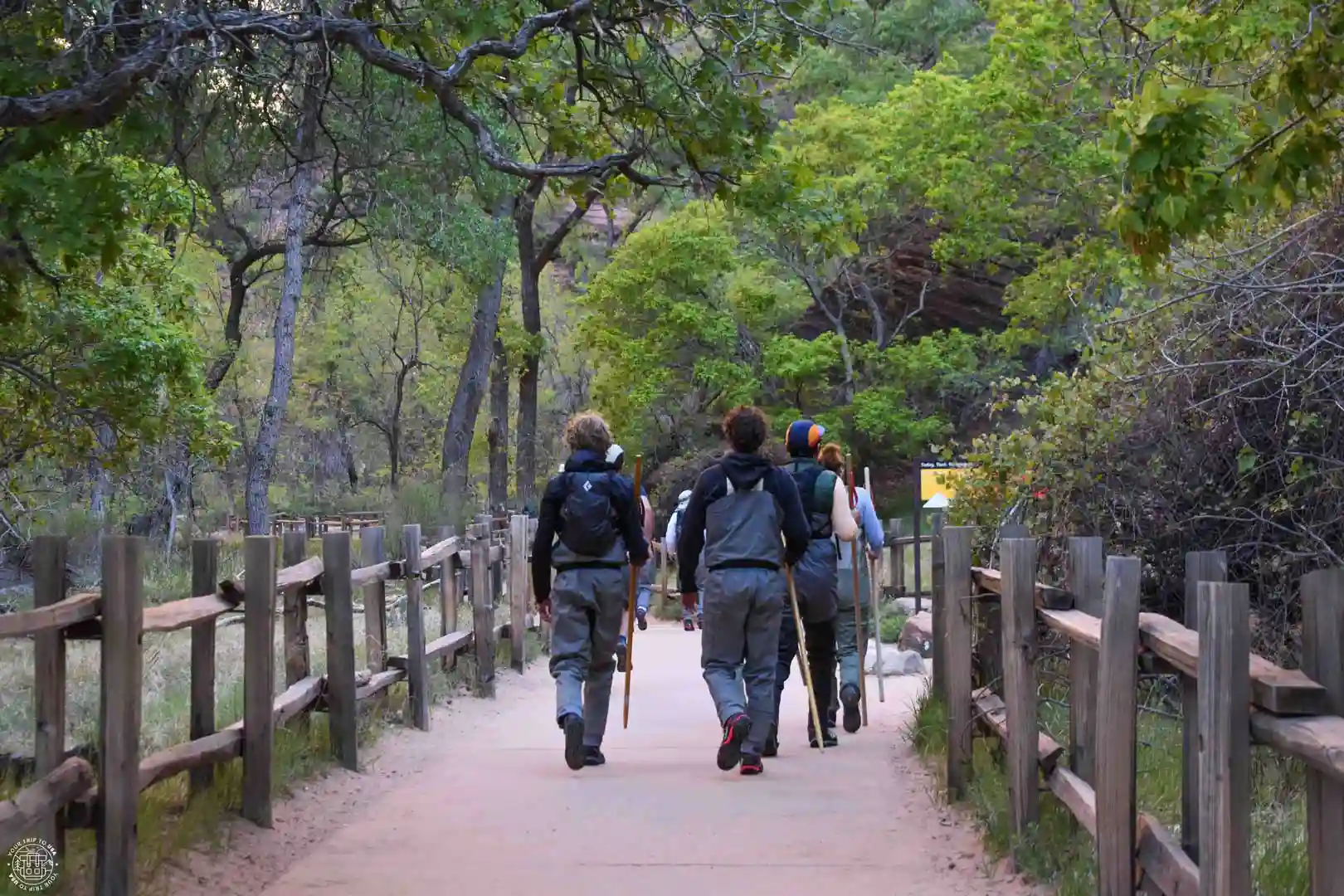
- 💧 Bring between 1/4 and 1/2 of a gallon (1 to 2 l) of water per person (up to 1 gallon or 4 liters is recommended in the middle of summer); remember that there are water fountains where you can refill your bottles
- 🌄 Start walking as soon as possible to avoid the hottest part of the day
- ⛈️ Check the weather forecast
- 🥾 Wear hiking boots—preferably mid-calf height—to protect your ankles
- 🧢 Protect yourself from the sun with a cap or hat, sunglasses, and sunscreen
- 👕 Wear breathable technical hiking or sports clothing—you'll be more comfortable
- 🧥 Bring a jacket or a light sweatshirt if you're traveling outside of the summer months
- ❄️ Temperatures are very low in winter, so be sure to wear warm clothes
- 🌡️ If you visit the park in the summer, be aware of the high temperatures at midday
- 🥪 Pack a sandwich or some snacks—there are no restaurants inside the park
- 🎒 A backpack is very useful for carrying your belongings
- 🥢 Hiking poles can come in handy, especially on trails with steep inclines
- 🪪 Remember that you'll need a permit to hike Angels Landing or The Subway, or to camp if a hike requires it. You must obtain it at recreation.gov

RENT A CAR IN THE UNITED STATES
The best way to explore the United States is by car, giving you the freedom to travel at your own pace.
🚗 Whether you’re looking for a convertible Mustang, a 4x4, or a regular car, we recommend to book through this car rental search engine
💸 This is where we find the best prices, both on the rental car itself and on full coverage insurance!
When is the best time to go hiking in Zion?
Although some times of year may be considered better than others for hiking in Zion National Park, each one actually has its pros and cons—and something that makes it special. That’s why, in this section, we’d like to tell you about each one.
🌸 Spring at Zion
Spring is an ideal time for hiking in Zion National Park, as temperatures are lower than in summer, the snow is beginning to melt, the Emerald Pools are at their best, and it’s the peak of the blooming season. In the case of The Narrows, the water level may be higher than at other times of the year, or access may even be closed if it’s too high, especially in early spring. The water temperature will be very low, so you’ll need to bring the necessary gear.
The shuttle service won't be running until mid-May, so you'll be able to drive to Zion Canyon in your own vehicle.
☀️ Summer at Zion
Summer brings the highest temperatures of the year, which can make hiking more challenging. Be careful to avoid heatstroke, dress appropriately, and bring plenty of water. This is also the time of year when there are the most visitors, and lodging prices rise significantly. The best months are June and September, when temperatures are slightly lower.
In the case of The Narrows, water temperatures are highest during July and August, so you can hike without waterproof gear and enjoy cooler temperatures inside the canyon than in the rest of the park. Be aware of afternoon thunderstorms and check for the risk of flash flooding.

INTERNET IN THE UNITED STATES
💡 The most convenient way to get internet access in the U.S. is to buy an eSIM—that way, you'll have a connection as soon as you set foot in the country. Plus, local SIM cards in the U.S. are pretty expensive.
💸 We have 2 discounts for your unlimited data eSIM for the US:
⭐5% OFF with Holafly ➡️ Excellent coverage
⭐20% OFF with eSIMFlag ➡️ Best price
🤓 Take a loot at: Best SIMs & eSIMs for traveling to the USA
🍂 Fall at Zion
During the fall months, temperatures drop again and hiking in Zion National Park becomes more pleasant; the leaves on the trees turn yellowish and eventually fall, leaving a beautiful landscape, especially at the bottom of the canyon. The bus service runs through the end of November.
At The Narrows, the water temperature is quite low, so waterproof gear is essential; however, at this time of year, the water level is low, and, with a few exceptions, you can complete the hike without any problems.
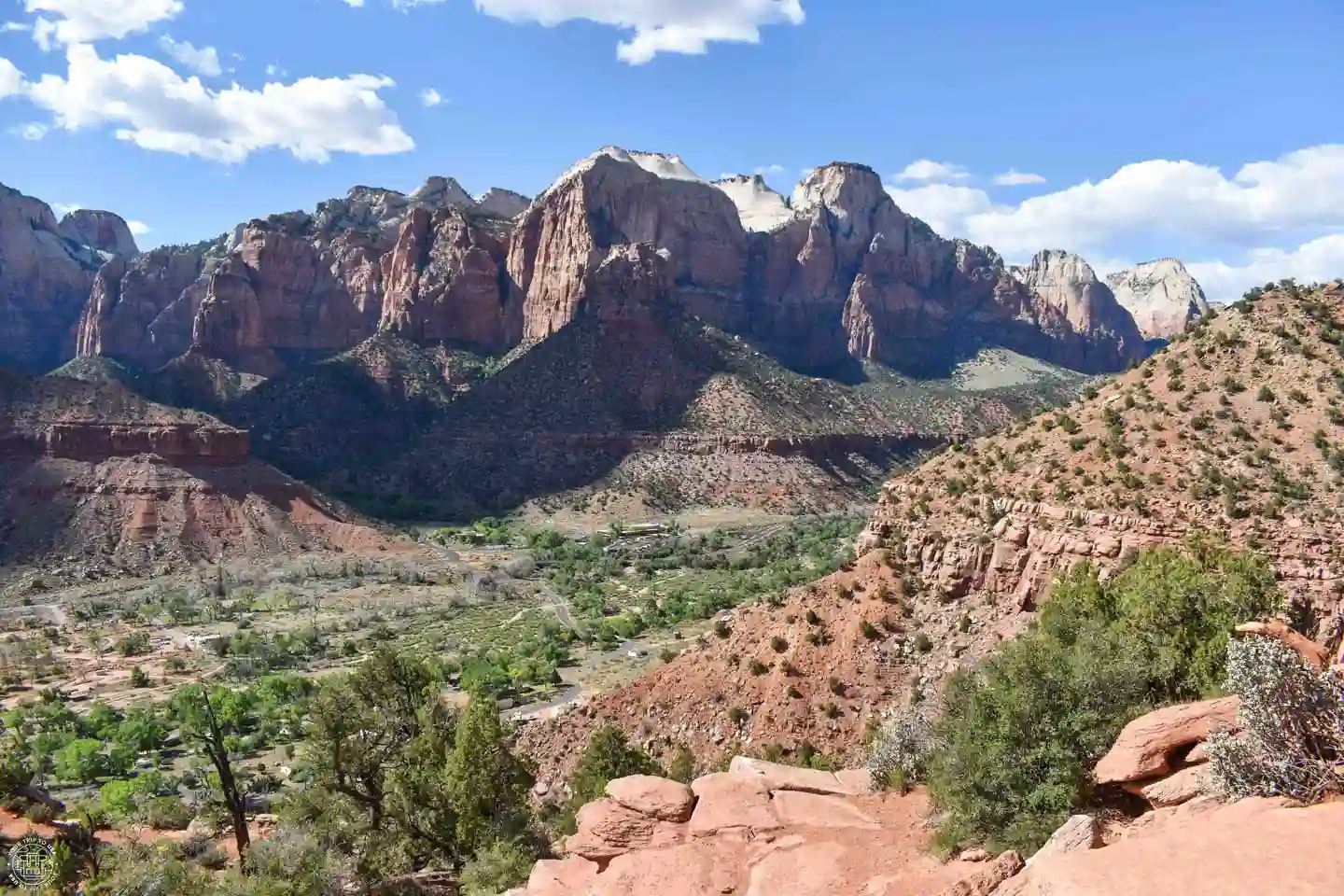
❄️ Winter in Zion
During the winter months, activity in the national park comes to a standstill; the shuttle bus service is suspended and operates only during the Christmas season. Temperatures drop significantly, and nighttime frosts are common; there may even be some snowfall. That’s why some trails in the higher elevations are inaccessible, and Kolob Terrace Road remains closed.
If you're thinking about hiking The Narrows, you should know that even though the water level is very low, the temperature will be freezing, and even if you have the proper gear, it's not recommended to hike there during these months of the year.
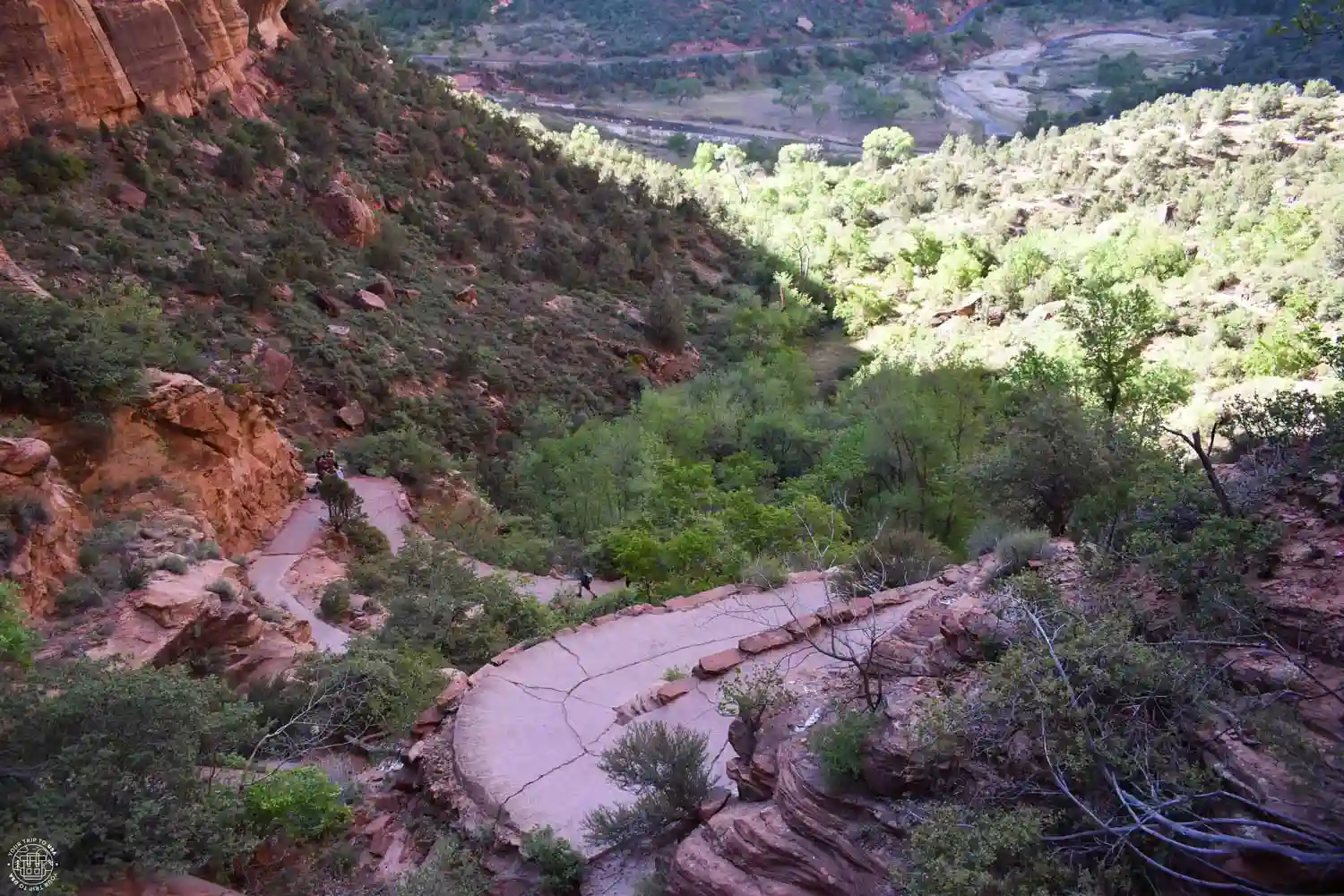
Map of the Best Hikes in Zion National Park
We've put together this very detailed map showing the best hiking trails in Zion National Park, along with access points, lodging, visitor centers, shuttle stops, and more.
Frequently Asked Questions About Hiking in Zion
What are the best hikes in Zion National Park?
Some of the best hiking trails in Zion National Park include Angels Landing, The Narrows, Emerald Pools, Canyon Overlook Trail, Observation Point, and The Subway. Your choice will depend on the time you have available, the level of difficulty you're looking for, and your hiking experience.
What is the most beautiful hike in Zion National Park?
Angels Landing and The Narrows are considered two of the most spectacular hikes in Zion. Angels Landing stands out for its breathtaking views from the top of Zion Canyon, while The Narrows allows you to hike through the spectacular Virgin River Canyon.
What is the easiest trail in Zion National Park?
Riverside Walk and Pa'rus Trail are two of the easiest trails in Zion and are suitable for most visitors. You can also choose the Canyon Overlook Trail, which is short and offers spectacular views with relatively little effort.
What is the most difficult hike in Zion National Park?
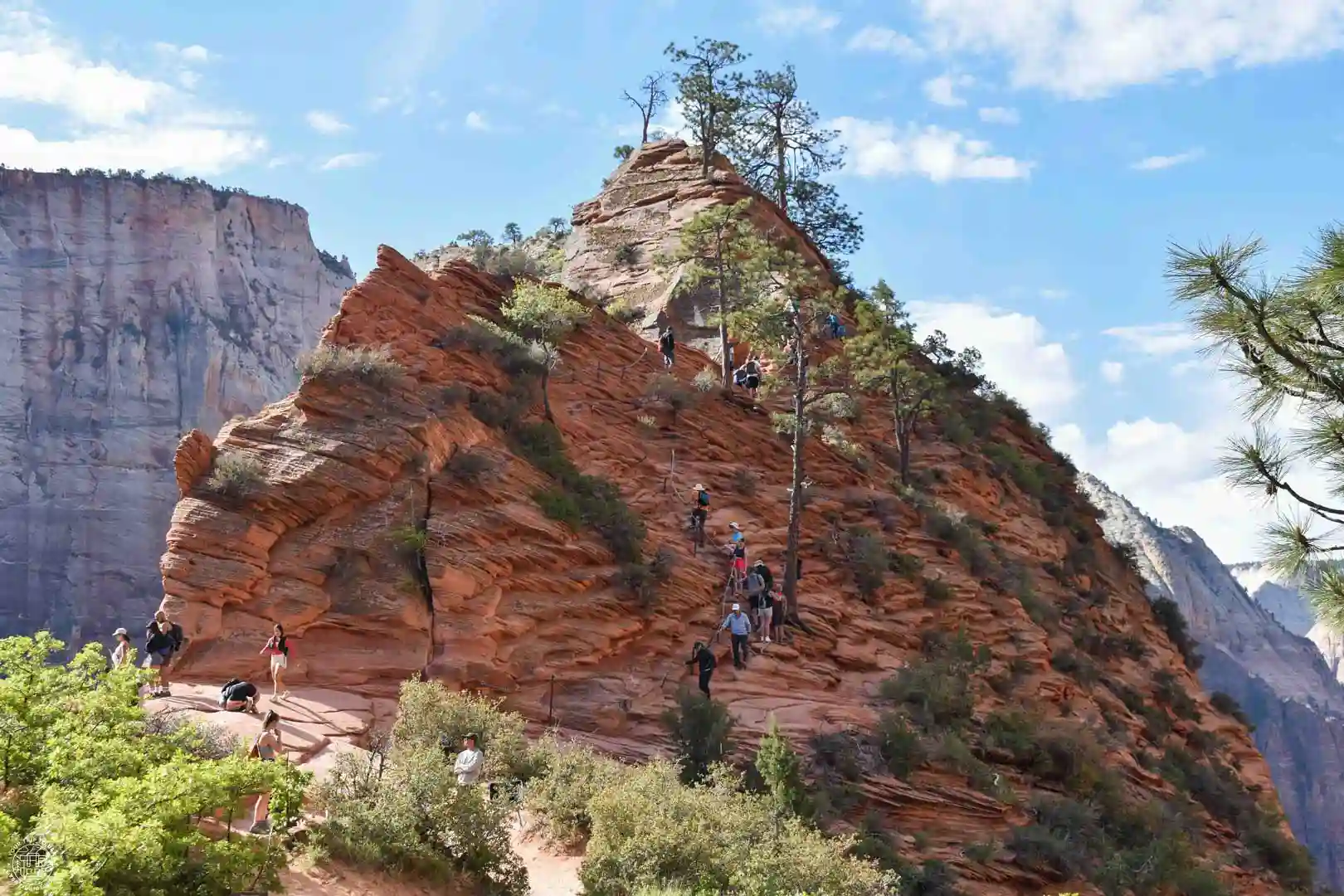
Angels Landing is one of the park’s most challenging and well-known trails, especially due to its final section, which is equipped with chains and features steep inclines. The Narrows can also be difficult, as much of the hike involves walking along the riverbed and conditions can vary. However, in our opinion, The Subway may be the most challenging due to its length and the fact that it involves walking along a riverbed.
Do you need a permit to go hiking in Zion National Park?
Not all trails require a permit. However, a permit is required to hike the final section of Angels Landing and The Subway.
Is it possible to go hiking in Zion National Park with children?
Yes. Zion has several easy trails that are suitable for families, such as the Riverside Walk, the Pa'rus Trail, and the Lower Emerald Pool Trail. However, the more exposed or challenging trails, such as Angels Landing and Observation Point, are not suitable for young children.
We hope this post on the best hikes in Zion National Park helps you choose which trails to hike and prepare for them properly!
Doc James, Don Graham from Redlands, Renata Muru, An Errant Knight, Warren LeMay, CC BY-SA 2.0 by Wikimedia Commons