

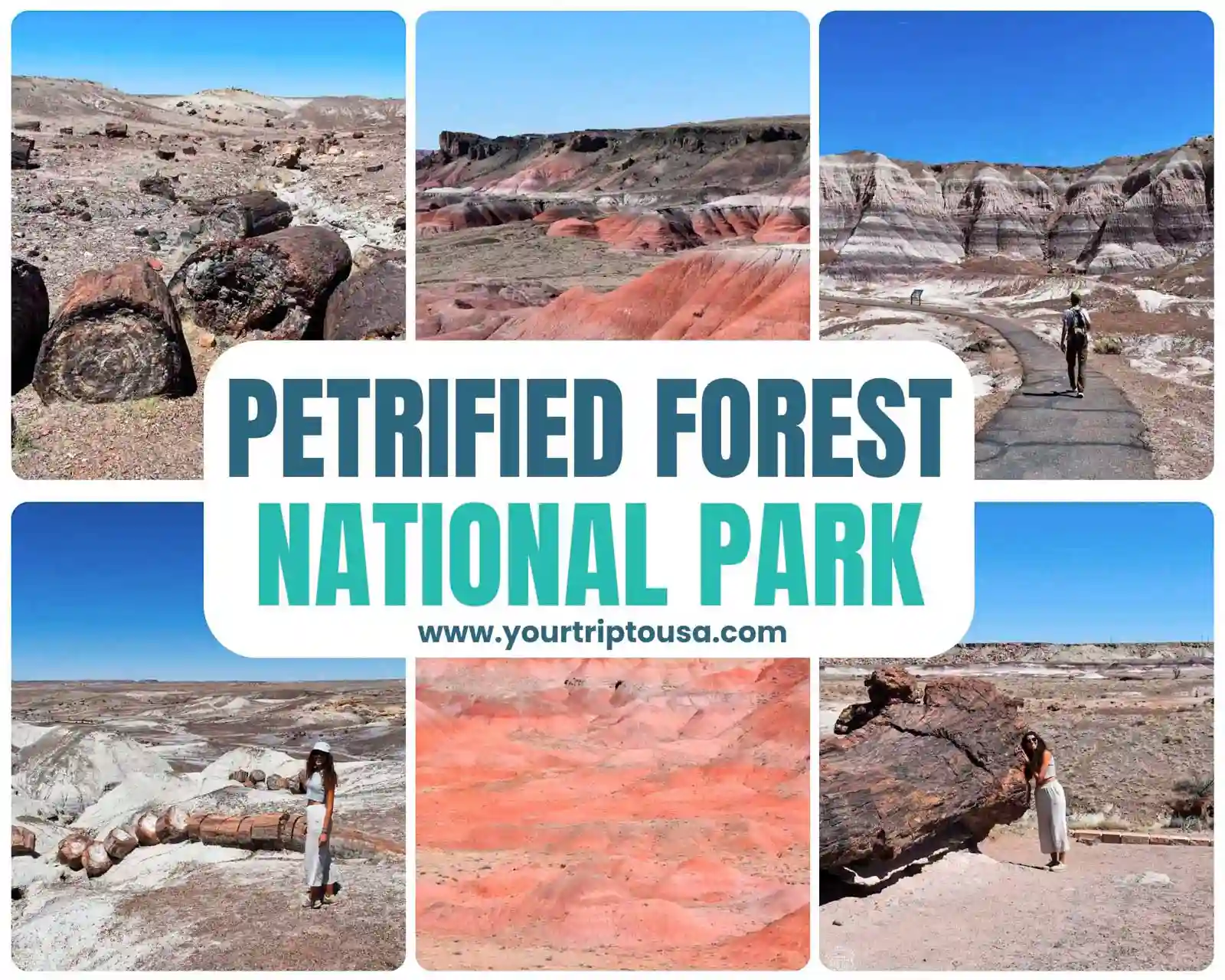
Where is Petrified Forest National Park
Petrified Forest National Park is located in northeastern Arizona, very close to the border with New Mexico. Its location makes it a particularly interesting stop on an Arizona road trip, if you are driving Route 66, or on a U.S. Southwest road trip, as it lies along Interstate 40 (I-40) and is relatively close to other tourist attractions. It should not be confused with Petrified Forest State Park, located in Escalante.
Here are some approximate driving distances to different nearby locations:
- Holbrook: 42 km or 26 mi (25 min)
- Winslow: 93 km or 58 mi (55 min)
- Canyon de Chelly: 159 km or 99 mi (1 hr 35 min)
- Flagstaff: 187 km or 116 mi (1 hr 45 min)
- Sedona: 236 km or 147 mi (2 hrs 25 min)
- Williams: 240 km or 149 mi (2 hrs 10 min)
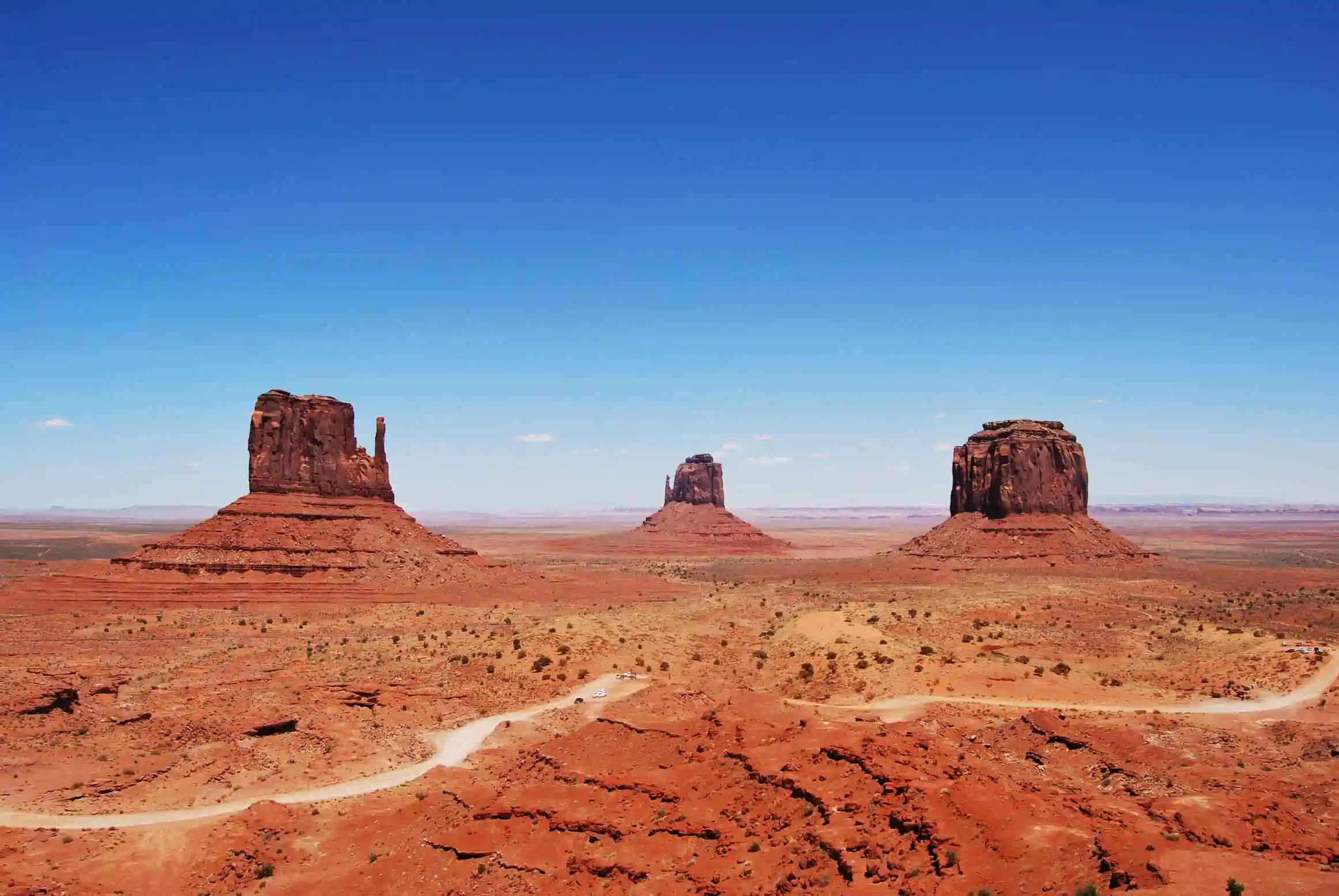
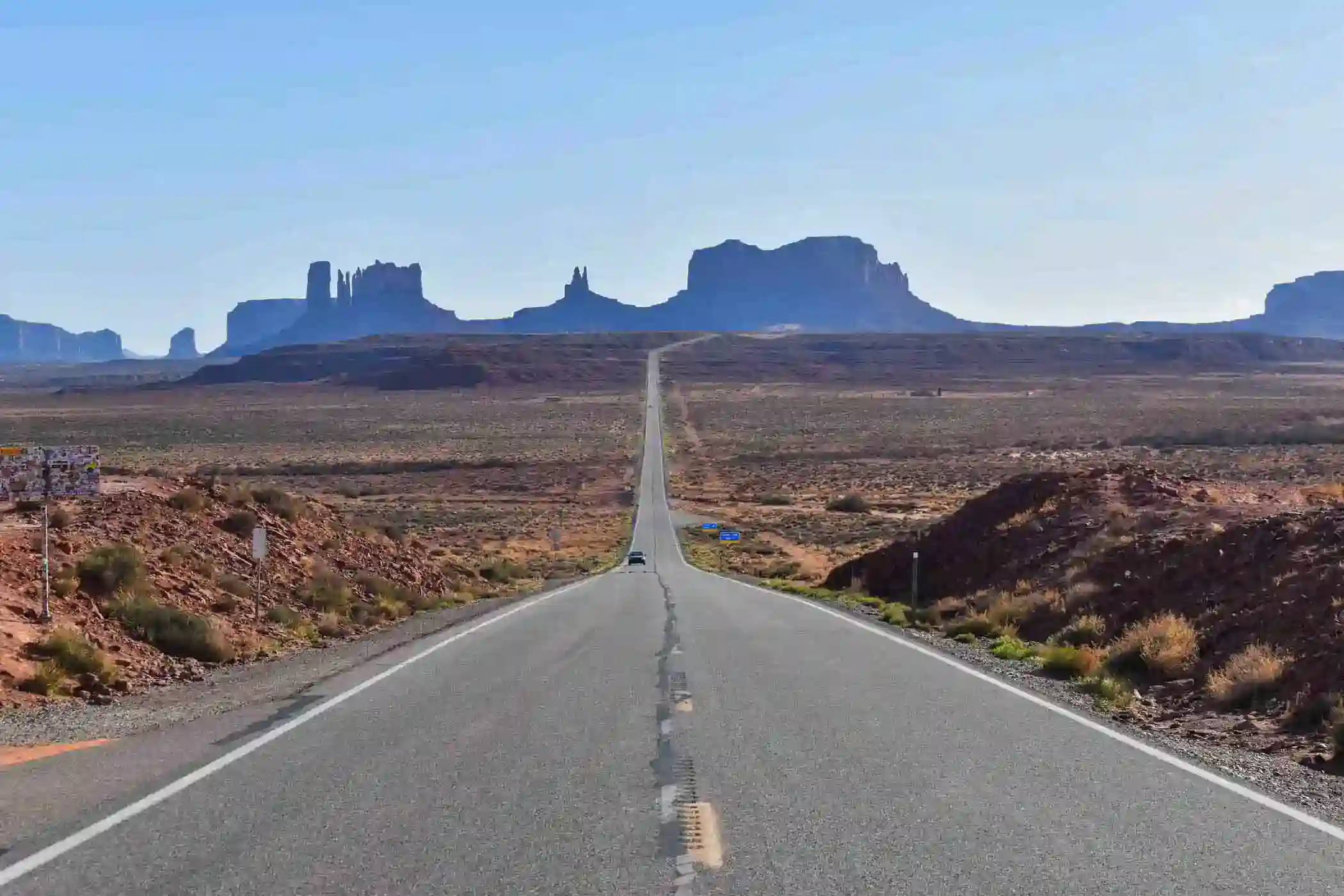
- Monument Valley: 300 km or 186 mi (3 hrs)
- Grand Canyon South Rim: 314 km or 195 mi (3 hrs 10 min)
- Phoenix: 325 km or 202 mi (3 hrs 20 min)
- Alburquerque: 335 km or 208 mi (3 hrs)
- Page: 374 km or 232 mi (3 hrs 40 min)

TRAVEL INSURANCE
FOR THE UNITED STATES
💸 Healthcare in the U.S. is very expensive, and any accident or illness can cost you a fortune.
That's why we recommend getting travel insurance that covers you in case anything goes wrong, so you don't have to pay anything up front.
💡 We always travel with Heymondo because it offers excellent medical coverage at a great price. Plus, you can get 5% OFF*!
🤓 Take a look at: Best travel insurances for the USA | Comparison + Discounts |
What it is Petrified Forest National Park
The Petrified Forest is one of Arizona's three national parks, along with the Grand Canyon and Saguaro. It's one of the most unique places to visit in Arizona and one of the least-known gems on the U.S. Southwest—we loved it, and it exceeded all our expectations!
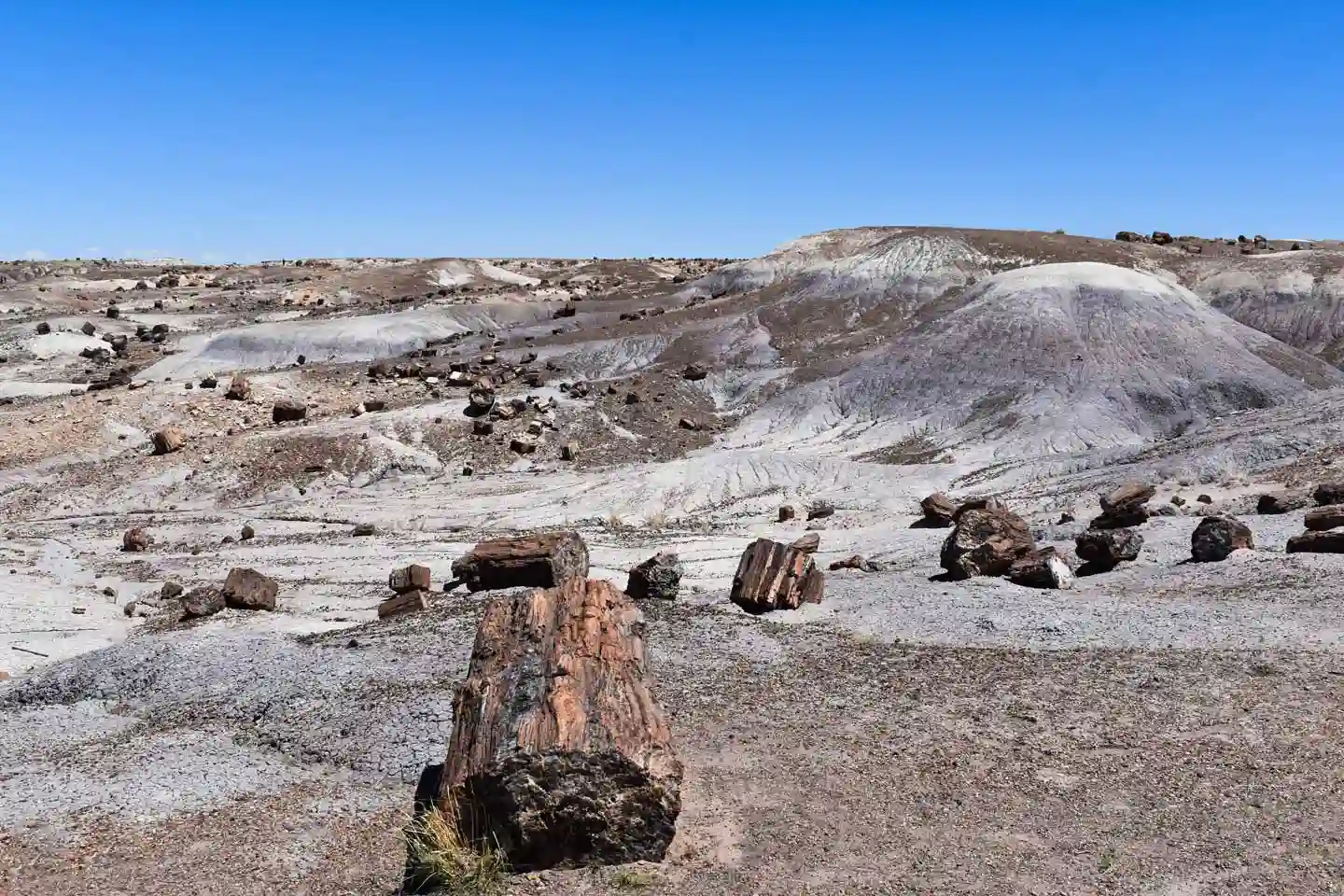
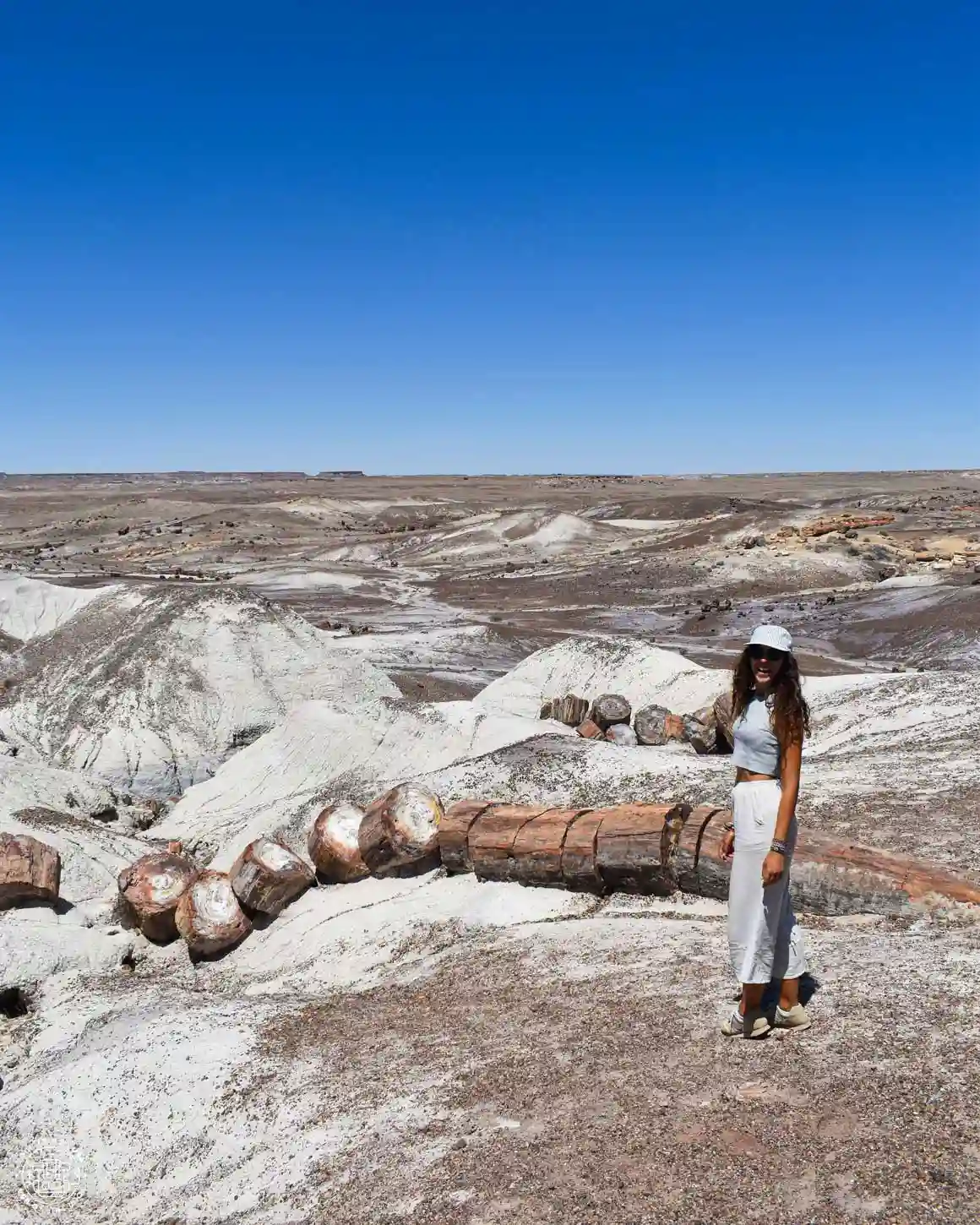
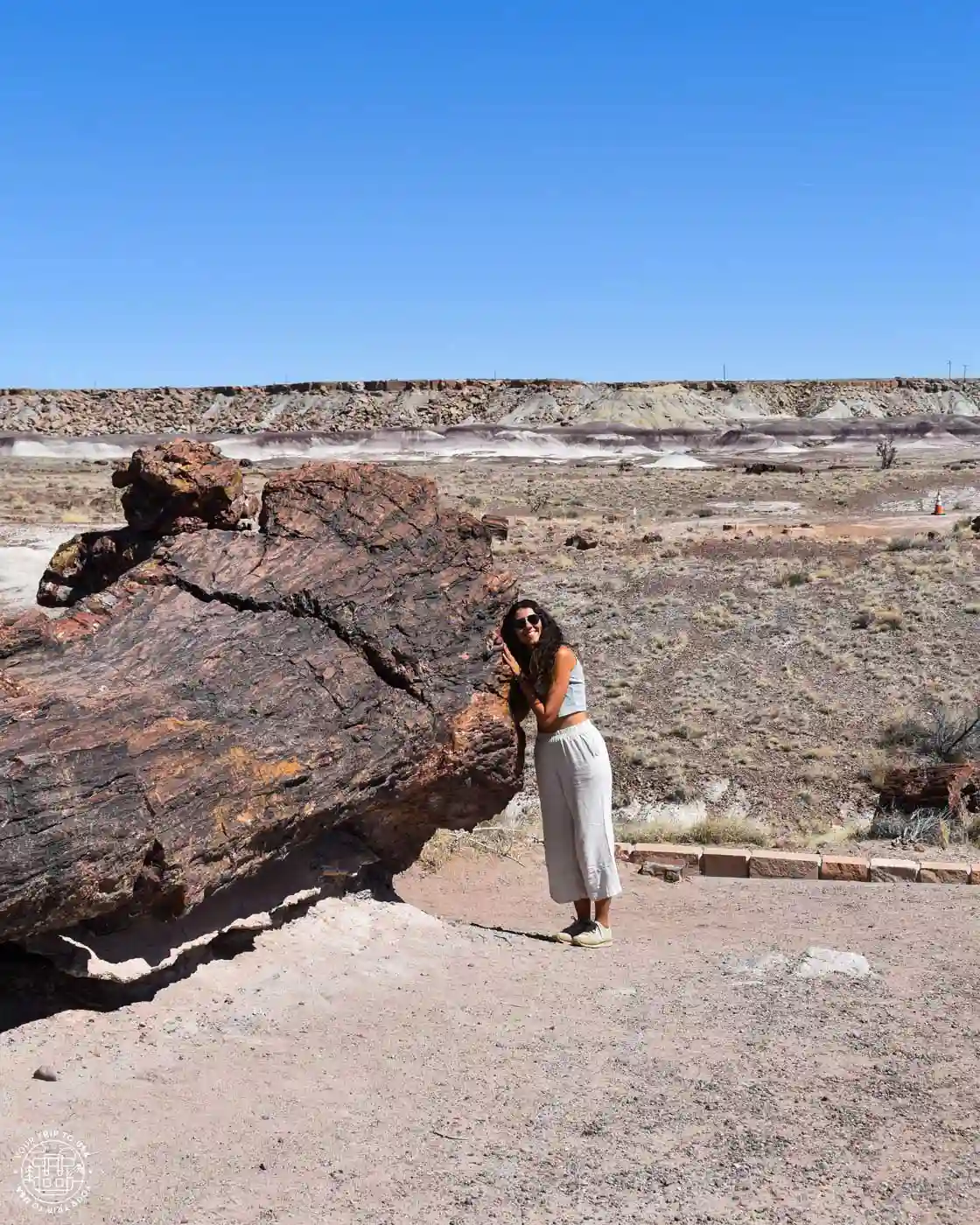
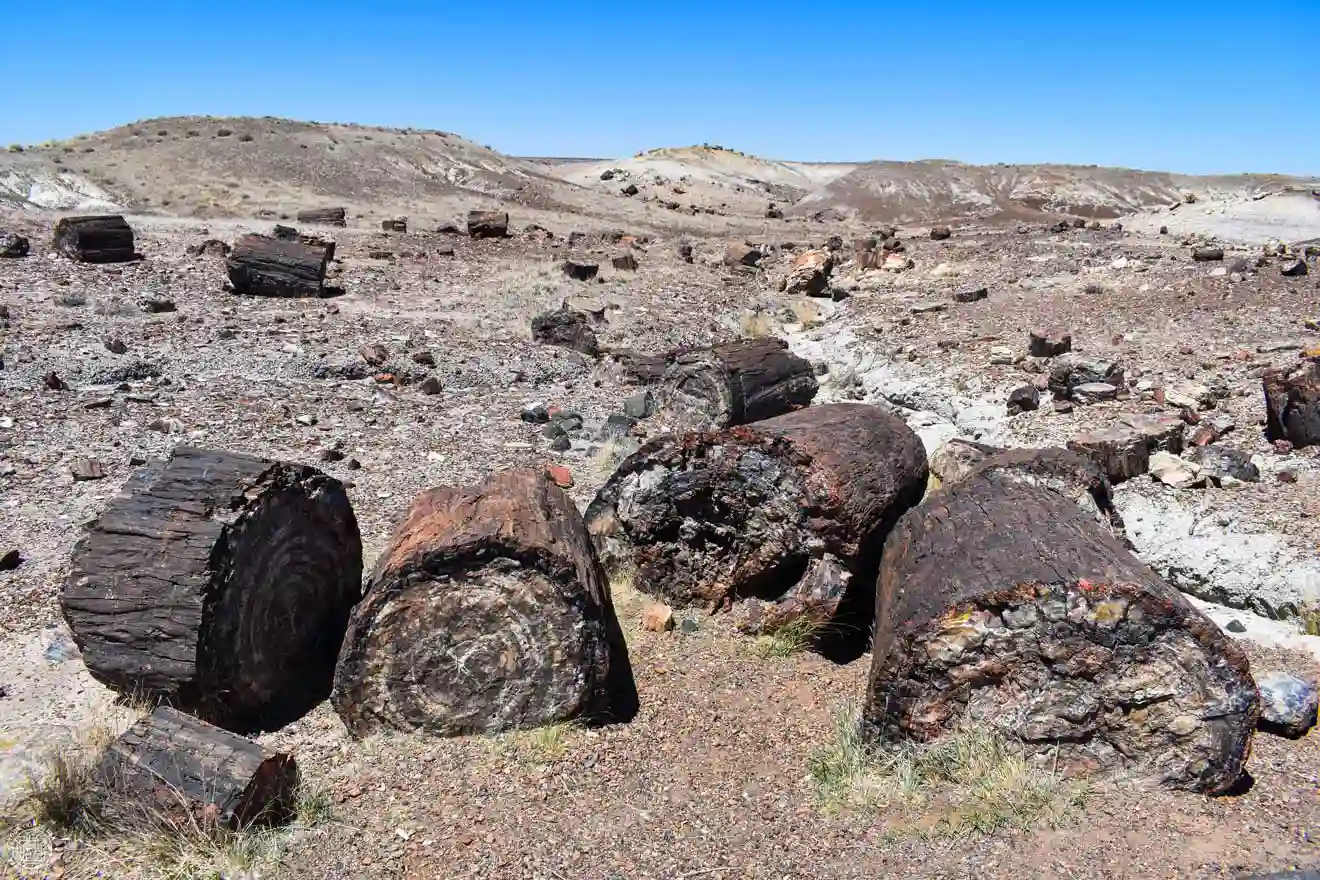
This site is home to one of the world’s largest concentrations of petrified wood. This wood comes from trees that lived in the area more than 200 million years ago—specifically during the Triassic period—and were buried under sediment, undergoing a geological process known as petrification. Here is the step-by-step process these trees went through to survive to the present day:
- The tree stands on the banks of a stream.
- It dies and loses its leaves, branches, and bark.
- The force of the water gradually erodes the ground, causing the tree to fall and be carried away by the water.
- The log snags on a bank and is buried under sand and mud in the stream.
- Deep burial seals the tree away from bacteria and oxygen and preventing it from decomposing.
- Silica from the groundwater infiltrates the tree, replacing the organic material with quartz crystals and turning it to stone.
- Erosion of the surrounding rock layers once again exposes the petrified trunk, causing it to crack, break into pieces, and eventually roll down the hill.
A slow and amazing process! The logs are visually stunning, as they retain their original shape and structure, yet contain intensely colored minerals inside: red, orange, and yellow from iron oxides; black and gray from manganese oxides; and white from quartz.
Although this is the part that gives the park its name, the petrified trees aren’t the only attraction; visitors can also see desert landscapes, colorful badlands, fossils, petroglyphs, archaeological remains of ancient settlements, part of the old Route 66, and desert flora and fauna.
What are the entrances to Petrified Forest National Park
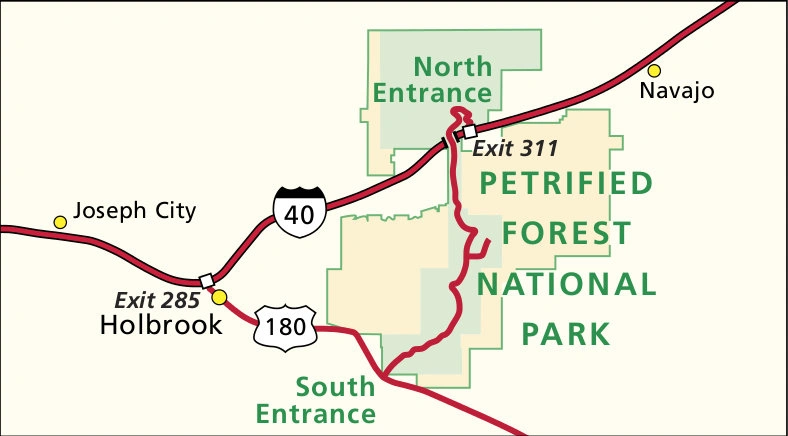
The Petrified Forest is traversed by a single 45-km (28-mi) road, the Petrified Forest Road, which connects I-40 with US-80. Therefore, there are two possible entrances to the park; choose one or the other depending on the direction of your trip.
- North Entrance: located on I-40, specifically at Exit 311 (about 41 km or 25 mi from Holbrook). This is where you’ll find the Painted Desert Visitor Center, which features a restaurant, restrooms, a gas station, and a gift shop. In this case, you’ll drive along the park road from north to south, exiting through the South Entrance.
- South Entrance: located on US-180, you can reach it by taking Exit 285 from Holbrook and then turning onto US-180 for 28 km or 17 mi. Here you’ll find the Rainbow Forest Museum & Visitor Center, which features a museum, restrooms, a gift shop, and a place to buy drinks. If you enter here, you’ll travel through the park from south to north, exiting at the North Entrance.
How much is admission to Petrified Forest National Park
The standard tickets for Petrified Forest National Park varies depending on your mode of transportation:
- Private vehicle: $25 per vehicle. This fee covers all passengers traveling in the vehicle.
- Motorcycle: $20; covers 2 motorcycles and up to 4 passengers.
- On foot or by bike for those 16 and older: $15 per person.
💡Recommended: Tips for traveling along the U.S. Southwest
This ticket grants you access to the park for 7 consecutive days, and you can purchase it at any of the visitor centers. 💸 Petrified Forest is a cashless park and only accepts card payments, so we recommend reading our article on the best cards for traveling to the United States to avoid fees.
There are also a number of passes that already include admission to the Petrified Forest; if you have any of them, you won't have to pay anything extra:
- Annual Entrance Pass: $45, which grants you unlimited admission to the park for 12 months. Available only to U.S. citizens and residents.
- America the Beautiful Pass: $80, granting you access to all U.S. national parks and other natural areas for 12 months. Available only to U.S. citizens and residents.
- America the Beautiful (Non-Residents): $250, granting you access to all U.S. national parks and other natural areas for 12 months. For non-residents only.
⚠️ Petrified Forest is not included in the list of national parks where tourists must pay an additional $100 per person on top of the admission fee if they do not have the America the Beautiful Non-Residents Pass.
What are the opening hours at Petrified Forest National Park
Although most national parks in the U.S. are open 24/7, Petrified Forest operates differently. Its access road is open every day (except on Thanksgiving and Christmas) from 8:00 a.m. to 5:00 p.m. The entrances are fenced off and have toll booths, so it’s impossible to enter outside of these hours.
⚠️ Please note that Arizona (except for the Navajo Nation) does not observe Daylight Saving Time, so Mountain Standard Time (MST) is in effect year-round. Keep this in mind if you’re coming from another state or from anywhere within the Navajo Nation, such as nearby Canyon de Chelly, since the time may be different.
How to get around Petrified Forest National Park
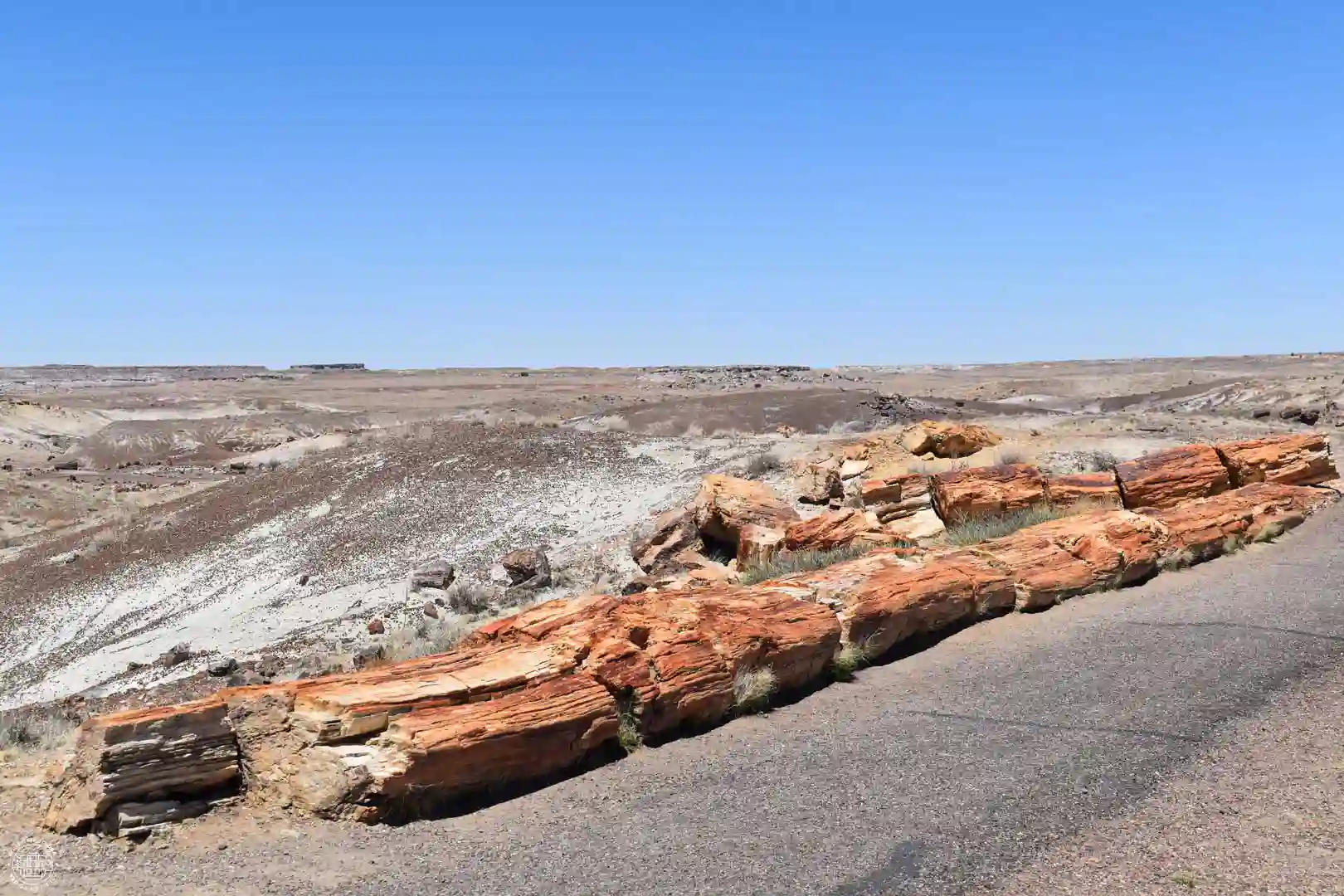
Since the park does not have a public transportation system, the only way to get around is by private vehicle. The truth is that it’s a very easy park to visit, because there’s a single 45-kilometer (28-mi) road that runs through it from north to south, along which you’ll find all the overlooks, the starting points for the hiking trails, and the points of interest.

INTERNET IN THE UNITED STATES
💡 The most convenient way to get internet access in the U.S. is to buy an eSIM—that way, you'll have a connection as soon as you set foot in the country. Plus, local SIM cards in the U.S. are pretty expensive.
💸 We have 2 discounts for your unlimited data eSIM for the US:
⭐5% OFF with Holafly ➡️ Excellent coverage
⭐20% OFF with eSIMFlag ➡️ Best price
🤓 Take a loot at: Best SIMs & eSIMs for traveling to the USA
When is the best time to visit Petrified Forest National Park
In our opinion, spring and fall are the best times to visit Petrified Forest National Park, since the temperatures are more pleasant for exploring the park. Keep in mind that the climate in this area is quite extreme, with very hot summers and very cold winters. Here’s a summary table showing the average temperatures throughout the year:
| TEMPERATURES IN PETRIFIED FOREST NATIONAL PARK | ||
|---|---|---|
| MINIMUM | MAXIMUM | |
| January | -6°C / 21ºF | 9°C / 48ºF |
| February | -4°C / 25ºF | 13°C / 55ºF |
| March | -2°C / 29ºF | 17°C / 62ºF |
| April | 2°C / 35ºF | 21°C / 70ºF |
| May | 6°C / 43ºF | 26°C / 79ºF |
| June | 11ºC / 52ºF | 32ºC / 90ºF |
| July | 15°C / 60ºF | 33°C / 92ºF |
| August | 15°C / 59ºF | 32ºC / 90ºF |
| September | 11ºC / 52ºF | 29°C / 84ºF |
| October | 5°C / 40ºF | 22ºC / 72ºF |
| November | -2°C / 28ºF | 15°C / 59ºF |
| December | -6°C / 21ºF | 9°C / 49ºF |
🌸Petrified Forest in the spring
During the spring, temperatures are pleasant during the day and cool at night—ideal for hiking without overheating and sleeping nice and warm. If it has rained during the winter months, you may find wildflowers that add even more beauty to the landscape. The downside of this time of year is that it’s usually windy.
☀️Petrified Forest in the summer
Daytime temperatures in the summer can reach 33°C (92ºF), so it's a good idea to start your visit early during this time of year.
The monsoon season occurs mainly in July and August, which are the rainiest months of the year. Mornings are usually clear, but by mid-morning clouds begin to form, eventually bringing rain in the afternoons. These are brief but intense storms that also help cool the air.
🍂Petrified Forest in the fall
Fall is also a perfect time of year, as temperatures begin to become more pleasant after the intense summer. The days are mild and the nights are cool, offering great opportunities for walks in the park.
❄️Petrified Forest in the winter
Winters are cold in this area, with nighttime freezing temperatures. However, it can be an ideal time for photography if it has snowed, as the contrast between the white snow and the colors of the Painted Desert is spectacular. That said, we recommend checking road conditions before setting out.

🚐 The U.S. is a paradise for traveling by camper van or motorhome: there are plenty of campgrounds, wonderful places to stay overnight for free, and amenities around every corner.
If you'd like to try this way of traveling, the United States is the place to do it!
💸 And you can save a lot of money on lodging and food!
➡️ We always book through this rental search engine because they work with all the companies and have great deals.
Hotels near Petrified Forest National Park
This national park has very few amenities, and there are no lodging options or campgrounds within the park where you can spend the night. The only way to spend the night inside the park is by camping in the Wilderness Area, and to do so, you need to apply for a backpacking wilderness permit, which is free and can be obtained in person on the same day at any of the visitor centers.
Therefore, to visit the Petrified Forest, you'll have choose between some places to stay near Petrified Forest. Here we'll recommend the closest ones, but it all depends on your itinerary.
Holbrook
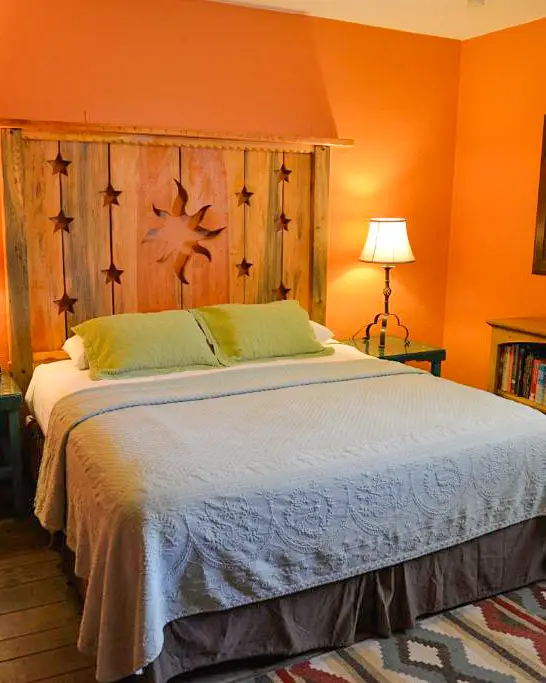
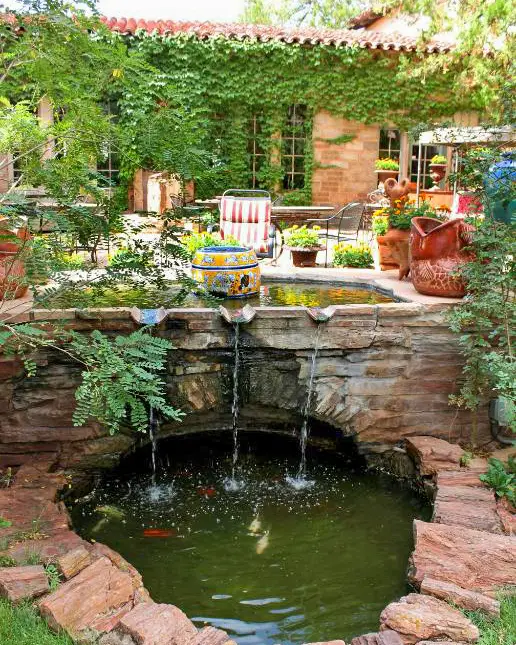
This is the nearest town, located about 20–25 minutes from each of the entrances, and it offers all the necessary amenities. It’s part of Arizona’s Route 66, and here you can stop at the Navajo County Historical Society to see its free exhibition of historical artifacts, as well as an old jail and a courthouse. We recommend the following hotels:
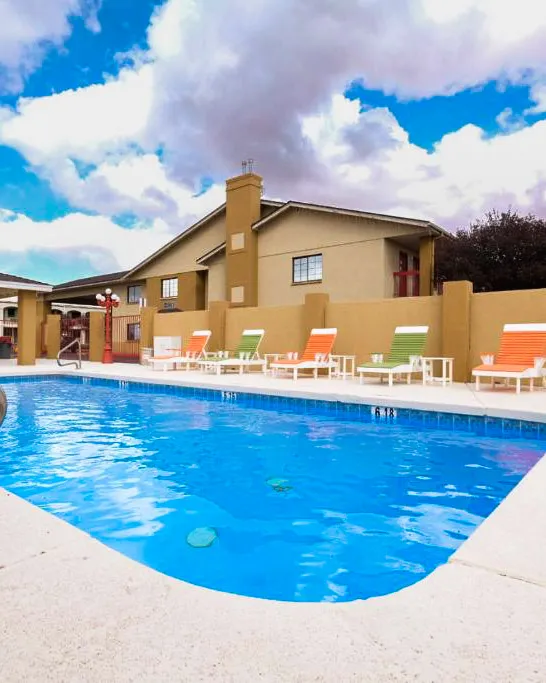
- Quality Inn Holbrook ➡️ A hotel with an outdoor pool, a bit dated but functional for a good night's rest. Breakfast is included in the rate, and there's free parking on-site. Book it here.
- Days Inn by Wyndham Holbrook ➡️ A hotel with spacious rooms, featuring an indoor pool, a hot tub, and low-cost laundry service. Breakfast and parking are included. Book it here.
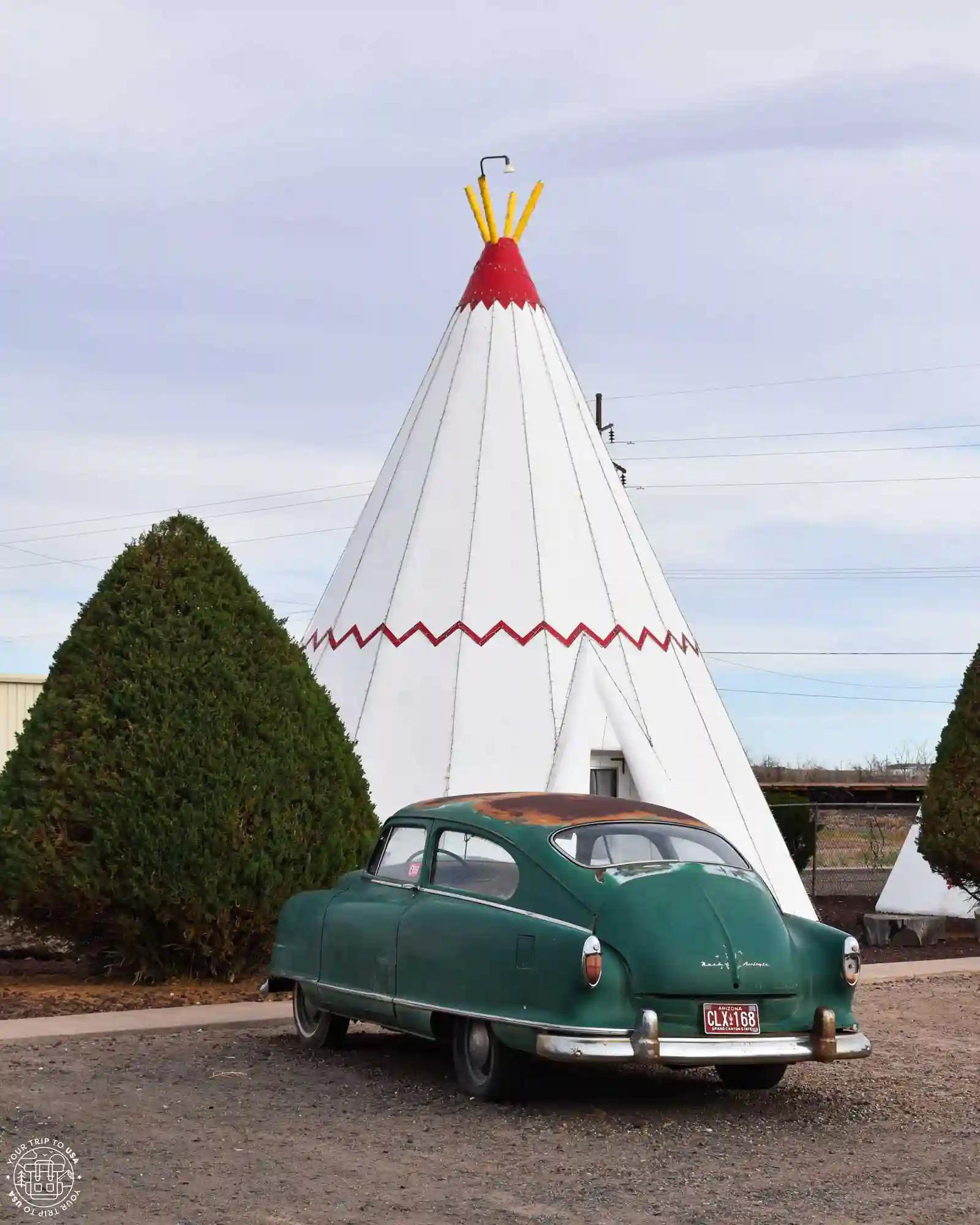
- Wigwam Motel ➡️ An iconic Route 66 hotel where the rooms are shaped like giant teepees. The property is filled with classic cars and served as the inspiration for the Cozy Cone Motel in the movie Cars. It’s not a comfortable place to stay, nor is it exactly new, but it’s unique.
Winslow
Another stop along Route 66, located about 50 minutes from the park. A highlight here is Standin' on the Corner Park, where a statue of Jackson Browne (singer for the Eagles) welcomes travelers at the corner where, years ago, he was stranded after his car broke down. The area offers all the necessary amenities and several hotels, such as:
- Hotel La Posada ➡️ A historic hotel dating back to 1929 and one of the most elegant and iconic on Route 66. It is the last of the grand hotels built alongside the railroad tracks by the Santa Fe Company. Book it here.
- Best Western Plus Winslow Inn ➡️ A hotel located on the outskirts of town, right off I-40. It features spacious rooms, a complimentary breakfast, and an indoor pool. Book it here.
- Motel 6 Winslow ➡️ An affordable but functional motel with clean and fairly spacious rooms. It doesn't offer breakfast or have a pool. Book it here.
Chambers
If you're heading east or combining a visit to Petrified Forest with Canyon de Chelly, you have the option of staying overnight in Chambers. It’s not really a town per se, but rather a roadside stop with a gas station, a restaurant, and the SureStay Petrified Forest—a simple motel with comfortable beds and fairly spacious rooms, plus breakfast included.
Things to see and do at Petrified Forest National Park
One of the unique features of this park is that it is divided into two areas, each of which is completely different from the other. On one side is the northern section, known as the Painted Desert, which is characterized by a landscape full of plateaus and hills in various shades. On the other hand, there is the southern part, the Petrified Forest, where most of the petrified wood is concentrated.
This is important when planning your visit, since it's essential to visit both areas to get the full picture. If you only visit one of the areas due to time constraints, you'll miss out on a significant part of the park's attractions!
These are all the things to do at Petrified Forest National Park, from north to south:
Painted Desert of Petrified Forest
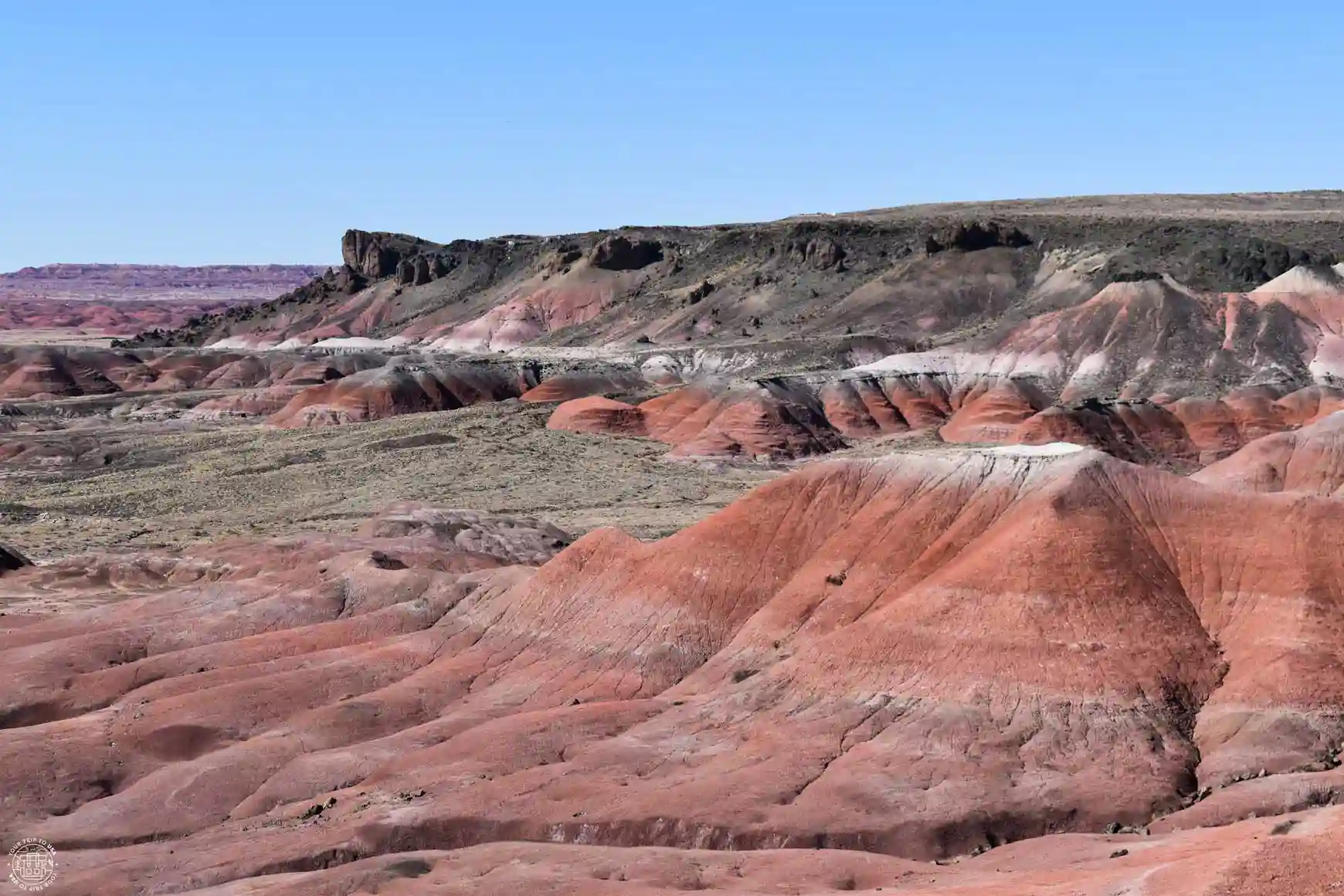
After stopping by the Painted Desert Visitor Center to learn about the park and see its exhibits, you’ll begin driving along the road that leads into the national park. The first section of the road will take you past various overlooks offering views of what is known as the “Painted Desert,” a name given to it by the Spanish explorer Francisco Vázquez de Coronado in 1540.
The reason for this name is quite clear: a range of hills whose mineral deposits have created layers of different colors, including pink, orange, and purple. A spectacular and incredibly colorful place!
Here, you can simply enjoy the scenic overlooks, such as Tawa Point, Kachina Point, Chinde Point, Pintado Point, Nizhoni Point, Whipple Point, and Lacey Point. They’ll all offer you different views!
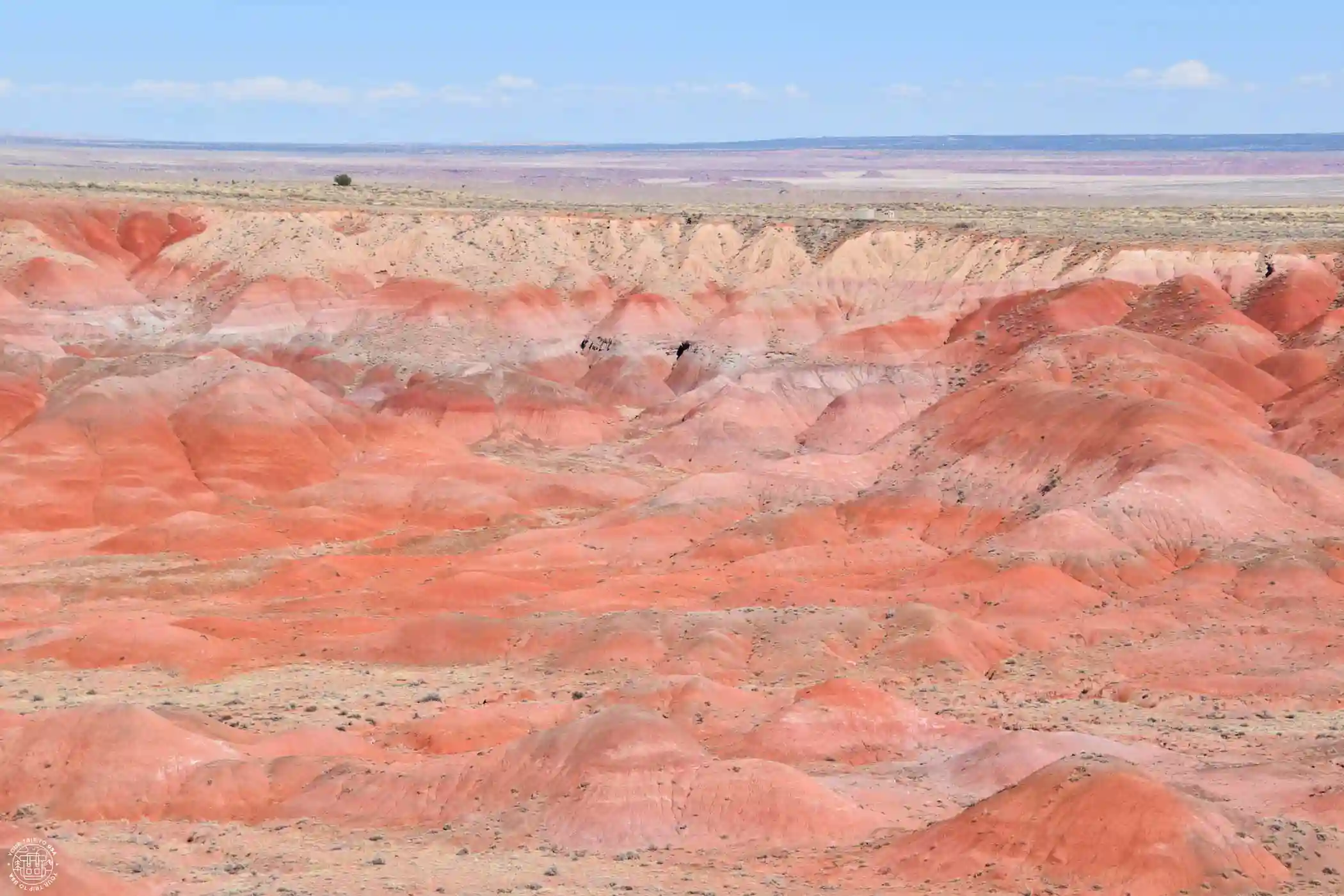
If you’d like to go for a walk in the area, there are two very easy trails. One of them is the Painted Desert Rim Trail, which is just 1.6 km ( 1 mi) round trip and connects Tawa Point with Kachina Point, offering great views of the Painted Desert. Another option is the Tawa Trail, a 2-km (1.2-mi) one-way hike that connects the Visitor Center to Tawa Point.
A much longer option is the trail that leads to Onyx Bridge, a large petrified log located in the heart of the Painted Desert. The route is 3.5 km (2 mi) one way, and the trail isn’t very well marked, so we only recommend it if you have enough time and a GPS to help you find your way.
Painted Desert Inn
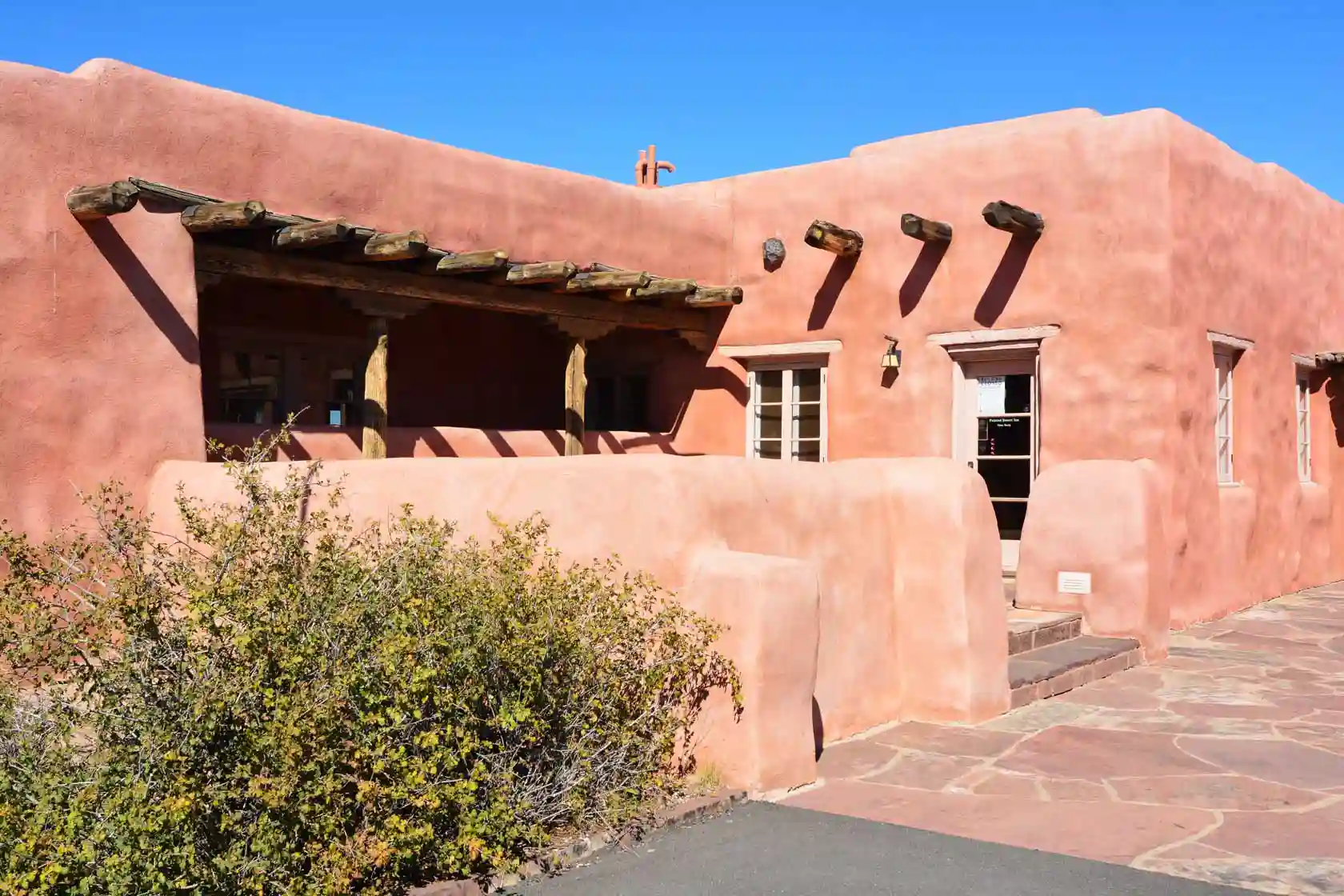
Next to Kachina Point stands the historic Painted Desert Inn. Built in 1924, this lodge was constructed using petrified wood and local stone and served as a rest stop for travelers in the area, whether they were looking for a bite to eat or a place to sleep. Rooms cost $4 a night!
Due to its location and the area’s climate, this building has suffered (and continues to suffer) from the elements: cracks are forming, the walls and windows are bulging, and structural damage is appearing. For this reason, it has opened and closed several times throughout its history, changing hands and undergoing repairs to address its flaws. In fact, there were plans to demolish it in 1975, but a public campaign prevented this, and it was successfully designated a Historic Natural Monument.
Today is still open, but as a museum. Inside, you can purchase handicrafts and see several exhibits, historic rooms, and the original murals by an artist from the Hopi Native American tribe.
Intersection with Route 66
Petrified Forest is the only national park in the United States that is crossed by historic Route 66. Right at that spot—where today you can see a long row of telephone poles—stands a rusty 1932 Studebaker.

RENT A CAR IN THE UNITED STATES
The best way to explore the United States is by car, giving you the freedom to travel at your own pace.
🚗 Whether you’re looking for a convertible Mustang, a 4x4, or a regular car, we recommend to book through this car rental search engine
💸 This is where we find the best prices, both on the rental car itself and on full coverage insurance!
Puerco Pueblo
Within the national park lie the archaeological ruins of Puerco Pueblo, an ancient settlement of the Puebloan people that was inhabited for 650 years. It’s an easy, paved trail just 0.5 km (0.3 mi) long that will introduce you to the history of this place through informational signs. Don’t miss the petroglyphs scattered throughout the area!
Newspaper Rock
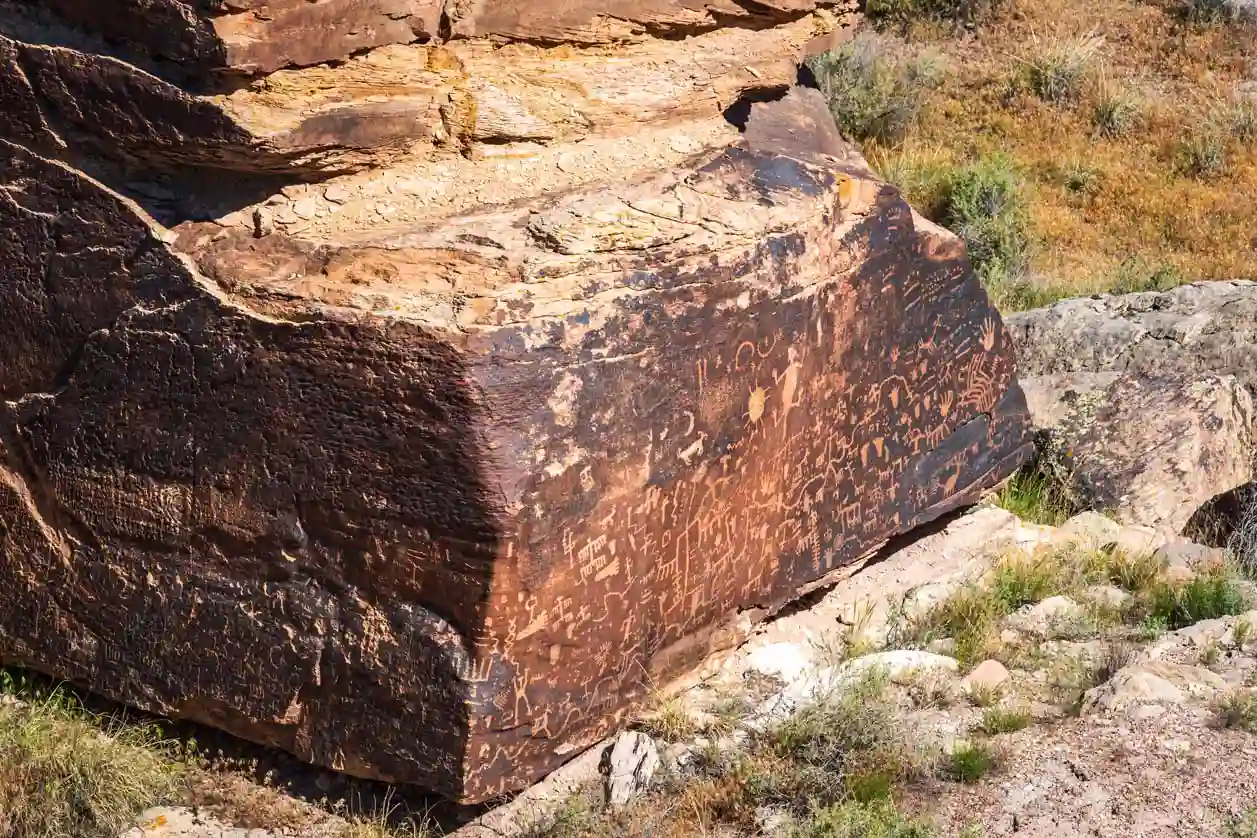
Speaking of petroglyphs... You'll find the finest examples of these rock carvings at Newspaper Rock. Actually, it’s neither a newspaper nor a single rock, but from the overlook you can admire a collection of more than 650 petroglyphs on various rock faces—some of them are over 2,000 years old!
They were created by several generations of the ancestral Puebloan people, who lived and farmed the lands in this area along the Puerco River.
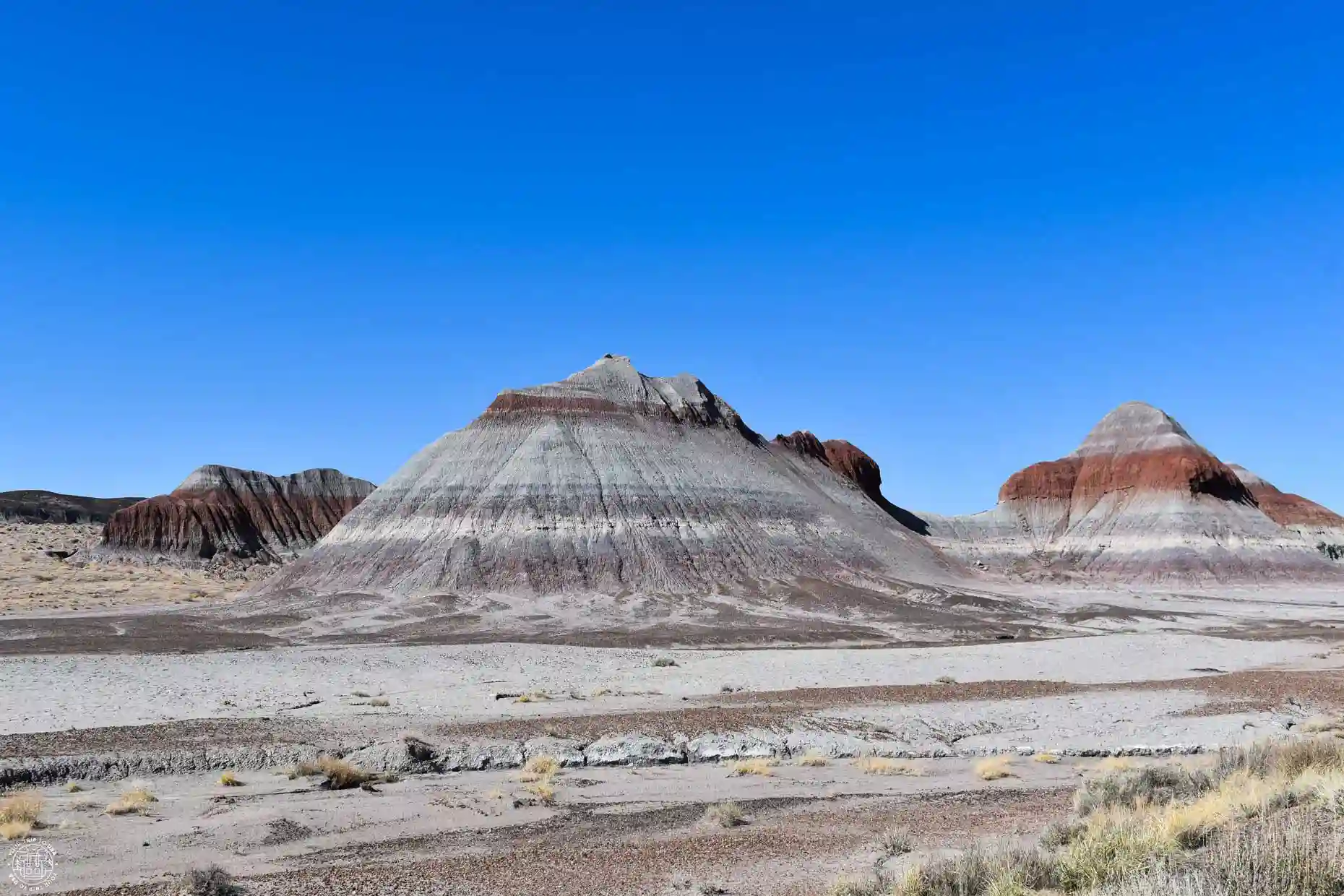
The Tepees Viewpoint
This roadside lookout offers views of cone-shaped hills with colorful streaks, which is why they've been named after the traditional tent-shaped dwellings.
This is where the Blue Forest Trail begins—a historic trail built between 1934 and 1937 to connect to the famous Blue Mesa area. Much of this trail was closed in 1955 but reopened to hikers in 2013. It’s a 2-km (1.2 mi) one-way trail, with ups and downs, that takes you deep into one of the most spectacular landscapes in Petrified Forest. Keep in mind that the ground can be slippery and will be muddy if it has rained!
Blue Mesa
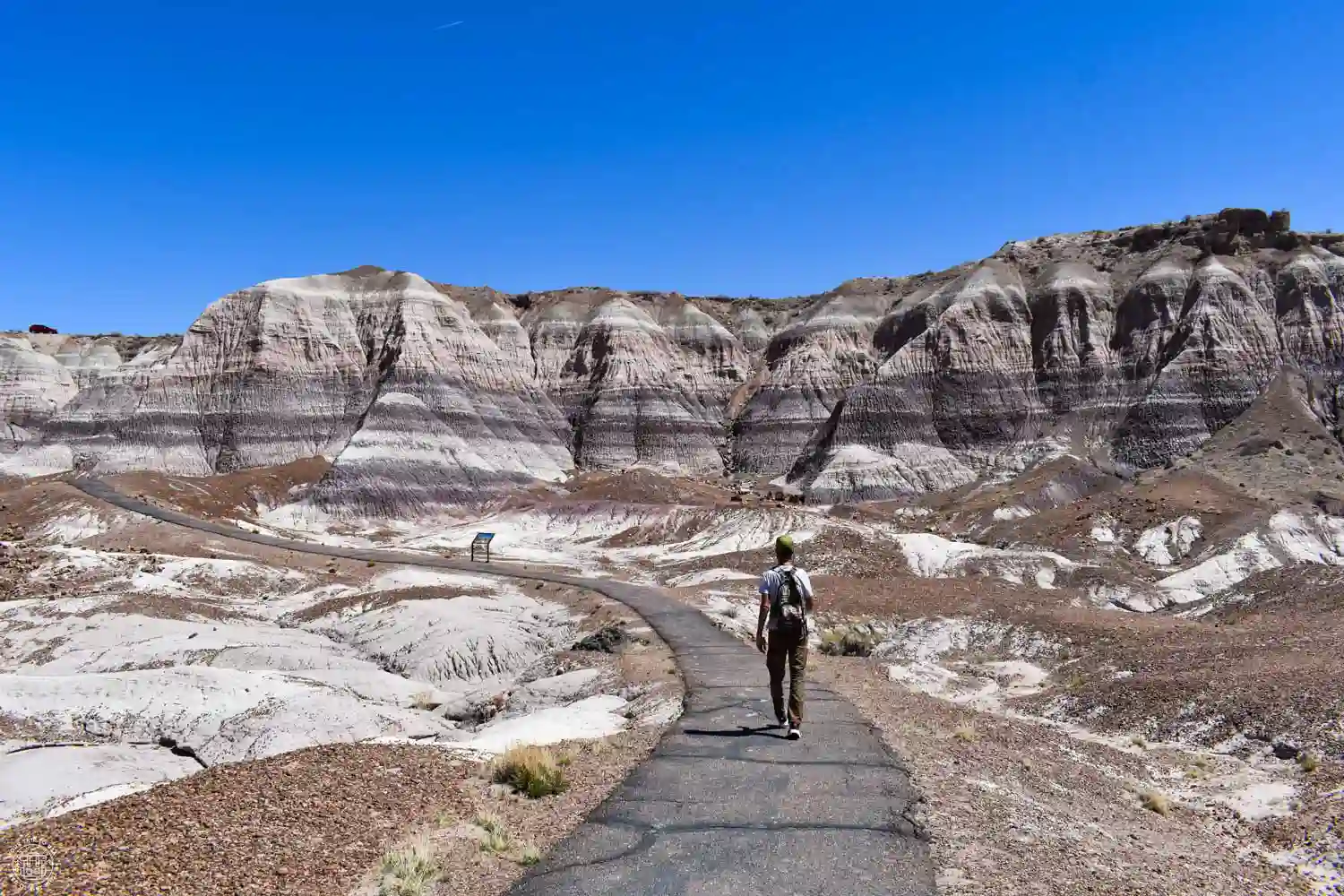
Blue Mesa is one of the must-see spots in Petrified Forest National Park and probably our favorite. A plateau filled with badlands and rock formations in shades of blue, purple, and gray—a color combination we haven’t seen anywhere else in the United States (only something similar in the Bentonite Hills of Utah). And all of this with petrified tree trunks dotting the landscape! 😊
To reach this area, you must take a detour off the main road, marked as Blue Mesa Scenic Road. It’s an approximately 8-km (5 mi) paved loop that runs along the top of the plateau and is dotted with panoramic overlooks, offering views you’ll never forget.
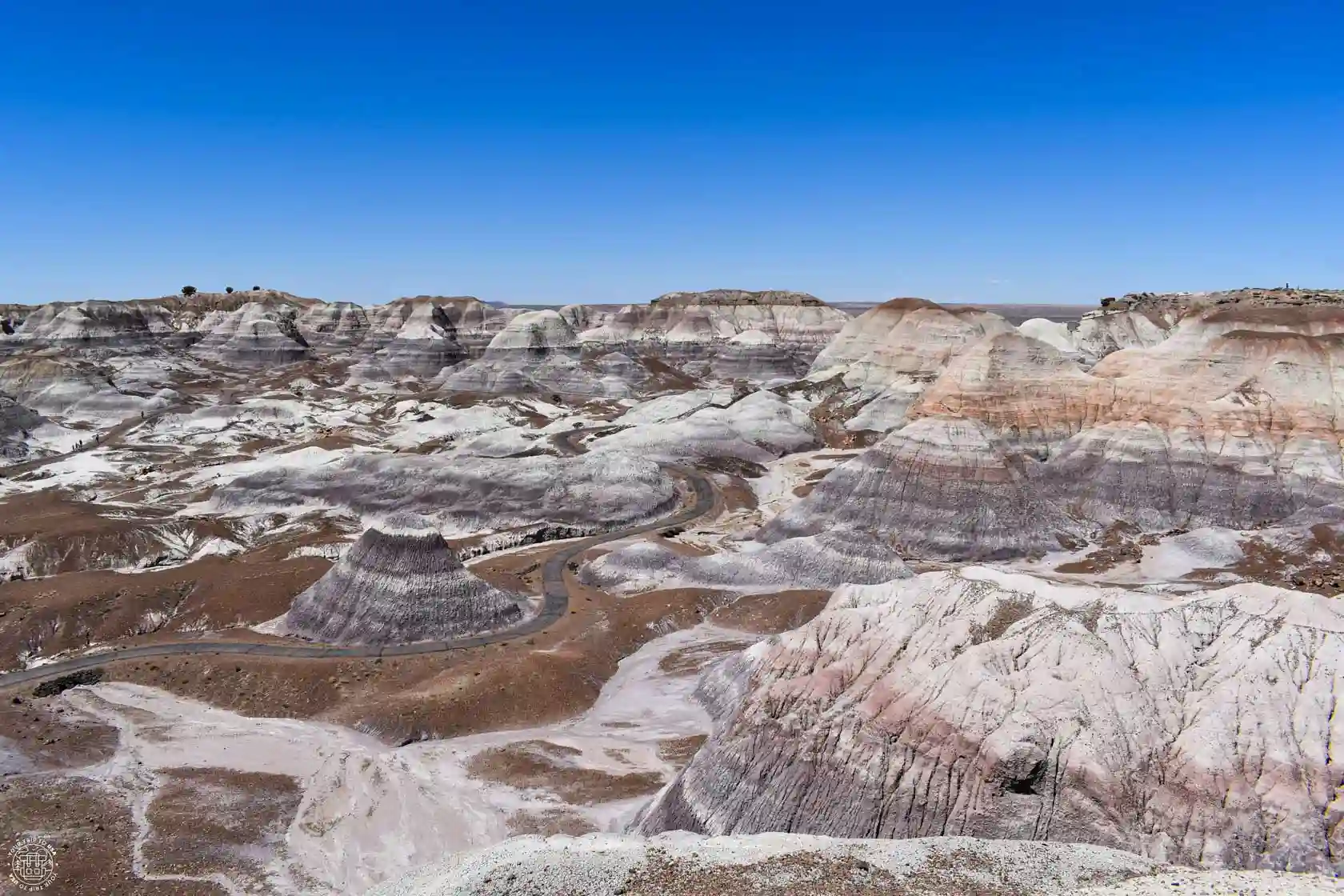
Halfway along this route, you’ll find the start of the Blue Mesa Trail, a 1-km (0.6 mi) walking trail that’s fully paved and takes you deeper into the badlands and their petrified wood. Although there’s a bit of an incline at the beginning and end, we highly recommend taking this trail—you’re going to love it!
Agate Bridge
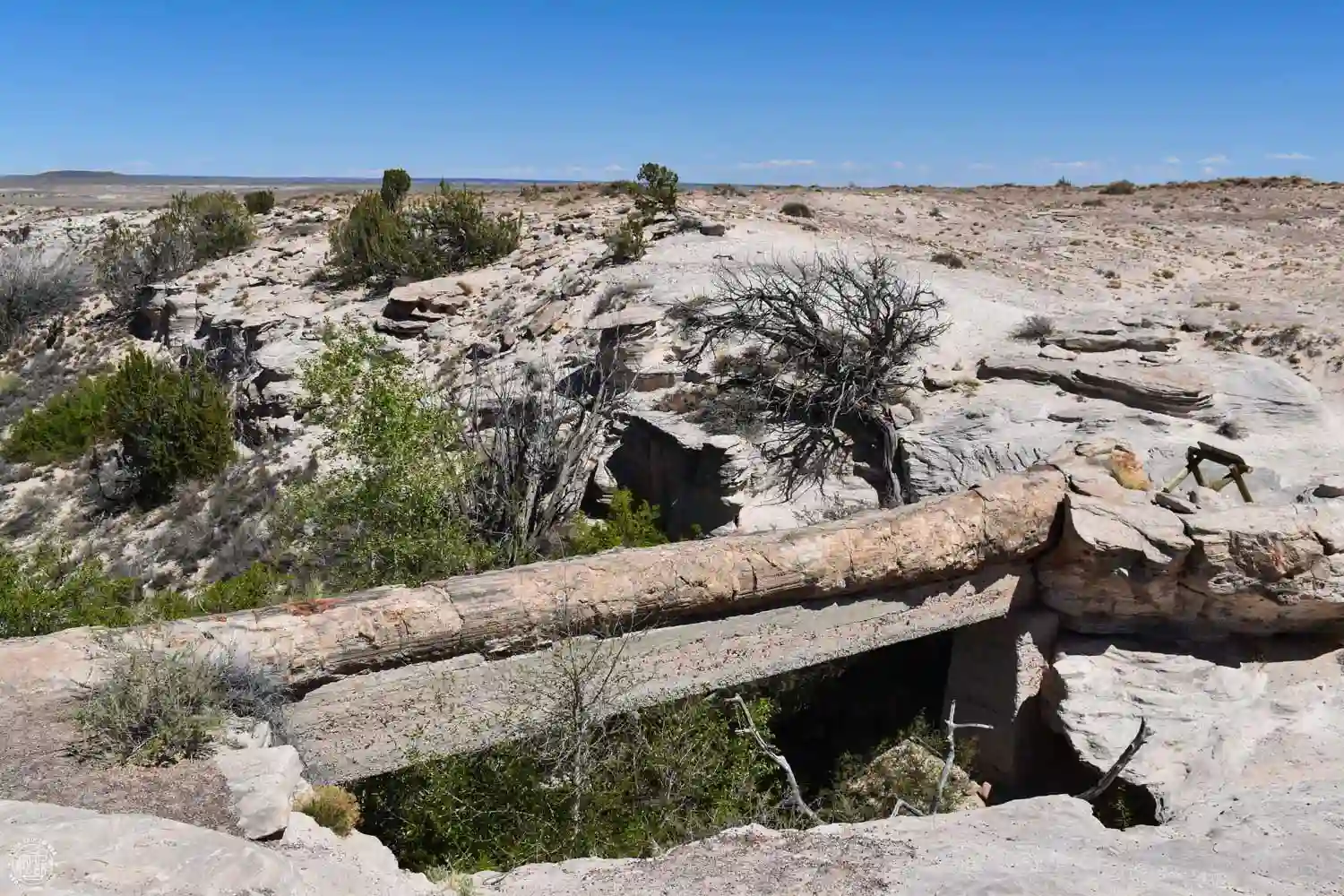
Agate Bridge is a petrified log that spans a gully at Agate Mesa, rising about 5 meters (16 ft) above the canyon floor. As a result, it resembles a natural bridge and for years has been one of the park’s main attractions (in fact, on the interpretive panels you’ll see old photographs of people walking across it).
Currently, it is not possible to climb it; you can only view it from the overlook to prevent it from collapsing. In fact, you'll notice that its base has been reinforced with concrete to prevent it from breaking.
Jasper Forest
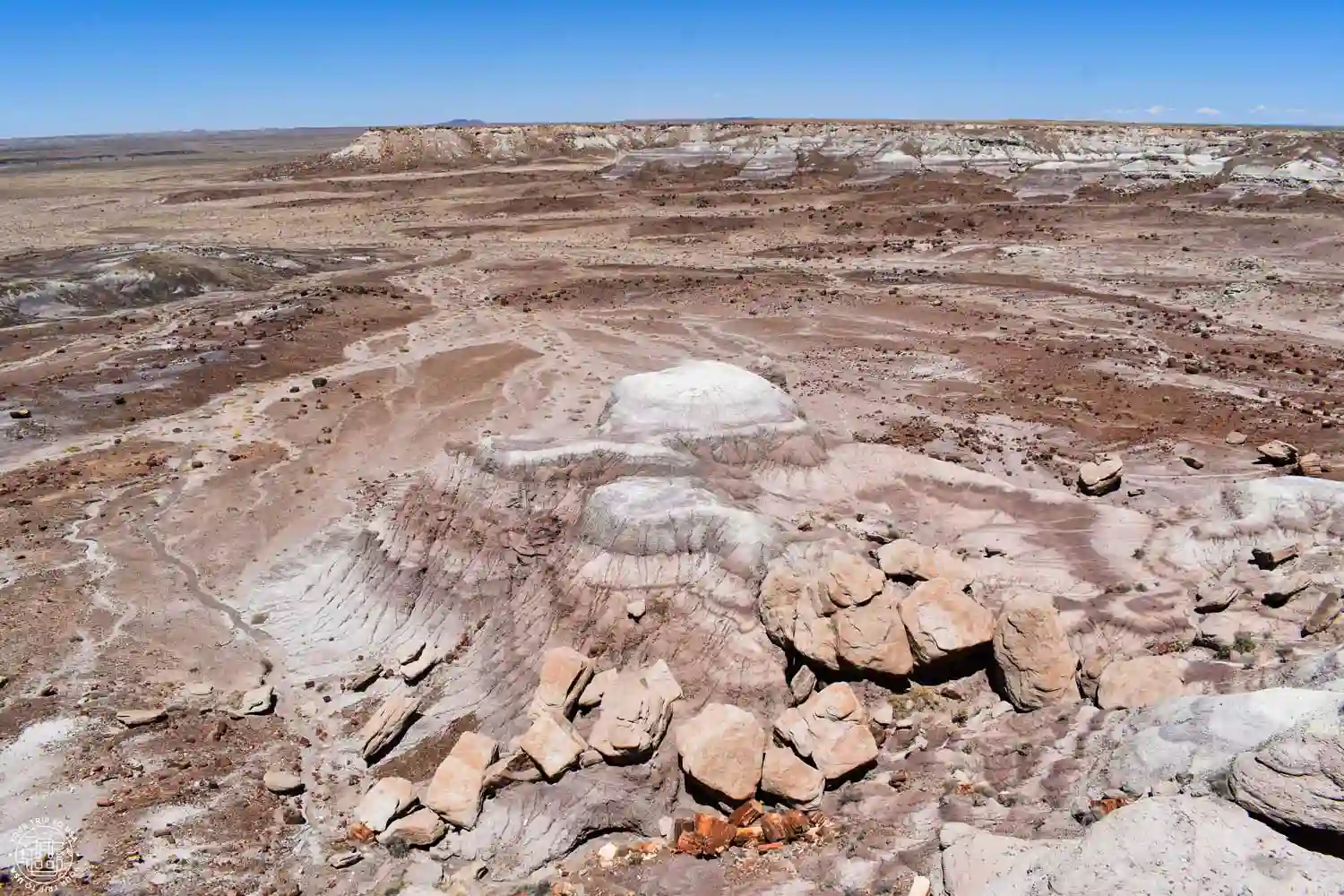
From this point on, the southern part of the park begins, characterized by the largest concentration of petrified wood. One example is Jasper Forest (formerly known as First Forest), where you can find a significant concentration of pieces of wood and logs of various sizes.
You can enjoy the views from the lookout or hike the Jasper Forest Trail, an unmaintained trail that was opened in the 1930s but closed years later to minimize the illegal collection of petrified wood. It’s a 3.4-kilometer (2 mi) round trip, but it’s not an easy trail, so we only recommend it if you’re used to hiking and have good sense of direction.
Crystal Forest
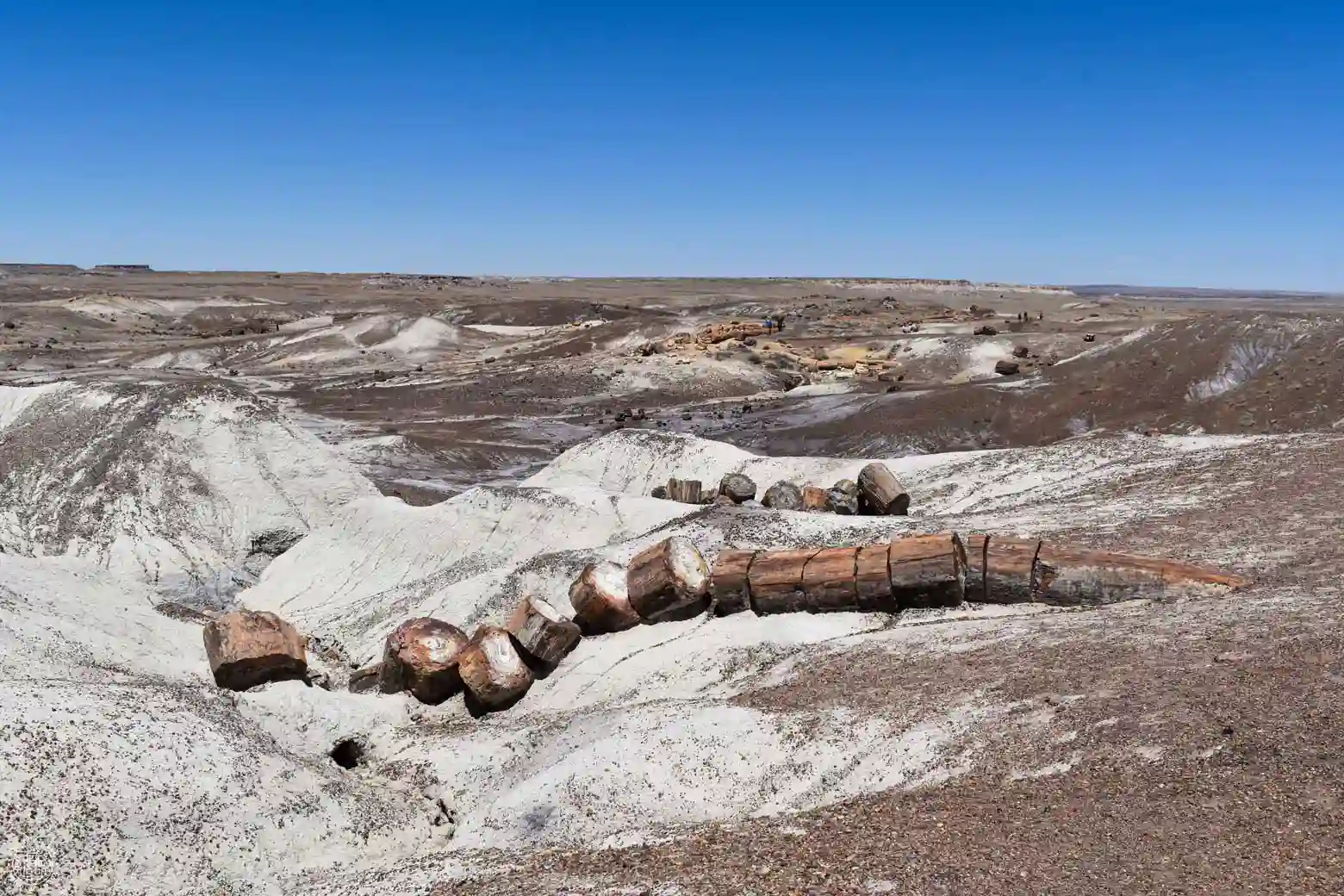
Another must-see spot in the Petrified Forest is the Crystal Forest Trail—in our opinion , one of the best places to see petrified wood in the park. It’s a 1.2 km (0.75 mi) paved loop that will treat you to some of the most beautiful photos you’ll be able to take, thanks to both the badlands landscape and the enormous logs lying on the ground, many of which feature large, visible quartz crystals.
Our favorite log is definitely the one in the photo below, which literally looks like a sausage cut into symmetrical pieces. It's amazing what nature can do!
Rainbow Forest Museum
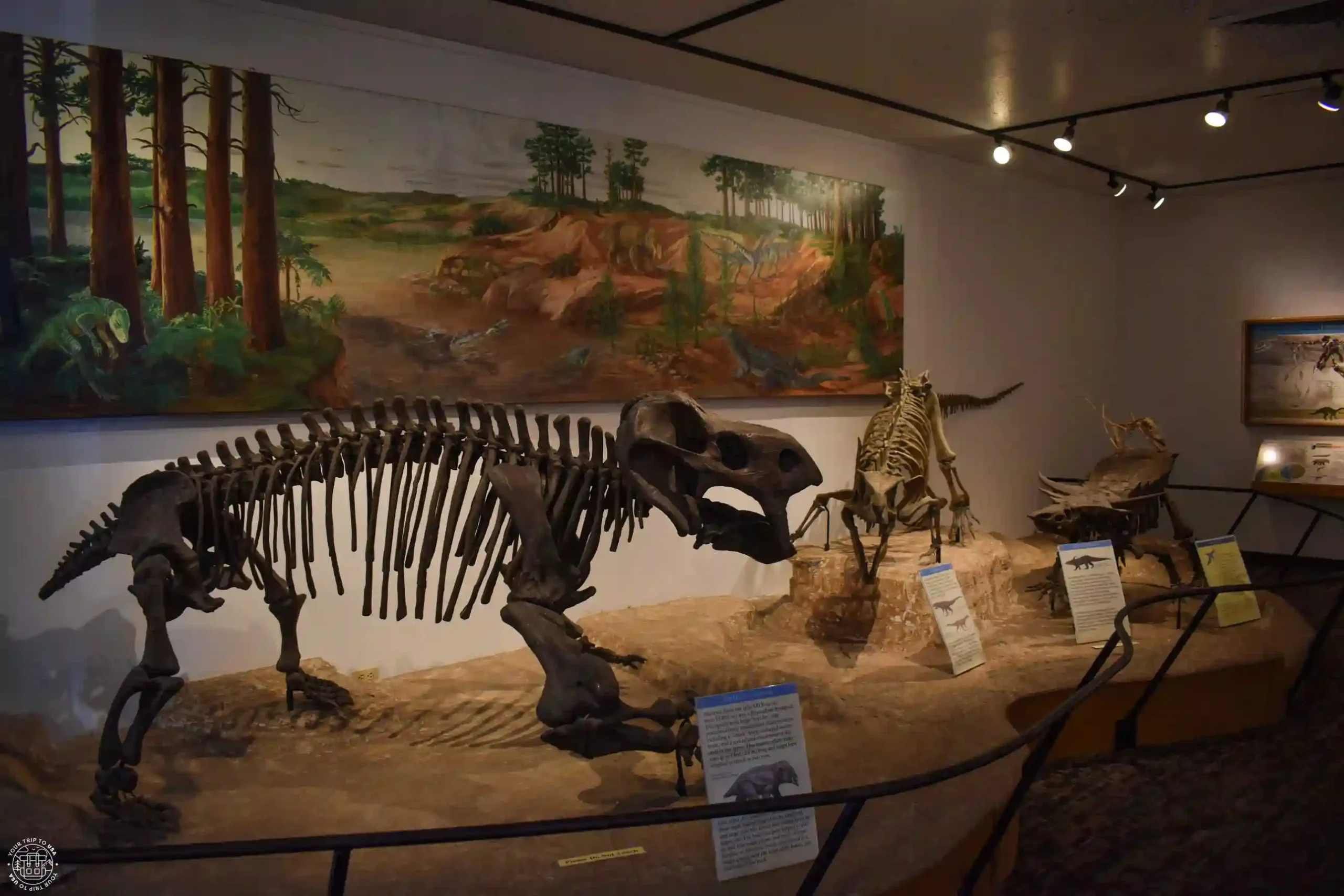
The Rainbow Forest Museum is the visitor center located near the south entrance. Its origins date back to 1931, when it was built to serve as the park’s headquarters. Today, in addition to serving as an information center, it features several exhibits that help you learn about dinosaurs, fossils, and the process of petrification.
If you visit the Petrified Forest with children, they might enjoy going to the lab, where paleontologists demonstrate the process of recovering fossils found in the park on Thursdays, Fridays, and Saturdays from 9 a.m. to 12 p.m. and from 1 p.m. to 4 p.m.
Giant Logs
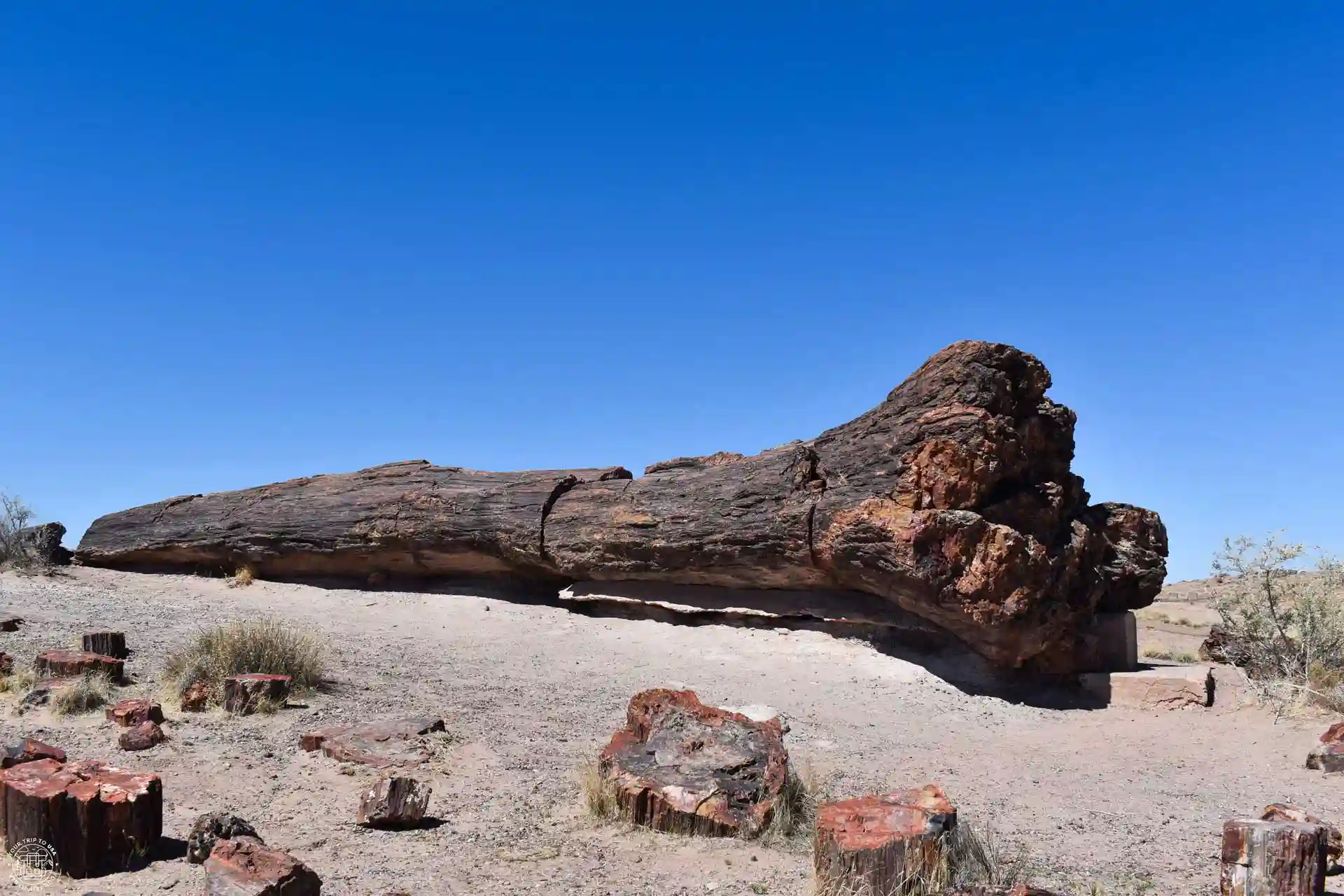
Starting right behind the visitor center, there’s an easy, 0.6-km (0.3 mi) loop trail that takes you to see some of the park’s largest (and most colorful) petrified logs. The largest of them, called Old Faithful (like the geyser in Yellowstone), is 3 meters (10 ft) wide at its base!
Long Logs and Agate House
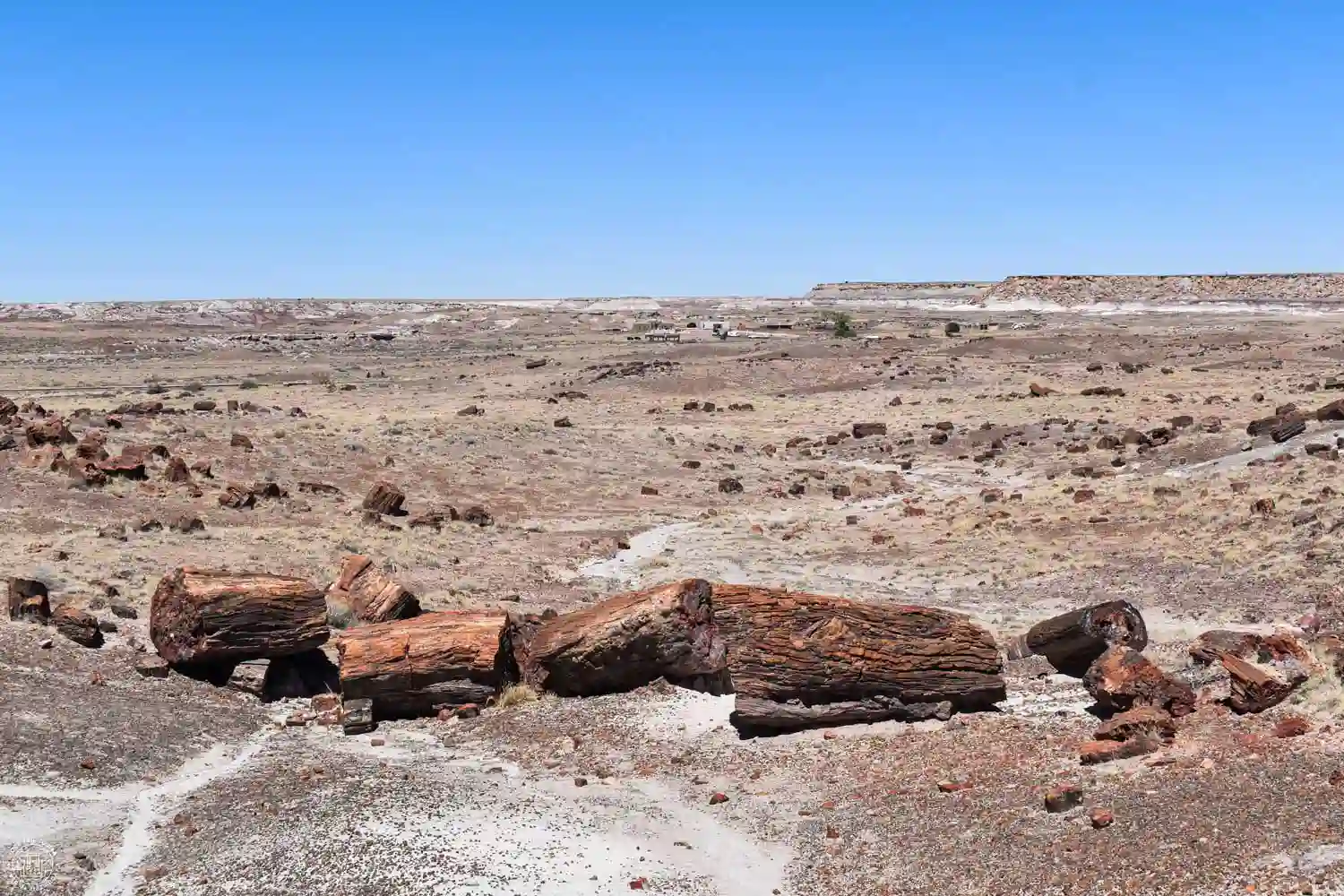
Two easy hiking trails start from the Rainbow Forest Museum parking lot, and they’re perfect for combining. One of them is the Long Logs Trail, a 2.5-kilometer (8 mi) trail (part of which is a loop) that winds through desert and petrified wood, featuring long logs.
From this trail, you can connect to the Agate House Trail, a trail just 600 meters (0.3 mi) long that will take you to the ruins of an ancient dwelling built by the Puebloans using petrified wood from the area. Agate House consisted of eight rooms, it was built between 1050 and 1300 and is believed to have belonged to a single family.
How much time do you need to visit Petrified Forest National Park
Although Petrified Forest seems like a small park at first glance, as you've seen, it has quite a bit to offer. Based on our experience, you'll need anywhere from half a day to a full day to explore it, depending on how much time you have and how eager you are to explore.
Keep in mind that the park’s road takes about 45 minutes to drive through without any stops, so here’s the itinerary we’d follow whether you have half a day or a full day:
Things to do in Petrified Forest in Half a Day (4 Hours)
Since you'll be entering from the north and exiting from the south, here are the must-sees for a half-day trip:
- Painted Desert Visitor Center (20 min)
- Kachina Point and Painted Desert Inn (20 min)
- Intersection with Route 66 (10 min)
- Newspaper Rock Viewpoint (15 min)
- Blue Mesa Scenic Road + Blue Mesa Trail (1 hr 30 min)
- Jasper Forest Viewpoint (15 min)
- Crystal Forest Trail (40 min)
- Rainbow Forest Museum (20 min)
- Giant Logs Trail (30 min)
Things to do in Petrified Forest in 1 Day
Since you'll be entering from the north and exiting from the south, here are the must-sees for a full day:
- Painted Desert Visitor Center (20 min)
- Kachina Point and Painted Desert Inn (20 min)
- Other viewpoints in the Painted Desert: Pintado Point, Nizhoni Point, Whipple Point, Lacey Point (20 min)
- Intersection with Route 66 (10 min)
- Puerco Pueblo (20 min)
- Newspaper Rock Viewpoint (15 min)
- The Tepees Viewpoint (10 min)
- Blue Mesa Scenic Road + Blue Mesa Trail (1 hr 30 min)
- Agate Bridge (15 min)
- Jasper Forest Viewpoint (15 min)
- Crystal Forest Trail (40 min)
- Rainbow Forest Museum (30 min)
- Giant Logs Trail (30 min)
- Long Logs Trail + Agate House (1 hr)
Tips for visiting Petrified Forest National Park
Here are a few tips for visiting this park that are sure to come in handy:
- ⛽ There's only one gas station at the North Entrance, so be sure to fill up with enough gas.
- 🥪 There's only one restaurant within the park and it's located at the North Entrance—the Painted Desert Diner—which serves fast food at a pretty good price. In any case, it's a good idea to bring some food with you.
- 💧 Bring plenty of water, especially if you plan to go during the summer months. It's best to bring refillable bottles, since the visitor centers have drinking fountains.
- 🧢 Don't forget your hat, sunglasses, and sunscreen—the sun is very strong in the summer, and there's not much shade.
- 🛜 You may not have cell service inside the park, so be sure to download your maps in advance.
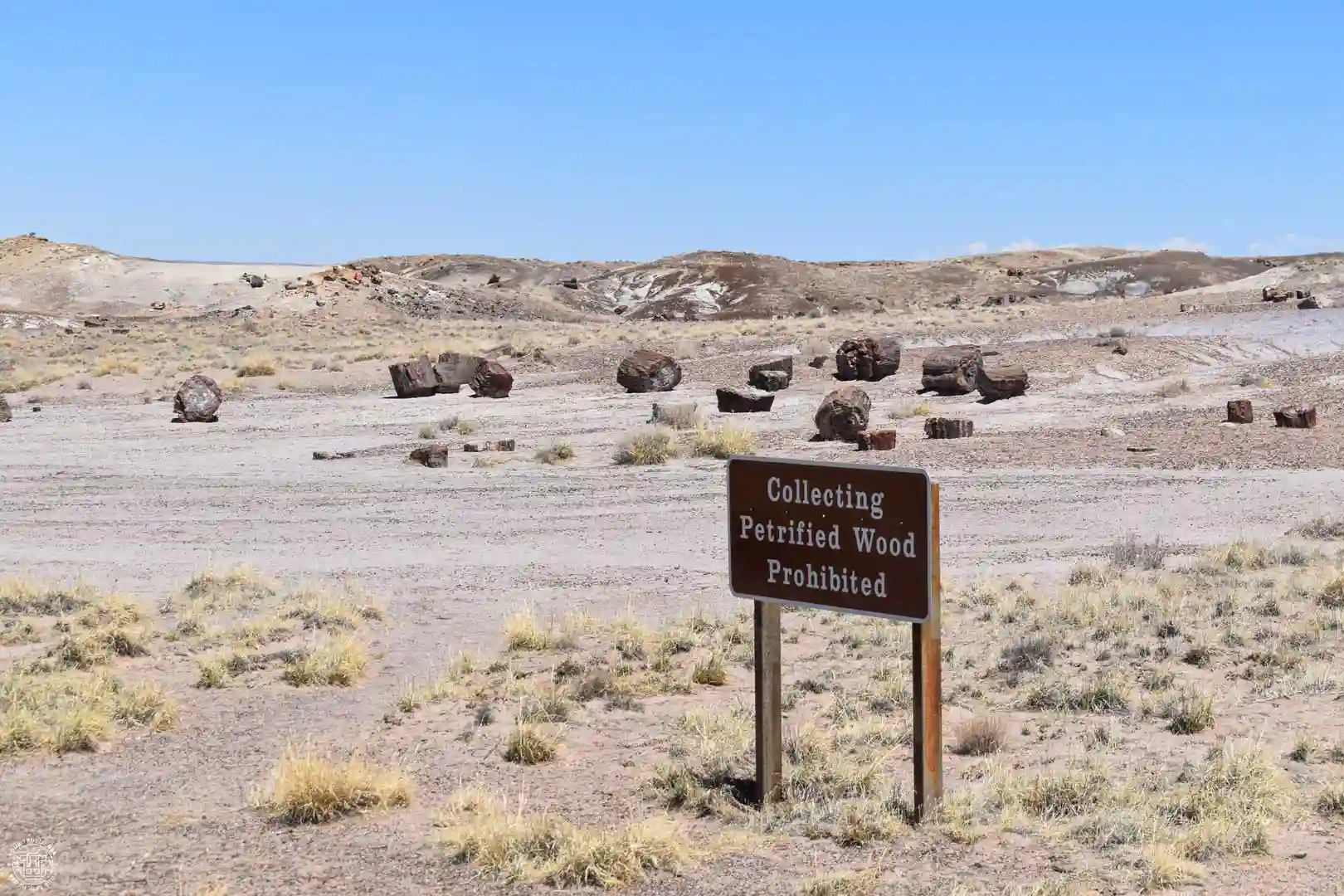
- ❌ It is strictly forbidden to take pieces of petrified wood (the fines are high). In fact, we encourage you to notify the rangers if you see anyone doing so.
- 🌄 If you're visiting in the summer, try to go to the park first thing in the morning to avoid both the hottest part of the day and any afternoon rain.
- 🚶🏻Stay on the marked trails to prevent unnecessary erosion in the area.
- 🦮 Pets are allowed in the Petrified Forest (except inside buildings), as long as they're on a leash. Your furry friend is welcome here!
- ❄️ Temperatures can get very low in winter —be sure to wear warm clothes!
- ⛺ The only way to spend the night inside the park is by camping in the Wilderness Area, for which you must apply for a permit at any of the visitor centers.
Petrified Forest National Park Map
On this map, you can see all the tourist attractions we've mentioned in this post, as well as access points, visitor centers, hikes, facilities, and hotels
FAQs about Petrified Forest National Park
Is Petrified Forest National Park worth visiting?
Yes, especially if you're on a road trip through Arizona or the U.S. Southwest and you'd like to visit a place that's still relatively unknown. Petrified Forest is very different from other parks in the region and features petrified wood alongside colorful deserts, fossils, petroglyphs, archaeological remains, and a short stretch of Route 66.
How much time do you need to visit Petrified Forest National Park?
For a first visit, we recommend setting aside between half a day and a full day for Petrified Forest National Park. That amount of time will allow you to drive along the main road, enjoy some scenic overlooks, and hike several short trails.
How many visitor centers are there in the Petrified Forest?
There are two visitor centers: the Painted Desert Visitor Center, located next to the north entrance, and the Rainbow Forest Museum, located near the south entrance.
Is it possible to visit the Petrified Forest and the Grand Canyon in a single day?
We don't recommend it at all, since it's a 3-hour drive from the Petrified Forest to the South Rim of the Grand Canyon, so you'd end up spending very little time at each park. If you want to include both on your itinerary, we’d recommend combining the Petrified Forest with other nearby tourist attractions, such as some highlights along Route 66 and Canyon de Chelly.
Can you collect petrified wood?
No. It is prohibited to collect petrified wood within the national park. Even if some pieces appear small or seem to have been left behind, they are part of the park’s protected natural resources. If you’d like to take home a souvenir of petrified wood, you can legally purchase pieces at stores in nearby towns.
What is the best hiking trail in Petrified Forest National Park?
The Blue Mesa Trail is our favorite for seeing the colorful badlands, and the Crystal Forest and Giant Logs Trail are great for seeing petrified logs.
Where to stay near Petrified Forest National Park?
Holbrook is the closest town to stay in if you want to visit Petrified Forest National Park, and it offers a variety of lodging options and restaurants. Winslow is also a good option, although it's a bit farther away.
Is it possible to visit Petrified Forest National Park with children?
Yes, because it's an easy park to visit and ideal for families, since you can see much of it by car and many of its trails are short and relatively easy. Plus, the petrified wood, fossils, and colorful landscapes can be especially appealing to children.
Is it possible to visit Petrified Forest without a car?
There is no public transportation to the park or within it, so having a car is essential. It’s very easy to visit the park by car, since all the tourist attractions are concentrated along the main road.
We hope you found this guide to visiting Petrified Forest National Park helpful! 🤗
Painted Desert Inn: Joe Mabel, CC BY-SA 4.0 via Wikimedia Commons; Newspaper Rock: dconvertini, CC BY-SA 2.0, via Wikimedia Commons