

10+ Best Things to Do in Yellowstone
In this section, we’ve highlighted the must-see spots in Yellowstone National Park and marked those you absolutely shouldn’t miss with a ⭐ if you’re spending at least 3 days in the park.
Yellowstone Lake
This stunning lake defines the landscape of the entire southeastern part of Yellowstone National Park. Right on the lake’s westernmost edge, in the West Thumb area, is where the Grand Loop begins—the figure-8-shaped road that winds through the park’s main attractions and also runs along the shore of Yellowstone Lake.
Along its shores, there are several picnic areas and parking lots where you can take a break and relax, as well as many amenities, such as those found near the visitor centers at Grant Village and Fishing Bridge. The lake’s main attractions are the West Thumb Geyser Basin and Lake Butte Overlook, which we’ll discuss throughout this post.

RENT A CAR IN THE UNITED STATES
The best way to explore the United States is by car, giving you the freedom to travel at your own pace.
🚗 Whether you’re looking for a convertible Mustang, a 4x4, or a regular car, we recommend to book through this car rental search engine
💸 This is where we find the best prices, both on the rental car itself and on full coverage insurance!
West Thumb Geyser Basin⭐
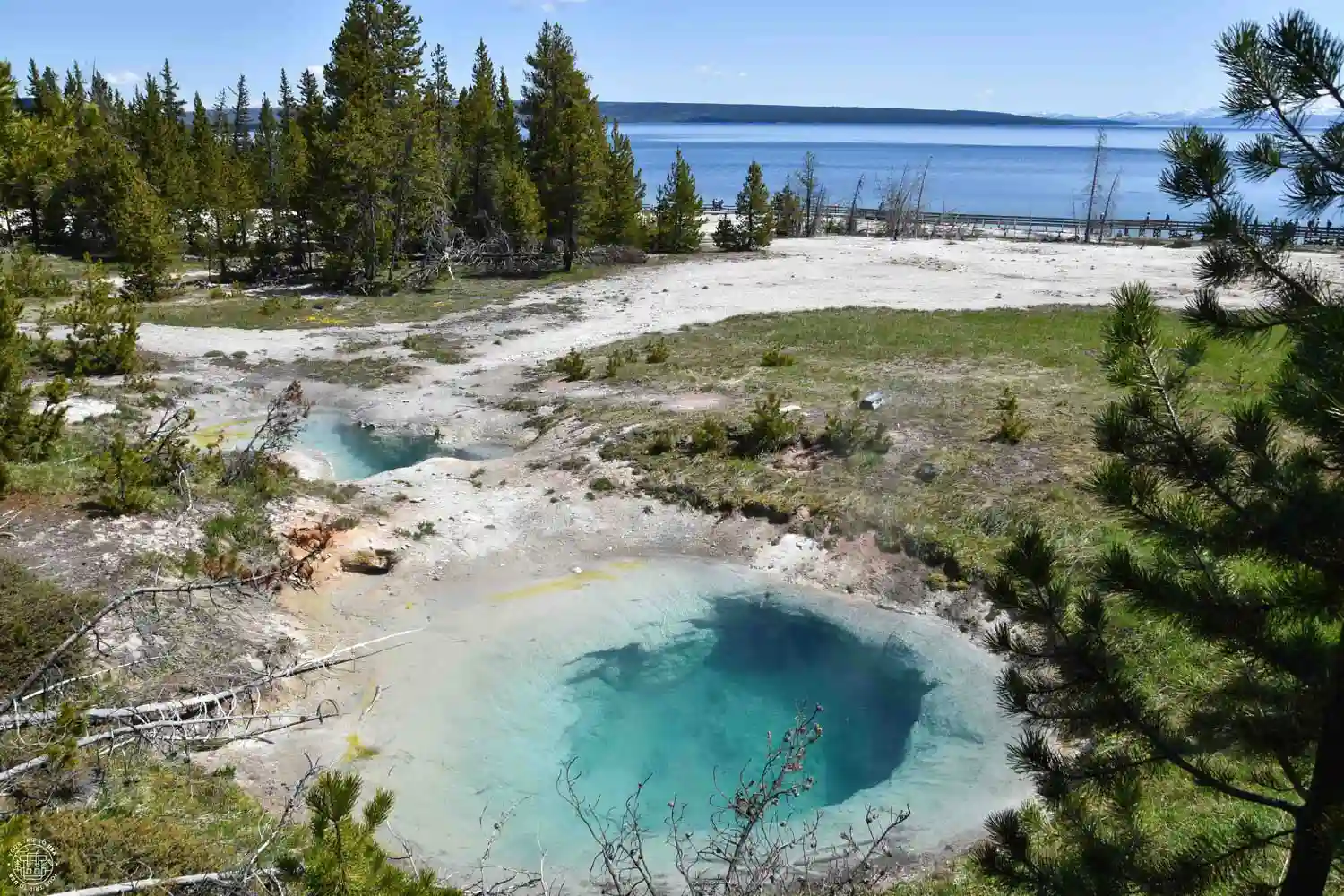
Located on the western shore of Yellowstone Lake and near the south entrance is this hydrothermal area, which features a myriad of features such as pools, geysers, springs, fumaroles, and ponds of various shapes, colors, sizes, and behaviors. What makes this place unique, aside from the large number of features, is that some of them are located right on the edge of the lake or even within its waters.
Some of the most interesting features include the Big Cone Geyser, the Fishing Cone, the Lakeshore Geyser (all located along the lake’s edge), the Black Pool, the Abyss Pool, and the Twin Geysers, though there are many more. It also offers some beautiful views of Yellowstone Lake.
There is a large parking area with picnic tables and a double loop of wooden walkways to make visiting easier and prevent accidents, as the water can be very hot.
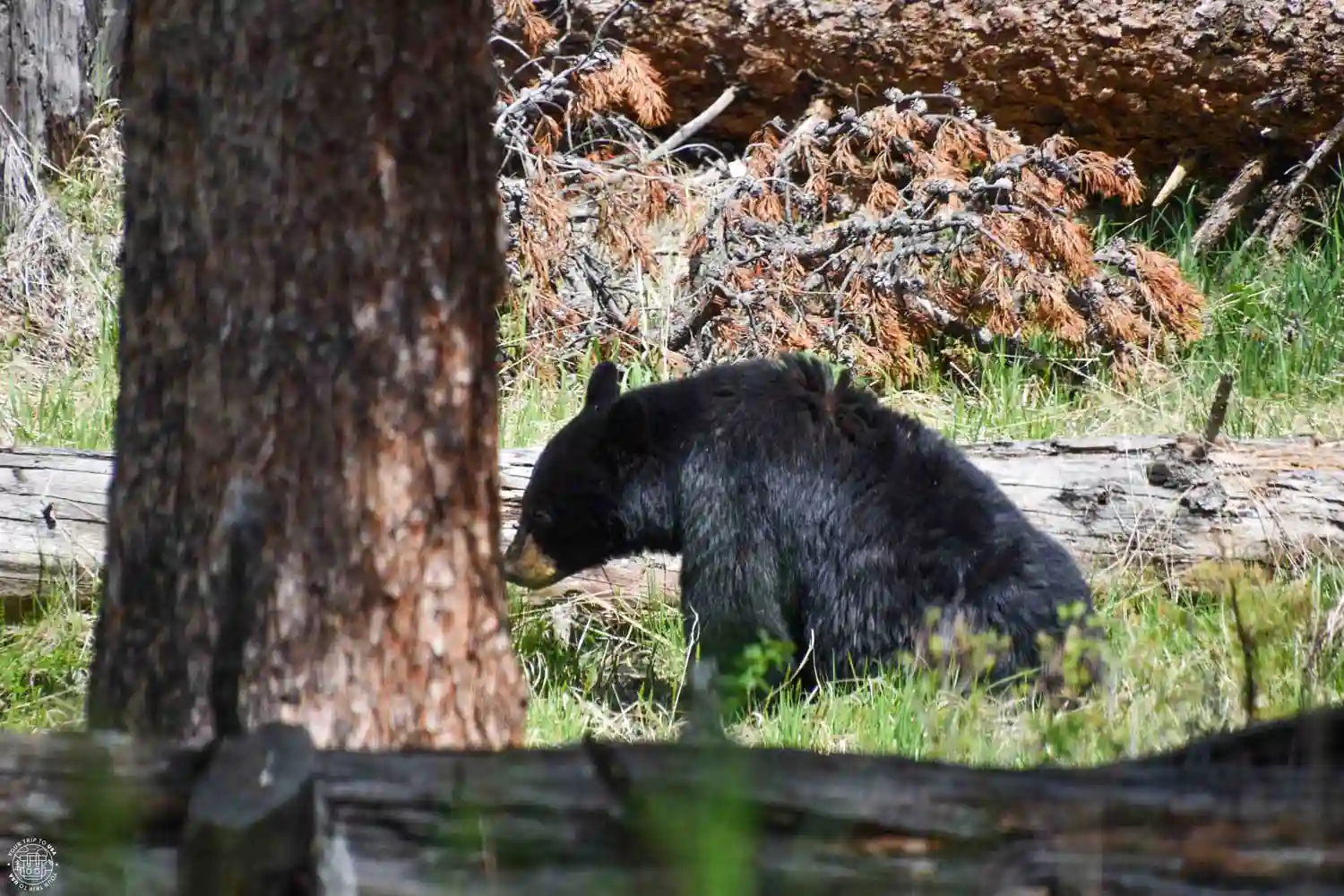
🐻 We have very fond memories of this place because this is where we saw our first bear in Yellowstone. A huge black bear that suddenly appeared and strolled right through the geothermal area toward the lake.
Mud Volcano
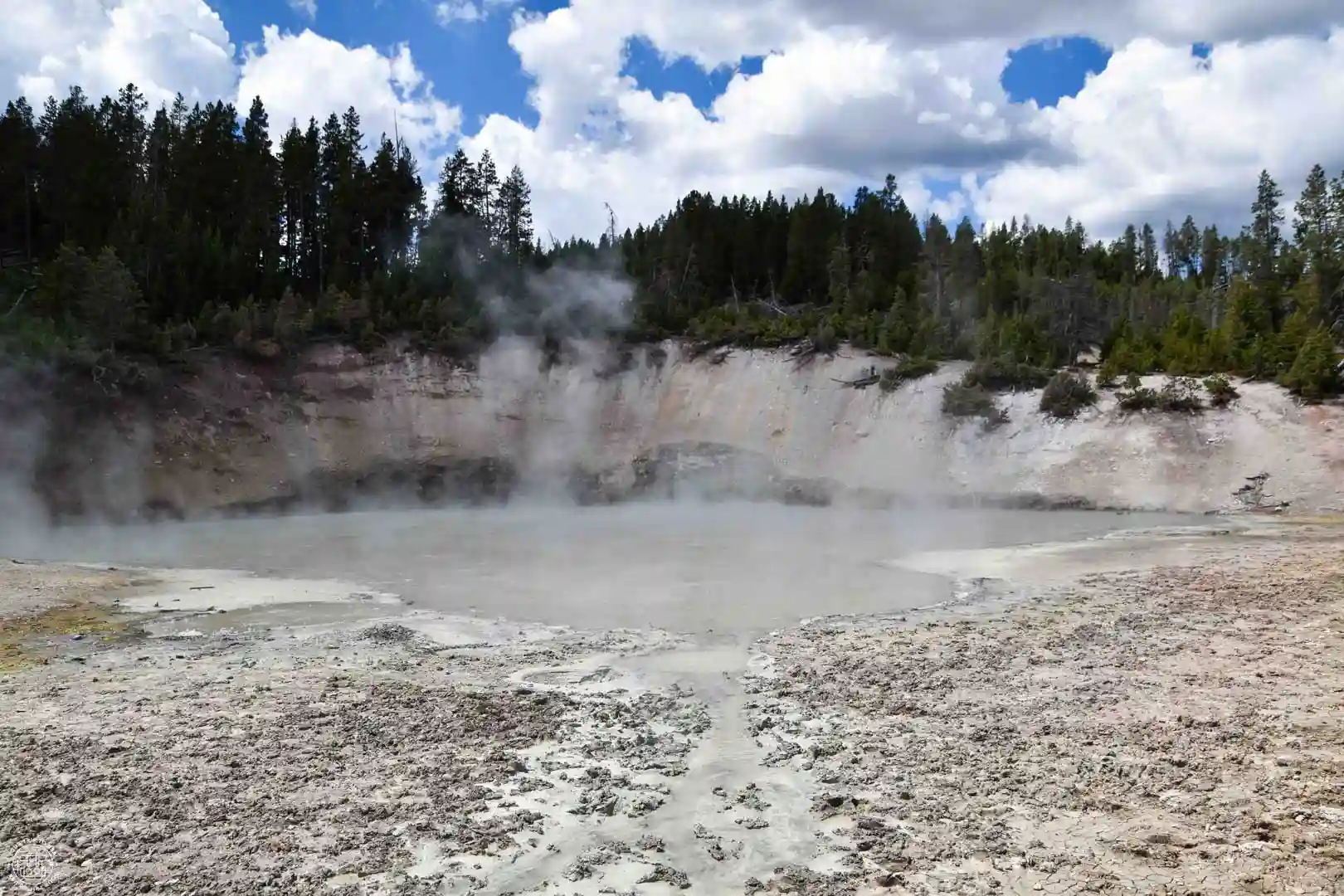
Located in Hayden Valley, alongside the Yellowstone River, is this unusual hydrothermal formation. It consists of a mound made up of several mud pits that constantly emit hydrogen sulfide, which is converted into sulfuric acid by certain microorganisms, dissolving the rocks into mud. The strong smell of rotten eggs is caused by the hydrogen sulfide itself.
How spectacular the site looks depends largely on whether it has rained recently, since the pools themselves are practically dry. Furthermore, it is an area prone to earthquakes, due to the convergence of various faults and its location on a steep slope at the bottom of the caldera. As a result, it is continuously monitored.
To access the site, there is a network of wooden walkways with stairs to make the visit easier and prevent accidents, as the gases are extremely hot and can be dangerous.
Hayden Valley ⭐
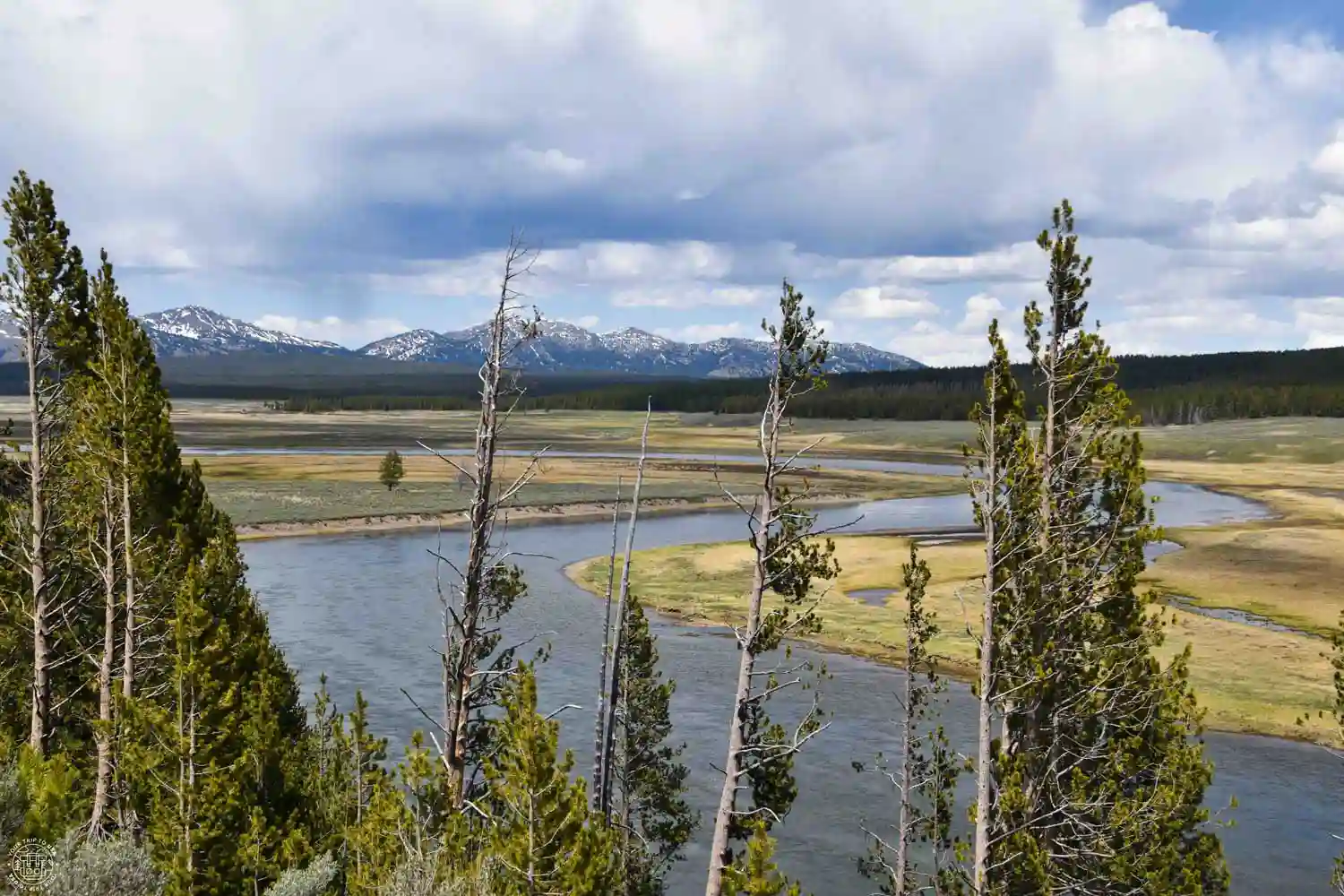
This beautiful subalpine valley between Yellowstone Falls and Yellowstone Lake is one of the best places in the national park for wildlife viewing, in addition to its unique beauty, which features meadows, the river, and the surrounding mountains. Among the animals that can be seen here are bison, elk, grizzly bears, coyotes, and wolves.
There are several spots along the side of the road where you can pull over, as well as picnic areas, where you can enjoy the scenery and spot wildlife if you're lucky. We saw a huge herd of bison here! 🦬
Grand Canyon of the Yellowstone ⭐
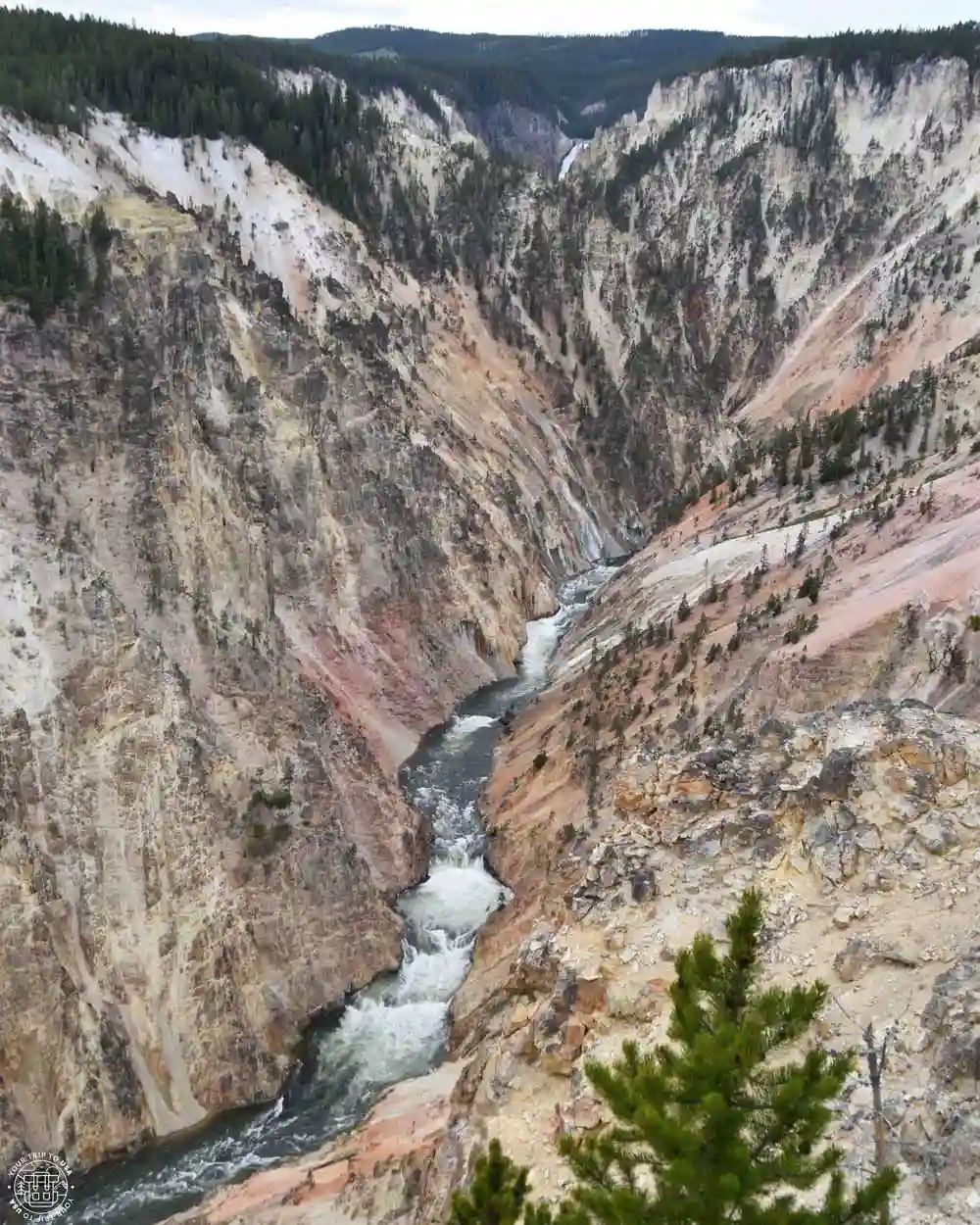
This area is one of the must-see attractions in Yellowstone National Park, located at the junction of the Lower Loop and the Upper Loop—the two sections that make up the Grand Loop Road. This canyon, carved by the erosion of the Yellowstone River, is a palette of reds, oranges, browns, and yellows that contrast with the green of the vegetation and the blue and white of the river.
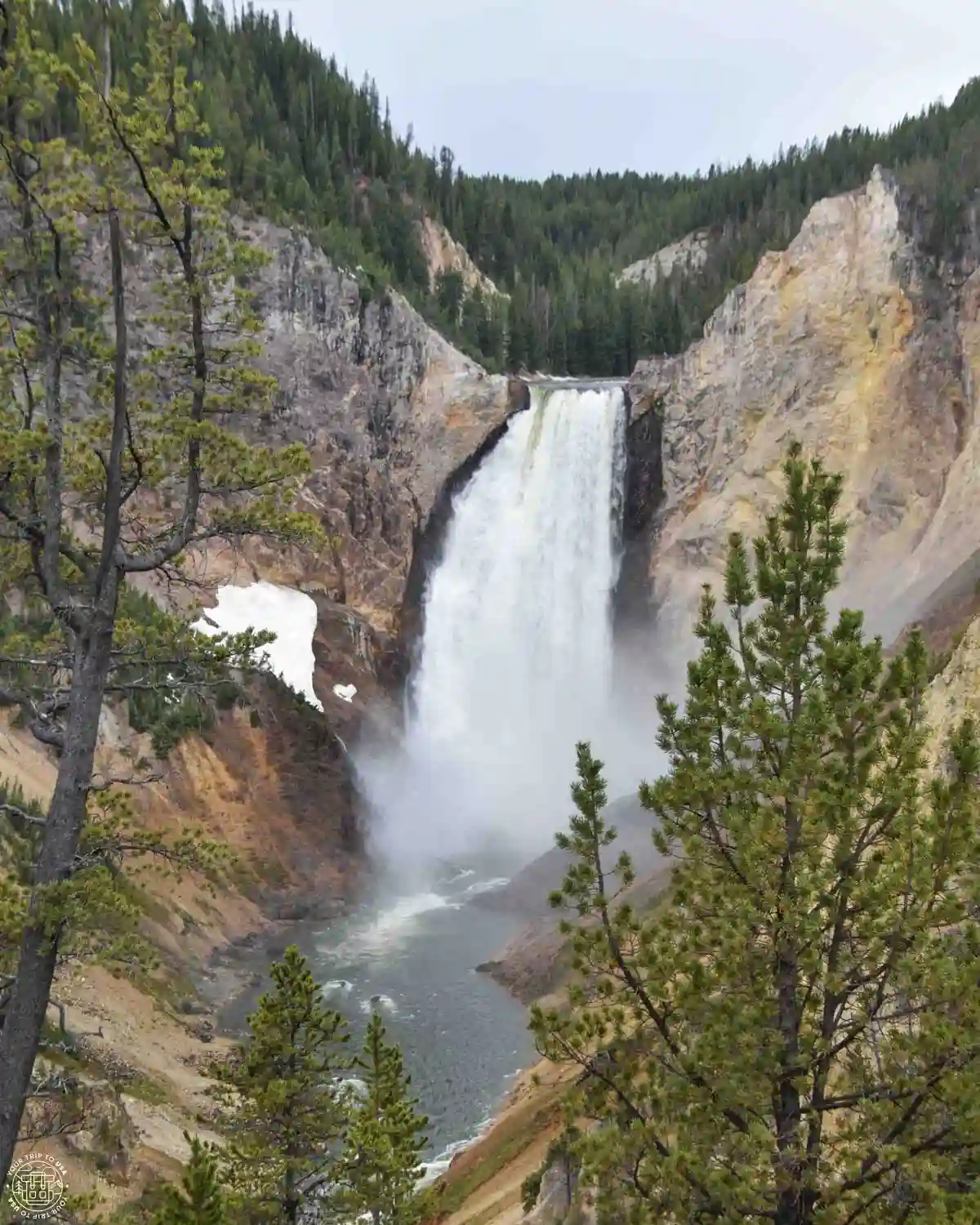
In addition, you can see up to three waterfalls: the most famous ones, Upper Falls and Lower Falls, and the Silver Cord Cascades. If that’s not enough, there is still hydrothermal activity on the canyon walls, such as small geysers and hot springs—remnants of a geyser basin that once existed there and is believed to be responsible for these colors.
There are two roads leading to the area:
- South Rim Drive: runs along the southern edge of the canyon and provides access to the Upper Falls View, Upper Falls Viewpoints, and the famous Artist Point. From Artist Point, you can enjoy the most iconic view of the canyon, with the Lower Falls in the background.
- North Rim Drive: runs along the northern edge of the canyon and provides access to the Brink of Upper Falls and the Brink of Lower Falls (with views of the upper sections of both waterfalls), Red Rock Point, Lookout Point, Grand View, and Inspiration Point.
All of these overlooks are connected by a network of trails that allows you to reach more remote parts of the canyon, such as Silver Corde Cascade Overlook, Silver Corde Cascade, and Point Sublime.
Tower Fall
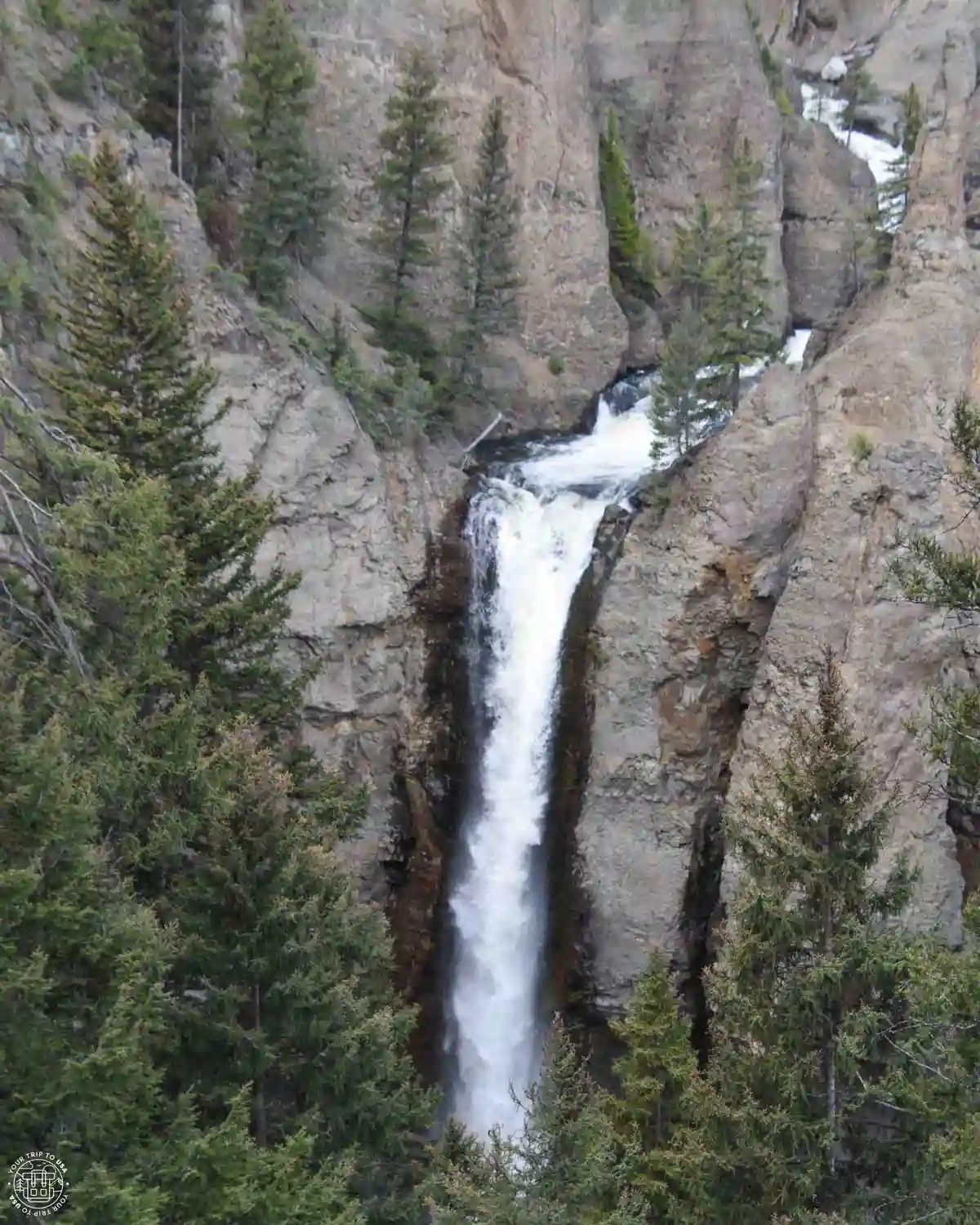
This beautiful 40-meter-high waterfall gets its name from the pinnacle-shaped rock formations at its head. Fed by Tower Creek, it is located very close to the Yellowstone River. To visit it, there is a trail leading to the overlook from the Tower General Store.
Lamar Valley ⭐
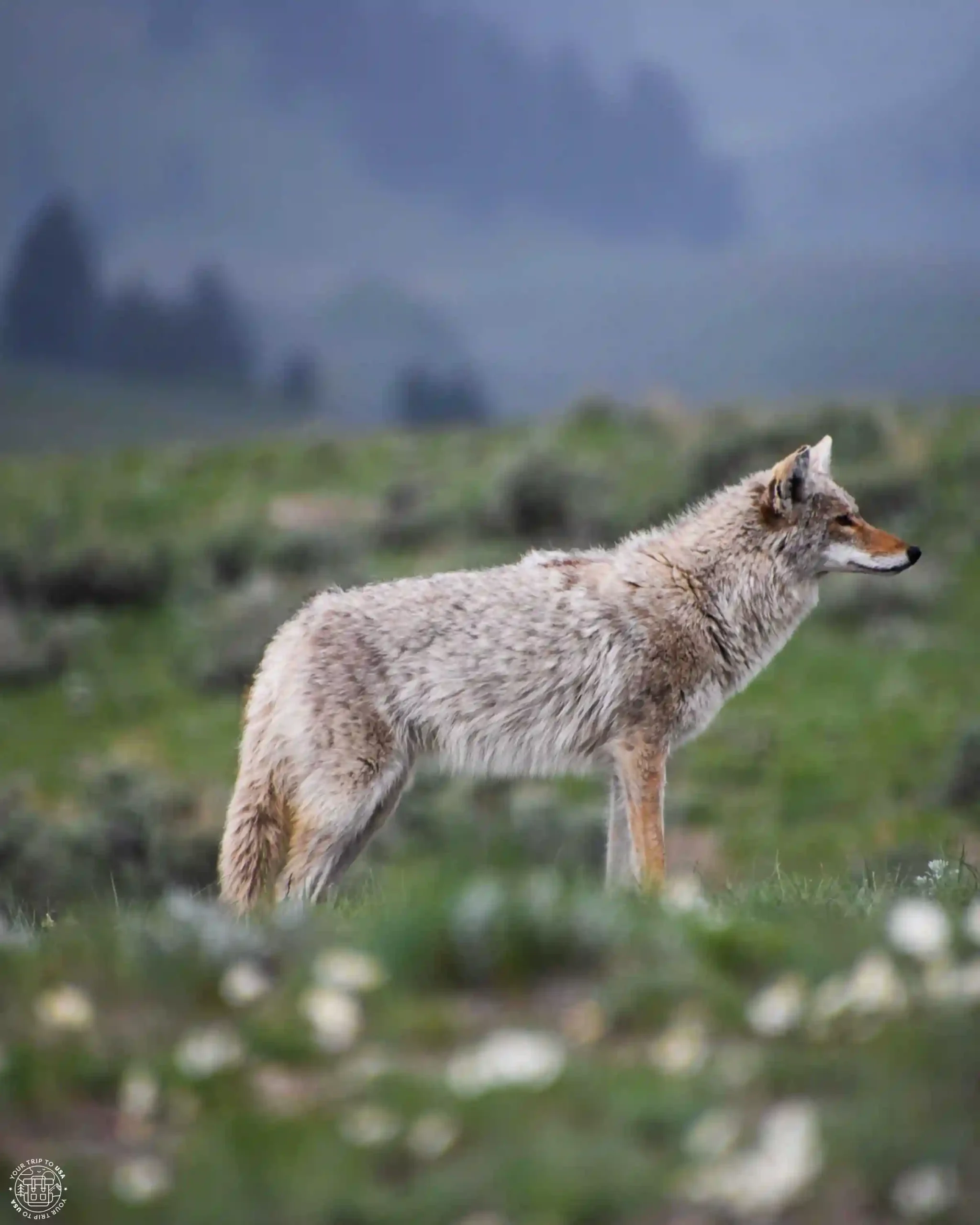
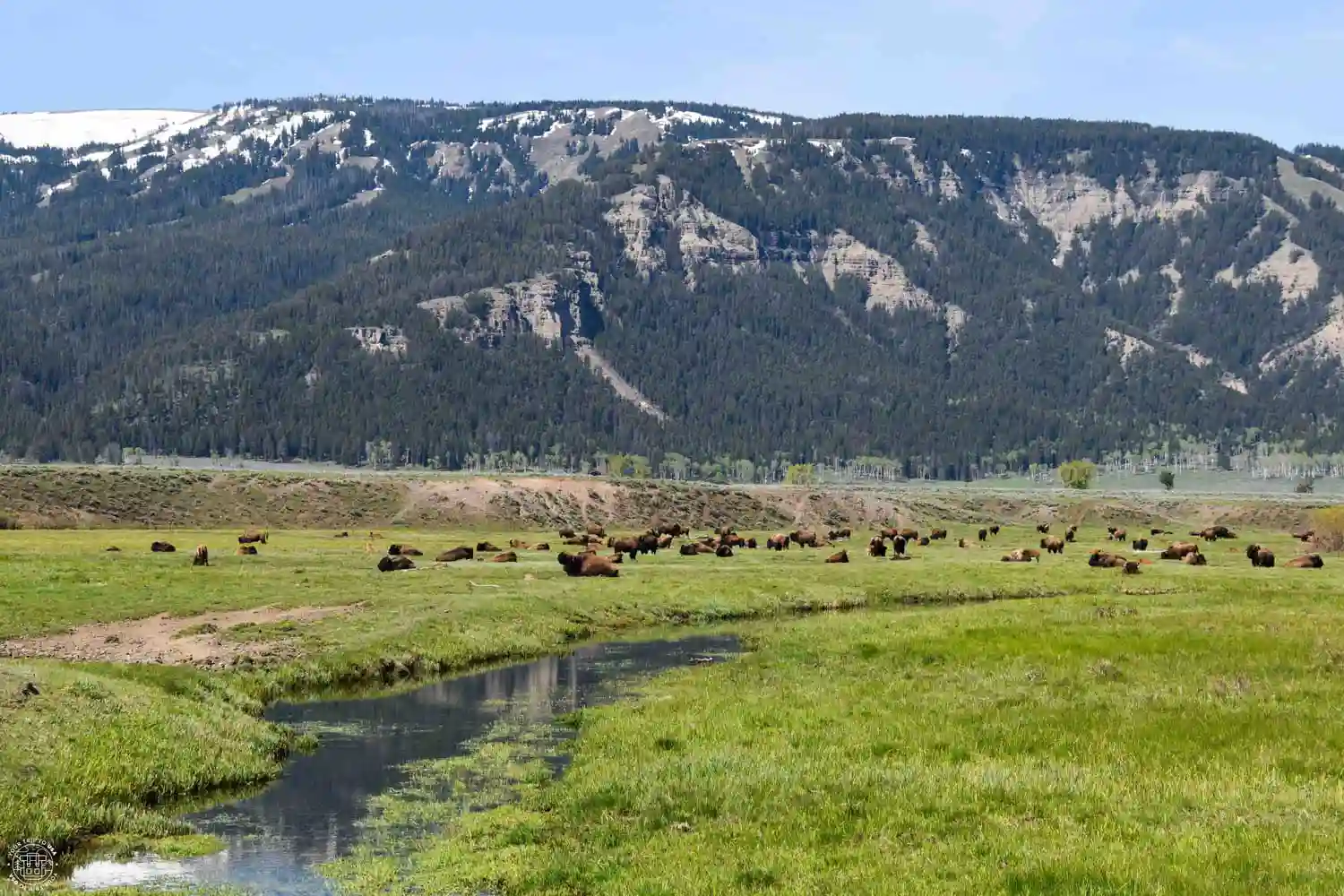
Another must-see in Yellowstone National Park, located between the northeast entrance and the intersection with the Upper Loop. This valley, known as the “Serengeti of North America,” is the premier spot for wildlife viewing in Yellowstone (and perhaps in all of North America).
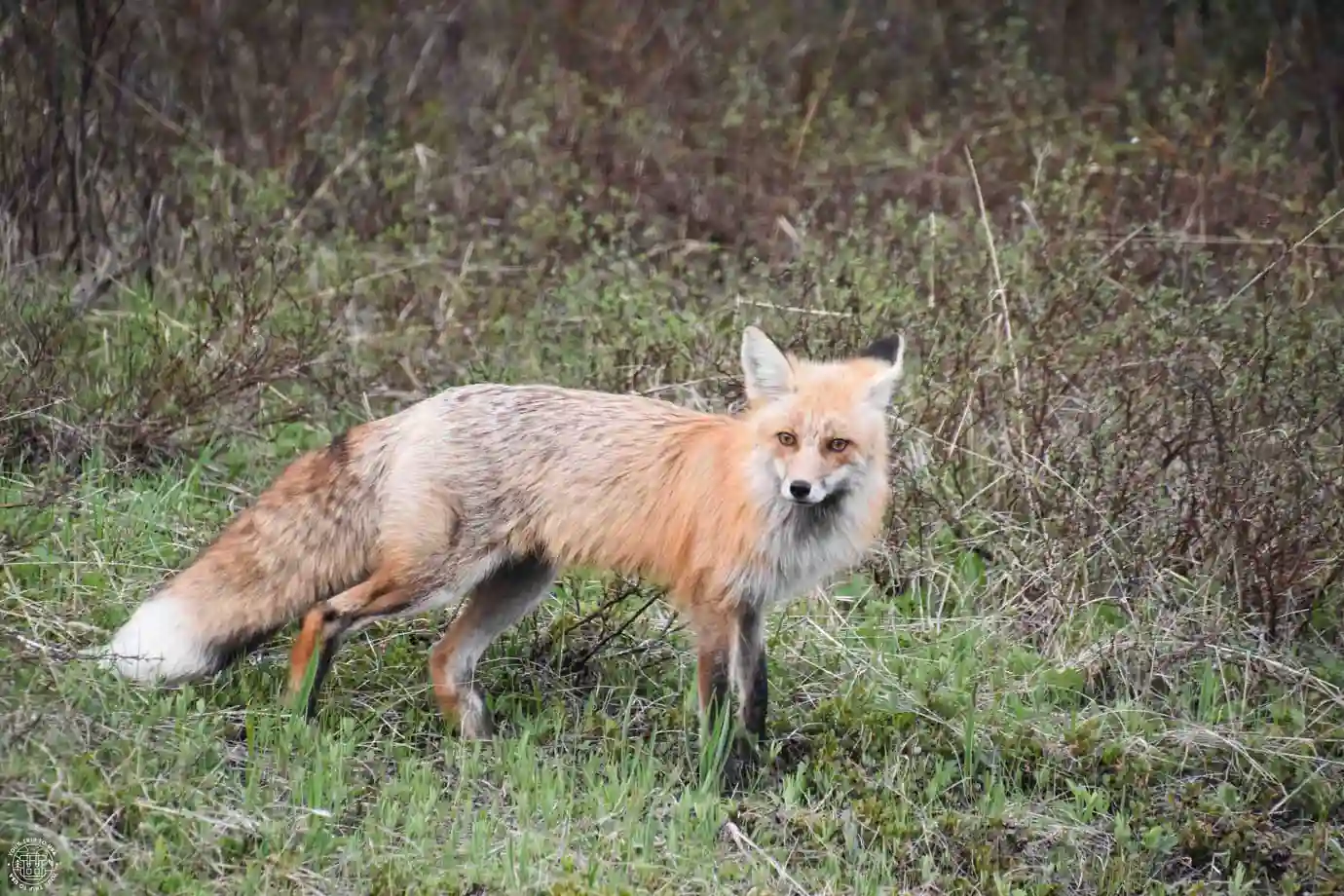
In the Lamar River Valley, wildlife sightings are practically guaranteed, as this area is home to one of the largest concentrations of bison and elk in North America, as well as pronghorn. All of this attracts many other predators and scavengers, such as grizzly bears, coyotes, red foxes, bobcats, mountain lions, and two wolf packs. It was right here in 1995 that wolves were reintroduced to Yellowstone National Park, and it is one of the best places in the world to observe them.
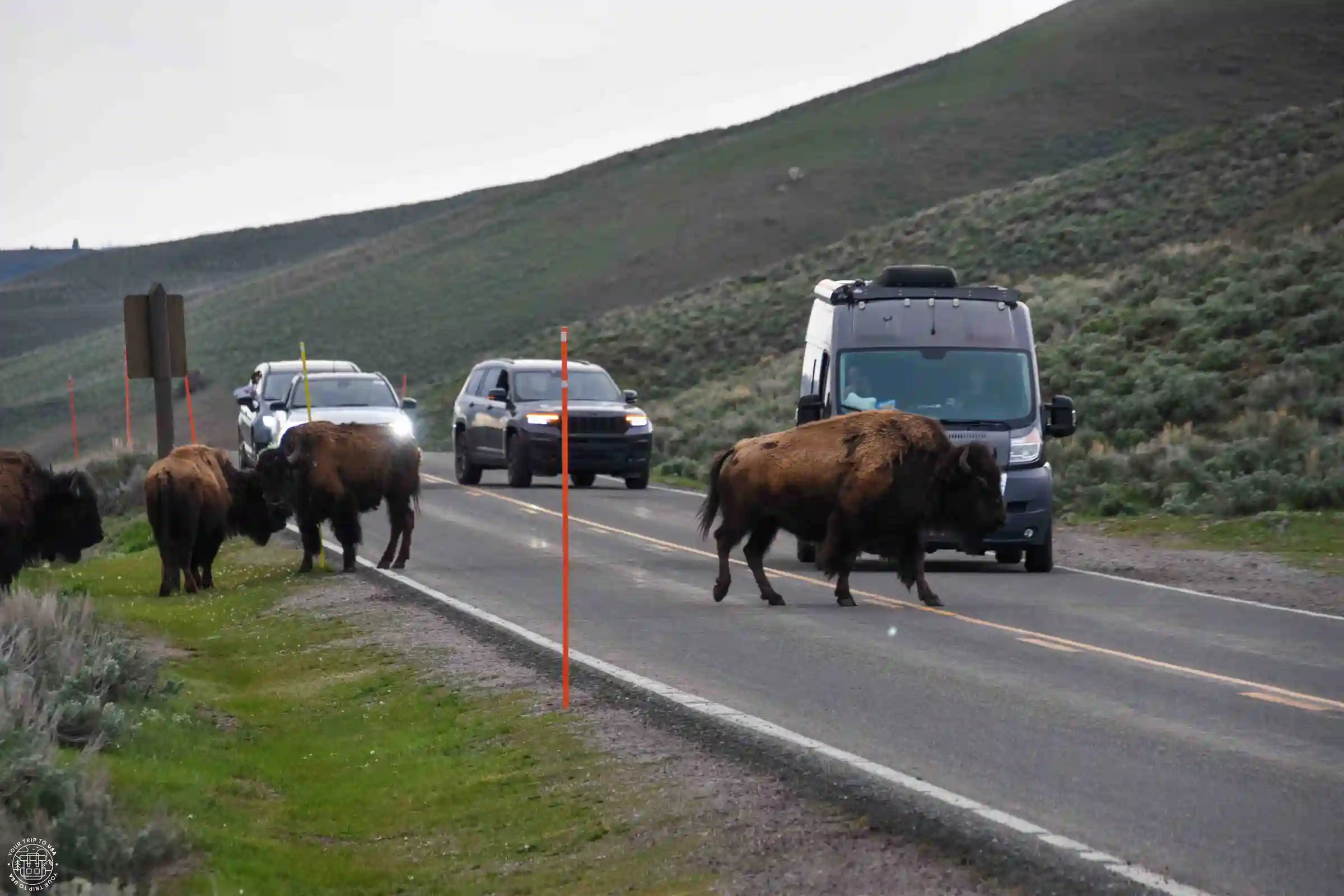
To get there, take the road that winds along the Lamar River and pull over to the side or stop at one of the overlooks. You must drive very carefully in this area, especially at dawn and dusk, as an animal could cross the road at any moment. In fact, traffic jams are very common, since bison have no qualms about stopping right in the middle of the road.
Another option is to hike the Lamar Valley Trail, which is 7 mile or 11.2 km long (round trip) and easy. We hiked part of it and loved it, both for the scenery and the dozens of bison we saw. ⚠️ Remember to maintain a safe distance from the animals: 100 yards or 91 meters from wolves and bears, and 25 yards or 23 meters from the rest, especially bison and elk. Feeding them is also prohibited.
Mammoth Hot Springs ⭐
This area is another must-see in Yellowstone National Park, as it offers plenty to see, from spectacular hydrothermal features to wildlife and historic buildings. This is where the park’s first facilities were built and where the U.S. Army was stationed in 1886 to protect this nature reserve.
Mammoth Hot Springs Historic District
This area features historic, protected buildings from the early 20th century, including the Horace Albright Visitor Center, the post office, the park offices, and the Mammoth Hot Springs Hotel.
Another activity you can enjoy in this area is wildlife viewing, especially elk, since they love the grass in the Historic District and there are plenty of them. Although these animals may seem harmless, it’s important to keep a safe distance of 25 yards or 23 meters (they can be dangerous), not to feed them, and not to trespass on private property to photograph them. When we were there, there was a woman constantly yelling at tourists because they were entering her yard to take pictures.
💡 In our guide to visiting Yellowstone, we've included plenty of tips to help you plan your stay in the park
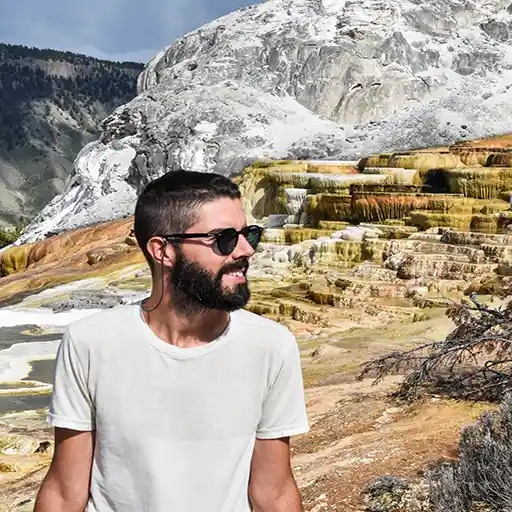
Mammoth Hot Springs Terraces
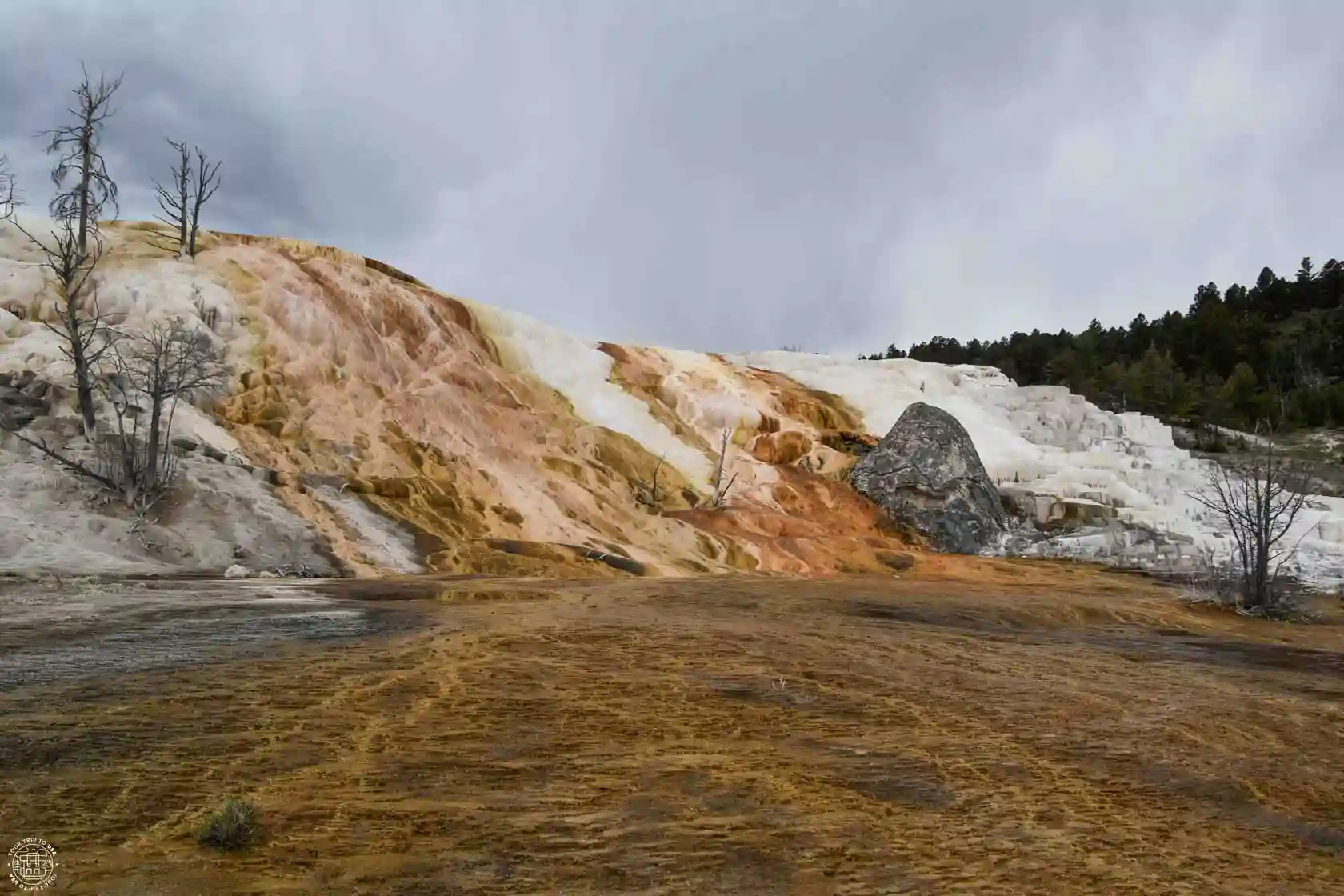
The main attraction in this area is the geothermal formations of the Mammoth Hot Springs Terraces. These are a series of hot springs that have formed a mound by depositing sediment (2 tons per day) over hundreds of thousands of years. Some of these springs are ochre-colored due to the presence of travertine, creating a striking visual contrast.
It’s true that the place has lost some of its appeal due to a small earthquake that altered the hot springs, leaving many areas dry. Even so, we think it’s worth making the trip here, but always with modest expectations.
The terraces are divided into two areas open to visitors: the Lower Terraces, which can be explored via wooden walkways, and the Upper Terraces, which feature a short loop road with a couple of parking lots and overlooks. The Upper Terraces are the least interesting.
Roaring Mountain
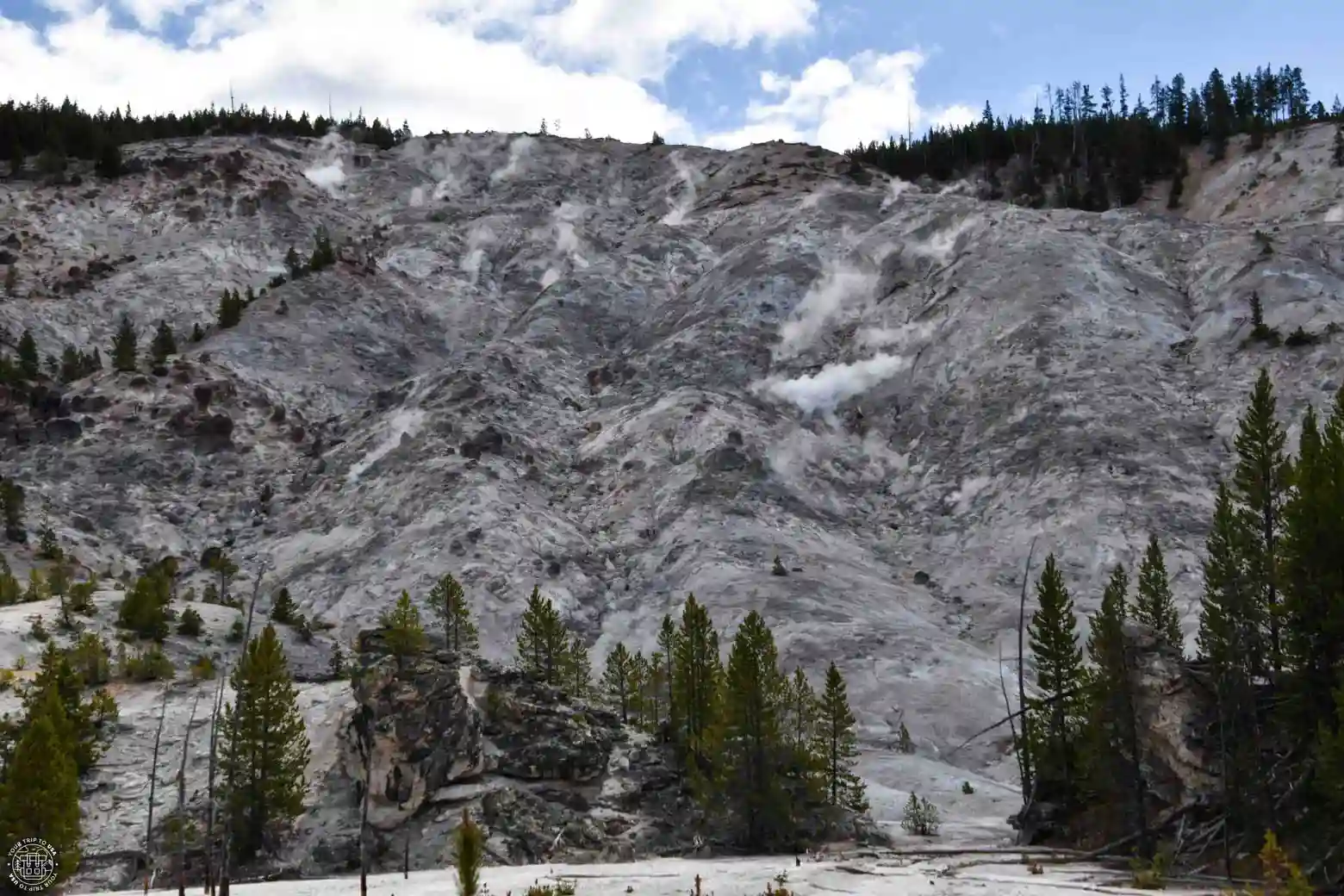
This curious formation is located on the slope of a hill and consists of several fumaroles that emit gases into the atmosphere. The name dates back to the late 19th and early 20th centuries, when the fumaroles were much more active and could be heard from up to 8 km away.
This tourist attraction is located on the Upper Loop, just off the road, near Norris Geyser Basin, and has parking available for easy access.
Norris Geyser Basin ⭐
Another must-see in Yellowstone National Park, as it is one of the park’s largest geyser basins and home to two of its most famous geysers. You’ll also find a multitude of geysers and hot springs in a variety of colors and with different characteristics, along with informational signs that explain the details of this area and its geothermal formations.
This geyser basin is located on the edge of the caldera, at the junction of two tectonic faults, which makes it very active and dynamic, constantly changing. What’s more, the water temperatures here are the highest in the entire park, and it’s known to have existed for at least 115,000 years—that’s quite a while! 😮
There is a parking lot—which tends to fill up quickly—and two walking trails. Keep in mind that it can take more than two hours to explore the site thoroughly, though you can also take a quick look around in 30 minutes.
Porcelain Basin
The shorter of the two trails winds through the Porcelain Basin, an open area with few trees and dotted with milky, turquoise, and ochre pools—and more water than in Back Basin. In addition to the boardwalks, there is a small overlook.
Back Basin
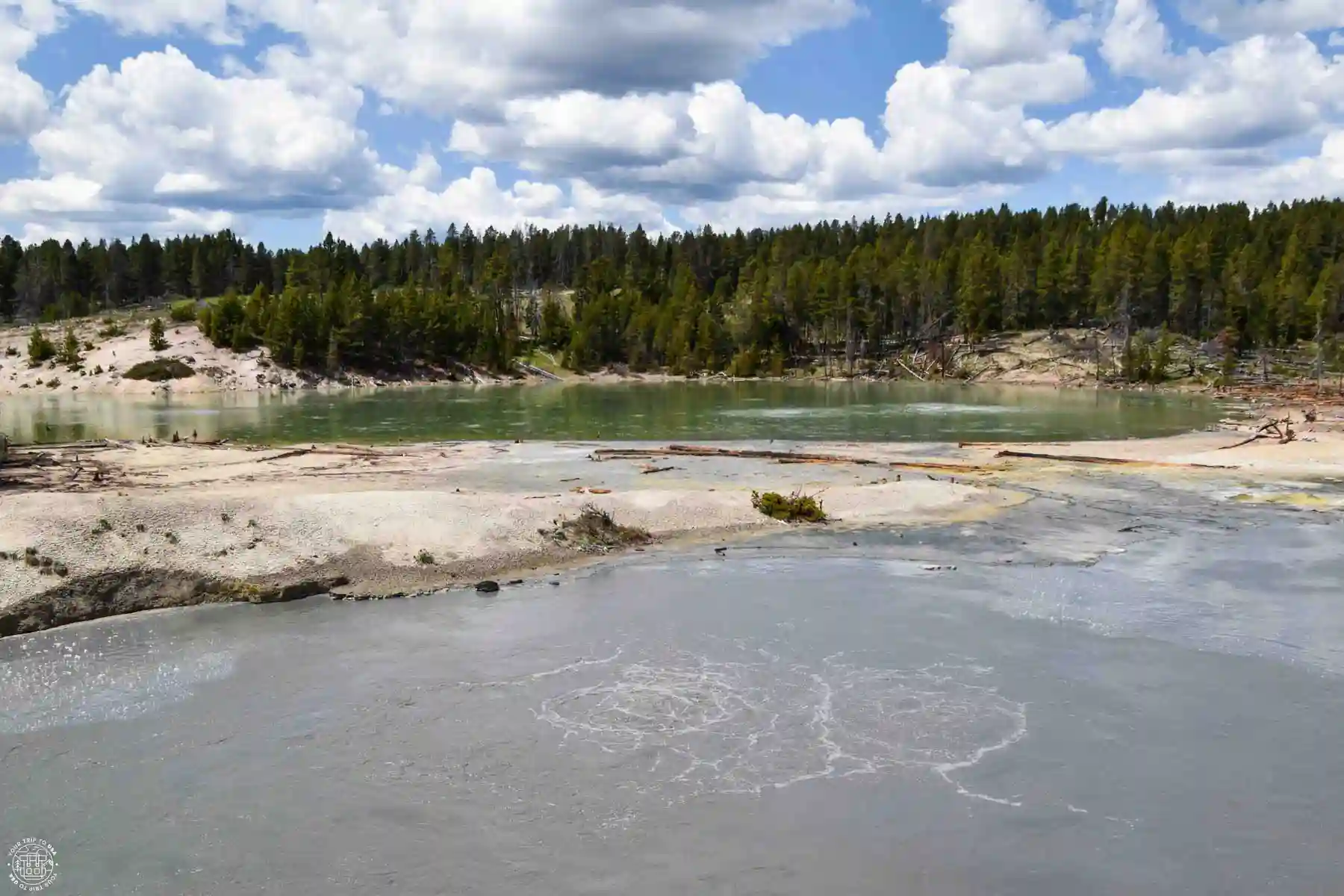
In contrast, the Back Basin is a more wooded area, and the geothermal features are spread out over a larger area. There is a double loop of trails and boardwalks for exploring the area, where you can see various types of geothermal features, such as mud pools, crystal-clear pools, and fumaroles.
Here you'll find, among others, Echinus Geyser and Steamboat Geyser—the world's tallest (928-400ft or 91–122 m)—whose eruptions are becoming increasingly rare. Although both are spectacular, their eruptions are highly irregular and difficult to predict.
Artists Paint Pots
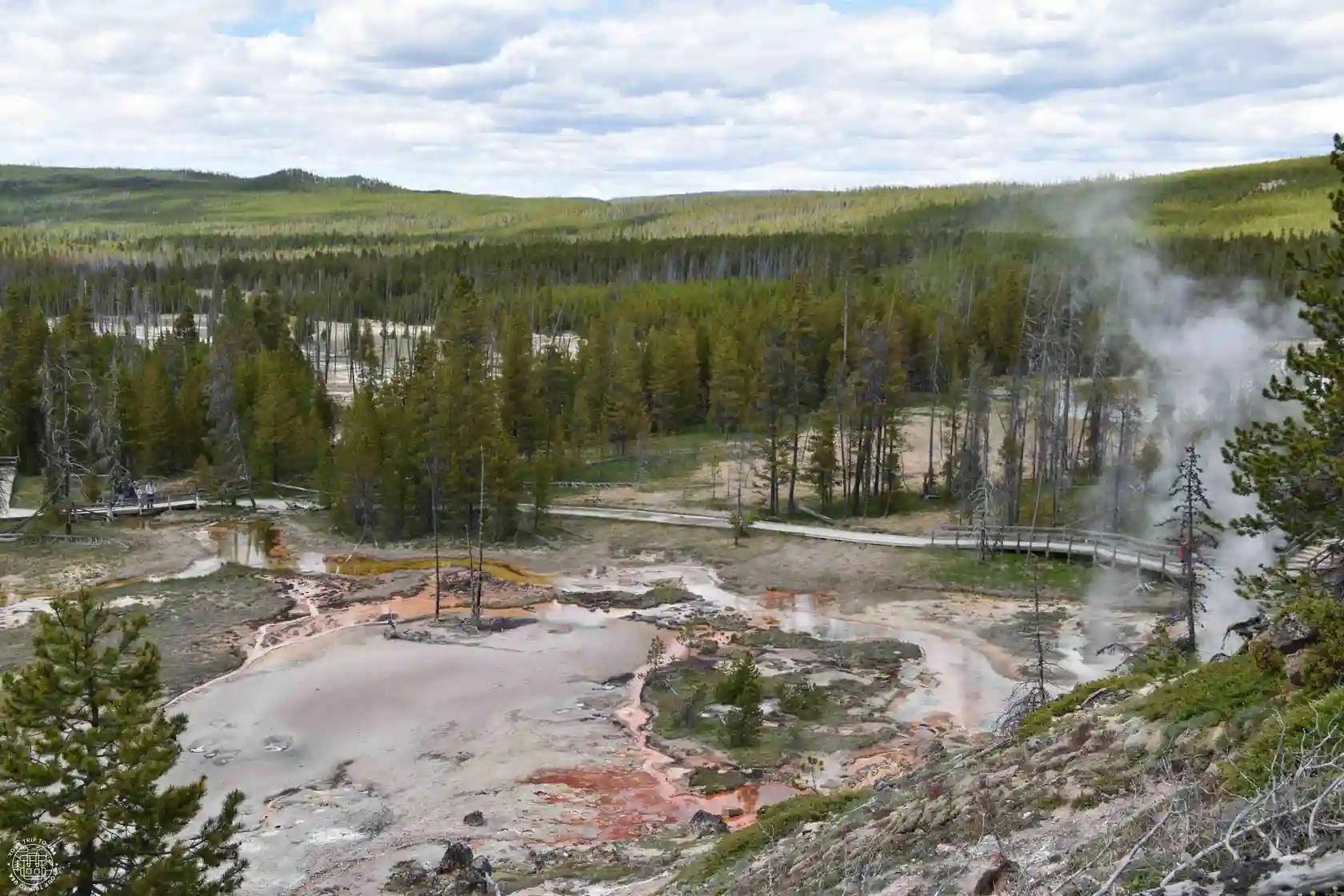
This small and intriguing geothermal area is located very close to Norris Geyser Basin, on Lower Loop Road. It features several mud pots, hot springs, and small geysers; one of the most interesting is Blood Geyser, named for the reddish color of the soil. Since it’s situated on a small hillside, there’s a system of wooden walkways and stairs that allow visitors to explore the area and enjoy a panoramic view. Watch out for hot mud splashes!
Lower Geyser Basin ⭐
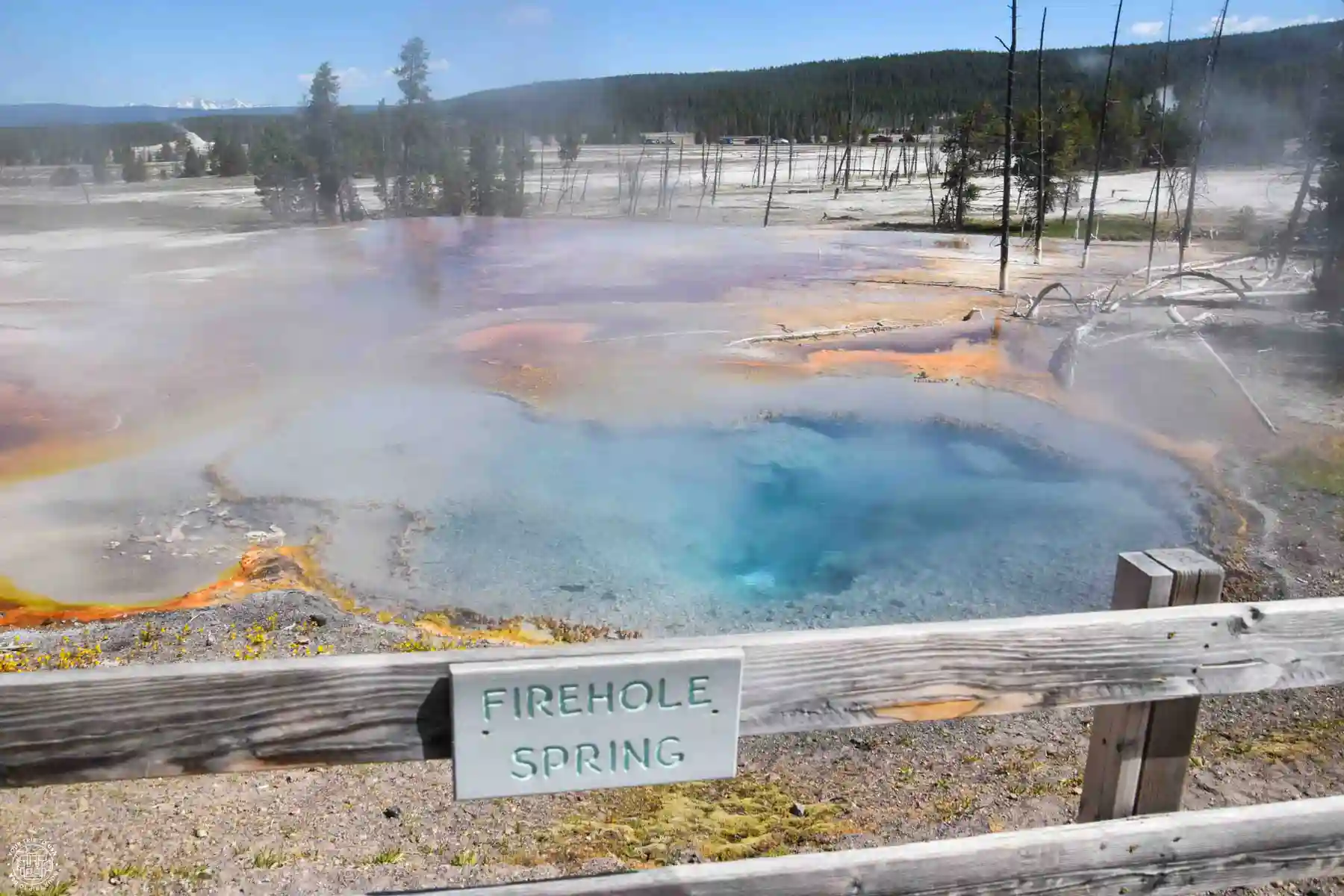
Another must-see attraction in Yellowstone National Park is the Lower Geyser Basin, as it is the second-largest geyser basin in the park. Divided into two areas— the Fountain Paint Pot Area and Firehole Lake Drive—it features some of the most spectacular geysers. It is located on Lower Loop Road, north of Old Faithful and the Grand Prismatic Spring.
Fountain Paint Pot Area
In this area, you’ll find various types of geothermal features, ranging from colorful mud pots like the Fountain Paint Pot to different types of geysers, such as the Morning Geyser, and fumaroles. To access the area, there’s a parking lot right off the road and a network of wooden walkways.
Firehole Lake Drive
At this turnoff on Lower Loop Road, you'll find the Great Fountain, one of the park's most spectacular geysers: it erupts up to twice a day and can shoot water 72 to 197 feet (22 to 60 m) into the air for nearly an hour. There are several parking lots along this road, though the one at the Great Fountain can get very crowded—you'll see people waiting here for hours to watch it erupt.
We waited here for about 40 minutes and got to see it erupt, but some people had been waiting for 5 hours 😲. It’s best to check the park’s website to see when the geysers are active.
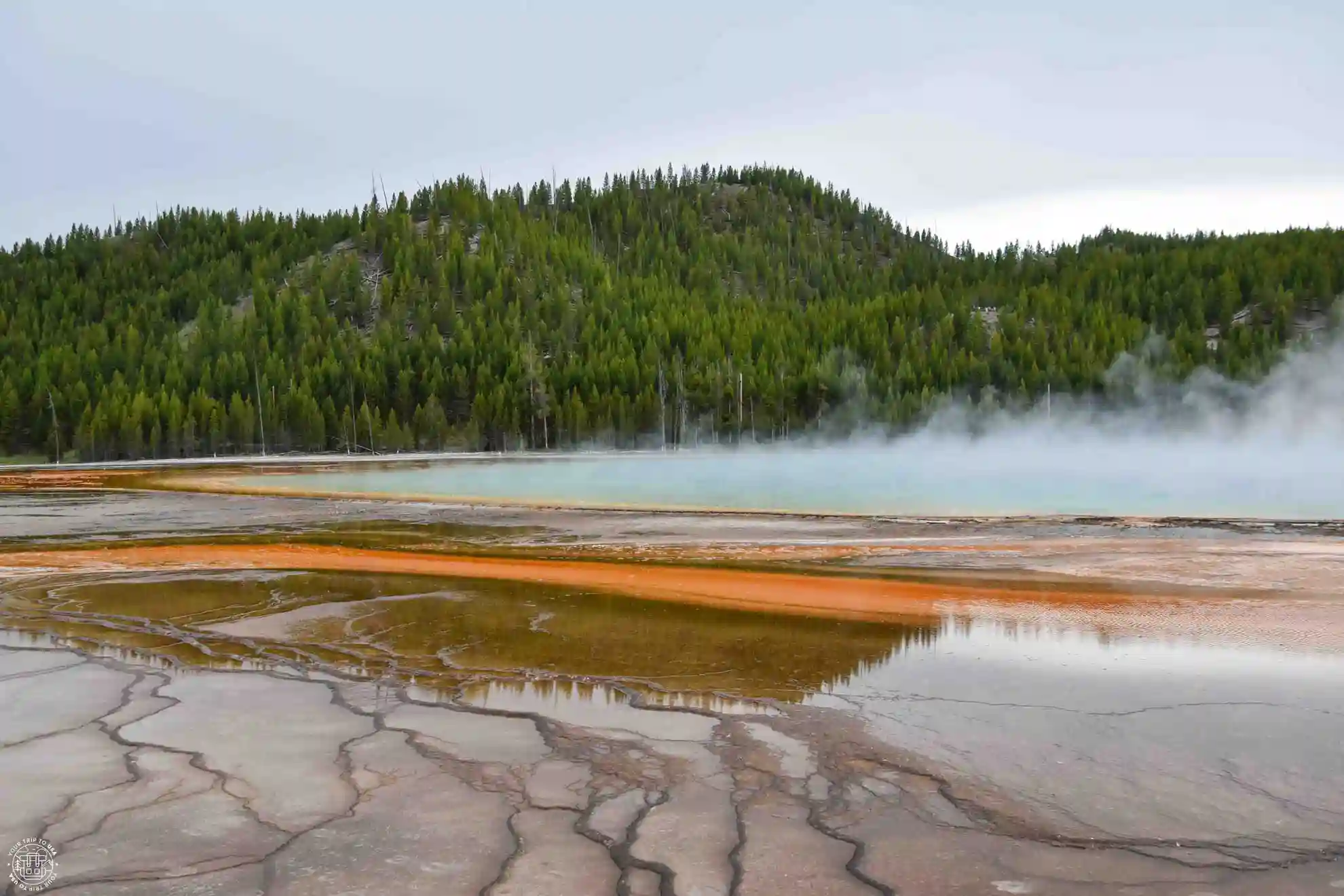
Midway Geyser Basin (Grand Prismatic) ⭐
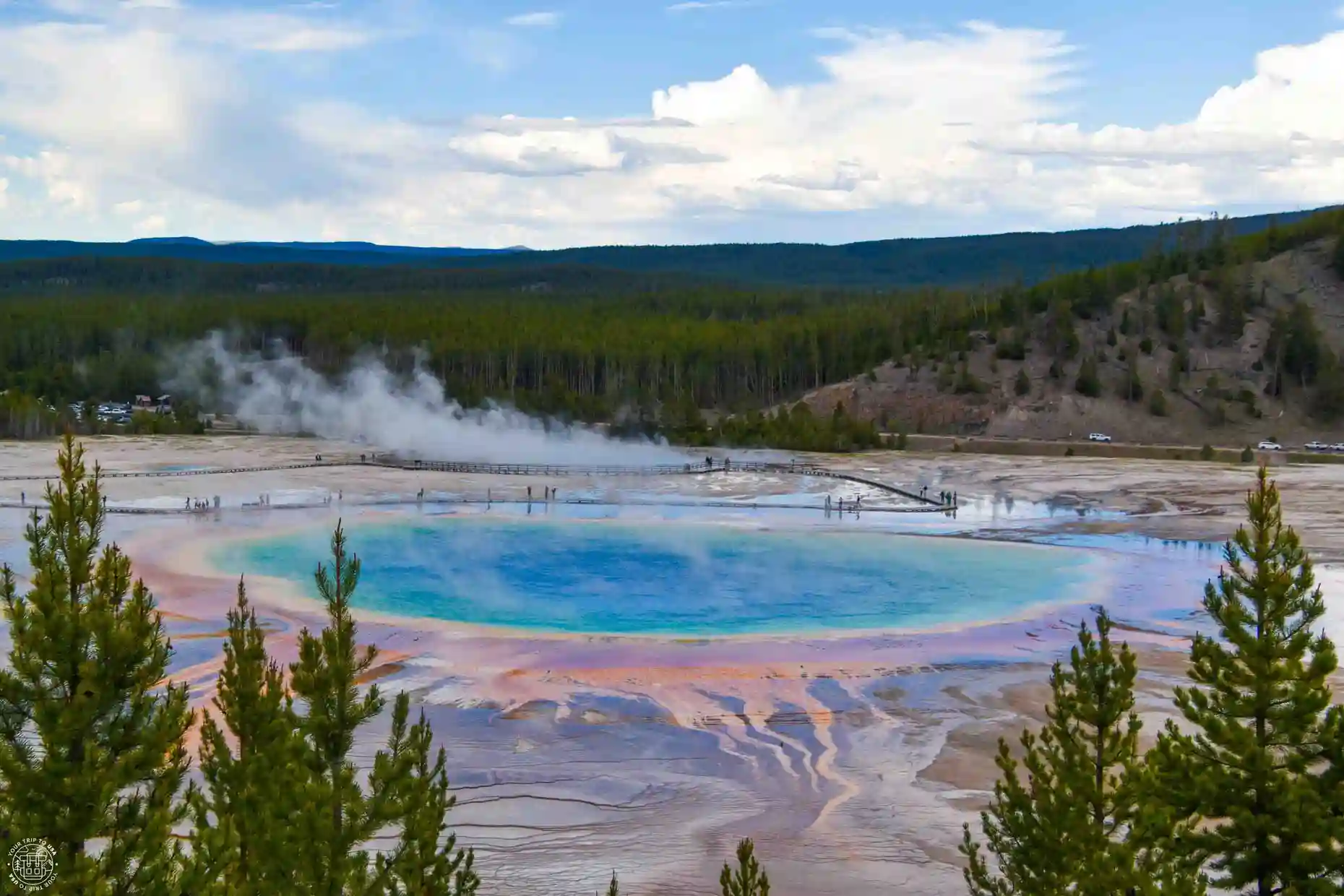
This is where you'll find Yellowstone's most iconic sight, so it's one of the places you simply can't miss. Although this basin has fewer geothermal features than its neighbors, the Lower and Upper basins, the ones here are truly special and the largest in the entire park. What sets them apart from the others is the vast amount of water they constantly spout, as well as the size and depth of the geysers.
The most famous attractions in this area are the Grand Prismatic Spring, the Excelsior Geyser, and the Turquoise Pool. There are two ways to get there, depending on how much time you have and how far you’re willing to walk; each offers a different perspective. We recommend doing both—you won’t regret it!
💡 We recommend our exclusive post on where to stay in Yellowstone, featuring hotels both inside and outside the park, as well as campgrounds
The first option—and the most convenient one—is to head straight to the parking lot in this area, from where a network of walkways leads you to the geothermal features. The first thing you’ll come across is a small thermal waterfall, fed by the formations themselves, which flows directly into the Firehole River. The trail continues across the river so you can get a close-up view of the features.
The second option is to hike the Grand Prismatic Overlook Trail. To do this, you’ll need to start from a parking lot further south than the previous one—the Fairy Falls Parking Lot—and walk to the Grand Prismatic Overlook. From this overlook, you’ll have an incredible panoramic view of the Midway Geyser Basin and the classic photo spot of the Grand Prismatic—you can’t miss it! It’s just 1.2 mi or 2 km (round-trip) with a 105-foot (32-meter) elevation gain.
Grand Prismatic Spring
This is the largest hot spring in the entire park (between 197 and 295 feet or 60 to 90 m in diameter and 121 feet or 37 meters deep). Furthermore, its nearly circular shape and the contrast between its turquoise waters and the ochre hues of the surrounding landscape—formed by the waters themselves—make it a truly special and photogenic spot.
Excelsior Geyser
With a diameter very similar to that of the Grand Prismatic, this turquoise-colored geyser constantly discharges more than 4,000 gallons or 15,000 liters of hot spring water per minute into the Firehole River.
Upper Geyser Basin (Old Faithful) ⭐
This is the park’s most famous area and home to the largest geyser field, with up to 410 geysers. The area is vast, and it takes at least half a day to explore it all; among the most notable features are the world-famous Old Faithful Geyser, Geyser Hill, Castle Geyser, Grand Geyser, and Morning Glory Pool.
There is a large parking lot for visitors, along with plenty of amenities such as a visitor center, restaurants, lodging, shops, a gas station, and a network of trails to help you get around the various geysers. The eruption schedules in this area are well documented and can be found on the park’s website.
Old Faithful Geyser
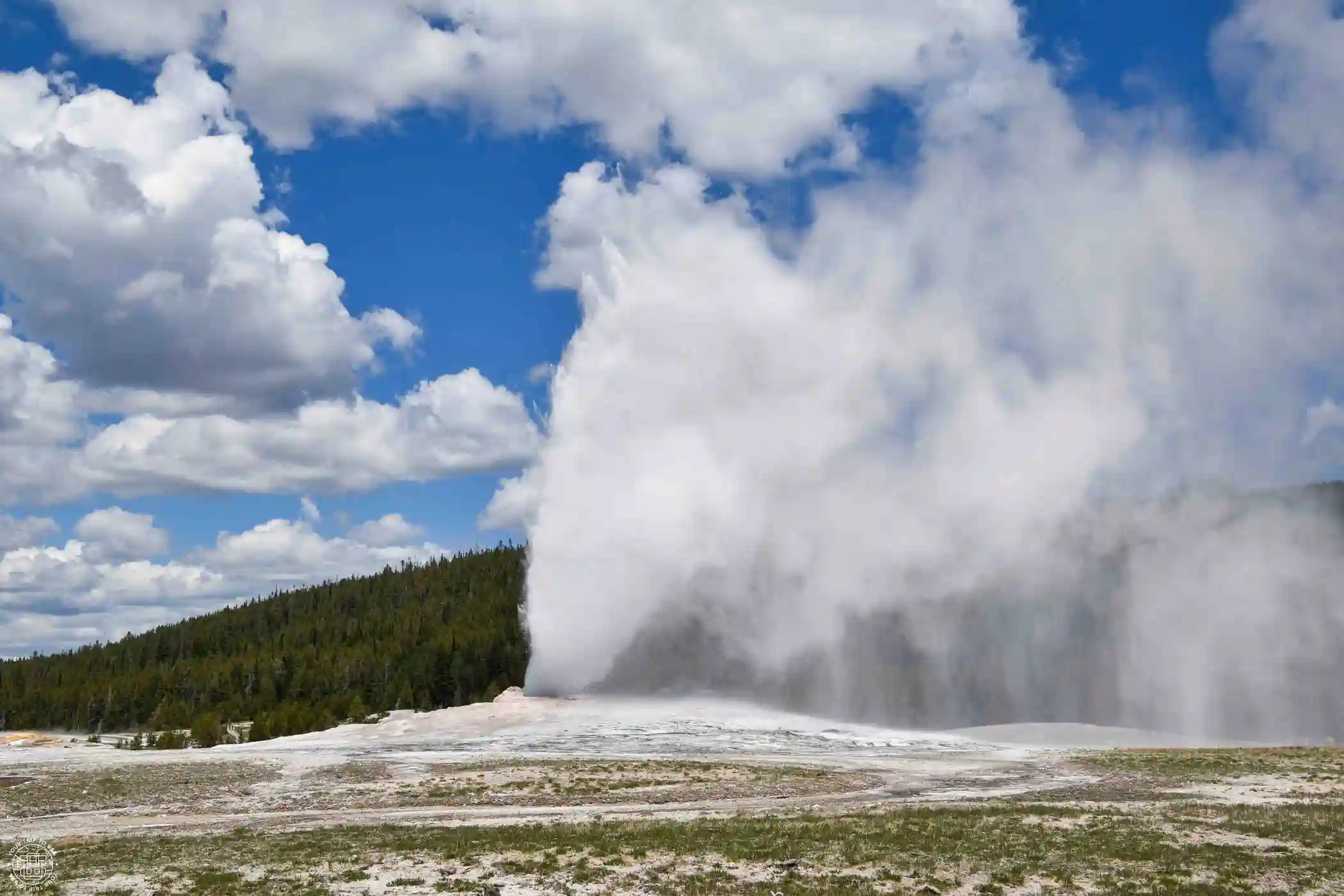
The park’s most famous and iconic geyser and a must-see stop on any trip through Wyoming. You’ll know it’s a popular spot because of the crowds of tourists it attracts; there are even benches around it where you can wait for the next eruption.
This is a conical geyser that shoots large amounts of boiling water (between 3,700 and 8,500 gallons or 14,000 and 32,000 liters) to heights of 105 to 184 feet or 32 to 56 meters for periods ranging from 1.5 to 5 minutes. The intervals between eruptions last between 68 and 94 minutes, with a margin of error of 10 minutes.
Geyser Hill
This hill, dotted with geysers (there are more than 50), is located a short distance from Old Faithful and features wooden walkways that allow visitors to observe them safely and up close. Among the highlights are the Beehive Geyser, Heart Spring, and Doublet Pool, among others.
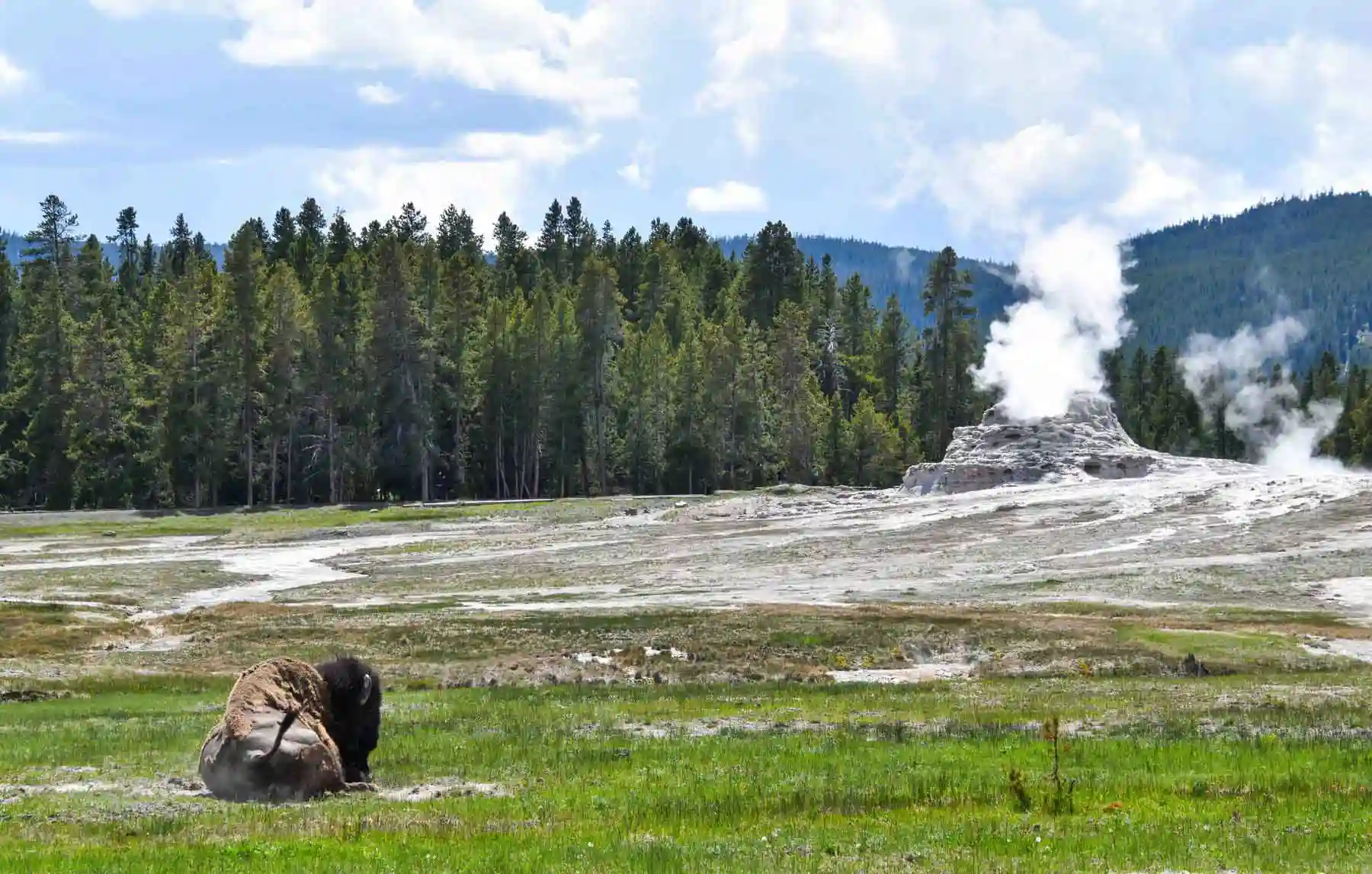
Castle Geyser
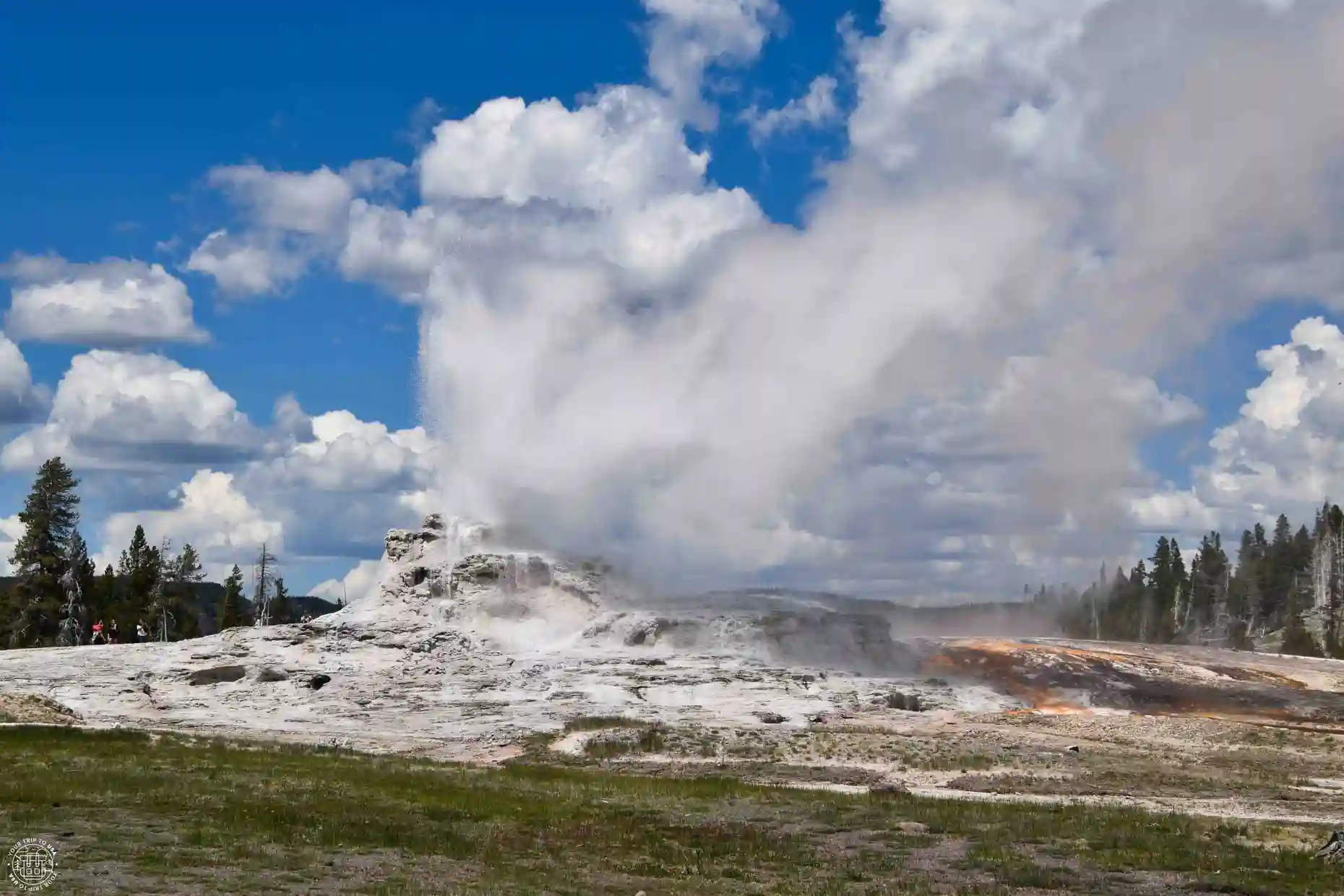
Just a short distance from Old Faithful is Castle Geyser, a conical geyser with an eruption cycle of 13 to 15 hours. It shoots boiling water about 89 feet or 27 meters into the air for 20 minutes, then emits steam for 30 to 40 minutes. We recommend visiting it if you have the time.
Grand Geyser
Another geyser you should try to see in this area is the Grand Geyser, as it can shoot boiling water up to 157 feet or 48 meters high approximately every 6.5 hours for 10 minutes.
Morning Glory Pool
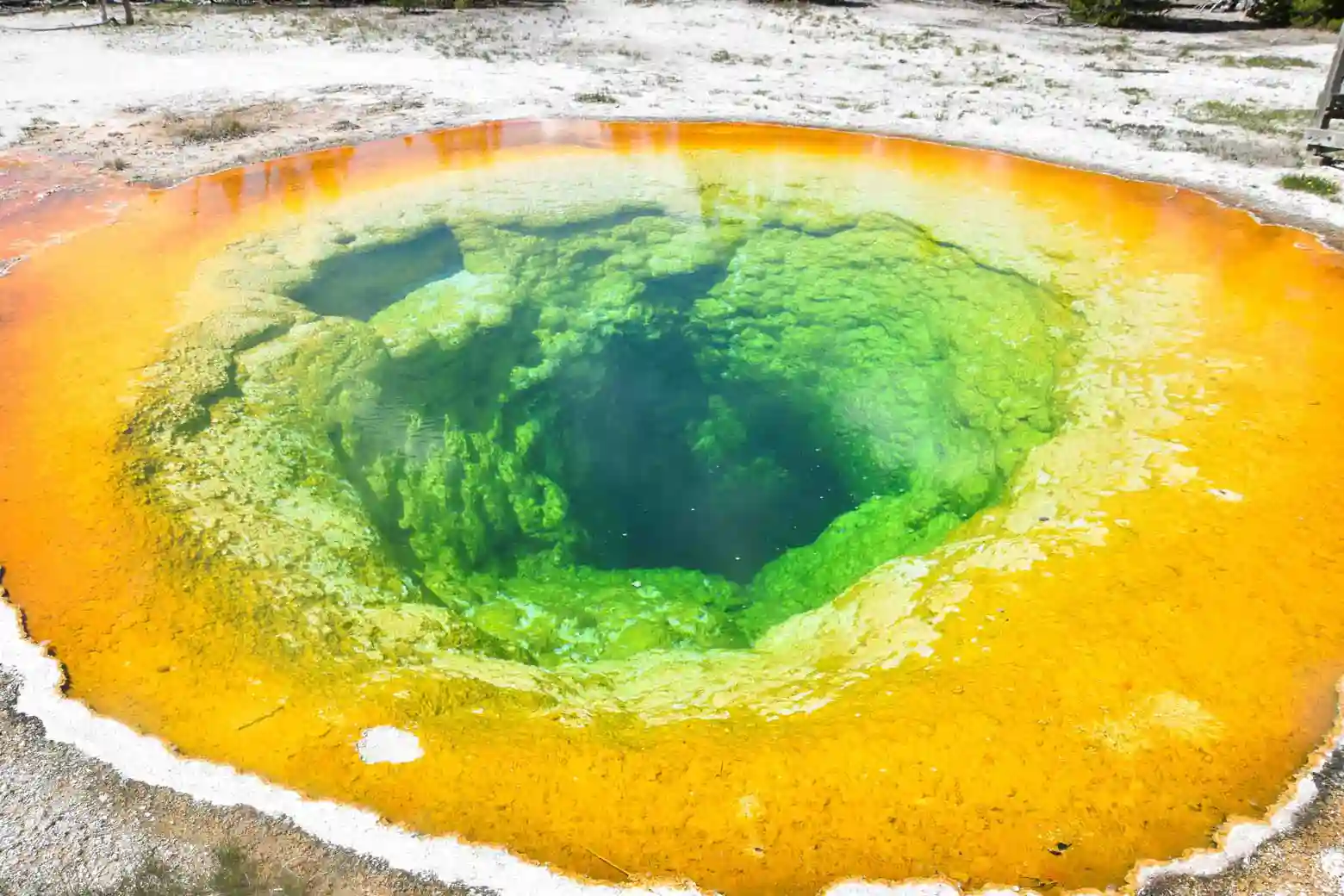
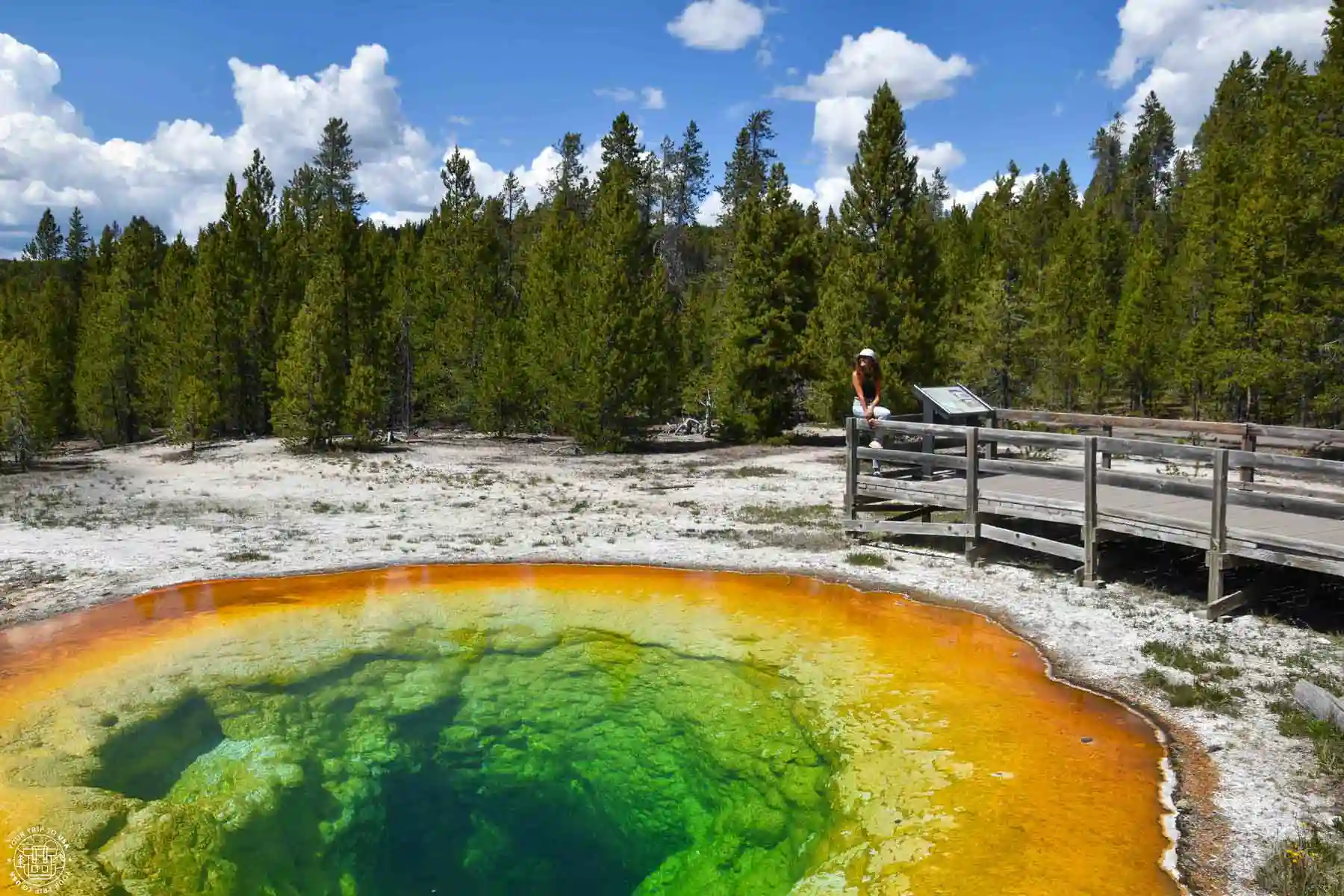
This thermal pool boasts one of the most striking colors in the entire park, and although it’s located at the far end of the basin, it’s well worth the trip. The water’s low temperature—just 158° F or 70°C—encourages the growth of bacteria that create its distinctive colors.
Old Faithful Inn
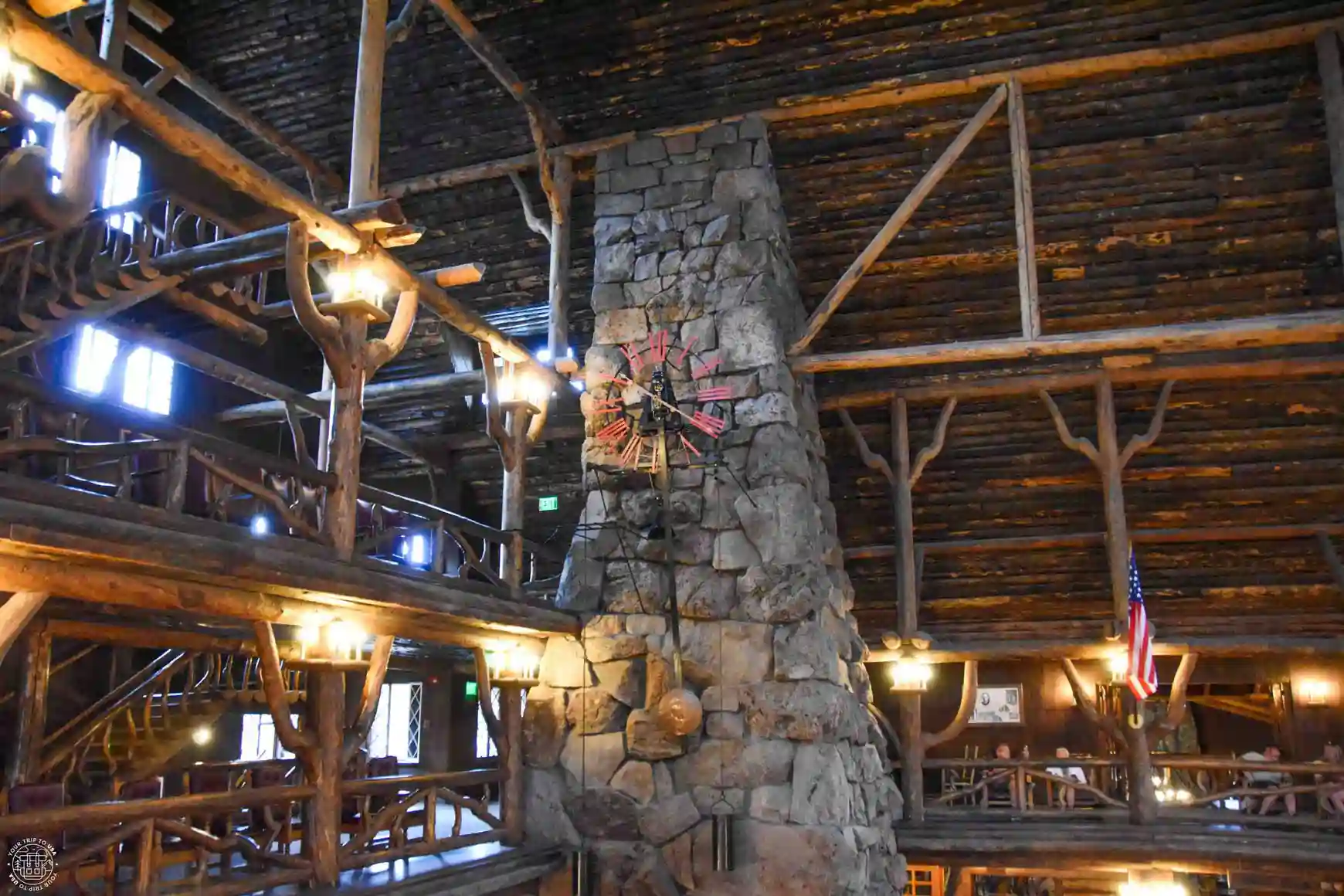
If you visit the area, you can’t leave without checking out this fantastic hotel from 1904, built with local wood and stone and considered one of the finest examples of rustic resort architecture. Admission is free, and it’s designated as a historic site. Don’t miss the lobby with its massive stone fireplace, the main entrance facing Old Faithful, and the first-floor terrace where you can relax with a drink while enjoying views of the Upper Geyser Basin.
Less-known spots in Yellowstone
Lewis Lake
This beautiful lake in the southern part of the park is located very close to the South Entrance and is a great place to stop for a bit, take in the views, or relax for a while at the picnic area.
Yellowstone Natural Bridge
This small natural arch, located in the Bridge Bay area (near Yellowstone Lake), is a great opportunity to see one if you haven’t been able to visit southern Utah. The rock that forms it, of volcanic origin, was eroded by the waters of Bridge Creek. To reach it, you’ll need to hike 2,5 mi or 4 km (round trip) from the Bridge Bay Marina parking lot.
Sylvan Pass
A scenic mountain pass at an elevation of 8,530 feet or 2,600 meters that connects the east entrance with Yellowstone Lake and the Lower Loop. In the area, right along the road, you'll find Eleanor Lake and Sylvan Lake.

🚐 The U.S. is a paradise for traveling by camper van or motorhome: there are plenty of campgrounds, wonderful places to stay overnight for free, and amenities around every corner.
If you'd like to try this way of traveling, the United States is the place to do it!
💸 And you can save a lot of money on lodging and food!
➡️ We always book through this rental search engine because they work with all the companies and have great deals.
Lake Butte Overlook
Located on the access road to the East Entrance, this overlook offers beautiful, sweeping views of Yellowstone Lake. To get there, take a 1-mile or 1.6 km paved detour off the main road.
Sulphur Caldron
Very close to the Mud Volcano, between the road and the Yellowstone River, lies the Sulphur Caldron, a small pool of gray mud. The most distinctive feature of this bubbling pool is its extremely high acidity and high concentration of sulfur.
Washburn Hot Springs Overlook
A beautiful overlook located on the Upper Loop, very close to Canyon Village. It offers excellent aerial views of the national park and a chance to see the Yellowstone Caldera, as it sits right on the rim. You can also see the fumaroles at Washburn Hot Springs and, on occasion, spot deer.
🚐 The U.S. is a paradise for traveling by camper van or motorhome: there are plenty of campgrounds, wonderful places to stay overnight for free, and amenities around every corner.
If you'd like to try this way of traveling, the United States is the place to do it!
💸 And you can save a lot of money on lodging and food!
➡️ We always book through this rental search engine because they work with all the companies and have great deals.
Dunraven Pass
This mountain pass, located at an elevation of 8,858 feet or 2,700 meters on the Upper Loop, is a great spot to stop and rest while enjoying the views. From late spring through summer, it’s also known for its abundance of wildflowers and is a good place to spot bighorn sheep.
Mount Washburn
This 10,259-foot or 3,127 meters peak offers the best 360-degree views of the entire park, as well as the chance to enjoy wildflowers and spot wild goats. There are two ways to reach it: take the trail from Dunraven Pass (6 mi or 9.6 km round-trip and more challenging) or take Chittenden Road to the designated parking lot and walk from there (5.8 mi or 9.3 km round-trip) to the viewpoint.
Petrified Tree
This petrified tree is located very close to the intersection of the Upper Loop and the northeast access road. What makes it unique is that it stands upright, unlike most others, which lie on the ground. To reach it, you’ll need to take a short detour of half m mile or 800 meters.

Take a look to this travel insurance for the United States comparison in case you need to buy one
Blacktail Plateau Drive
This short but interesting 6-mile or 10 km detour, which runs parallel to the Upper Loop, follows a west-to-east route (one-way traffic) and offers excellent views of the Northern Range, as well as the chance to spot bison and black bears. The trail is unpaved and is not accessible to RVs or vehicles with trailers.
Forces of the Northern Range
This fully accessible trail, which runs along half-mile-long or 800 m wooden boardwalks, offers beautiful views of the park, educational displays, and the chance to spot foxes.
Sheepeater Cliff
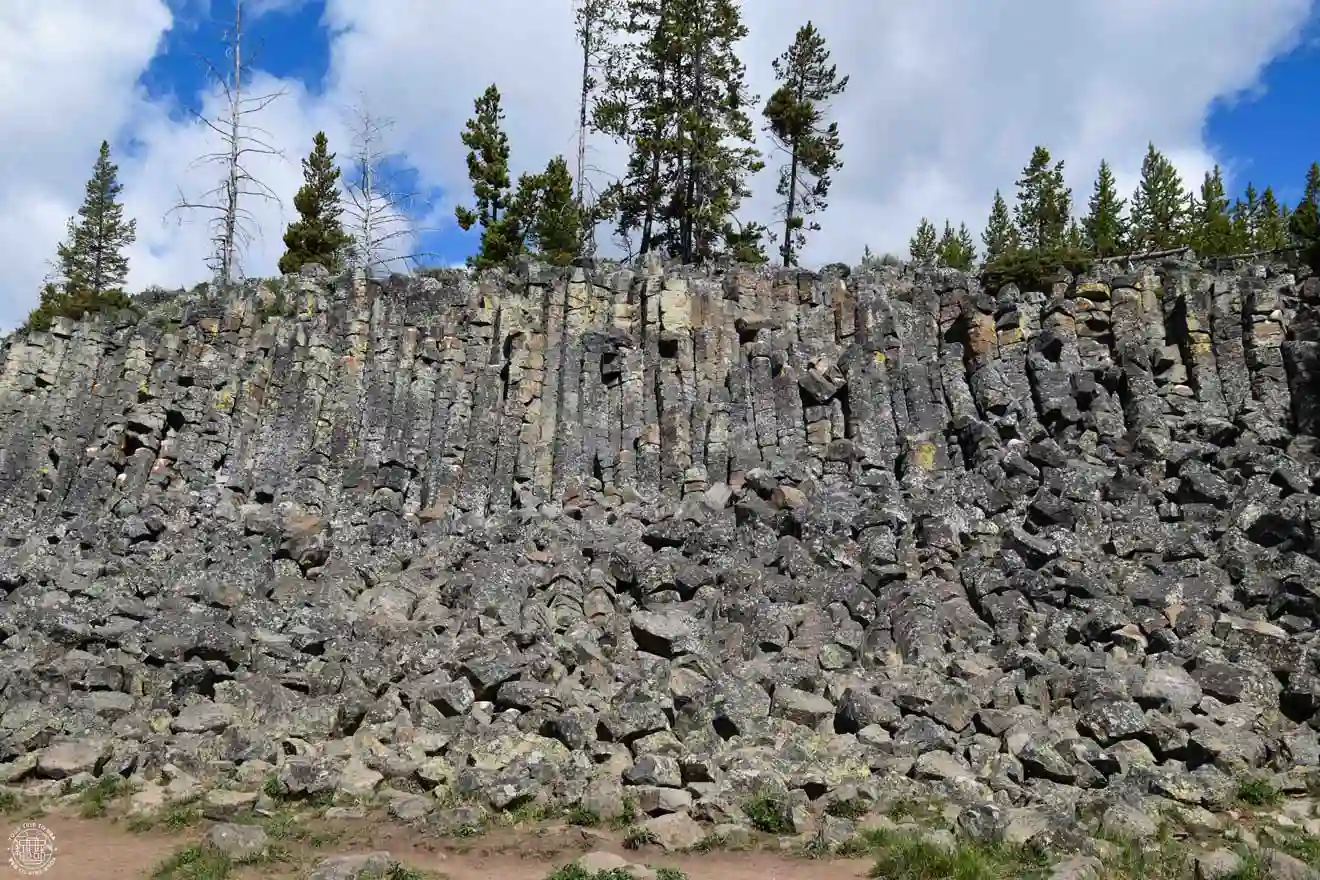
Sheepeater Cliff is a cliff composed entirely of basalt columns deposited by an ancient volcano in the area. It is located in a beautiful setting near the Gardner River. To get there, take a short, well-maintained dirt road from the Upper Loop, between Mammoth Hot Springs and Norris Geyser Basin.
Obsidian Cliff
Obsidian Cliff is a cliff where obsidian, a glass-like rock, can be found. Black in color, it can be sharpened and was widely used by ancient cultures to make knives, spears, and arrowheads. There is archaeological evidence that this was an important obsidian mine, as artifacts from this site have been found in many other areas of Canada and the United States.
Monument Geyser Basin
A small geothermal basin with fumaroles and small geysers at the top of a mountain. It is located in the Lower Loop area between Norris Geyser Basin and the West Access Road. To reach it, you must park your car and hike 2.3 mi or 3.8 km (round trip) along a steep trail.
Beryl Spring
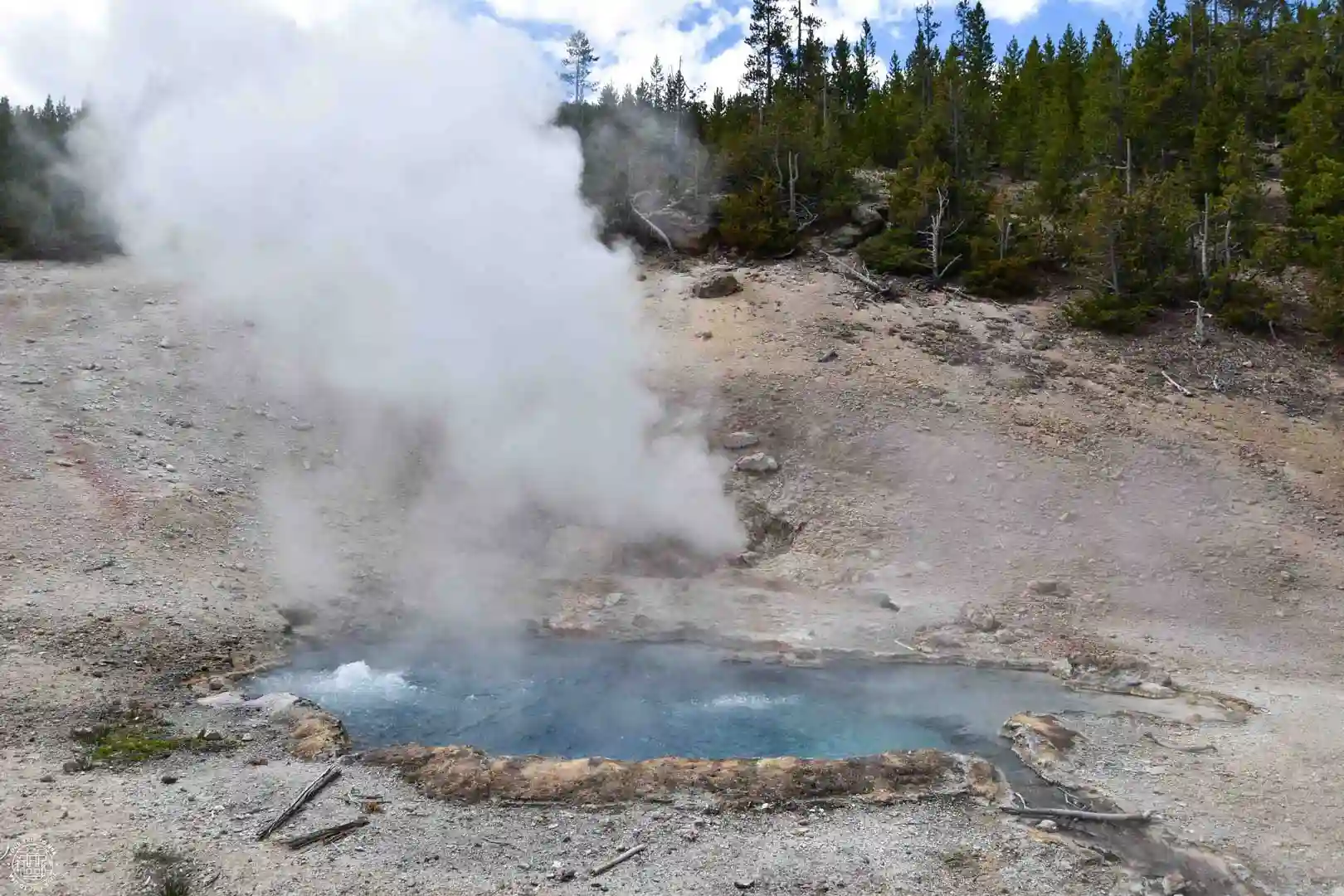
This small, aquamarine-colored hot spring south of Norris Geyser Basin is one of the hottest in the entire park; its temperature is usually around 194°F or 90°C, and steam rises from the ground.
Gibbon Falls
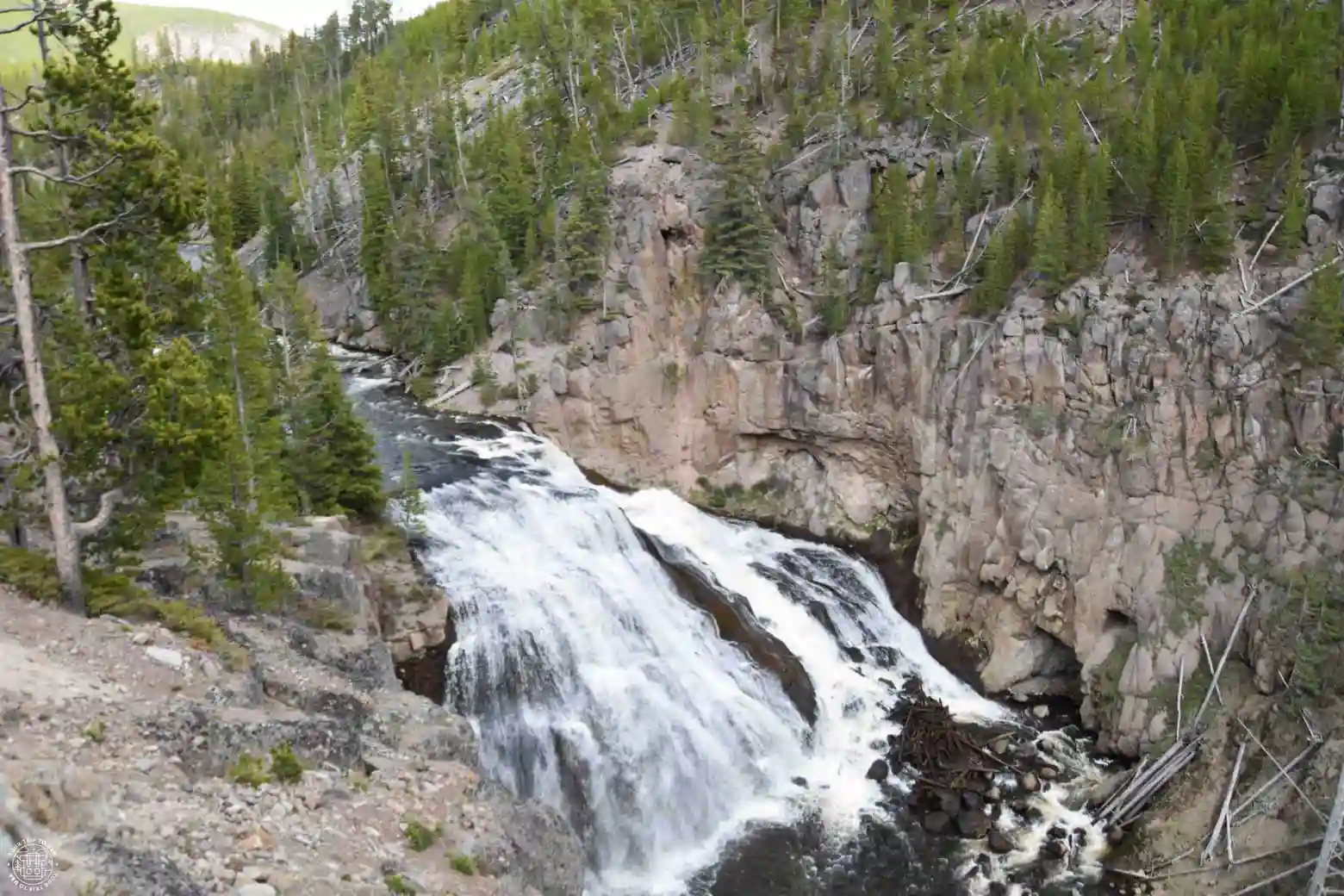
Some small but beautiful waterfalls on the Gibbon River, located along the Lower Loop Road, and a perfect spot to take a break from all the geysers.
Virgina Cascade Drive
Another detour off the main road, this time in the area between the Upper Loop and the Lower Loop. This 2.5-mile or 4 km, one-way detour takes you to Virginia Cascade, an 59-foot-high or 18 m waterfall on the Gibbon River.
Firehole Canyon Drive
This short, 2.2-mile or 3.6-kilometer one-way detour off Lower Loop Road, near the West Access Road, leads to a popular summer swimming spot near Firehole Falls.
Black Sand Geyser Basin
This small geyser basin is located very close to the Upper Geyser Basin and right next to the Lower Loop Road. It features some fascinating formations worth visiting, such as Emerald Pool and Rainbow Pool, among others. Its name comes from the black color of the sand that covers the area, which contains obsidian.
Lone Star Geyser
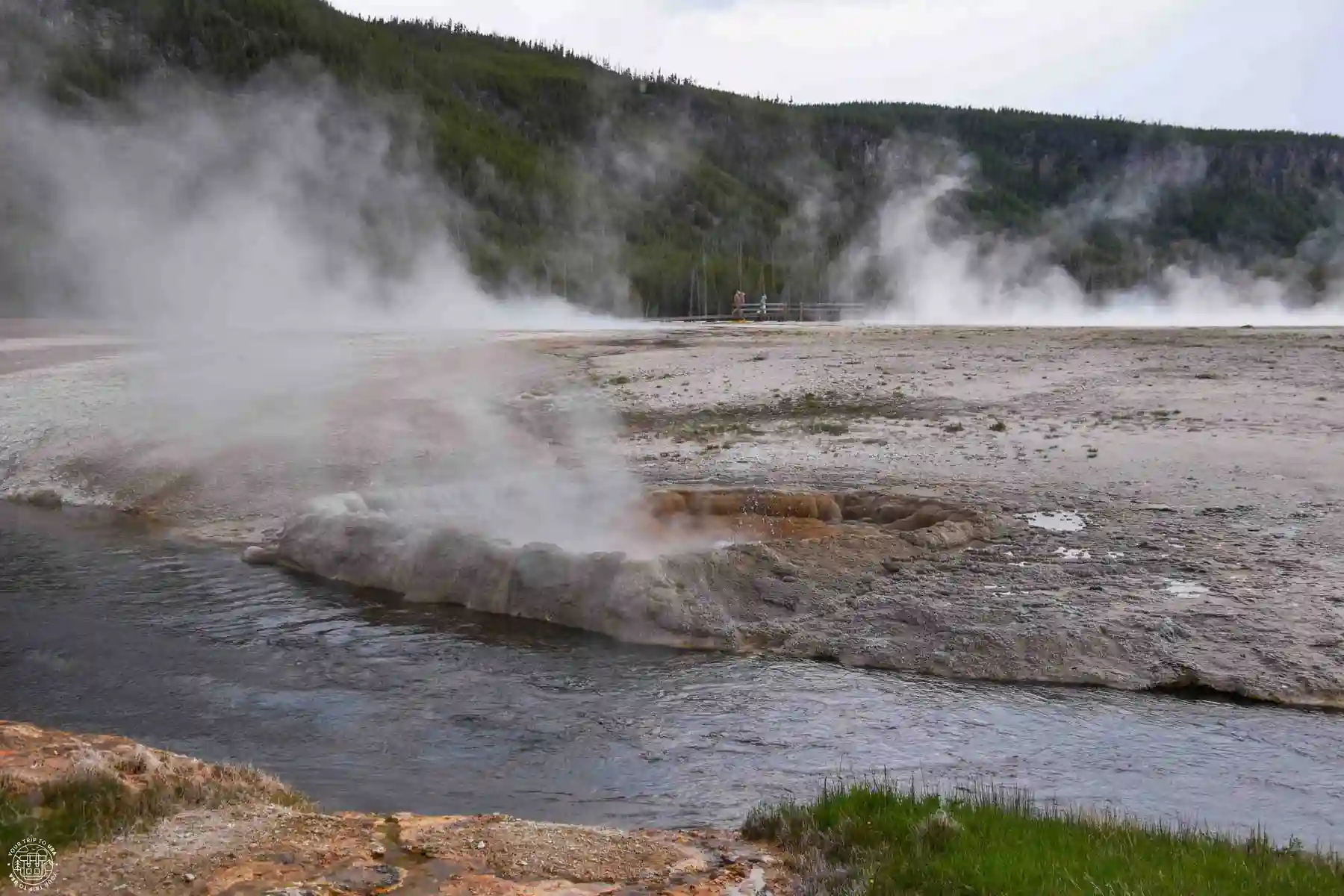
This solitary, conical geyser, as its name suggests, is located south of the Upper Geyser Basin and has a fairly regular eruption pattern, erupting approximately every 3 hours. From its height of 12 feet or 3.6 m, it shoots boiling water 46 feet or 14 meters into the air. To reach it, you’ll need to hike a 9-mile or 5.6 km (round-trip) trail from the Kepler Cascades Parking Lot.
1-day itinerary in Yellowstone
If you only have one day in Yellowstone, we recommend focusing on the main geyser basins in the southwestern part of the park so you can visit the most iconic sites. Here’s an itinerary assuming you enter through the South Entrance and exit through the West Entrance (you can also do it the other way around or enter and exit through the South Entrance). The * marks optional stops.
The night before, we recommend you to stay in Jackson at the The Hostel.
- Lewis Lake* (🚗 30 min + 🚶🏻 5 min)
- Upper Geyser Basin (🚗 1h + 🚶🏻 3h)
- Midway Geyser Basin (🚗 20 min + 🚶🏻1:30h)
- Norris Geyser Basin (🚗 45 min + 🚶🏻 2h)
- Gibbon Falls* (🚗 15 min + 5 min)
- West Entrance (🚗 35 min). Overnight stay in West Yellowstone at the City Center Motel or in Jackson at the The Hostel.
2-day itinerary in Yellowstone
If you have two days in Yellowstone, we recommend that you take the opportunity to visit the geyser basins in the south and southwest and enjoy the scenery and wildlife in the northeast. That way, you’ll take home wonderful memories of the park’s best attractions. The itinerary is designed with the assumption that you’ll enter through the South Entrance on Day 1 and exit through the North Entrance on Day 2. The * marks optional stops.
The night before, we recommend you to stay in Jackson at the The Hostel.
Day 1:
- Lewis Lake*(🚗 30 min + 🚶🏻 5 min)
- Upper Geyser Basin (🚗 1h + 🚶🏻 3h)
- Midway Geyser Basin (🚗 20 min + 🚶🏻1:30h)
- Gibbon Falls* (🚗 30 min + 5 min)
- Washburn Hot Springs Overlook* (🚗 55 min + 🚶🏻 5 min)
- Lamar Valley (🚗 1 hr + 🚶🏻 2 hrs)
- Northeast Entrance (🚗 40 min). 🏨 Overnight stay in Cooke City at the Elk Horn Lodge Motel.
Day 2:
- Tower Fall* (🚗 45 min + 🚶🏻 5 min)
- Grand Canyon of the Yellowstone (🚗 55 min + 🚶🏻 3h)
- Norris Geyser Basin (🚗 45 min + 🚶🏻 2h)
- Sheepeater Cliff* (🚗 30 min + 🚶🏻 10 min)
- Mammoth Hot Springs (🚗 20 min + 🚶🏻 3 hr)
- North Entrance (🚗 10 min). 🏨 Overnight stay in Gardiner at the Absaroka Lodge.
3-day itinerary in Yellowstone
If you have enough time to spend 3 days in Yellowstone (the minimum recommended), we suggest you visit the main geyser basins, the most notable landscapes, and the best spots for wildlife viewing. This itinerary is designed with the assumption that you’ll enter and exit through the South Entrance. The * marks optional stops.
The night before, we recommend you to stay in Jackson at the The Hostel.
Day 1:
- Lewis Lake* (🚗 30 min + 🚶🏻 5 min)
- West Thumb (🚗 30 min + 🚶🏻 1 hr)
- Hayden Valley, Mud Volcano y Sulphur Caldron (🚗 50 min + 🚶🏻 2h)
- Grand Canyon of the Yellowstone (🚗 30 min + 🚶🏻 3h)
- Washburn Hot Springs Overlook* (🚗 20 min + 🚶🏻 5 min)
- Northeast Entrance (🚗 1.25 hours). 🏨 Overnight stay in Cooke City at the Elk Horn Lodge Motel.
Day 2:
- Lamar Valley (🚗 40 min + 🚶🏻 2 hr)
- Tower Fall* (🚗 30 min + 🚶🏻 5 min)
- Mammoth Hot Springs (🚗 40 min + 🚶🏻 3 hr)
- Roaring Mountain* (🚗 35 min + 🚶🏻 10 min)
- Norris Geyser Basin (🚗 10 min + 🚶🏻 2h)
- Gibbon Falls* (🚗 25 min + 5 min)
- West Entrance (🚗 45 min). 🏨 Overnight stay in West Yellowstone at the City Center Motel.
Day 3:
- Lower Geyser Basin (🚗 50 min + 🚶🏻 1:30h)
- Midway Geyser Basin (🚗 10 min + 🚶🏻 1:30h)
- Upper Geyser Basin (🚗 20 min + 🚶🏻 3 hr)
- South Entrance (🚗 1.5 hours). 🏨 Overnight stay in Jackson at the The Hostel.
4-day itinerary in Yellowstone
Four days in Yellowstone is the perfect amount of time to explore the entire park and see most of its attractions. This itinerary is designed with the assumption that you’ll enter and exit through the South Entrance. The * marks optional stops.
The night before, we recommend you to stay in Jackson at the The Hostel.
Day 1:
- Lewis Lake* (🚗 30 min + 🚶🏻 5 min)
- West Thumb (🚗 30 min + 🚶🏻 1 hr)
- Hayden Valley, Mud Volcano y Sulphur Caldron (🚗 50 min + 🚶🏻 2h)
- Grand Canyon of the Yellowstone (🚗 30 min + 🚶🏻 3h)
- Washburn Hot Springs Overlook* (🚗 20 min + 🚶🏻 5 min)
- Northeast Entrance (🚗 1.25 hours). 🏨 Overnight stay in Cooke City at the Elk Horn Lodge Motel.
Day 2:
- Lamar Valley (🚗 40 min + 🚶🏻 2 hr)
- Tower Fall (🚗 30 min + 🚶🏻 5 min)
- Petrified Tree* (🚗 15 min + 🚶🏻 5 min)
- Blacktail Plateau Drive (🚗 30 min + 🚶🏻 1h)
- Forces of Northern Range* (🚗 35 min + 🚶🏻 30 min)
- Mammoth Hot Springs (🚗 20 min + 🚶🏻 3 hr)
- North Entrance (🚗 10 min). 🏨 Overnight stay in Gardiner at the Absaroka Lodge.
💡 We recommend our exclusive post on where to stay in Yellowstone, featuring hotels both inside and outside the park, as well as campgrounds
Day 3:
- Sheepeater Cliff*(🚗 30 min + 🚶🏻 10 min)
- Roaring Mountain*(🚗 20 min + 🚶🏻 10 min)
- Norris Geyser Basin (🚗 10 min + 🚶🏻 2h)
- Artists Paintpots (🚗 15 min + 🚶🏻 1 hr)
- Beryl Spring (🚗 15 min + 🚶🏻 5 min)
- Gibbon Falls*(🚗 25 min + 5 min)
- West Entrance (🚗 45 min). 🏨 Overnight stay in West Yellowstone at the City Center Motel.
Day 4:
- Lower Geyser Basin (🚗 50 min + 🚶🏻 1:30h)
- Midway Geyser Basin (🚗 10 min + 🚶🏻 1:30h)
- Upper Geyser Basin (🚗 20 min + 🚶🏻 3 hr)
- South Entrance (🚗 1.5 hours). 🏨 Overnight stay in Jackson at the The Hostel.
💡 We recommend you this 7-day Grand Teton and Yellowstone itinerary
5-day itinerary in Yellowstone
Five days in Yellowstone go a long way, and it’s up to you to decide what you’d rather do: explore more areas of the park, or spend more time in Lamar Valley or Hayden Valley spotting wildlife. In any case, we suggest this itinerary so you can discover many of the park’s hidden gems. The * marks optional stops.
The night before, we recommend you to stay in Jackson at the The Hostel.
Day 1:
- Lewis Lake* (🚗 30 min + 🚶🏻 5 min)
- West Thumb (🚗 30 min + 🚶🏻 1 hr)
- Yellowstone Natural Bridge (🚗 35 min + 🚶🏻 1:30h)
- Lake Butte Overlook (🚗 30 min + 🚶🏻 10 min)
- Sylvan Pass (🚗 20 min + 🚶🏻 30 min)
- East Entrance (🚗 15 min)
- Near Cody (🚗 1 hour 10 minutes). 🏨 Overnight stay in Cody at the Big Bear Motel.
Day 2:
- Hayden Valley, Mud Volcano y Sulphur Caldron (🚗 1h + 🚶🏻 2h)
- Grand Canyon of the Yellowstone (🚗 30 min + 🚶🏻 3h)
- Washburn Hot Springs Overlook* (🚗 20 min + 🚶🏻 5 min)
- Mount Washburn (30 min + 🚶🏻 4h) o Lamar Valley (🚗 1h + 🚶🏻 2h)
- Northeast Entrance (🚗 40 min). 🏨 Overnight stay in Cooke City at the Elk Horn Lodge Motel.
Day 3:
- Lamar Valley (🚗 40 min + 🚶🏻 2 hr)
- Tower Fall (🚗 30 min + 🚶🏻 5 min)
- Petrified Tree* (🚗 15 min + 🚶🏻 5 min)
- Blacktail Plateau Drive (🚗 30 min + 🚶🏻 1h)
- Forces of Northern Range* (🚗 35 min + 🚶🏻 30 min)
- Mammoth Hot Springs (🚗 20 min + 🚶🏻 3 hr)
- North Entrance (🚗 10 min). 🏨 Overnight stay in Gardiner at the Absaroka Lodge.
💡 We recommend our exclusive post on where to stay in Yellowstone, featuring hotels both inside and outside the park, as well as campgrounds
Day 4:
- Sheepeater Cliff* (🚗 30 min + 🚶🏻 10 min)
- Roaring Mountain* (🚗 20 min + 🚶🏻 10 min)
- Norris Geyser Basin (🚗 10 min + 🚶🏻 2h)
- Artists Paintpots (🚗 15 min + 🚶🏻 1 hr)
- Beryl Spring (🚗 15 min + 🚶🏻 5 min)
- Gibbon Falls* (🚗 25 min + 5 min)
- West Entrance (🚗 45 min). 🏨 Overnight stay in West Yellowstone at the City Center Motel.
Day 5:
- Lower Geyser Basin (🚗 50 min + 🚶🏻 1:30h)
- Midway Geyser Basin (🚗 10 min + 🚶🏻 1:30h)
- Upper Geyser Basin (🚗 20 min + 🚶🏻 3 hr)
- South Entrance (🚗 1.5 hours). 🏨 Overnight stay in Jackson at the The Hostel.
We've included Lamar Valley twice because we think it's a truly unique place—especially if you love wildlife. The longer you stay there, the better your chances of spotting animals.
What to see around Yellowstone
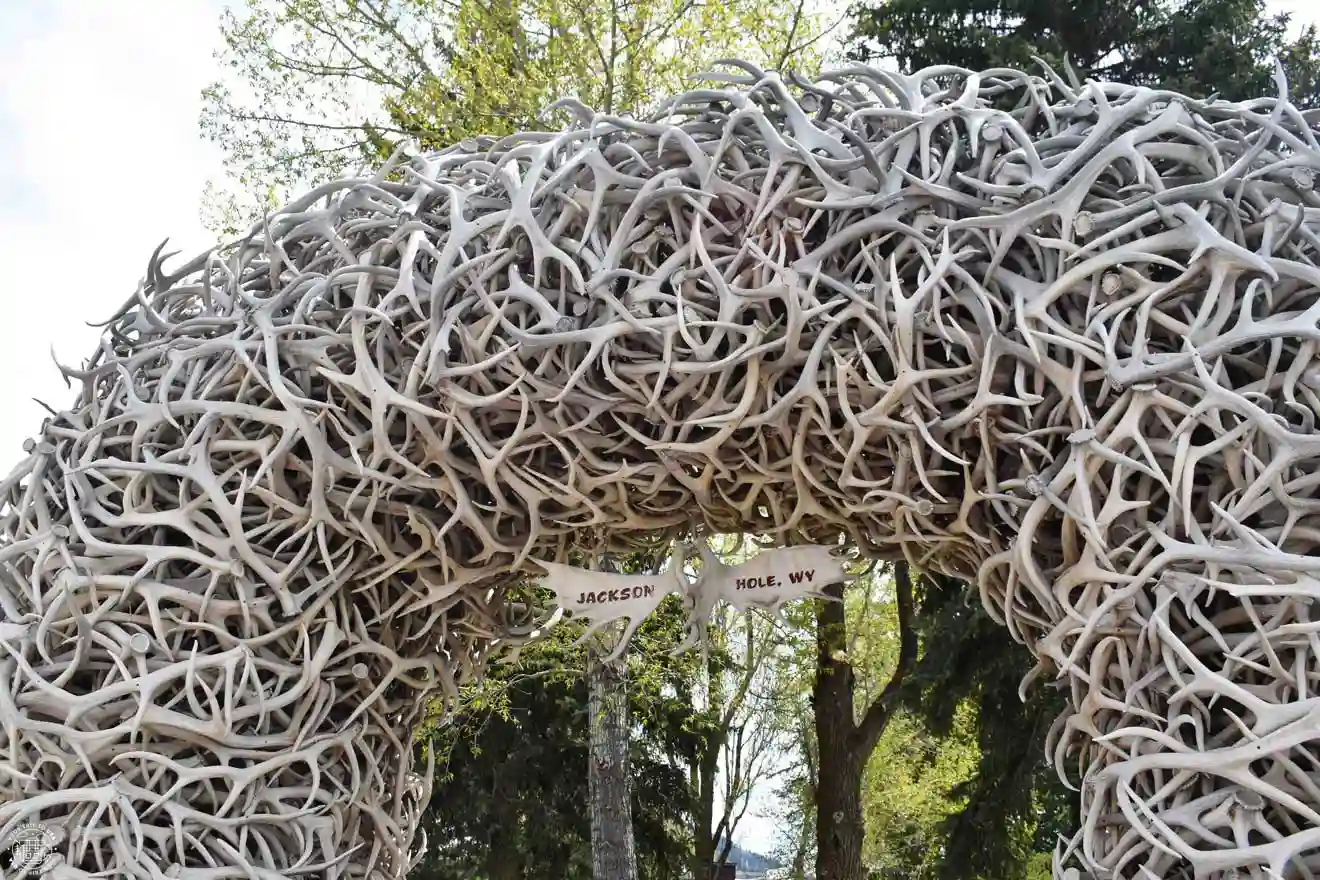
Jackson Hole
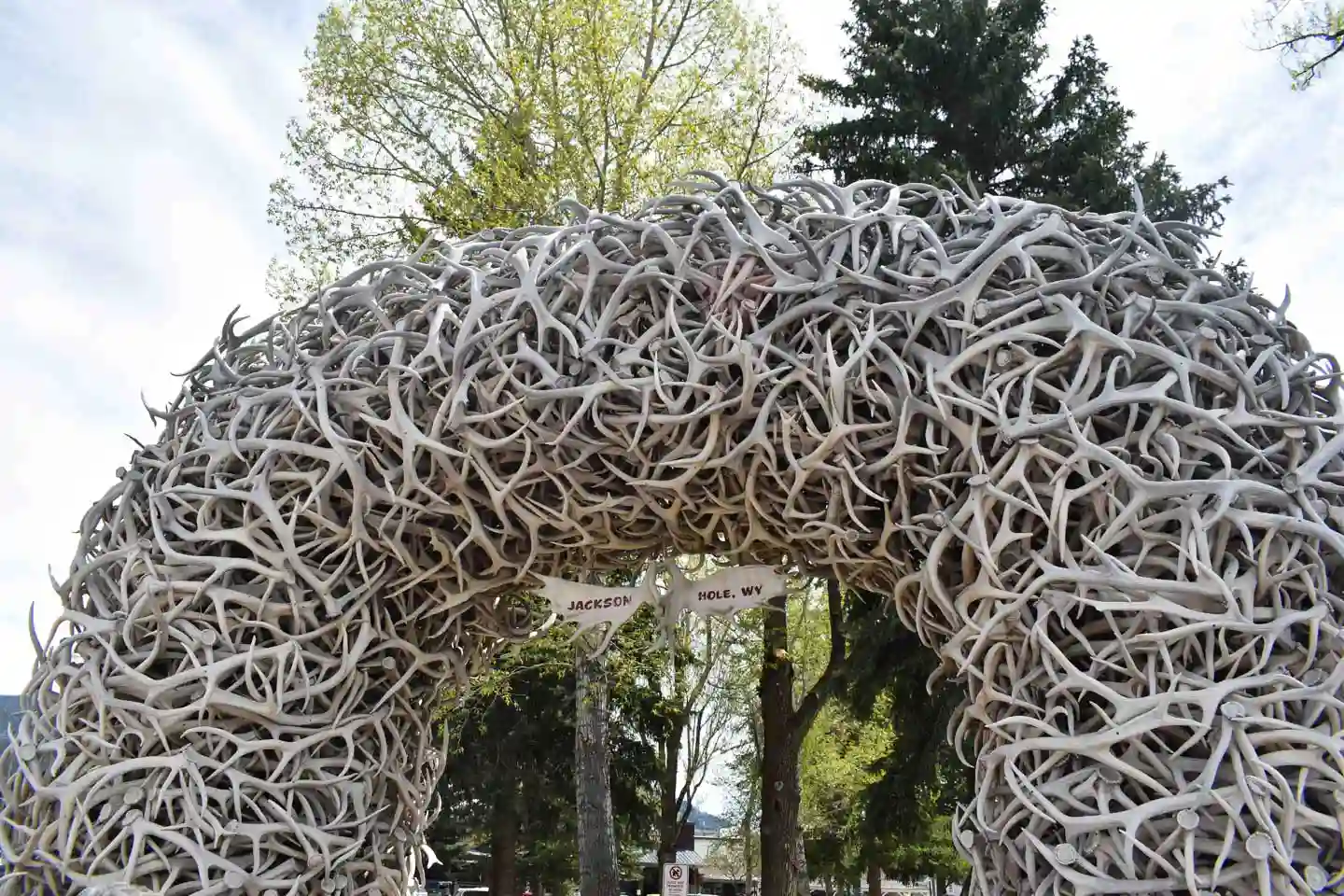
Jackson still exudes the essence of a classic American frontier town, even though it has now become a destination for skiing and luxury travel. Even so, it’s well worth a stop, and it’s the ideal place to stay overnight when visiting Grand Teton. In our article on things to do in Jackson, we’ll give you all the details.
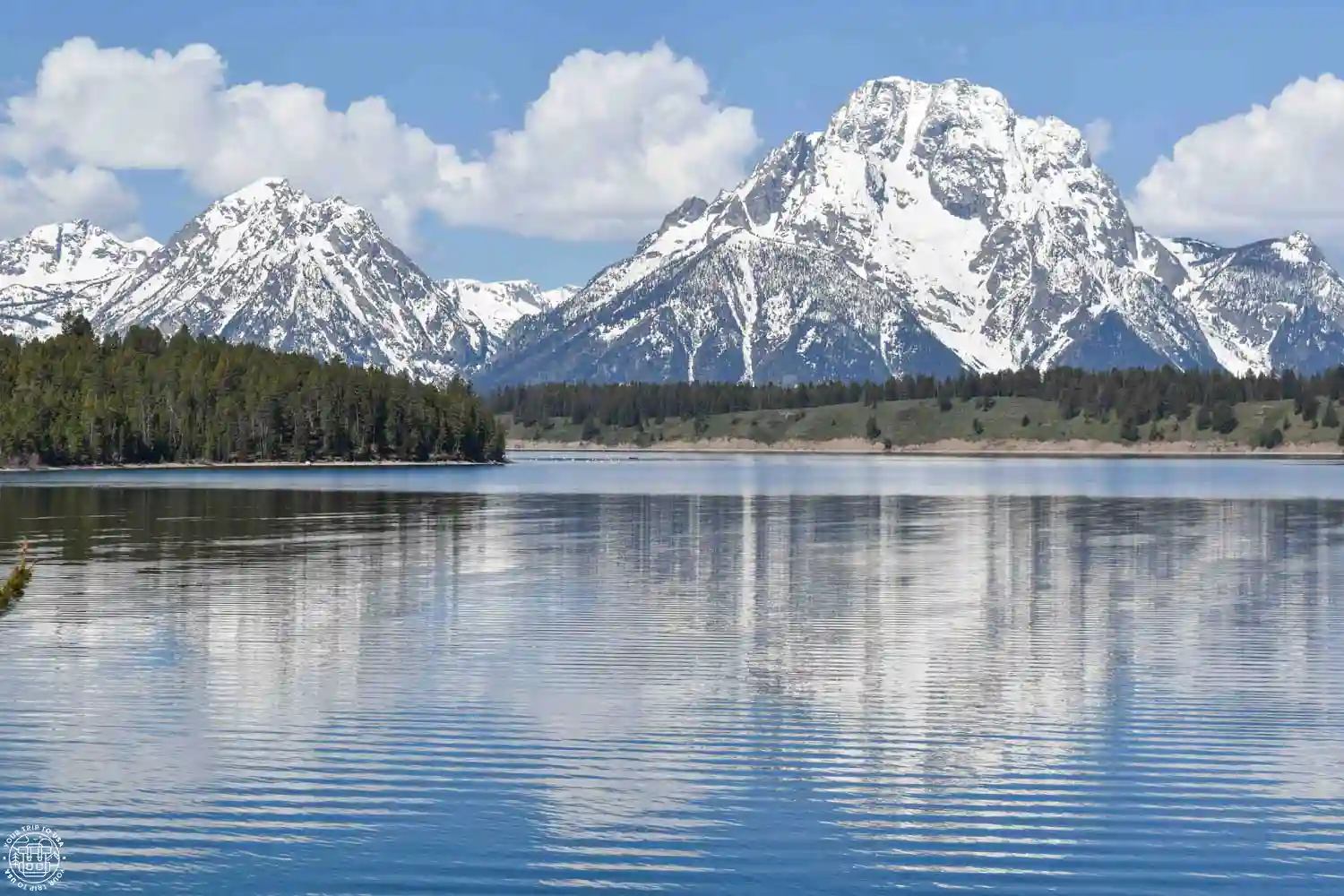
Grand Teton National Park
Although much smaller and less well-known than its northern neighbor, Grand Teton National Park is an incredible place, brimming with wildlife, history, and a unique landscape that you shouldn’t miss if you’re planning to visit Yellowstone. In our post on things to do in Grand Teton National Park, we’ll reveal all its secrets.
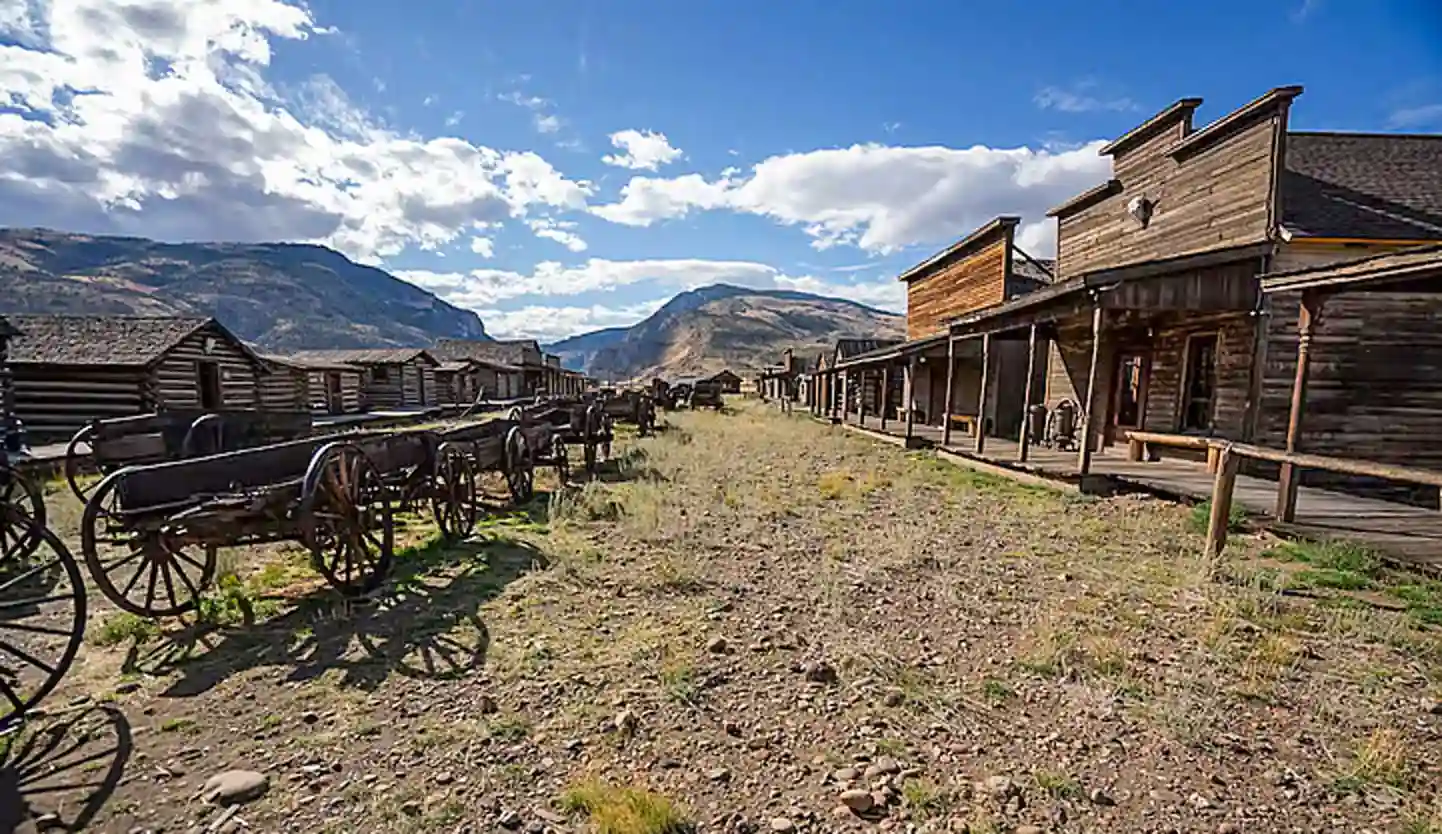
Cody and the surrounding area
Although you’ve probably never heard of this town, it’s named after its founder, the famous William Frederick Cody, better known as Buffalo Bill. In the area around Cody, you’ll find plenty to do, such as the Buffalo Bill Center of the West, the Buffalo Bill Dam, Old Trail Town, and the Smith Mansion. It’s an ideal place to stop if you’re heading to Yellowstone or taking our 5-day tour of the park. On our 5-day itinerary, we recommend spending a night here.
Shoshone National Forest
The Shoshone National Forest is a largely untouched area in the state of Wyoming that is of great environmental importance. It is part of the Greater Yellowstone Ecosystem and borders Yellowstone National Park and the Bridger-Teton National Forest.
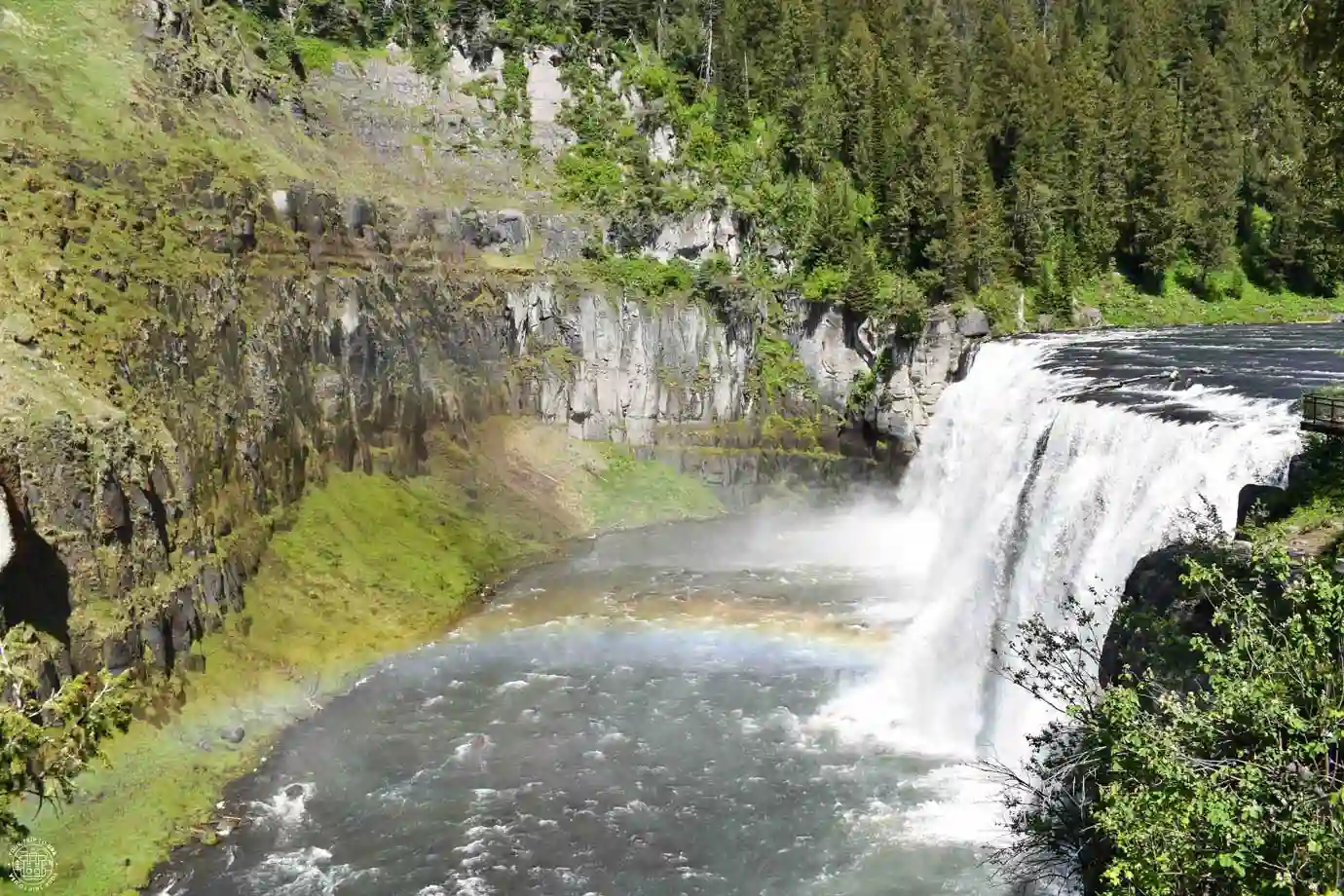
Upper Mesa Falls
These stunning waterfalls in the state of Idaho are an ideal stop if you plan to enter or exit Yellowstone National Park from the town of West Yellowstone. Standing 115 feet or 35 meters tall and 200 feet or 61 meters wide, with an impressive flow and stunning surroundings, they are a must-see attraction. To visit them, take a detour off Highway 20; there is a trail and several overlooks where you can view them in complete comfort.
Map of places to see in Yellowstone
We've put together this highly detailed map of the sights to see in Yellowstone, along with access points, gas stations, lodging options, grocery stores, and more.
FAQs About Best Things to Do in Yellowstone
What are the must-see attractions in Yellowstone National Park?
The must-see attractions include Old Faithful Geyser, Grand Prismatic Spring, the Grand Canyon of the Yellowstone, West Thumb Geyser Basin, Lamar Valley, Hayden Valley, Norris Geyser Basin, Lower Geyser Basin, and Mammoth Hot Springs. These are some of the park’s most spectacular and iconic sites.
What are the most beautiful places in Yellowstone National Park?
Among the most impressive are the Grand Canyon of the Yellowstone, known for its views and waterfalls; Lamar Valley, known for its scenery and abundant wildlife; and the geyser fields of Grand Prismatic, Old Faithful, and Norris.
How should I plan what to see in Yellowstone National Park?
First, you need to know how many days you have. If you only have 1 or 2 days, focus on the main attractions; if you have 3 or more days, divide the park into sections based on its roads and spend one day in each section.
The different areas are:
- Southeast (Lower, Midway y Upper Geyser Basin)
- Southwest (West Thumb, Yellowstone Lake, and Hayden Valley)
- Northeast (Grand Canyon of the Yellowstone and Lamar Valley)
- Northwest (Mammoth Hot Springs and Norris Geyser Basin)
Keep in mind that the park is huge and it takes quite a while to get from one area to another.
Which areas of Yellowstone National Park are must-sees?
The most important areas are Midway, Upper, and Norris Geyser Basins, the Grand Canyon of the Yellowstone, and Lamar Valley.
How long does it take to see the highlights of Yellowstone National Park?
To see the park’s main attractions, we recommend setting aside at least 2 or 3 days, as the distances are long and there’s a lot to explore. With 4 days, you’ll be able to see practically the entire park.
Can you see Yellowstone National Park in a day?
Yes, but you'll need to focus on a specific area, such as the geyser basins (Upper, Midway, and Norris).
Can you see animals in Yellowstone National Park?
Yes, it's one of the best places in the world to see wildlife such as bison, moose, bears, and wolves, especially at sunrise or sunset.
Is Yellowstone National Park worth visiting?
Yes, it is one of the most impressive parks in the world, with unique landscapes and a wide variety of natural phenomena that make it a must-see.
We hope this post on what to see in Yellowstone National Park helps you enjoy this wonderful place!