

Where is Bryce Canyon?
Bryce Canyon National Park is located in southern Utah, between Zion National Park and Escalante. It is a 4-hour drive from Las Vegas and Salt Lake City, and some of the towns closest to the park are Tropic, Panguitch, and Cannonville, although they are tiny and offer very few amenities.
Here are the distances to a few cities and destinations to give you an idea:
- Tropic (Utah): 9 mi or 14 km (10 m)
- Escalante (Utah): 47 mi or 76 km (50 m)
- Zion National Park (Utah): 85 mi or 137 km (2 hours)
- Page (Arizona): 149 mi or 240 km (2:35 h)
- Las Vegas (Nevada): 246 mi or 396 km (4h)
- Salt Lake City (Utah): 245 mi or 395 km (4 hours)
- Williams (Arizona): 316 mi or 508 km (5:15 h)
- Moab (Utah): 247 mi or 397 km (4:15 h)
- Sedona (Arizona): 314 mi or 505 km (5:30 h)
- Phoenix (Arizona): 426 mi or 685 km (7 hours)
- Los Angeles (California): 526 mi or 846 km (8 hours)
- San Diego (California): 588 mi or 946 km (9 hours)
- San Francisco (California): 824 mi or 1,326 km (12:30 h)
What are the closest airports to Bryce Canyon?
The closest airports to Bryce Canyon National Park are Las Vegas, which is about a 4-hour drive from the park, and Salt Lake City, which is also a 4-hour drive away.
What are the entrances to Bryce Canyon?
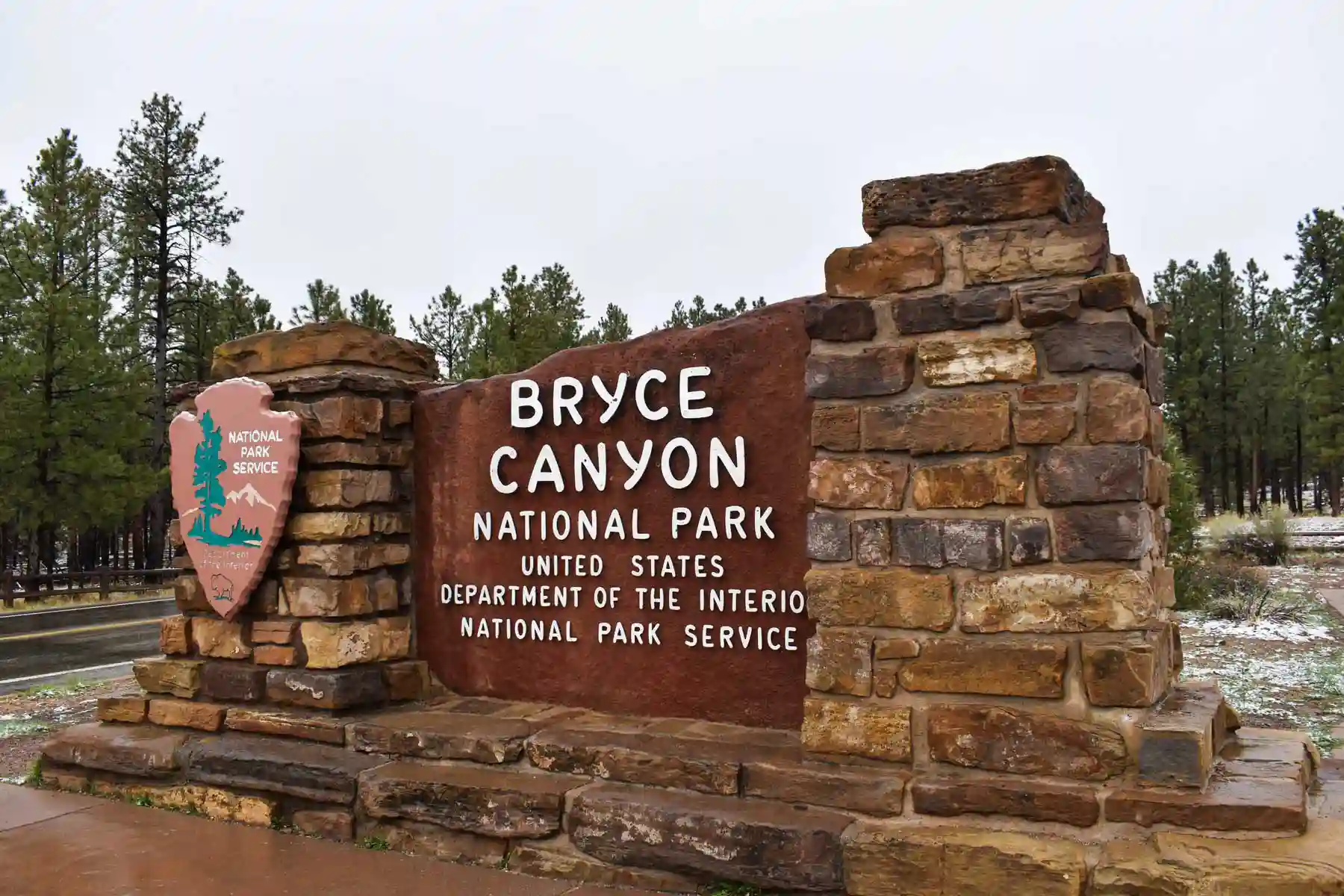
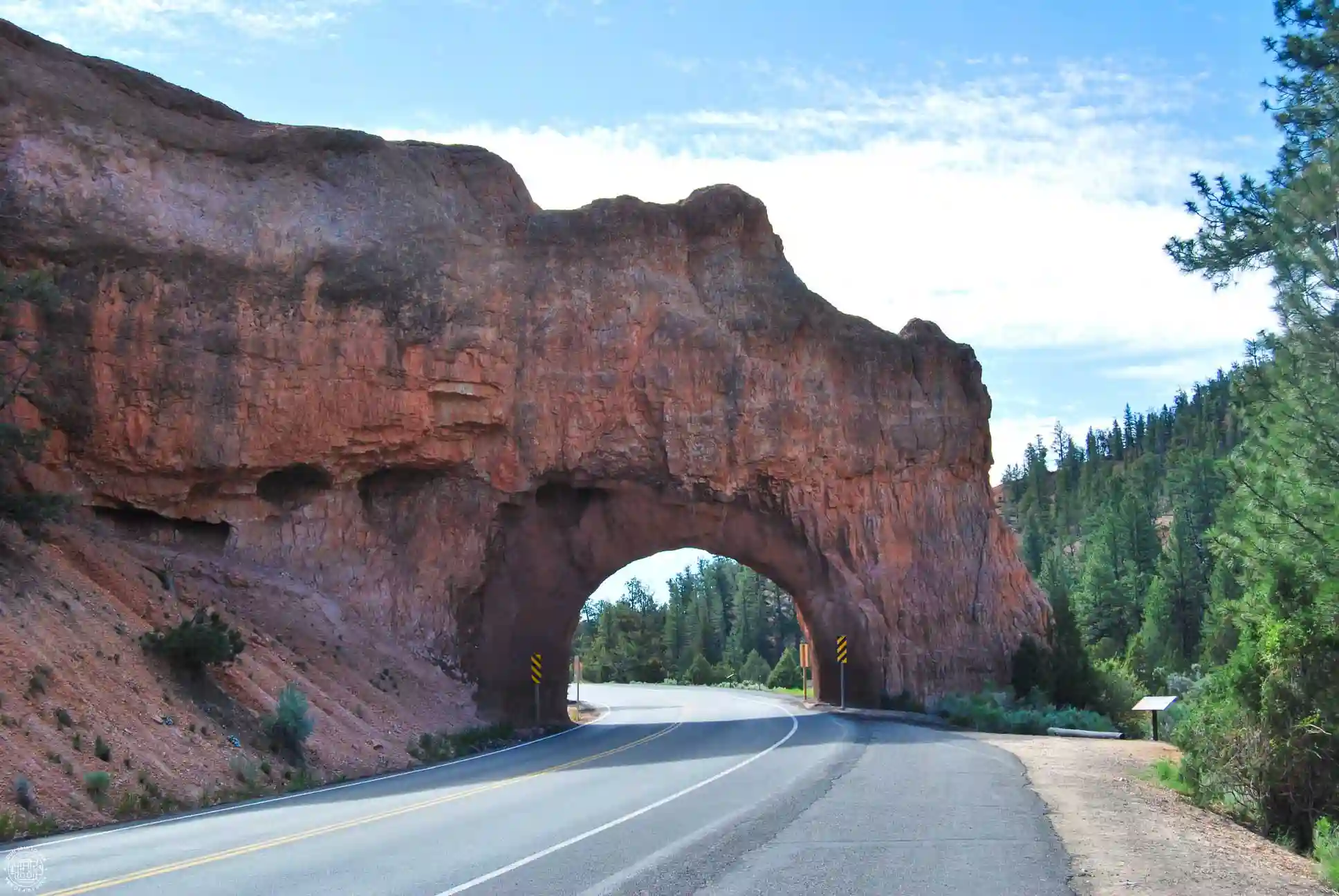
Bryce Canyon National Park has only one entrance, which provides access to the road that crosses the park from north to south. The first section of the road takes you through the park’s most famous area, the Bryce Amphitheater, and from there begins the scenic route known as Southern Scenic Drive, which takes you to the southern rim.
The visitor center and toll booths are located about 3 miles (5 km) from Bryce Canyon City, a small town with hotels, restaurants, and a few other amenities.
How to Get Around Bryce Canyon?
There are several ways to get around Bryce Canyon: on foot, by bus, and by car, or by combining more than one of these options.
On foot
Although you can explore the park on foot via its extensive network of trails, this isn't the best way to do it, especially if you're short on time. We do recommend combining a car or the shuttle bus with a walk along some of the paths that connect the park’s various overlooks, to have a more complete experience and see the hoodoos up close.

TRAVEL INSURANCE
FOR THE UNITED STATES
💸 Healthcare in the U.S. is very expensive, and any accident or illness can cost you a fortune.
That's why we recommend getting travel insurance that covers you in case anything goes wrong, so you don't have to pay anything up front.
💡 We always travel with Heymondo because it offers excellent medical coverage at a great price. Plus, you can get 5% OFF*!
🤓 Take a look at: Best travel insurances for the USA | Comparison + Discounts |
By car
Bryce Canyon is perfectly suited for exploring by car, as the road runs along the top of the plateau and features numerous overlooks where you can view the hoodoos from a variety of angles.
The only thing you need to keep in mind is that parking can be difficult in the Bryce Amphitheater area, especially during peak season, and that the detours to Paria View and Fairyland Point are closed in winter.
The Southern Scenic Drive, which takes you to the overlooks in the southern part of the park, is accessible only by car and may be closed in the event of snowstorms.

-Sites: Fairyland Canyon, Natural Bridge, Inspiration Point,
Sunset Point, Sunrise Point and more
-Includes: transportation and guide
-Duration: 3 hours
By shuttle bus
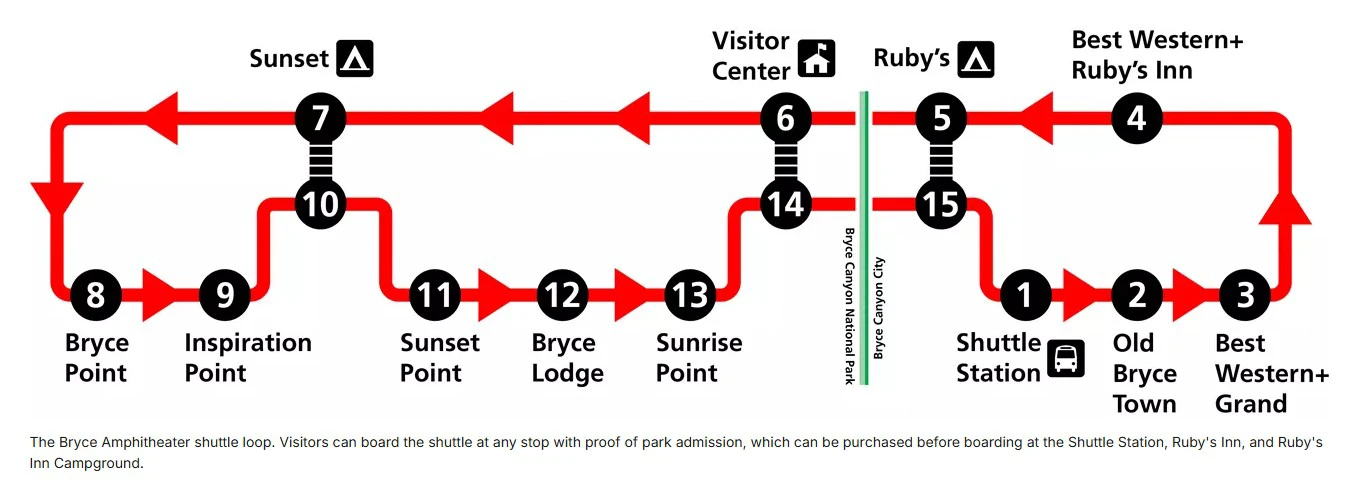
The bus service is perfect for exploring the northern part of the park, the Bryce Amphitheater, since during peak season it can be impossible to find parking in this area. It’s also very useful for connecting different overlooks on foot, allowing you to get a complete view of the amphitheater without having to go back to your car—or if you’re staying in Bryce Canyon City and don’t feel like driving. The main drawback of the bus is that it doesn’t run in the southern part of the park.
The service operates from early April through mid-October from 6 a.m. to 6 p.m., except from mid-May through late September, when it operates from 6 a.m. to 8 p.m. The maximum wait time is usually 15 minutes.

INTERNET IN THE UNITED STATES
💡 The most convenient way to get internet access in the U.S. is to buy an eSIM—that way, you'll have a connection as soon as you set foot in the country. Plus, local SIM cards in the U.S. are pretty expensive.
💸 We have 2 discounts for your unlimited data eSIM for the US:
⭐5% OFF with Holafly ➡️ Excellent coverage
⭐20% OFF with eSIMFlag ➡️ Best price
🤓 Take a loot at: Best SIMs & eSIMs for traveling to the USA
How to Get to Bryce Canyon?
Bryce Canyon is usually a stop on any itinerary along the Southwest of the United States. Most travelers reach the park by car or RV, either from Las Vegas or Salt Lake City, or as part of a road trip that includes other nearby national parks such as Zion, the Grand Canyon, or Capitol Reef.
If you're coming from northern Utah, the trip from Salt Lake City is about 245 miles (395 km) and takes about 4 hours to drive. It's a great option for those taking a complete tour of the state of Utah.
If you're taking a tour of the natural wonders in southern Utah, you may be coming from Escalante; in that case, the distance is 47 miles (76 km) and the drive takes 50 minutes.
Zion and Bryce Canyon are the perfect combination for any itinerary through the southwestern United States. The two parks are just 85 miles (130 km) apart, which is about a 2-hour drive along scenic, beautiful roads.

RENT A CAR IN THE UNITED STATES
The best way to explore the United States is by car, giving you the freedom to travel at your own pace.
🚗 Whether you’re looking for a convertible Mustang, a 4x4, or a regular car, we recommend to book through this car rental search engine
💸 This is where we find the best prices, both on the rental car itself and on full coverage insurance!
How much is admission to Bryce Canyon?
The standard admission price for Bryce Canyon National Park varies depending on your mode of transportation:
- Cars, RVs , and vans with up to 15 seats: $35 per vehicle. This rate covers all passengers traveling in the vehicle. If you are a nonresident, you must pay an additional $100 per person.
- Motorcycle: $30; covers 2 motorcycles and up to 4 passengers.
- On foot or by bike for those 16 and older: $20 per person.
💡Recommended: Tips for Traveling Along the U.S. West Coast
This ticket grants you entry to the park for 7 consecutive days, and you can purchase it at any of the park entrances. 💸 Both credit cards and cash are accepted, so we recommend reading our article on the best cards for traveling to the United States to avoid fees.
There are also a number of passes that already include admission to Bryce Canyon National Park; if you have any of them, you won't have to pay anything extra:
- Annual Entrance Pass: $70, which grants you unlimited admission to the park for 12 months. Available only to U.S. citizens and residents.
- America the Beautiful Pass: $80, granting you access to all U.S. national parks and other natural areas for 12 months. Available only to U.S. citizens and residents.
- America the Beautiful (Non-Residents): $250, granting you access to all U.S. national parks and other natural areas for 12 months. For non-residents only.
⚠️ Bryce Canyon is one of the national parks where visitors must pay an additional $100 per person on top of the entrance fee if they do not have the America the Beautiful Non-Residents Pass.
When to Visit Bryce Canyon?
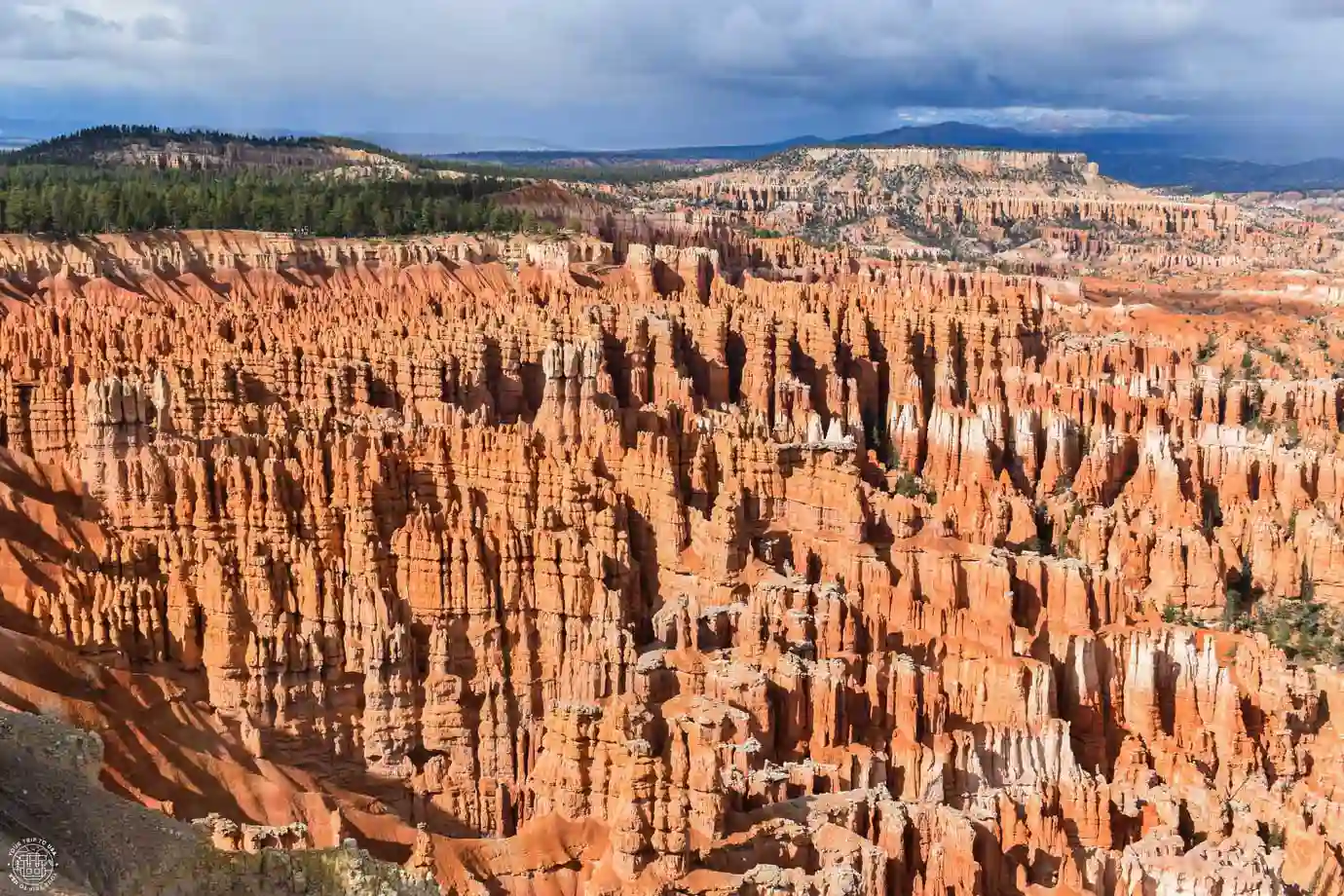
The best time to visit Bryce Canyon is from mid-May through late September, when temperatures are warmer and there are more hours of sunshine. From mid-May through mid-June and throughout September, you’ll find fewer visitors, allowing you to enjoy the park at a more leisurely pace and take advantage of lower lodging rates. Rainfall is usually quite scarce in the area, with August being the rainiest month.
🪻 Visiting Bryce Canyon in the Spring
Through mid-April, temperatures in the park are low, dropping below 32°F (0°C) at night and not reaching 59°F (15°C) during the day. Starting in mid-May, temperatures become milder, and the best time to visit begins.
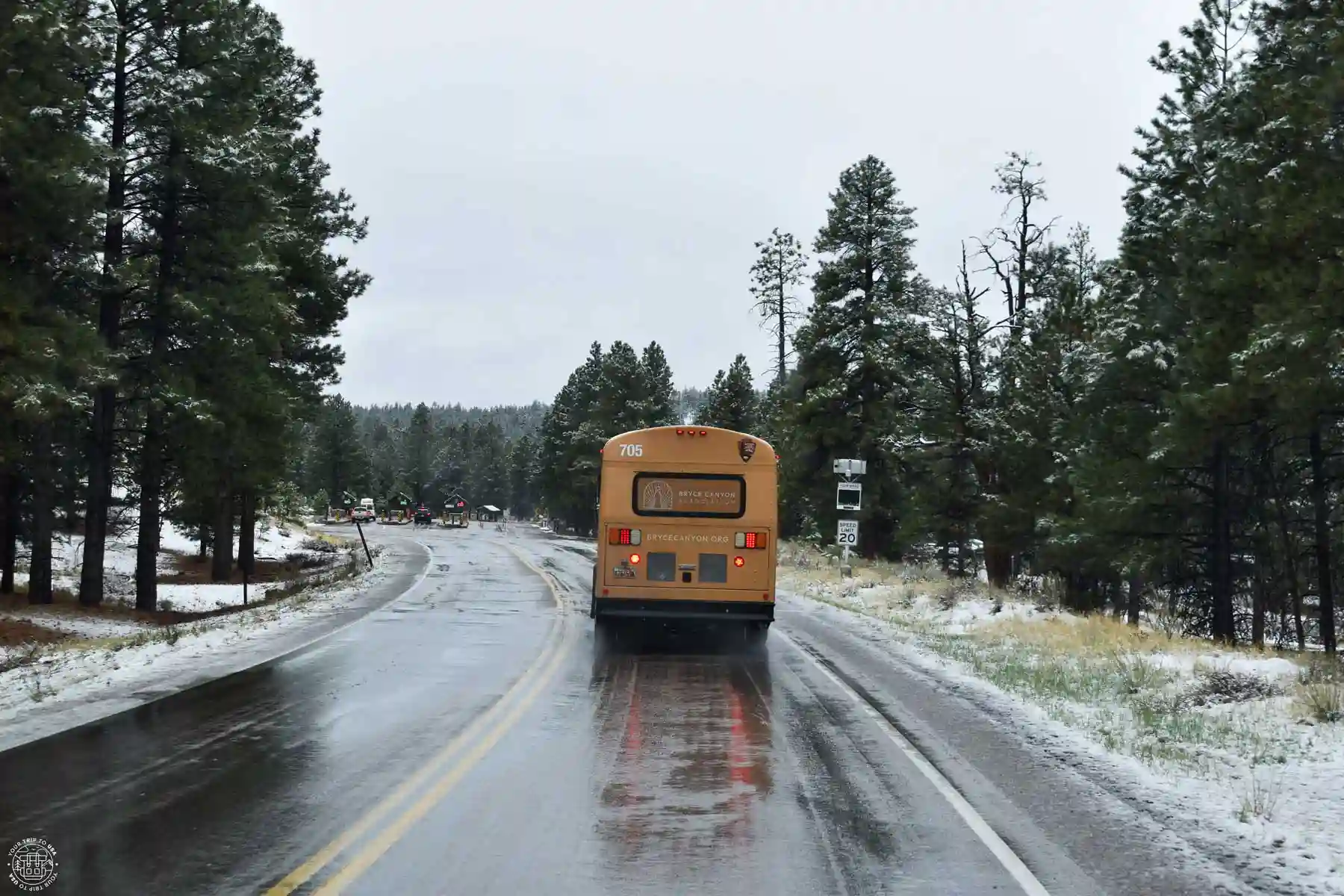
Keep in mind that the Southern Scenic Drive may be closed due to snowstorms, especially at the start of the season. During our second visit to the park, in early May, we were hit by a heavy snowfall, and visibility didn't improve until noon—which is essential for enjoying the views.
The shuttle bus service begins in early April and extends its hours until 8 p.m. starting in mid-May.
☀️ Visiting Bryce Canyon in the Summer
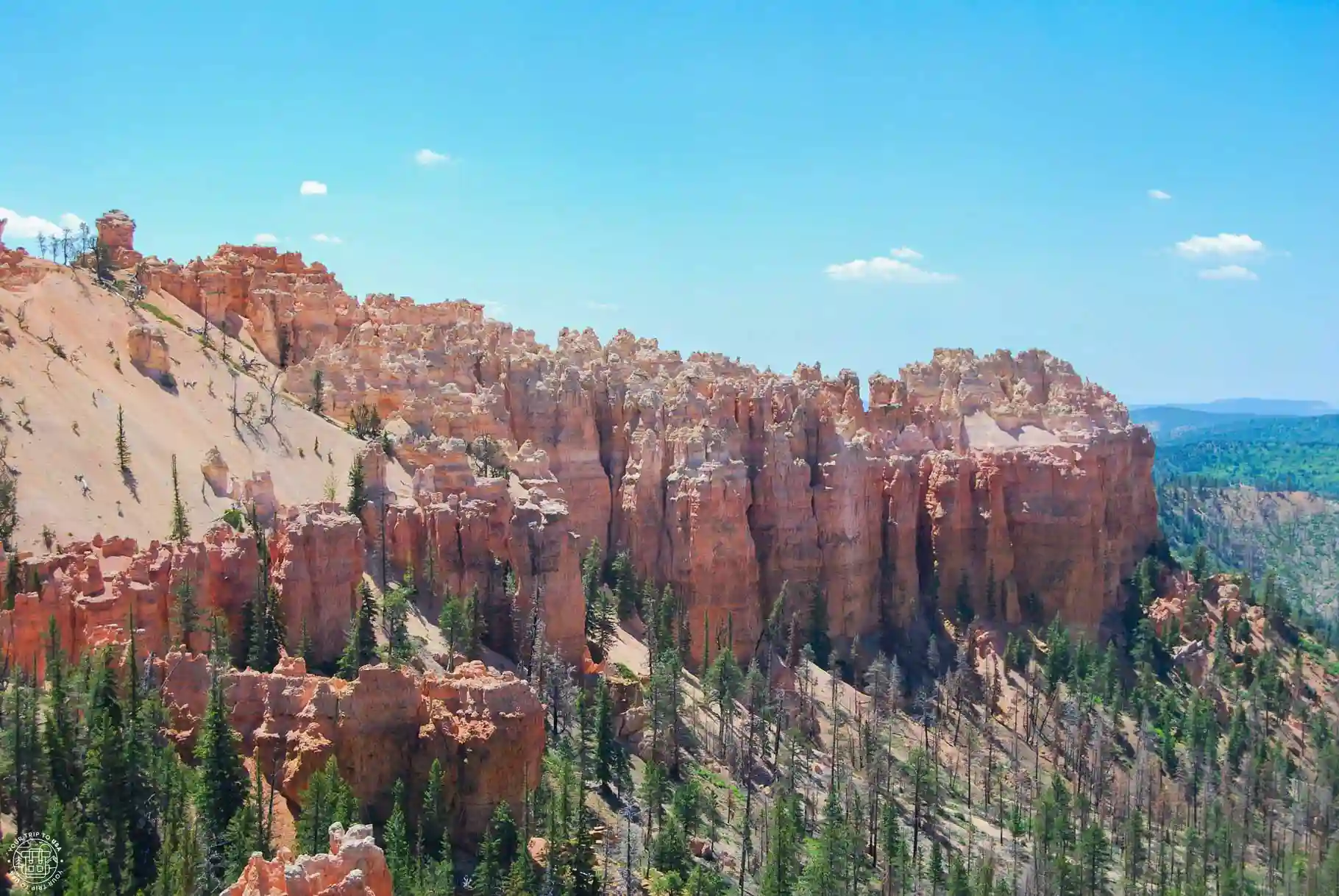
From mid-June through late August, temperatures in the park are at their highest for the entire year, as is the number of visitors. It’s an ideal time to visit, since—due to its high elevation—temperatures are never as extreme as they are in Zion. That said, August is the rainiest month, but rainfall isn’t heavy, and the chance of rain is low.
In September, temperatures are lower and there are fewer visitors, making it a quieter time to visit.
As for, the shuttle bus service runs until 8 p.m. throughout the summer.
 NO FEES CARD FOR THE UNITED STATES
In the U.S., you'll pay for almost everything by card. If you use one from your regular bank, you'll get hit with a ton of currency conversion fees.
💡 That's why we recommend to get the Wise card. There's no maintenance fee, and you can:
💸 Withdraw $250/month in any currency with no fees
💳 Do payments in any currency with no extra fees
🍂 Visiting Bryce Canyon in the Fall
In October, the weather is cool, the number of visitors drops significantly, and it's a good time to visit the park. The bus service ends in the middle of the month.
Keep in mind that in November, the weather turns cold or very cold, so visiting Bryce Canyon during this time isn't recommended if you don't like cold temperatures.
❄️ Visiting Bryce Canyon in the Winter
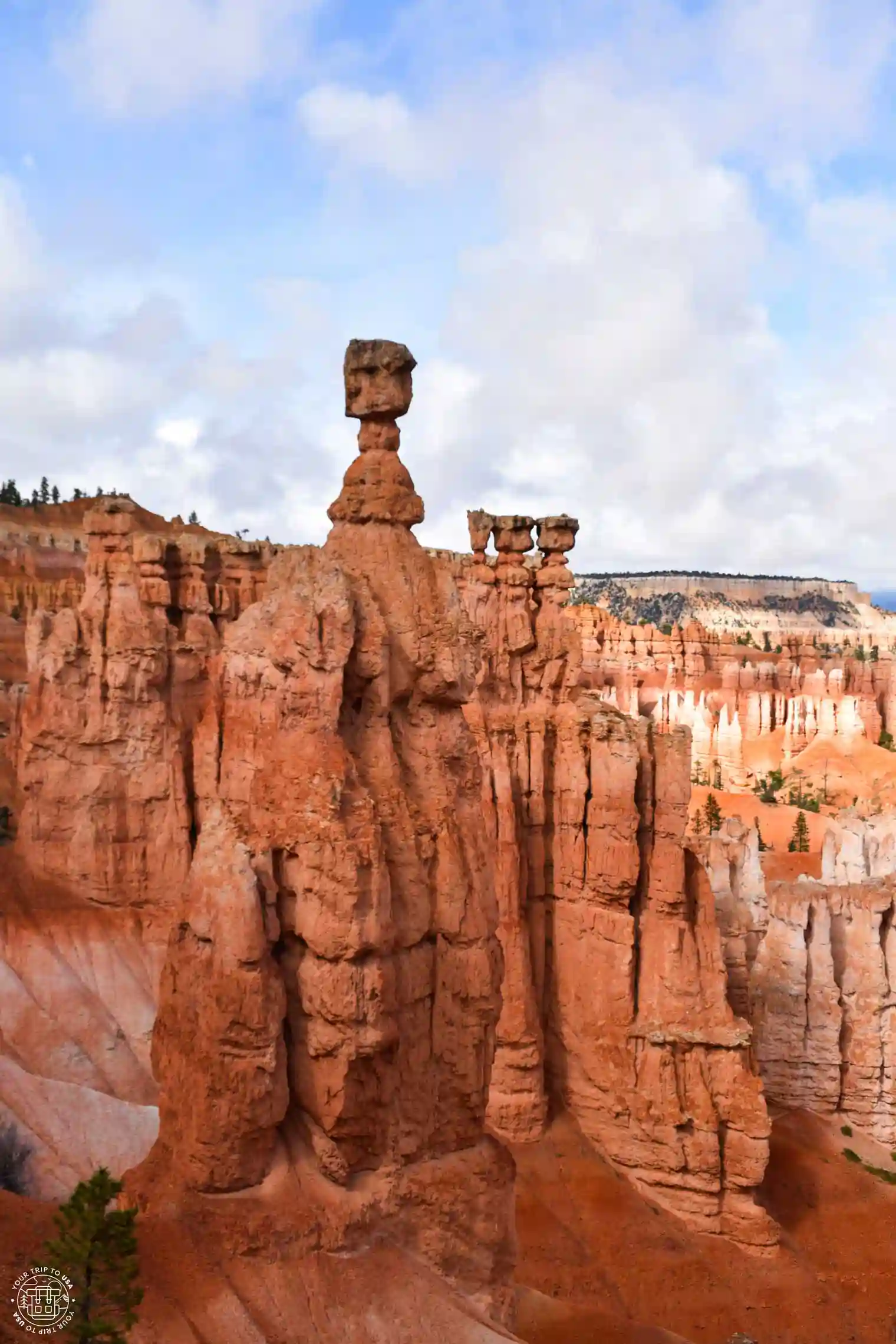
Although it’s possible to visit the national park during the winter months—and seeing the hoodoos covered in a light dusting of snow is an unparalleled sight—it’s not highly recommended to do so during this time of year. Temperatures range from 10°F (-12°C) to 39°F (4°C), making it a truly chilly experience 🥶.
Also, if your visit coincides with a snowstorm, you won't be able to appreciate the vastness of the area, and you may find that the Southern Scenic Drive is closed.
Where to Stay in Bryce Canyon?
Accommodation options in the area around Bryce Canyon are somewhat limited despite its popularity, as it is located in a remote area and the surrounding towns are small. The best places to spend the night are Bryce Canyon City, a town right at the park entrance, Tropic, Cannonville, Hatch, and Panguitch.
🏨 Since this is such a broad topic, we have a dedicated post on where to stay in Bryce Canyon National Park, where we'll tell you all about the options available to you!

🚐 The U.S. is a paradise for traveling by camper van or motorhome: there are plenty of campgrounds, wonderful places to stay overnight for free, and amenities around every corner.
If you'd like to try this way of traveling, the United States is the place to do it!
💸 And you can save a lot of money on lodging and food!
➡️ We always book through this rental search engine because they work with all the companies and have great deals.
How many days should you spend at Bryce Canyon?
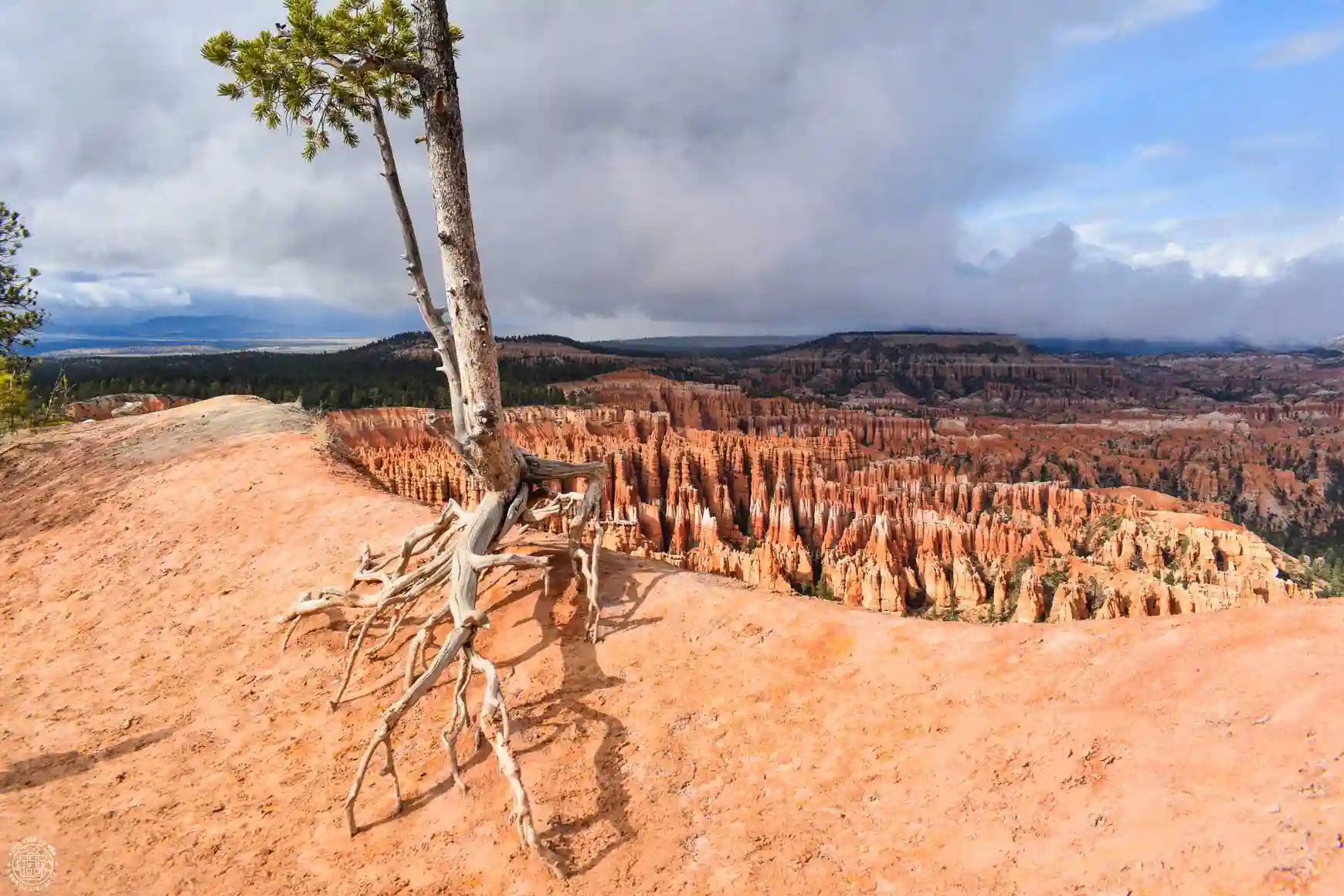
Although spectacular, Bryce Canyon is a relatively small park, which is why half a day is enough time to visit the main area, known as Bryce Amphitheater or Canyon Amphitheater. But if you want to drive along the Southern Scenic Drive and visit all the overlooks, you’ll need a full day.
We don't recommend staying any longer in Bryce Canyon, unless you plan to do additional activities such as the Under-the-Rim Trail, a 23-mile (36.9 km) trail that connects the two ends of the park along the base of the cliffs and can take between 2 and 3 days to complete.
What to See in Bryce Canyon?
As we've already mentioned, Bryce Canyon isn't a very large park, but there are plenty of overlooks and a few short trails to explore. That's why we've written an exclusive article on Things to Do in Bryce Canyon National Park—don't miss it!
Hiking in Bryce Canyon
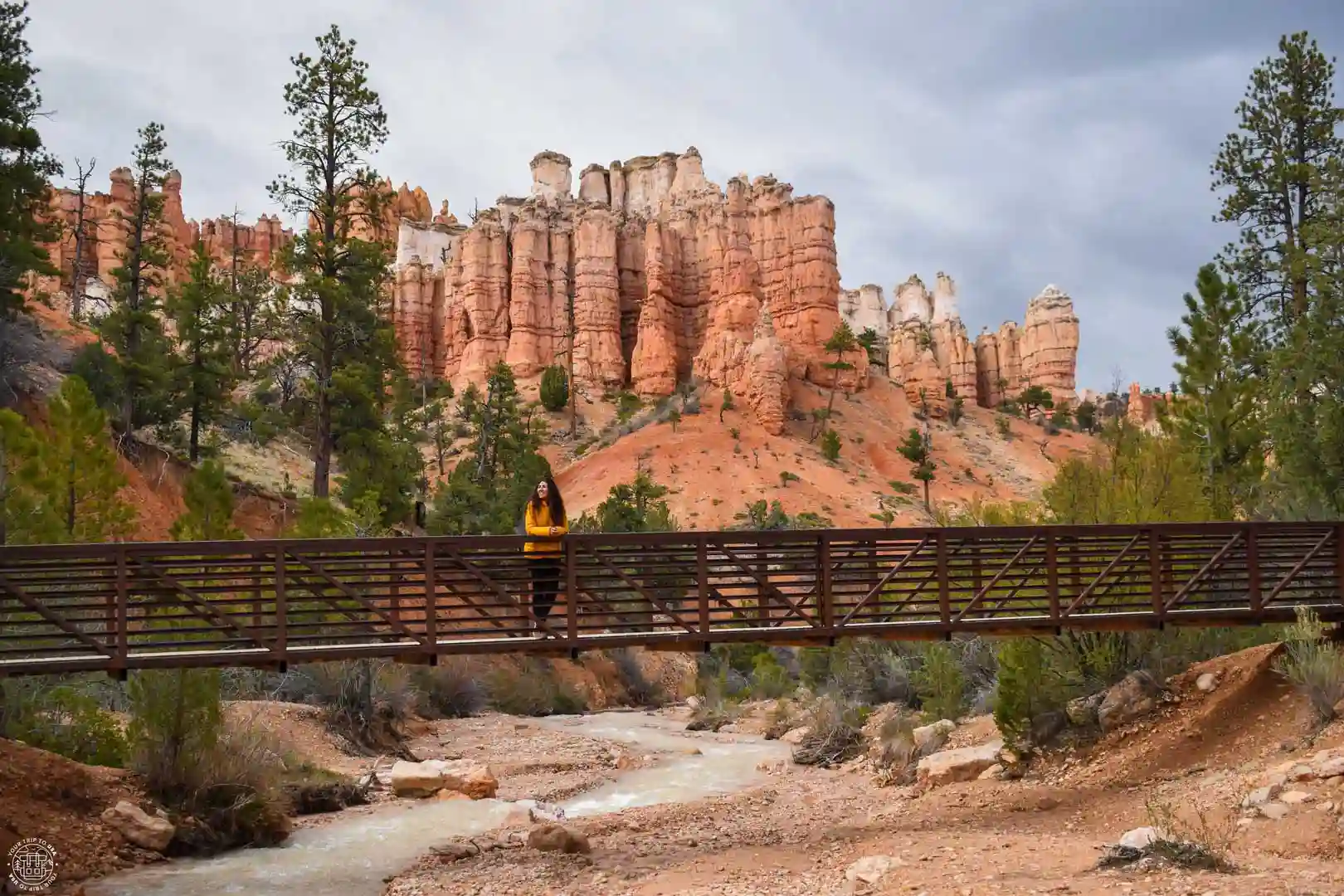
Although Bryce Canyon isn't known for its trails, there are a few that we found incredible during our two visits to the park. We'll tell you all about them in our post on Things to Do in Bryce Canyon National Park.
Tips for Visiting Bryce Canyon
- 🌄 Try to get there early—there may be lines at the entrance, and the parking lot fills up quickly during peak season. You'll also find fewer visitors at the lookout points.
- 🚌 If you're visiting during peak season and can't arrive early, take the shuttle bus so you don't have to worry about parking and can enjoy the park without any hassle.
- 🏨 Book your lodging well in advance if you're traveling during peak season. Check out our post on where to stay in Bryce Canyon to choose your hotel.
- 🚶🏻Stay on the marked trails—the hoodoos are very fragile, and our irresponsible behavior can damage them forever.
- 🧢 Don't forget your hat, sunglasses, and sunscreen—the sun is very strong in the summer, and there's not much shade.
- 🌡️ The temperature difference between Zion Canyon and Bryce Canyon can be as much as 50°F (10°C), since Zion is at an elevation of 4,600 feet (1,400 m) and Bryce is between 7,200 and 8,850 feet (2,200 and 2,700 m).
- ❄️ In winter, temperatures are very low, ranging from 10°F to 39°F (-12°C to 4°C). Be sure to wear warm clothes!
- 🥪 Bring some sandwiches or snacks and a refillable water bottle to make the most of your time at the park; there are water fountains scattered throughout the park and at the visitor center.
- 💧 Bring plenty of water if you're going for a hike in the summer—at least half galoon (2 l) per person.
- ⛺ If you want to camp outdoors because you're going on a hike that requires it, you must obtain a backcountry permit. You can get one on the recreation.gov website or app, and there is a fee.
Map of Bryce Canyon
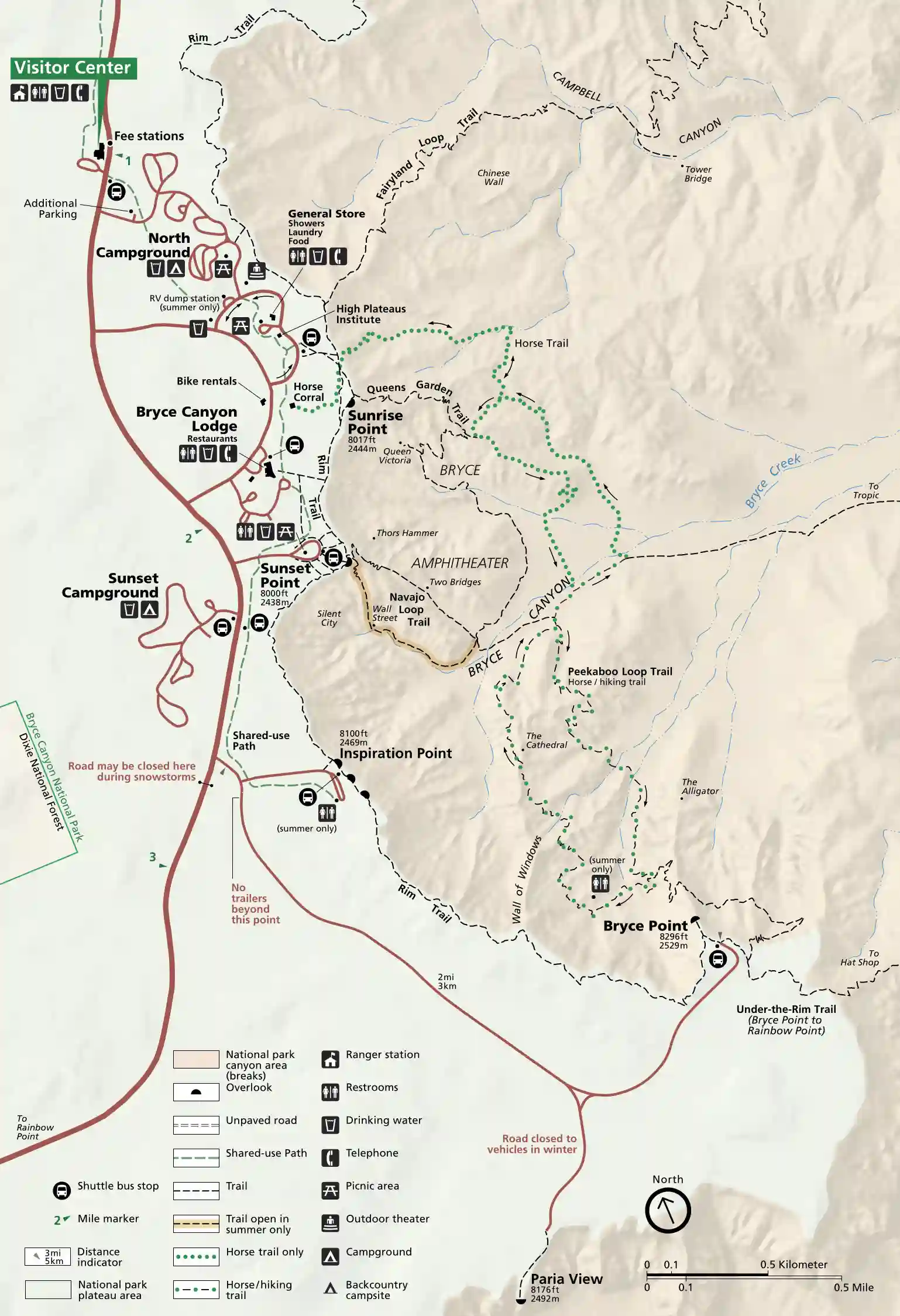
On this map of how to visit Bryce Canyon National Park, you'll find the entrance, the visitor center, the overlooks, the bus stops, the trails, and lodging options marked. I hope you find it helpful!
Frequently Asked Questions About Bryce Canyon
How much time do you need to visit Bryce Canyon National Park?
Ideally, you should set aside at least one full day to visit Bryce Canyon’s main viewpoints and hike some of its trails. If you have more time, you can spend a night in the area and enjoy the park at a more leisurely pace.
When is the best time to visit Bryce Canyon?
Spring and fall are excellent times to visit Bryce Canyon, as temperatures are pleasant and there are fewer visitors than in the summer. Summer offers good hiking conditions, while winter allows you to enjoy the snow-covered hoodoos, although some areas may be affected by weather conditions.
How much does it cost to enter Bryce Canyon National Park?
Admission to the park requires an entrance fee of $35 per vehicle plus $100 per person for nonresidents, although you can also use the America the Beautiful Pass, which costs $80 for residents and $250 for nonresidents per vehicle.
Can you visit Bryce Canyon by car?
Yes. You can drive along the park's main road and visit all of its overlooks. During the peak season, there is also a shuttle bus service that connects the overlooks at Bryce Amphitheater.
Which viewpoints should you definitely check out at Bryce Canyon?
The most spectacular viewpoints are Sunrise Point, Sunset Point, Inspiration Point, and Bryce Point. It's also worth driving along the Southern Scenic Drive to Rainbow Point to enjoy different views of the park.
At what elevation is Bryce Canyon located?
Bryce Canyon is located at a high elevation, with parts of the park situated at approximately 7,200 to 8,850 feet (2,400 to 2,700 m) above sea level. For this reason, temperatures can be significantly lower than in other parks in Utah, and it’s a good idea to keep this in mind when planning your visit.
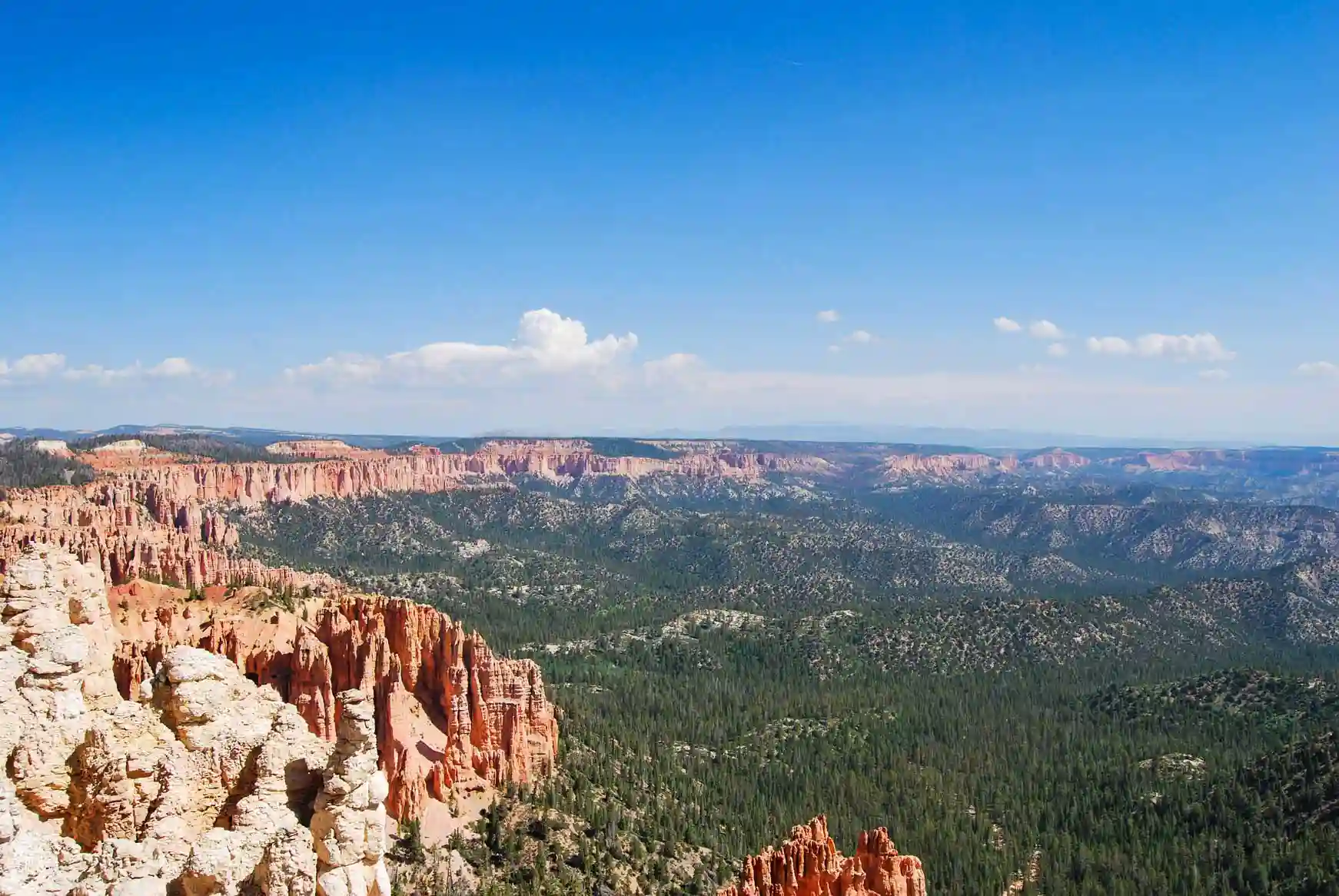
We hope this guide on how to visit Bryce Canyon National Park helps you enjoy this wonderful place!