

Things to Do in Zion National Park (Must-Sees)
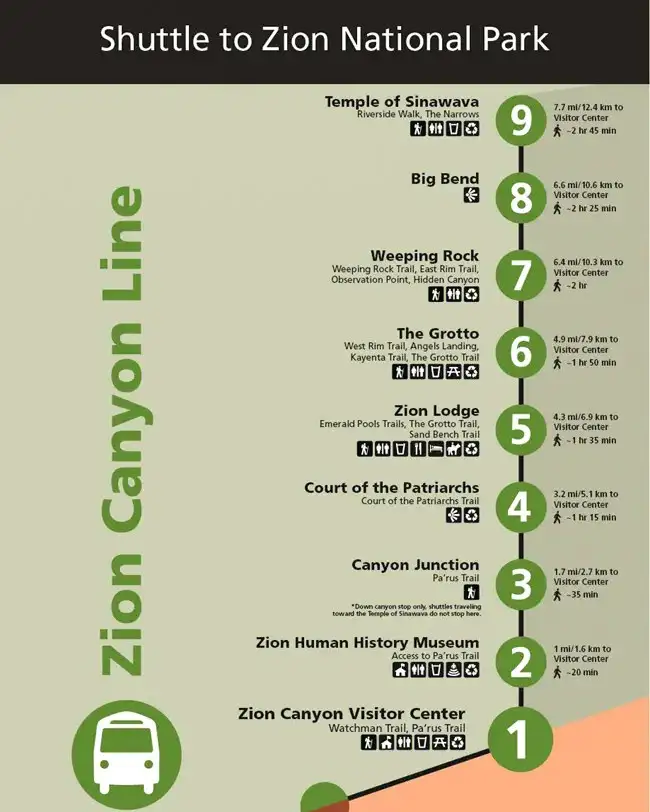
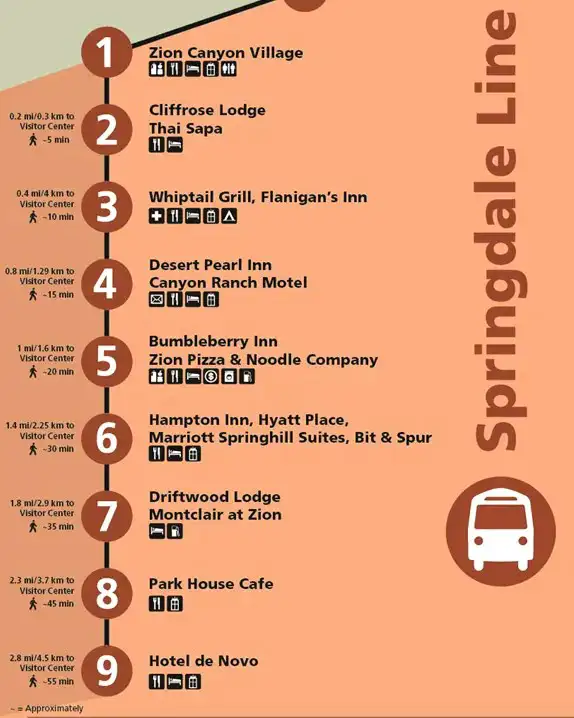
In this section, we've selected the things to do in Zion National Park. Since many of them are located in the Zion Canyon area (the most popular of all), the best way to visit them is by shuttle bus, as we explain in our guide to Zion National Park.
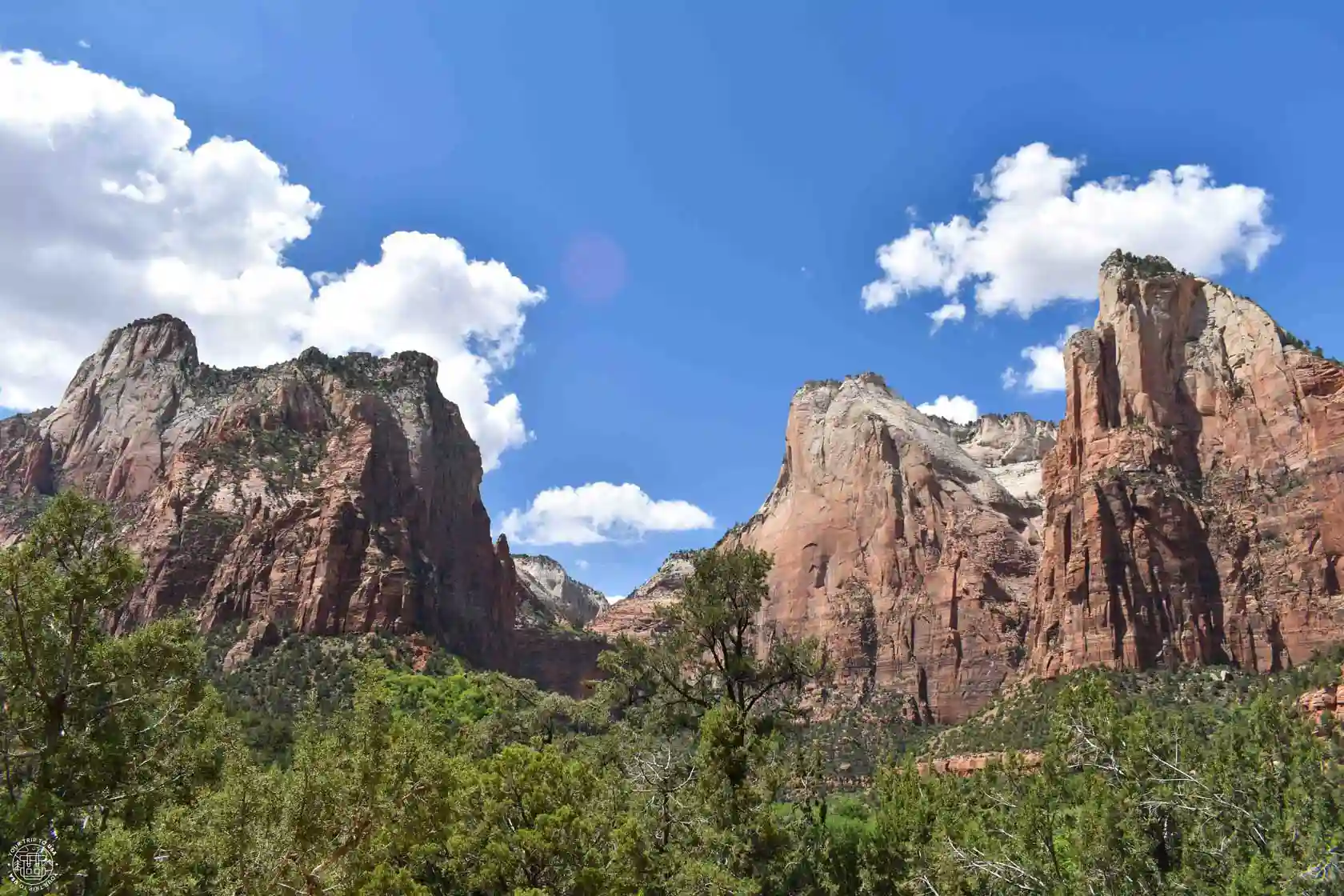
Court of the Patriarchs
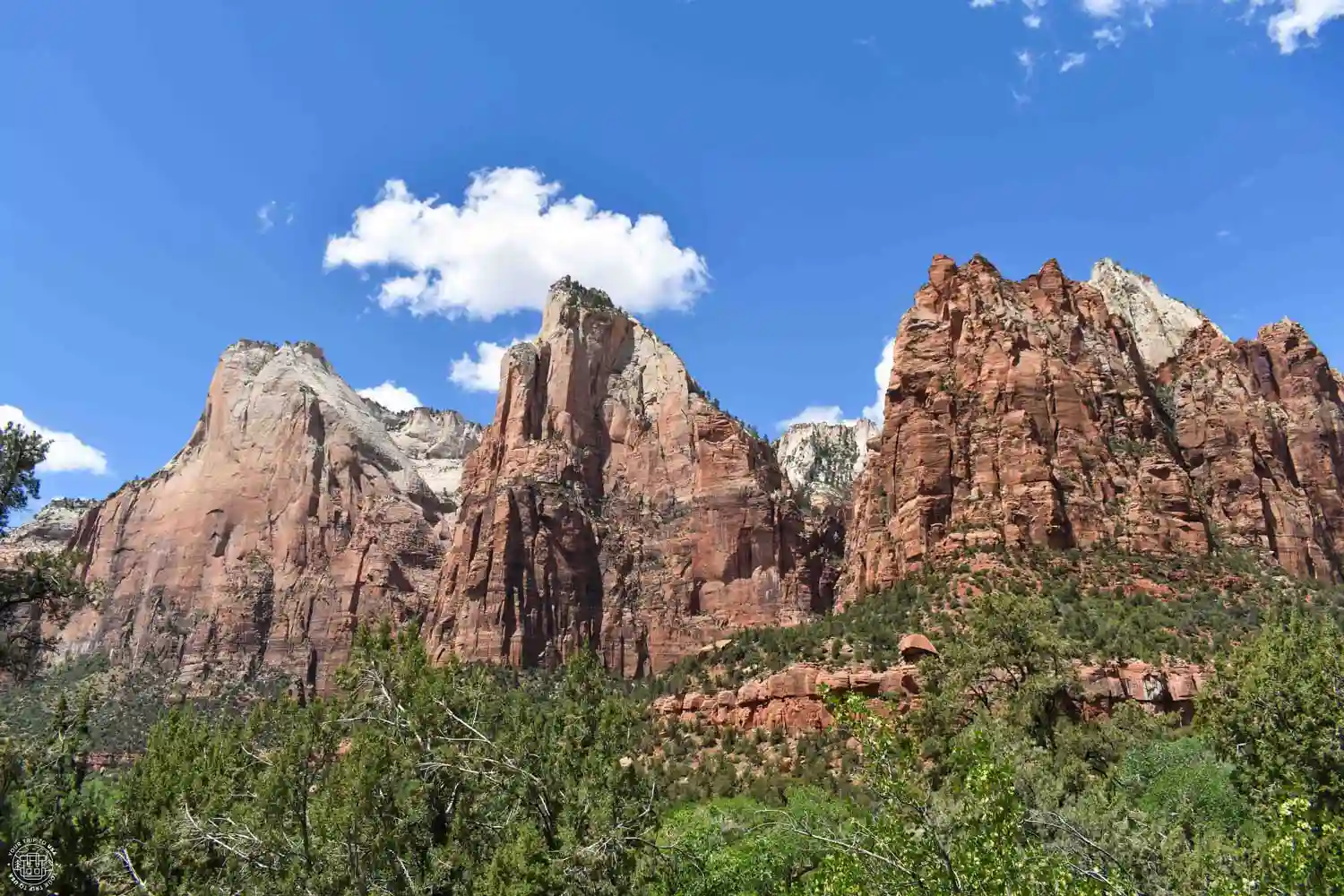
We’ll start this list with one of the park’s most iconic sites. These are the mountains that make up the Court of the Patriarchs, situated side by side and towering proudly over Zion Canyon. These three peaks were named after the biblical figures Abraham, Isaac, and Jacob and rise to over 6,800 feet (2,000 m) in height.
You can see them perfectly from a small lookout point next to the road, which has its own bus stop.
Emerald Pools
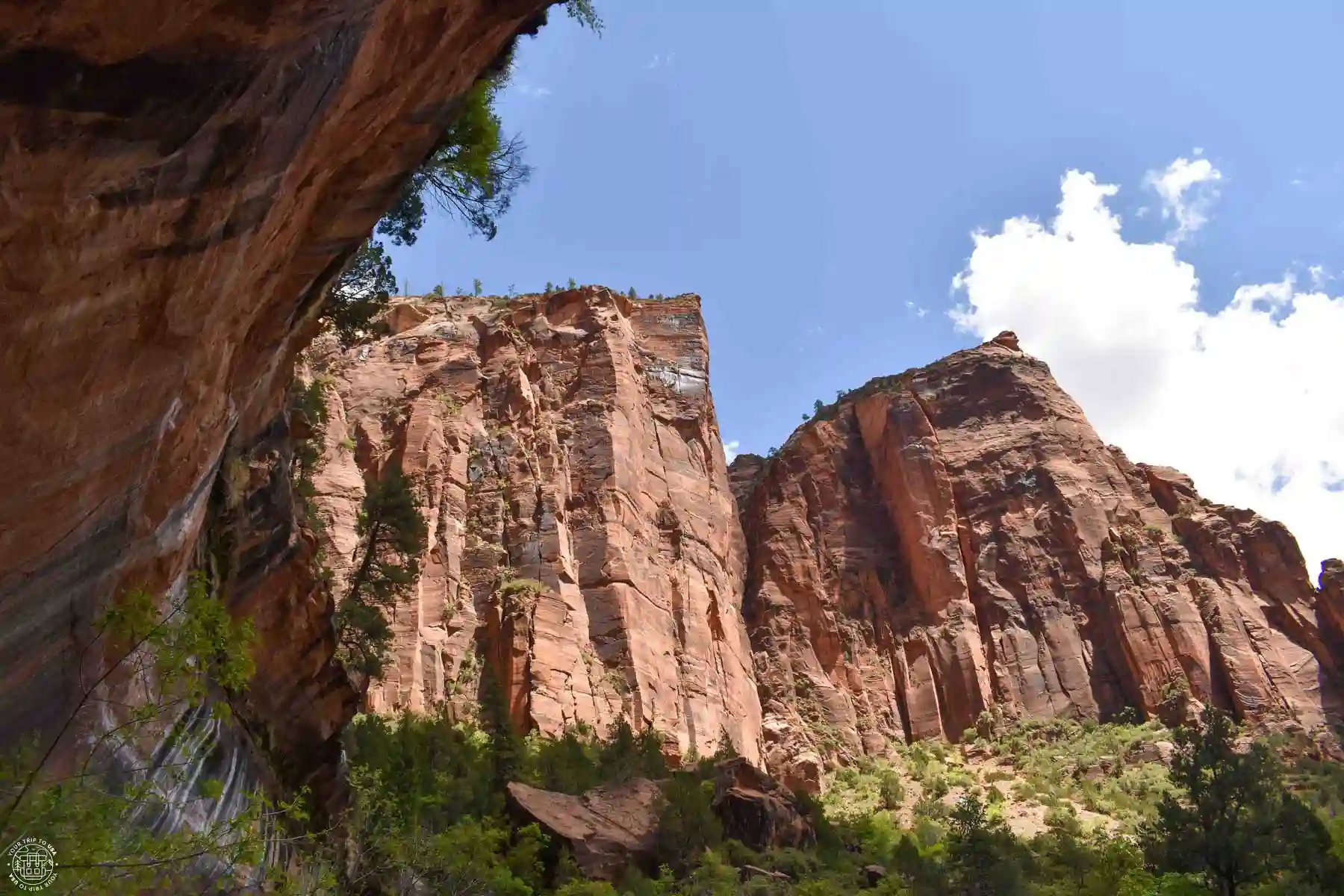
These three small pools of crystal-clear water are located on the west side of the canyon. You can visit all of them on a 3-mile (5 km) hike with 755 feet (230 m) of elevation gain and marvel at the views along the trail of the surrounding mountains and cliffs, as well as Zion Canyon. In addition to the pools themselves, and depending on rainfall, you can enjoy the waterfalls that feed them.
For this hike, you'll find all the information you need in our exclusive post on the best hikes in Zion National Park.
Great White Throne
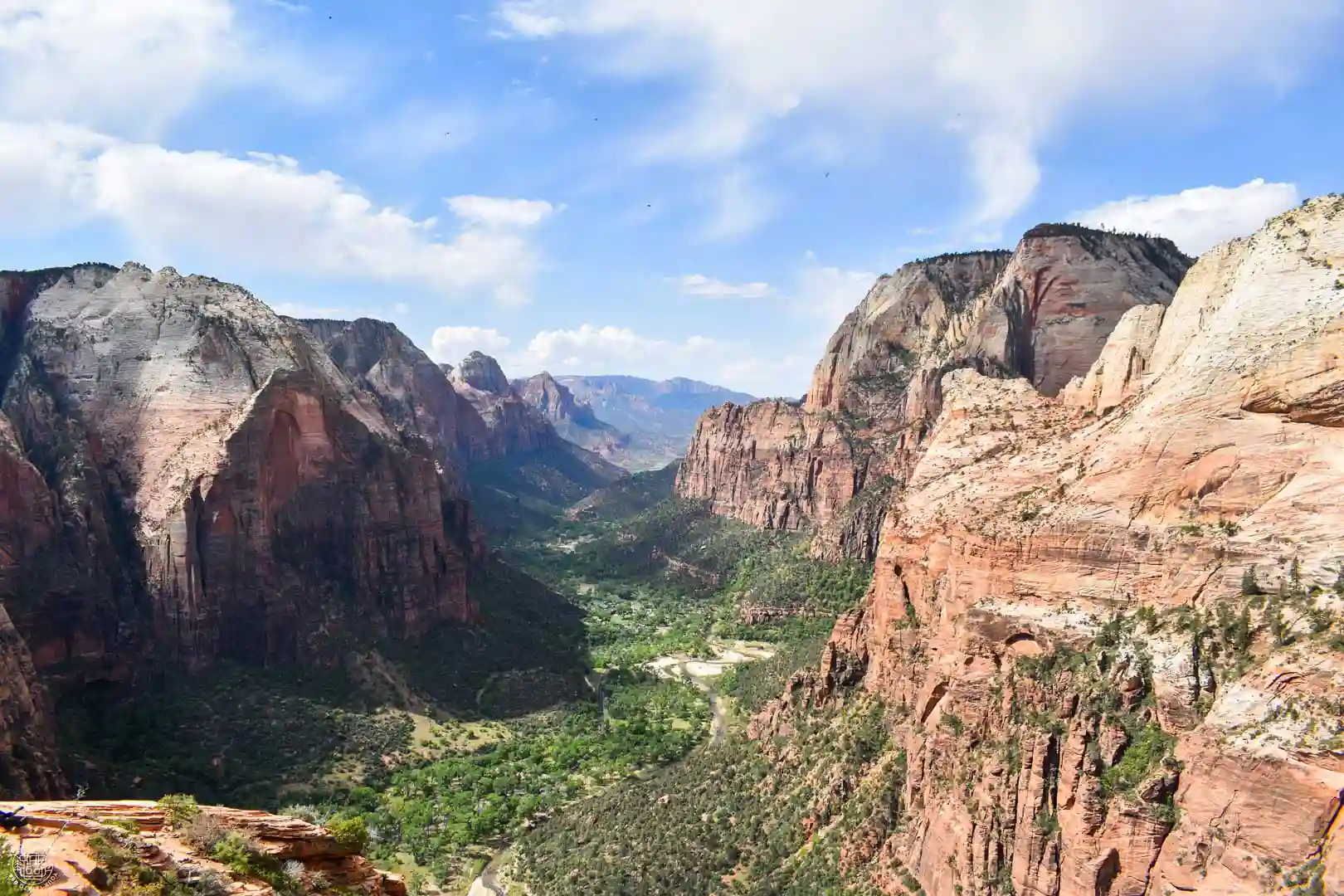
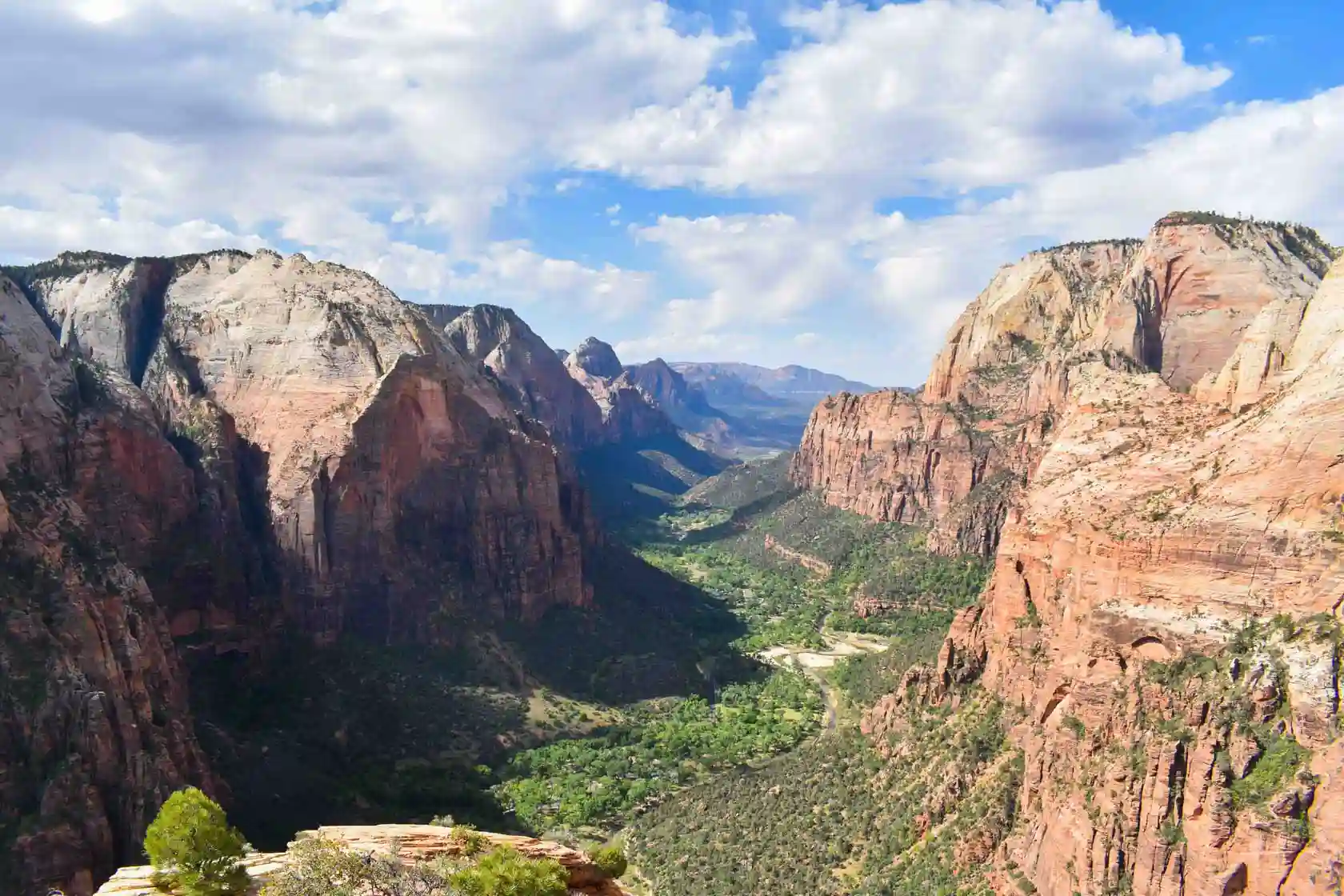
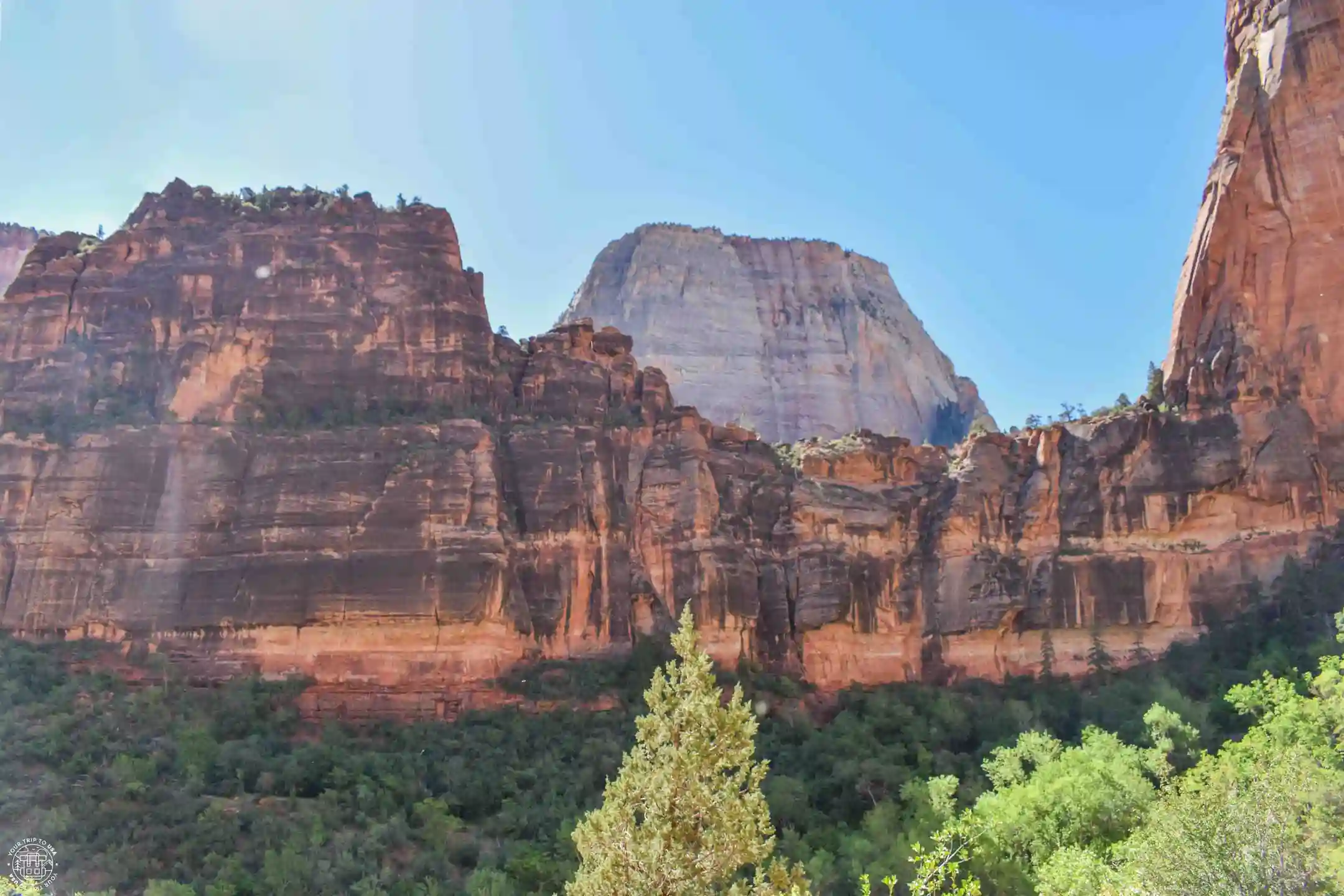
This gray sandstone mountain is one of the park's most recognizable landmarks, visible from several overlooks along Zion Canyon, including Angels Landing. It rises 2,362 feet (720 m) from the canyon floor and stands out from the other mountains due to its distinctive grayish color.
Angels Landing
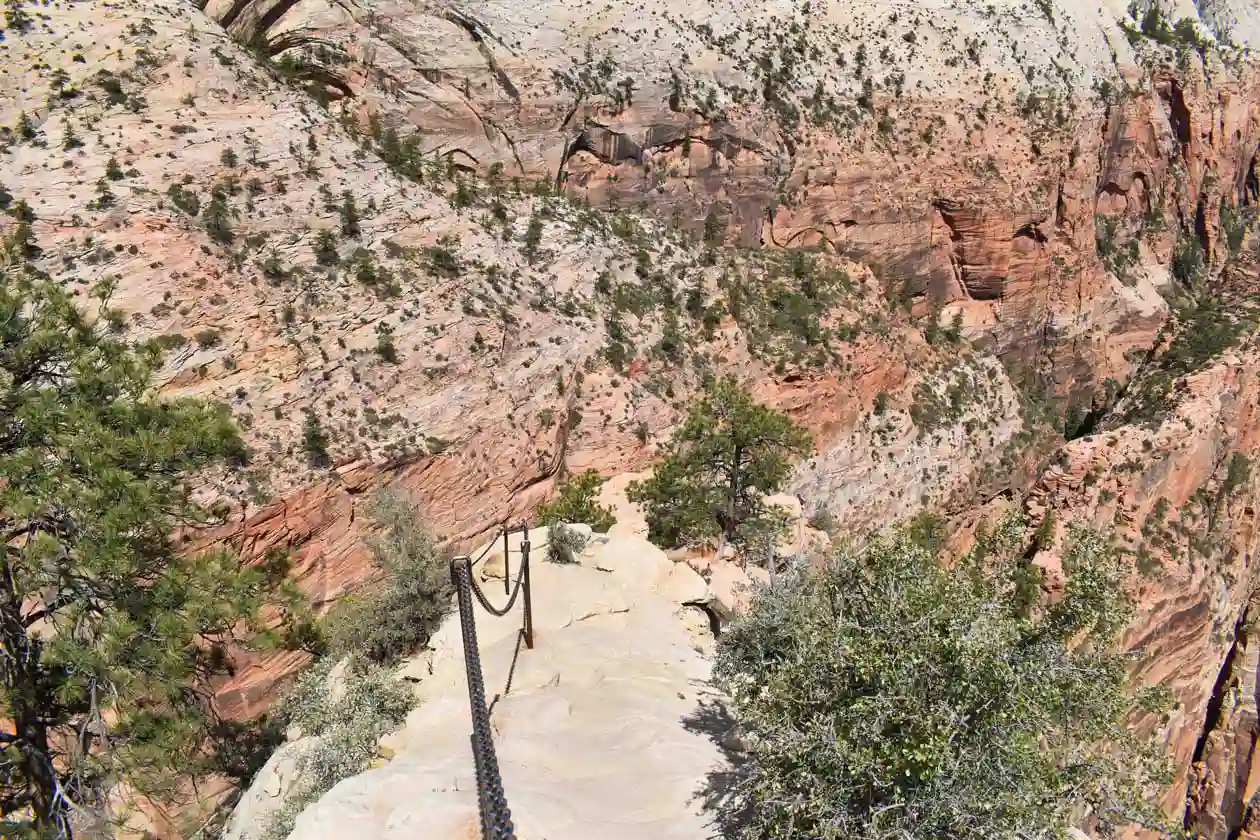
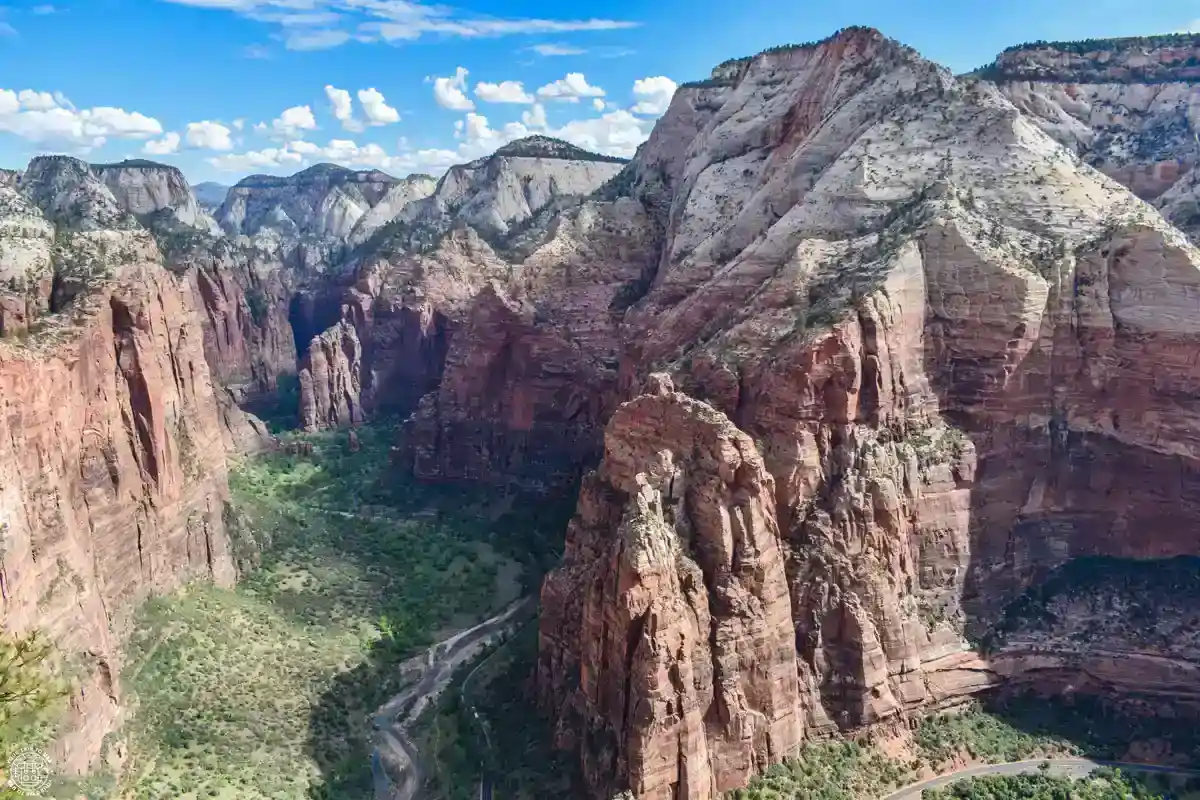
Without a doubt, this is the most spectacular viewpoint in the entire park and one of the best on the West of the United States. To reach it, you have to take a grueling and challenging hike that passes through a very exposed and steep section, where you’ll need to use chains anchored to the rock itself for support.
To do this, you need to apply for a special permit. We'll provide all the information in our exclusive post about the Angels Landing hike.
The Organ
This massive red rock formation is located at the point where the Virgin River forms a large meander as it flows through Zion Canyon, known as Big Bend. Standing 5,085 feet (1,550 m) high, it lies directly across from Angels Landing, though it is somewhat overshadowed by the colossal peaks surrounding it. To take your time exploring the entire area, get off the bus at the Big Bend stop; right there you’ll find a beautiful overlook, which we’ll discuss below.

TRAVEL INSURANCE
FOR THE UNITED STATES
💸 Healthcare in the U.S. is very expensive, and any accident or illness can cost you a fortune.
That's why we recommend getting travel insurance that covers you in case anything goes wrong, so you don't have to pay anything up front.
💡 We always travel with Heymondo because it offers excellent medical coverage at a great price. Plus, you can get 5% OFF*!
🤓 Take a look at: Best travel insurances for the USA | Comparison + Discounts |
Big Bend Viewpoint
Along with the Court of the Patriarchs, it is one of the best roadside viewpoints in Zion Canyon. It has its own shuttle bus stop, and the views include the meander of the Virgin River—from which it takes its name—as well as the rock formations of Angels Landing, The Organ, and The Great White Throne, among others.

RENT A CAR IN THE UNITED STATES
The best way to explore the United States is by car, giving you the freedom to travel at your own pace.
🚗 Whether you’re looking for a convertible Mustang, a 4x4, or a regular car, we recommend to book through this car rental search engine
💸 This is where we find the best prices, both on the rental car itself and on full coverage insurance!
Temple of Sinawava
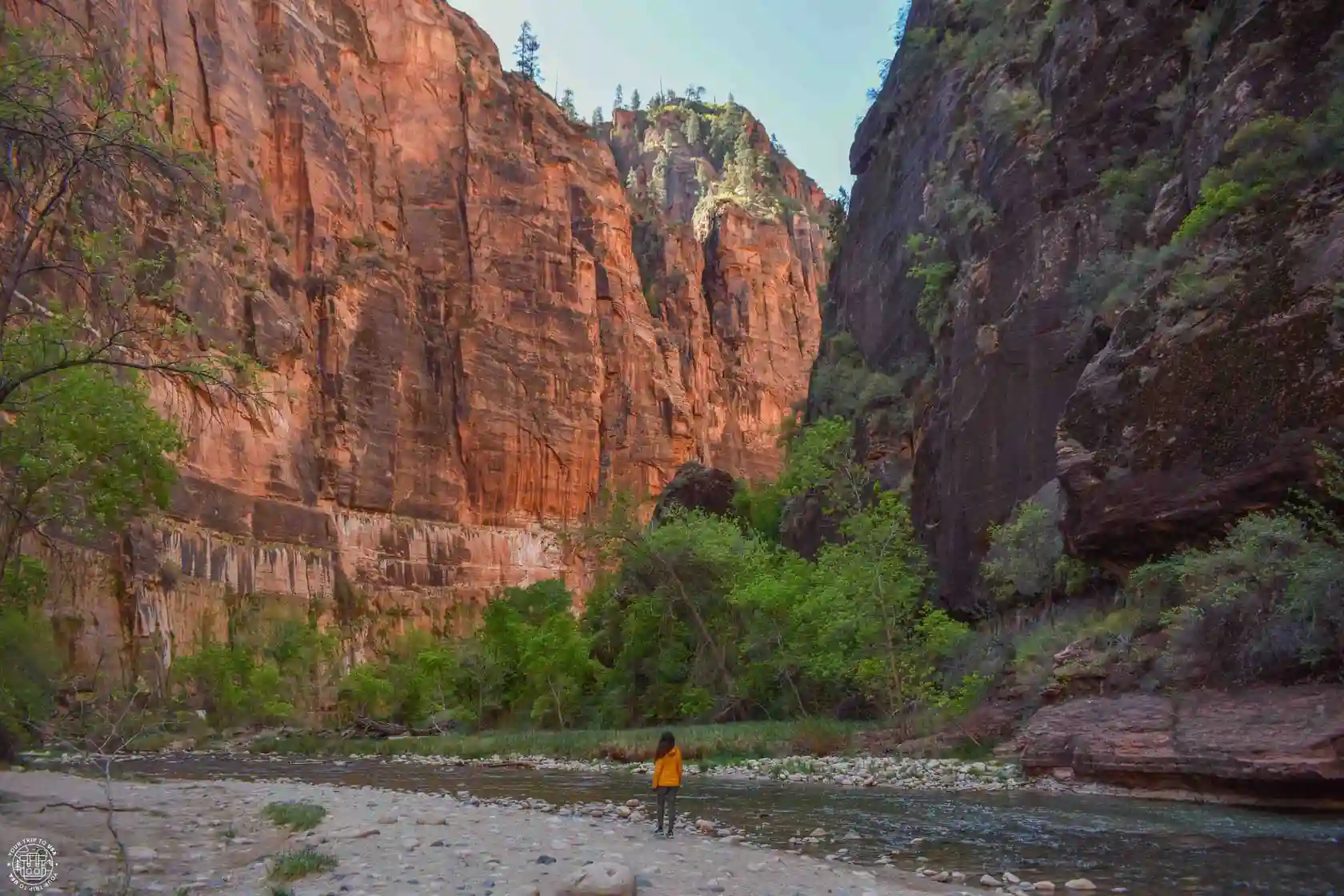
Located in the upper part of Zion Canyon, this is a natural amphitheater where the canyon narrows dramatically. This is where the park’s shuttle bus route ends and the path begins that leads you to The Narrows, one of the park’s most famous trails. Even if you don’t plan to hike this trail, it’s really worth taking a stroll along the Riverside Walk to its starting point.
The Narrows
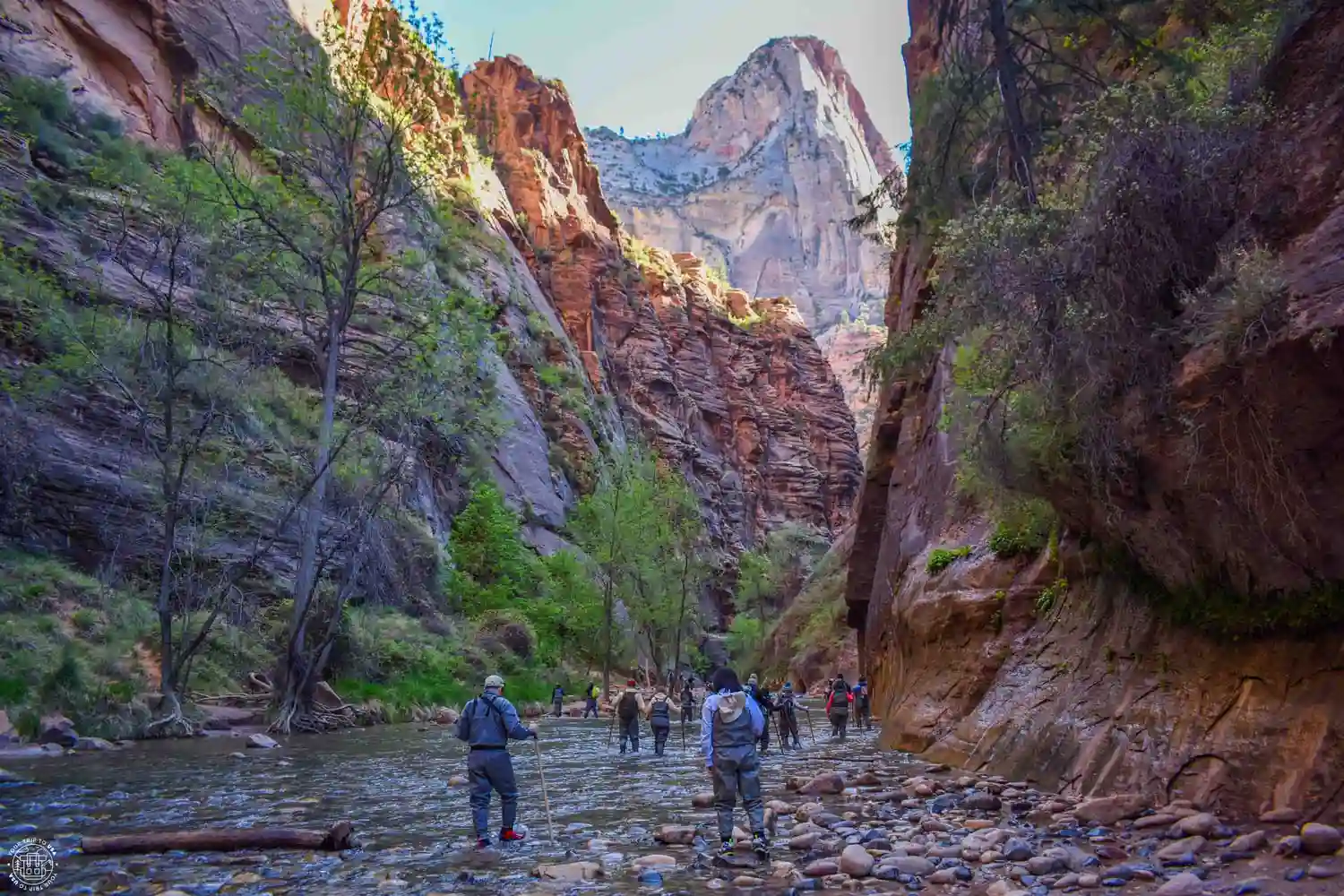
One of the most famous and spectacular hikes in Zion National Park, along with Angels Landing. In our post on the best hikes in Zion National Park, you'll find all the information
🚶🏻 Book this tour to The Narrows—which includes equipment, transportation, and a specialized guide—from Springdale, and leave everything else behind
The Subway
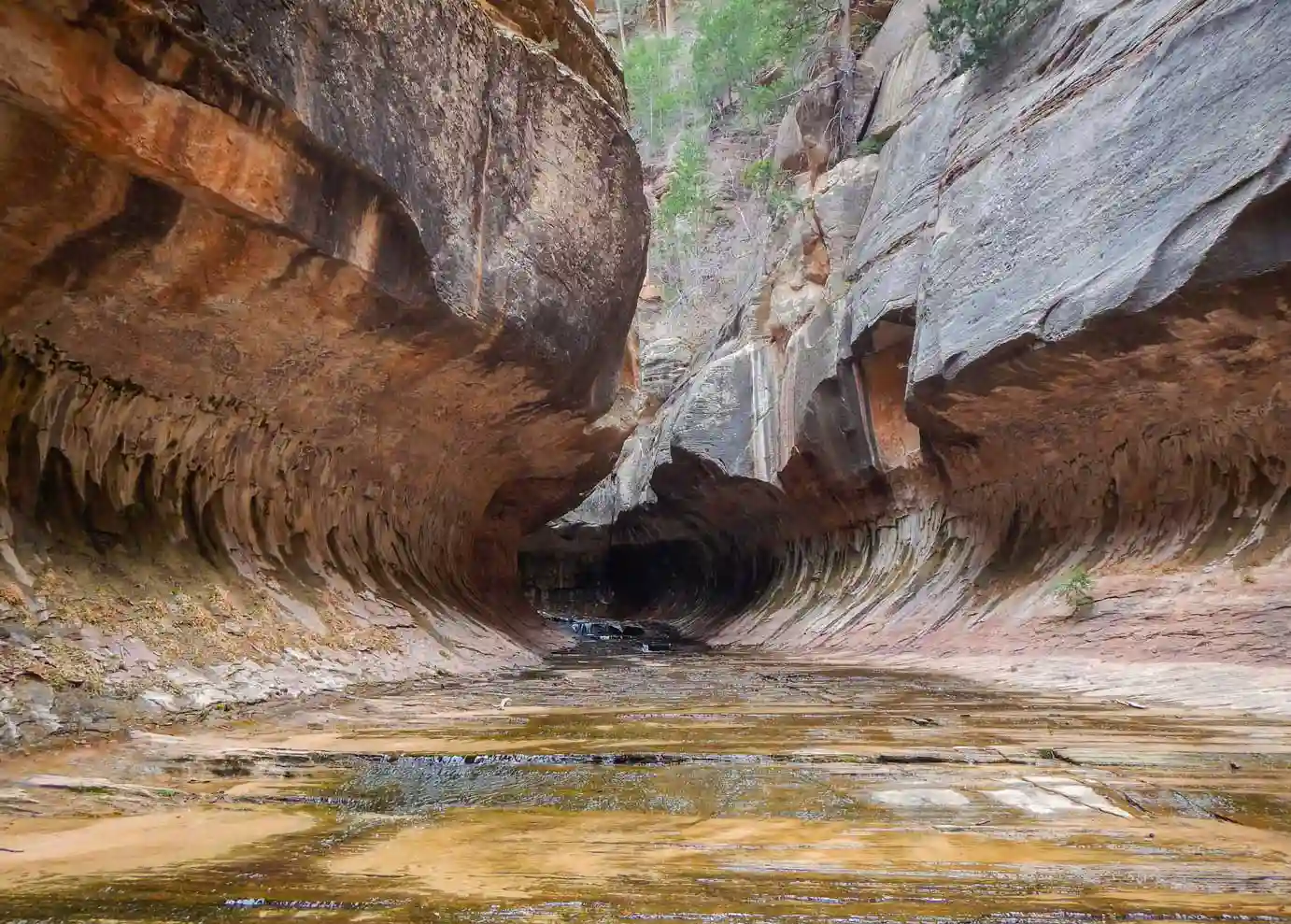
Subway, officially known as the Left Fork of North Creek, is a narrow, tunnel-like canyon. The trail is extremely challenging due to its 9 miles or 14.5 km (round-trip) length, the need to climb over large boulders, the fact that it is hard to find, and much of the route involves wading through water ranging from ankle- to knee-deep.
You can find much more information in our post about the best hikes in Zion National Park.
Canyon Overlook
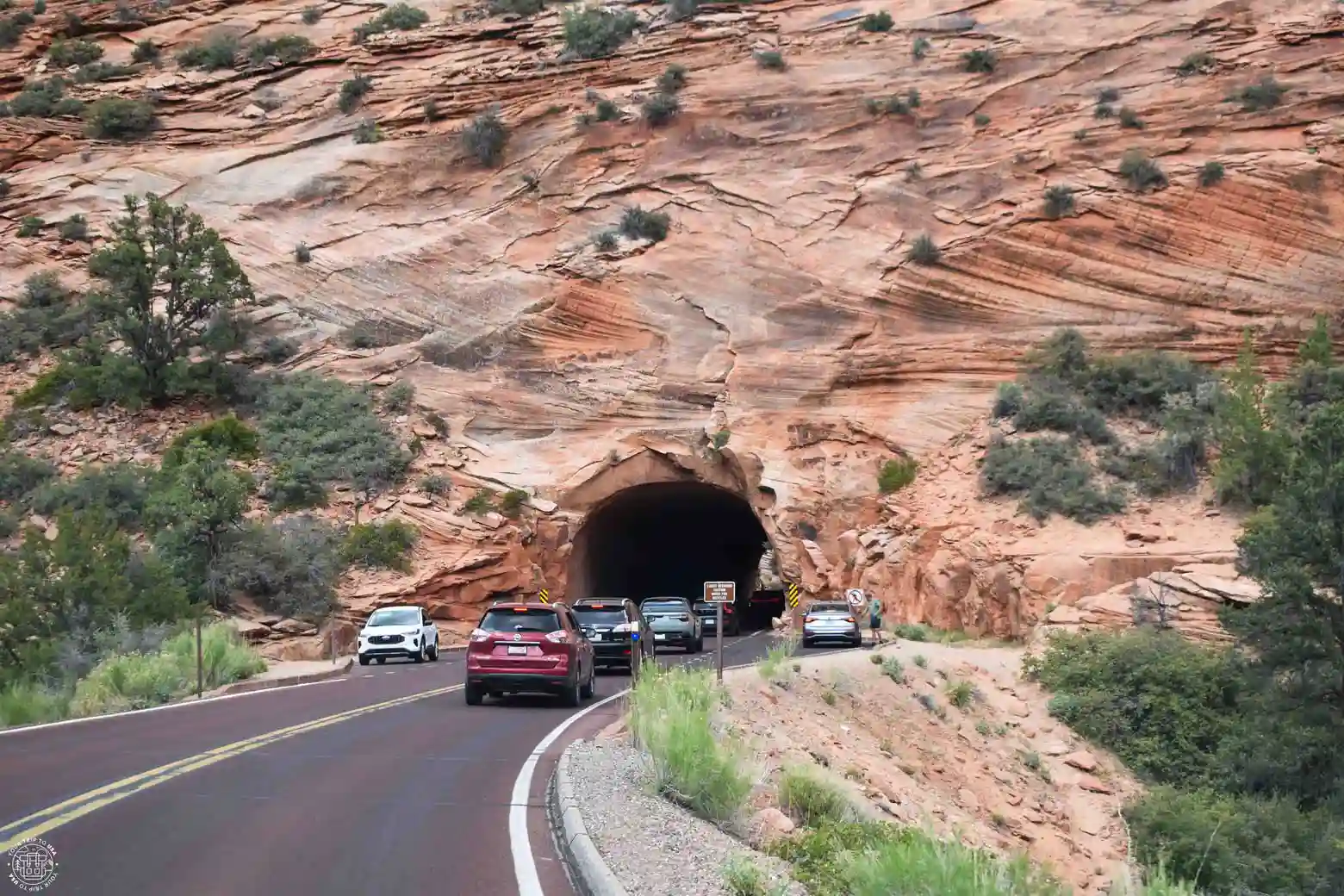
An excellent panoramic overlook in the park along the Zion–Mount Carmel Highway. From there, you’ll enjoy beautiful views of Zion Canyon and its surroundings. To get there, take the road leading to the East Entrance, the Canyon Overlook Trail takes you up to the observation deck. It starts at the north entrance of the first tunnel, and parking can sometimes be difficult—keep that in mind so you don't drive past it!
Less-Known Spots in Zion National Park
The Zion Human History Museum
A small museum located at the entrance to Zion Canyon, featuring exhibits that tell the story of the various cultures that have inhabited the area, from Native Americans to the first European settlers. A 22-minute video about the national park is also shown.
 NO FEES CARD FOR THE UNITED STATES
In the U.S., you'll pay for almost everything by card. If you use one from your regular bank, you'll get hit with a ton of currency conversion fees.
💡 That's why we recommend to get the Wise card. There's no maintenance fee, and you can:
💸 Withdraw $250/month in any currency with no fees
💳 Do payments in any currency with no extra fees
Watchman Overlook
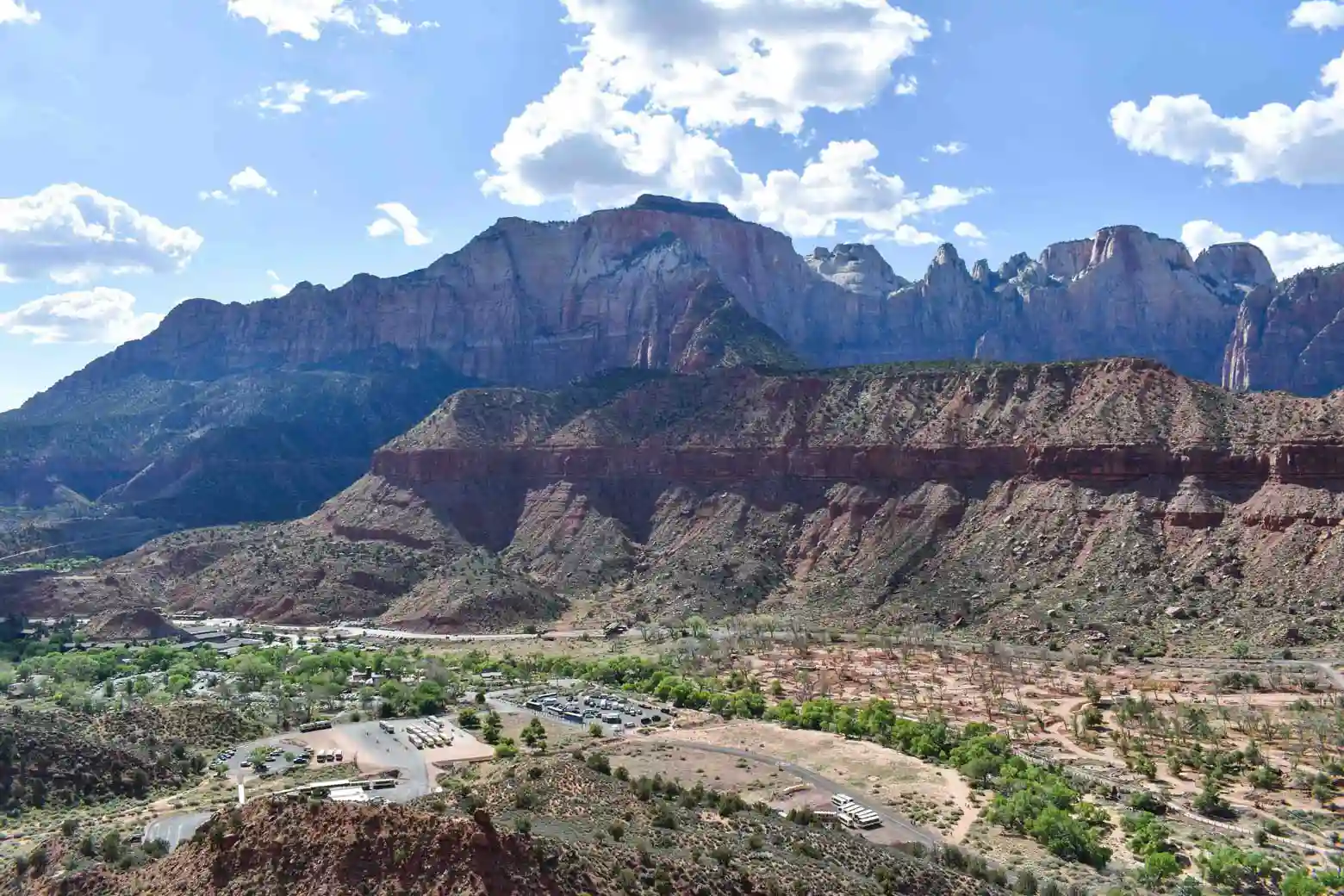
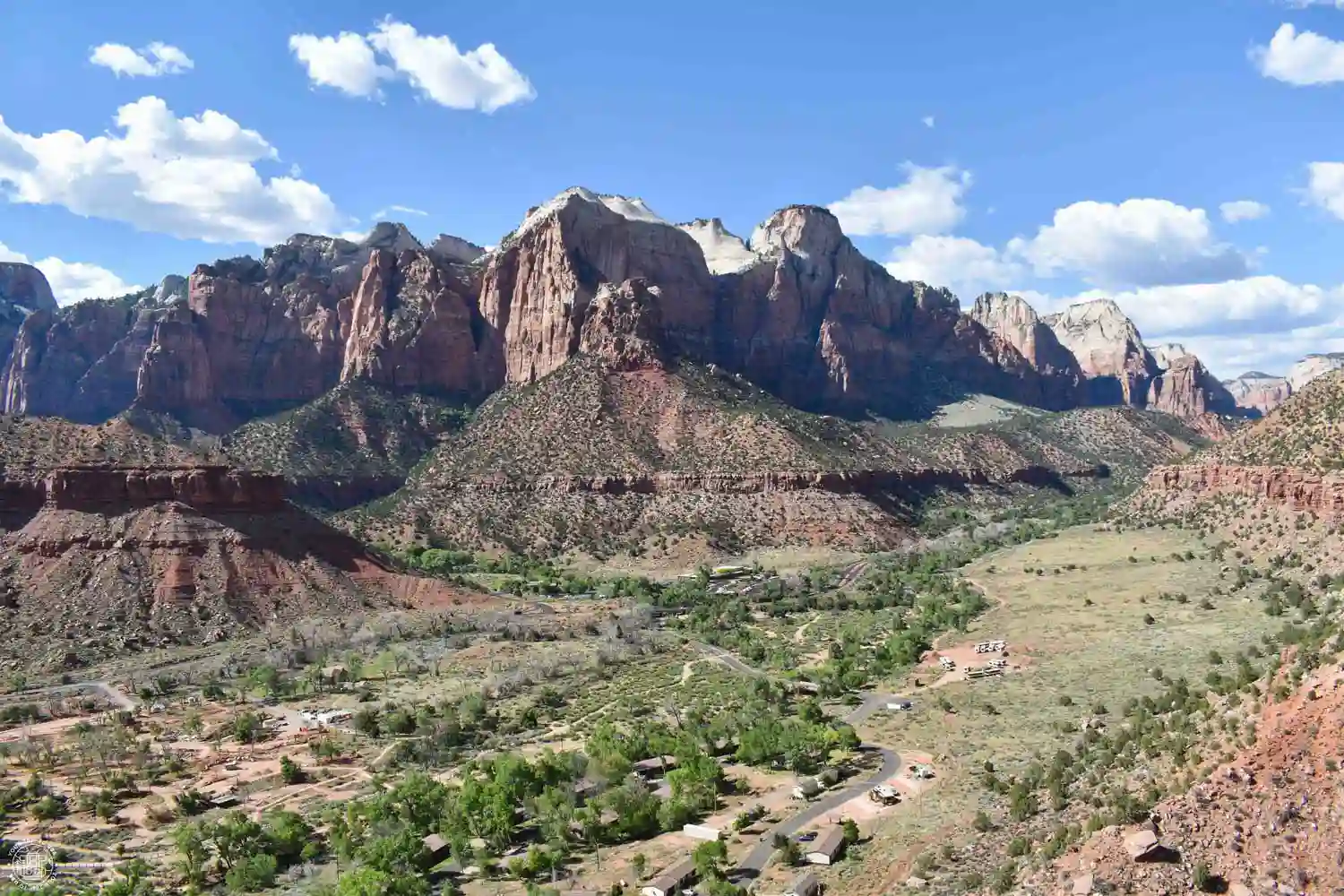
A beautiful overlook of the lower part of Zion Canyon, the surrounding mountains, and the town of Springdale. To get there, you’ll need to hike the Watchman Trail, which is 3 miles or 5 km (round trip) with 535 feet (163 m) of elevation gain; it will take you at least 2 hours and 30 minutes. The trail has some exposed sections, and the overlook itself is not fenced off, so you’ll need to be careful when leaning out over the edge.
Observation Point
The most panoramic viewpoint in the entire park—even higher than Angels Landing and offering views of it, The Organ, Big Bend, and a spectacular view of Zion Canyon. However, to get there, you’ll need to leave the park and take a forest road and a trail. We’ve included a link to the hike to Observation Point in our exclusive post on hiking trails.
Lava Point Overlook
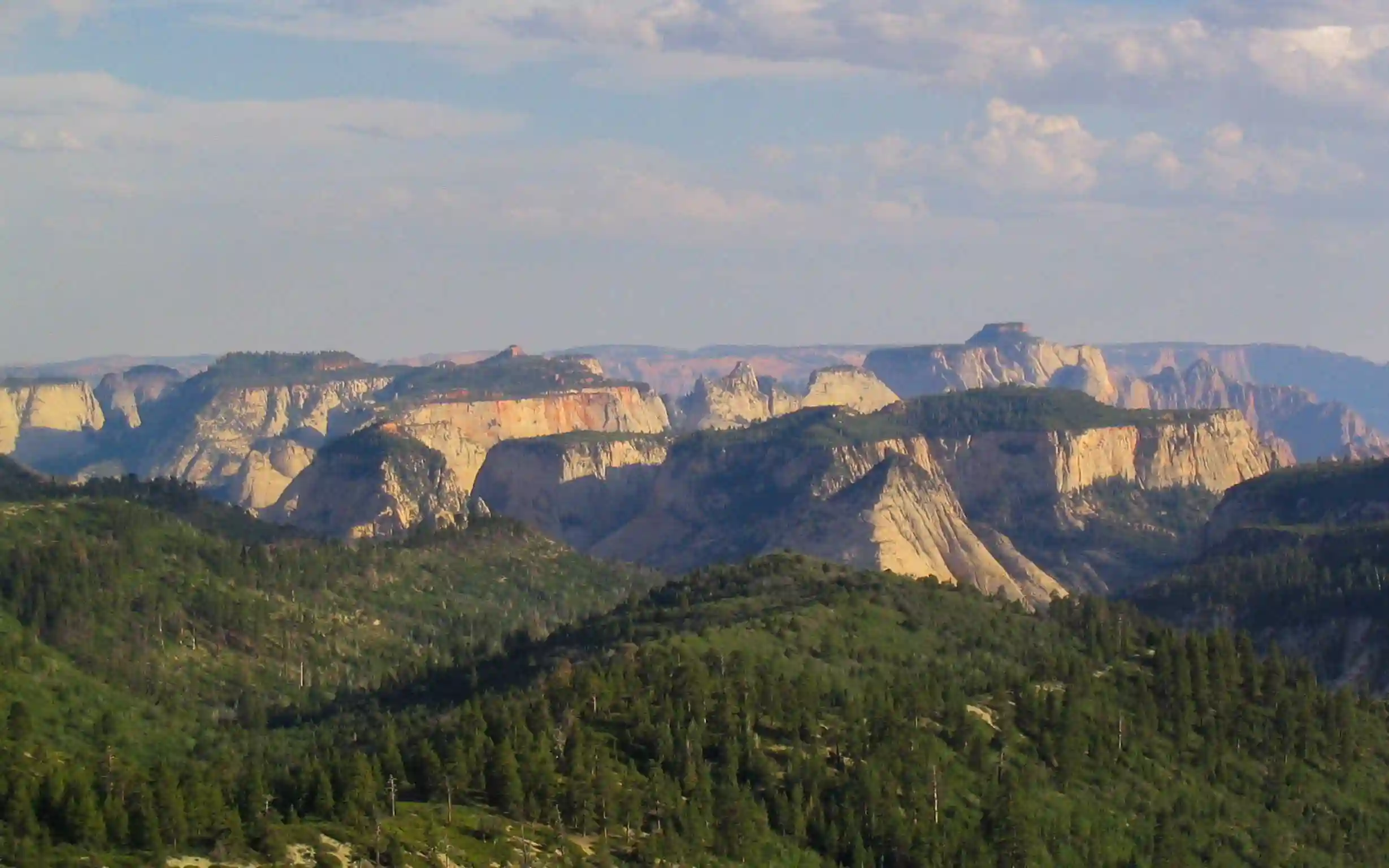
This overlook in the upper part of the national park offers stunning views of the area, with Zion Canyon in the background. Located on the Kolob Plateau, to get there you must take Kolob Terrace Road and take a short detour onto Lava Point Road; it is very close to the Lava Point Campground. It’s usually accessible from May through September, as the road is closed the rest of the year due to snow.
Kolob Reservoir
This small reservoir, located at the end of Kolob Terrace Road, sits at an elevation of 8,120 feet (2,475 m) above sea level. Although it’s outside the national park, you’ll need to drive through the park to reach it. It’s an ideal spot to relax away from the crowds of Zion Canyon. The road begins in the town of Virgin and gradually climbs 4,593 feet (1,400 m) to the reservoir.
Kolob Canyons
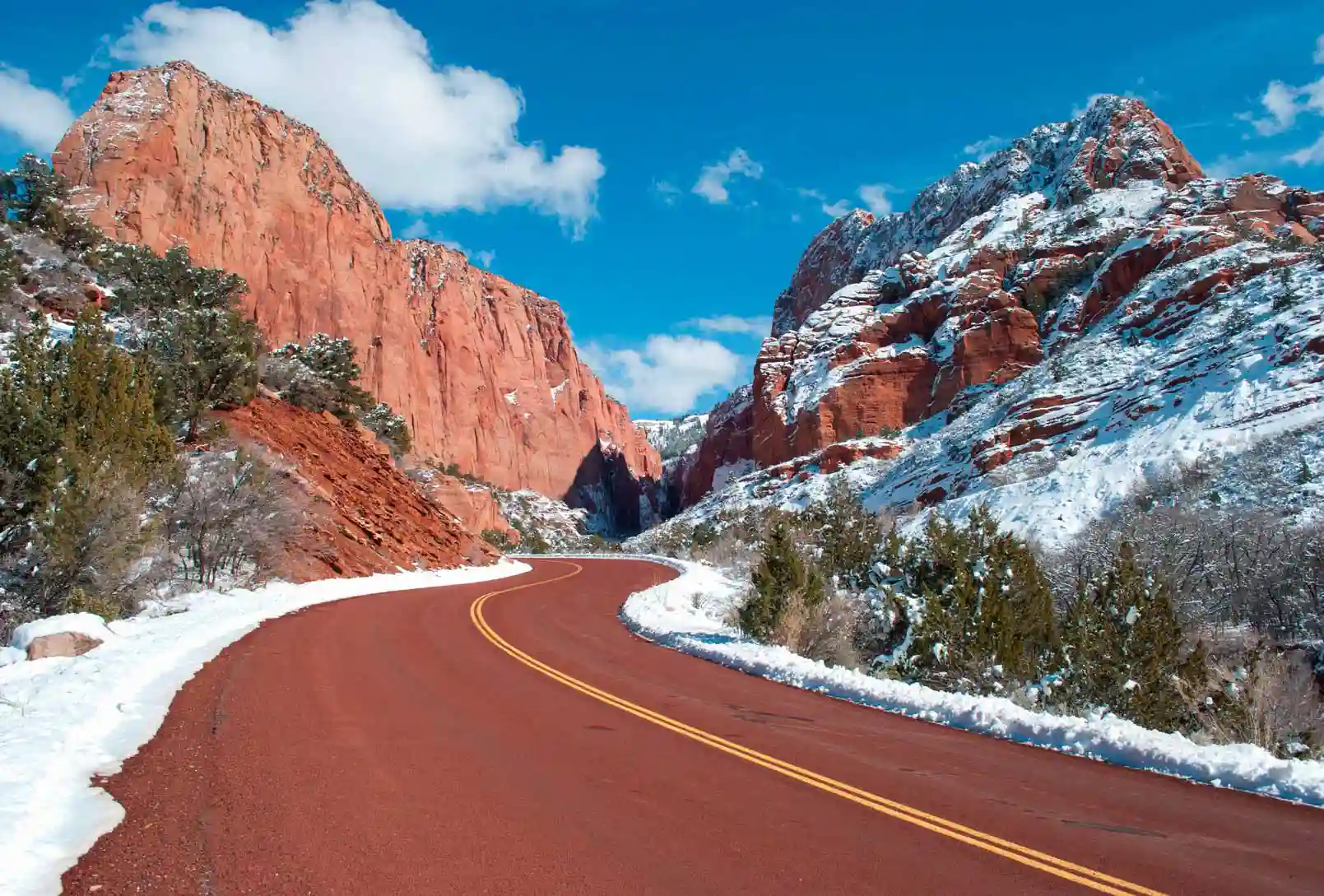
This much less crowded area of the park is ideal for hiking. Located in the northwestern part of the park, it is accessible via Exit 40 on Interstate 15 and is notable for its narrow red-rock canyons carved into the rock by small streams.
It has its own visitor center, a scenic byway called Kolob Canyons Road, and several trails and overlooks, including the Taylor Creek Trail, the La Verkin Creek Trail, the Timber Creek Overlook Trail, and the Kolob Arch Trail.
Kolob Arch
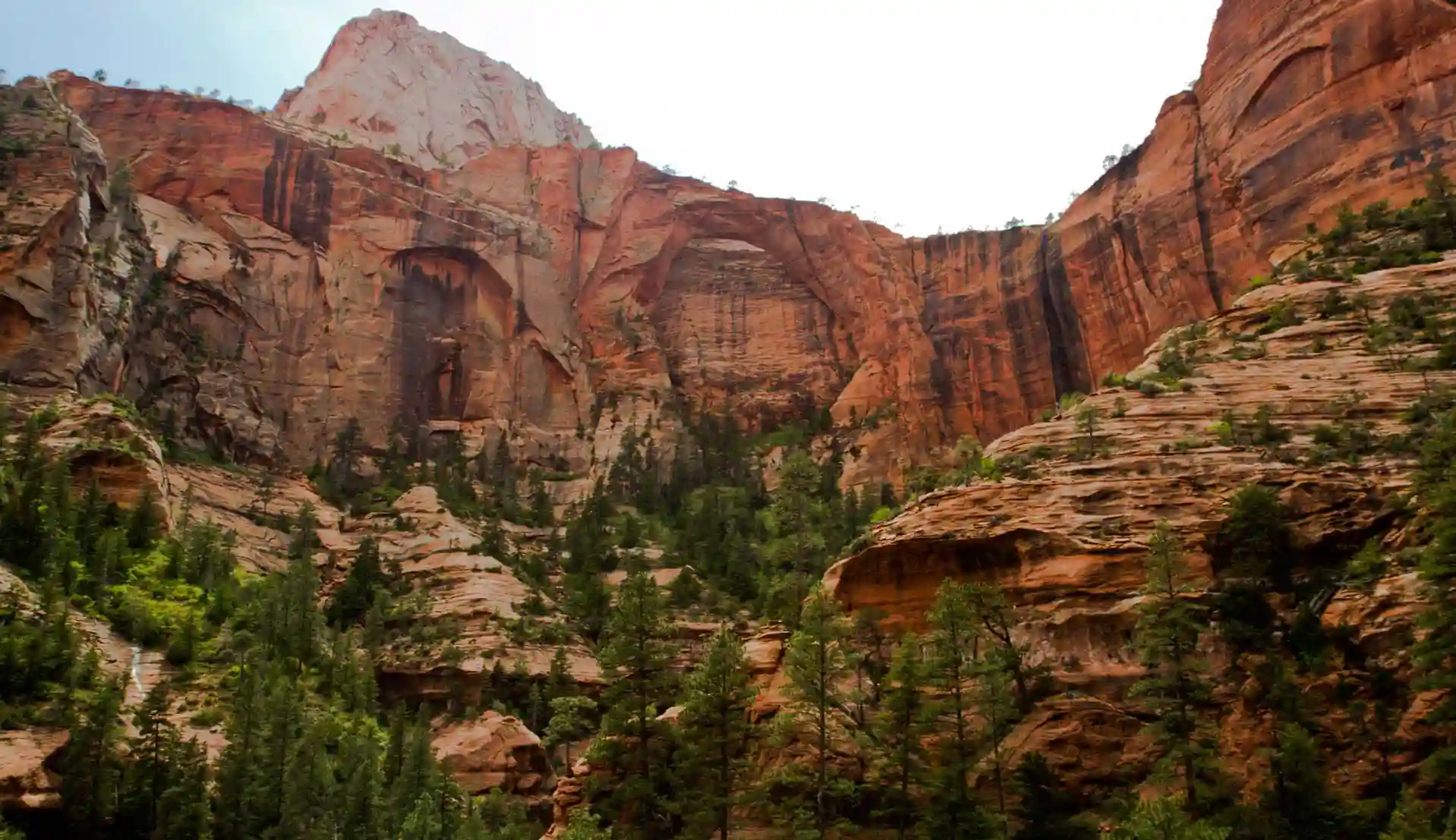
At 287 feet (87 m) long and 75 feet (23 m) wide, it is one of the largest natural stone arches in the world. The challenge lies in getting there, as you’ll have to hike 13.7 miles (22 km) with an elevation gain of 1,037 feet (316 m), a trek that will take between 7 and 9 hours.
Things to Do in Half a Day at Zion National Park
If you only have half a day in Zion National Park, you won’t have time to go on any hikes, so we recommend that you focus on visiting the park’s main viewpoints. Here’s an itinerary for you, assuming you’re coming from Las Vegas and will be heading to Bryce Canyon National Park the next day.
If you'll be visiting Las Vegas the day before, we recommend staying there—at the Paris Las Vegas if you prefer a themed hotel, or at the Sahara Las Vegas if staying at a themed hotel isn't your priority. If you’d rather stay closer to the park, we’ve written a dedicated post about accommodation in Zion National Park with plenty of recommendations.
- Head straight to the parking lot at the Zion Canyon Visitor Center (🚗 3h)
- If you find the parking lot full when you arrive, your best bet is to head to your hotel's parking lot in Springdale or park on the street and take the Springdale Line shuttle bus to the visitor center. You can find all the information about parking in Springdale here
- Temple of Sinawava, the last stop on the Zion Canyon Line (🚌 45 min)
- Big Bend. Take the bus again to start your return trip and get off at Big Bend, where you'll find the overlook of this large meander of the Virgin River (🚌 5 min)
- Court of the Patriarchs. Continue on the bus to the 4th stop, where you'll find this beautiful viewpoint (🚌 20 min)
- Zion Canyon Visitor Center. At the end of the day, take some time to explore the visitor center (🚌 20 min)
- Head to your lodging in Springdale—for example, the Zion Park Motel
- The next day, on your way to Bryce Canyon, we recommend stopping at Canyon Overlook (🚗 20 min + 🚶🏻 30 min)
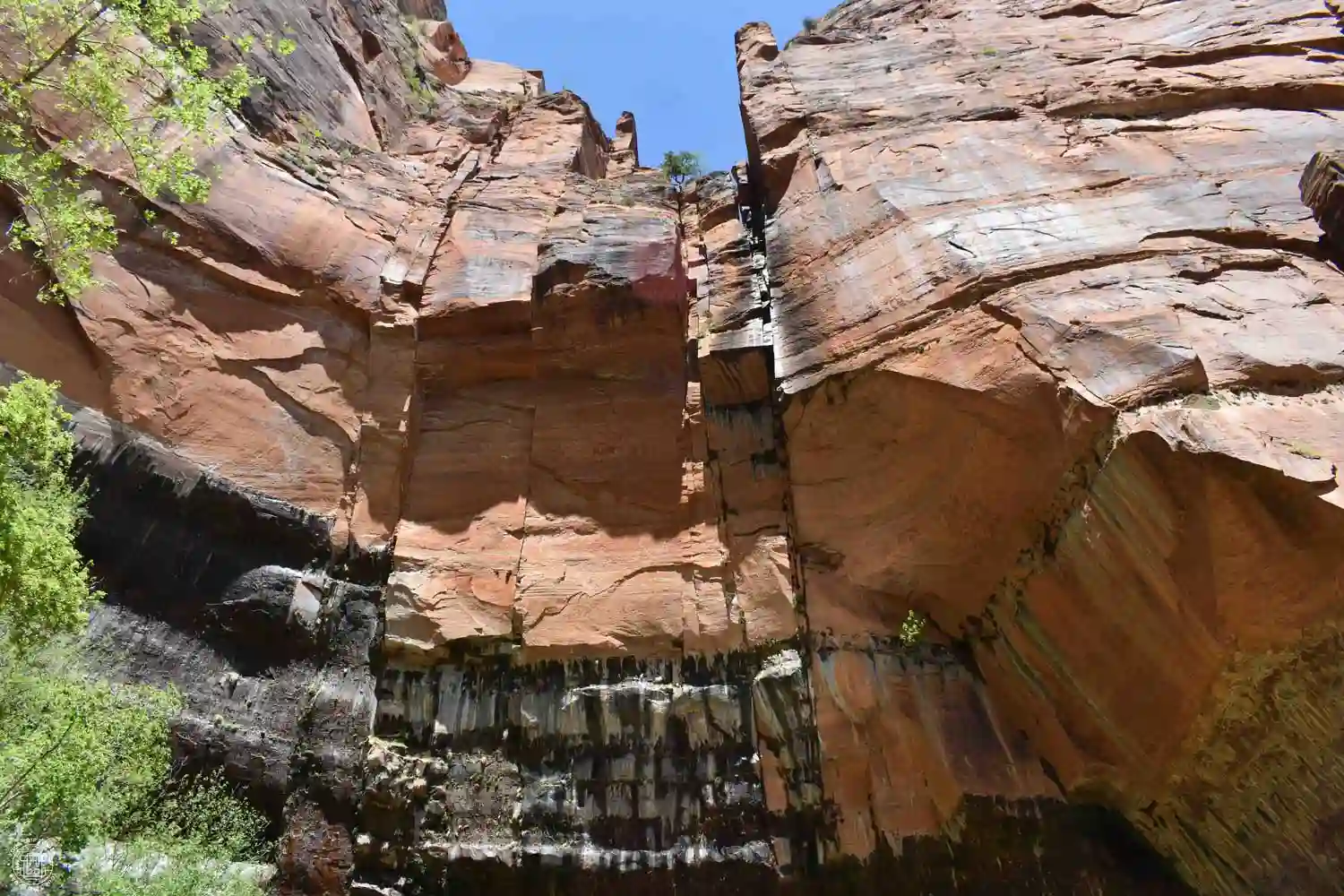
Things to Do in One Day at Zion National Park
If you have one day in Zion National Park, you’ll have time to visit the park’s main viewpoints and go on a short hike, such as the Emerald Pools or the Watchman Overlook. We’ve put together this itinerary assuming you’re coming from Las Vegas and will continue on to Bryce Canyon National Park the next day.
🏨 We recommend staying overnight in Springdale the night before—for example, at the Zion Park Motel.
- Take the Springdale Line and head to the Zion Canyon Visitor Center
- Temple of Sinawava, the last stop on the Zion Canyon Line (🚌 45 min)
- Big Bend. Take the bus again to start your return trip and get off at Big Bend, where you'll find the overlook of this large meander of the Virgin River (🚌 5 min)
- Emerald Pools. Continue by bus to the Zion Lodge stop; from there, the trail leads to these famous pools (🚌 10 min + 🚶🏻 2:30h)
- Court of the Patriarchs. Take the bus to the next stop, where you'll find another beautiful viewpoint (🚌 20 min)
- Zion Canyon Visitor Center. At the end of the day, take some time to explore the visitor center (🚌 20 min).
- Head to your lodging in Springdale, such as the Zion Park Motel.
- The next day, on your way to Bryce Canyon, we recommend stopping at Canyon Overlook (🚗 20 min + 🚶🏻 30 min)
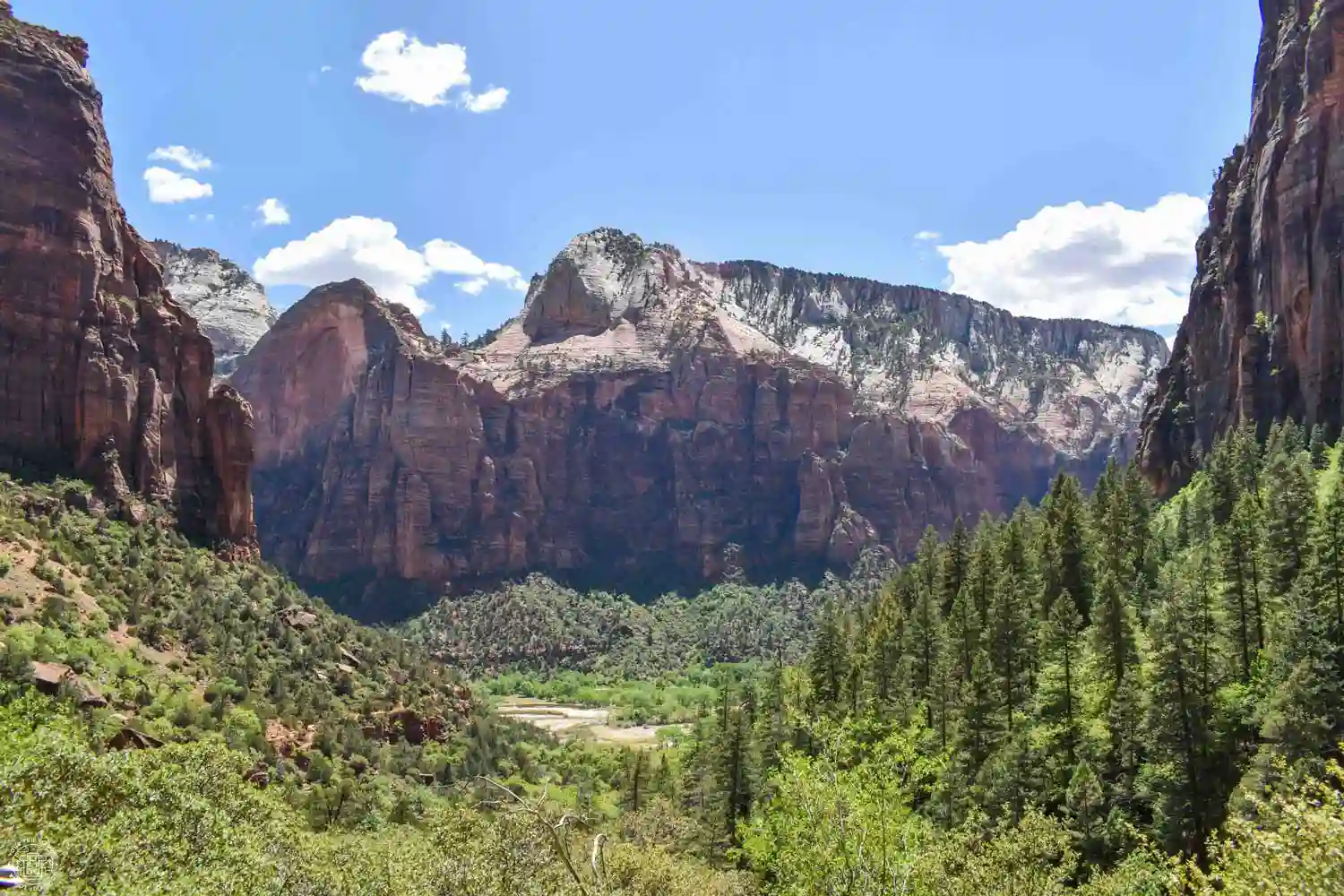
Things to Do in 2 Days at Zion National Park
If you have enough time to spend two days in Zion National Park, we suggest that on the first day you visit the park’s most famous viewpoints and take a short hike, such as the Emerald Pools or Watchman Overlook trails, just as we described in the one-day itinerary.
On the second day, take one of the park's most famous hikes, such as Angels Landing or The Narrows. Don't forget to stop at Canyon Overlook the next day on your way to Bryce Canyon!
🏨 We recommend staying at least 2 nights in Springdale—for example, at the Zion Park Motel.

INTERNET IN THE UNITED STATES
💡 The most convenient way to get internet access in the U.S. is to buy an eSIM—that way, you'll have a connection as soon as you set foot in the country. Plus, local SIM cards in the U.S. are pretty expensive.
💸 We have 2 discounts for your unlimited data eSIM for the US:
⭐5% OFF with Holafly ➡️ Excellent coverage
⭐20% OFF with eSIMFlag ➡️ Best price
🤓 Take a loot at: Best SIMs & eSIMs for traveling to the USA
Things to Do in 3 Days at Zion National Park
If you have 3 days in Zion National Park, you're in luck! That way, you'll be able to visit the best viewpoints in Zion Canyon, go on several hikes, and/or explore less crowded areas of the park.
We recommend that on your first day, you take the opportunity to visit the park’s most famous viewpoints and go on a short hike, such as the Emerald Pools or Watchman Overlook, just as we’ve described in the 1-day itinerary.
On the second day, take one of the most famous hikes, such as Angels Landing or The Narrows, and on the third day, you can either hike the trail you didn't get to the day before or visit less crowded areas like Kolob Terrace or Kolob Canyons.
🏨 We recommend staying at least 3 nights in Springdale—for example, at the Zion Park Motel.
Things to Do Around Zion National Park
The Las Vegas Strip
One of the must-see stops on any road trip along the U.S. Southwest is undoubtedly Las Vegas. A unique city where entertainment, shows, and excess blend with themed hotels, 24-hour casinos, and an energy that’s hard to match. It’s a place you either love or hate, but it’s definitely worth a visit.
👉🏼 Here are all the posts we've written about Las Vegas.

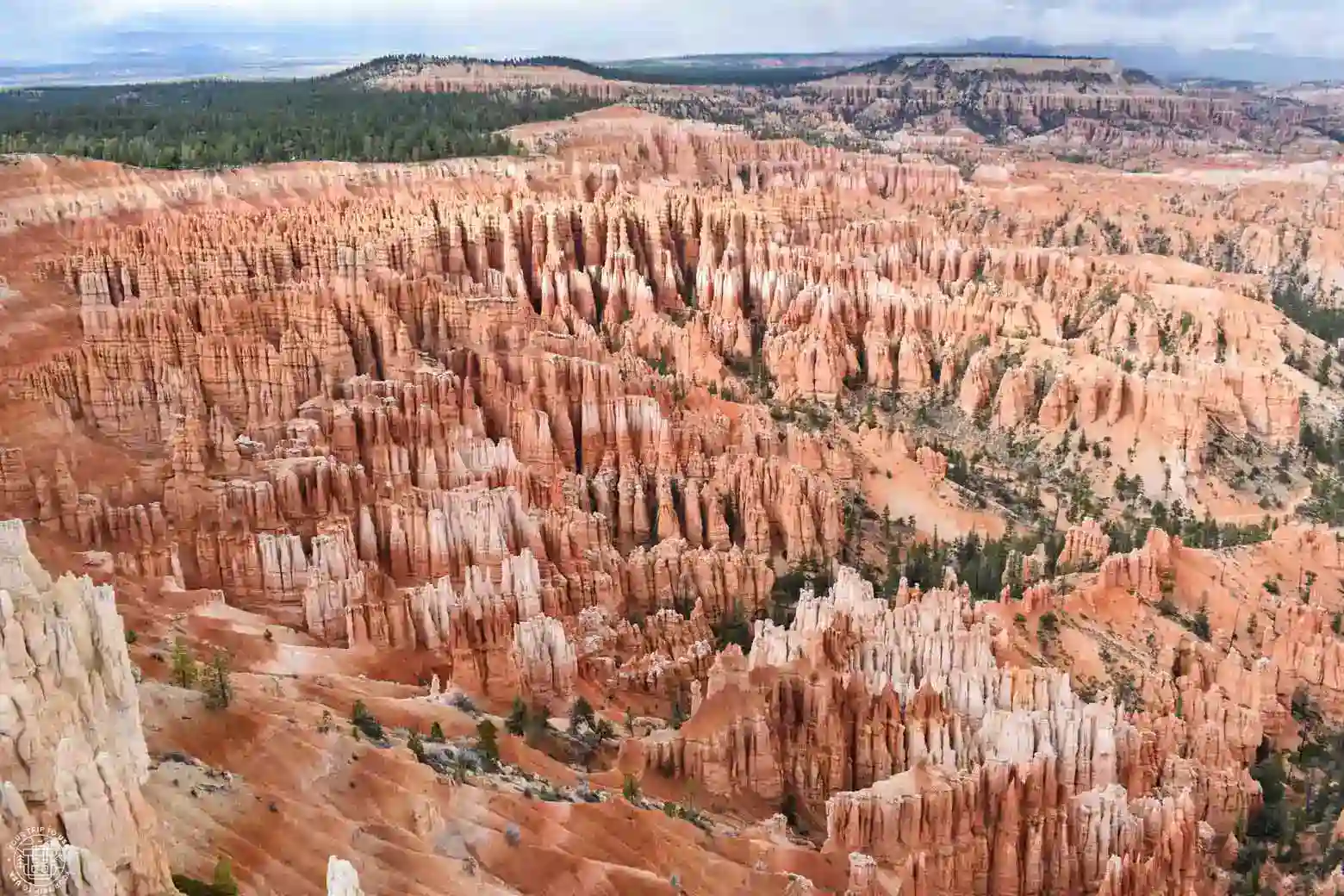
Bryce Canyon National Park
This immense amphitheater, located on one edge of the Colorado Plateau, is famous for its multitude of fairy chimneys—spire-shaped rock formations created by erosion over millions of years.
These formations, known as hoodoos, can reach heights of up to 60 meters and feature a unique combination of colors—ranging from white to red and orange—creating an unforgettable visual effect. You’ll find all the information you need in our guide to Bryce National Park.
Kanarra Falls
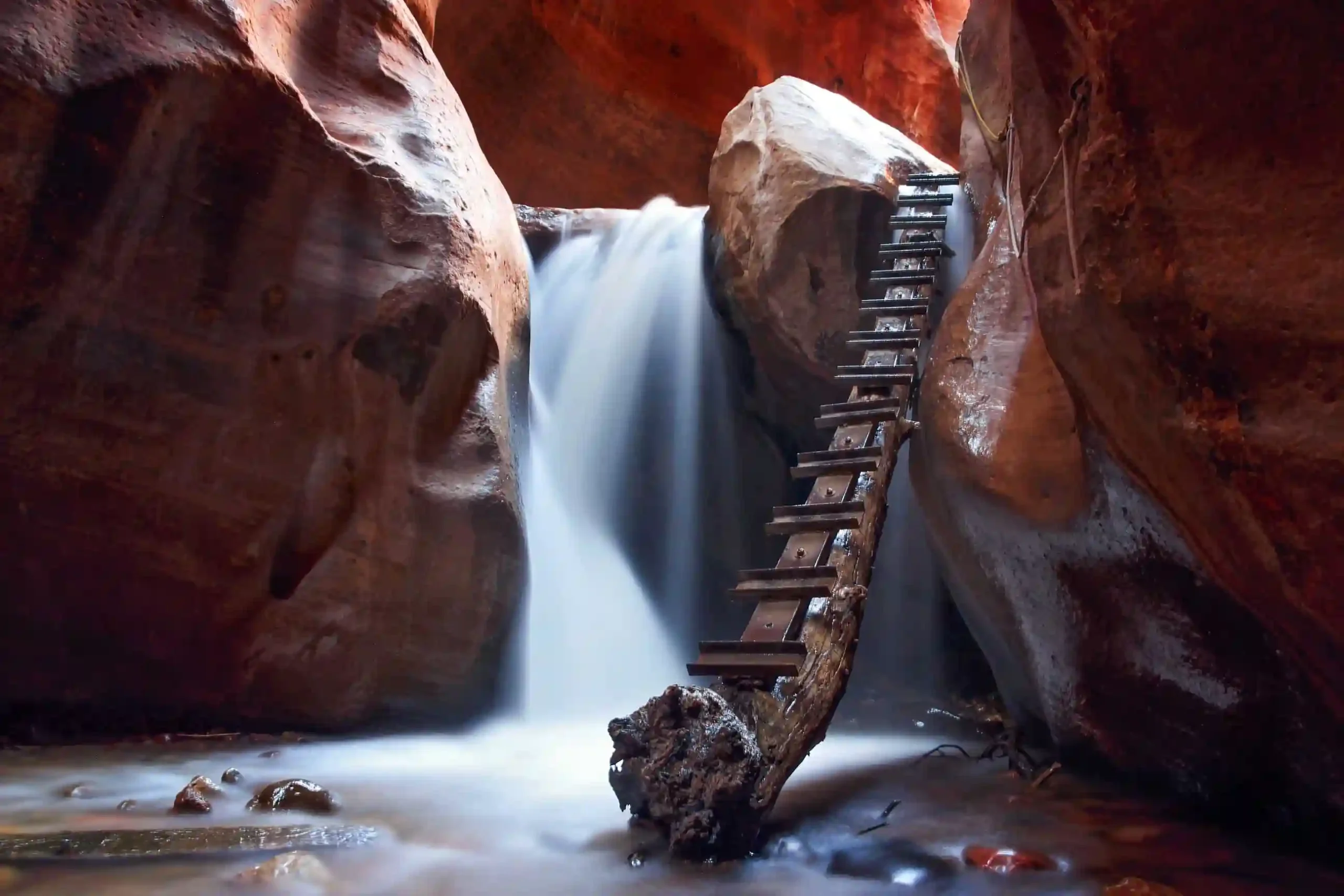
It is a narrow, reddish-rock canyon carved out by a stream and featuring several waterfalls (aka a slot canyon).
The hike, which is 3.7 miles or 6 km (round trip) long, consists of two distinct sections: the first is the approach along a dirt road that’s more than 1.5 miles (2.5 km) long, and the second, which is 0.3 miles (500 m) long, goes through the canyon where the waterfalls are located. In this section, the water may reach your knees, and you’ll need to climb a ladder to reach Upper Kannarra Falls, where the trail ends.
Located in the town of Kanarravile, just 7 miles (11 km) from the Kolob Canyons Visitor Center, it has become a popular destination, which is why the town began charging a fee of $15 per person and limiting access to 200 visitors per day. For more information, please visit their website.
Toquerville Falls
A fantastic double waterfall formed by La Verkin Creek and surrounded by stunning scenery. Just 20 km from the town of Hurricane, these waterfalls offer a refreshing alternative to Zion National Park, though they’re nowhere near as impressive as that park. The only drawback is getting there, as it involves an 5-mile (8 km) drive on a rough dirt road, which requires a high-clearance 4x4.
If you want to visit this marvel and take a refreshing dip, but don't have a high-clearance 4x4, you can book this UTV tour to Toquerville Falls with hotel pickup.

-Meeting point: Hurricane
-Duration: 4 hours
😉 Free cancellation up to 24h in advance
Snow Canyon State Park
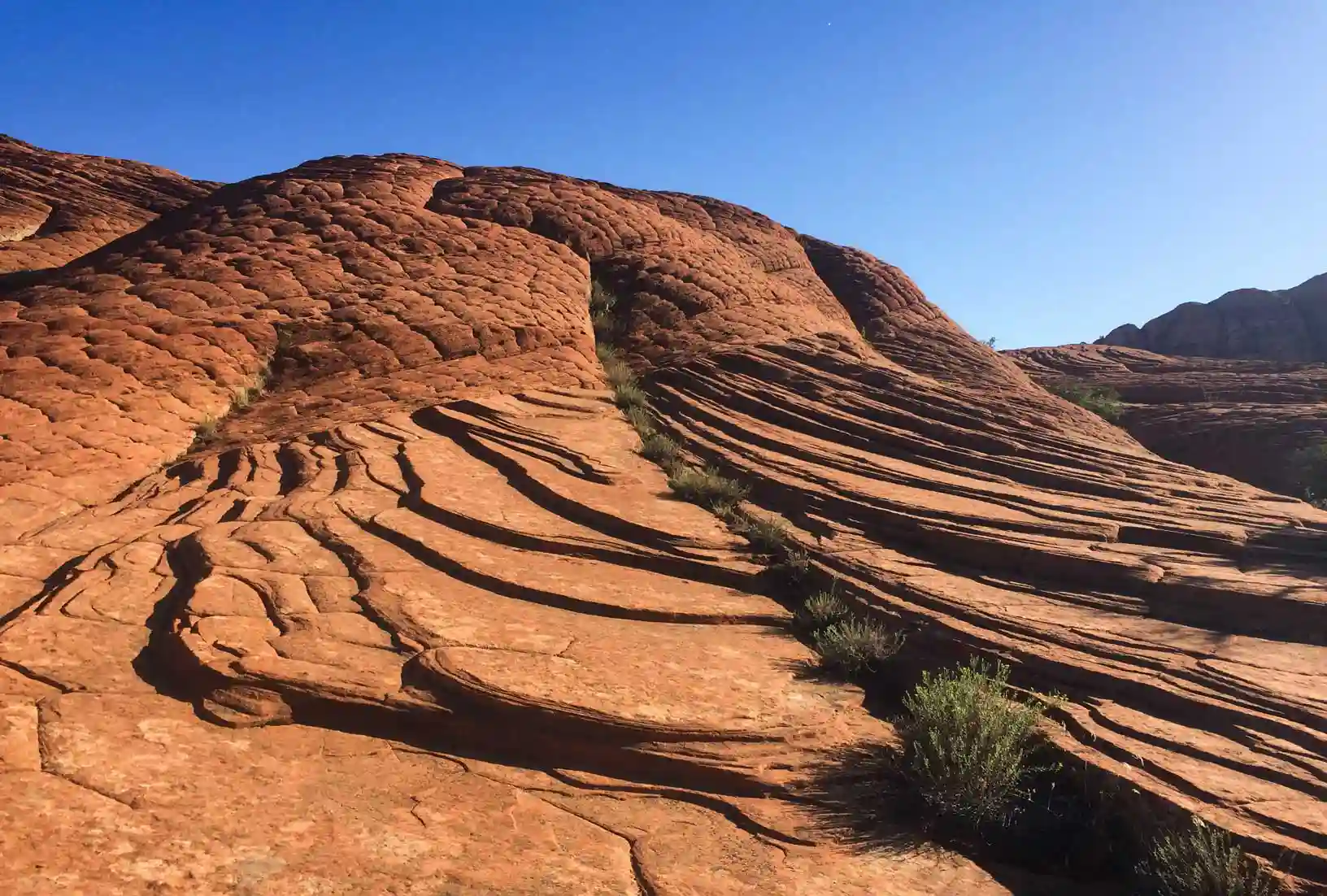
Another of the wonders of this part of Utah is Snow Canyon State Park, a unique blend of towering orange sandstone cliffs, petrified dunes, and black lava flows. In addition, this state park features a multitude of trails that take you to narrow canyons, natural stone arches, petrified dunes, lava flows, and sandstone caves. Other popular activities in the park include biking and rock climbing.
Although its name might suggest otherwise, snowfall here is rare, and the name comes from one of the first European settlers to arrive in the area (Erastus Snow). The entrance fee is $20 per vehicle ($15 for Utah residents).
Red Cliffs National Conservation Area
North of the city of Saint George lies this area of reddish cliffs, which also includes Snow Canyon.
This is a transitional zone between the Mojave Desert, the Great Basin, and the Colorado Plateau. Here you’ll discover cliffs, canyons, arches, and a multitude of rock formations that will leave you speechless, as well as wildlife that’s unique due to its geographic location and geological features.
Sand Hollow State Park
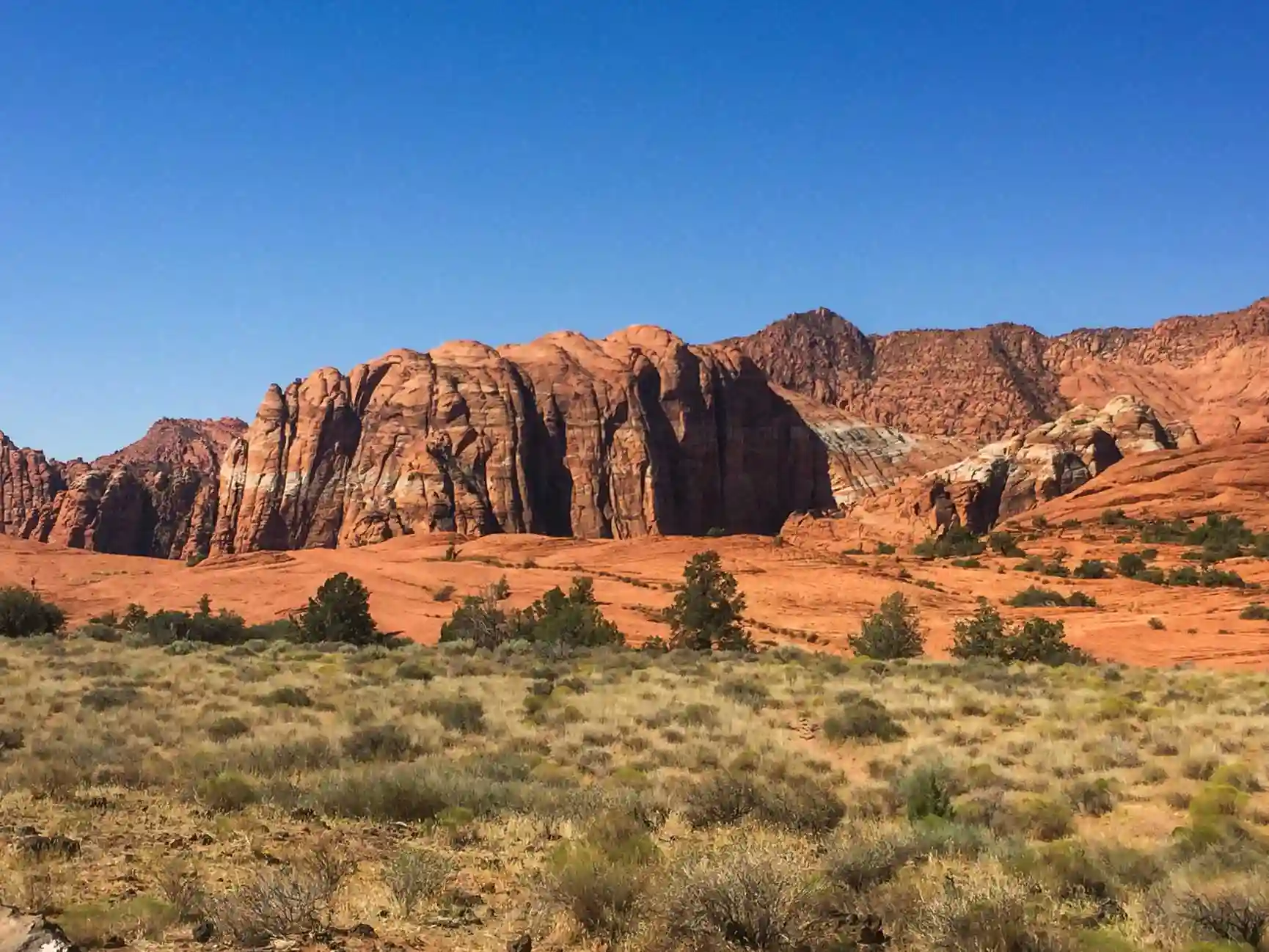
This small state park located south of Saint George is famous for its reservoir, where visitors can enjoy water sports such as kayaking or stand-up paddleboarding, go for a swim, or simply relax on the shore. It’s also known for its orange sand dunes, where you can spot native wildlife such as lizards, rabbits, roadrunners, quail, and snakes, or go on 4x4 trails. To visit, you must purchase a daily pass for $35 per vehicle ($25 if you’re not a Utah resident).

🚐 The U.S. is a paradise for traveling by camper van or motorhome: there are plenty of campgrounds, wonderful places to stay overnight for free, and amenities around every corner.
If you'd like to try this way of traveling, the United States is the place to do it!
💸 And you can save a lot of money on lodging and food!
➡️ We always book through this rental search engine because they work with all the companies and have great deals.
Belly of the Dragon
It is a drainage tunnel carved into the sandstone beneath Highway 89. It gets its name because water and wind erosion have shaped its walls into distinctive forms and textures that resemble a dragon’s scales. Over time, it has become a unique stop for tourists and photographers traveling by road between Page and Zion or Bryce.
Great Chamber
This large cavity in golden sandstone, with a massive sand dune inside, is a very special and beautiful place that has become popular on social media. But don’t be fooled—to get here, you’ll need a sturdy 4x4 with plenty of ground clearance, like a Jeep Wrangler or a UTV, to navigate the 9-mile (15 km) stretch of deep sand.
Keep in mind that once you're there, to get that famous view, you'll need to climb the dune and reach the center of the cavity. Look toward the cave's opening, and you'll have the perfect photo!
If your vehicle doesn't meet these requirements or if you'd prefer to be driven by a professional, you can book this guided tour to the Great Chamber from Kanab, the nearest town.
-Meting point: Kanab
-Duration: 3 hours
😉 Free cancellation up to 24h in advance
Moqui Cave
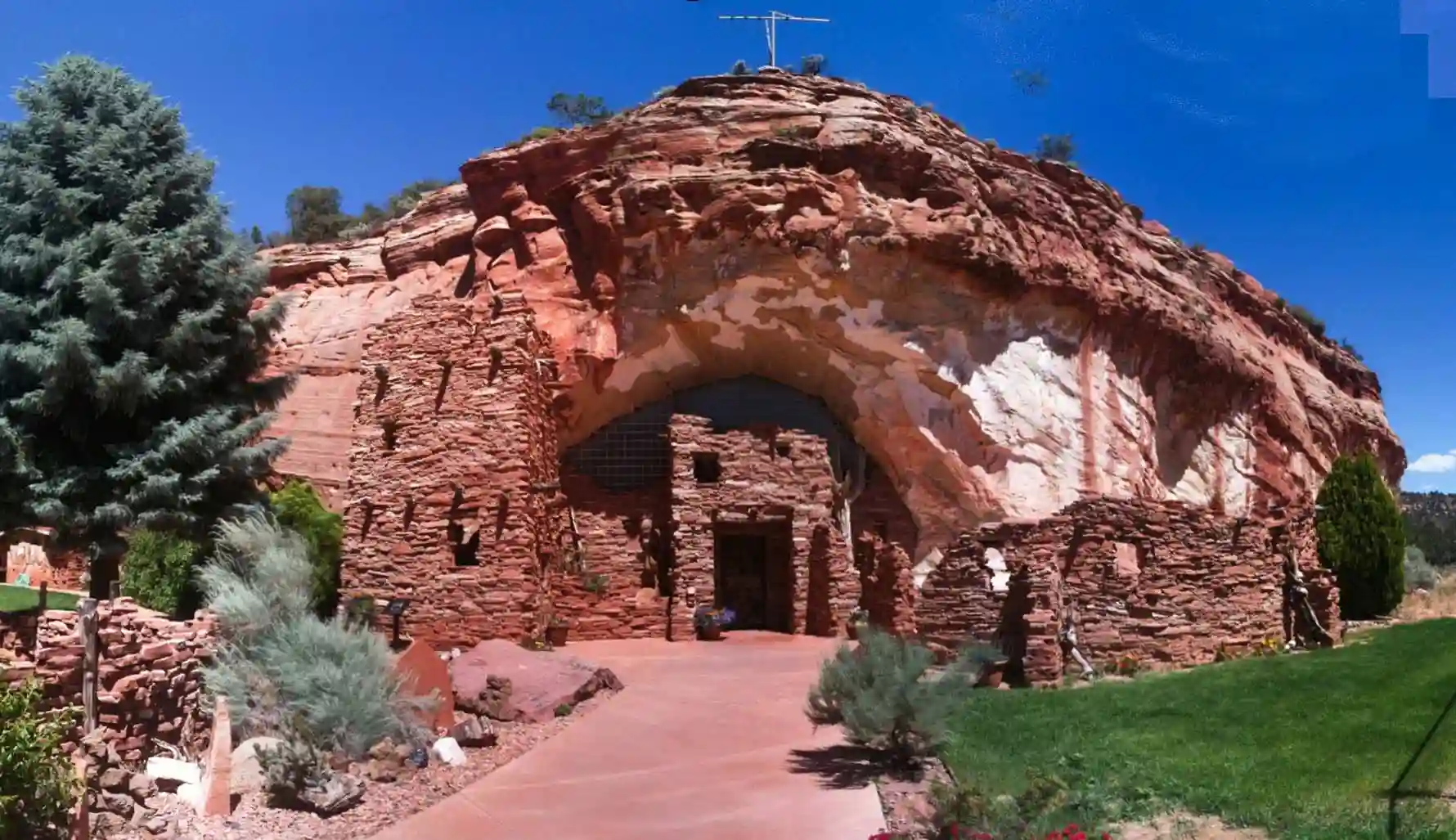
A quick stop at this interesting spot off Highway 89, north of Kanab. It is a cave naturally formed by erosion of the sandstone, where archaeological remains have been found; during the 20th century, it served as a speakeasy during Prohibition, as well as a tavern and dance hall.
Coral Pink Sand Dunes State Park
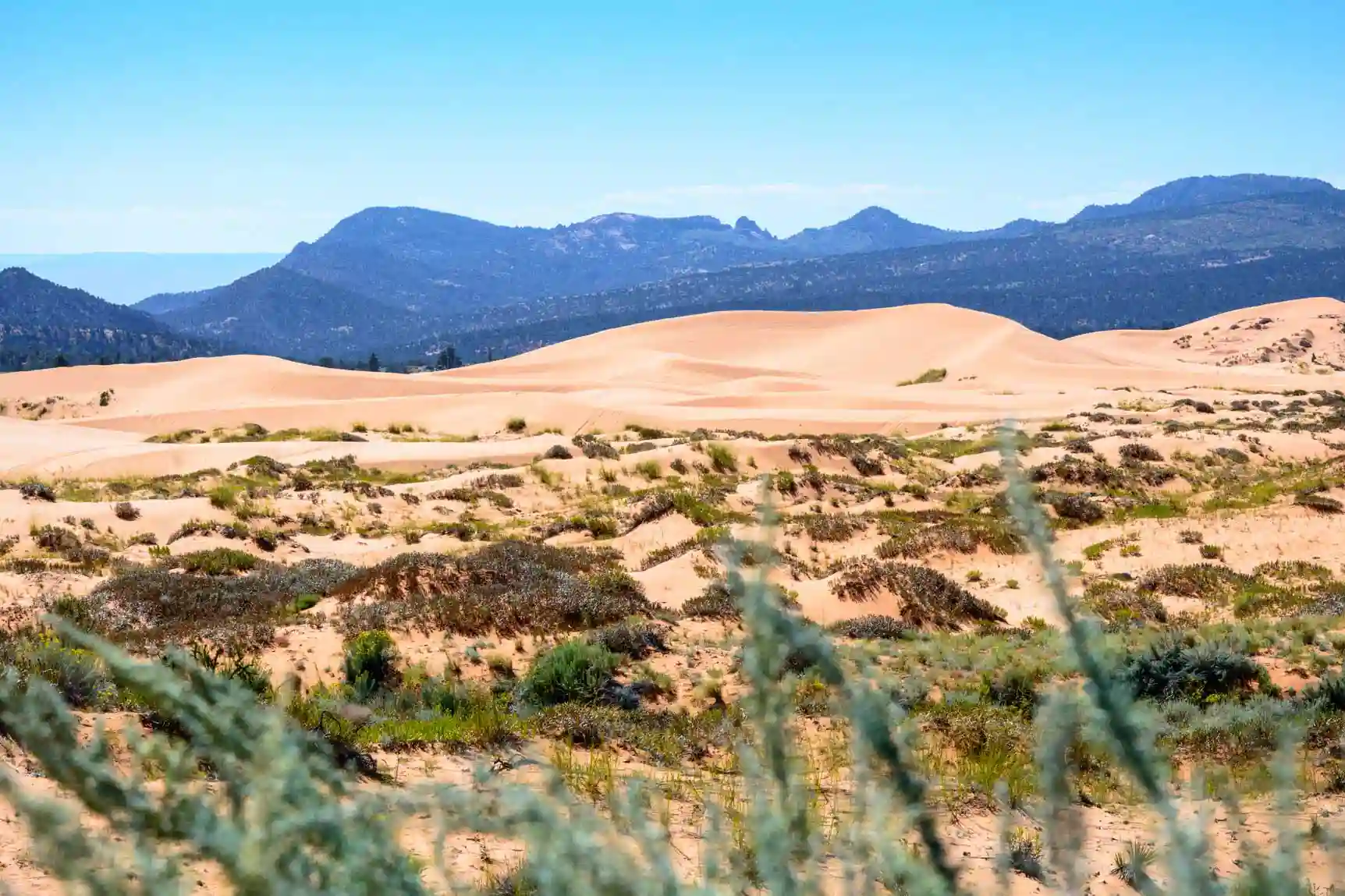
This state park, as its name suggests, protects a large area of pink-colored dunes between Kanab and the turnoff to Zion Canyon. The dunes are estimated to be between 10,000 and 15,000 years old, and the entrance fee is $15 per vehicle. The most popular activities in the area are hiking, sandboarding, and 4x4 tours.
👉🏼 If you want to explore the dunes, you can book this utv tour from Kanab, which includes sandboarding and a visit to a slot canyon.
Things to Do Map on Zion National Park
We've put together this super-detailed map showing the things to Do in Zion National Park, how to get there, lodging options, visitor centers, and more.
Frequently Asked Questions About Things to Do in Zion National Park
What are the must-see attractions at Zion National Park?
The must-see attractions at Zion National Park include Angels Landing, The Narrows, Emerald Pools, Riverside Walk, Canyon Overlook Trail, Zion Canyon Scenic Drive, and the overlooks scattered throughout the park. All of them offer some of Utah’s most spectacular scenery.
What to See in Zion National Park in One Day?
If you only have one day, the best thing to do is explore Zion Canyon using the free shuttle, walk along Riverside Walk, visit Emerald Pools, and hike the Canyon Overlook Trail. If you've obtained a permit and are in good physical shape, you can hike Angels Landing.
How many days does it take to see Zion National Park?
Ideally, you should set aside two to three days to explore the main trails and enjoy the park at a leisurely pace. That way, you’ll also be able to visit lesser-known areas like Kolob Canyons.
What is the most beautiful spot in Zion National Park?
Although many people consider The Narrows to be the most beautiful spot in Zion, in our opinion, Angels Landing is the most impressive of all. The views from Canyon Overlook and the lookouts along Zion Canyon are also not to be missed.
Which trails are must-sees in Zion National Park?
The most popular trails are Angels Landing, The Narrows, Riverside Walk, Emerald Pools, Watchman Trail, Canyon Overlook Trail, and Observation Point (when access is available).
When is the best time to visit Zion National Park?
Spring and fall are the best seasons thanks to their mild temperatures and ideal conditions for hiking. In the summer, there are more visitors, and the heat can be quite intense. If you plan to hike The Narrows, the water temperature is more pleasant in the summer.
We hope this post on Things to Do in Zion National Park helps you enjoy this wonderful place!
Doc James, Jacob Ufkes jakeufkes, joannapoe, Flickr User respres, dconvertini, NPS Photo, Andrew K. Smith, CC BY 2.0 by Wikimedia Commons