


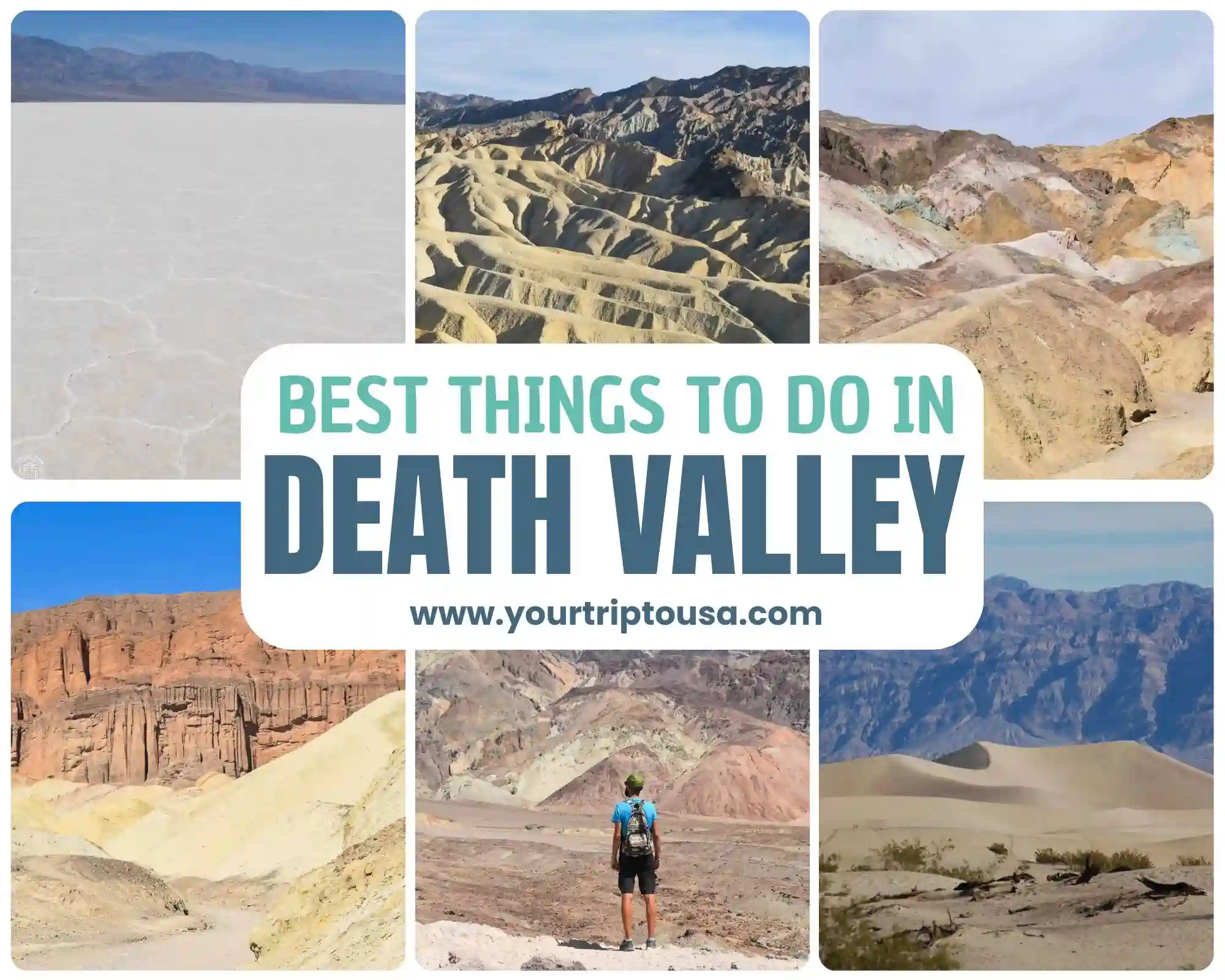
Places to visit in Death Valley: 10 must-sees
Death Valley is a huge national park, in fact it's the largest in the lower 48. With this information, you can imagine that the distances within the park are very long: it can easily take an hour to drive from one point to another, even if they appear to be close together on the map.
💡Recommended: How to visit Death Valley | Guide + Tips + Map |
The key to visiting this park is to choose your stops wisely based on the time you have available, calculating distances and taking into account the time of year you're visiting so you don't die trying🔥 Later on, we'll suggest you what to see in Death Valley in half a day, 1 day, and 2 days, but these are the 10 must-see sights you shouldn't miss:
1. Furnace Creek Area
Furnace Creek is the heart of the park and where the visitor center is located. Here you can stop to buy your ticket or annual pass, register your visit, and take the opportunity to see the different exhibits and explanations about Death Valley (they're very interesting!). You can also find out about possible closed routes or recommendations from the Rangers, fill up your water bottle, and take a legendary photo with the thermometer at the entrance.
In this area, you'll also find some of the best hotels to stay in Death Valley, such as The Inn at Death Valley or The Ranch at Death Valley, shops, the Borax Museum, a gas station with exorbitant prices, and several restaurants (The Last Kind Words Saloon has a spectacular atmosphere).

DO YOU NEED A RENTAL CAR IN THE UNITED STATES?
Take a look at this search tool and get the best price!
2. Badwater Basin
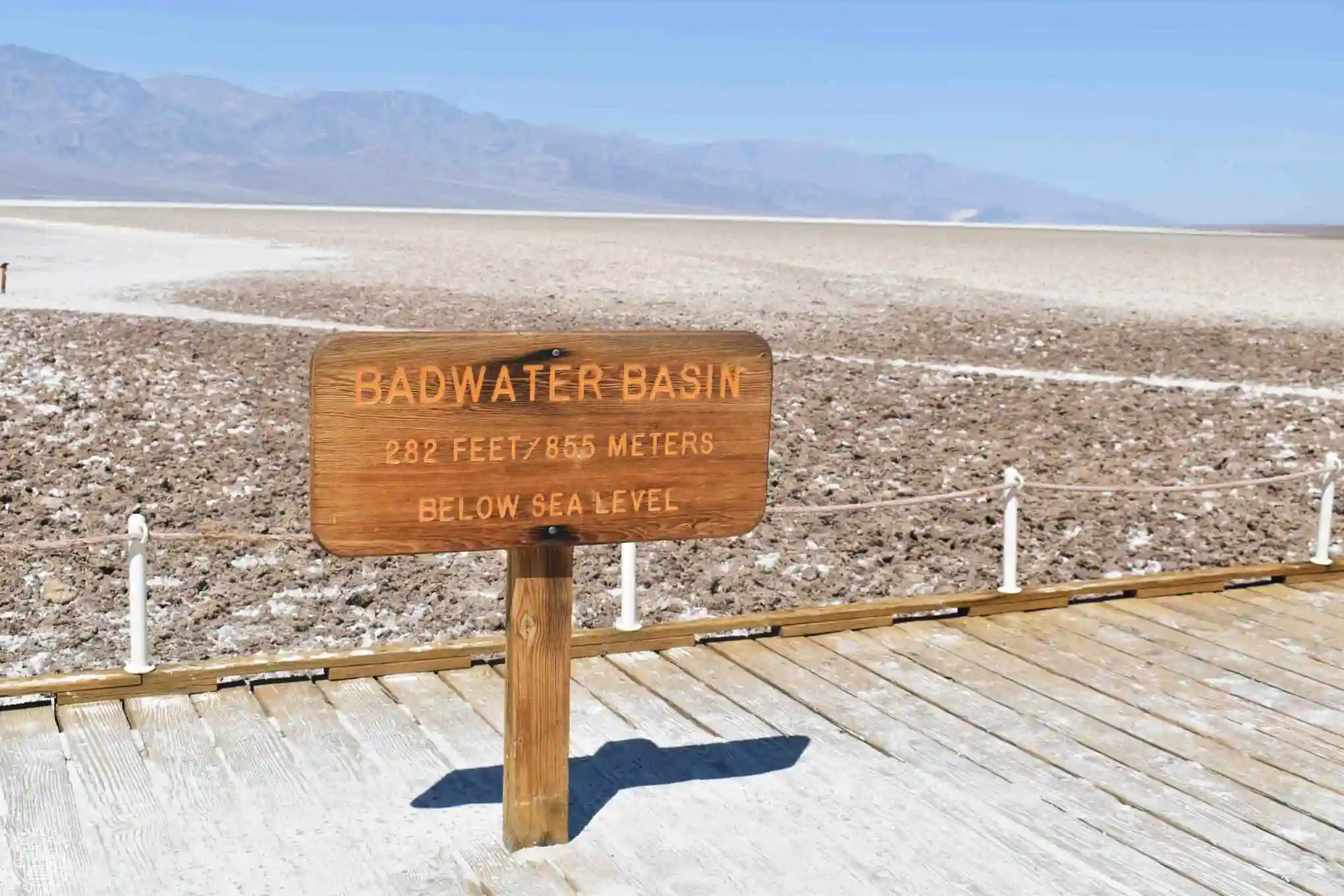
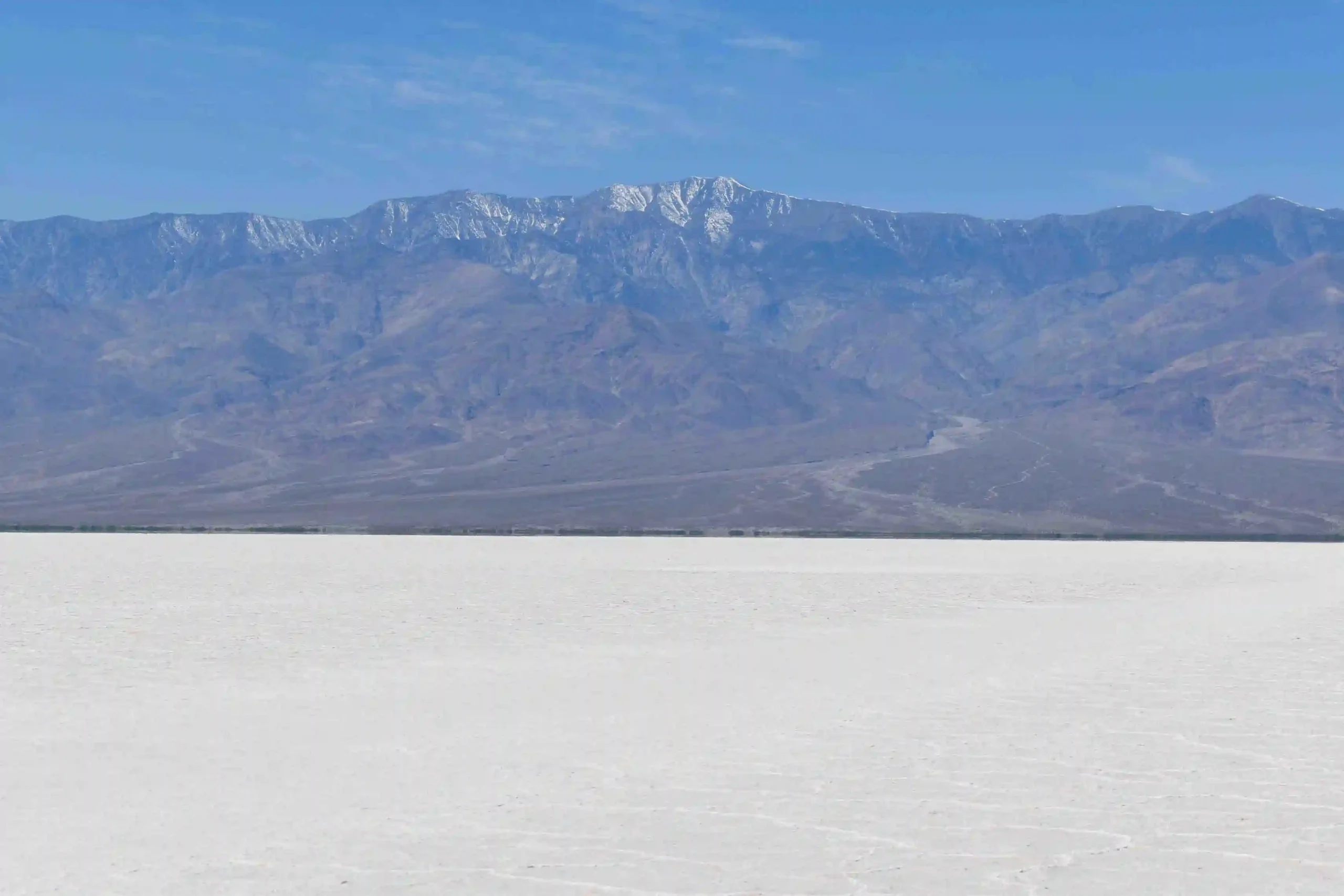
The most legendary place in Death Valley is undoubtedly Badwater Basin for one simple reason: it's 86 meters (282 feet) below sea level and is the lowest point in North America. When you arrive, look towards the mountains next to the parking lot (the Black Mountains), look up and find the small sign that says Sea Level, which indicates the level of the sea. You'll be amazed when you see how low you are!
From here, you can also see Telescope Peak, the highest point in Death Valley at 3,368 meters (11,040 feet). Nowhere else in the world you can see such a difference in altitude!
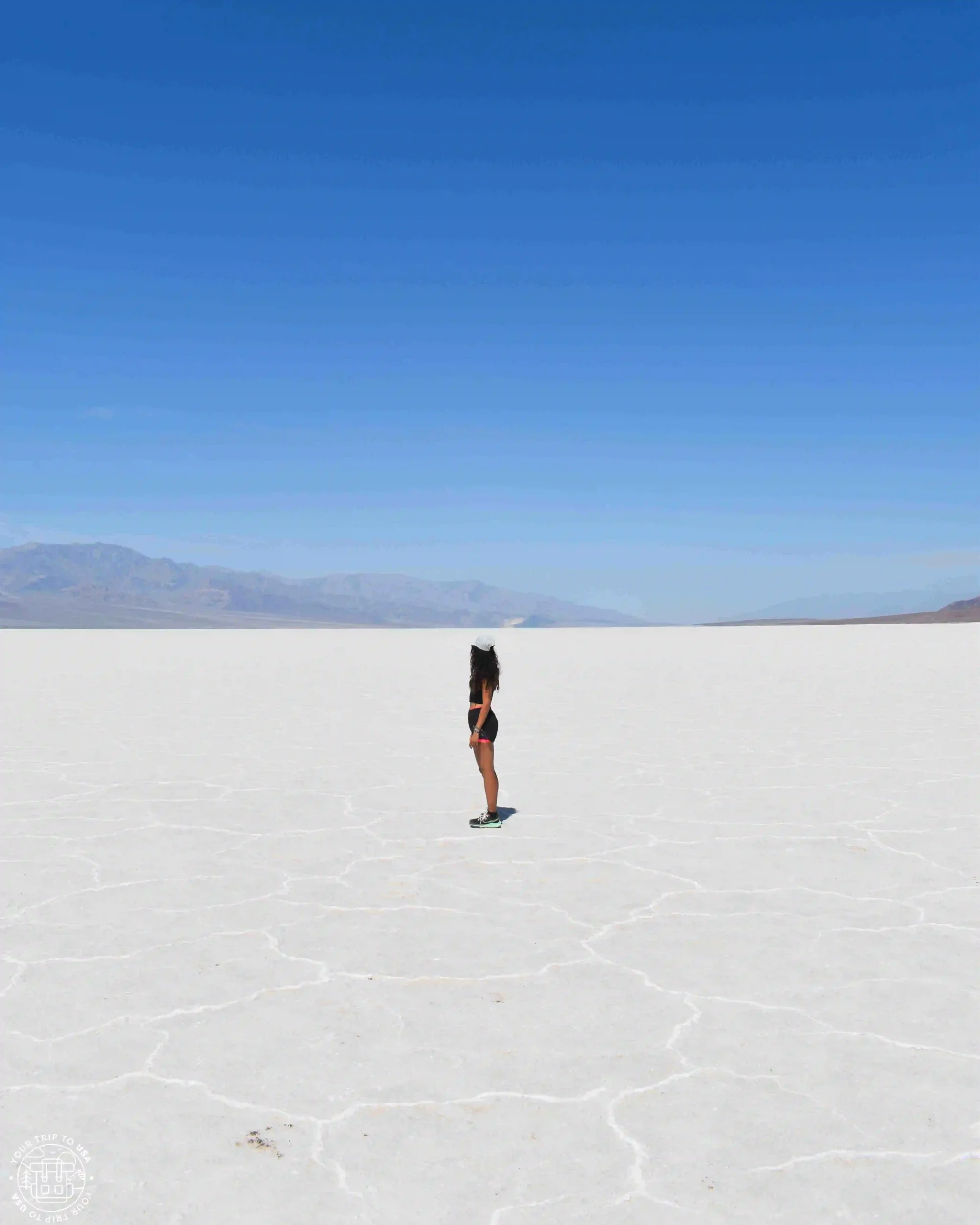
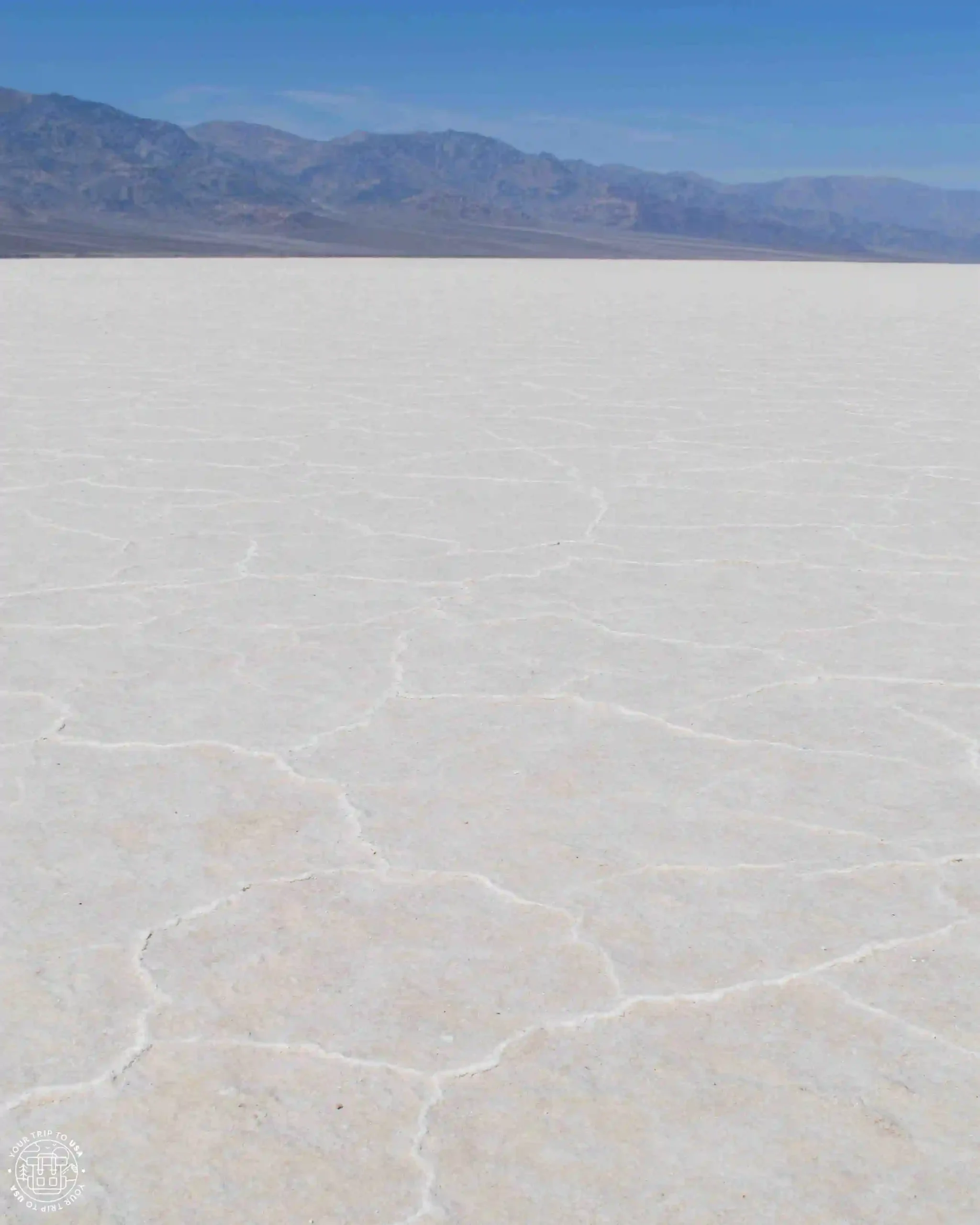
The Badwater Basin salt flat is huge, covering an area of 518 km2 (200 square miles). It's fascinating to see the geometric polygons of salt that form when groundwater rises and evaporates on the surface. To do this, we recommend that you move away from the initial walkway, where everyone congregates and where the salt is quite damaged by footsteps. Further back, there is no one around and you can enjoy a spectacular white and infinite landscape.
Also take note of the natural spring at the beginning of the walkway (it may be dry if you visit in the height of summer). 🐌 Did you know that there is a snail endemic to this water? An animal species that you won't find anywhere else in the world! And let's tell you the origin of the name Badwater Basin: a surveyor stopped here with his mule to give it water, but the animal refused to drink because it was so salty. Thinking that it was because the water was bad, he named the place "Badwater."
3. Natural Bridge
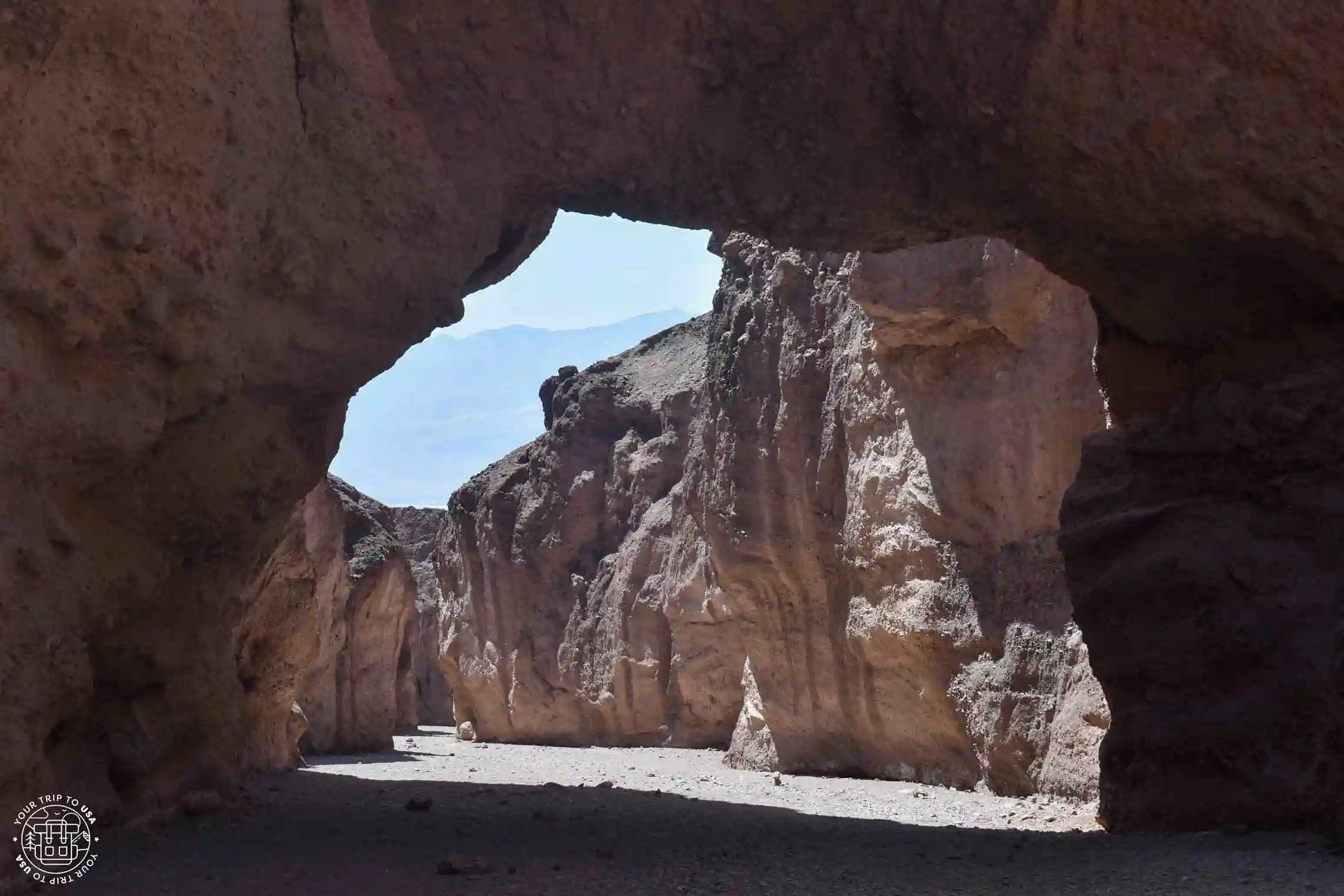
The hike to Natural Bridge is short, easy, and ends at a beautiful spot. What more could you ask for? To get there, take a detour from Badwater Road onto Natural Bridge Road, a 2.5 km (1.5 mi) unpaved road. It's all uphill and has a few potholes, but you can drive it in a normal car without any major problems.
The parking lot is an attraction in itself, as it offers beautiful views of Badwater Basin and the surrounding mountains. From here, you only have to walk 0.5 km (0.3 mi) through a canyon to reach Natural Bridge, an 11-meter (35 ft) natural arch connecting both walls of the canyon and formed of rock, gravel, and sediment. The first few meters are in full sun, but once you enter the canyon, there is more shade.
As you walk, take note of the canyon walls, adorned with traces left by waterfalls during the rare moments when it rains in Death Valley. If you feel like continuing, from the natural bridge you can walk a few more steps along the canyon until you reach the end, where you'll find the largest dry waterfall.
4. Devils Golf Course
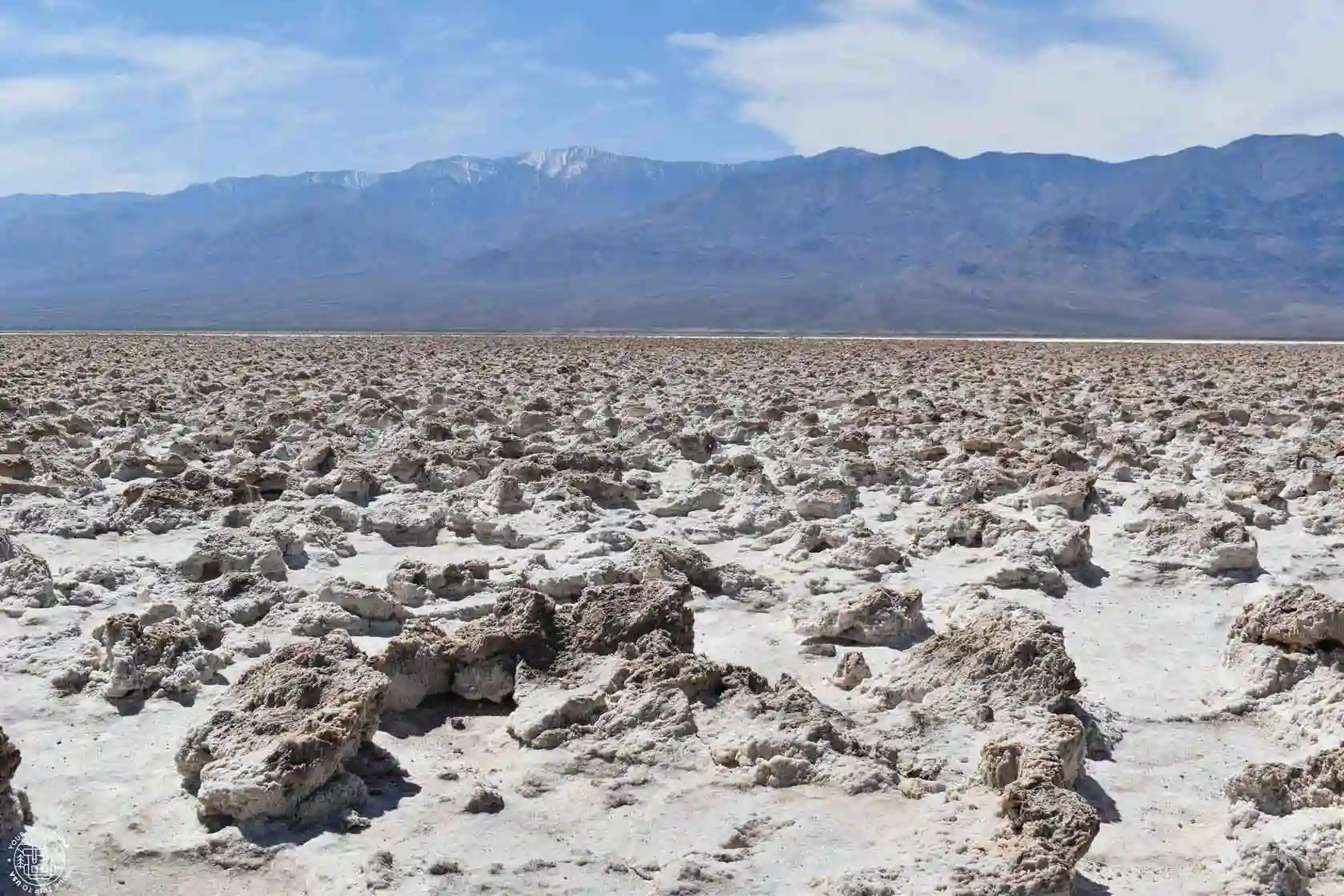
Another 2 km (1.2 mi) unpaved detour from the main road takes you to Devils Golf Course, a short but interesting stop. At first glance, it may seem like just another place with rocks, but in reality, the formations are the result of salt eroded by wind and rain, creating jagged rocks covered with salt crystals. The name of the place comes from the fact that they say "only the devil could play golf in a place like this." 🤣
Be careful when touching these rocks and, above all, don't walk on them, as you could fall and they are like razor blades! If you listen carefully, you will hear small "cracks," which are nothing more than millions of salt crystals breaking as they expand and contract with the heat.
5. Artists Drive Scenic Loop
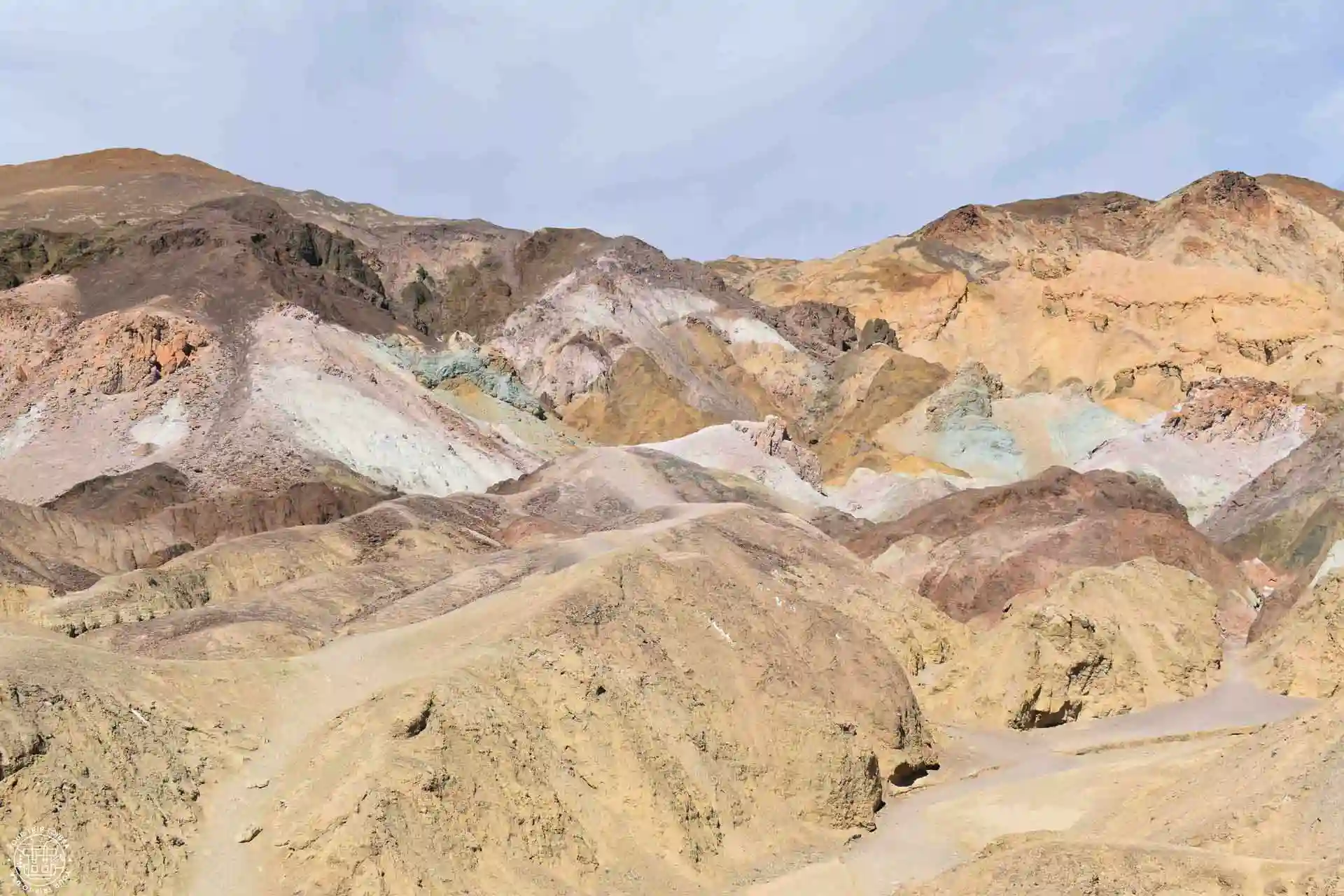
Driving along the scenic Artists Drive Scenic Loop is one of the essential things to do in Death Valley. This 14-kilometer (9 mi) semi-circular road is a marvel, taking you through hills of different colors formed by volcanic sediment deposits. It's almost like a Martian landscape!
⚠️ This is a one-way road with length restrictions, so if you're traveling by RV, the maximum length allowed is 7.6 meters (25 ft), as there are sharp curves and uneven surfaces.
During the tour, we recommend making two stops. One of them is at Artists Drive Hill, which you reach after walking a few steps uphill along a gravel path that ends at a viewpoint with spectacular views of colorful hills.
Finally, the Artists Palette is one of the most famous spots in the park, as the range of colors you can see here resembles a painter's palette: red, yellow, blue, pink, green, orange... Here, volcanic minerals from eruptions underwent chemical alterations due to water, heat, and oxygen, creating components such as iron, aluminum, magnesium, green chlorite, and hematite.
🎥 If you're a Star Wars fan, this is one of the locations where Episode IV - A New Hope and Episode VI - Return of the Jedi, were filmed.
6. Golden Canyon
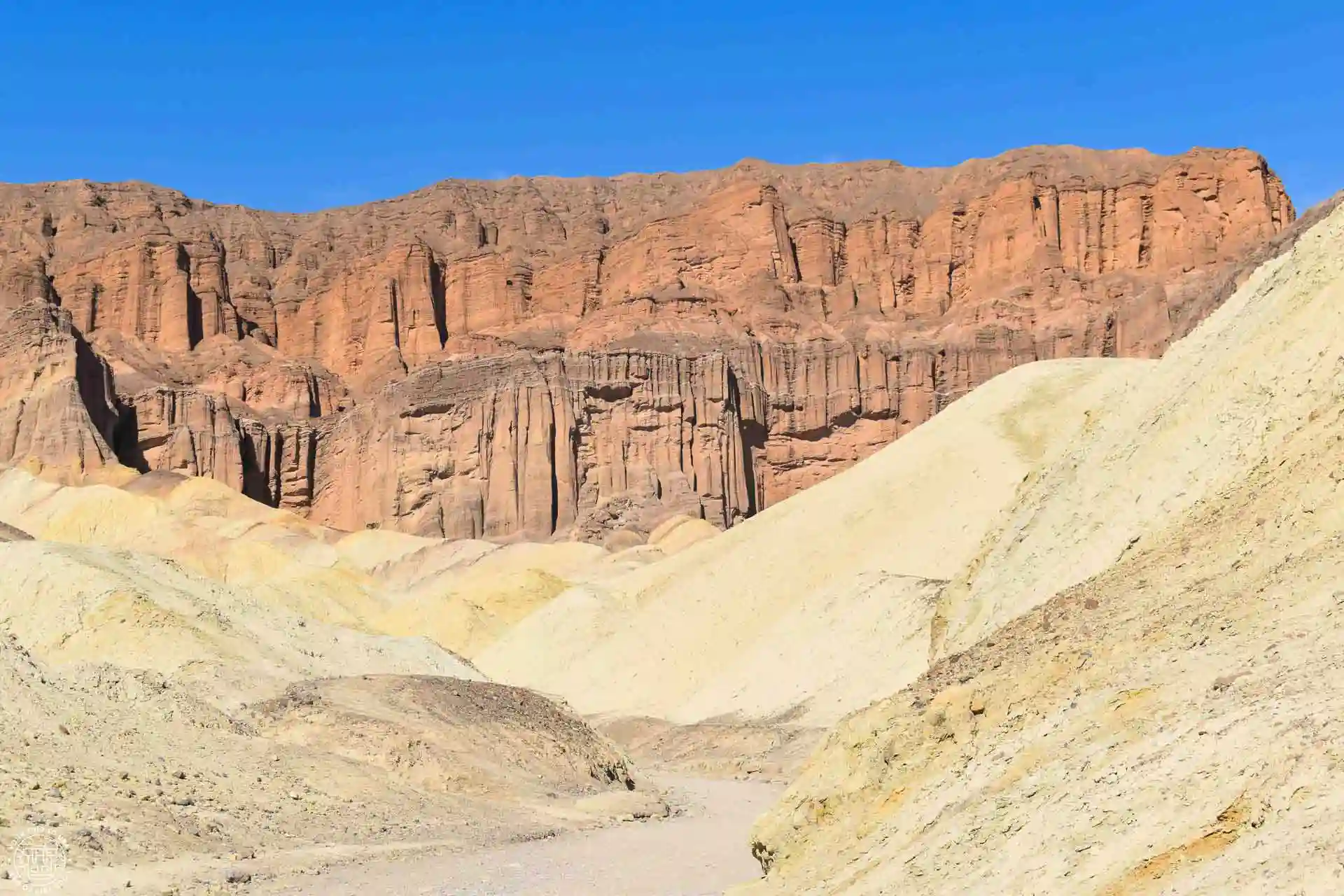
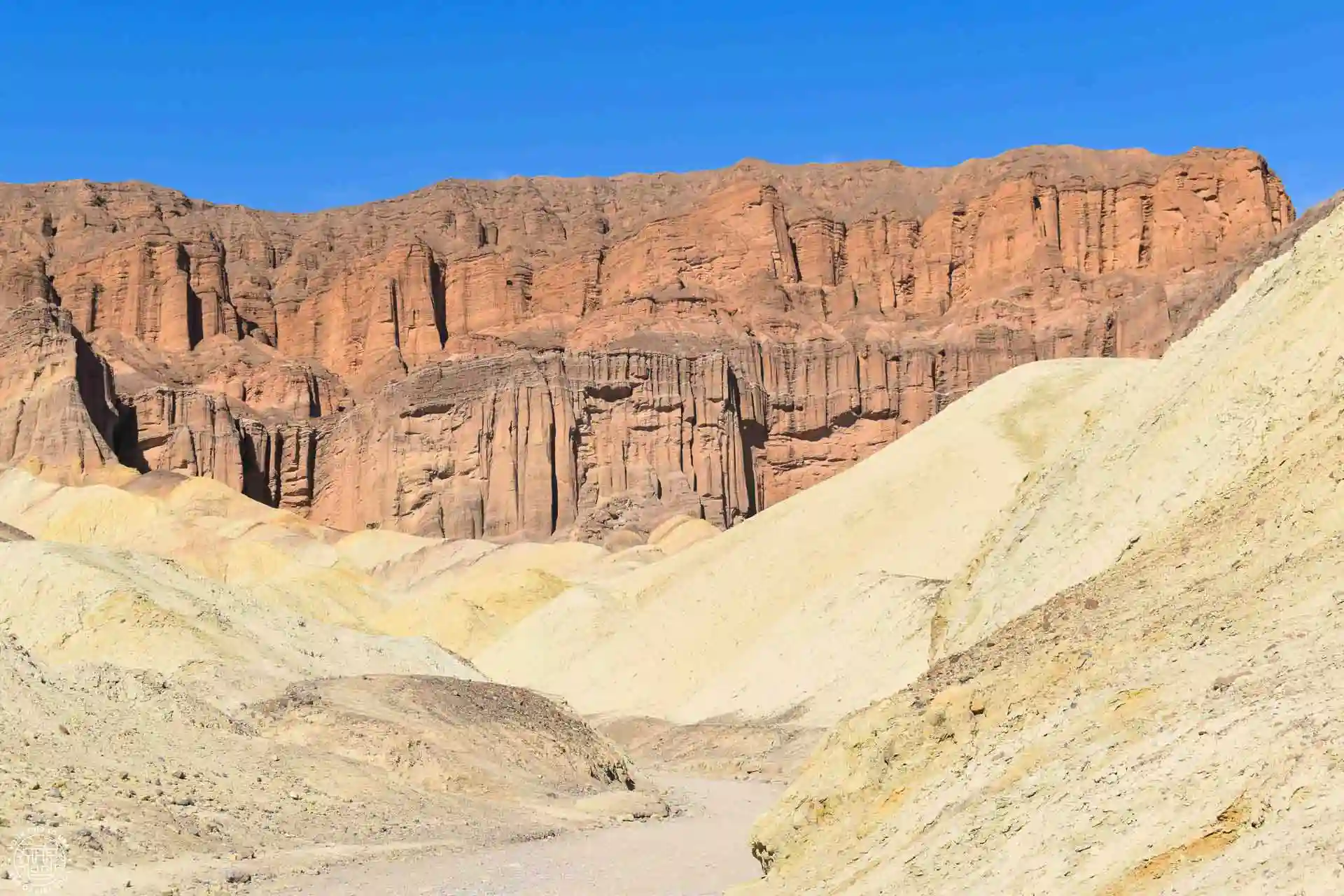
The route through Golden Canyon is undoubtedly the most popular hikes in Death Valley, as it's close to Furnace Creek, relatively short, easy, and beautiful. It's a 5 km ( 3 mi) round trip that takes you through a canyon with yellow walls and ends at Red Cathedral, a rock formation that is red due to the iron oxide it contains. Towards the end of the route, the contrast between the yellow and red is stunning. 😍
If you're feeling energetic, this trail connects to others, allowing you to take longer routes. One of these is the Gower Gulch Loop, which is 7 km (4.3 mi) in total and takes you back to the same parking lot. Another option is to take the detour that leads to Zabriskie Point, which adds 2.5 km (1.5 mi) to the one-way trip.
When is the best time of day to do this hike? The colors are most intense when the sun is high in the sky and there are no shadows in the canyon. However, this is also when it's hottest and when you'll find almost no shade to shelter in along the way (we speak from experience). If you do what we did, bring plenty of water or a drink with electrolytes—we almost had a heat stroke!
7. Zabriskie Point
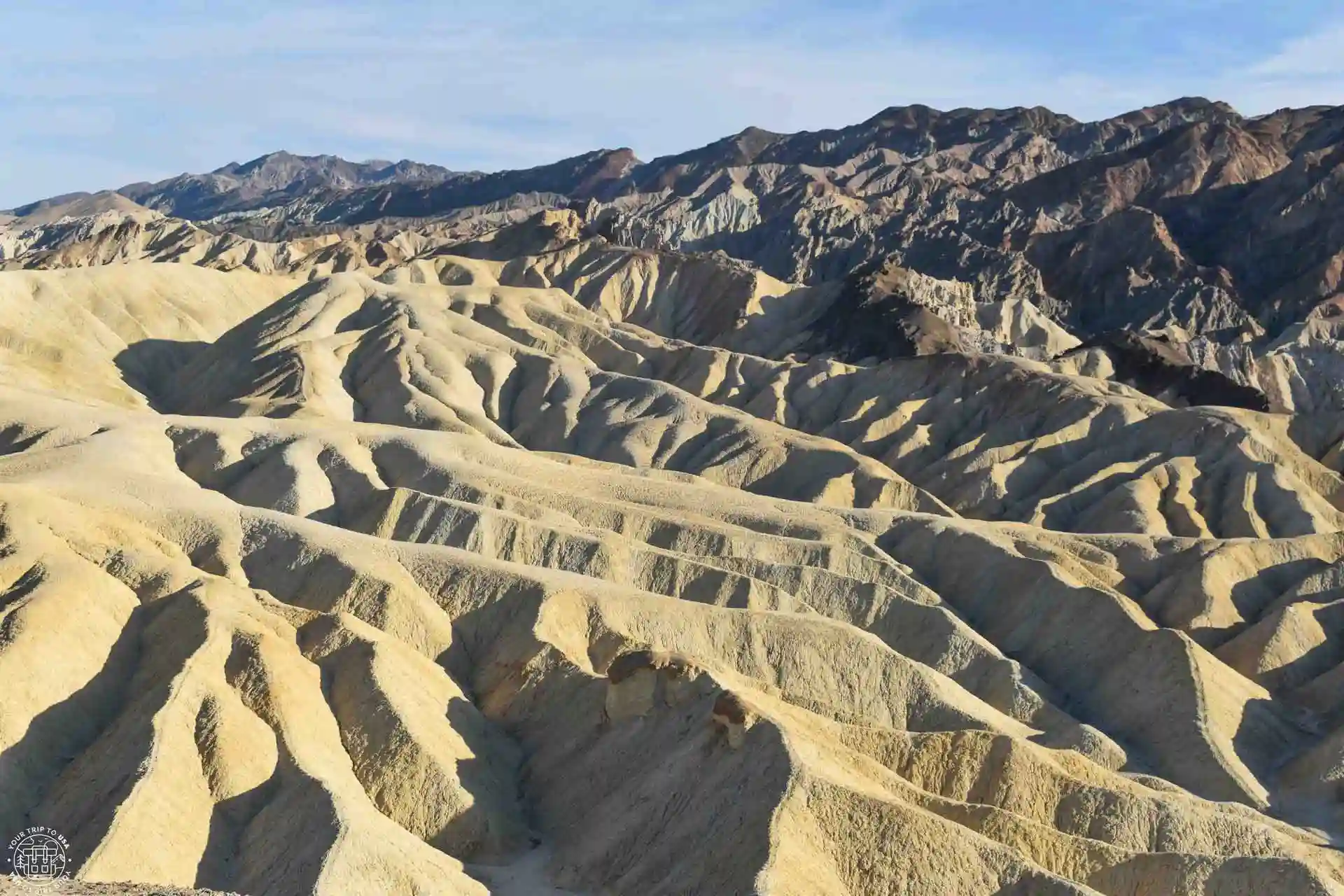
The most iconic view of Death Valley is from Zabriskie Point, a very popular viewpoint at sunrise and sunset.
From the parking lot, you only have to walk 300 meters (0.19 mi), from where you'll have breathtaking views of yellow and brown hills that have been shaped by the force of water over many years. In the distance, you can see the salt flats and the impressive mountains that surround them, which may be snow-capped depending on the time of year.
You'll surely notice a very pointed hill that stands out above the rest and is especially illuminated during sunrise and sunset. This is Manley Beacon, named after one of the pioneers of the Gold Rush.
If you feel like it, the Badlands Loop starts at the viewpoint, a 4.3 km (2.7 mi) circular hike that takes you through golden hills and canyons.
8. Dante's View
If Zabriskie Point has the most iconic views of Death Valley, Dante's View has the most epic. From here, you'll enjoy a magnificent view of the Death Valley salt flats and the Panamint Range in the background, as it's located 1,700 meters (5,575 ft) above Badwater Basin. 🎥 If you're a Star Wars fan, this view may remind you of the one in Episode IV - A New Hope: it's Mos Eisley!
The downside of this place is that it takes quite a long time to get there, as you have to take a 21 km (13 mi) secondary road, so you should allow about 45 minutes for the round trip (plus the time you spend at the viewpoint).

FROM LAS VEGAS
-Duration: 10 hrs
-What is included? Hotel pick up & drop off, transport, guide, drinks and national park permit
-Places to visit: Death Valley Nat Park and Rhyolite Ghost Town
😉Free cancellation up to 24 hours in advance
9. Mesquite Flat Sand Dunes
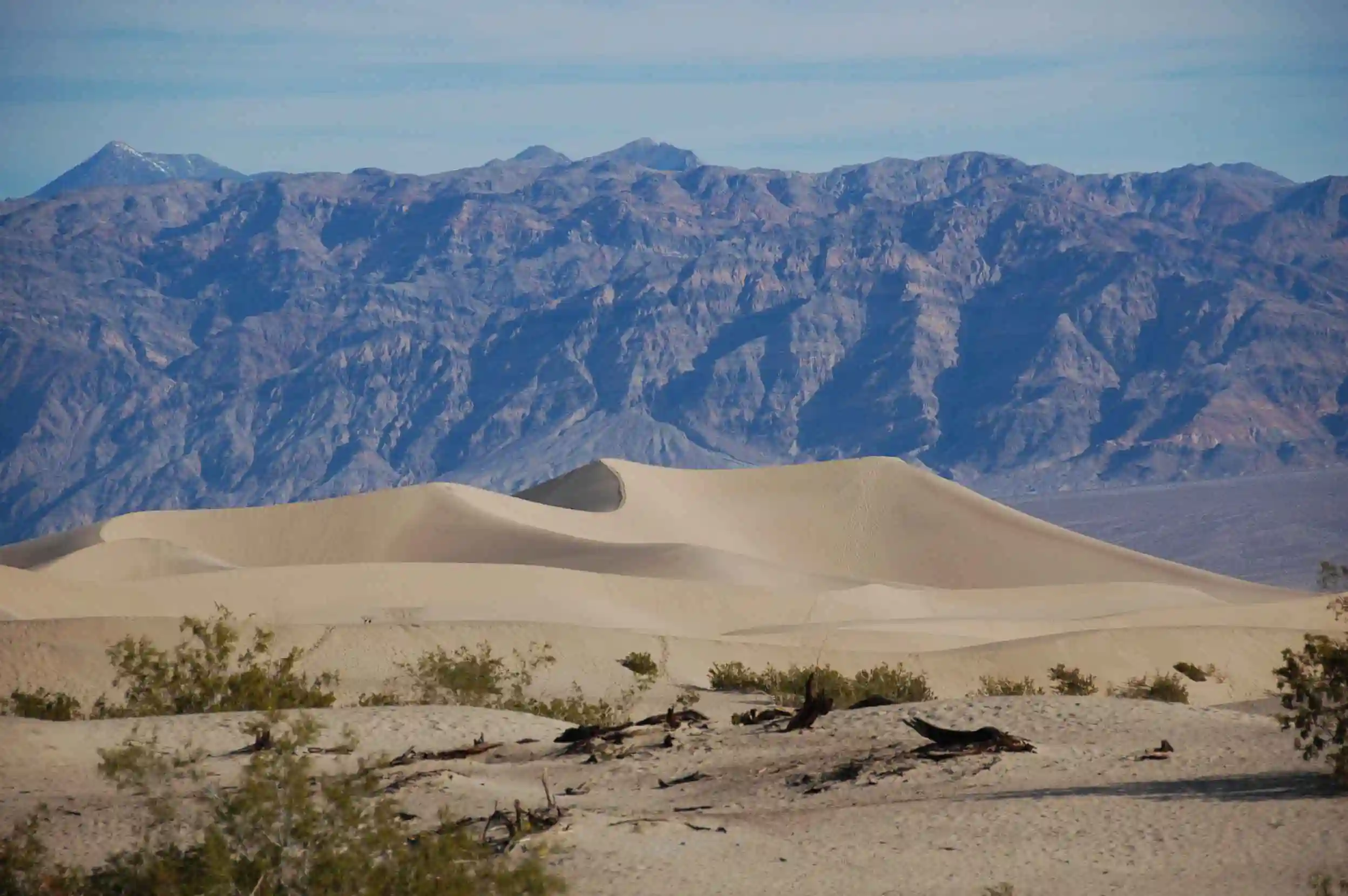
In Death Valley, the contrast between landscapes is tremendous, and another example is the Mesquite Flat Sand Dunes. This is the largest field of dunes in the national park: here, the sand comes from the erosion of the mountains to the north, the wind carries it away, and the mountains to the south prevent it from moving any further, causing it to accumulate here in the form of dunes.
From the parking lot, it's just a short walk to the dunes, and once there, you can go wherever you want, but if you want, you can climb the High Dune (the highest one). It's the most popular hike, so just follow the marked footsteps.
You might ask, why is this place called "Mesquite"? The name comes from the mesquite tree that grows in the area, which tends to grow in a twisted shape so as not to get buried in the sand. Interestingly, the pods of this tree have been and continue to be used as food by the Shoshone Timbisha Native American tribe, who live in this area.
10. Death Valley sky at night
If you're lucky enough to spend a night in Death Valley, you have to take advantage of the fact that it's a Dark Sky Park. 🌠 Here, the nights are so dark that the sky shines like few other places in the world, allowing you to see the Milky Way with the naked eye. A paradise for night photography and one of the best Death Valley attractions!
The park is open 24 hours a day, so you can drive at night and visit some of the best locations for stargazing in Death Valley, such as Dante's View, Mesquite Flat Sand Dunes, Badwater Basin, Harmony Borax Works, and Ubehebe Crater. It's best to do this on new moon nights to avoid the reflection of moonlight.
Another option is to book this 1-day Death Valley tour from Las Vegas, where you will not only visit the park's must-see attractions during the day, but also stay to watch the sunset and gaze at the starry sky at night. It includes pickup from your Las Vegas hotel, transportation, a guide, and park admission.
💡Recommended: Where to stay in Death Valley | Areas + Hotels + Map |
Less well-known places to see in Death Valley
If you have more time in Death Valley, why not visit some of the park's lesser-known spots? Some are closer than others, some are super accessible, and others require several hours of driving on 4x4 trails. You're spoiled for choice. 😊
1. Harmony Borax Works
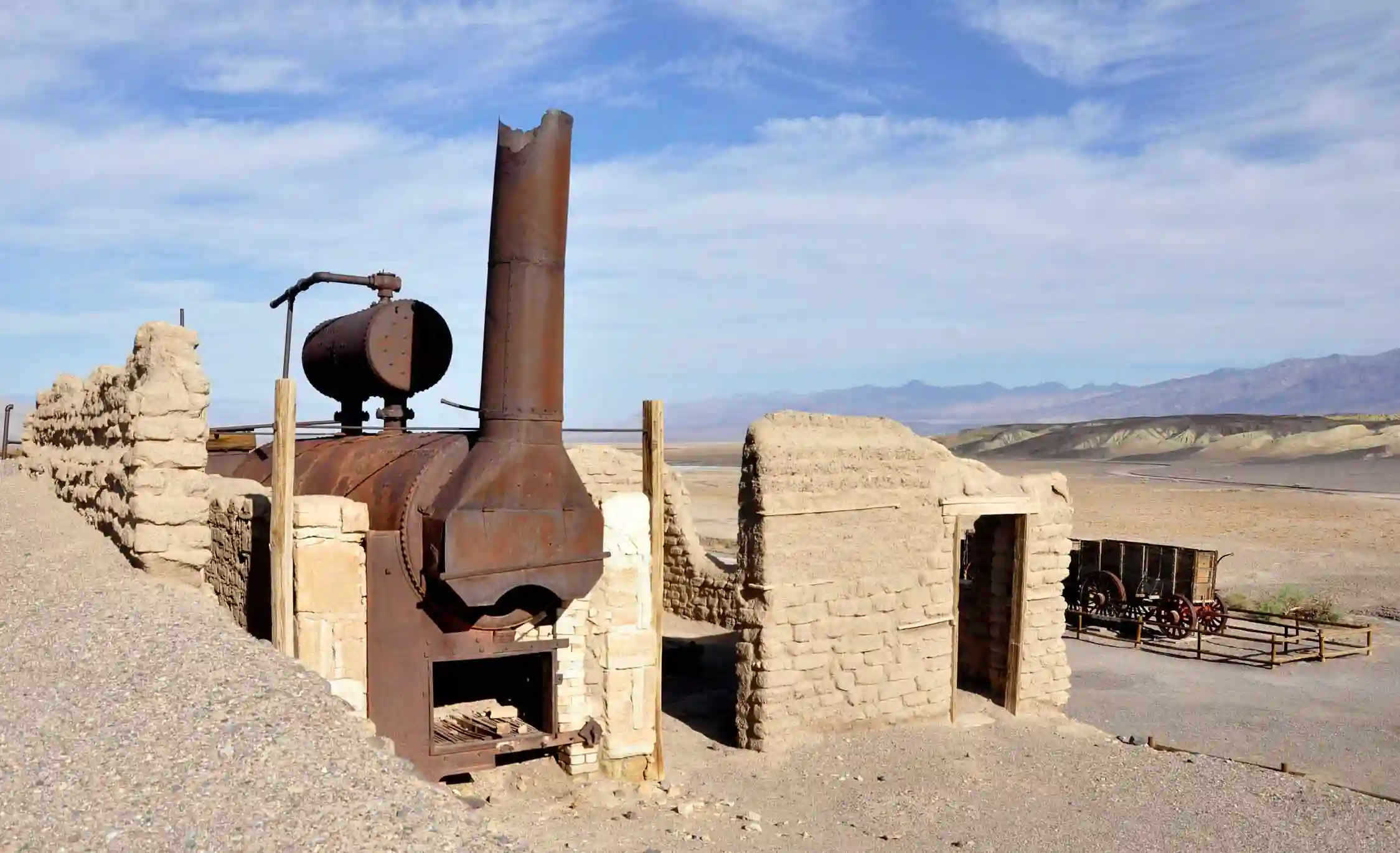
Just 2.5 km (1.5 mi) north of Furnace Creek, you can see the remains of an important part of Death Valley's history. In 1881, borax was discovered in the Furnace Creek area, and a processing plant called Harmony was built, producing up to 3 tons of borax per day. Today, you can see old adobe buildings, remains of machinery, and one of the wagons from the "20 Mule Team."
🫏 And here we have to pause to explain you what the 20-Mule Team is, so you can learn something crazy about the history of Death Valley. To transport the borax produced at Harmony Borax Works, the product was loaded onto two wagons that were pulled by a team of 18 mules and 2 horses for 265 km (165 mi) to the Mojave train station.
They also carried a whole wagon of water, as the journey took 10 days and there were two people involved. It was very hard work that went on for six years! For all these reasons, the borax produced here was called 20 Mule Team Borax, which was a marketing campaign that scored 10 out of 10.
ℹ️ You can learn more about this topic at the Borax Museum in Furnace Creek, where admission is free.
2. Twenty Mule Canyon
The name of this canyon, located very close to Zabriskie Point, comes from the above story. Twenty Mule Canyon is accessed via a 4 km (2.5 mi) unpaved, one-way road that takes you through a landscape full of eroded hills. Although a 4x4 isn't necessary, if you have a low-clearance car, it may be best not to venture in.
3. Desolation Canyon
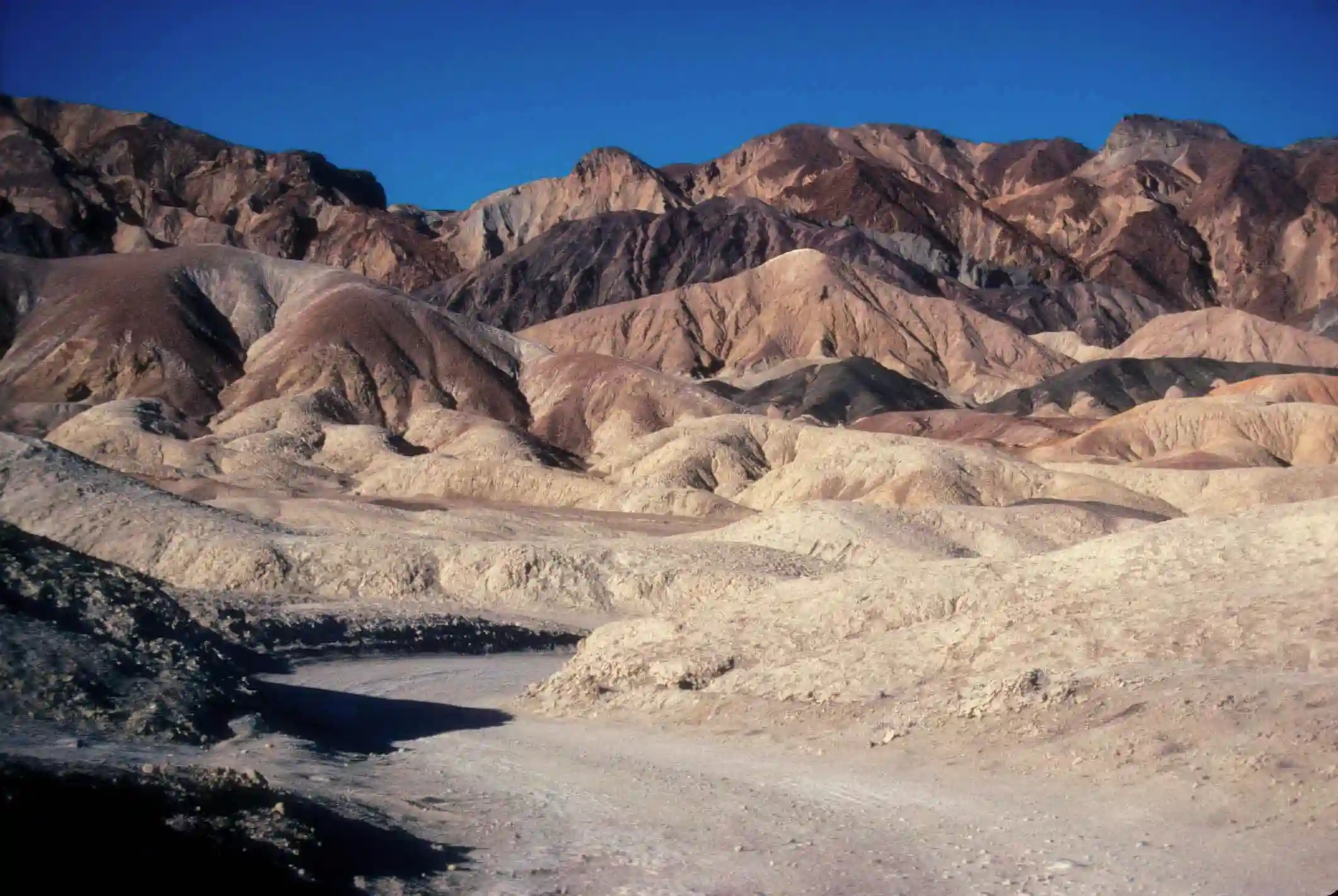
If you're looking for a less popular hike in Death Valley that's still close to the main attractions, Desolation Canyon is a good option. Despite its proximity to Golden Canyon, few hikers venture here because the trail is a little longer (5.8 km (3.6 mi) round trip) and has more elevation gain.
This canyon, whose walls are highly vulnerable to erosion, turns into a river of mud when there are flash floods. For this reason, you'll see sections with deep mud cracks. Also, keep in mind that there're a couple of sections where you have to climb a dry waterfall, but it isn't technical at all.
At the end of the trail, you'll reach the top of the canyon, which offers spectacular views of Death Valley.
💡Recommended: American Southwest in 15 days | Itinerary + Map |
4. Unbehebe Crater
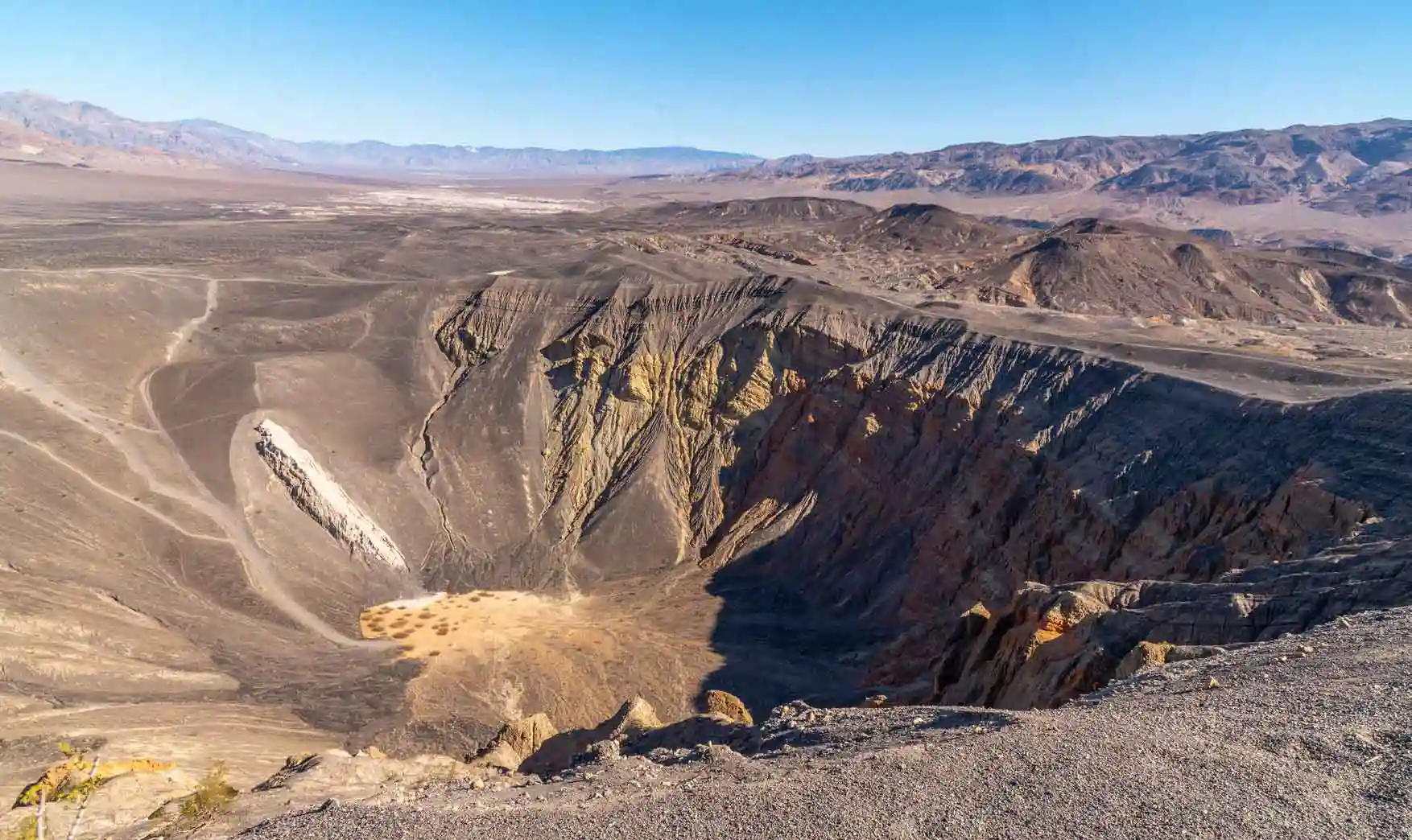
We jumped to the northern part of the park, which is much more remote and less visited. Ubehebe Crater is one of the most spectacular sights in Death Valley, but you need to drive over an hour from Furnace Creek to get there. However, the road is paved!
The Ubehebe volcanic field is actually made up of 12 craters, but Ubehebe Crater is the largest of them all and the one that attracts the most attention. It's also the youngest of the group, being "only" 2,100 years old. 😅
From the parking lot, you already have incredible views of the crater, but you can also walk around its entire rim. You can even reach the bottom of it, but remember that you then have to make the entire climb back up, and the terrain isn't easy.
5. Racetrack Playa
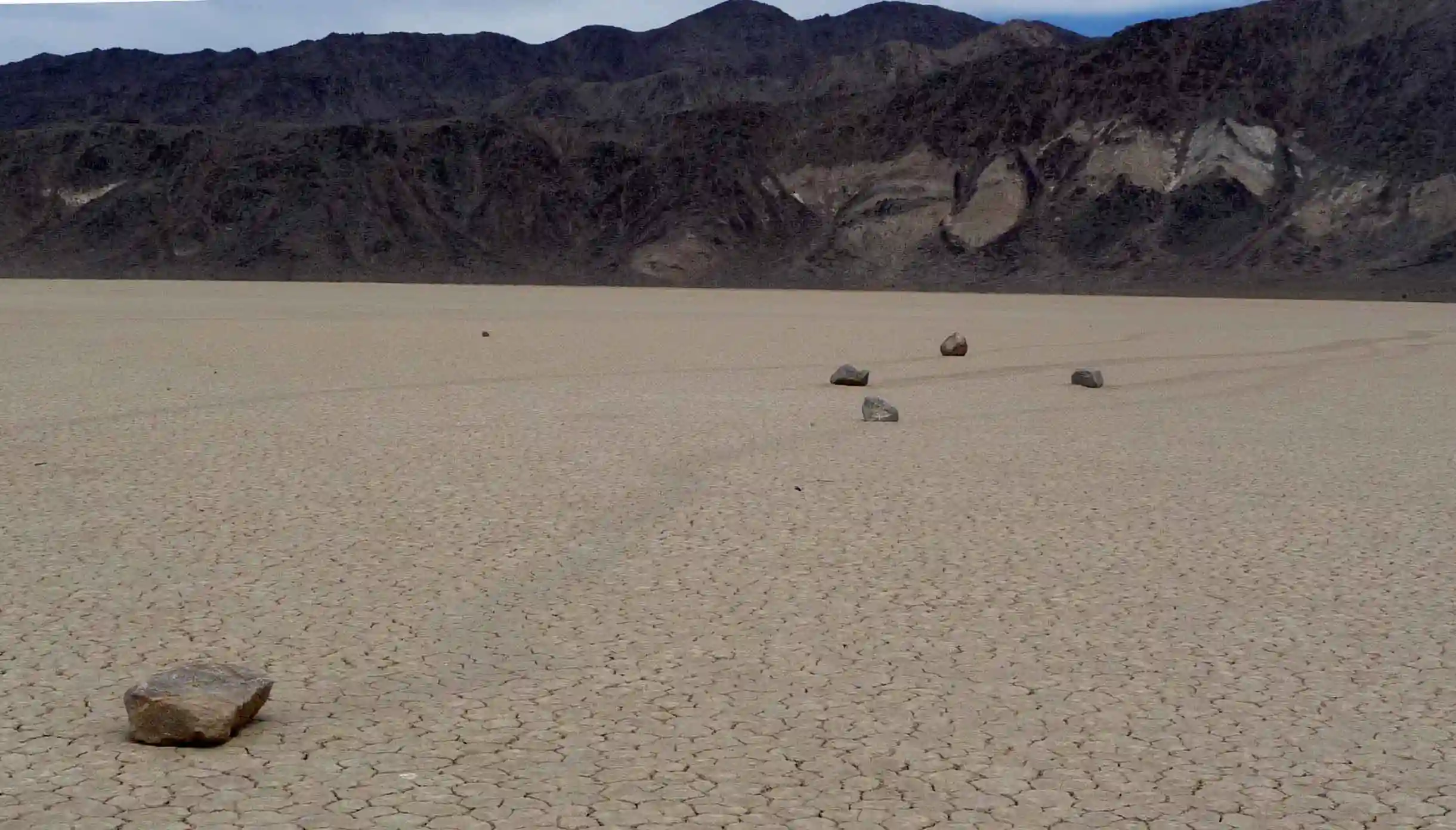
Have you ever heard of the moving rocks in Death Valley? The most mysterious place in the park, where rocks weighing over 300 kg (660 pounds) fall from the mountains and roll across the surface of what is now a huge dry lake, leaving a trail of mysterious lines.
It's true that it's practically impossible to see rocks moving in real time, as they do so so slowly that it's practically imperceptible. Furthermore, they can remain immobile for decades until climatic conditions allow them to move again.
Even so, a group of researchers managed to solve the mystery in 2013, as all the phenomena came together so that they could see the rocks moving. Let's see if we can explain it to you in simple terms!
First, the area must be flooded with water, which must freeze during the cold winter nights. On sunny days, the ice begins to melt and break up, creating large floating panels that are driven by the wind, dragging the rocks along with them.
⚠️ Although it's a very unique place in the world, keep in mind that the access road starts near Ubehebe Crater and is 47 km (29 mi) long, so from Furnace Creek you should allow about 3.5 hours one way. In addition, it's an unpaved and very inhospitable track, so a 4x4 or a car with high clearance is recommended to drive here (as well as patience and good tires).
6. Scotty's Castle
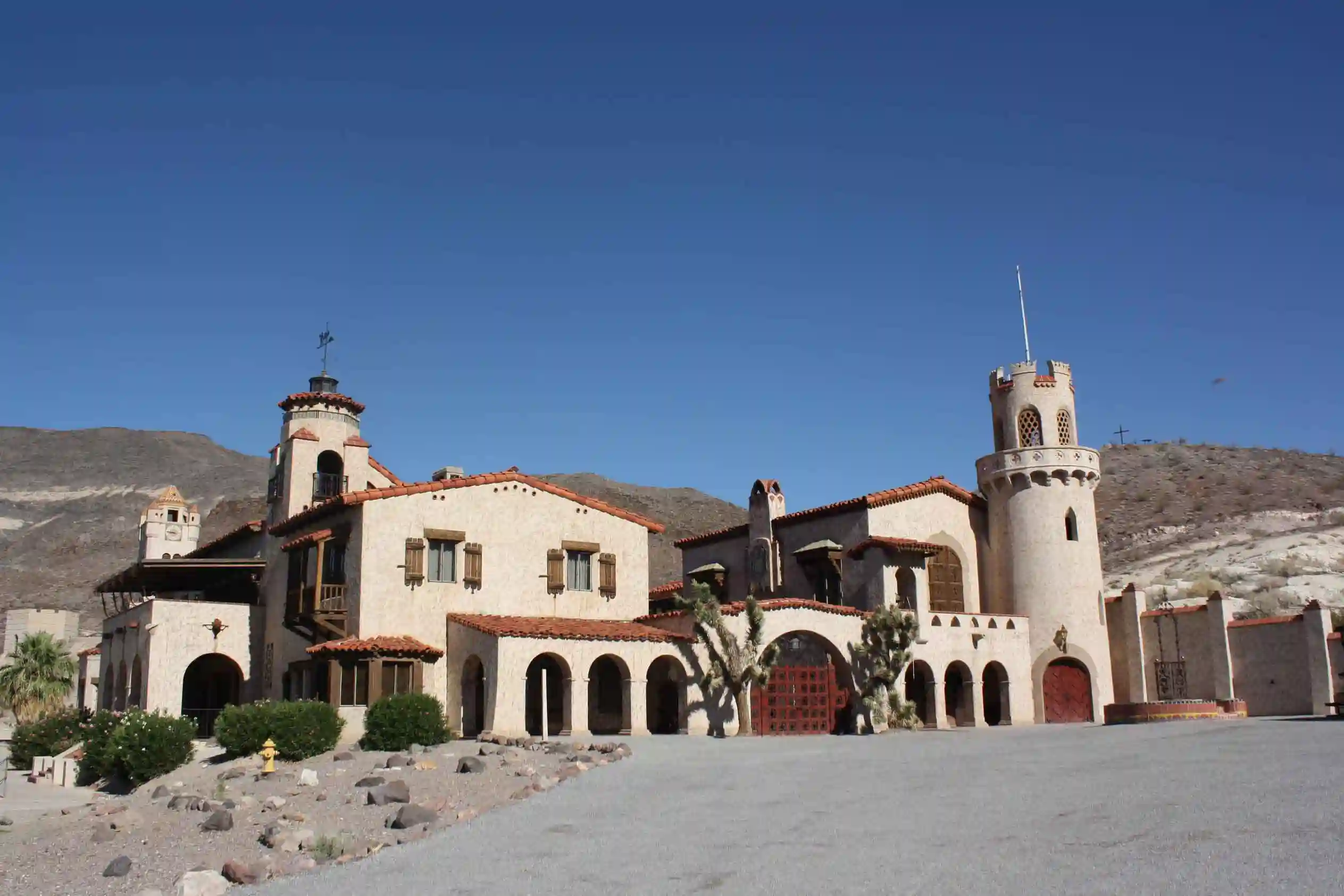
Although we wouldn't come here specifically to see it, if you're going to Ubehebe Crater, you can make a quick stop at Scotty's Castle, as it's only 14 km (9 mi) away. Don't expect to find a castle, but rather a luxurious colonial-style mansion with clear Spanish influences.
The truth is that it's surprising to see such a building in the middle of the desert: a huge villa with a bell tower, an interior courtyard, several fountains, a swimming pool, and even a pipe organ.
Scotty's Castle was built in the 1920s by Chicago millionaire Albert Mussey Johnson and his wife Bessie as a winter residence. However, the person who made the place famous was Walter Scott, a charismatic adventurer and con man known as "Death Valley Scotty," who eventually became friends with Mussey, even though he led him to believe for years that he owned gold mines in the area.
⚠️Following severe flooding in 2015 and a subsequent fire, the building suffered significant damage and has been closed for restoration (and remains so today due to lack of funding). Although you can see it from the outside, the only way to get inside is by booking a Scotty's Castle Flood Recovery Tour.
7. Father Crowley Vista Point
If you enter (or exit) Death Valley via the west entrance, i.e., Panamint Springs, be sure to stop at Father Crowley Vista Point. From this viewpoint, you can see the colorful Rainbow Canyon and Panamint Valley in the distance.
Interestingly, this canyon is popularly known as "Star Wars Canyon," because for years military aerial tests were conducted in this area and people came to this viewpoint to watch them. As a result of a plane crash in 2019, the pilot died and several visitors were injured, so the training sessions were discontinued.

e-sim for THE UNITED STATES
We have 2 discounts for you:
-5% OFF with Holafly ➡️ Unlimited data with the best coverage! Get it here
-30% OFF with eSIMFlag ➡️ Unlimited data at the best price! Get it here
Discounts applied automatically
🤓 Take a loot at: Best SIMs & eSIMs for traveling to the USA
8. Darwin Falls
Strange as it may seem, there is a waterfall in Death Valley that flows all year round. Darwin Falls is an oasis in the middle of the desert, located in the western part of the park, whose flow doesn't depend on rainfall but is fed by a spring. The access road is unpaved, but can be driven on with a normal car (unless there has been recent flooding).
From the parking lot, a short 1.5 km (1 mi) walk one way awaits you, first passing through a desolate canyon and then entering an area where vegetation takes center stage. At the end, you'll find this inverted Y-shaped waterfall. It isn't too high, but it's an interesting place to visit if you have time.
What to see in Death Valley in half a day (4-5 hours)
Although half a day is very little time to get to know Death Valley, sometimes you can only spend a few hours, either because you're passing through or because your visit is in the middle of summer.
In this case, we would do the following, bearing in mind that you're coming from Las Vegas (if you're coming from somewhere else, you'll have to change the order of the visits):
- Zabriskie Point (🚶🏼20 min). Here you'll find a machine to pay for your park entrance fee if you don't have a pass.
- Badwater Basin (🚗30 min + 🚶🏼30 min)
- Devils Golf Course (🚗15 min + 🚶🏼15 min)
- Artists Drive Scenic Loop (🚗30 min + 🚶🏼30 min)
- Furnace Creek (🚗10 min). The time you spend here will depend on what you do, as this is where the restaurants are located.
- Harmony Borax Works (🚗3 min + 🚶🏼15 min)
- Mesquite Flat Sand Dunes (🚗25 min + 🚶🏼30 - 45 min)
What to see in Death Valley in 1 day
If you have a full day to explore Death Valley, in addition to all of the above, you can enjoy some extra viewpoints and go on a short hike. That's what we would do, considering that your visit isn't in summer and that you're coming from Las Vegas, if not you'll have to change the order of the stops:
- Dante's View (🚗45 min + 🚶🏼20 min)
- Zabriskie Point (🚗10 min from the main road + 🚶🏼20 min). Here you'll find a machine to pay for your park entrance if you don't have a pass.
- Badwater Basin (🚗30 min + 🚶🏼30 min)
- Devils Golf Course (🚗15 min + 🚶🏼15 min)
- Artists Drive Scenic Loop (🚗30 min + 🚶🏼30 min)
- Golden Canyon (🚗5 min + 🚶🏼1.5 to 2 hrs). Take the short hike to Red Cathedral.
- Furnace Creek (🚗5 min). The time you spend here will depend on what you do.
- Harmony Borax Works (🚗3 min + 🚶🏼15 min)
- Mesquite Flat Sand Dunes (🚗25 min + 🚶🏼30 - 45 min)
- Stargazing at night. If you're staying in Death Valley or nearby, go out at night to gaze at the stars.
💡You can replace the Golden Canyon hike for the Natural Bridge hike, which is shorter and easier (or do both). If you plan to leave Death Valley via the west, stop at Father Crowley Vista Point and/or visit Darwin Falls.
 DO YOU NEED A NO FEES CARD FOR YOUR TRIPS?
Get your Wise card here for free
Withdraw money and pay in other currencies without fees!
💳Check it out: Best Travel Cards for the USA | Comparison & Opinion |
What to see in Death Valley in 2 days
If you have two full days to visit Death Valley, you'll be able to take a more relaxed approach to your visits, seeing both the must-see sights and other less-visited places. We suggest two options:
Death Valley in 2 days with a 4x4
If you have a 4x4 and want to explore more remote areas of the park, we'd do the following:
Day 1: Same plan as in the section "What to see in Death Valley in one day."
Day 2: Northern Death Valley
- Ubehebe Crater (🚗 1 hour drive from Furnace Creek + 🚶🏼15 min walk)
- Racetrack Playa (🚗 2.5 hours + 🚶🏼30–45 minutes)
- Scotty's Castle ( 🚗 3h + 🚶🏼10 min)
Death Valley in 2 days without a 4x4
If you don't have a 4x4 or don't feel like driving in somewhat extreme areas, focus on the main part of the park by following this plan:
Day 1: Furnace Creek Area + Badwater Road
- Badwater Basin (🚶🏼30 min). Here you'll find a machine to pay for your park entrance fee if you don't have an annual pass.
- Natural Bridge (🚗10 min + 🚶🏼1h)
- Devils Golf Course (🚗5 min + 🚶🏼15 min)
- Artists Drive Scenic Loop (🚗30 min + 🚶🏼30 min)
- Golden Canyon (🚗5 min + 🚶🏼1.5 to 2 hrs). Take the short one-way hike to the end of the canyon.
- Furnace Creek (🚗5 min). Here you can spend as much time as you need, even stopping to eat at one of the restaurants.
- Stargazing at night. If you're staying in Death Valley or nearby, go out at night to gaze at the stars and the Milky Way.
Day 2: Highway 190 + Dunes
- Dante's View (🚗45 min + 🚶🏼20 min)
- Twenty Mule Canyon (🚗30 min)
- Zabriskie Point (🚗5 min + 🚶🏼20 min). If you feel up to it, take the Badlands Loop circular hike.
- Furnace Creek (🚗10 min). Stop again if you want to eat or need any services.
- Harmony Borax Works (🚗3 min + 🚶🏼15 min)
- Mesquite Flat Sand Dunes (🚗25 min + 🚶🏼30 - 45 min)
Things to see around Death Valley
Apart from the places everyone knows, such as Las Vegas, Sequoia National Park, or Yosemite National Park, there're many other places to see near Death Valley that you probably don't know about. We're sure you'll pass by some of them on your way to or from the park, so why not stop at one of them?
1. Rhyolite Ghost Town
The ghost town of Rhyolite is located in Nevada, 47 km (29 mi) from the Mesquite Flat Sand Dunes and 61 km (38 mi) from Furnace Creek. If you enter the park via Beatty, you can make a quick stop, as it's on the way. Otherwise, don't make a special trip to visit this place, because although it's famous, it has very little to offer and there're plenty of ghost towns in the US that are far more interesting.
Rhyolite originated when gold-filled quartz was discovered in the area, becoming a real town with banks, a theater, a school, and a railroad line, among other things. The problem is that very little remains standing, only the walls of an old three-story bank, the train station building, and the Bottle House, which was restored in 1925.
2. Amargosa Valley
Also in Nevada, not far from the previous location, you can stop at Amargosa Valley, a town in the middle of the desert that serves as a base for visiting Death Valley, as it's home to the Longstreet Inn & Casino, an ideal place to stay.
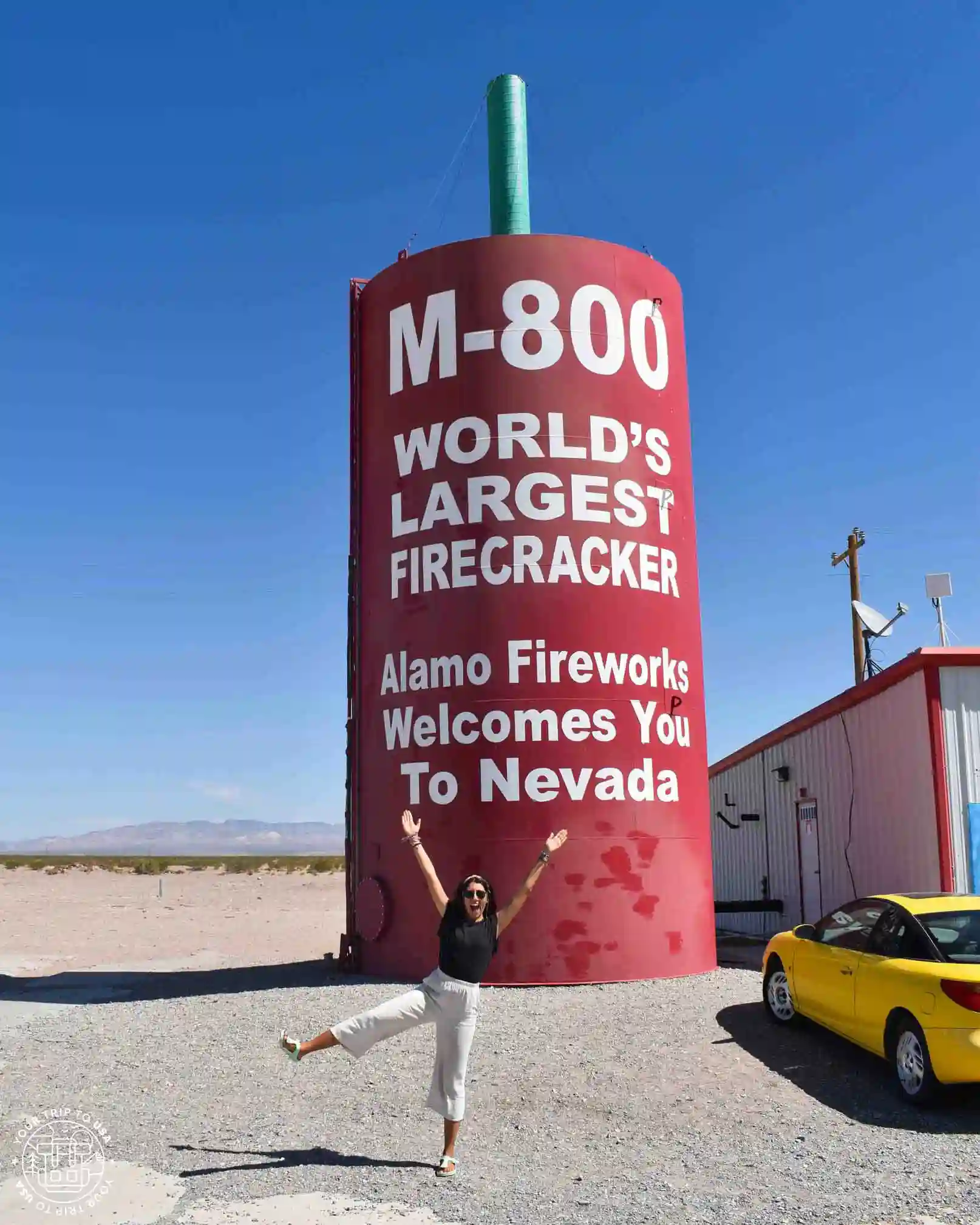
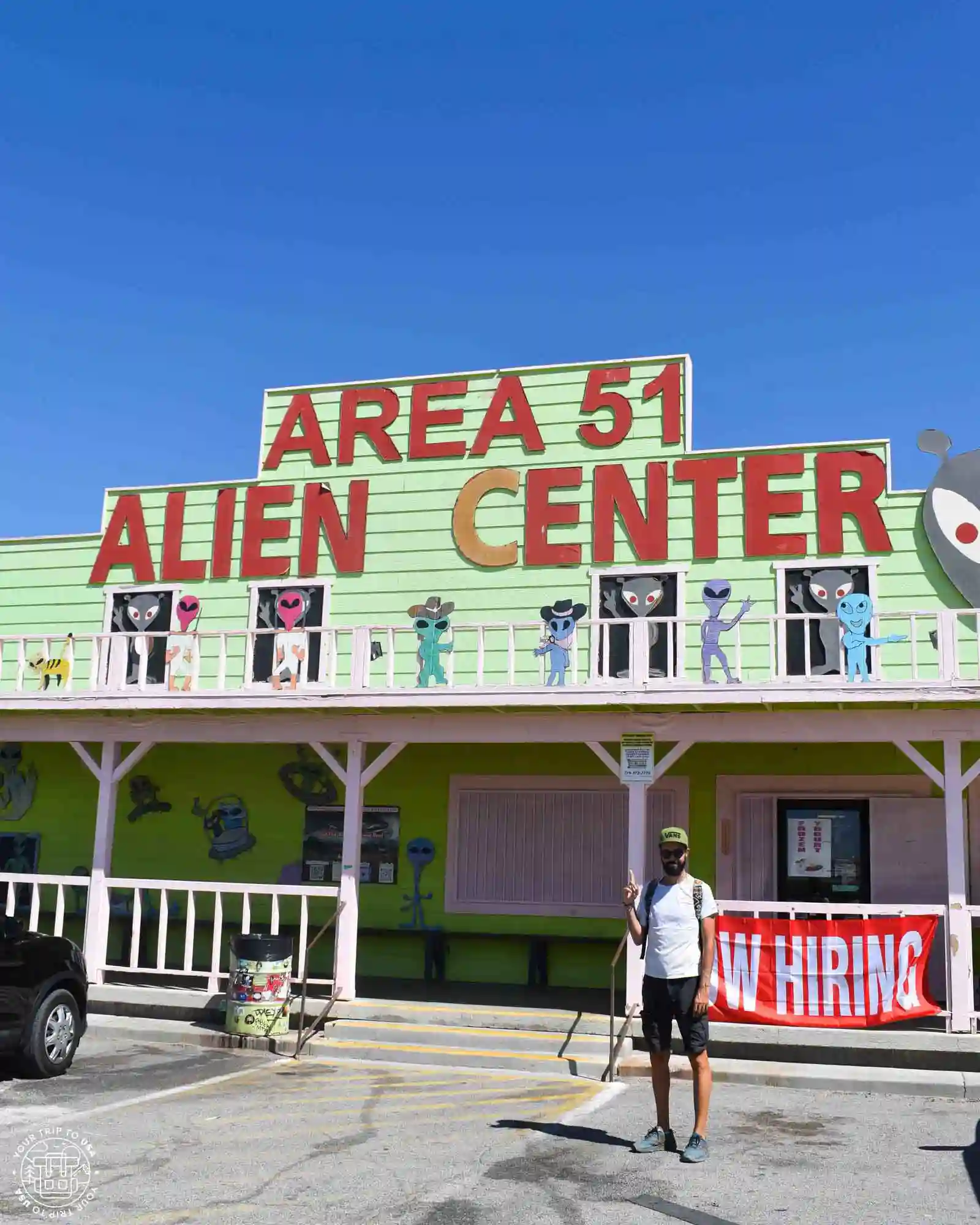
There isn't much to do here, but there're a couple of slightly geeky stops that are sure to make you smile. One of them is a firecracker store that holds the record for having the largest firecracker in the world. It's outside, and you can take silly pictures with it 😂. Next door is the Area 51 Alien Center, a store themed around the extraterrestrial world that is quite curious.
3. Amargosa Opera House
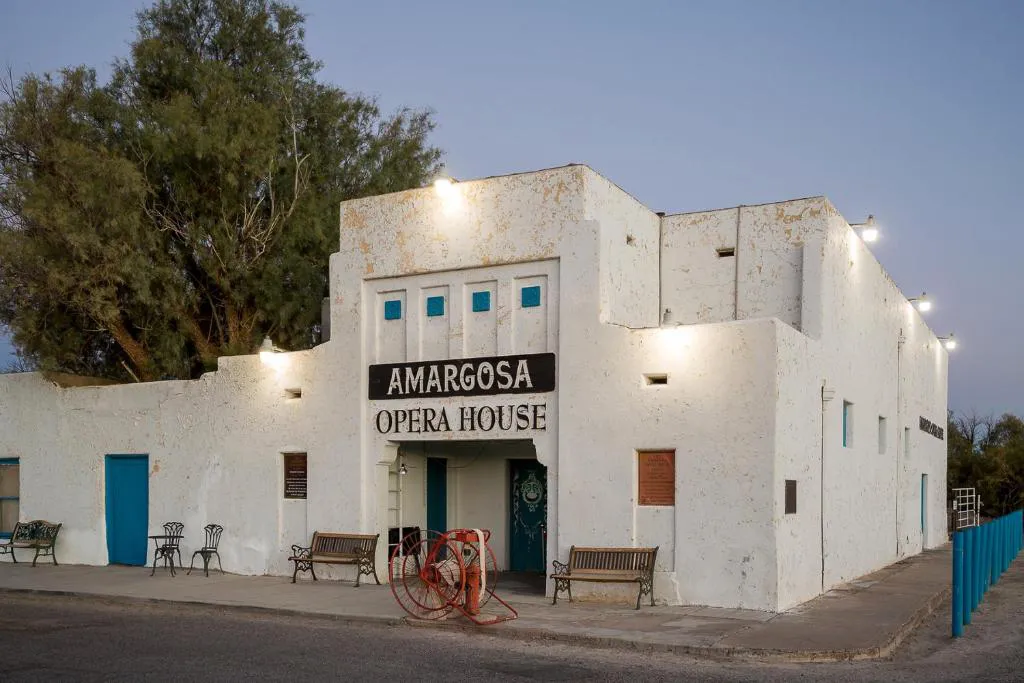
The Amargosa Opera House & Hotel is a historic building located in Death Valley Junction, one of the gateways to Death Valley. It was built in 1920 as part of a borax mining company, serving as offices and a hotel. Later, in the 1960s, it was acquired by American dancer and artist Marta Becket, who transformed it into a theater decorated with murals painted by her own hand. Dance, mime, and music performances were held here, making it a tourist attraction in a remote location.
It currently continues to operate as a hotel and retains its beautiful theater, making it a unique place to stay near Death Valley, but it's true that it's a little outdated and the rooms are in need of some renovation, although they're also decorated with handmade paintings.
If you don't want to stay here, you can also join one of the daily tours that show you around the facilities and theater and tell you more about the history of this place. The price is $20 for adults and $10 for children.
4. Tecopa Hot Springs
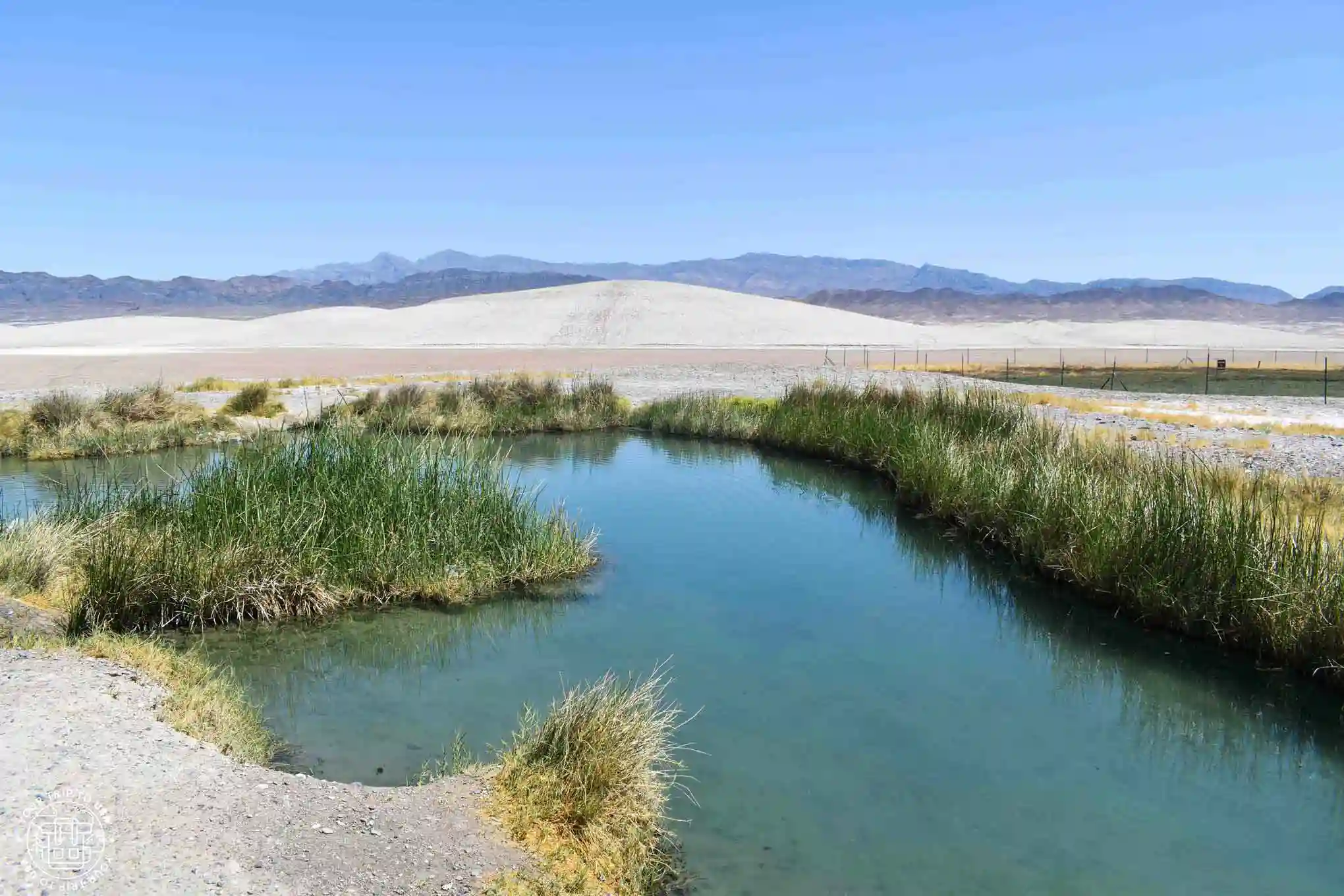
We know that talking about hot springs in one of the hottest places on the planet doesn't sound very appealing, right? But if you go to Death Valley when the temperatures are still bearable and take the southern route, you'll find Tecopa Hot Springs in the middle of the desert, natural hot springs with temperatures ranging from 35ºC to 39ºC (95ºF to 102ºF). We couldn't get more than our feet in 🔥.
Please note that there're no services available, and above all, leave everything even cleaner than you found it. 😉
5. China Ranch Date Farm
Just a 15-minute drive from the previous spot, you can immerse yourself in an oasis of date palms while tasting yummy and homemade smoothies, cookies, and bread made by dates. What's more, at this family farm, you can stroll along its trails, visit its small museum, and buy delicious dates picked from the plantation itself.
6. Mojave National Preserve
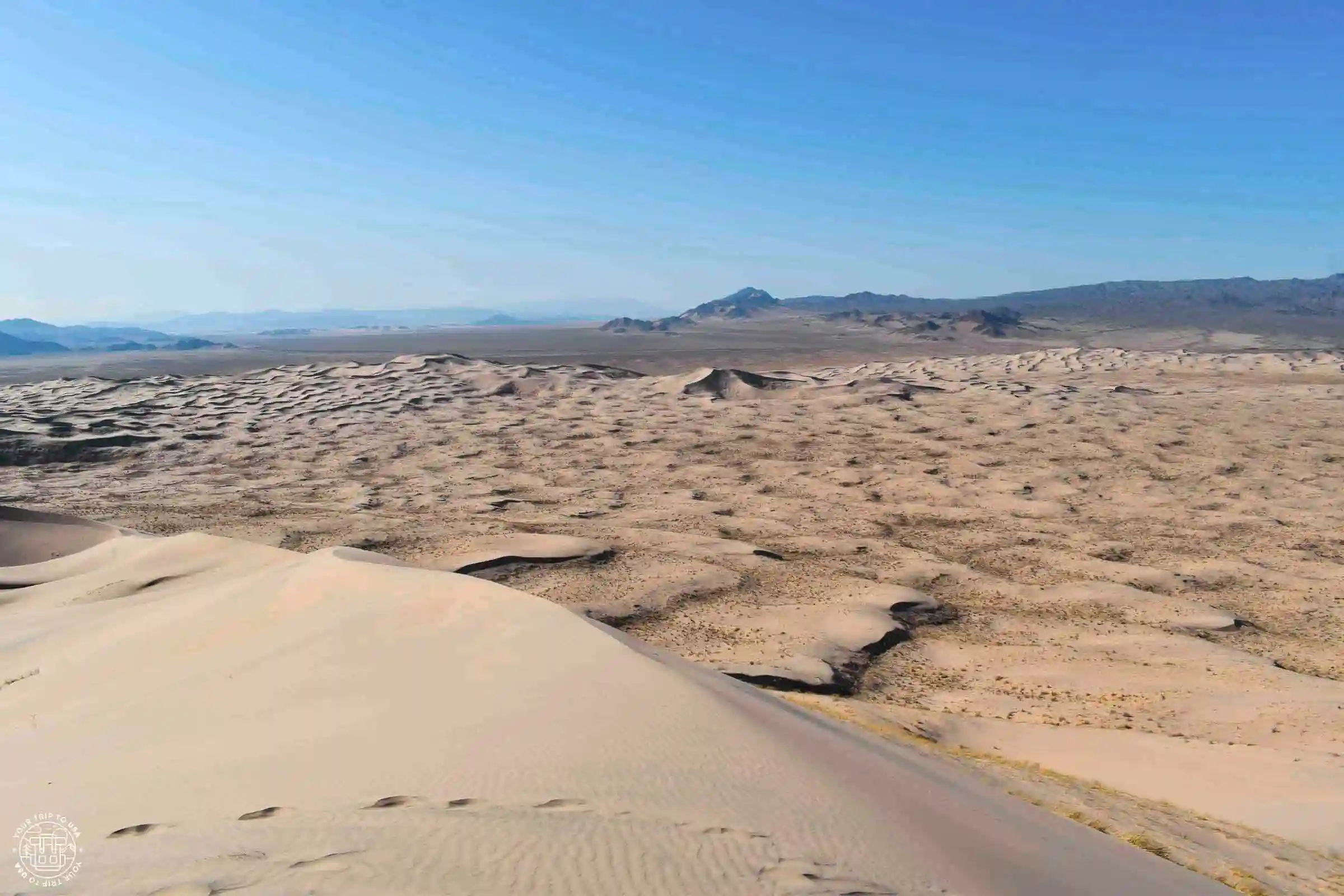
This place was a complete surprise for us, and we can't recommend it enough! Located south of Death Valley, here you can enjoy a landscape where Joshua trees intermingle with volcanoes and sand dunes. It's spectacular. 😍
If you have time and it's not too hot, we recommend climbing the Kelso Dunes. You can reach the summit of these sand dunes by following a 2.5-kilometer (1.5 mi) trail. We won't lie to you, the last part is tough because your feet sink into the sand, but when you reach the top, the landscape will leave you speechless.
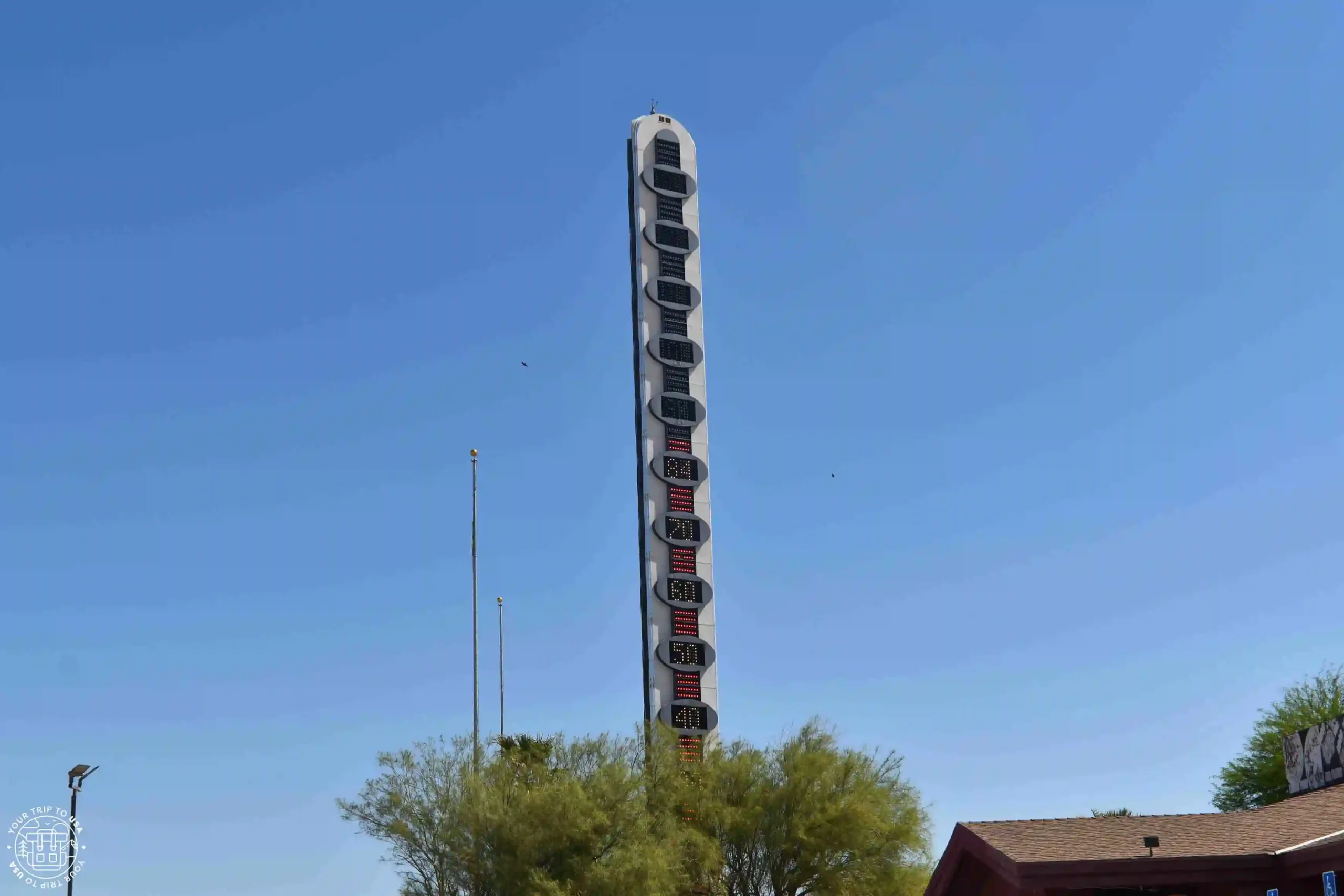
7. The World's Tallest Thermometer
If you like visiting unique places and have been to the Mojave National Preserve, the nearby town of Baker is home to the world's largest thermometer. It stands 134 feet (40 meters) tall in honor of the highest temperature ever recorded in Death Valley: 134ºF (57ºC). It was built in 1991 by a businessman from Baker who spent no less than $700,000 (which today would be about $1,655,000). 😮
You can visit the souvenir shop next to it, where, in addition to a wide range of merchandise related to the thermometer, there're explanations about its history and photographs of when it was built.
8. Alabama Hills
On the west side of Death Valley is the charming town of Lone Pine, gateway to the Alabama Hills. If you connect Death Valley with Yosemite via Tioga Road or head to Sequoia National Park, it's right on your way!
Although little known to foreign tourists, the Alabama Hills are impressive for their rock formations (including many natural arches) with the Sierra Nevada mountains as a backdrop. If you're lucky enough to see them covered in snow, the contrast is stunning!
The road that runs through the Alabama Hills is unpaved, but it isn't difficult to drive on and can be navigated with a normal car.
Death Valley tourist attractions Map
You're going to find absolutely all the places we've mentioned throughout this post on this map, so that you can find your way around more easily:
FAQs about things to do in Death Valley
What are the must-see attractions in Death Valley National Park?
You can’t miss Badwater Basin, Zabriskie Point, Dante’s View, Mesquite Flat Sand Dunes, and Artist’s Palette.
What are the best viewpoints in Death Valley?
Zabriskie Point and Dante’s View.
Do you need a 4x4 to visit the sites in Death Valley?
No, you don’t, as you can reach the vast majority of attractions in a regular car. However, a 4x4 is required to visit Racetrack Playa.
When is the best time to visit Death Valley?
The best time is from November to March. In summer, the extreme heat can make some activities inadvisable. To know more about that, check out our guide about visiting Death Valley.
What are the best hikes in Death Valley?
Some recommended hikes include Golden Canyon, Natural Bridge, and climbing the highest dune at Mesquite Flat Sand Dunes. If you want to see a waterfall, Darwin Falls flows year-round.
Can you visit Death Valley with kids?
Yes, as long as you take precautions against the heat. Many stops are accessible and do not require long walks.
We hope you enjoy all the places to visit in Death Valley, if the heat allows it 😊
Twenty Mule Canyon: JERRYE AND ROY KLOTZ MD, CC BY-SA 3.0 https://creativecommons.org/licenses/by-sa/3.0, via Wikimedia Commons; Racetrack Playa: Daniel Mayer (mav), CC BY-SA 3.0 https://creativecommons.org/licenses/by-sa/3.0, via Wikimedia Commons; Ubehebe Crater: samiamx, CC BY 2.0 https://creativecommons.org/licenses/by/2.0, via Wikimedia Commons