


Where to stay in Oregon
If you're planning a trip to the northwestern United States, you'll be looking for accommodation in Oregon. On any route through this state, you'll need to stay in Portland, Mount Hood, Bend, or the Oregon coast. That is why we've selected four accommodations that stand out for their good value for money in these four destinations. We hope you find this helpful.
What are the best places to see in Oregon
Here we tell you the best sights to see in Oregon. At the end, we'll leave you with a detailed map showing all the places, so you don't miss a thing!
1. Smith Rock State Park
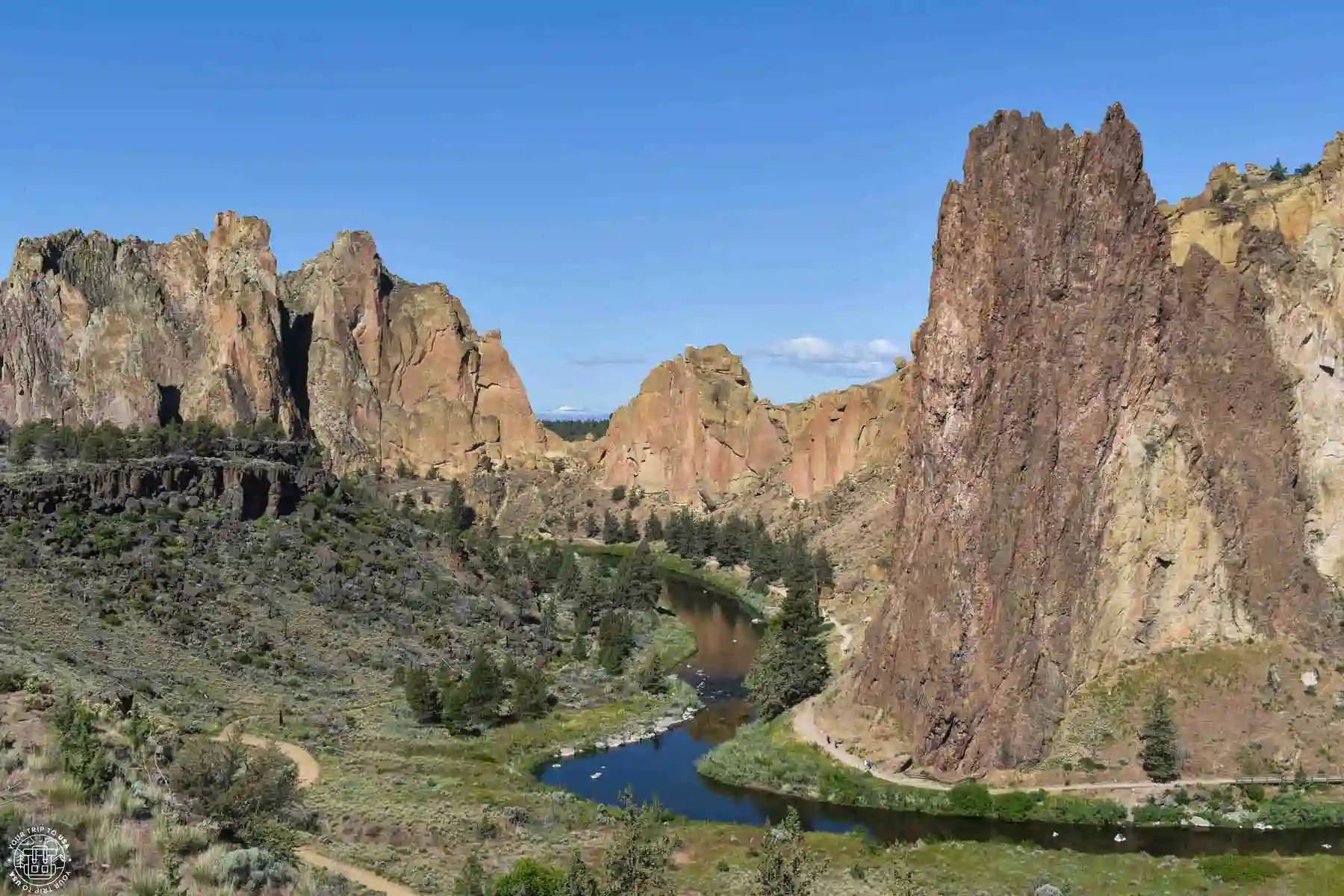
We start with this small but beautiful state park near the city of Bend. Here you'll find a canyon carved out by a river, trails through rock formations such as the famous Monkey Face, lots of climbing routes, including many bouldering routes (low-altitude climbing without ropes), and wonderful views of the immense volcanoes surrounding the area (such as Mount Hood and Mount Washington). You may also encounter wildlife like golden eagles, falcons, deer, river otters, and beavers, although we only saw a few ducks. 😅
The park is free, but parking must be paid for, which costs $10 for Oregon residents or $12 for non-residents. You can pay on the spot at the parking meters or online on the same day. You can also purchase an annual pass for Oregon State Parks for $60 for residents and $75 for non-residents.
Some of the services offered include a camping area for tents, hot showers (for guests only), and an overnight parking area for campers and motorhomes.
🚶We recommend taking the Misery Ridge Trail, which is 1 mi (1.5 km) long with an elevation gain of 720 ft (220 m, there are sections with stairs), so you can enjoy the incredible views from its lookout points and get a close-up look at Monkey Face. However, if you have a little more time, the ideal option is to take the Misery Ridge Loop Trail, which has the same elevation gain and is 3.7 mi (6 km) long, allowing you to discover a little more of the park. Smith Rock State Park is located 26 mi (42 km) north of Bend (~30 min) and 142 mi (229 km) southeast of Portland (~3 hrs).
2. Mount Hood National Forest
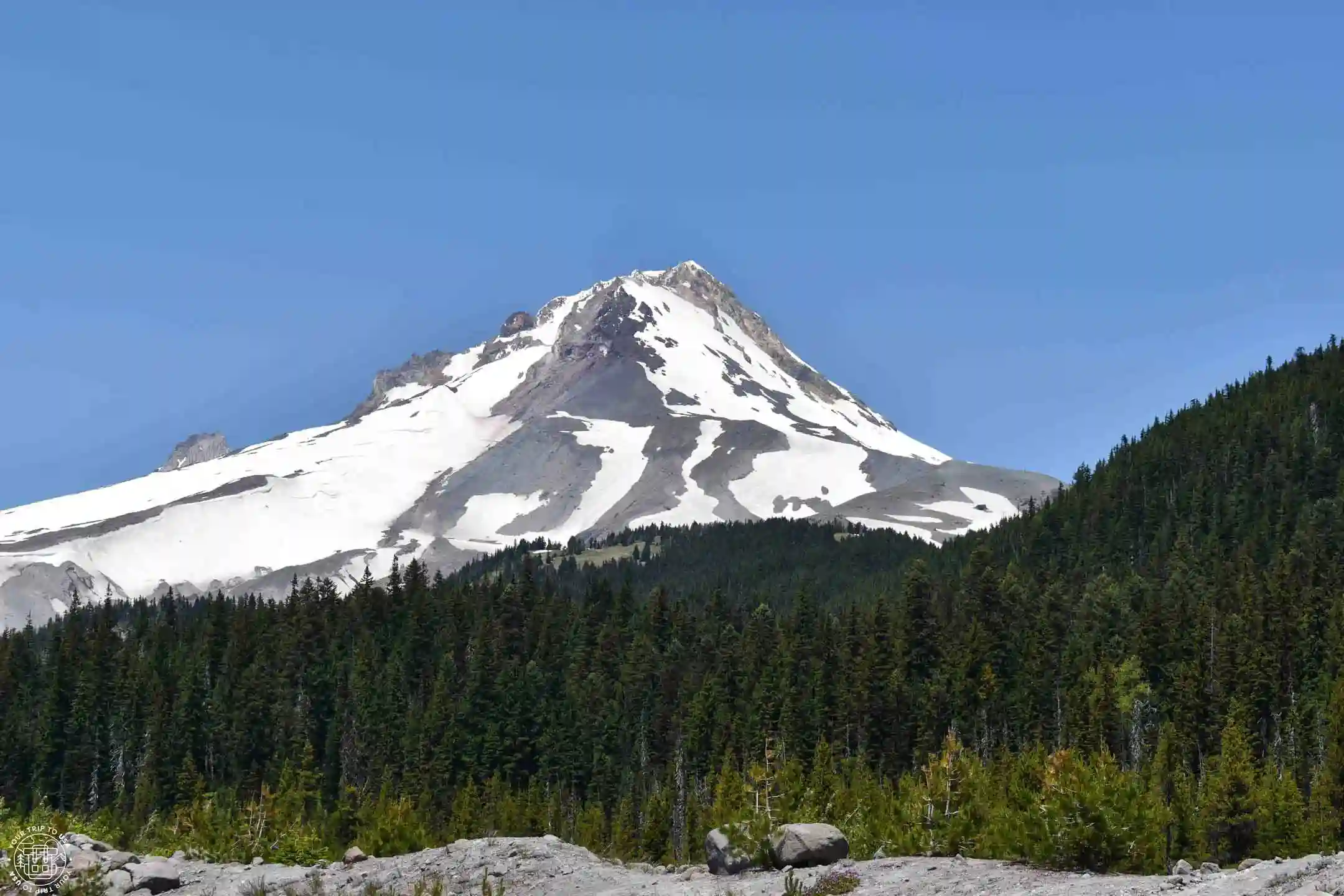
Mount Hood National Forest is a 766,000 ac (3,100km²) nature reserve stretching from the banks of the Columbia River in the north to Willamette National Forest in the south. Its crown jewel is Mount Hood, the highest mountain in the state of Oregon at 11,240 ft (3,426 m). It has up to 12 glaciers on its slopes!
Mount Hood is an active volcano that formed 500,000 years ago and is considered the most dangerous in Oregon, although its last eruption was in 1866. It's a huge and very popular mountain, which you can see from many miles away.
Some of the sites you shouldn't miss are Timothy Lake, Little Crater Lake, Clear Lake, Trillium Lake, and Tamanawas Falls. If you go in winter, you can also visit the Mount Hood Meadows ski slopes.
🍩We recommend stopping by Joe's Donut Shop, a small shop in the town of Sandy that makes some of the best donuts we've ever tasted. You won't regret it!
Mount Hood National Forest is located about 50 miles (80 km) from Portland, making it a very popular destination during the summer, especially on weekends, as well as in the spring and fall. We therefore recommend visiting during the week if possible, as it will be much less crowded.
ℹ️ Although many of the parking lots are free, some require payment. So, to access Mount Hood National Forest, you need an annual national park pass (America the Beautiful, priced between $80 and $250), an annual Northwest Forest Pass ($30), or a $5 day pass. In addition, Trillium Lake has a separate $10 entrance fee, unless you have the Northwest Forest Pass. All prices are per vehicle.
3. Hood River Fruit Loop
The beautiful Hood River Valley, located next to Mt. Hood, is an area with a rich agricultural tradition dating back to 1855 with the planting of the first fruit trees. Today, the valley is covered with acres of apple, pear, and cherry orchards, and it truly comes alive in spring and summer.
During these months, you can enjoy a unique rural experience through the businesses and farms that sell their local produce. Here you'll find fruit stands, bakeries, wineries where you can enjoy wine tastings, craft breweries, cideries and flower fields, among other things.
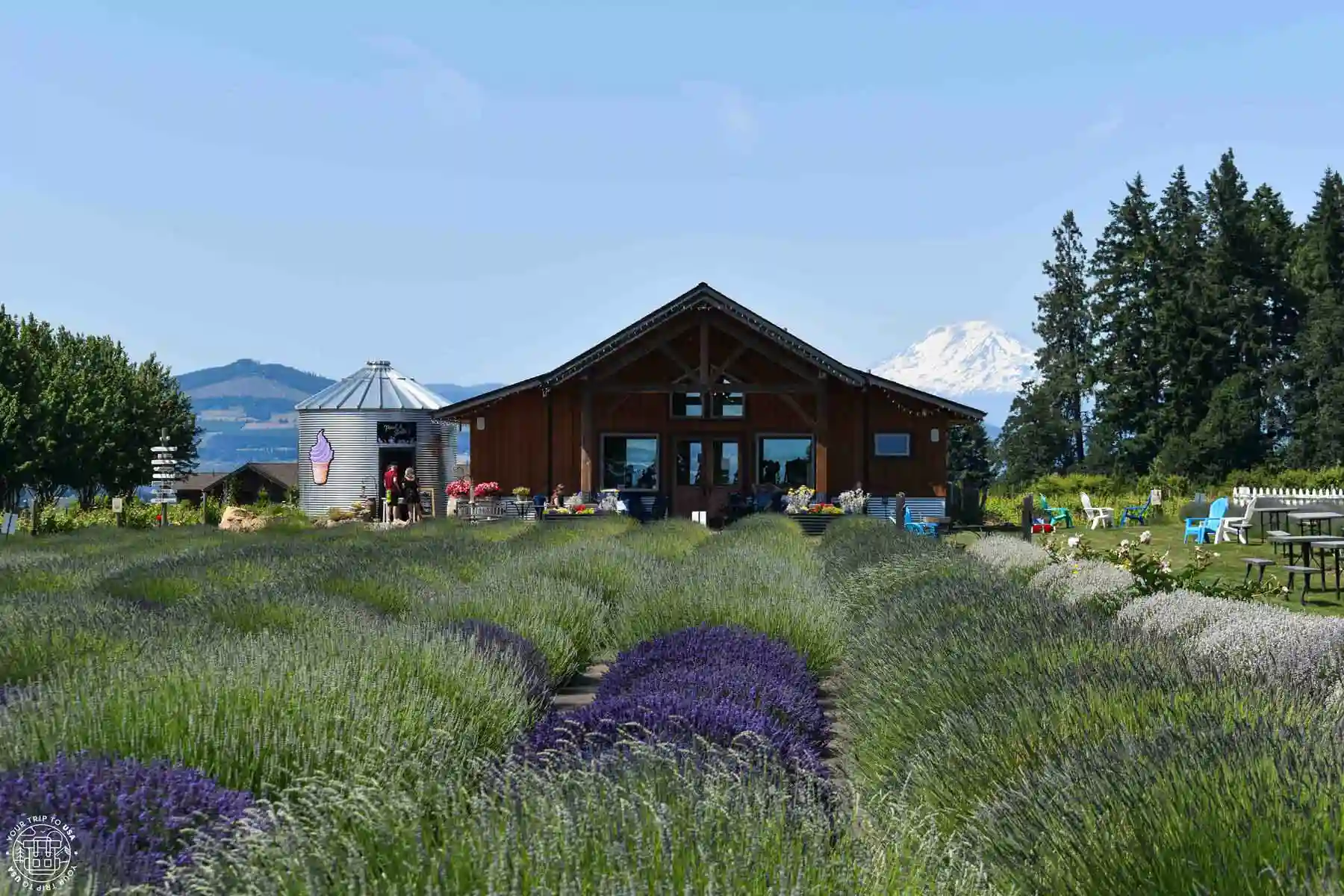
We visited Hood River Lavender Farms, a farm that producdes its own homemade cosmetics and an exquisite lavender ice cream that's definitely worth trying. Not to mention the views of Mt. Hood to the south and Mt. Adams to the north! Next door is Stave & Stone Winery, the perfect spot to enjoy a glass of wine with a view.
4. Columbia River
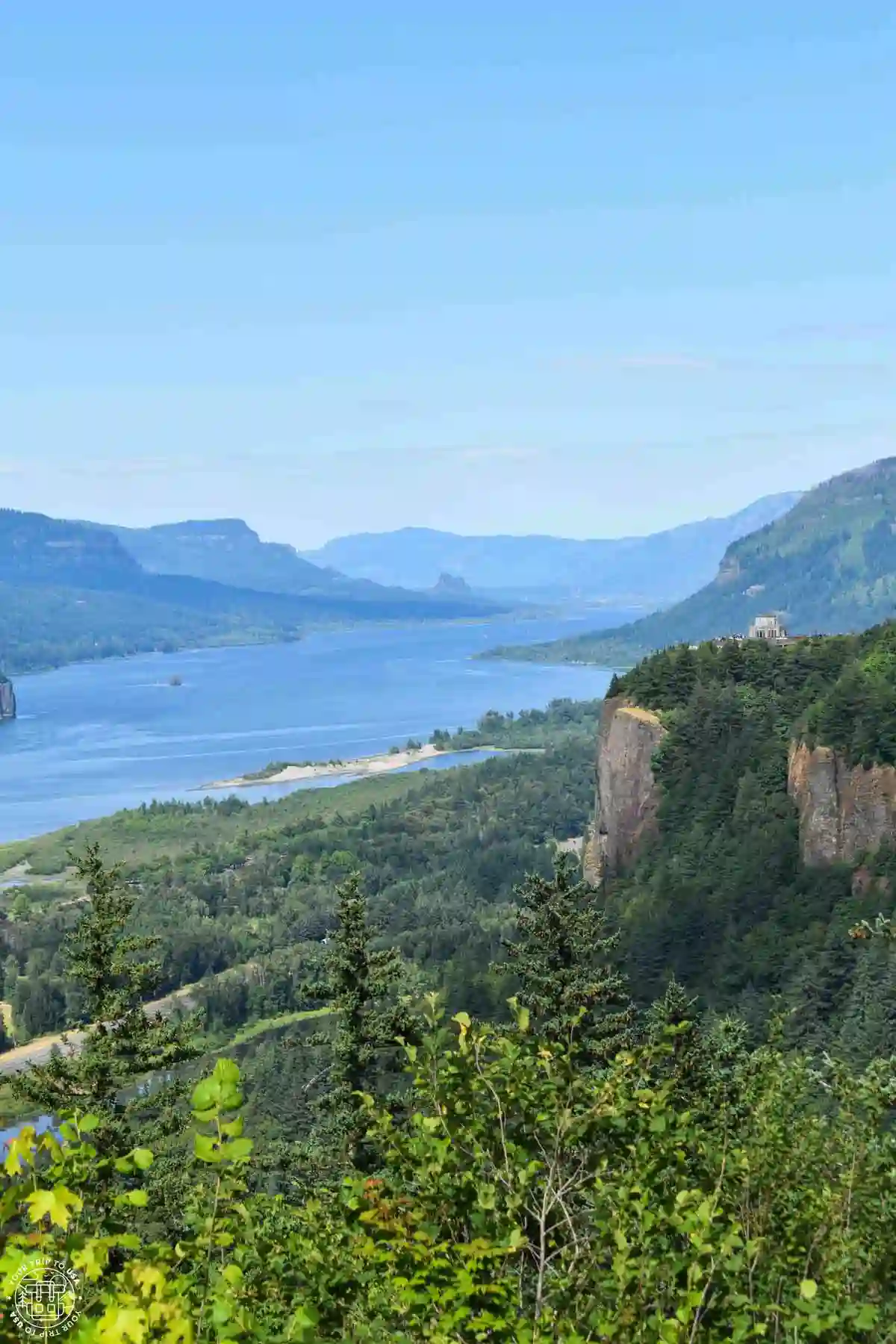
This immense, 1,242-mile-long (2,000 km) river originates in the Canadian province of British Columbia and is the largest river in America that flows into the Pacific Ocean. What's more, its watershed is the size of France and encompasses seven states and one Canadian province!
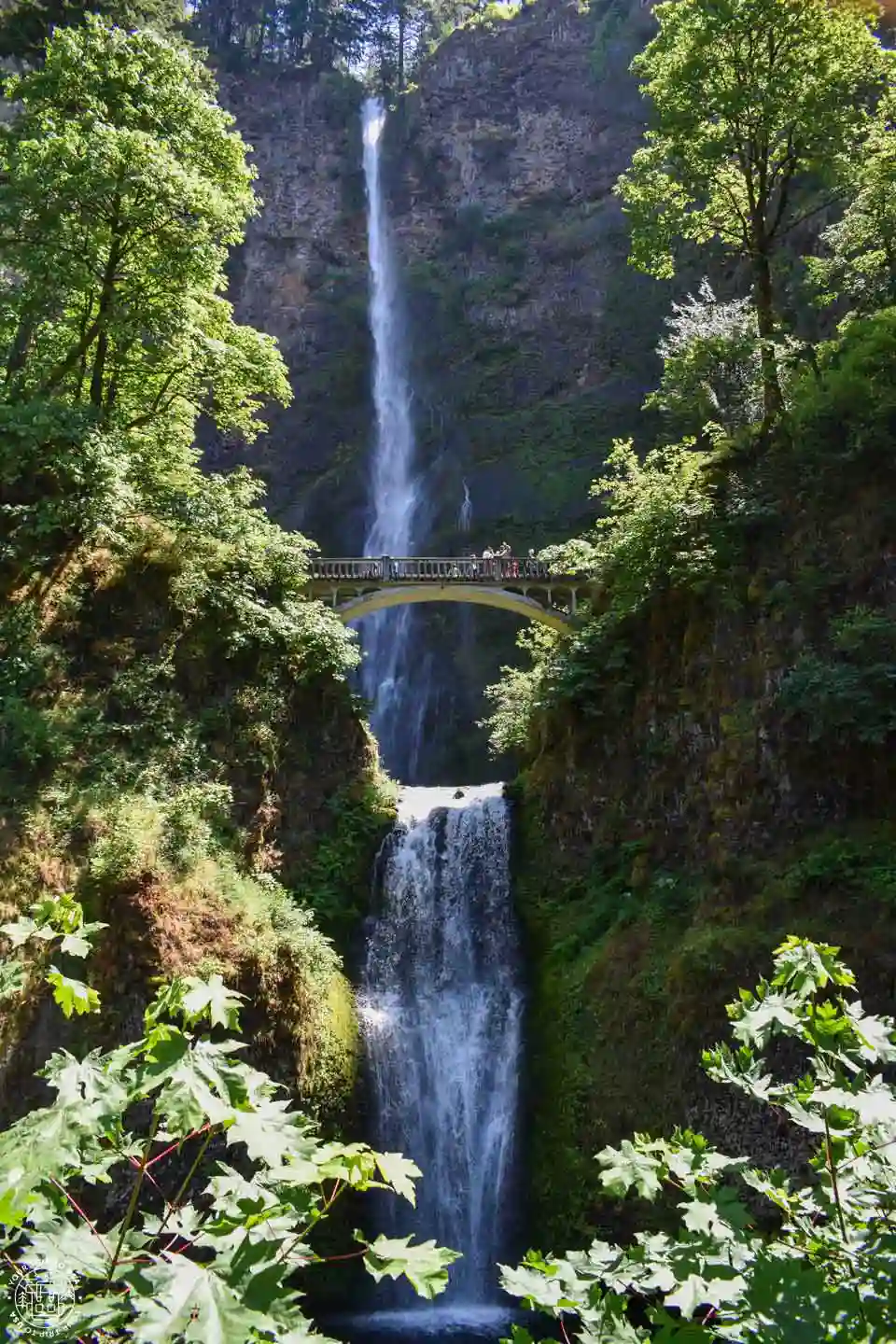
If all this hasn't convinced you to visit one of the viewpoints east of Portland, you should know that its southern bank is full of waterfalls that pour their waters just a few meters from the river itself. In our article on what to see and do on the Columbia River (coming soon), we'll tell you all its secrets.
5. Crater Lake National Park
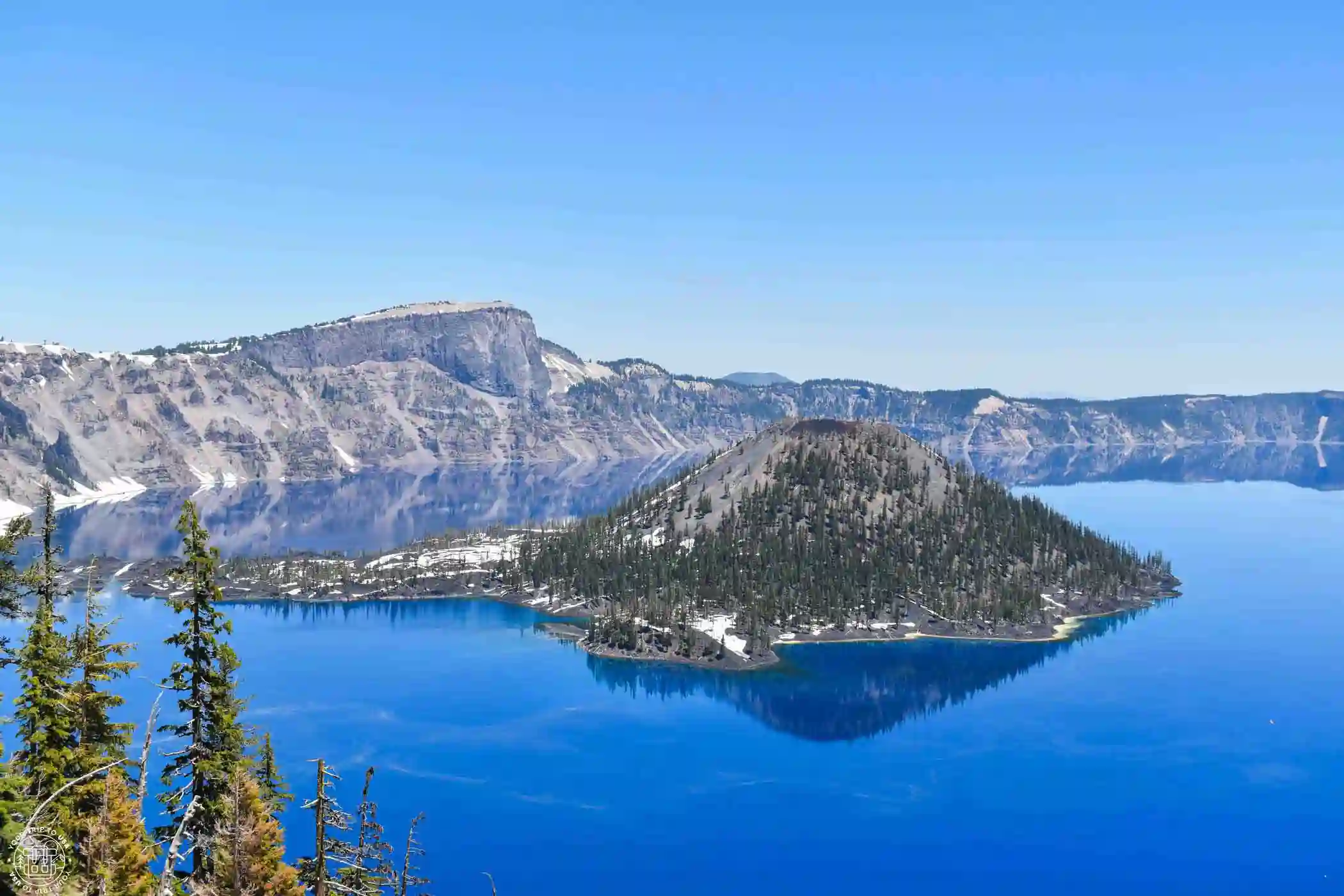
Crater Lake, the second deepest lake in North America, is located at an altitude of 6,174 feet (1,882 m) above sea level in the Cascades and is the only national park in the state of Oregon. It was formed 7,800 years ago when the Mazama volcano erupted violently and collapsed the volcanic cone.
The views of the lake from Discovery Point or the Rim Village Visitor Center are some of the most incredible in North America. Its location in the middle of a crater, its deep blue waters due to their depth and clarity, and the iconic Wizard Island make it one of the must-see attractions on any visit to the northwestern United States.
If you want to learn more about this wonderful place, check out our post on what to see and do in Crater Lake National Park (coming soon).
6. John Day Fossil Beds National Monument
Are you a fossil lover? This is the place for you! The John Day Fossil Beds is a protected area located 140 km (85 miles) from Bend and 17 km (10 miles) from the town of Mitchell. It preserves one of the world's largest fossil records of Cenozoic land plants and animals, the era when the first mammals appeared. You can see fossils of horses, bears, rhinos, cats, sequoias, magnolias… all preserved thanks to the area's volcanic ash 😯
There're three different areas to visit: Sheep Rock, Painted Hills, and Clarno. The most visited area is Painted Hills, where you can see hills striped with different color layers like yellow, black, red, tan, and orange. A visual spectacle! Furthermore, the colors appear different depending on the time of the day and the season, so you'll never get tire of visiting.
7. Deschutes National Forest
The Deschutes National Forest is full of lakes, waterfalls, volcanoes, and even has a scenic highway, the Cascades Lake Scenic Byway, which takes you to its best spots so you can just sit back and enjoy. This nature reserve covers 1,606,000 ac (6,500km²) in the Cascades and borders other protected areas such as the Fremont–Winema National Forest, the Umpqua National Forest, and the Willamette National Forest.
The must-see sites along the Cascades Lake Scenic Byway heading south from Bend are:
- Mount Bachelor: this photogenic 9,068-feett (2,764 m) volcano has a ski resort on its slopes. Its name is used to distinguish it from the neighboring mountains, the Three Sisters.
- Todd Lake: this beautiful but small lake is the highest in the Cascades, and from its shore you can see the peaks of the Three Sisters. To get there, you have to take a short hike from the road.
- Sparks Lake: From the scenic highway, you can enjoy beautiful views of the lake and the west face of Mount Bachelor, although you can also access the shore to go kayaking or paddleboarding.
- Three Sisters: These three iconic volcanoes, over 9,800 feet (3,000 m) high and oriented north to south, are some of the tallest and most famous mountains in the state of Oregon.
- Devils Lake: This small lake is ideal for fishing, kayaking, paddle surfing, and is also the access point to the South Sister Climber Trail.
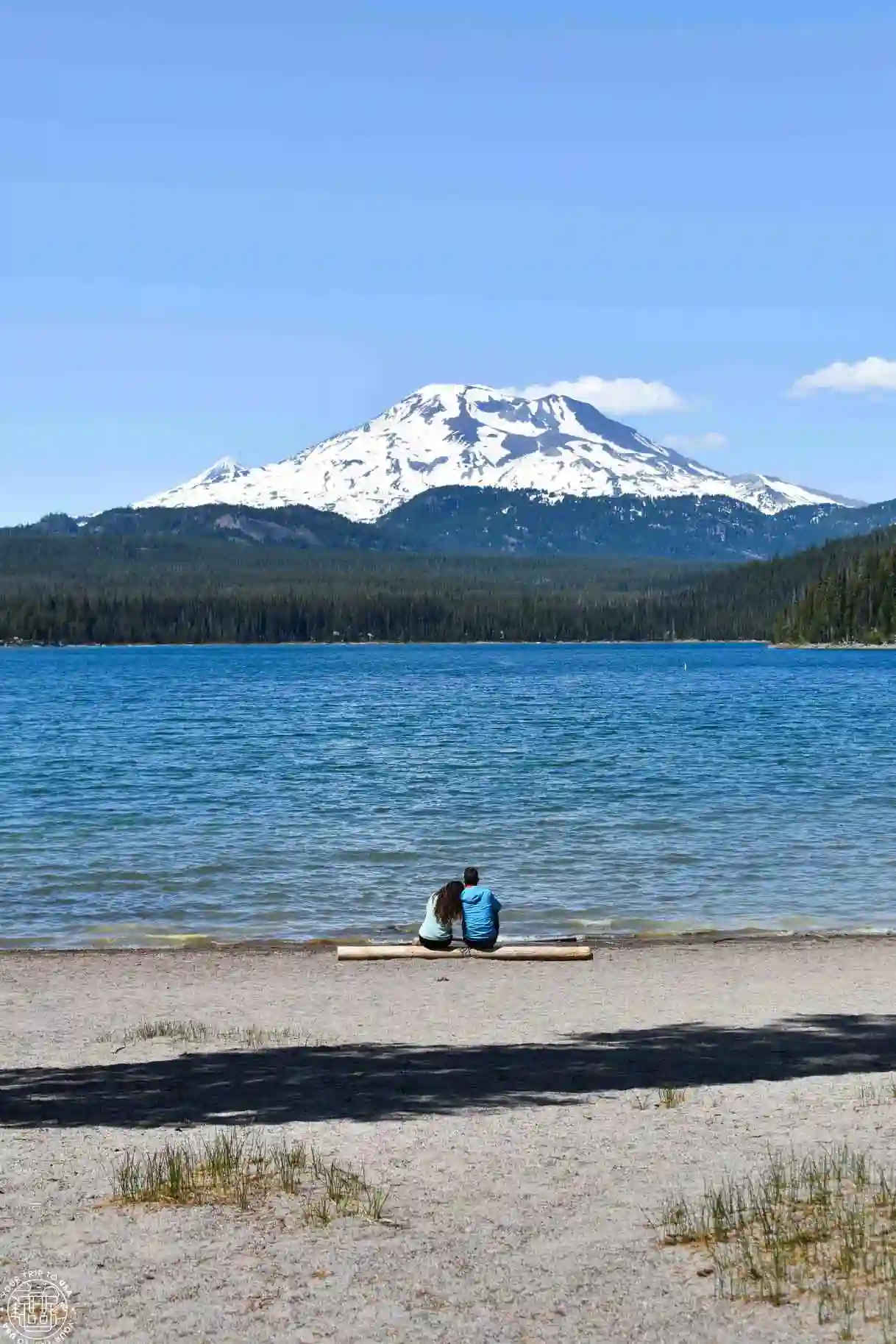
- Elk Lake: a beautiful lake with a beach and picnic area where you can relax or eat and enjoy the views with Mount Bachelor in the background.
- Lava Lake and Little Lava Lake: two other beautiful lakes with views of the surrounding volcanoes and a campground where you can spend the night.
- Craine Prairie Reservoir and Wickiup Reservoir: these two reservoirs are also part of the nature reserve, and although they're not as beautiful as the other lakes, they're well worth a stop if you have time.
- Davis Lake: this lake is unique in that a large lava flow reaches right up to its shore.
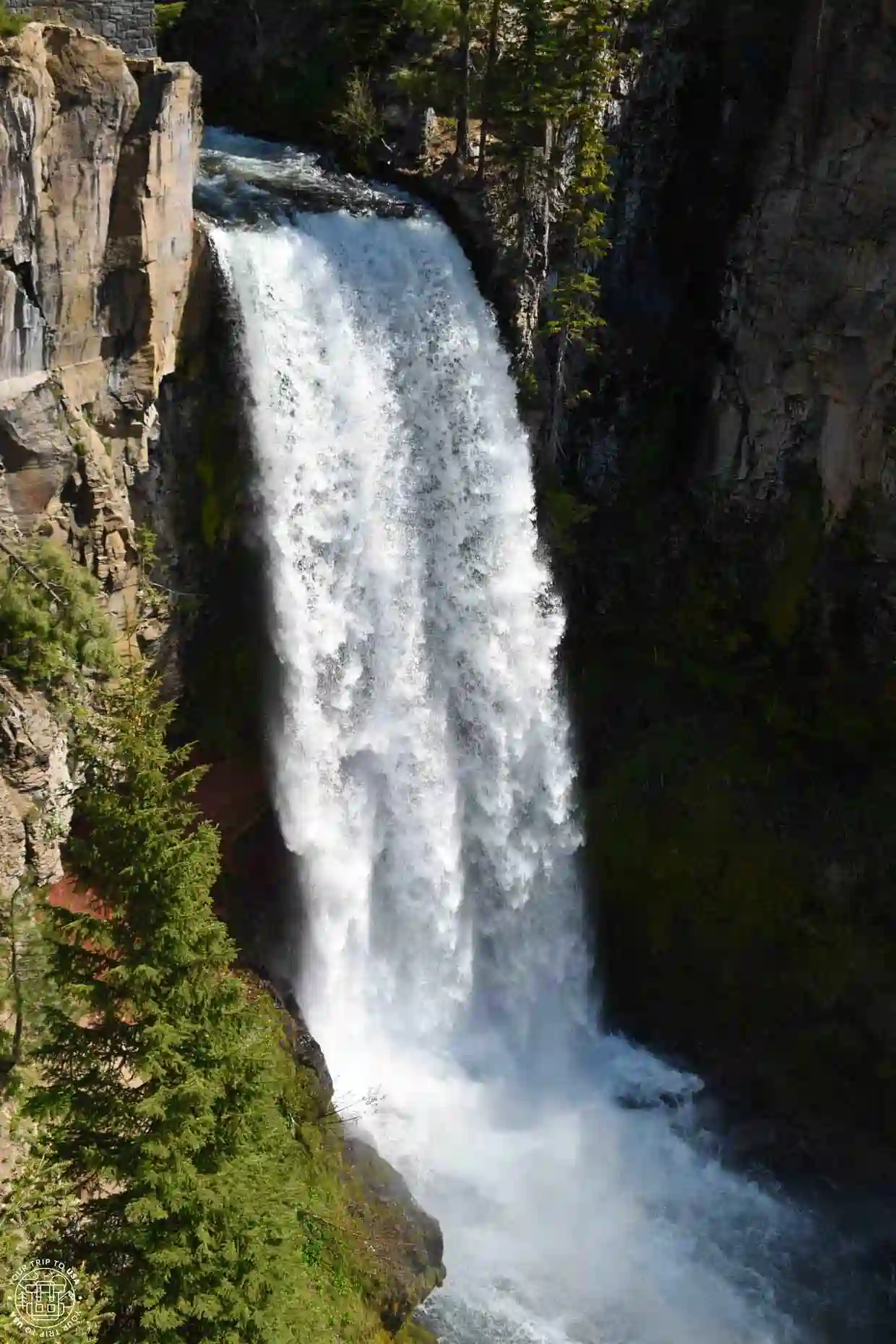
Another must-see in the Deschutes National Forest is Tumalo Falls. These 98-feet-high (30 m) waterfalls are located at the end of a well-maintained unpaved forest road. From the parking lot, where there is a picnic area, there is a 1,312-feet (400 m) trail (one way) to the viewpoint. The trail continues for another 1.2 mi (2 km, one way) to a second waterfall, Middle Tumalo Falls.
ℹ️ Although many of the parking lots are free, some require payment. Therefore, to access the Deschutes National Forest, you need an annual national park pass (America the Beautiful, priced between $80 and $250), an annual Northwest Forest Pass ($30), or a $5 daily pass. All prices are per vehicle.
8. Newberry National Volcanic Monument
The Newberry National Volcanic Monument is a protected area within the Deschutes National Forest and south of Bend, created to preserve the surroundings of Newberry Volcano. NASA also used this area to train Apollo program astronauts between 1964 and 1966.
It's divided into four areas that can be visited:
- The caldera of Newberry Volcano, where you can see East Lake and Paulina Lake, climb Paulina Peak, or view the Big Obsidian Flow, a 1,300-year-old obsidian lava flow.
- Lava Cast Forest, a 6,000-year-old lava flow that created casts of ancient tree trunks.
- Lava Butte is a 150-meter-high cylindrical volcanic cone next to the Lava Lands Visitor Center.
- Lava River Cave is the largest lava tube in Oregon. You can explore it on your own from May to September, but keep in mind that you'll need a flashlight, appropriate footwear, and warm clothing, as the average temperature inside is 42.8ºF (6°C). You can also join this organized tour of Lava River Cave.

DO YOU NEED A RENTAL CAR IN THE UNITED STATES?
Take a look at this search tool and get the best price!
9. High Desert Museum
South of Bend is this interesting place to visit in the state of Oregon, an outdoor and indoor museum that recreates the fauna, flora, art, culture, and natural resources of the high desert of Oregon. You can get your ticket to the High Desert Museum here.
It's located just 7 mi (12 km) from downtown Bend, and admission is $20 in winter and $24 the rest of the year.
10. Bend Blockbuster
The Blockbuster store in Bend is the only one still open in the world. This video store chain once had more than 9,000 franchises, but in 2010 it filed for bankruptcy and most of them closed. In this temple of VHS and DVD, you can find old and new movies to rent or buy, merchandise, and all kinds of curiosities from the world of cinema from the last 30 years.
🎥 Whether you're a movie buff, nostalgic for old video stores, or want to discover what life was like before Netflix, Apple TV, or HBO Max, you'll love this place.

11. Umpqua National Forest
The Umpqua National Forest is a nature reserve covering almost 988,000 ac (4,000km²) in the southern part of the Cascades. The highlights of this area of Oregon are its many waterfalls, volcanoes, lakes, and some interesting free hot springs. We recommend visiting it before or after Crater Lake National Park, as they're right next to each other.
The two most imposing mountains in this area are Mount Thielsen, with its characteristic pointed shape, and Mount Bailey, separated by Diamond Lake. This lake was formed around 7,000 years ago during the eruptions of Mount Mazama, which also created Crater Lake. In addition, the lake's waters feed most of the waterfalls in the nature reserve, as the North Umpqua River originates there.
Other lakes that form part of these forests are Lemolo Lake and Toketee Lake. The best way to explore the Umpqua National Forest is via the Rogue-Umpqua Scenic Byway, a scenic road that crosses the park and allows you to visit all its tourist attractions.
But we won't lie to you, many people visit this park to take a dip in the Umpqua Hot Springs, hot springs that bubble up in the middle of the forest overlooking the North Umpqua River. To get there, take the NF34 road that runs along Toketee Lake, take the right turn onto NF3401 and park in the designated parking lot. From there, a path through the forest and a bridge over the river will take you there in 15 minutes. Don't forget your flip-flops and towel!
💧 Here is a list of the most famous waterfalls you can find along this road, listed from east to west. As you can see, there are quite a few:
- Clearwater Falls
- Whitehorse Falls
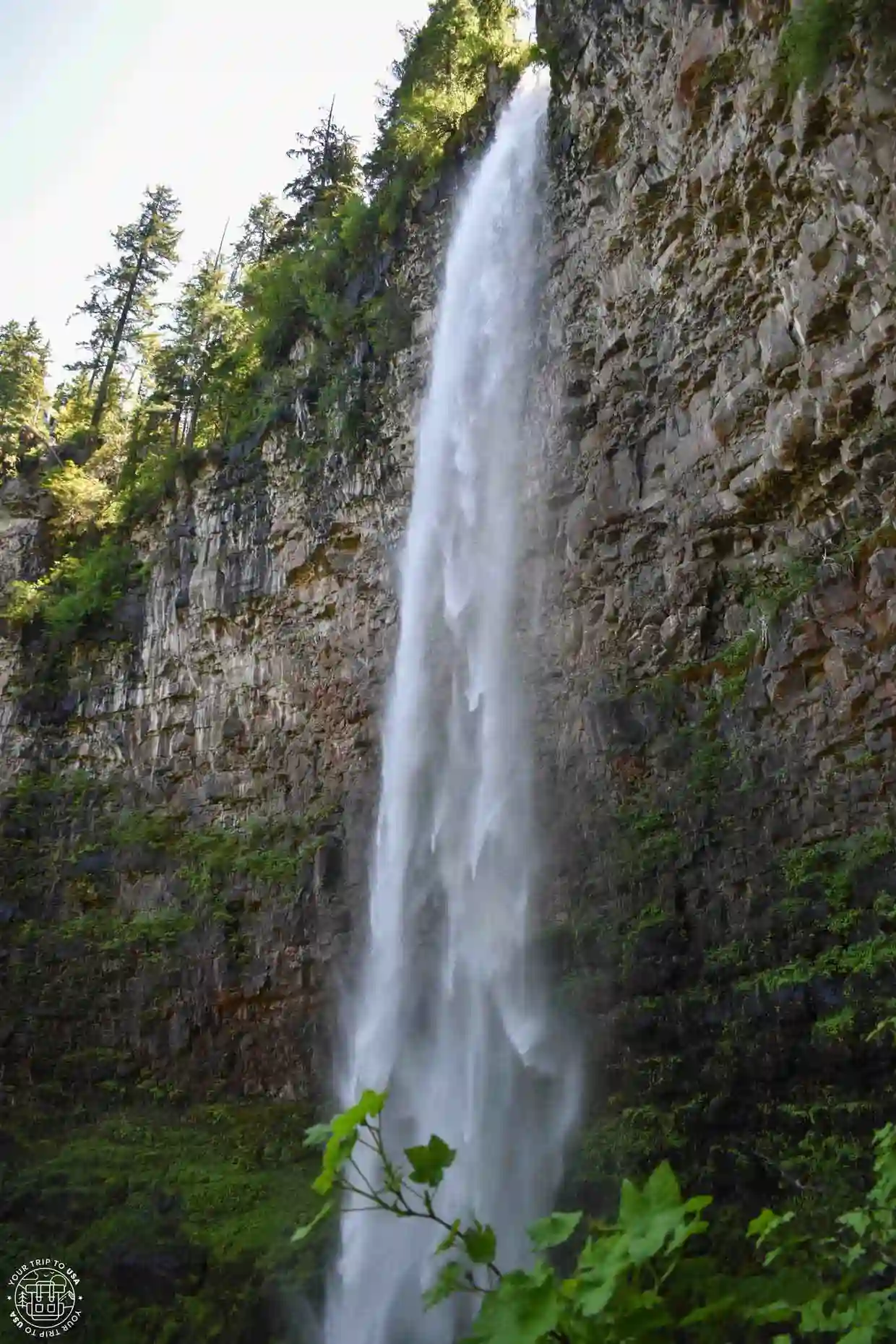
- Watson Falls
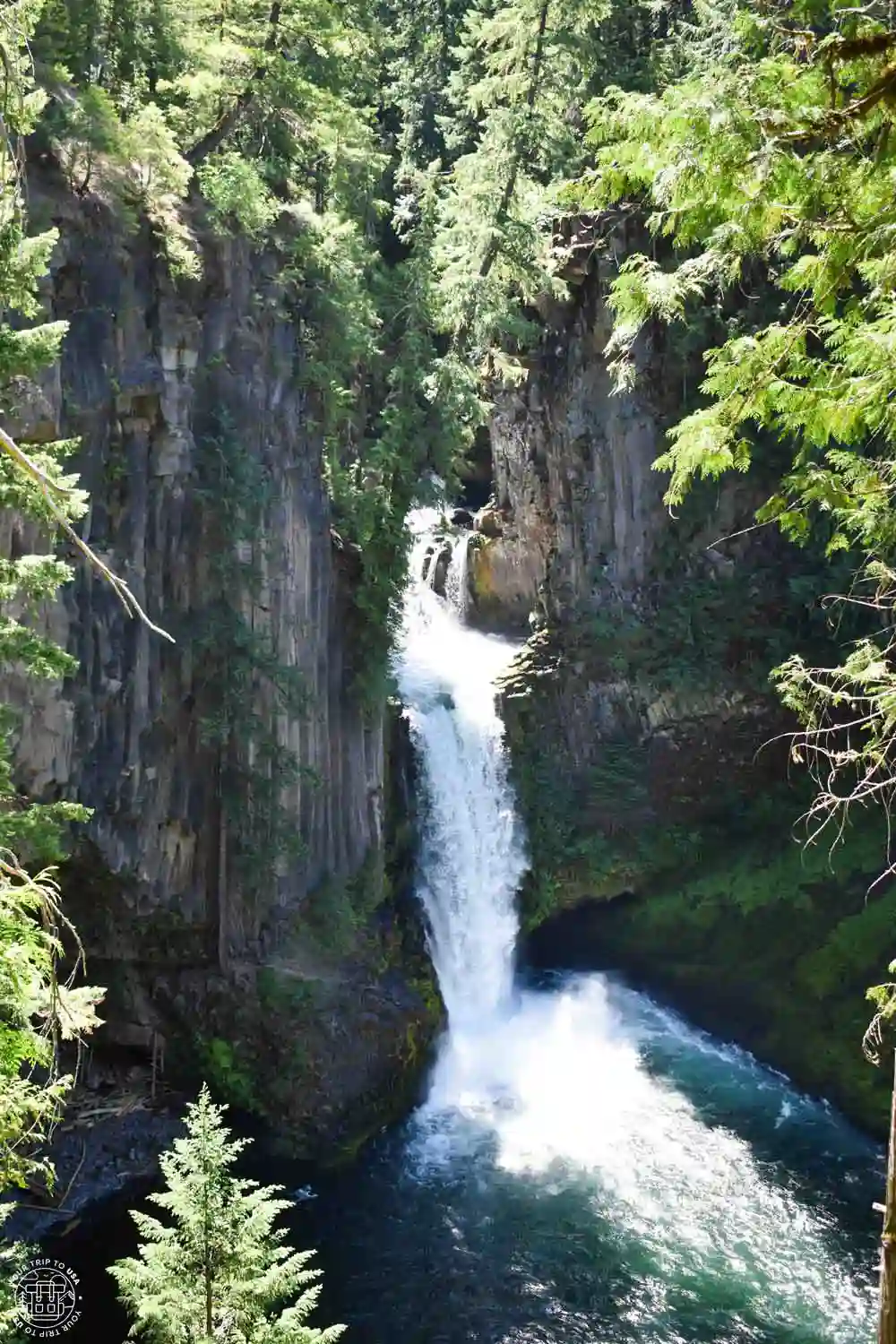
- Toketee Falls
- Fall Creek Falls
- Grotto Falls
- Susan Creek Falls
- Wolf Creek Falls
- Shadow Falls
- Deadline Falls
ℹ️ Although many of the parking lots are free, some require payment. Therefore, to access the Umpqua National Forest, you'll need an annual national park pass (America the Beautiful, priced between $80 and $250), an annual Northwest Forest Pass ($30), or a daily pass ($5). All prices are per vehicle.
12. Willamette National Forest
Another of the many national forests protecting the state of Oregon is the Willamette National Forest. Did you know that approximately 25% of the state is national forest? It's located in the central part of the Cascades and covers almost 1,680,000 ac (6,800km2), bordering Mount Hood NF, Deschutes NF, and Umpqua NF.
Although the Willamette National Forest does not have as many attractions as its neighbors, it does have several spots that are well worth a visit. In the northern part of the park, you'll find Clear Lake, Koosah Falls, and Tamolitch Falls. If you want to enjoy some hot springs, you can visit Terwilliger Hot Springs, and in the southern part, very close to the Deschutes National Forest, you'll find Salt Creek Falls.
ℹ️ Although many of the parking lots are free, some require payment. Therefore, to access the Willamette National Forest, you need an annual national park pass (America the Beautiful, priced between $80 and $250), an annual Northwest Forest Pass ($30), or a daily pass ($5). All prices are per vehicle.

Take a look to this travel insurance for the United States comparison in case you need to book one
13. Oregon coast
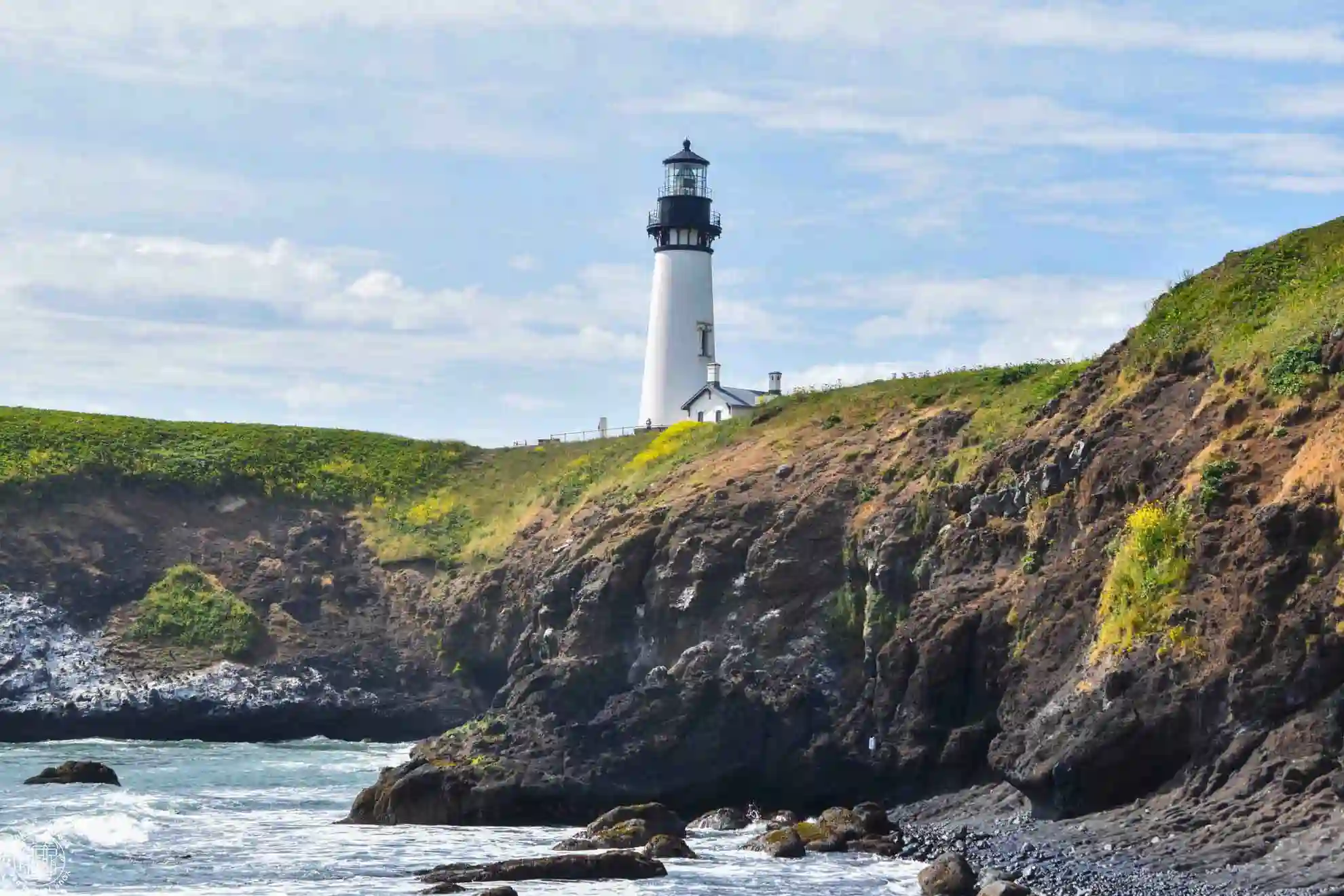
One of the places you shouldn't miss and one of the best places to see in Oregon is its coastline. It's a wild coast with pristine beaches, charming lighthouses, cliffs, small fishing villages, and wildlife that will leave you speechless.
Among many other things, you can see giant sequoias, puffins, seals, sand dunes and even carnivorous plants. If you want to know all the details, check out our article on what to see and do on the Oregon Coast (coming soon).
14. Oregon Dunes National Recreation Area
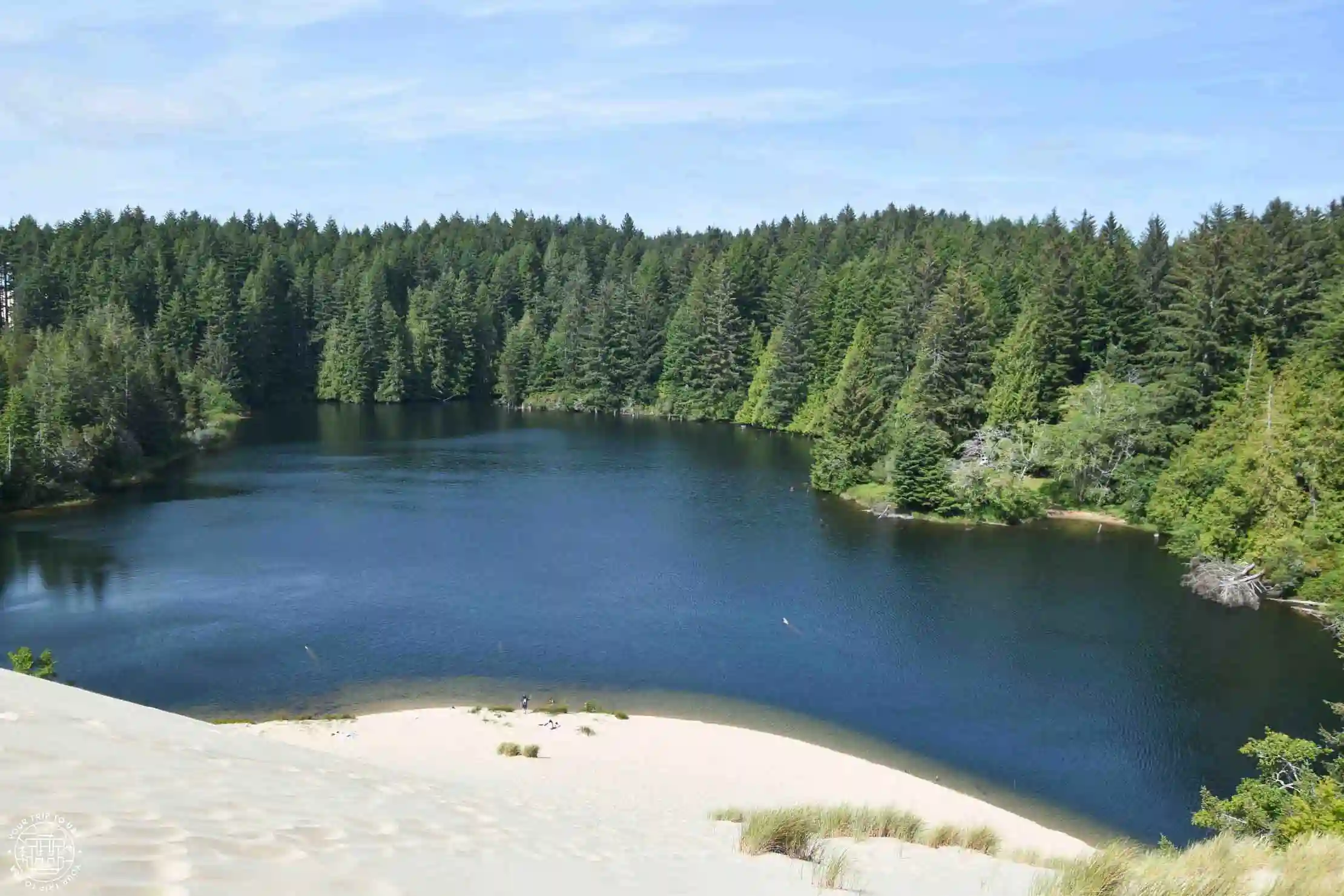
Although it's part of the Oregon Coast, this protected area deserves special mention, as it boasts the largest expanse of coastal dunes in North America. It stretches for 64 kilometers (40 miles) along the entire coastline!
Here, the dune landscapes merge seamlessly with the ocean, creating breathtaking scenery. There're even areas where the contrast between forests, lagoons, and dunes seems almost surreal, like at Hall Lake. If you make it here, climb to the top of the dune—even though it's tiring, you'll be amazed by the views!
15. Silver Falls State Park
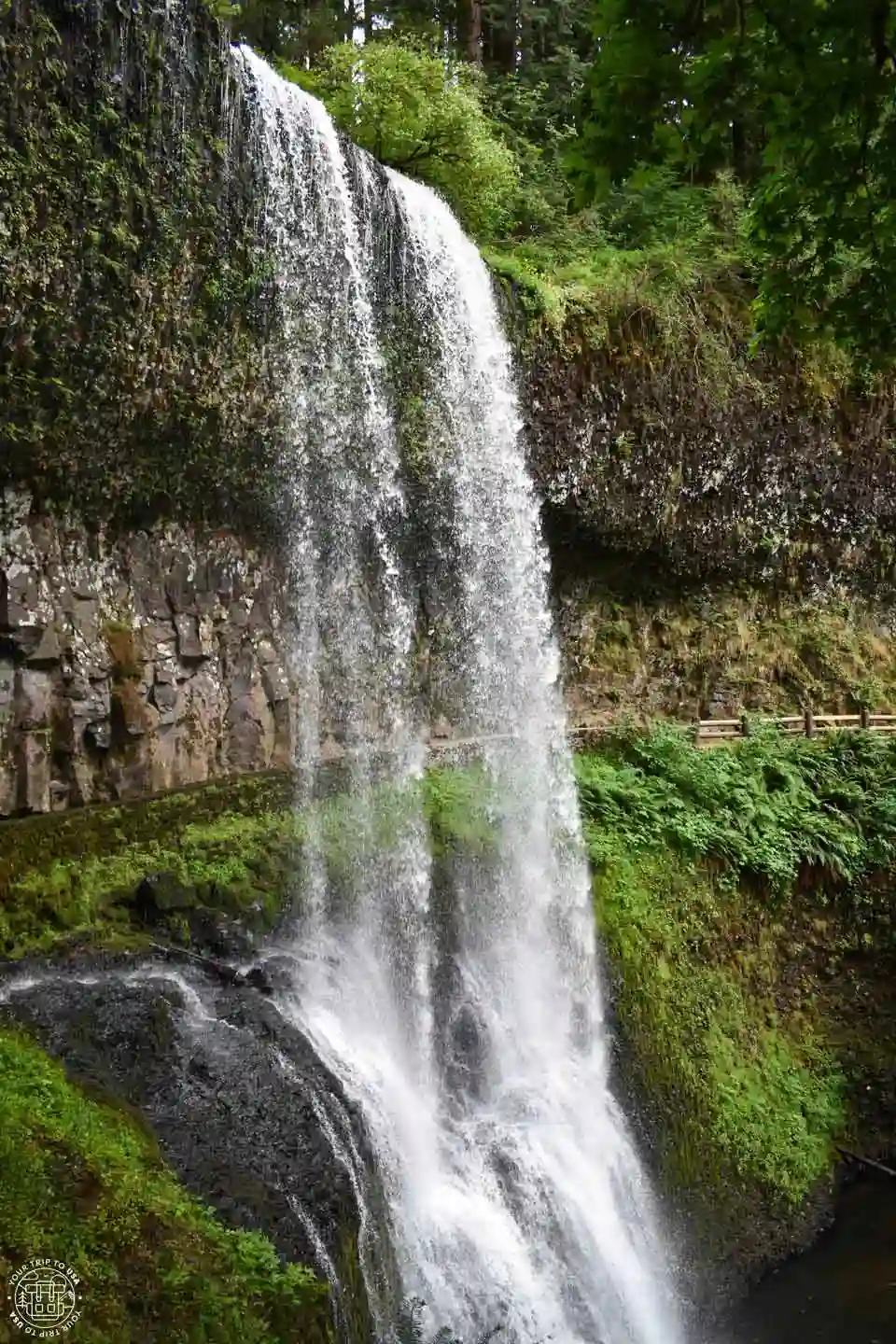
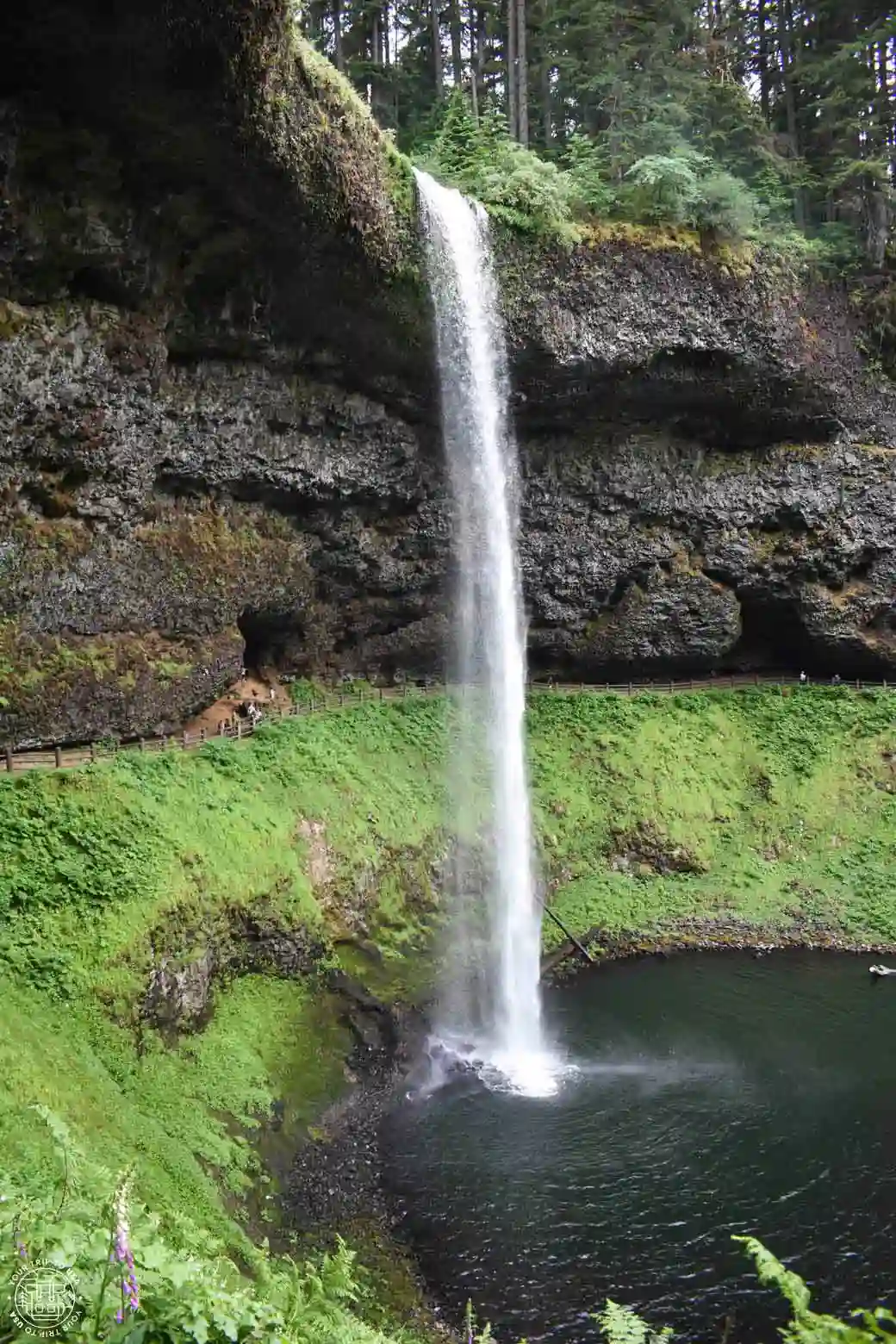
It's the largest state park in Oregon, where you can visit up to 10 waterfalls and walk behind at least 4 of them. To see them all, you must take the Canyon Trail or Trail of 10 Falls, a 7 mi (11.4 km) hike of moderate difficulty, where you can explore a canyon full of trees and waterfalls of all kinds that will amaze you. If you don't have much time, you can visit only South Falls, a 177-feet-high (54 m) waterfall that you can see from both above and below and even walk behind.
ℹ️ Silver Falls State Park is located 24 mi (38 km) from Salem and has parking, a picnic area, restrooms, and camping facilities. The park is free, but parking must be paid for, which costs $10 for Oregon residents or $12 for non-residents. You can pay on site at the parking meters or online on the same day. You can also purchase an annual pass for Oregon State Parks for $60 for residents and $75 for non-residents.
16. Volcanic Legacy Scenic Byway
This 500-mile (800 km) scenic highway between southern Oregon and northern California connects some of the region's most beautiful natural sites through its volcanic landscapes. Highlights include Lassen Volcanic National Park, Lava Beds National Monument, Tule Lake National Monument, and Crater Lake National Park, among other nature reserves, lakes, and mountains.
You can do just one section or the whole route, depending on how much time you have, but either way, the scenery will leave you speechless.
17. Collier Memorial State Park
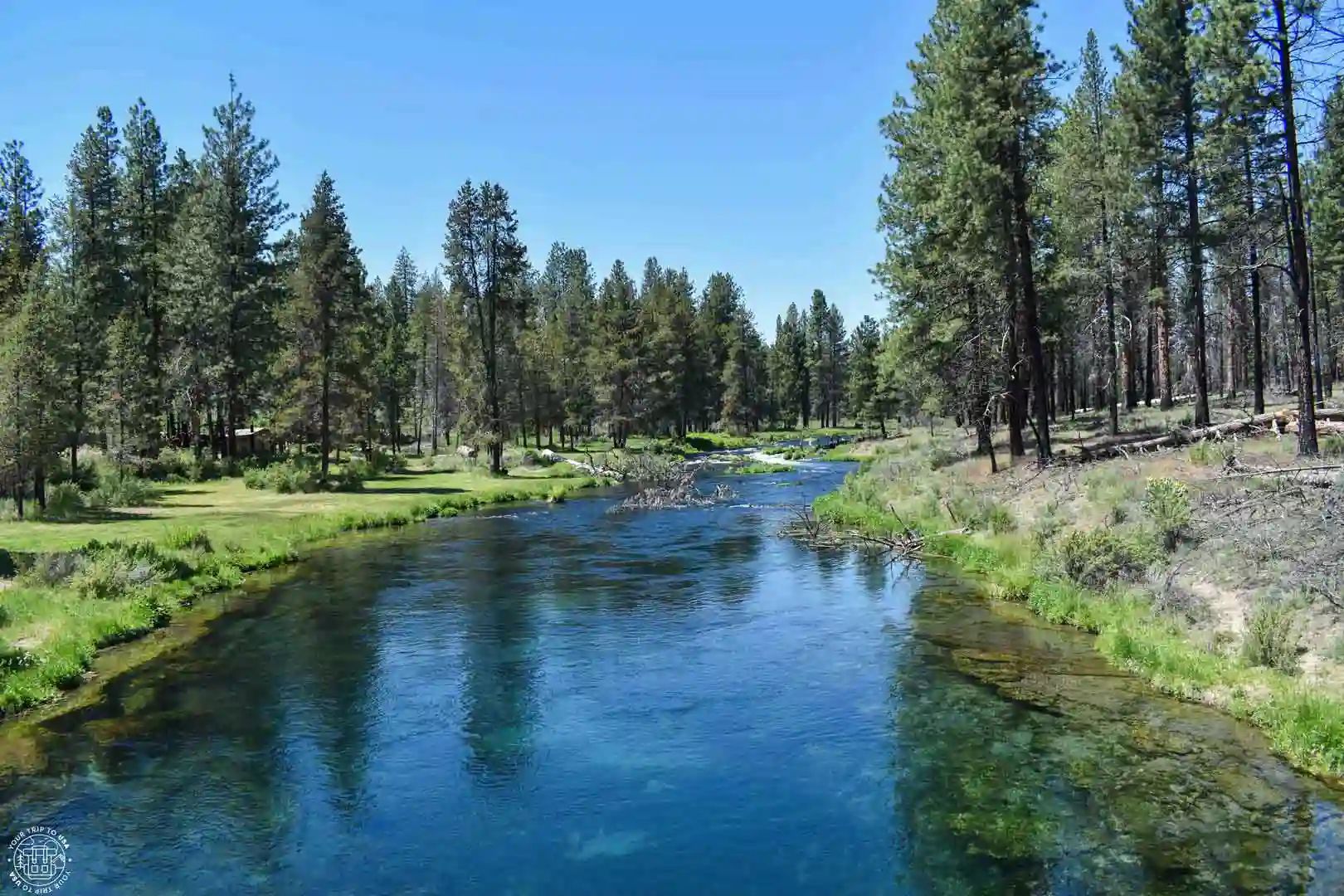
Would you like to discover Oregon's most crystal-clear waters? This beautiful state park, located very close to Crater Lake National Park, 32 mi from the south entrance (51 km) and on the Volcanic Legacy Scenic Byway, is ideal for picnicking, walking, visiting the outdoor museum of historic logging equipment, or kayaking on pristine Spring Creek. It also has a riverside camping area and public restrooms, and access is free.
18. Portland
Portland is the largest city in the state of Oregon and the third largest in the American Northwest after Seattle and Vancouver. Located at the confluence of the Columbia and Willamette rivers, its climate is hot and dry in summer and cool and rainy in winter, making it an ideal place to grow roses. That's why it's known as the City of Roses! 🌹
It's also famous for its vibrant cultural and artistic scene, its numerous parks, and for being home to an NBA franchise, the Portland Trail Blazers. It's a good place to catch your outbound or return flight on any route through the states of Oregon or Washington.
Some of the museums and historic buildings you shouldn't miss in Portland are:
- Portland Art Museum
- OMSI (Oregon Museum of Science and Industry)
- Pittock Mansion
- Oregon Maritime Museum
- Oregon Rail Heritage Center
- The World Forestry Center & Discovery Museum
As we mentioned, this city has many green spaces. Here is a selection of the best parks in Portland:
- International Rose Test Garden
- Lan Su Chinese Garden
- Portland Japanese Garden
- Mount Tabor Park
- Tom McCall Waterfront Park
- Hoyt Arboretum
The must-see neighborhoods in Portland are Downtown with the exclusive Pearl District, the Alberta Arts District with its many art galleries and cafes, and Hawthorne/Division, which is full of bars, restaurants, and local shops. And finally, don't forget to stop by Powell's City of Books, the world's largest independent bookstore with tens of thousands of books on different topics.

INTERNET IN THE UNITED STATES
We have 2 discounts for you:
-3 FREE days with eSIMFlag ➡️ Unlimited data at the best price! Code: TRIPTOUSA10
-10% OFF with SimLocal ➡️ Best deal with limited data! Discount applied automatically
🤓 Take a loot at: Best SIMs & eSIMs for traveling to the USA
19. Airplane Home
Would you like to visit an authentic passenger plane converted into a home? ✈️ In Hillsboro, a 30-minute drive from Portland, you can. Bruce Campbell, a retired electrical engineer, bought a decommissioned Boeing 727-284 and installed it in the middle of a forest. In total, he spent $220,000 to create this unique home.
If your curiosity has been piqued, you should know that it's possible to visit it and climb both on the wings and inside. To do so, you must first contact the owner by email and make an appointment. Here is the link to Airplane Home so you can discover it for yourself.
20. Oregon Caves National Monument
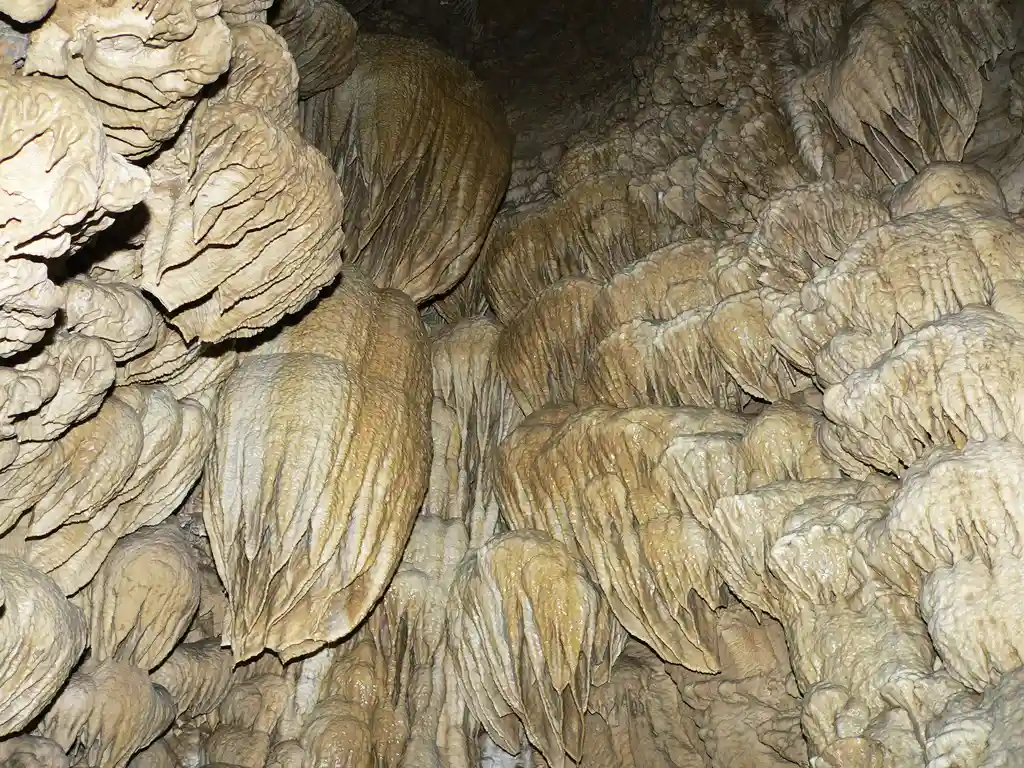
This National Monument in the southern part of the state consists of a marble cave filled with rock formations such as stalactites and stalagmites. These have been created by water seepage over at least 1 million years and are one of the sites to see in Oregon. The vast majority of caves are composed of limestone or dolomite rocks, but in this case, they're entirely marble, which makes the place exceptional. 😯
To give you an idea, of the 3,900 caves managed by the U.S. National Park Service, only three are composed of marble. In addition, the Oregon Caves Chateau, a historic six-story hotel built in 1934 in a rustic style and considered a national historic landmark, is located within the grounds.
ℹ️ Visits to the cave can only be made on one of the tours organized by park rangers. There are different types of tours depending on the age, abilities, and desire for adventure of each participant. Tickets are sold only at the Illinois Valley Visitor Center in Cave Junction and are available on a first-come, first-served basis.
We recommend wearing warm clothing, as the cave has an average temperature of 41ºF (5ºC), and closed-toe hiking shoes, as the floor can be slippery.
Oregon attractions map
On this map, we've marked the most notable places in the state of Oregon and our accommodation recommendations:
We hope this list of places to see in Oregon helps you plan your next trip!
Foto Oregon Caves: Wikimedia Commons