

Things to See in Wyoming (Must-Sees)
Flaming Gorge National Recreation Area
The Flaming Gorge National Recreation Area is a protected natural area located between the states of Wyoming and Utah. Its main attraction is Flaming Gorge Reservoir, which, at 94 miles (150 km) long, is the largest reservoir in the state of Wyoming and collects the waters of the Green River.
It’s an ideal area for camping, biking, hiking, spotting wildlife such as pronghorn or bighorn sheep, enjoying water sports on the lake, or taking in the fantastic views. The best viewpoint is Sheep Creek Overlook on Highway 44 between the town of Manila and Greendale Junction, or near the dam where the visitor center is located.
Fossil Butte National Monument
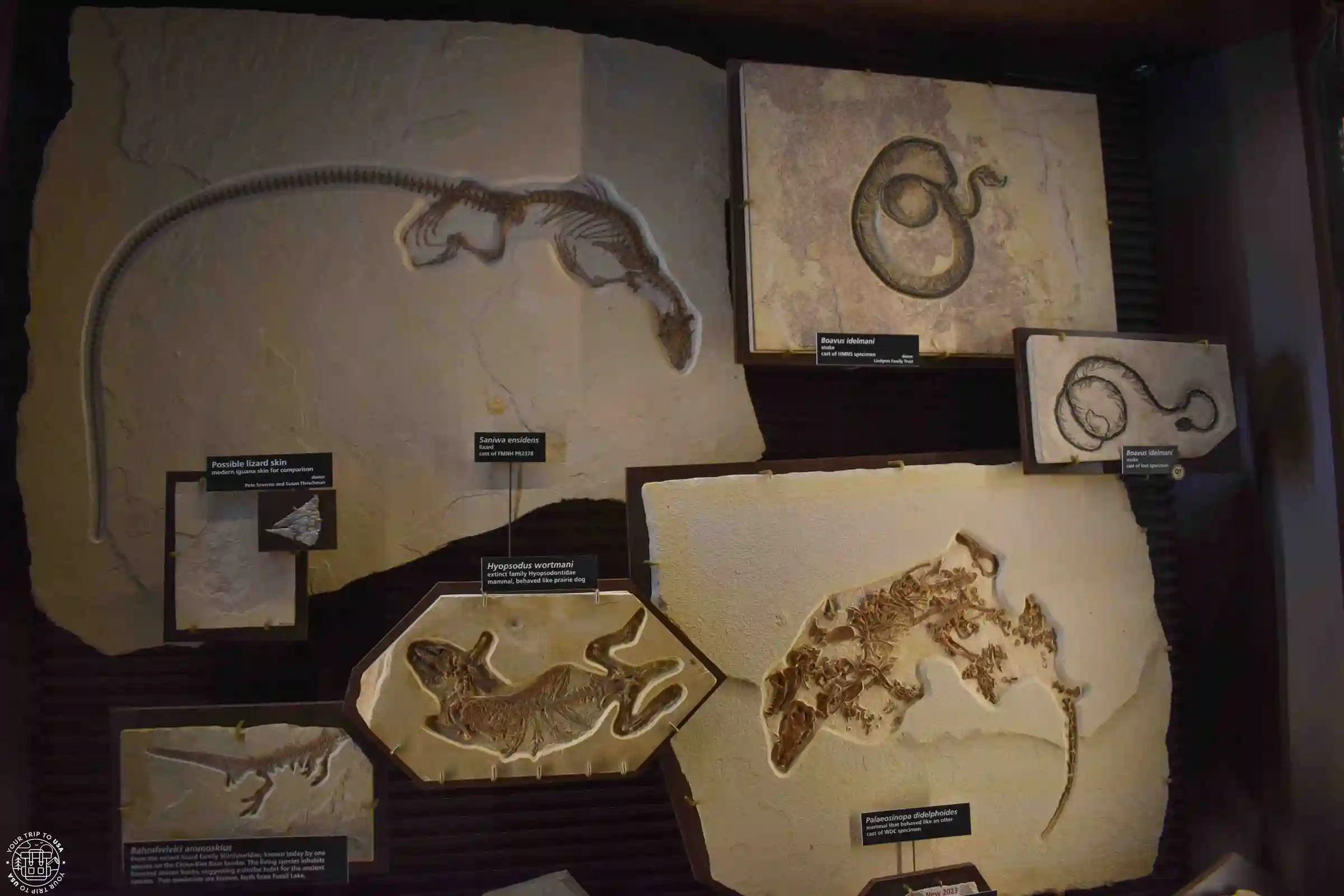
Fossil Butte National Monument is an incredible place to see remarkably well-preserved fossils —a site we really enjoyed and found truly amazing during our visit to Wyoming. Located in the southwestern part of the state, it houses a collection of animal and plant remains dating back 56 to 34 million years (Eocene), considered the best in the world from that period. 😮
During the Eocene epoch, the states of Wyoming, Utah, and Colorado were covered by three large lakes, and the climate was tropical; the fossils found here come from the bed of the smallest of the three, known as Fossil Lake. In addition to enjoying the scenery, driving along the scenic byway, or going for a hike, the visitor center is an absolute must-see.
The center includes an exhibition of fossils of fish, alligators, bats, turtles, rays, a horse, insects, and a wide variety of plants, all in excellent condition, as well as informational panels where you can learn a lot about the fossils and the period in which these creatures lived. Don’t forget to check out the restroom—there’s an exhibit of animal poop fossils inside. 😂
Bridger-Teton National Forest
It is one of the largest national forests in the United States and borders the state’s major national parks, such as Yellowstone and Grand Teton. Here you can find all kinds of wildlife native to the area, including bears, wolves, coyotes, mountain lions, various species of deer (including elk and moose), bison, wild goats, pronghorns, bald eagles, and many others.
On Highway 89 near the Idaho state line, you'll find the Salt River Pass Scenic Overlook, a beautiful viewpoint within the national forest—perfect if you'd like to stop along the way. To reach Jackson from the south, you'll pass through these forests.
Wind River Range
This mountain range, located in western Wyoming and protected by the Bridger-Teton and Shoshone National Forests, is part of the Rocky Mountains. It is an alpine region, dotted with lakes, glaciers, and peaks over 13,000 feet (4,000 m) in elevation, and is an ideal place for hiking and camping.
The most famous hike in the area, the Sacred Rim Trail, is located near the town of Pinedale and is an easy hike, offering stunning views of the mountain range.

INTERNET IN THE UNITED STATES
💡 The most convenient way to get internet access in the U.S. is to buy an eSIM—that way, you'll have a connection as soon as you set foot in the country. Plus, local SIM cards in the U.S. are pretty expensive.
💸 We have 2 discounts for your unlimited data eSIM for the US:
⭐5% OFF with Holafly ➡️ Excellent coverage
⭐20% OFF with eSIMFlag ➡️ Best price
🤓 Take a loot at: Best SIMs & eSIMs for traveling to the USA
Jackson Hole
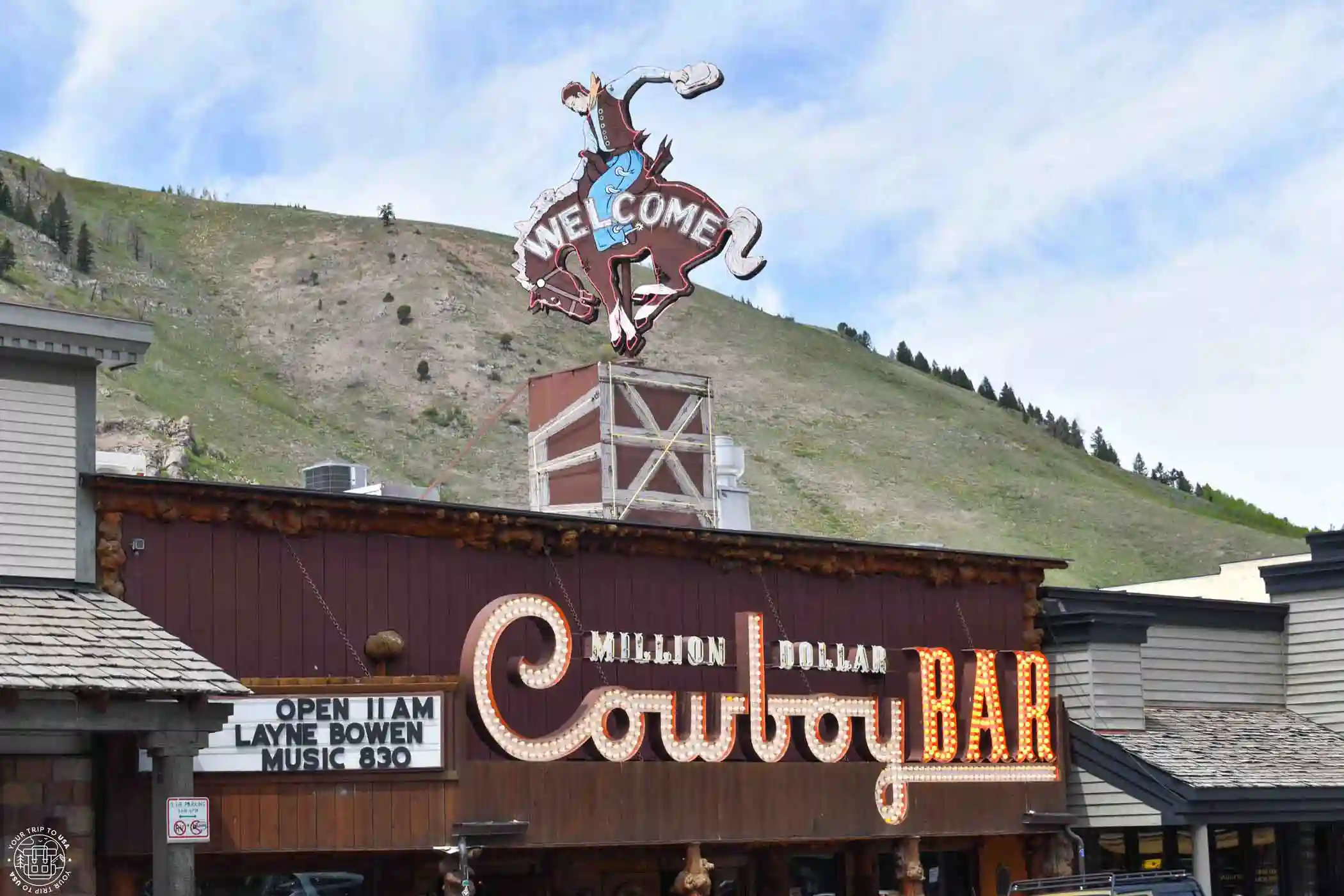
Jackson is a true American Western cowboy town—or at least it used to be—and it still retains some of that charm, even though it has now become an upscale ski resort. Located in the western part of the state and next to Grand Teton National Park, it serves as one of the main gateways to the area, as it has a commercial airport.
From May through mid-October, it serves as a starting or ending point for many tourists visiting the national parks of western Wyoming, and in our article on things to do in Jackson, we’ll tell you all about this Wild West town.
National Elk Refuge
This nature reserve was established to protect the migration of elk from Yellowstone to milder areas in southern Wyoming during the winter. Due to the construction of fences on ranches around Jackson, many of these animals died during the harshest winters of the late 19th and early 20th centuries. In response to this problem, the U.S. government established this park in 1912.
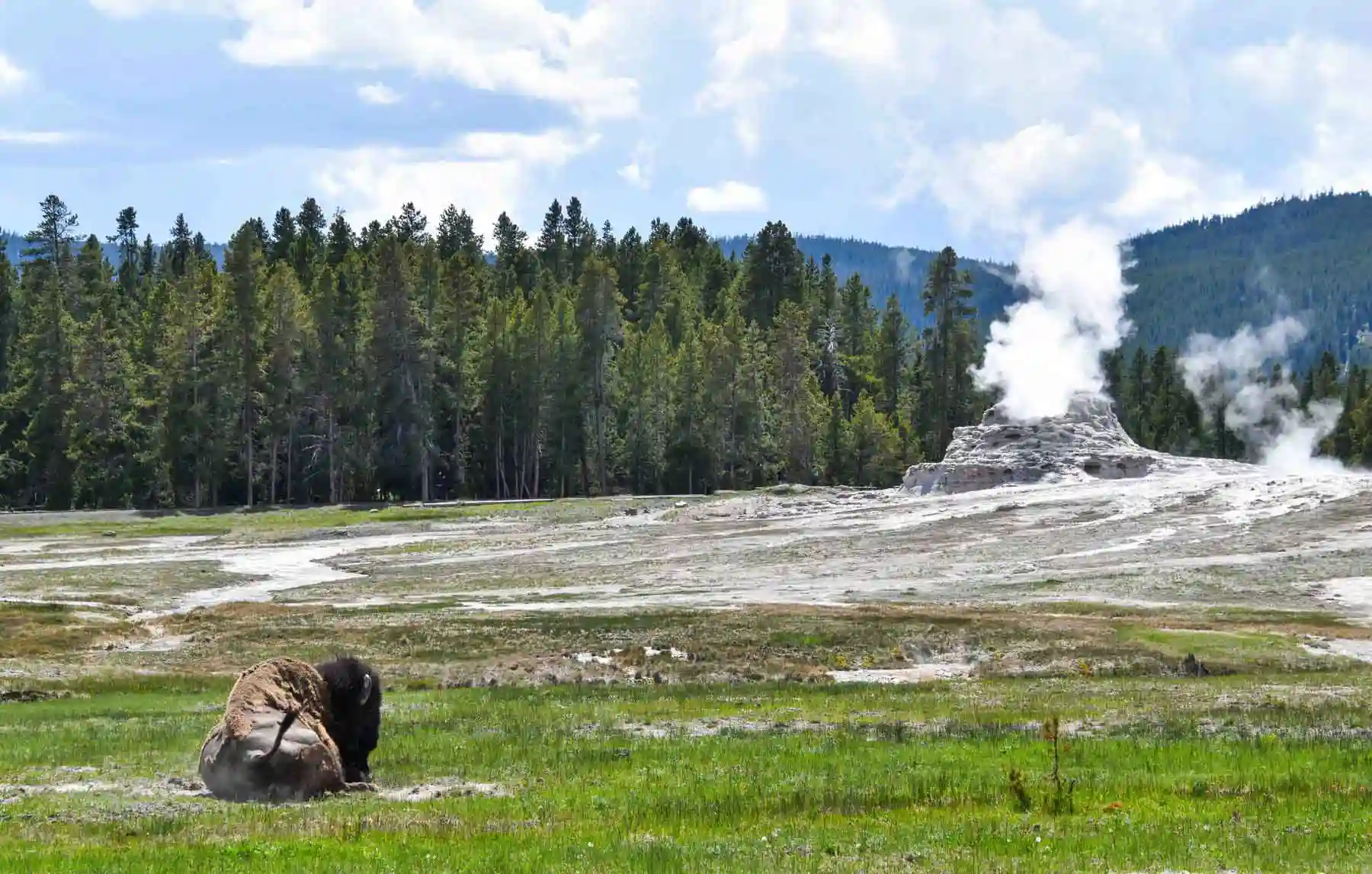
Today, it is a wildlife sanctuary that is home to large herds of deer, bison, and pronghorn, among other animals, which spend the winter in this area between the town of Jackson and Grand Teton National Park. During the rest of the year, it is also possible to spot bison in small groups, though they are usually far from the road.
Grand Teton National Park
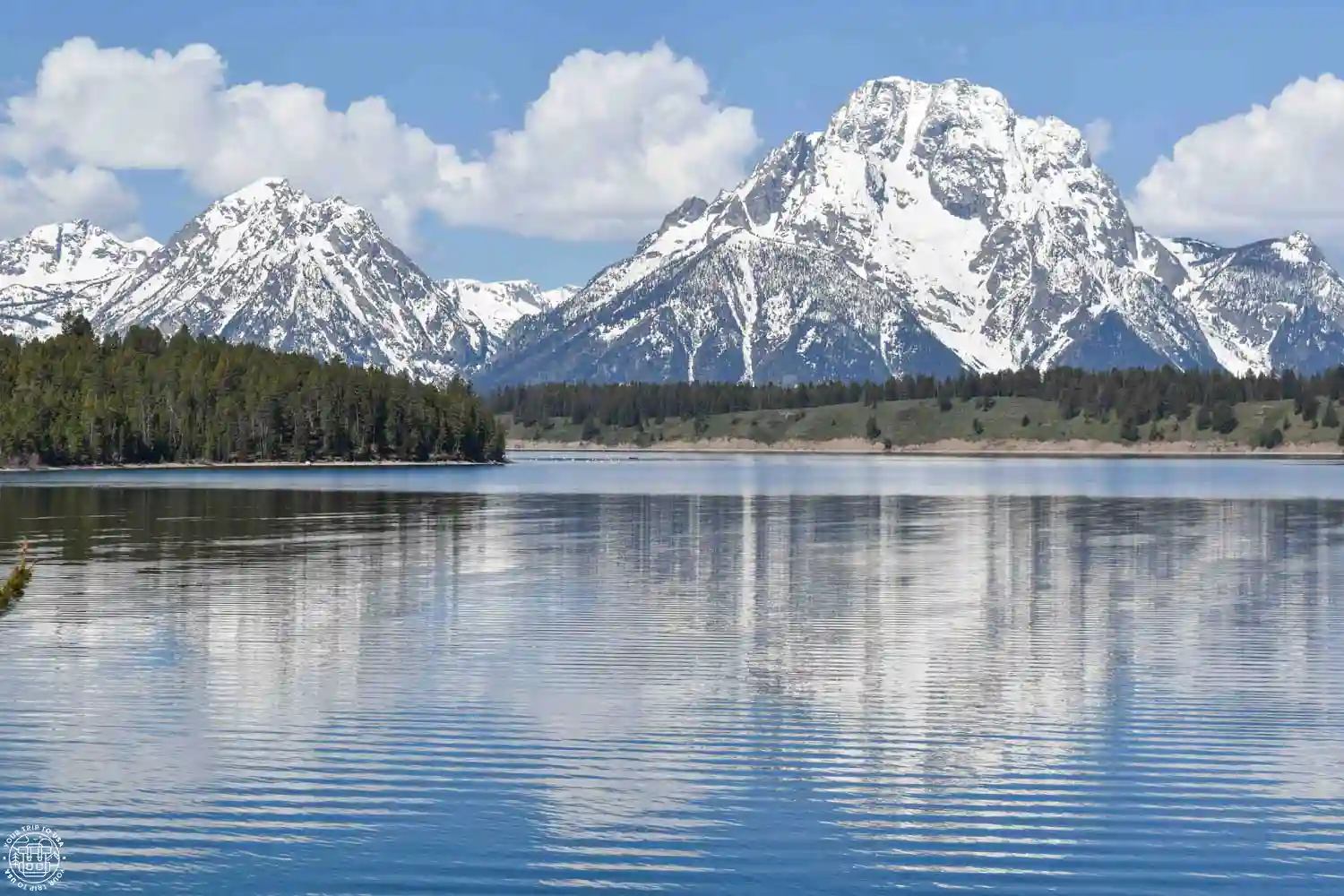
This famous national park, located between Yellowstone and Jackson, protects the Teton Range, the surrounding lakes, rivers, valleys, and meadows, and is part of the Greater Yellowstone Ecosystem, one of the last remaining nearly intact ecosystems in the Earth’s northern temperate zone.
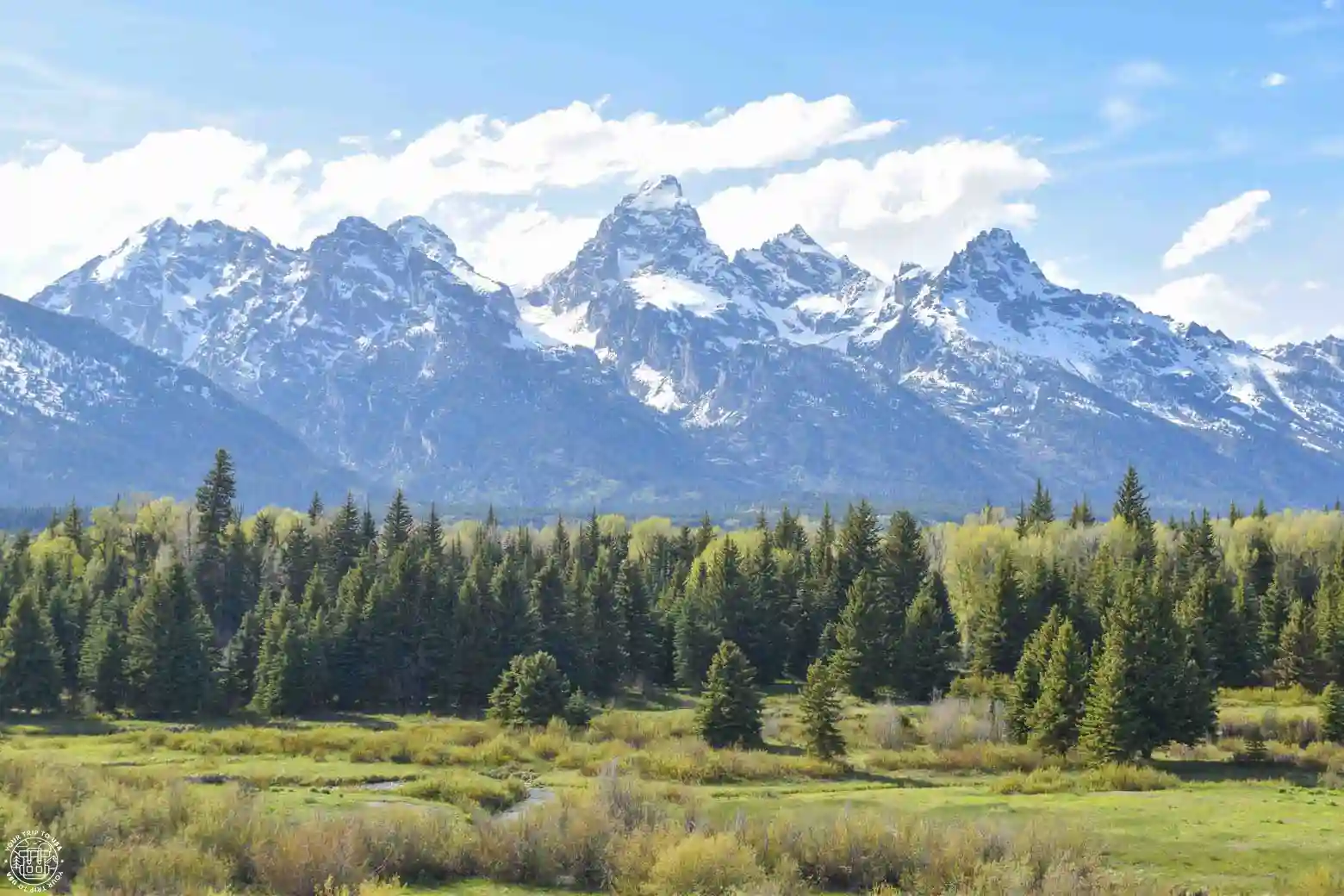
Here you’ll find incredible landscapes featuring vast lakes surrounded by towering mountains, alpine lakes, snow-capped peaks, the Snake River teeming with wildlife, and old barns that will transport you to another era. It’s the perfect place for hiking, mountaineering, kayaking, and wildlife viewing—including deer, elk, bears, wolves, and more—or simply to take in views that will leave you speechless.
In our post on how to visit Grand Teton, we'll tell you much more about this must-see Wyoming destination.
Smith Mansion
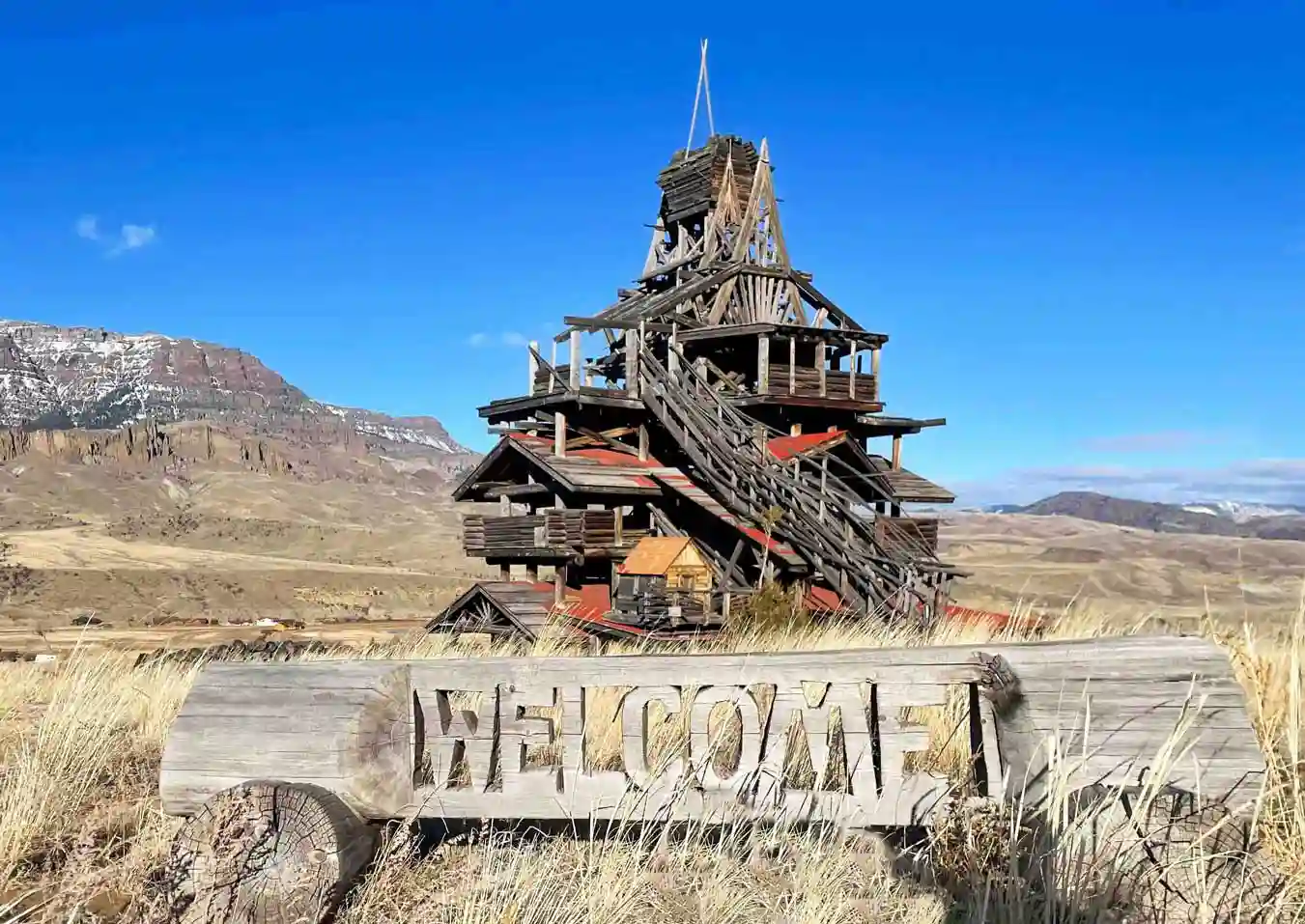
This strange, 75-foot-tall (23 m) structure on the road between Cody and Yellowstone was built by a single man named Francis Lee Smith over the course of more than 20 years, until he died in a fatal fall from one of the house’s roofs. He lived there with his wife and two children without heat, electricity, running water, or gas. The building is not open to visitors, so you’ll have to settle for viewing it from the road.
Buffalo Bill Dam
This impressive dam, over 325 feet (100 m) high and nestled in the Shoshone River Canyon, forms Buffalo Bill Reservoir. It is located on the outskirts of Cody, a town founded by the famous William Cody (Buffalo Bill), a late-19th-century showman who reenacted "life" in the Old West through performances across the United States and Europe.
This reservoir, which is protected by Buffalo Bill State Park, features several overlooks and a visitor center located at the dam.

🚐 The U.S. is a paradise for traveling by camper van or motorhome: there are plenty of campgrounds, wonderful places to stay overnight for free, and amenities around every corner.
If you'd like to try this way of traveling, the United States is the place to do it!
💸 And you can save a lot of money on lodging and food!
➡️ We always book through this rental search engine because they work with all the companies and have great deals.
Old Trail Town
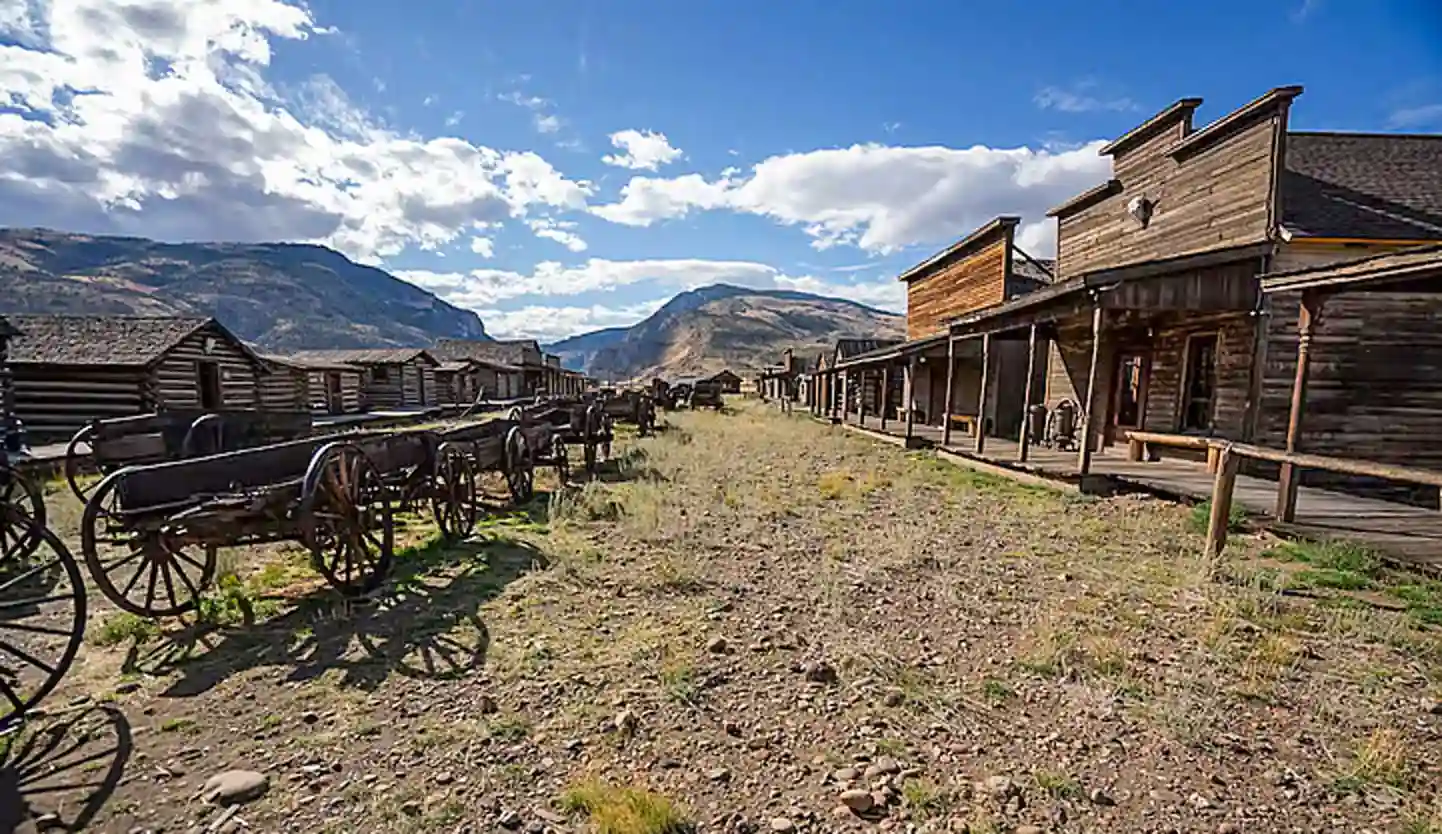
Old Trail Town is an open-air museum on the outskirts of Cody, situated on the town’s original site, which preserves up to 25 historic buildings from the area built between 1879 and 1901. It is a fascinating place that brings to life what daily life was like in this region in the late 19th century, when it was a frontier town in the Wild West.
What’s more, some of these cabins were once home to famous figures from the American West, such as 7th Cavalry officer George Custer, Jeremiah Johnson, and members of the Wild Bunch gang—Butch Cassidy, Kid Curry, and Sundance Kid. All of them have been portrayed in various Hollywood movies! 🎥
Buffalo Bill Center of the West
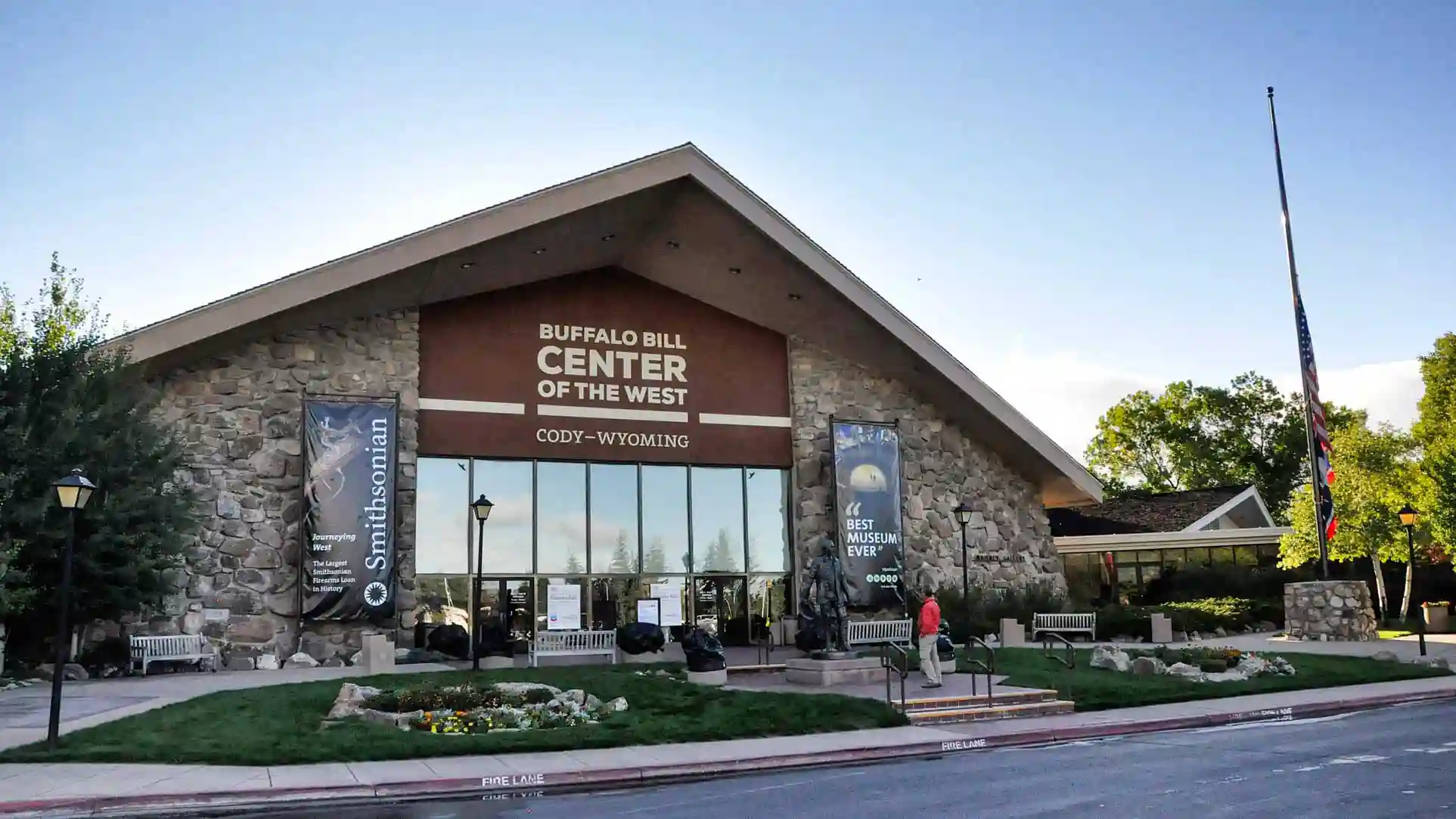
The Buffalo Bill Center of the West is a complex comprising five museums and a library that displays artifacts, works of art, and hosts exhibitions on the American West. It is considered the most comprehensive museum on this subject!
The museums you'll find here include the Buffalo Bill Museum, which focuses on the life of this famous figure; the Plains Indians Museum, which explores the various indigenous cultures of the American plains; the Whitney Western Art Museum, which displays artworks depicting the American West; the Draper Natural History Museum; and the Cody Firearms Museum, which features a collection of over 4,000 antique and modern firearms.
Yellowstone National Park
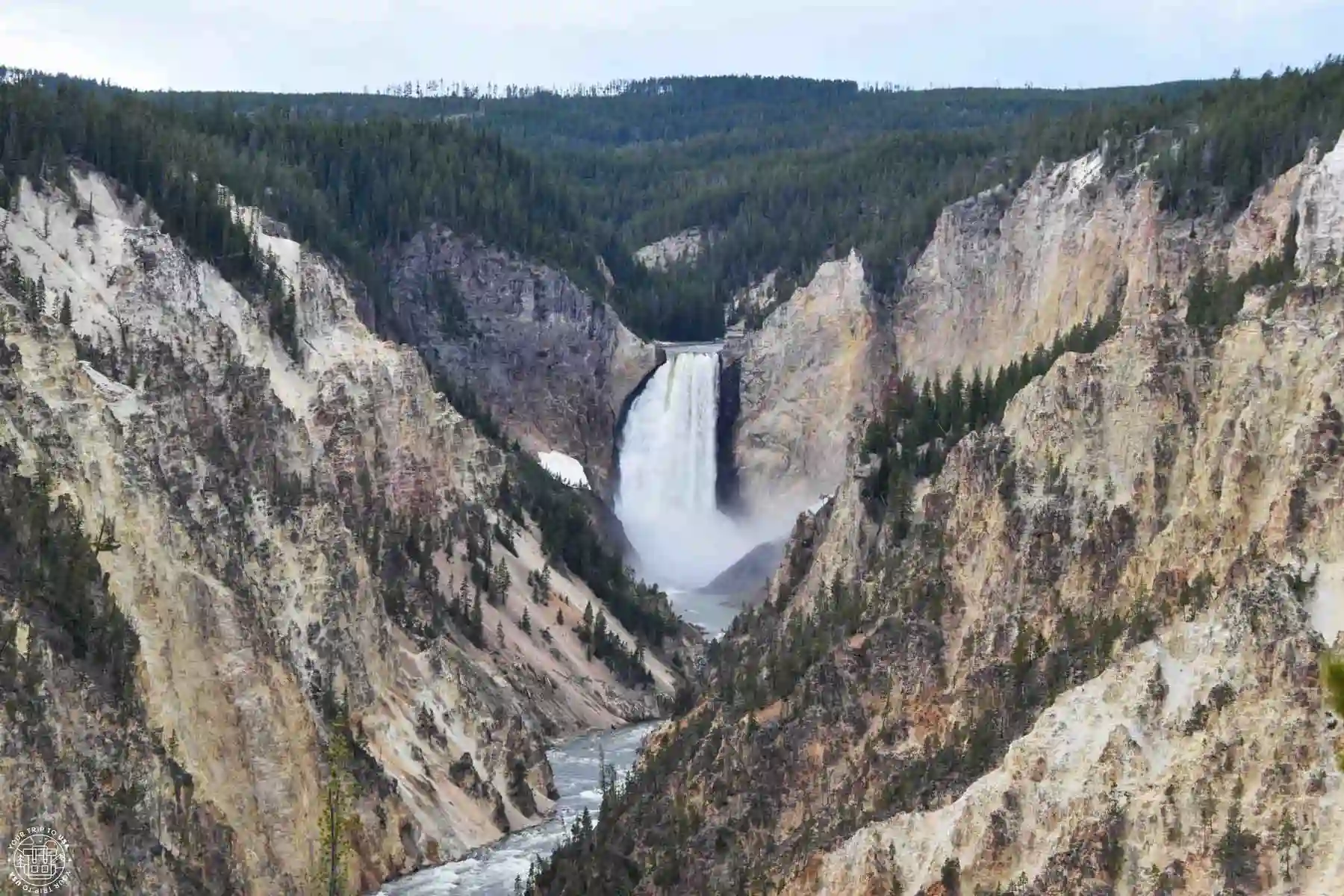
Undoubtedly the most spectacular national park in all of North America and a must-see in Wyoming. Known as the “Serengeti of North America” for its vast diversity and abundance of wildlife, it also features lakes, mountains, geysers, fumaroles, historic buildings, waterfalls, rivers, rock formations, and much more. Don’t miss it!
In our Yellowstone guide, we'll tell you everything you need to know to plan your visit—you won't regret it!
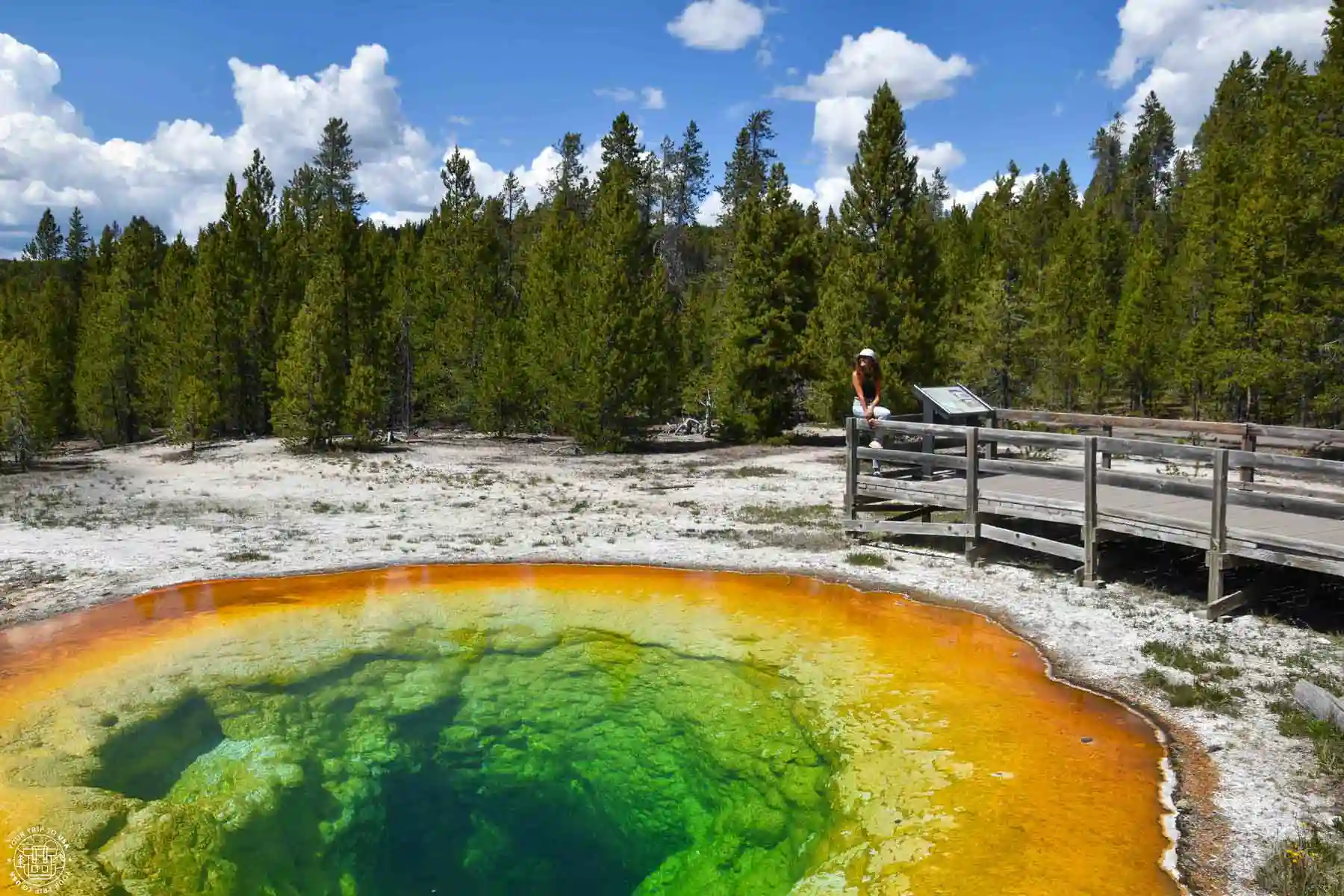
Shoshone National Forest
This national forest was the first to be established in the United States in 1891 and protects a virtually untouched area that has never been heavily exploited or settled, making it of great natural importance. It is part of the Greater Yellowstone Ecosystem, as it borders both Yellowstone National Park and the Bridger-Teton National Forest.
It is home to a high concentration of native wildlife, including grizzly and black bears, wolves, mountain lions, deer, elk, wapiti, wild goats, and trout, and boasts one of the greatest biodiversities in the country. The most common activities include hiking, camping (there are several campgrounds within the reserve), rock climbing, and horseback riding. Several roads traverse the forest en route to Yellowstone or Grand Teton, and all are considered scenic routes due to their stunning landscapes—there are several overlooks along the way where you can stop!
Hot Springs State Park
This state park is located in the town of Thermopolis in central Wyoming and is known for its hot springs, the travertine rock formations created by the springs, and its herd of 15 bison. The park also features free hot springs where the water temperature remains a constant 104 °F (40°C).
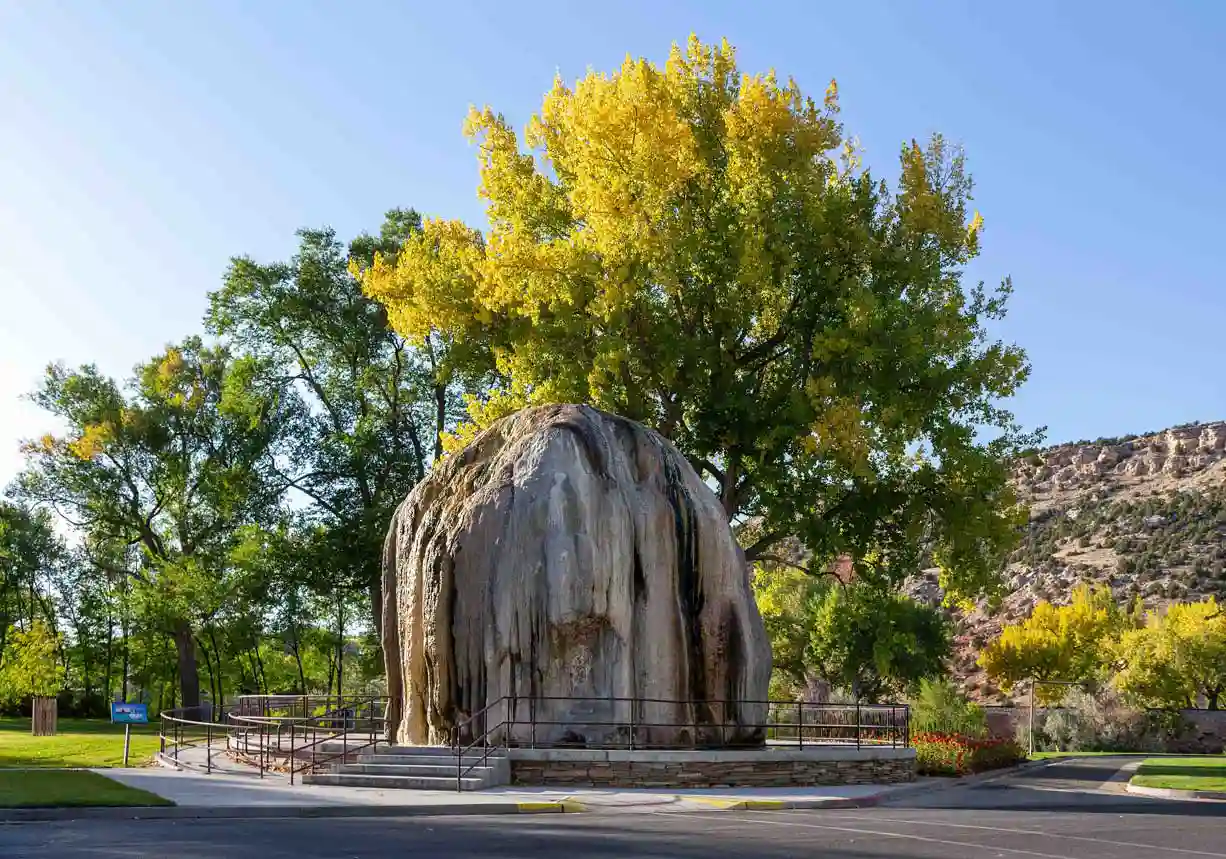
Hell's Half Acre
It is a small area (320 acres or 1,3 sq km2) filled with rock formations shaped by erosion over thousands of years, such as hoodoos, tiny valleys, and caves similar to those found in southern Utah and northern Arizona.
It is located in central Wyoming, along Highway 26 between the towns of Casper and Shoshoni. There is a small overlook where you can easily stop by, making it ideal for a quick break.
Alcova Reservoir
Alcova Reservoir is located in central Wyoming, in an arid region near the town of Casper. It is an ideal destination for hiking, camping, and water sports.

Take a look to this travel insurance for the United States comparison in case you need to buy one
Ayres Natural Bridge State Park
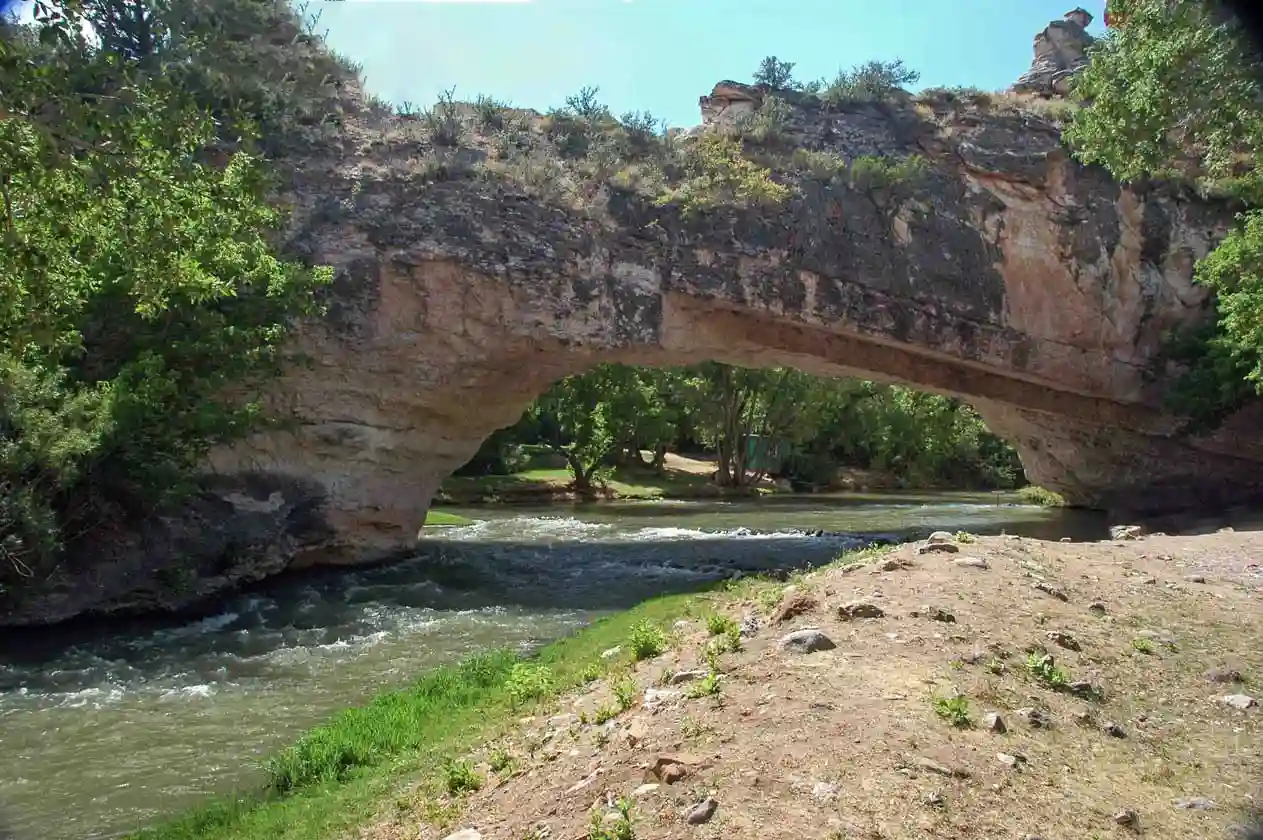
This small state park in eastern Wyoming, near the town of Douglas, features a really cool natural stone bridge over La Prele Creek. It’s not quite as impressive as the natural bridges at Arches National Park or Natural Bridge National Monument in Utah, but it’s worth stopping by if you’re in the area.
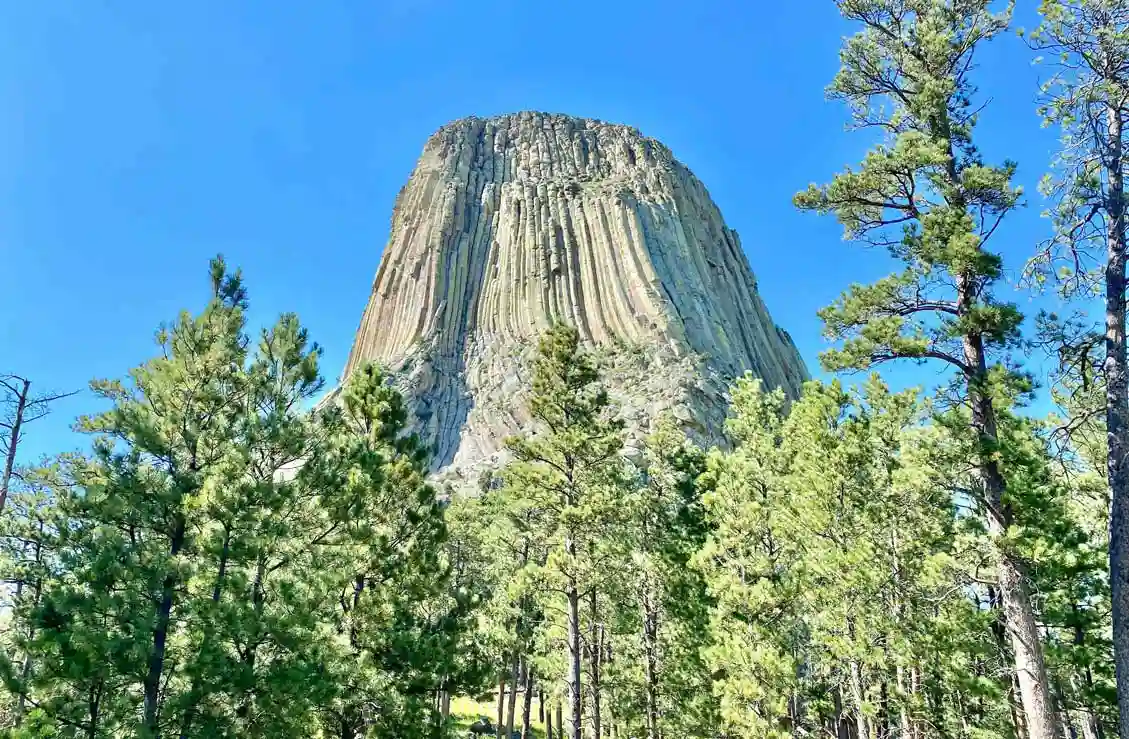
Devils Tower National Monument
This impressive mountain is one of Wyoming's must-see attractions. Located in the northeastern part of the state, it consists of solidified lava within a volcanic cone. Since it is more resistant to erosion than the volcano itself, this unique geological formation remains visible once the volcano has eroded away.
Given its uniqueness, it was the first site in the United States to be designated a national monument in 1906. Standing 1,267 feet (386 m) tall, it is visible from several miles away!
Map of Things to See in Wyoming
On this map, we've marked all the must-see Wyoming spots that we've mentioned earlier, as well as our recommended accommodations. We hope you find it helpful!
6-8 day tour of Wyoming
If you don't have much time, a trip through Wyoming to see the highlights should include Jackson and the national parks. If you only have 6 days, we'd recommend spending 2 in Grand Teton and 3 in Yellowstone, since it's much larger and more diverse. If, on the other hand, you have 8 days, that would be ideal for fully enjoying both parks; you can spend 3 in Grand Teton and 4 in Yellowstone.
- Day 1: Arrival and tour of Jackson
- Days 2 and 3 (and 4 on the 8-day itinerary): Grand Teton National Park
- Days 4, 5, and 6 (days 5, 6, 7, and 8 on the 8-day itinerary): Yellowstone National Park
In our article, 7-Day Road Trip Through Wyoming, you'll find all the details about our recommended itinerary.

RENT A CAR IN THE UNITED STATES
The best way to explore the United States is by car, giving you the freedom to travel at your own pace.
🚗 Whether you’re looking for a convertible Mustang, a 4x4, or a regular car, we recommend to book through this car rental search engine
💸 This is where we find the best prices, both on the rental car itself and on full coverage insurance!
Wyoming National Parks
The state of Wyoming has only two national parks, but they’re both incredible. We’ve visited more than a third of the national parks in the United States (23 out of 63), and we can tell you that these are two of the most amazing ones—especially Yellowstone.
Yellowstone National Park
Yellowstone became the world's first national park in 1872 and paved the way for the creation of many others. Situated atop a massive volcanic caldera, which feeds numerous geysers and hot springs, it boasts an incredible variety of landscapes and serves as a vital wildlife refuge.
We recommend spending at least two days there, though 4 days would be ideal. In our article on best things to do in Yellowstone, you’ll find everything you need to plan your visit. And if you’re planning a trip to the area, check out our 10-day Grand Teton, Yellowstone, and Glacier National Park itinerary, complete with a detailed schedule and plenty of tips.
What to See in Yellowstone
- West Thumb
- Old Faithful
- Grand Prismatic Spring
- Fountain Paint Pot
- Artist's Paintpots
- Norris Geyser Basin
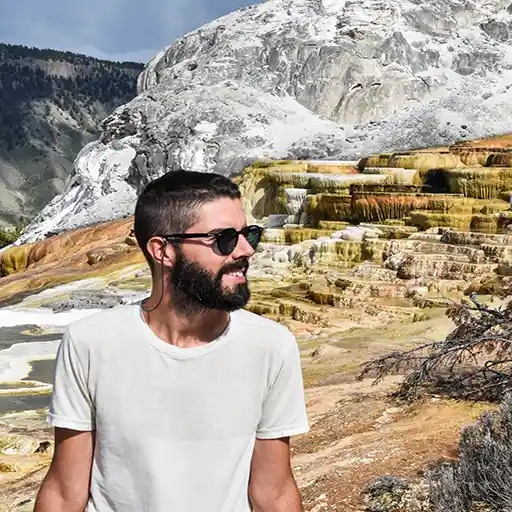
- Mammoth Hot Springs Terraces
- Grand Canyon of the Yellowstone
- Hayden Valley
- Lamar Valley
Grand Teton National Park
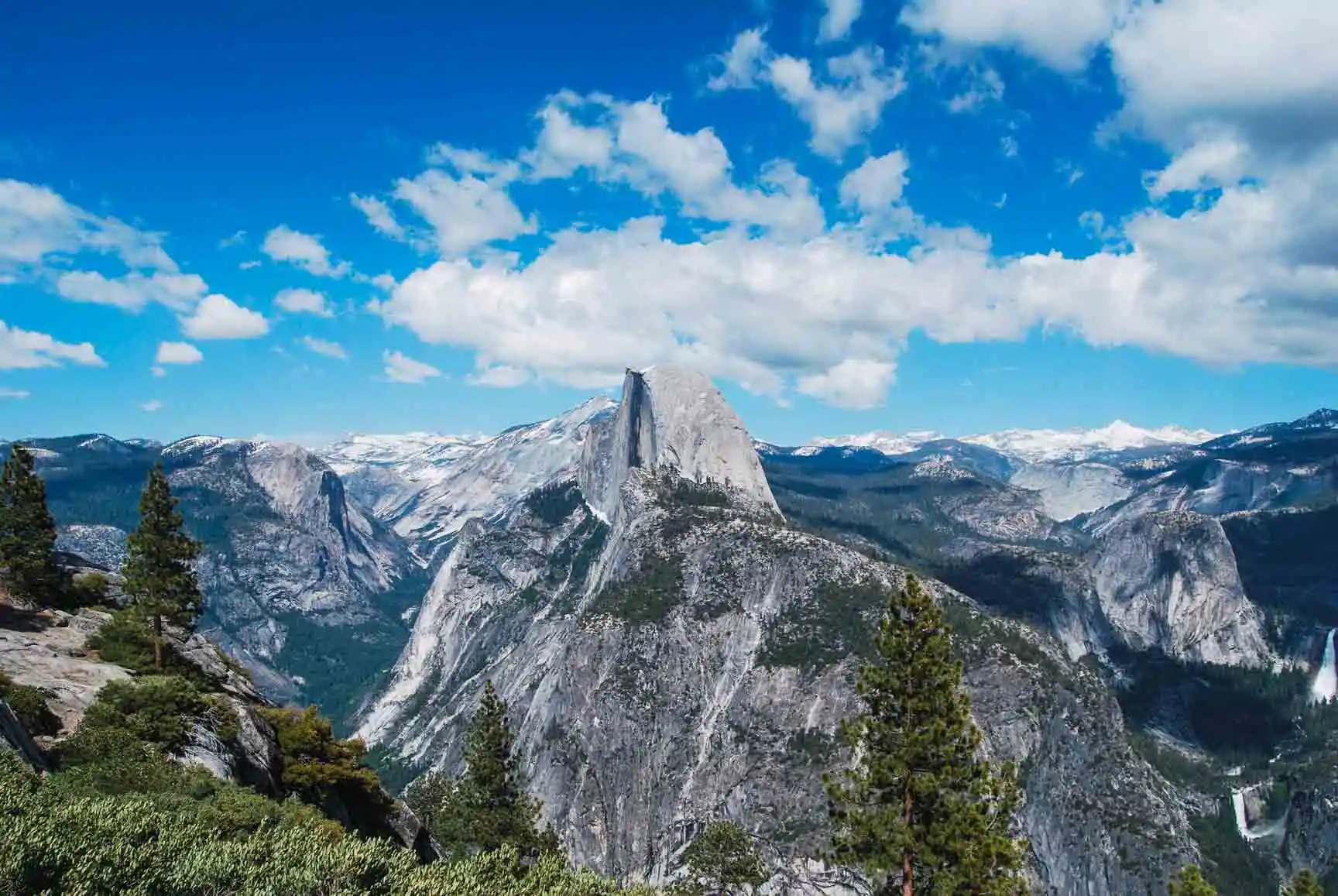
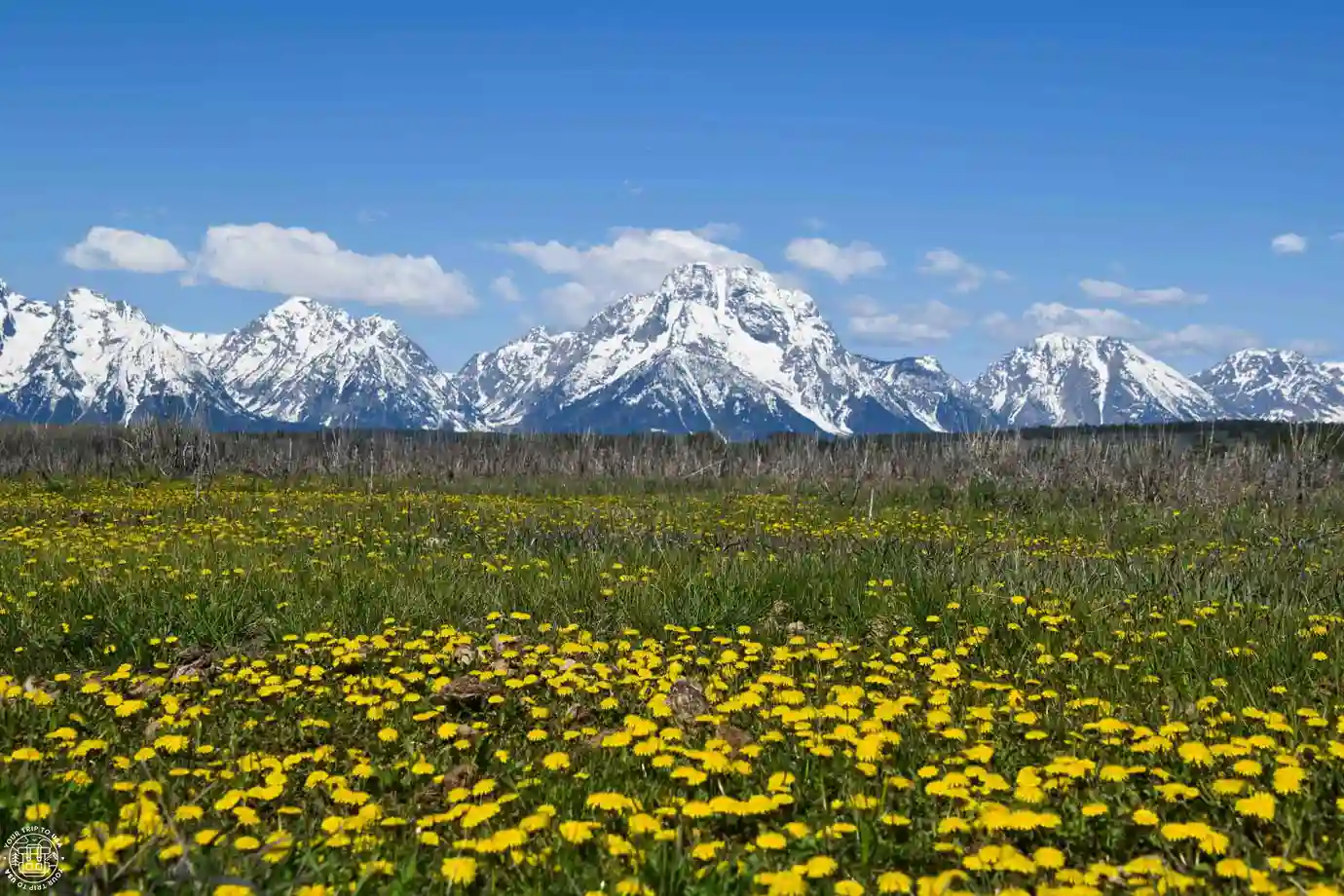
Located in a setting of exceptional beauty, Grand Teton National Park protects one of the most beautiful areas of the Rocky Mountains: the Teton Range. The area is dotted with lakes and glacial valleys, rivers, and spectacular wildlife, including more than 61 species of mammals such as bears, wolves, moose, elk, and bison, among others.
In addition, located near the park is the National Elk Refuge, a wildlife preserve where thousands of elk, bison, and pronghorn migrate from other parts of the Greater Yellowstone Ecosystem to spend the winter. In our post on things to do in Grand Teton National Park, we’ll give you all the details you need to make your visit a success.
We recommend setting aside at least one day for Grand Teton, though ideally you should spend three days there. If you’re planning a trip to the area, check out our 10-day Grand Teton, Yellowstone, and Glacier National Park itinerary, which includes a detailed schedule and plenty of tips.
What to See in Grand Teton
- Mormon Row Road
- Taggart Lake
- Jenny Lake
- Hidden Falls
- Inspiration Point
- Jackson Lake
Tips for Traveling to Wyoming
Best time to visit Wyoming
The best time to visit Wyoming is from late May to late June and from early September to early October, when all the roads in Yellowstone are open, temperatures are milder, and there aren’t as many tourists yet. July and August are also good months to visit the area, but you’ll find more people and higher prices.
From late March through late May, some roads in Yellowstone remain closed due to snow accumulation, as do the trails leading to the alpine lakes in Grand Teton. Starting in early October, temperatures drop and the first snowfalls of the season begin, leading to road and trail closures. The winter months are ideal for enjoying the snow in the Jackson Hole area or spotting the large herds of elk in the National Elk Refuge.
How to get around Wyoming
The best way to explore the state of Wyoming is to rent a car, since the distances are very long and public transportation is quite limited. Having your own vehicle will allow you to travel at your own pace and visit less touristy spots. Although there are some tours from Jackson to Grand Teton and Yellowstone, we believe renting a car is essential to get the most out of a trip like this.
Where to Stay in Wyoming
To visit the state’s main tourist attractions, it’s common to stay in Jackson, Gardiner, West Yellowstone, Cooke City, Cody, Thermopolis, or Casper. We’ve selected several accommodations in these destinations to make it easier for you to choose where to stay in Wyoming.
How many days should you spend in Wyoming?
Most of Wyoming’s attractions are located in the western part of the state, which is why any itinerary should include Jackson, Grand Teton, and Yellowstone. We recommend spending 6 to 8 days exploring these destinations. In our Wyoming itinerary, you’ll find all the details you need to plan your own trip.
If you have 12 days, you can take the opportunity to visit other places such as Cody and its surroundings, Thermopolis, the Wind River Range, and/or Fossil Butte. Devils Tower is an amazing site in Wyoming, but it’s located on the other side of the state, more than a 7-hour drive from Yellowstone, with no other attractions nearby. That’s why we don’t think it’s worth spending at least a full day just on the round trip.
FAQs about travelling to Wyoming
How many days do you need to visit Wyoming?
Ideally, you should set aside at least 6 days to visit Jackson and the national parks. If you have 8 days, you’ll be able to explore the parks in depth, and with more than 8 days, you can discover other fascinating parts of the state.
When is the best time to visit Wyoming?
The best time to visit Wyoming is from late May to late June or from early September to early October, when the weather is mild, the roads and trails are usually snow-free, and there aren’t as many people as there are in July and August.
Is it necessary to rent a car to visit Wyoming?
Yes, it’s practically a must. Wyoming is a vast, sparsely populated state, which means the distances are long and public transportation is limited. Although there are tours from Jackson to Grand Teton and Yellowstone, a car will give you the freedom to explore at your own pace, visit less crowded spots, and enjoy Wyoming’s scenery without any worries.
Where should you start your trip through Wyoming?
The largest airports closest to the state of Wyoming are Denver and Salt Lake City, although if you only have a few days, it’s best to fly directly to Jackson.
What is the best route for touring Wyoming?
The best way to explore Wyoming in just a few days is to focus on the northwestern part of the state, visiting Jackson and the surrounding area, as well as Grand Teton and Yellowstone National Parks. like on this 7-day Grand Teton and Yellowstone itinerary.
Is Yellowstone National Park worth visiting?
Yes, it's one of the most impressive parks in the world, famous for its geysers, volcanic landscapes, and abundant wildlife. It's a must-see on any trip to Wyoming.
Acroterion, CC BY-SA 4.0, via Wikimedia Commons; w_lemay, CC BY-SA 2.0, via Wikimedia Commons; Mooseman7325, CC BY-SA 4.0, via Wikimedia Commons; oldtrailtown.org, Paul Hermans, CC BY-SA 3.0, via Wikimedia Commons; James St. John, CC BY 2.0, via Wikimedia Commons