

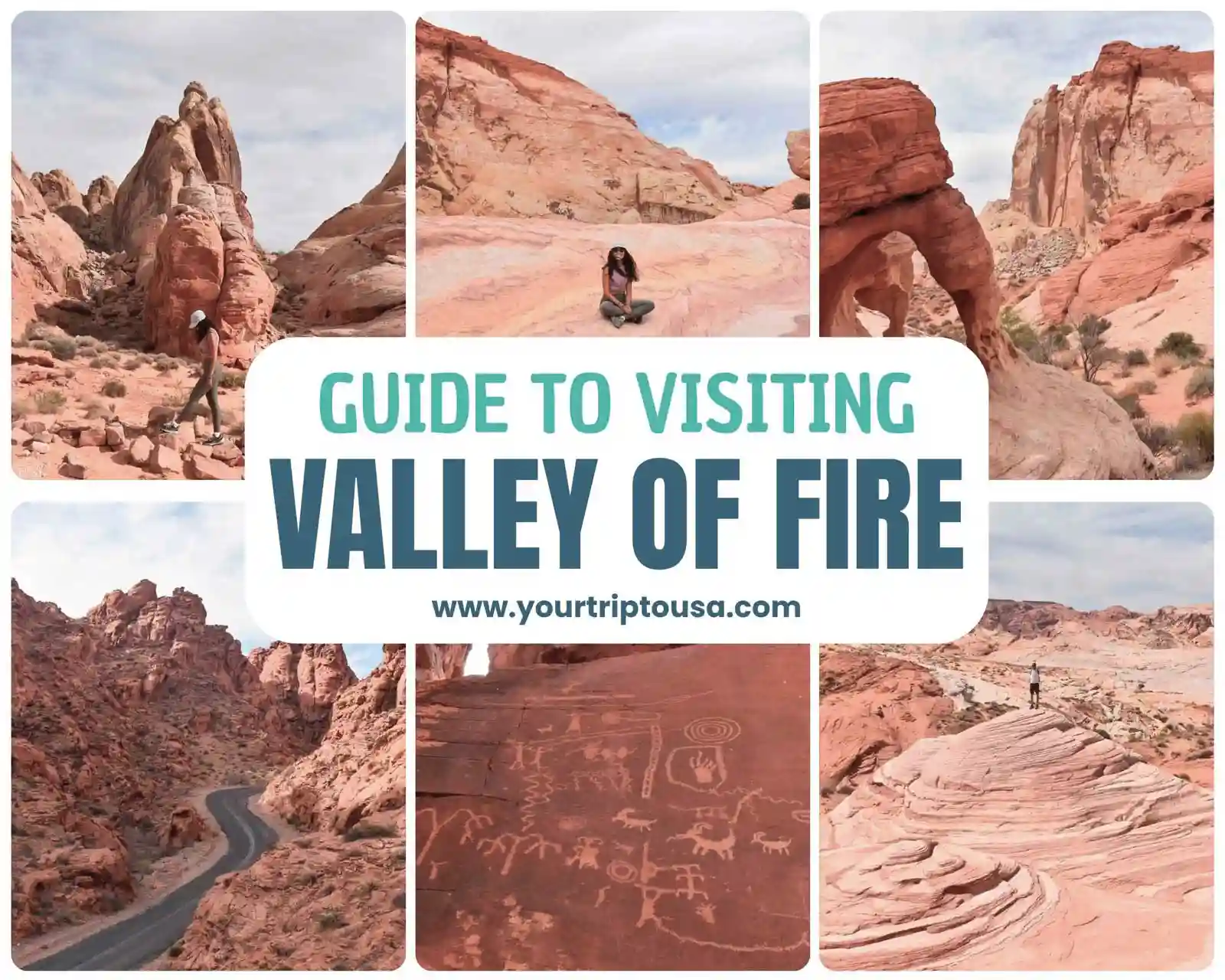
Where is Valley of Fire State Park?
Valley of Fire State Park is located in southern Nevada, very close to the state of Arizona. The distance between Valley of Fire and the city of Las Vegas is 75 km or 46 mi (about a 50-minute drive), making it a very easy and highly recommended day trip from Sin City. You can also visit from Hoover Dam; the distance between the two locations is 120 km or 75 mi (1 hr 30 min by car).
Valley of Fire vs Red Rock Canyon
Valley of Fire State Park and Red Rock Canyon National Conservation Area are two of the best day trips from Las Vegas, but they offer different experiences. In our opinion, Valley of Fire is much more spectacular, with unique desert landscapes and jaw-dropping sandstone formations. Red Rock Canyon, on the other hand, isn’t as visually striking, but it’s more accessible and convenient for a quick visit.
Similarly, if you’d like to visit both places but don’t have much time, you can book Valley of Fire and Red Rock Canyon guided tour, which includes hotel pickup, transportation, guide, admission fees, water, and snacks.
Here is a comparison table of the two places so you can see the main differences:
| VALLEY OF FIRE VS RED ROCK CANYON | ||
|---|---|---|
| Valley of Fire | Red Rock Canyon | |
| Distance from Las Vegas | 1 hour | 20–30 minutes |
| Price | $15 for non-Nevada residents and $10 for residents. Annual passes are not accepted | $20; annual passes accepted |
| Landscape | Desert and colorful rock formations | Mountains, canyons, and a wide variety of landscapes |
| Visual impact | ⭐⭐⭐⭐⭐ | ⭐⭐⭐ |
| Hiking | Short, easy trails, but closed from May 15 to September 30 | Longer and more varied hikes, trails that are always open |
| Advance reservation | No | Yes, from October 1 to May 30 |
| Temperature | More extreme, very hot in the summer | Milder |
| Time you need | 4 to 6 hrs | 3 to 4 hrs |
| Best time of year | Fall, spring, and winter | All year round |
How to get to Valley of Fire
Valley of Fire State Park has two entrances:
- West Entrance: located on the west side of the park and connecting to Las Vegas via I-15.
- East Entrance: located on the eastern side of the park, it connects northward to I-15 toward Zion National Park and southward to NV-15 toward Lake Mead and Hoover Dam.
You can easily get there on your own with a rental car or rental RV, since the roads inside the state park are in excellent condition. Keep in mind that you’ll need a vehicle to explore the park, as there is no public transportation. For this reason, if you don’t have a vehicle or prefer to travel in comfort, another option is to book a Valley of Fire guided tour from Las Vegas, so a guide can show you the best spots.
You also have the option of booking this Valley of Fire and Hoover Dam guided tour, which combines these two fascinating Nevada attractions and includes hotel pickup, an expert guide, admission tickets, and transportation.

TOUR FROM LAS VEGAS
-Duration: 6h
-What's included: pick up and drop off, transport, guide, entrance fee, sandwich, snacks and water
Free cancellation up to 24h in advance
How much is the entrance fee to Valley of Fire?
The entrance fee to Valley of Fire State Park is $15 for non-resident vehicles in Nevada and $10 for residents. Please note that admission is per vehicle (not per person), is valid for one day only, and is not included in the America the Beautiful annual park pass. There are also annual passes that grant access to all parks in Nevada.
There's a ticket booth at each entrance; you can pay by card and don't even have to get out of the car.
 NO FEES CARD FOR THE UNITED STATES
In the U.S., you'll pay for almost everything by card. If you use one from your regular bank, you'll get hit with a ton of currency conversion fees.
💡 That's why we recommend to get the Wise card. There's no maintenance fee, and you can:
💸 Withdraw $250/month in any currency with no fees
💳 Do payments in any currency with no extra fees
Best things to do in Valley of Fire: Top 15
1. Atlatl Rock
The first thing you'll come across if you enter the park via the west entrance is the Scenic Loop Road, an unpaved road (accessible to any vehicle) that takes you to two of the park's main attractions.
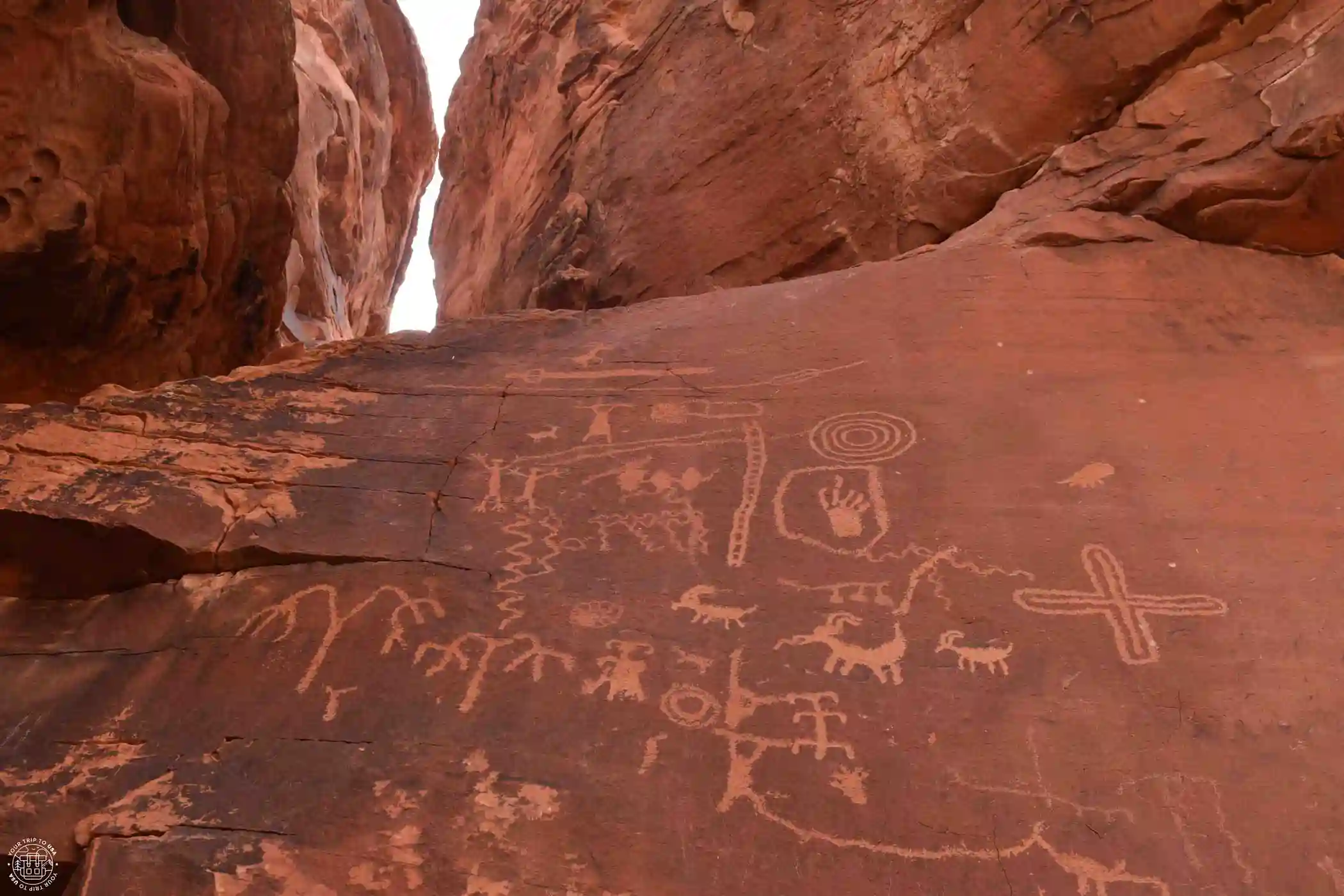
One of them is Atlatl Rock, a massive boulder reached by climbing a set of stairs, which features some of the most unique petroglyphs in the Valley of Fire. For thousands of years, this area was inhabited by Native Americans, such as the Basketmakers and the Ancestral Puebloans, who carved these images into the sandstone walls.
These drawings typically depict daily activities, such as hunting, farming, and gathering, and feature both people and animals (specifically, bighorn sheep, which are very common in this area). Others have spiritual and shamanic significance.
The most significant rock formations at Atlatl Rock are located at the top of the rock, and the site gets its name because one of them clearly depicts an atlatl, an ancient tool used to propel spears with great speed and power.
2. Arch Rock
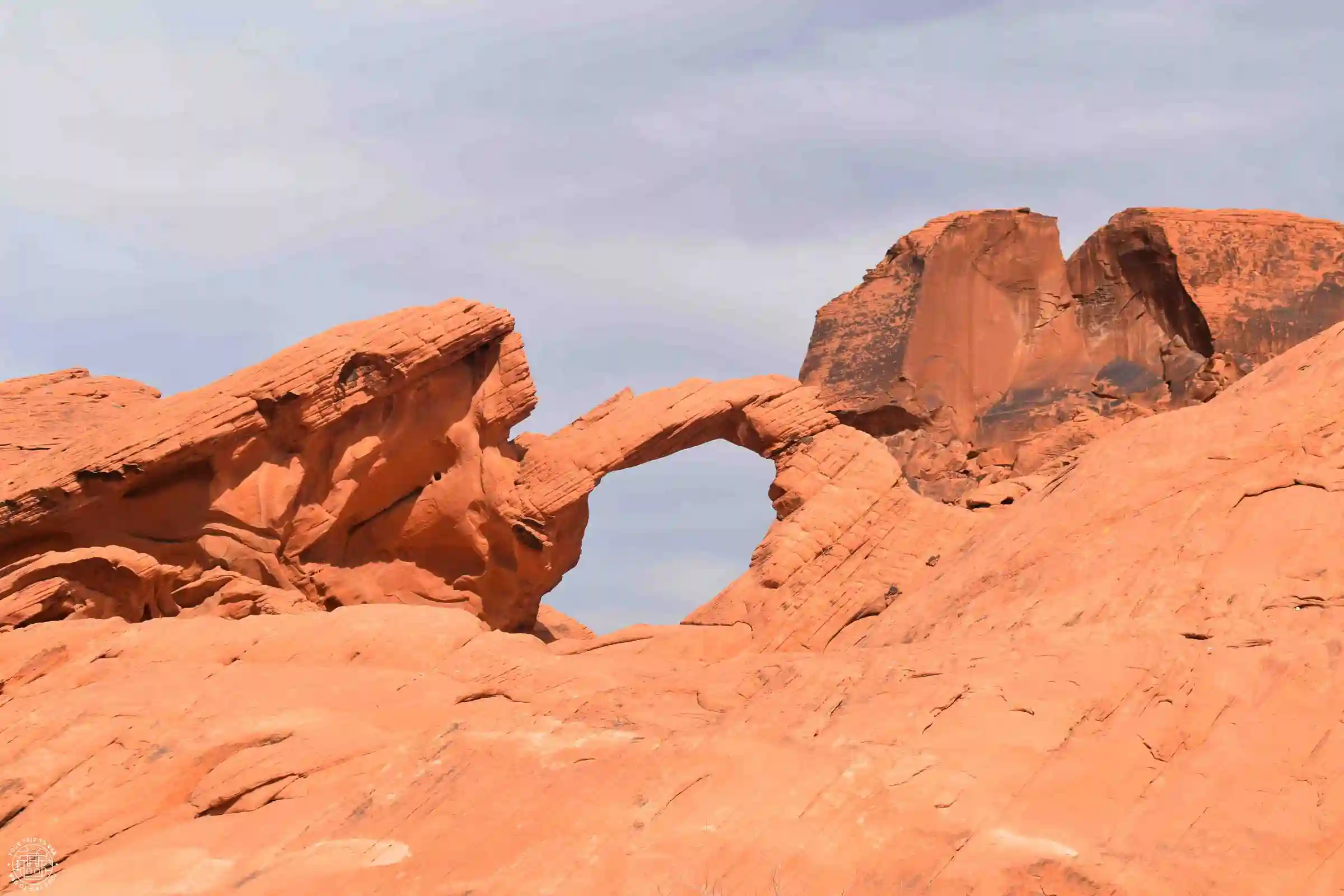
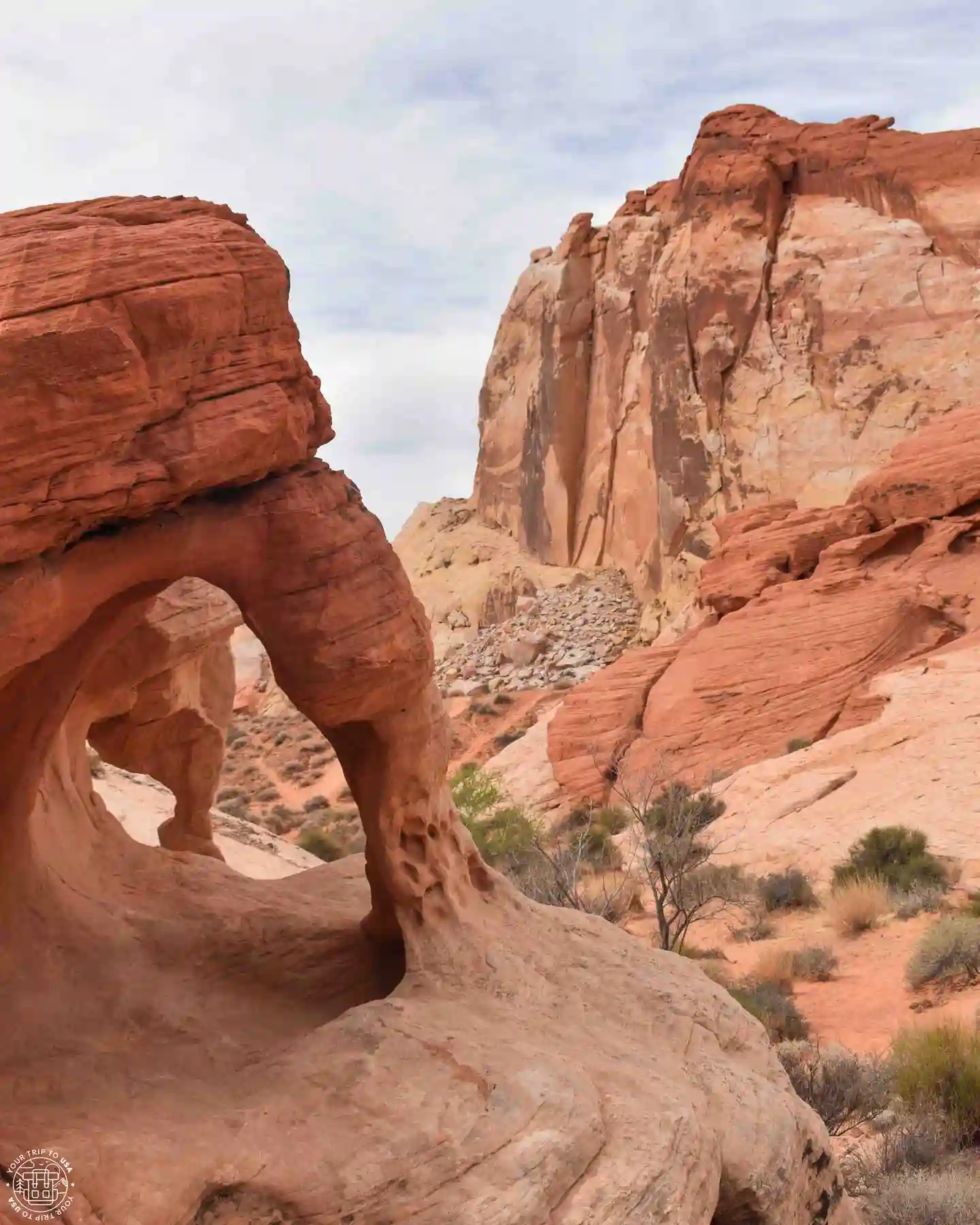
Located on the same loop as Atlatl Rock is Arch Rock, a natural arch that can be seen from the road itself. If you’ve visited Arches National Park before, this might not be enough for you, but you can never get tired of seeing how nature sculpts these natural wonders!
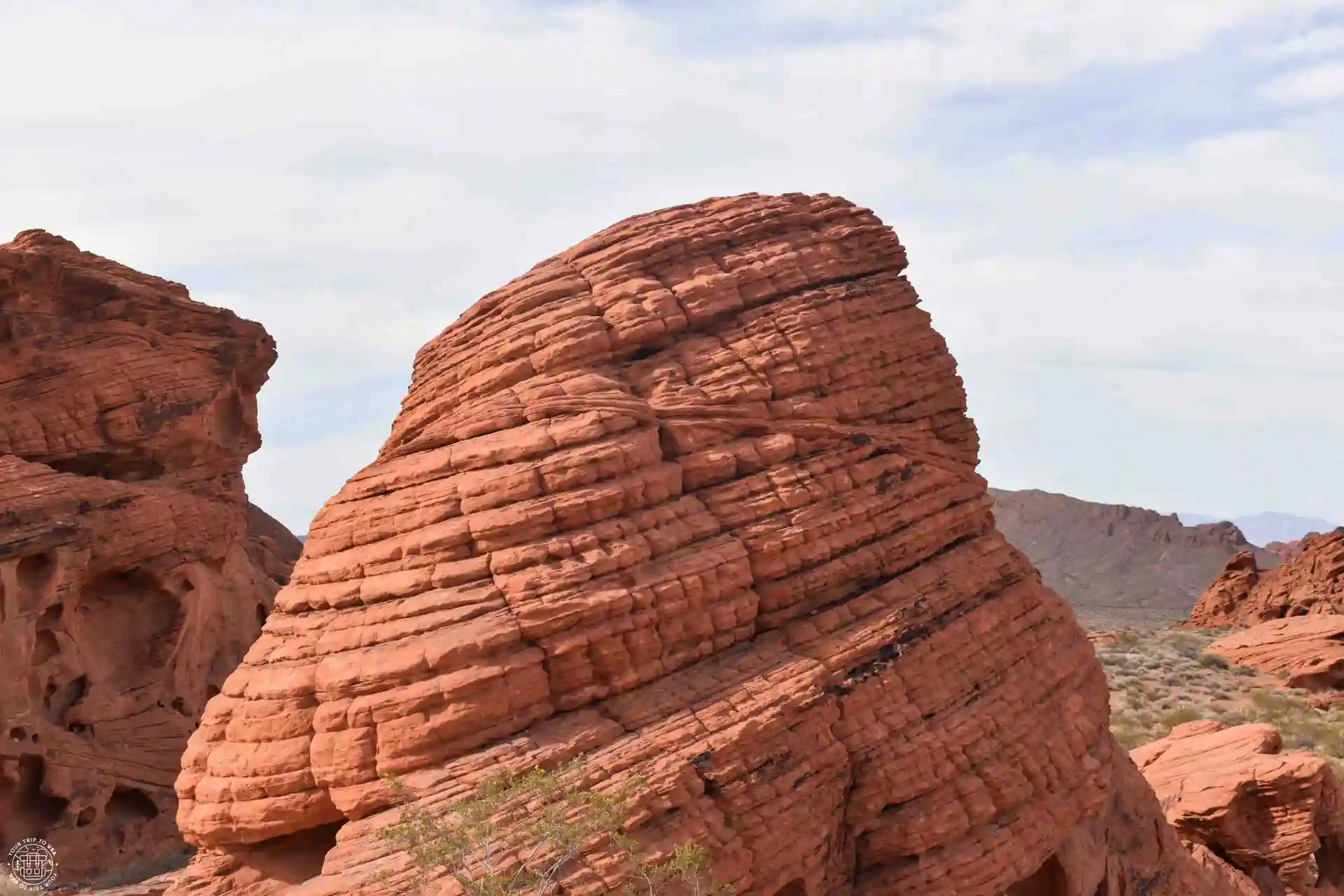
3. Beehives Rock
Another of the most intriguing rock formations in Valley of Fire is Beehives Rock, an example of cross-bedding, grooved lines going in different directions.
You might ask, “What is this?” Well, it’s something that happens when the layers or beds represent different layers of silt that are deposited at different times. The beds indicate the angle the wind or water was moving at the time the material was deposited. Cross-beding is very common in sand dunes, beach desposits, and river sediments.
4. White Domes Road (o Mouse's Tank Road)
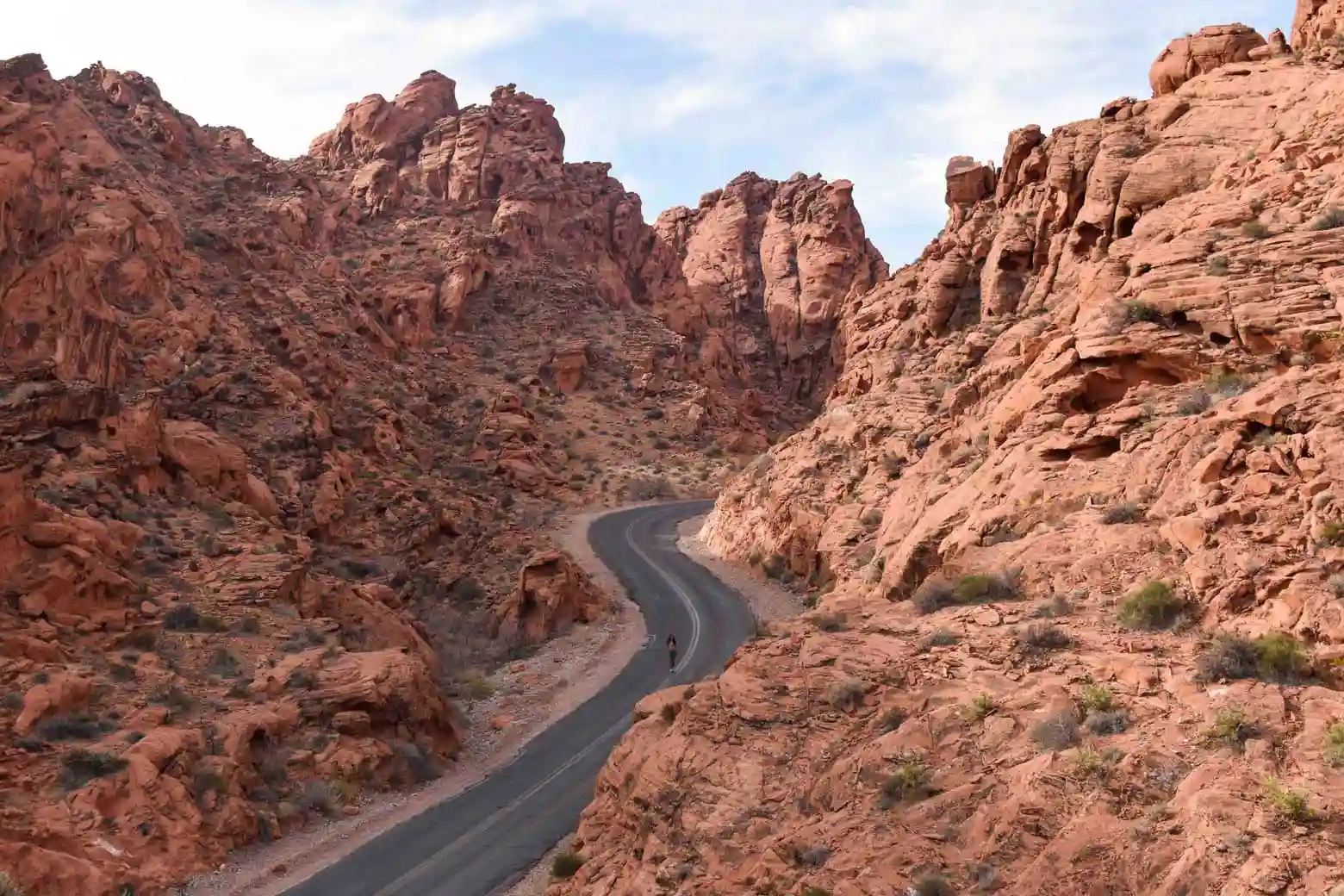
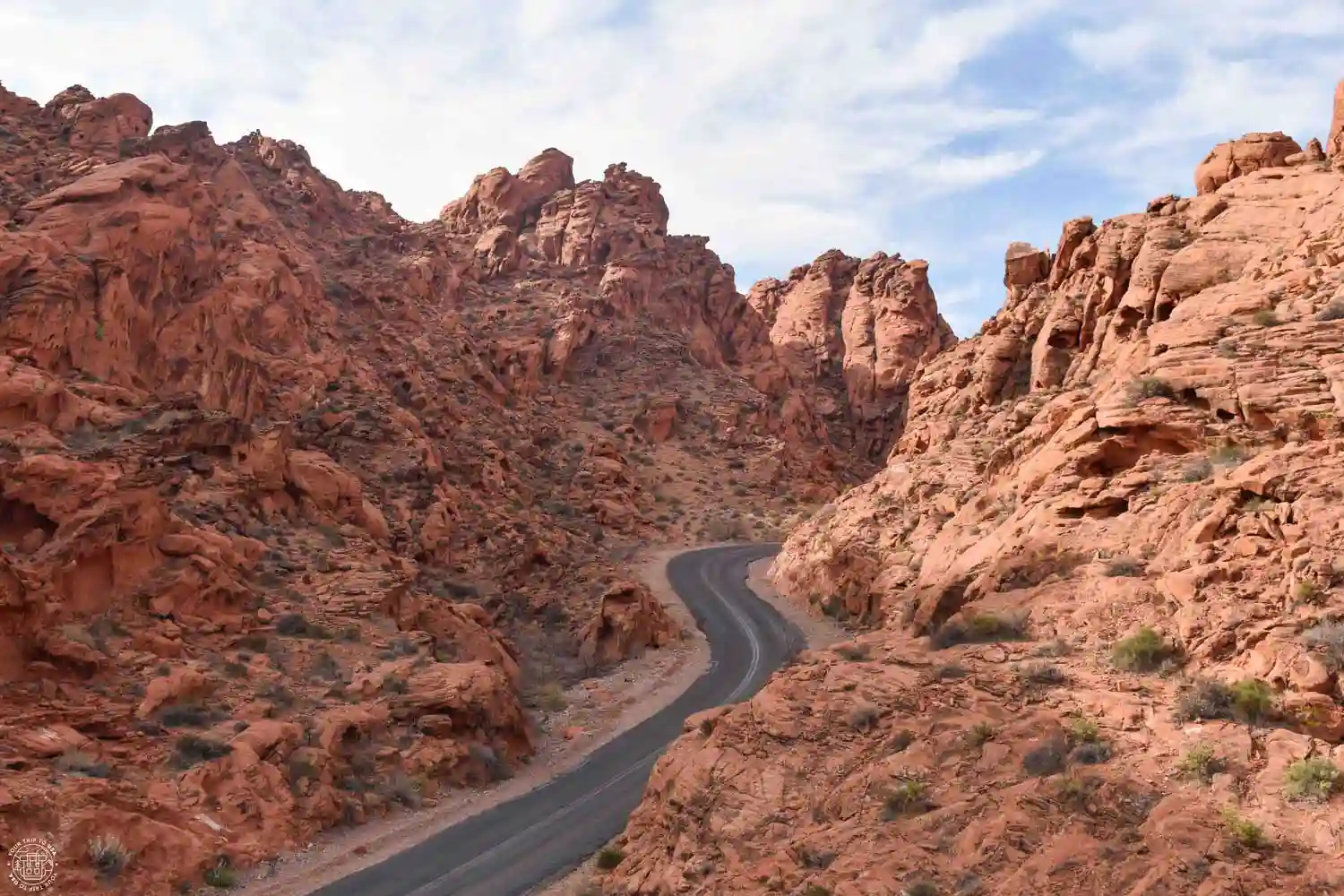
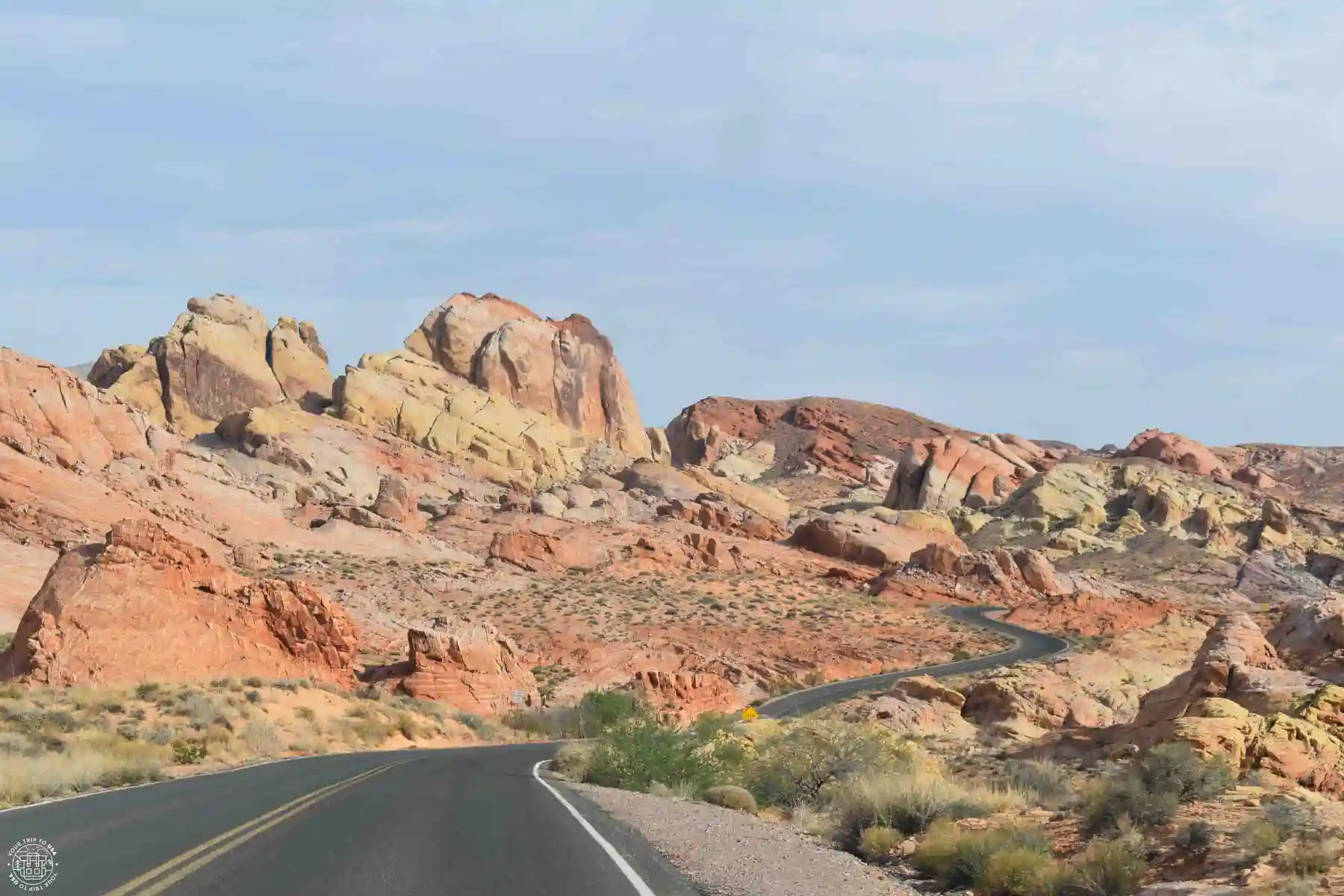
The image that likely brought you to Valley of Fire is probably that of a beautiful, narrow road surrounded by reddish rock formations—especially if you’re an active social media user. Well, that’s White Domes Road, also known as Mouse’s Tank Road, which takes you to some of the park’s most scenic spots.
It’s 9 km (5.6 mi) long, and driving along it is a real treat. The first section is the most popular, winding through a narrow canyon with towering red cliffs. As you continue, the landscape transforms, revealing a true palette of colors before you. If you want to stop to climb one of the rocks and enjoy a more panoramic view, remember to do so in the designated areas along the roadside (of which there aren’t many).
5. White Domes Loop
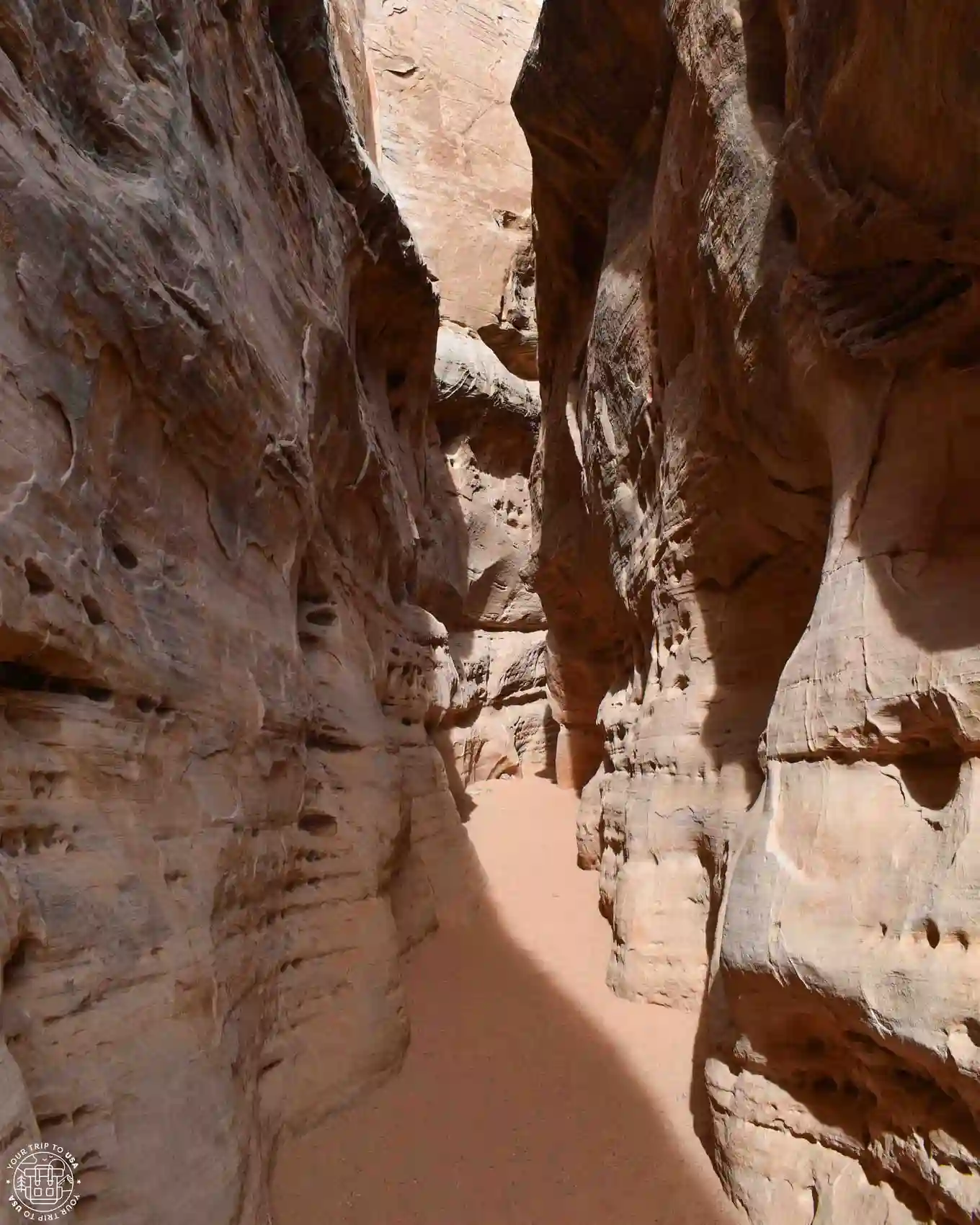
At the end of that road is the White Domes Loop Trailhead, a 1.8 km (1.1 mi) loop that we find very interesting. The trail begins by descending between towering limestone walls, in a landscape bursting with color and rocks of every shape imaginable.
You’ll arrive at the ruins of a Mexican hacienda that served as a filming location for a 1960s movie (The Professionals), and then head out to explore White Dome Slot Canyon. What we did was also visit Kaolin Slot Canyon and from there connect to a section of the Seven Wonders Trail, making a longer loop. It was during this last part that we saw a couple of spots that became some of our favorites in the park; we’ll tell you about them below!
6. Fire Wave and Seven Wonders Loop
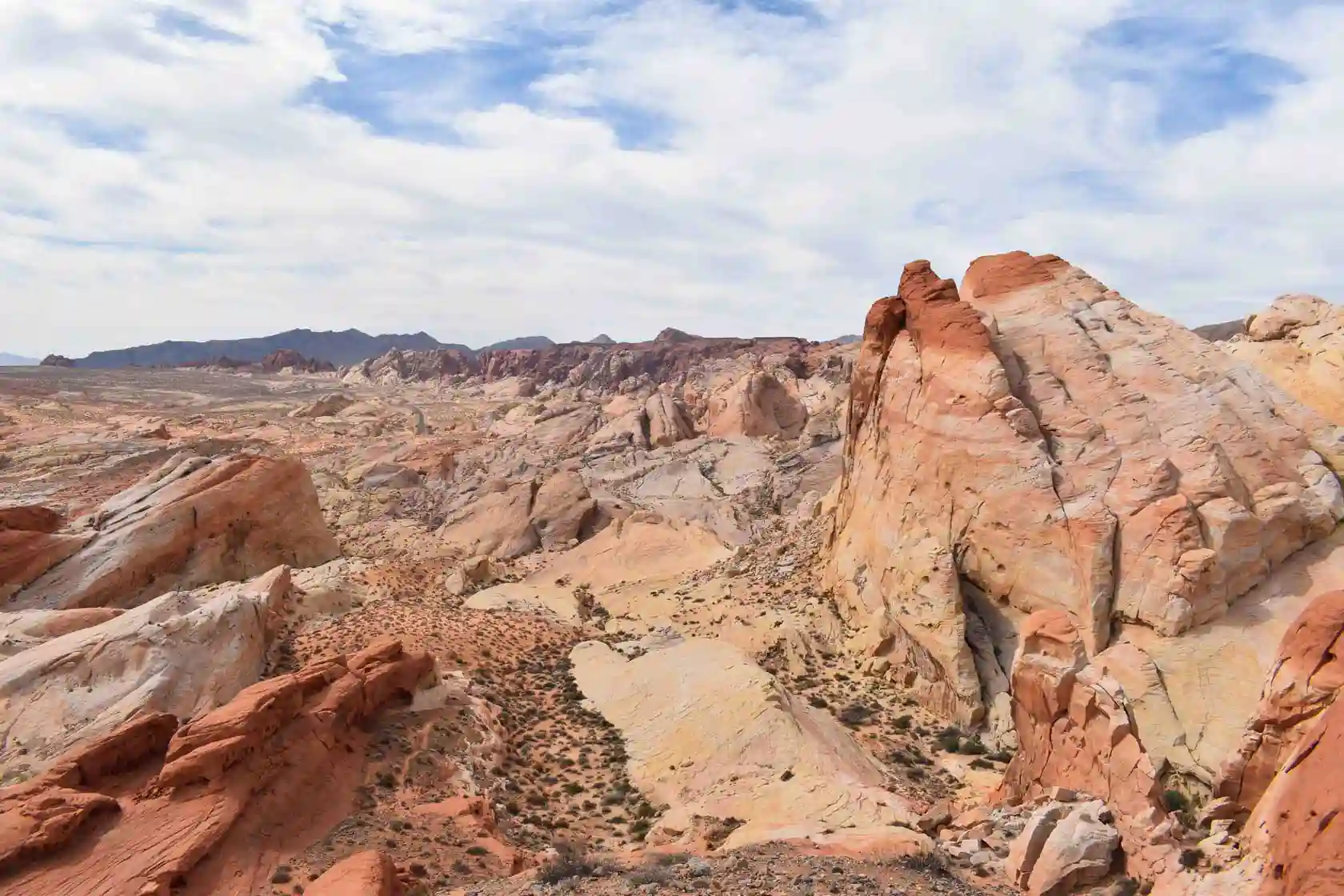
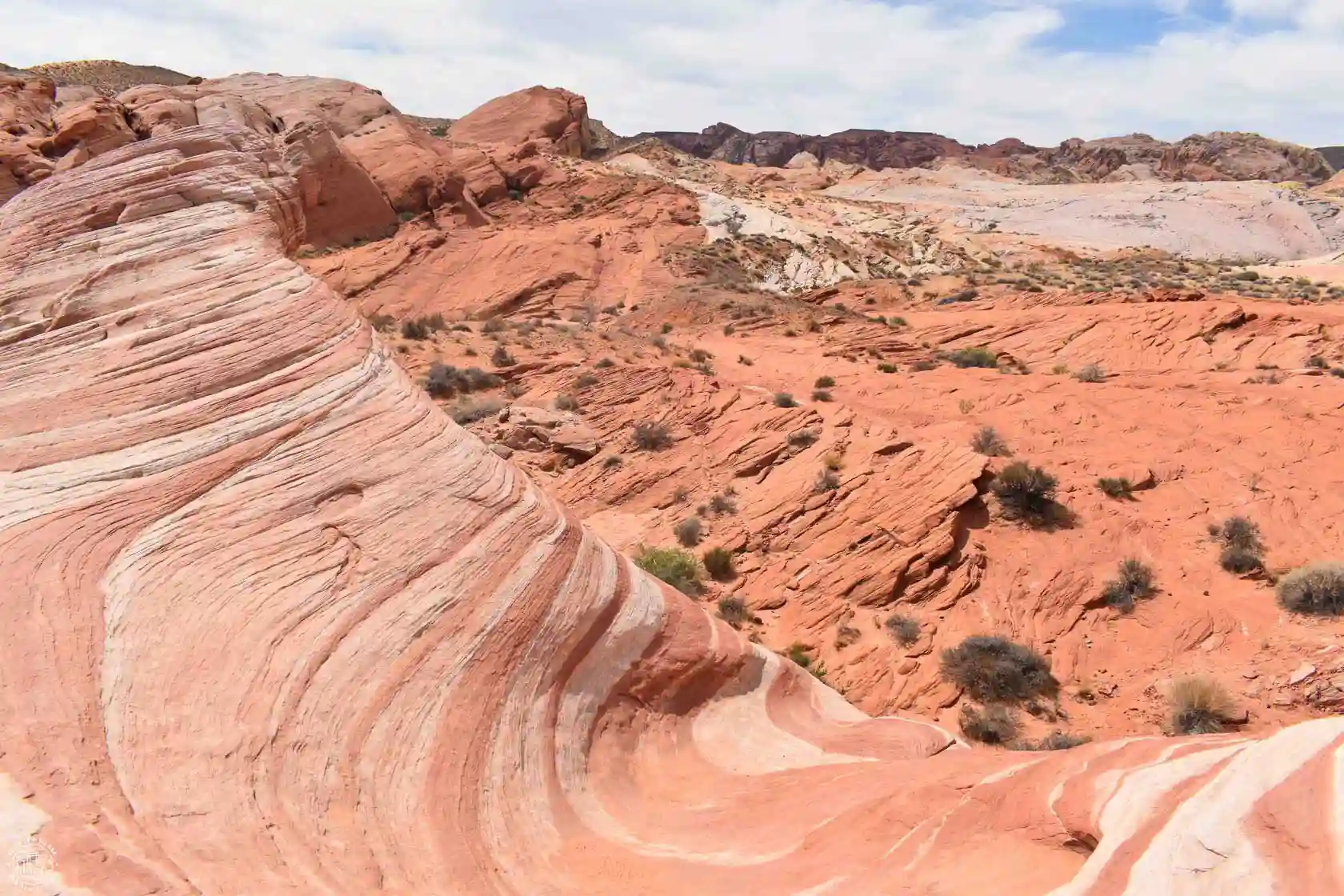
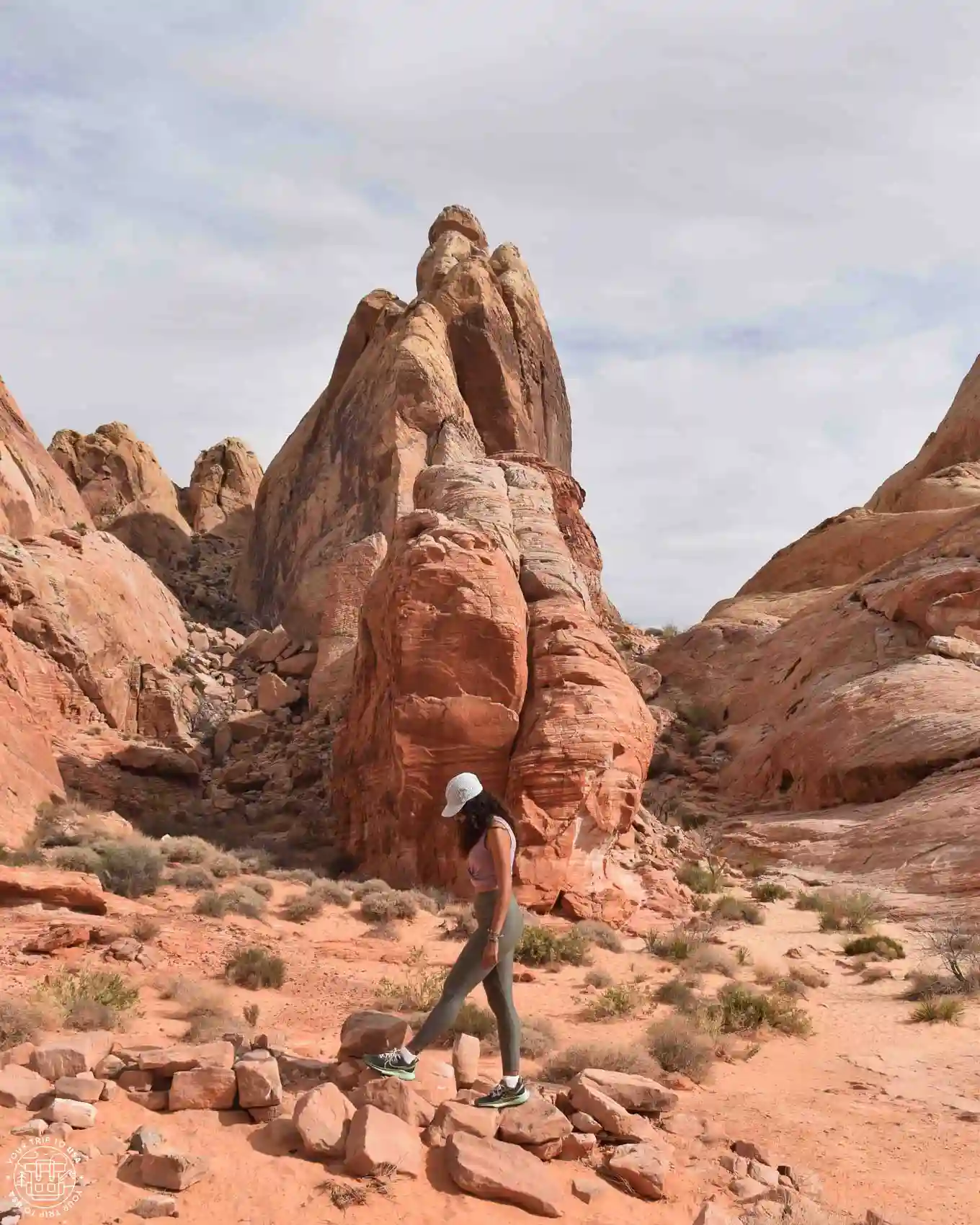
One of the must-see sights in Valley of Fire is undoubtedly the Fire Wave, a natural rock formation reminiscent of The Wave (albeit on a much smaller scale) that really catches the eye with its stripes of pink, red, and white.
To get there, you have to walk 1.2 km (0.75 mi) one way; it’s an easy hike, but there are a few short sections with a slight incline. If you want to make it longer—which is what we recommend—you can do the Seven Wonders Loop.
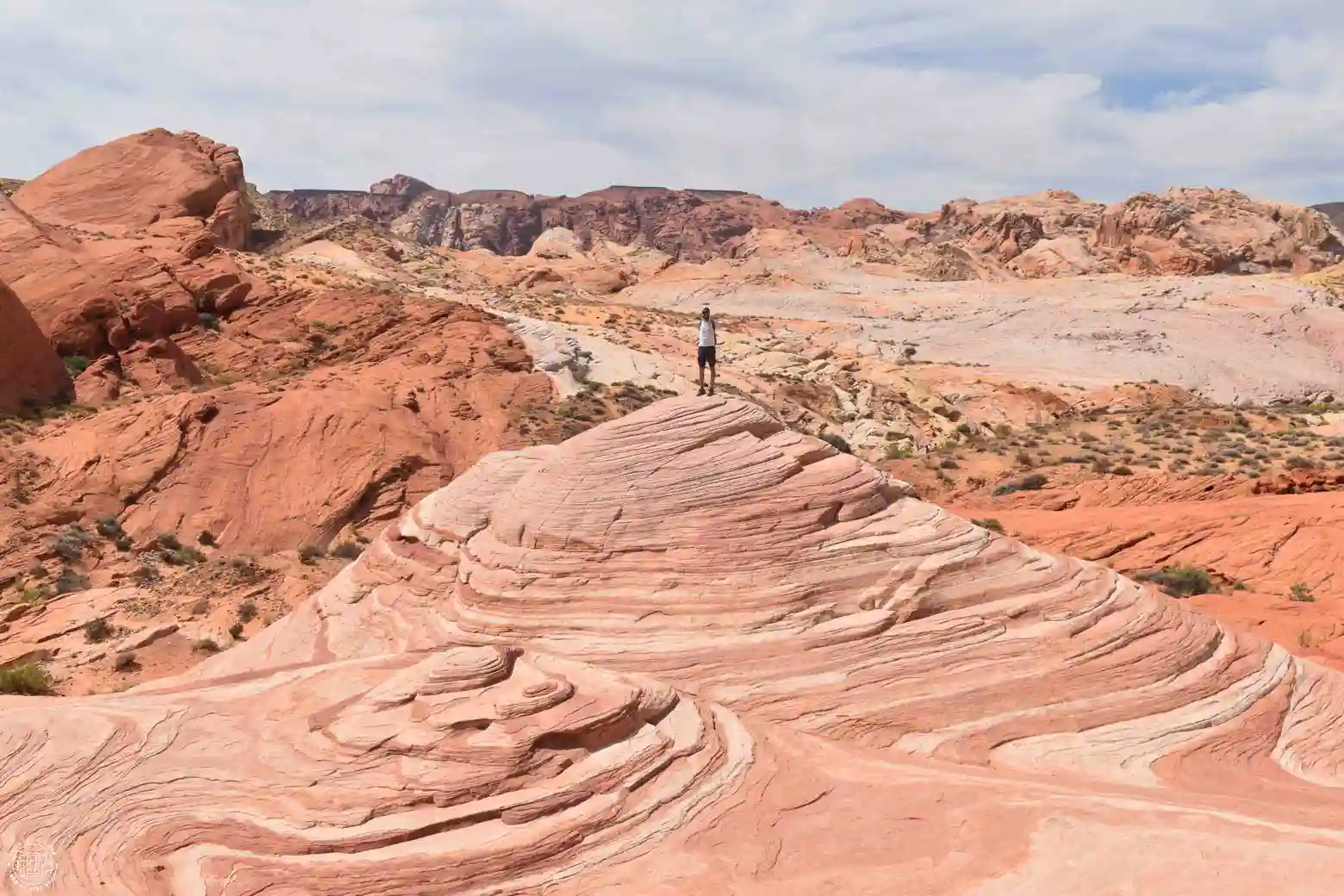
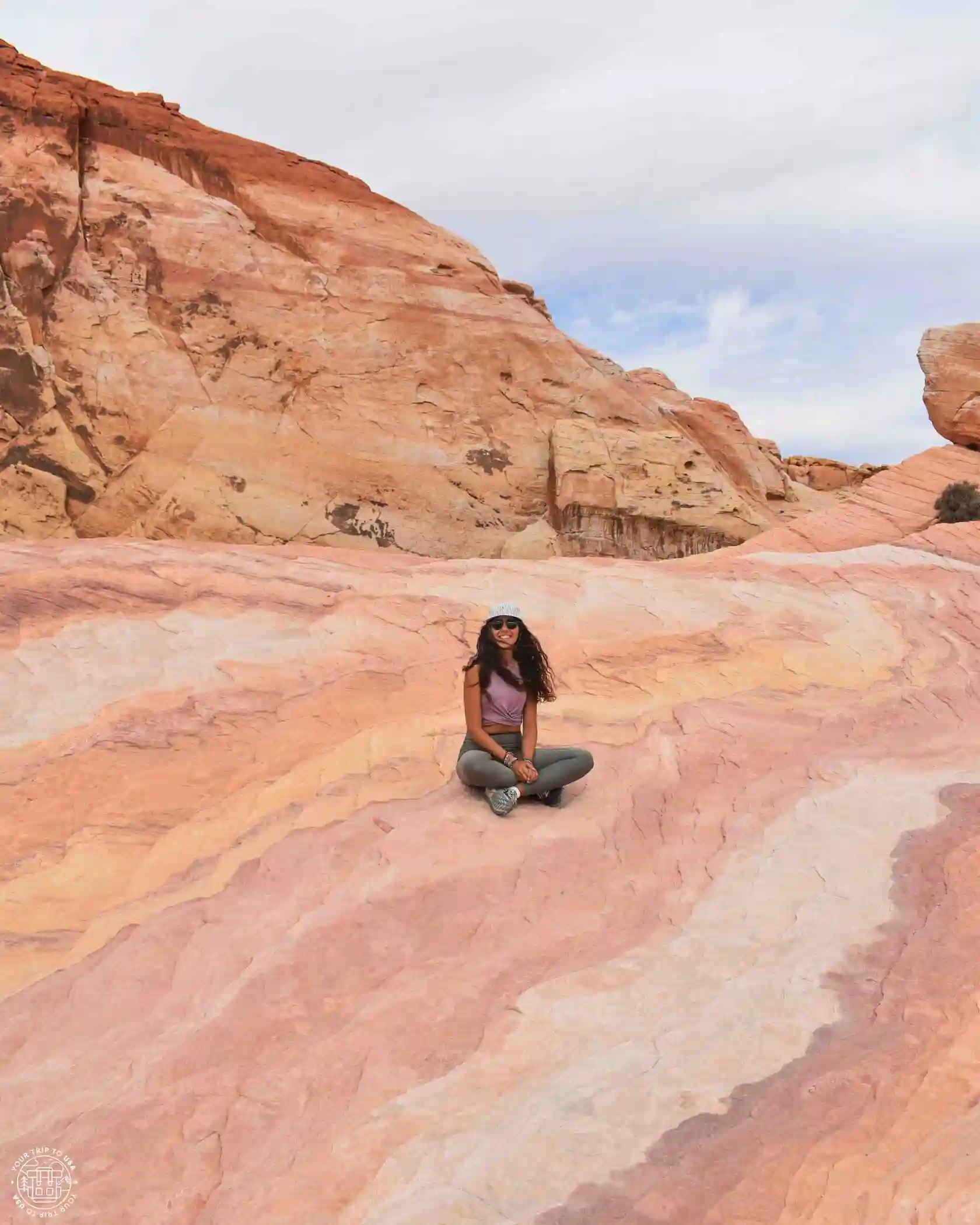
Completing this loop involves a 2.9-kilometer (1.8 mi) hike, and in addition to passing by Fire Wave, you’ll also see a pink slot canyon, the Crazy Hill (a colorful rocky mound that looks like a rainbow), and caves with natural arches, such as the incredibly photogenic Fire Cave.
7. Pink (Pastel) Canyon
Pink Canyon (also known as Pastel Canyon) is located in the southern part of the Seven Wonders Loop. It’s an unmarked trail, so you won’t see any signs pointing to it, but the entrance to this slot canyon is clearly visible. What makes it unique is the color of its walls, as the entire canyon is pink. It’s very photogenic!

RENT A CAR IN THE UNITED STATES
The best way to explore the United States is by car, giving you the freedom to travel at your own pace.
🚗 Whether you’re looking for a convertible Mustang, a 4x4, or a regular car, we recommend to book through this car rental search engine
💸 This is where we find the best prices, both on the rental car itself and on full coverage insurance!
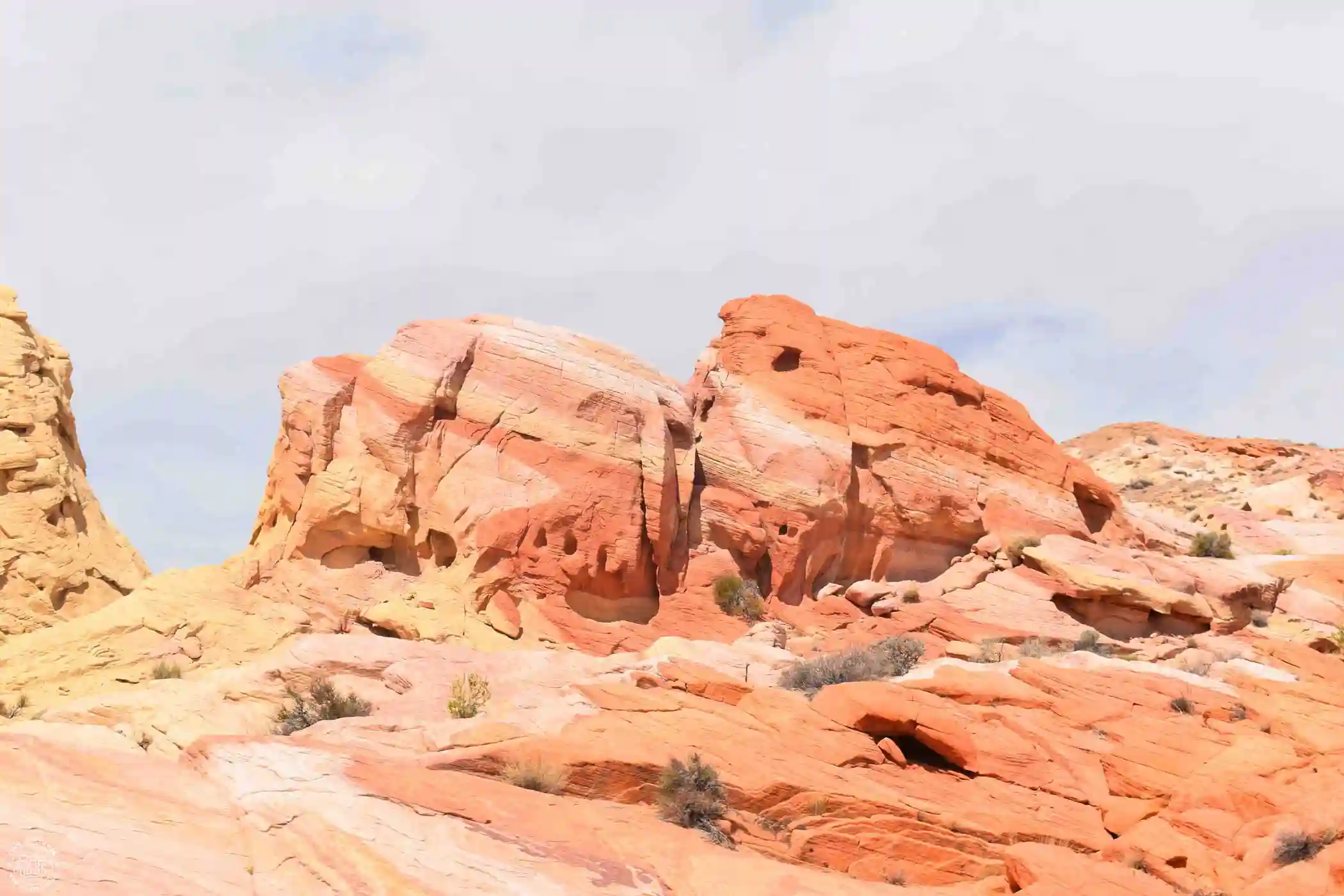
8. Striped Rock
It's a large rock with a variety of colors (orange, red, pink, yellow, white...) that you can see right from White Domes Road.
9. Fire Canyon Overlook
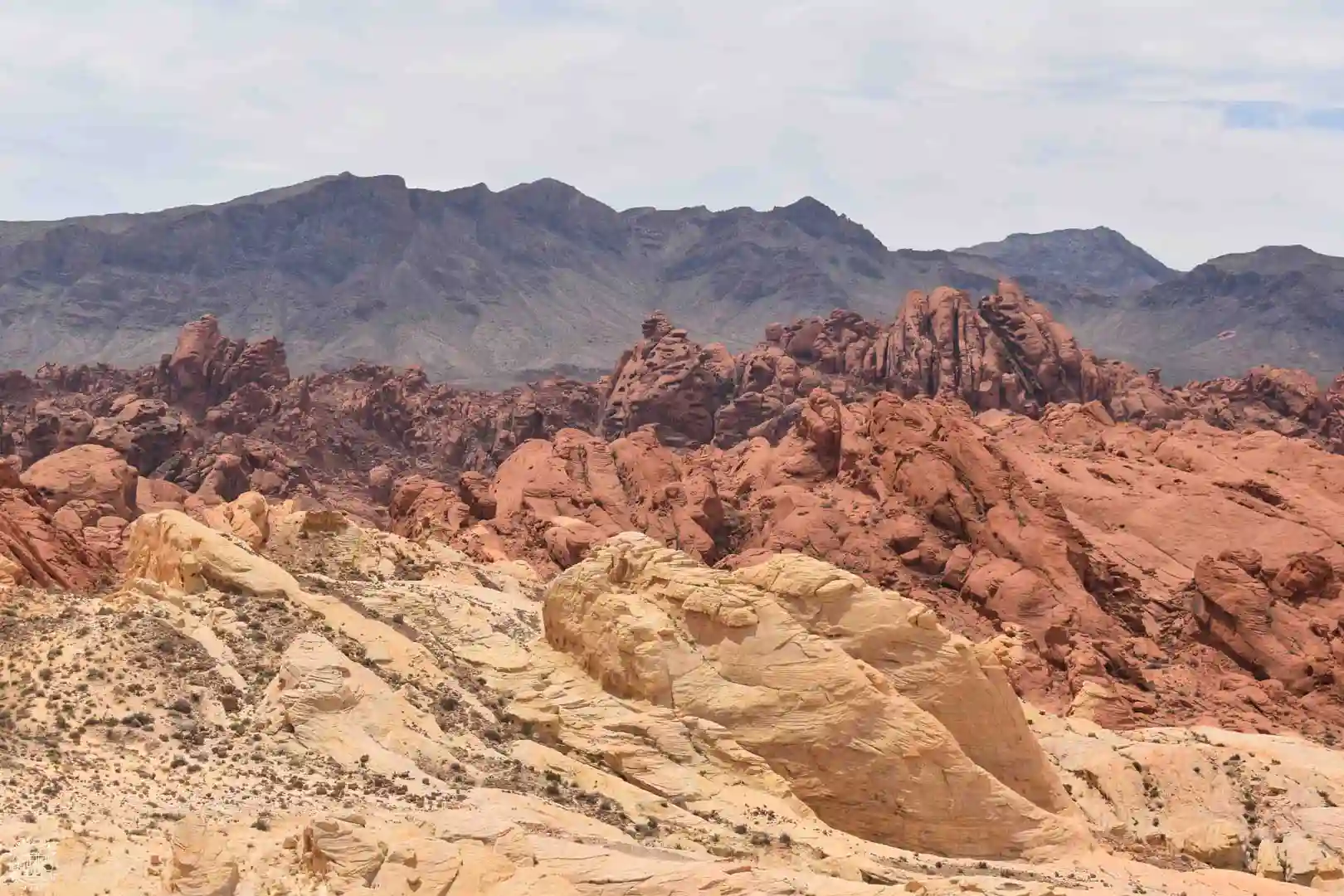
One of the best viewpoints in Valley of Fire is Fire Canyon Overlook, located at the end of Fire Canyon Road. From the parking lot, you’ll only have to walk a few steps to enjoy a panoramic view where the contrast between red and yellow is striking.
10. Rainbow Vista
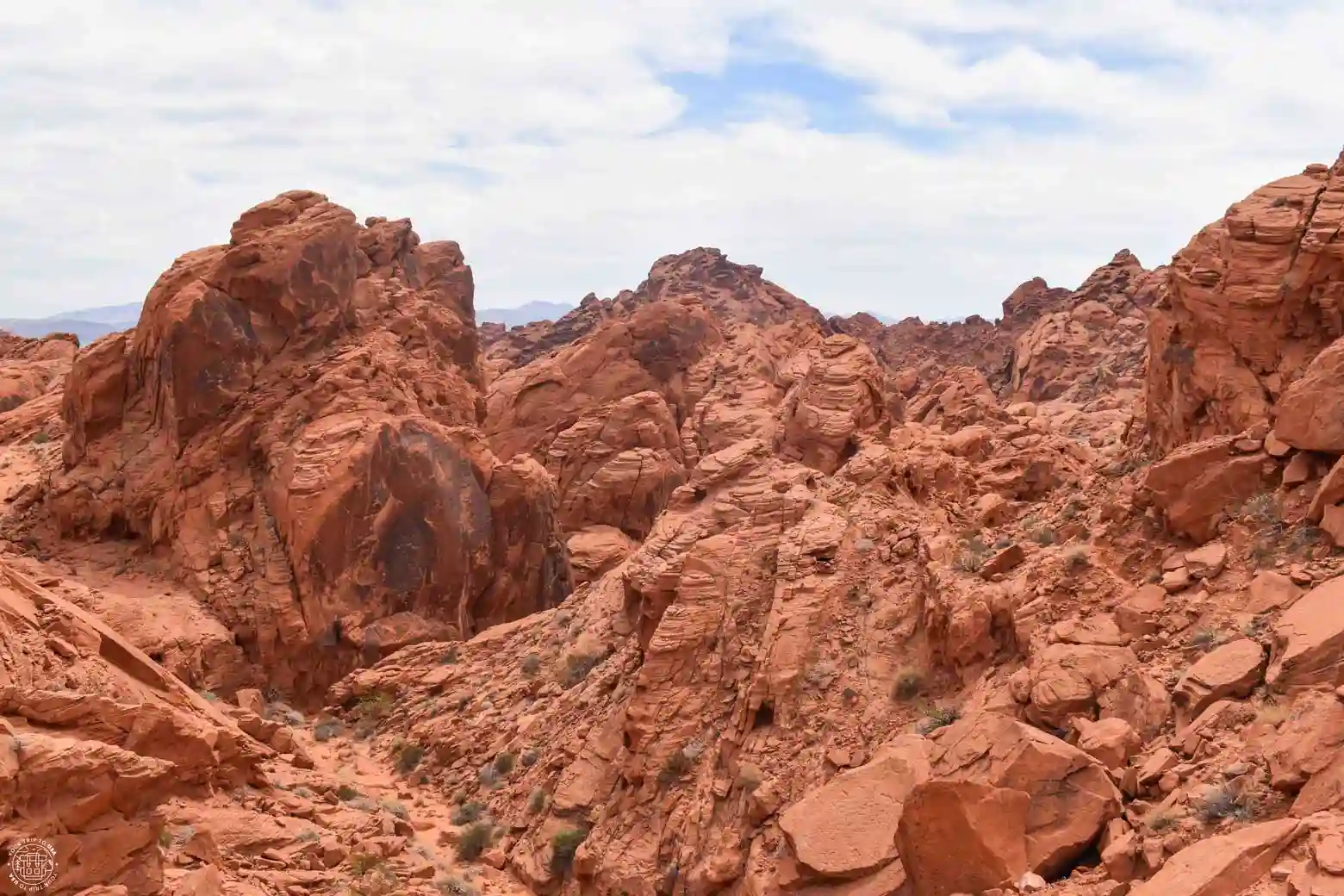
Another interesting overlook is Rainbow Vista, located near the previous one. In this case, you’ll need to hike a fairly easy 1.6-kilometer (1 mi) round-trip trail. You’ll find the colorful rocks that give it its name at the start of the trail, but it’s at the end where you can have amazing views of Fire Canyon, offering a different perspective of the canyon than the one from the previous overlook.
11. Mouse's Tank
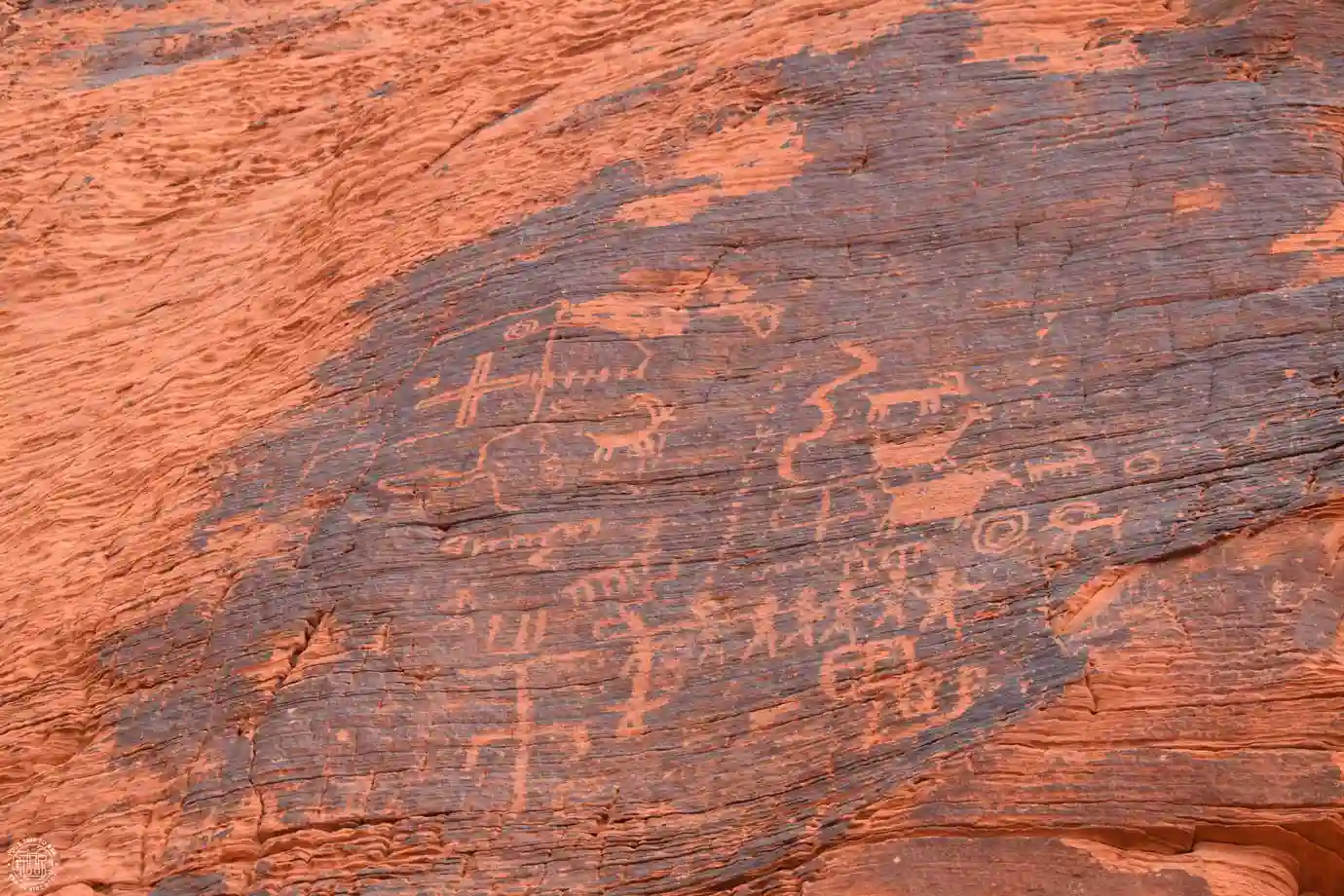
The Mouse's Tank Trail, just 1.2 km (0.75 mi) round-trip, is the perfect trail for viewing petroglyphs in Valley of Fire. The petroglyphs are usually found in clusters, and there are a remarkable number of them along this short trail. They're easy to spot because they're carved into dark areas of the rock, which is simply desert varnish—a natural oxidation process. You’ll see depictions of people holding hands and lots of bighorn sheep!
Along this path, you can also see a natural water reservoir, formed when the rock walls broke apart, which was used in ancient times to store water from the scarce rainfall in the area.
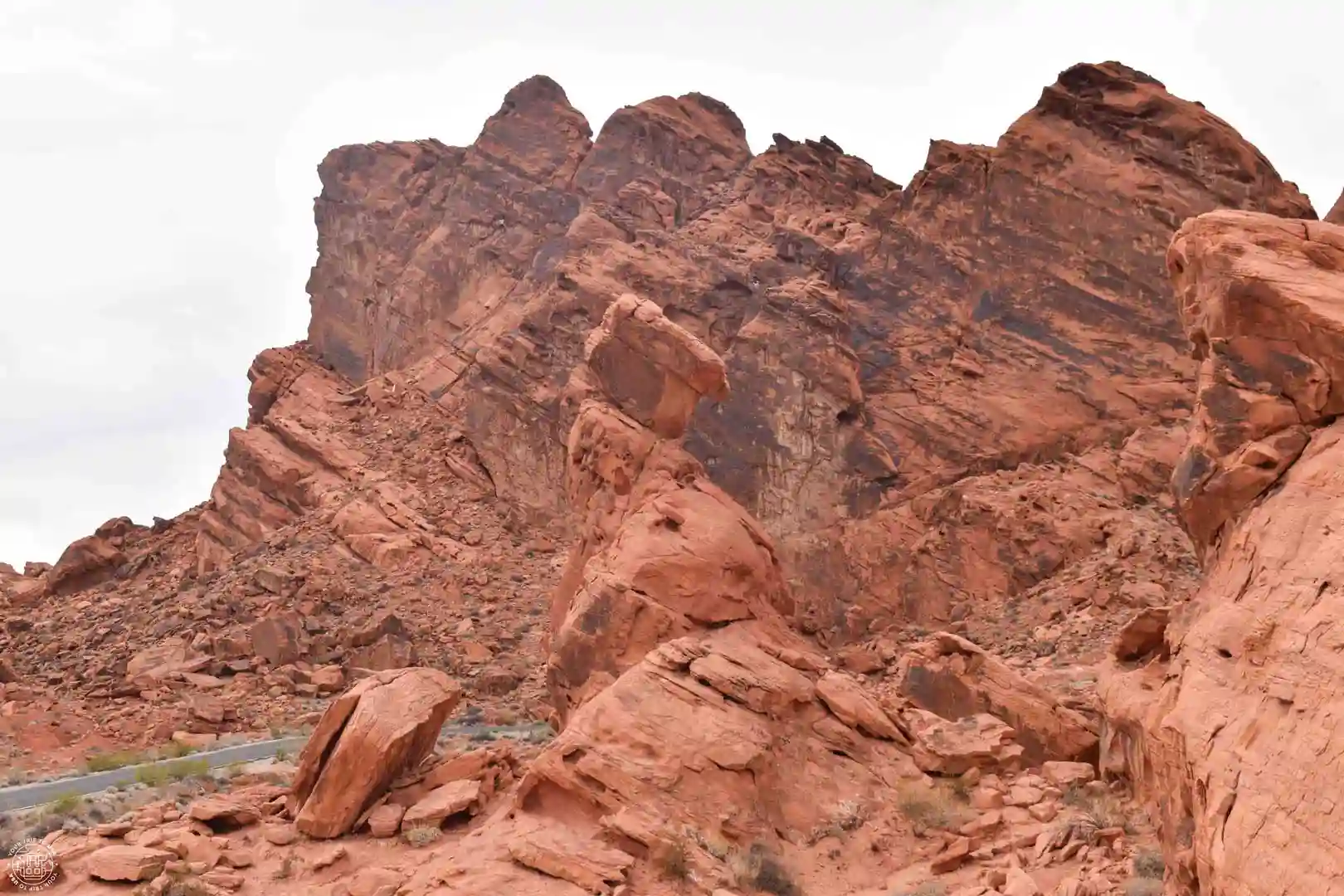
12. Balancing Rock
Right next to the visitor center, there’s a very short 300-meter (0.4 mi) trail that takes you up close to Balancing Rock, a rock that defies the laws of gravity and physics—it’s hard to understand how it stays upright!
13. Elephant Rock
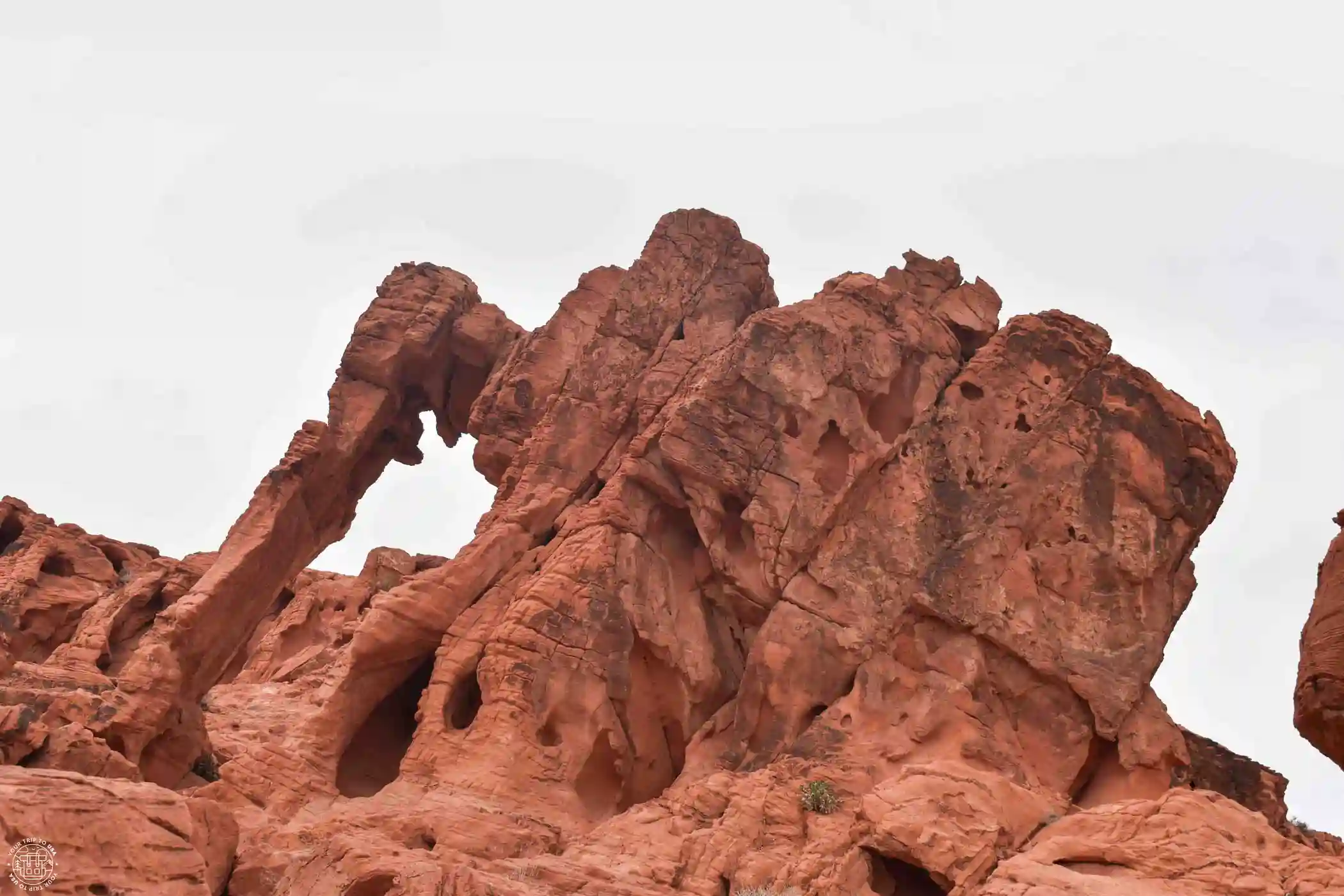
The park's most famous rock formation, located near the east entrance, is undoubtedly Elephant Rock. And yes, this rock undeniably resembles an elephant, especially when it comes to the trunk.
In this case, the rock is clearly visible from the road, although it’s true that the best view is from the Elephant Rock Loop, a 2-kilometer (1.25 mi) circular trail that offers higher viewpoints (you can also just walk the first part and turn back).
14. Historic cabins
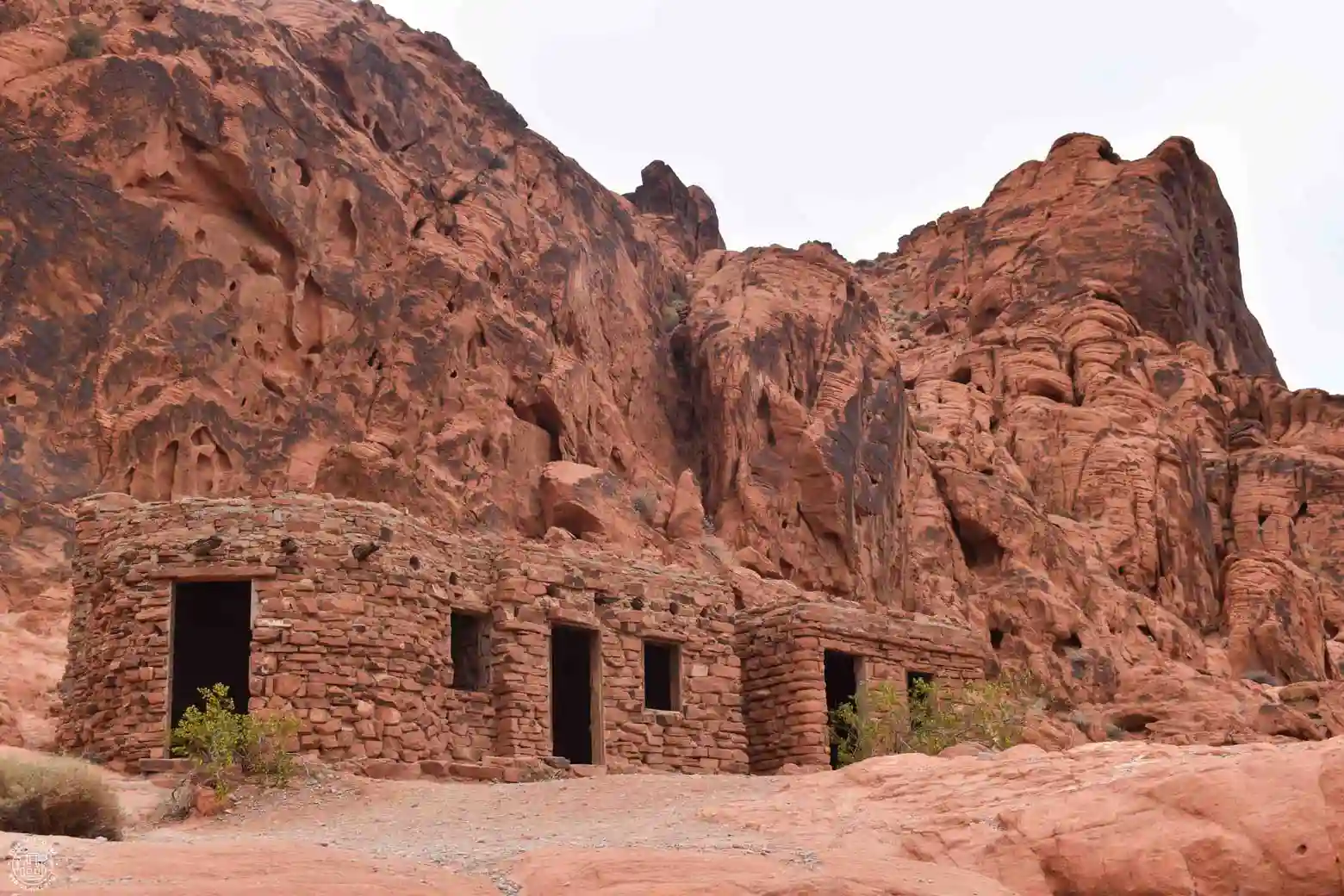
A short stop takes you to three historic cabins that were built shortly after Valley of Fire became a state park in 1935. Their walls are made of sandstone, and they were used for several years as lodgings for travelers visiting the park.
15. Petrified logs
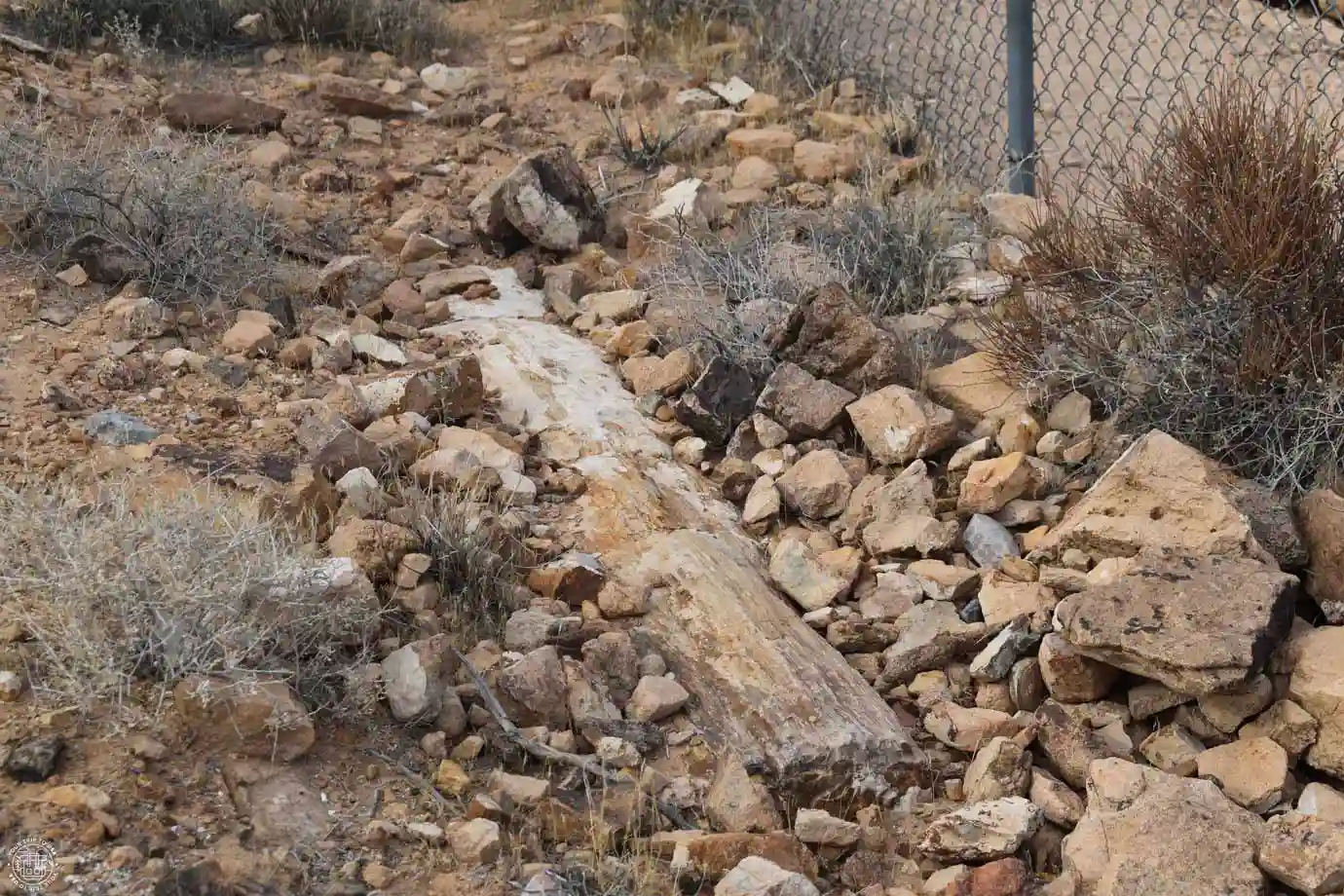
The Valley of Fire is so amazing that you can even find petrified logs here. There are two areas where you can see them—one on the east side of the park and another on the west. Although they’re nothing like the ones found in Petrified Forest National Park, they’re a nice spot for a quick stop.
To give you some context, millions of years ago these trees grew in forests located several miles from here. After they fell, floods carried the trunks to this area, where they were buried under layers of sand and sediment, causing them to gradually harden and turn into rock.
Best hikes in Valley of Fire
There are several hikes in Valley of Fire, and the best part is that most of them are short and fairly easy (with a few exceptions). Keep in mind that several trails are closed from May 15 to September 30 due to extreme temperatures, so if you want to go hiking here and not miss out on some of the best sights, it’s best to visit outside of this period.

TRAVEL INSURANCE
FOR THE UNITED STATES
💸 Healthcare in the U.S. is very expensive, and any accident or illness can cost you a fortune.
That's why we recommend getting travel insurance that covers you in case anything goes wrong, so you don't have to pay anything up front.
💡 We always travel with Heymondo because it offers excellent medical coverage at a great price. Plus, you can get 5% OFF*!
🤓 Take a look at: Best travel insurances for the USA | Comparison + Discounts |
In this table, you'll find all the hiking trails in Valley of Fire, along with their difficulty level, distance, and whether they are closed during the annual closure period. We've also included some trails that aren't shown on the park maps because they are no longer maintained.
| HIKES IN VALLEY OF FIRE | ||||
|---|---|---|---|---|
| Difficulty | Distance | Known for... | Closed from May 15 to September 30 | |
| Mouse's Tank | 🟢 | 1.2 km (0.75) out-and-back | Petroglyphs and a natural water tank | No |
| Rainbow Vista | 🟢 | 1.6 km (1 mi) out-and-back | Views of a reddish canyon | No |
| Fire Wave/Seven Wonders | 🟡 | 3 km (1.8 mi) full loop; 2.4 km (1.5 mi) out-and-back to Fire Wave only | Various colorful formations and a spectacular natural wave | Yes |
| Pink (Pastel) Canyon | 🟢 | 0.6 km (0.4 mi) one way | Pastel pink slot canyon | Yes |
| White Domes Loop | 🟡 | 1.8 km (1.1 mi) full loop | Slot canyon, colorful rock formations, and remnants from the filming of a 1960s movie | Yes |
| Pinnacles Loop | 🟡 | 7.8 km (4.8 mi) full loop | Spire-shaped rock formations | Yes |
| Elephant Rock | 🟢 | 0.3 km (0.2 mi) out-and-back, or 2 km (1.25 mi) full loop | A rock formation resembling an elephant | No |
| Prospect Trail | 🔴 | 14.3 km (8.9 mi) out-and-back | Colorful rock formations | Yes |
| Arrowhead Trail | 🟡 | 11 km (6.8 mi) out-and-back | Panoramic views of the Valley of Fire | Yes |
| Natural Arch Trail | 🟡 | 6.8 km (4.2 mi) out-and-back | Several natural arches | Yes |
| Balancing Rock | 🟢 | 0.6 km (0.4 mi) out-and-back | A rock that defies gravity | No |
| 🟢 easy, 🟡 medium, 🔴 hard | ||||
Itineraries in the Valley of Fire
What to see in Valley of Fire in half a day
If you only have half a day to explore Valley of Fire, you’ll need to keep it short and sweet by sticking to the must-see spots. Here’s the itinerary we’d take, assuming you’re visiting during the hiking season and entering through the West Entrance.
- Access via West Entrance
- Atlatl Rock and Arch Rock (Scenic Drive Loop)
- Visitor Center (in case you'd like to get information, pick up maps, etc.)
- Balancing Rock
- White Domes Road
- Fire Canyon Overlook
- Fire Wave
- White Domes Loop
- Elephant Rock
If you go when the trails are closed, then you'll have to focus on the following places:
- Access via West Entrance
- Beehives Rock
- Atlatl Rock and Arch Rock (Scenic Drive Loop)
- West Petrified Logs
- Visitor Center (if you'd like to get information, pick up maps, etc.)
- Balancing Rock
- White Domes Road
- Mouse's Tank (just looking at the petroglyphs is enough)
- Rainbow Vista (only if the heat allows you)
- Fire Canyon Overlook
- Elephant Rock
What to See in Valley of Fire in 1 day
It makes sense to spend a full day at this park when the trails are open, so you can visit both the must-see spots and some of the lesser-known areas, giving you a very comprehensive overview. Here’s the itinerary we’d follow, assuming you’re entering through the West Entrance:
- Access via West Entrance
- Beehives Rock
- Atlatl Rock and Arch Rock (Scenic Drive Loop)
- West Petrified Logs
- Visitor Center (if you'd like to get information, pick up maps, etc.)
- Balancing Rock
- White Domes Road
- Fire Wave and/or Seven Wonders Loop (including Pink Canyon)
- White Domes Loop
- Fire Canyon Overlook
- Rainbow Vista
- Mouse's Tank (just looking at the petroglyphs is enough)
- Historic Cabins
- Elephant Rock
What to See in Valley of Fire in 2 days
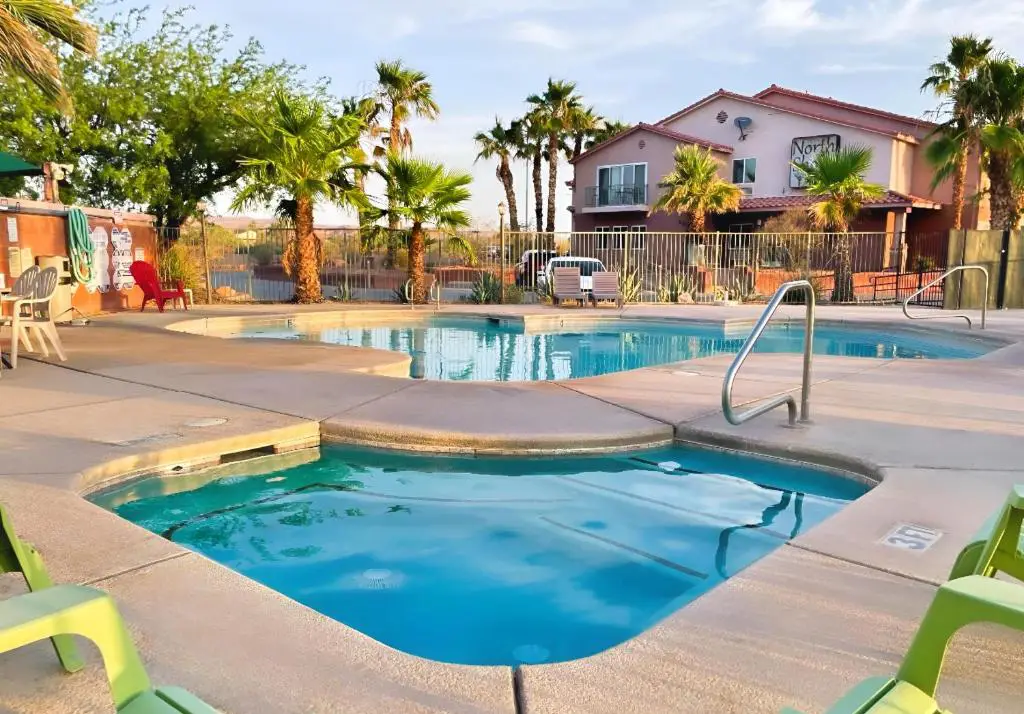
If you have two days, the best option is to stay at one of the campgrounds inside the park or at the nearest hotel, the North Shore Inn at Lake Mead. In this case, on the first day you can do exactly the same as in the 1-day Valley of Fire itinerary, and on the second day, you can hike one of the longer trails, such as the Pinnacles Loop (this would be our choice), the Prospect Trail, or the Arrowhead Trail.
Another option is to take things at a more leisurely pace and spread the things to do in Valley of Fire in 1 day over two days.

🚐 The U.S. is a paradise for traveling by camper van or motorhome: there are plenty of campgrounds, wonderful places to stay overnight for free, and amenities around every corner.
If you'd like to try this way of traveling, the United States is the place to do it!
💸 And you can save a lot of money on lodging and food!
➡️ We always book through this rental search engine because they work with all the companies and have great deals.
Where to stay in Valley of Fire
Hotels near Valley of Fire
There are no hotels inside Valley of Fire—only campgrounds. For this reason, if you’re looking for a hotel near Valley of Fire, your best bet is to stay in Las Vegas, where there are more options. To help you out, check out our post on where to stay in Las Vegas!
Otherwise, the closest option is the North Shore Inn at Lake Mead in Overton, located 20 km (12.5 mi) from the park’s east entrance (about a 20-minute drive). It offers free parking, a swimming pool, a quiet atmosphere, spacious rooms, and comfortable beds. Plus, breakfast is included in the rate.
If you're combining a visit to Valley of Fire with a trip to Zion National Park, a good option is to stay in Mesquite, a quiet town located near the Arizona border, about an hour from the park's eastern entrance. We recommend the Holiday Inn Resort Mesquite and the Eureka Casino Resort.
Campgrounds in Valley of Fire
Camping at Valley of Fire is totally possible, as there are two campgrounds: Atlatl Rock Campground and Arch Rock Campground. Together, they offer 72 sites and are equipped with tables, grills, water, restrooms, and showers. There are also sites with electricity and a dump station if you’re traveling in a rental campervan or RV (or your own).
Reservations must be made through the official website, and the maximum stay is 14 days within a 30-day period. The cost is $20 per vehicle per night for Nevada residents and $25 per vehicle per night for non-residents, plus an additional $10 if you use electricity.
If there's no space available or you don't want to stay here, the public lands are just a short distance from the west entrance, where you can camp for free.
When to visit Valley of Fire
The best time to visit Valley of Fire is in the spring, fall, and winter (October through April). In the summer, the heat is extreme, with temperatures often exceeding 38ºC (100°F) and reaching as high as 49ºC (120°F) on the hottest days. As mentioned earlier, several trails are closed from May 15 to September 30 for this reason.
Winters are mild with temperatures ranging from freezing to 24°C (75ºF), but please note that the park is always closed from December 1 through 14 for maintenance.
If you're visiting during the hot season, it's best to avoid the middle of the day and take advantage of the early morning and late afternoon hours for your visits. Keep in mind that the park is open from sunrise to sunset, with hours varying depending on the time of year.
Valley of Fire with kids: Is it worth it?
Yes, Valley of Fire is a perfect place for kids, since most of the trails are easy and it’s a place where little ones can have a great time—whether exploring the canyons, surfing the Fire Wave, playing at being explorers while searching for petroglyphs, or looking at rocks shaped like animals, such as Elephant Rock.
In this case, especially when traveling with children, it makes even more sense to avoid the hottest part of the day and to alternate walking with short breaks.
Valley of Fire State Park Map
On this map, you'll find not only the sights to see in the park, but also the hiking trails, park entrances, recommended accommodations, and the nearest gas stations.
Tips for First-Time Visitors to Valley of Fire
If you're visiting Valley of Fire for the first time, these tips will come in handy:
- ⛽ There are no gas stations inside Valley of Fire, so be sure to plan ahead. We've marked the nearest gas stations on the Valley of Fire State Park map.
- 🚫 Do not touch the petroglyphs or scratch the rocks; it is everyone’s responsibility to preserve the natural environment and the history of this place. Furthermore, doing so is punishable by law.
- ❌ Do not climb natural arches or stray from marked trails; this is also prohibited.
- 💧 Bring plenty of water; there’s drinking water at the visitor center where you can refill your bottles.
- 🥪 Bring all the food and snacks you need—they don't sell anything inside the park.
- 🧴 Don't forget your sunscreen, a cap or hat, and it's best to wear breathable clothing.
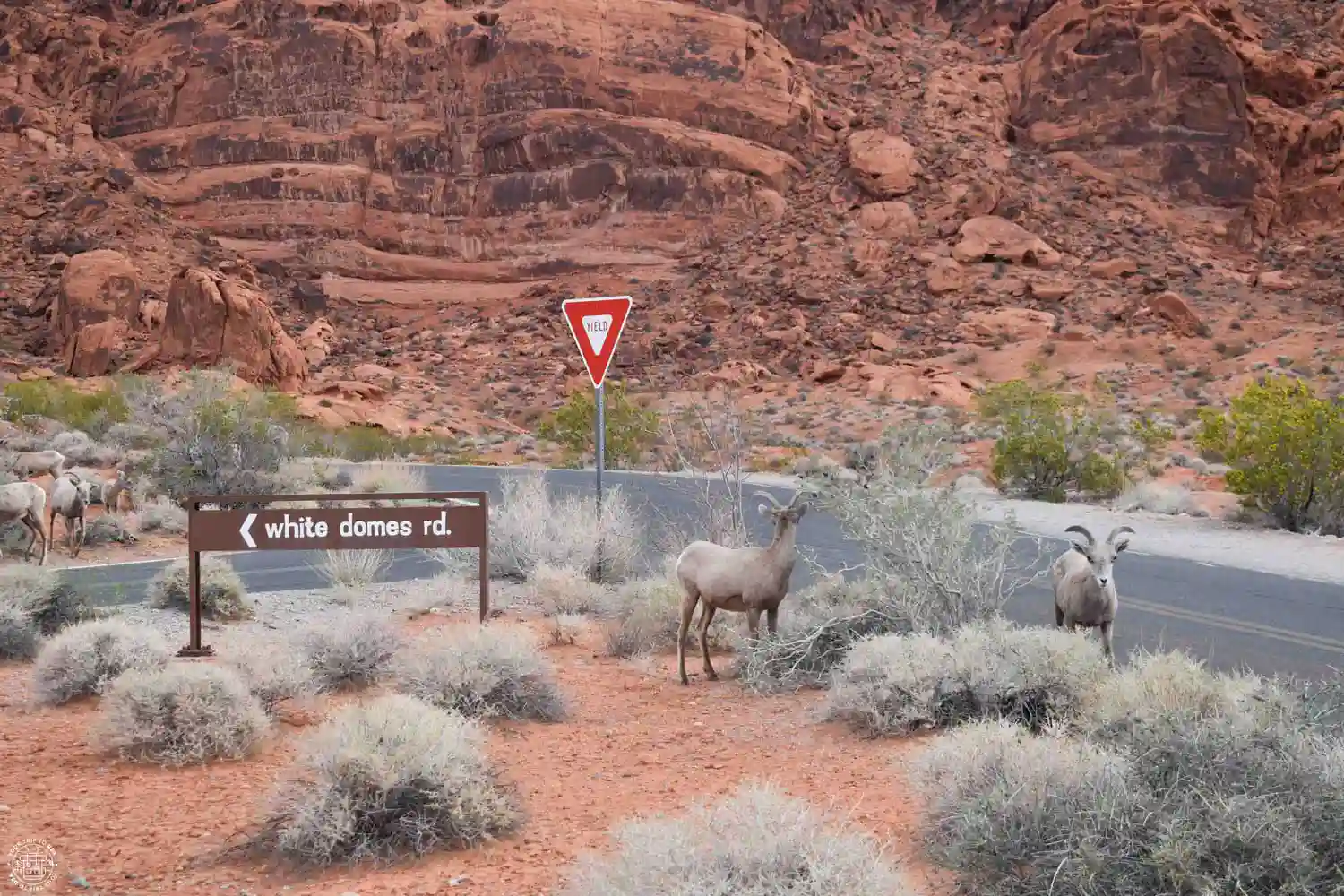
- 🐐 Respect the speed limit within the park and watch out for bighorn sheep. It’s common to find them in the middle of the road.
- 🛜 There's hardly any cell service inside the park, so be sure to download the maps in advance.
- 🐕🦺 Pets are allowed in the park, but must always be kept on a leash.
FAQs about visiting Valley of Fire State Park
How far is Valley of Fire from Las Vegas?
It's about 75 km (46 miles) away, roughly a 1-hour drive from Las Vegas.
Is Valley of Fire worth visiting?
Absolutely yes—it’s one of the most breathtaking parks on the U.S. Southwest, featuring unique red rock landscapes and easy access by car.
How long does it take to visit Valley of Fire?
Ideally, you should spend between half a day and a full day to see the main sights and go on a hike.
How many visitor centers are there in Valley of Fire?
There is one visitor center, located at the intersection of the main road (Valley of Fire Highway) and White Domes Road. Inside, you can see exhibits on the geology, ecology, prehistory, and history of the park and the surrounding region, and it’s a good idea to stop by when you enter the park. You can also buy souvenirs here. It’s open daily from 9:00 a.m. to 4:00 p.m.
When is the best time to visit the Valley of Fire?
The best time to visit is from October to April. In summer, temperatures can exceed 40 °C (104 ºC), and many roads are closed.
Can you visit Valley of Fire in a day?
Yes, it's perfect for a day trip from Las Vegas.
What are the best hotels near Valley of Fire?
Las Vegas has the best hotels thanks to its wide variety of options, but just 20 km (12.4 mi) from the eastern entrance is the North Shore Inn at Lake Mead. Other options further away are located in Mesquite, a good choice if you’re planning to visit Zion National Park afterward. Here, we recommend the Holiday Inn Resort Mesquite and the Eureka Casino Resort.
What are the must-see attractions in Valley of Fire?
Must-see sights include Fire Wave, White Domes Loop, Elephant Rock, and Atlatl Rock, as well as a drive along White Domes Road.
Is Valley of Fire better than Red Rock Canyon?
Overall, Valley of Fire is much more spectacular and photogenic than Red Rock Canyon, but the latter is more accessible and easier to visit.
We hope you found this guide to visiting Valley of Fire State Park helpful!